I stood in my 400 square foot Brooklyn studio three years ago and felt like the walls were closing in. I had a mountain of “stuff” that I thought defined my personality. There were dusty books I never read. I owned three different coffee makers. My closet was bulging with clothes from 2015. Every morning I spent ten minutes looking for my keys. My home did not feel like a sanctuary. It felt like a storage unit that I happened to sleep in.
Many apartment dwellers face this same suffocating feeling. High rent prices force us into smaller footprints. We try to compensate by buying more organizers. We buy more bins. We buy more shelves. This is a trap. The secret to a beautiful apartment is not more storage. The secret is having less to store.
Minimalism is not about living in a cold white box. It is about making room for what matters. I spent eighteen months testing every minimalist theory. I failed often. I once threw away a kitchen tool I actually needed and had to buy it again. I learned the hard way that “empty” is not the goal. “Intentional” is the goal. These 21 ideas come from those failures and successes. They will help you reclaim your space and your sanity.
Executive Summary
You can turn a cramped apartment into a peaceful retreat using specific minimalist strategies. This guide covers 21 actionable ideas for furniture, color, and lifestyle. You will learn why quality matters more than quantity. I will show you how to use vertical space effectively. We will look at tools like the Muji storage systems and the IKEA IVAR series.
Expect to see real numbers on costs and time. Most people can implement these changes over a weekend or a few months. We will discuss why “warm minimalism” is better than the “museum look.” You will see how to save roughly $200 a month by ending the cycle of impulse buying. This is a deep dive into functional living for the modern renter.
1. Select Multi Functional Furniture Pieces
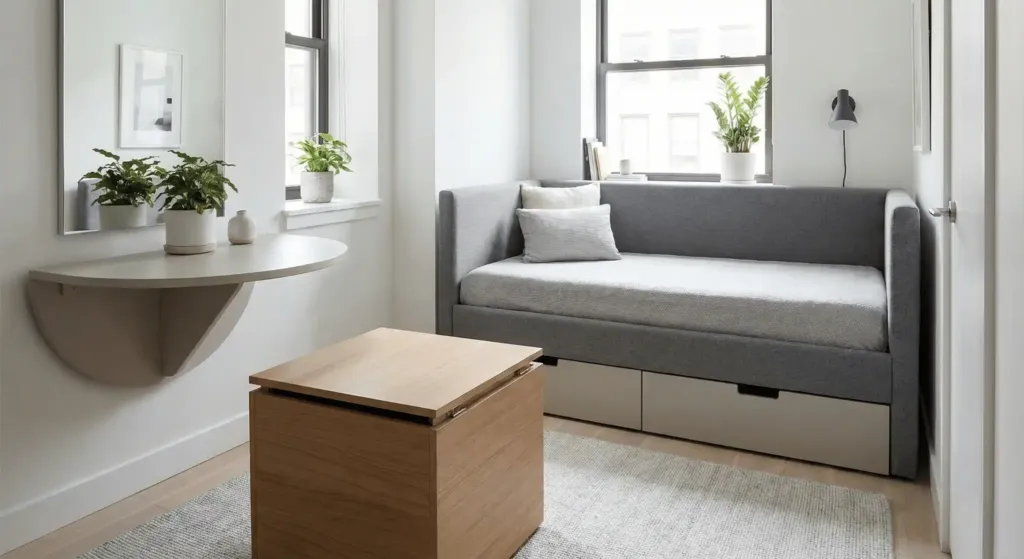
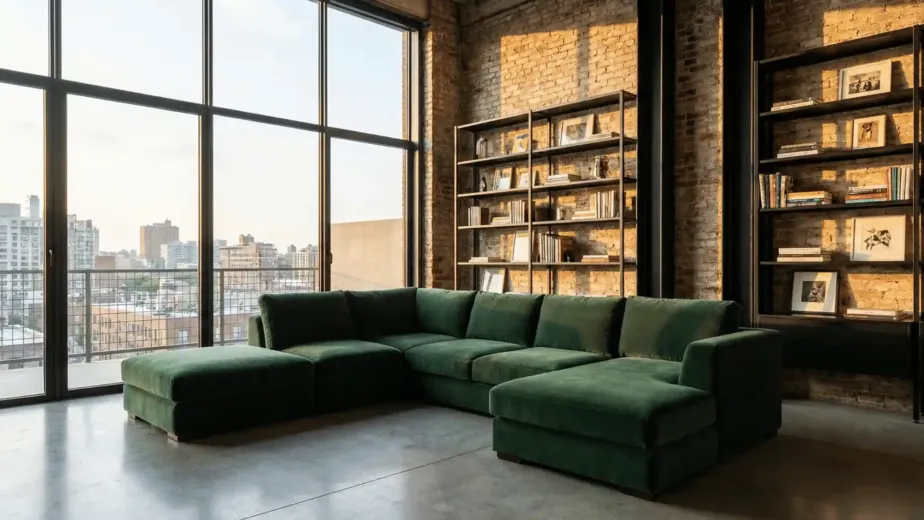
My first big mistake was buying a massive velvet sofa that did nothing but hold my body. It took up 30 percent of my floor space. I eventually replaced it with a sleek daybed that has drawers underneath. This single change cleared an entire closet worth of linens.
Look for ottomans that open up for storage. Find dining tables that fold down into consoles. Brands like Resource Furniture offer incredible pieces, though they are pricey. For a budget version, the IKEA Kallax remains a classic for a reason. It is a room divider and a shelf at the same time.
2. Adopt a Monochromatic Color Palette
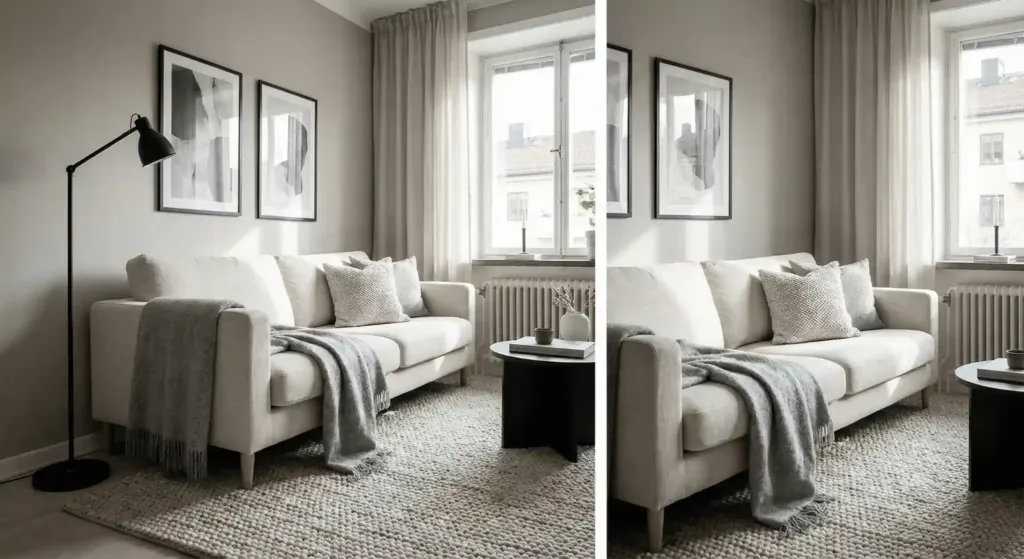
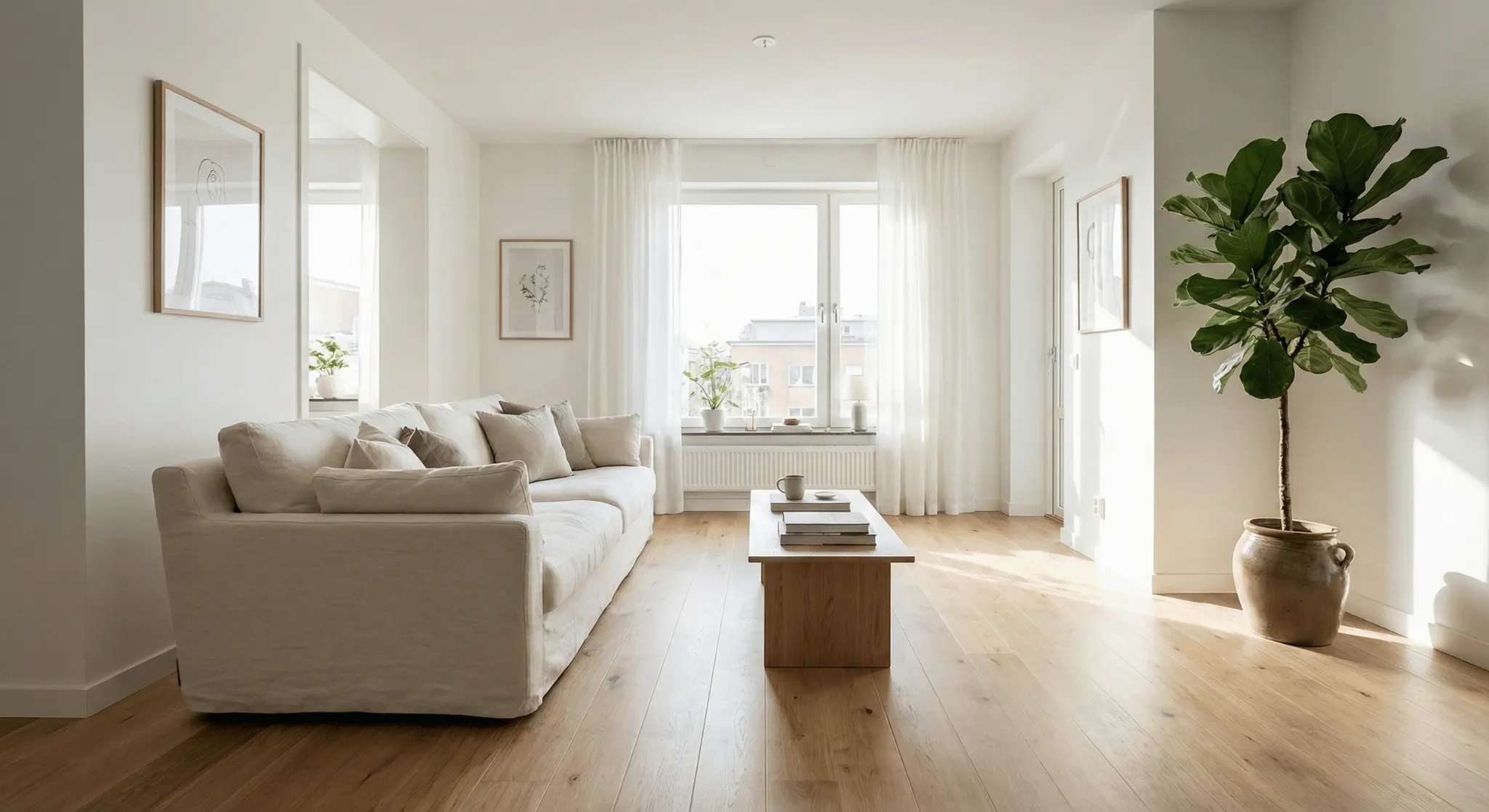
Visual noise is the primary enemy of small apartments. When your eyes jump from a red rug to a blue wall and a green chair, your brain feels tired. I switched my apartment to shades of oatmeal, cream, and soft grey. The walls started to recede. The room felt four feet wider instantly.
Use different textures to keep it from looking boring. Mix a chunky wool rug with a smooth linen sofa. Use matte black metal accents for contrast. This creates a cohesive flow that makes a studio feel like a suite.
3. Practice the One In One Out Rule
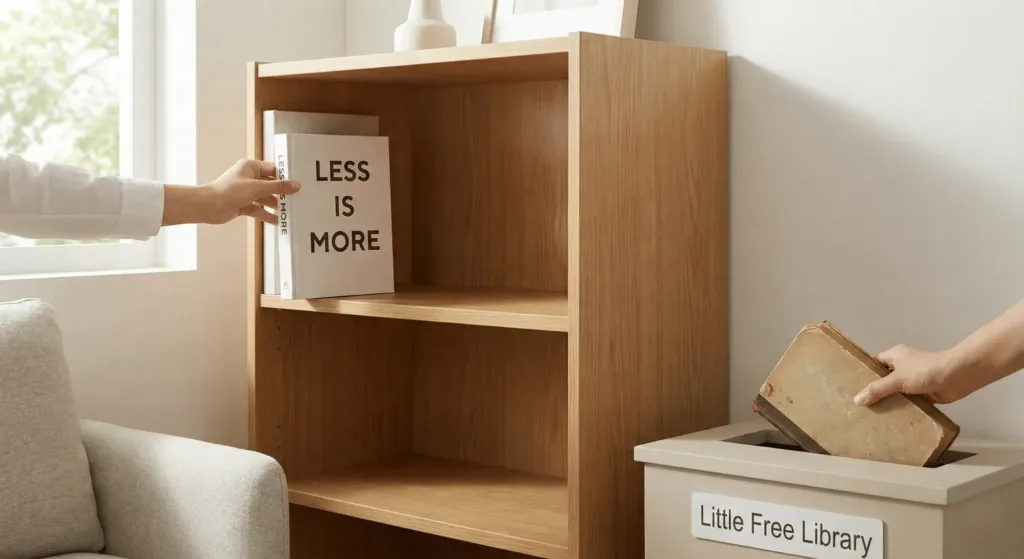
Minimalism is a daily practice. It is not a one time event. Whenever I bring a new book home, an old one goes to the little free library on my corner. This prevents the “clutter creep” that ruins most minimalist homes.
I tracked this for six months. My total item count stayed the same while the quality improved. I stopped buying cheap trinkets because I knew I would have to give something up. This rule saves you hundreds of dollars in impulse purchases every year.
4. Use Mirrors to Multiply Natural Light
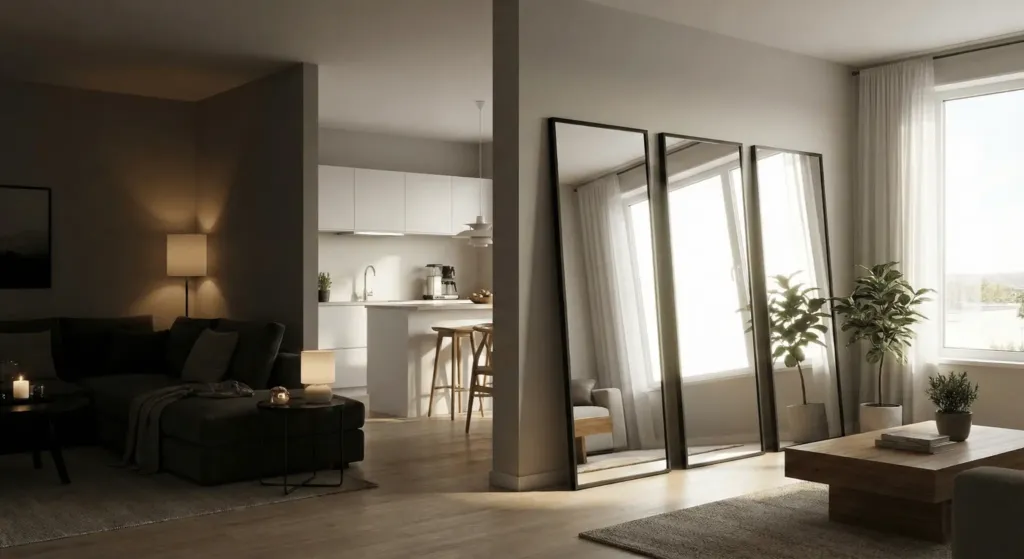
I lived in a dark basement apartment in Seattle for a year. I felt depressed every winter. I bought three large floor mirrors from West Elm and placed them opposite the windows. The light bounced deep into the kitchen.
Mirrors trick your brain into seeing more depth. They act like windows into a parallel room. Avoid small, ornate frames that add visual clutter. Choose thin black frames or frameless options for a cleaner look.
5. Clear Every Flat Surface
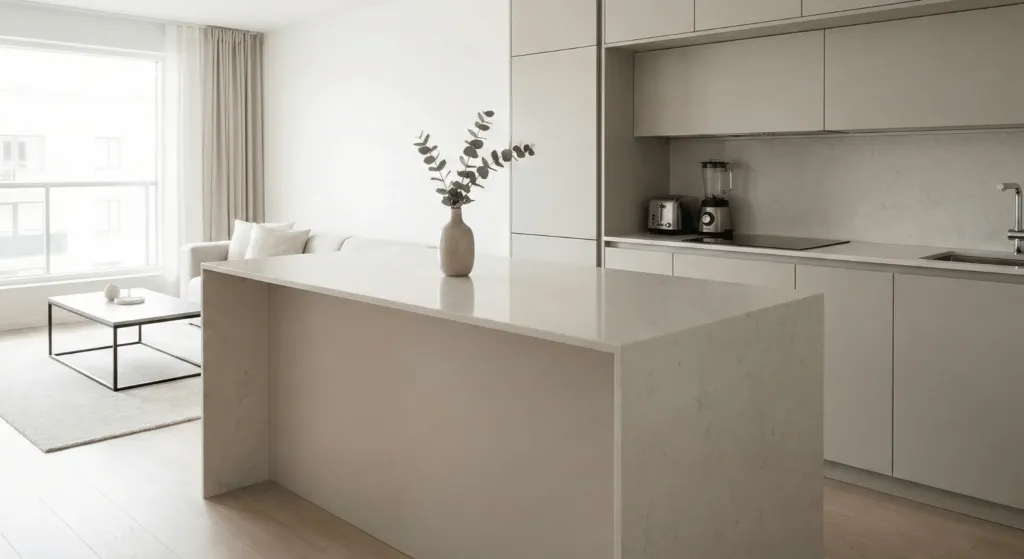
Kitchen counters and coffee tables are clutter magnets. We drop mail, keys, and spare change there. My rule now is that nothing lives on the counter unless I use it every single day. My toaster is in a cabinet. My blender is tucked away.
This makes cleaning take five minutes instead of thirty. When surfaces are clear, the whole room looks professionally designed. It creates a sense of calm that hits you the moment you walk through the door.
6. Invest in Hidden Storage Solutions
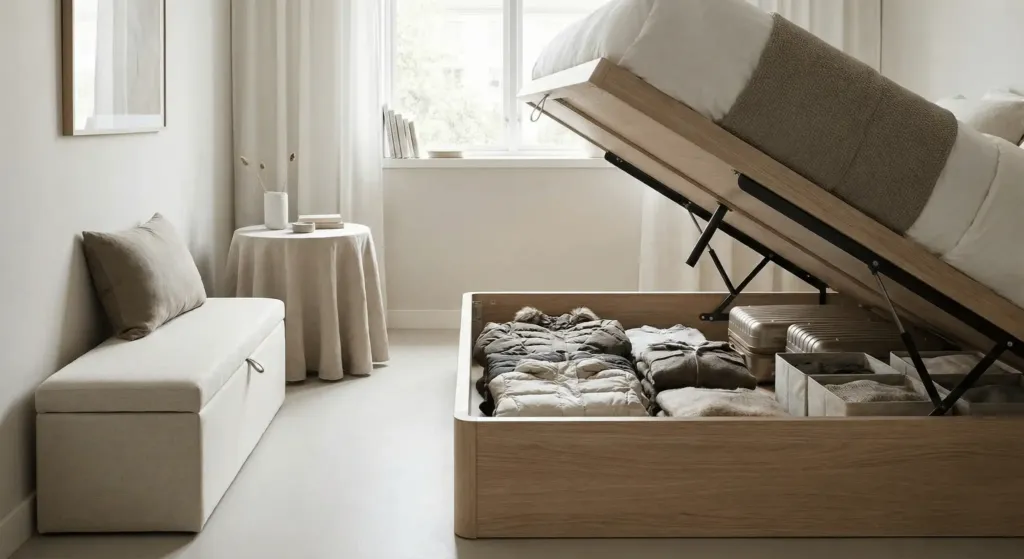
I used to have plastic bins stacked in the corner. They were ugly. I replaced them with a bed frame from Article that has a hydraulic lift. Now my winter coats and suitcases are completely invisible.
Hidden storage is the secret weapon of city living. Look for benches with lids for your entryway. Use “skirted” tables if you need to hide a printer or office supplies. If you can’t see the mess, it doesn’t exist in your mental space.
7. Limit Your Wall Art to One Large Piece
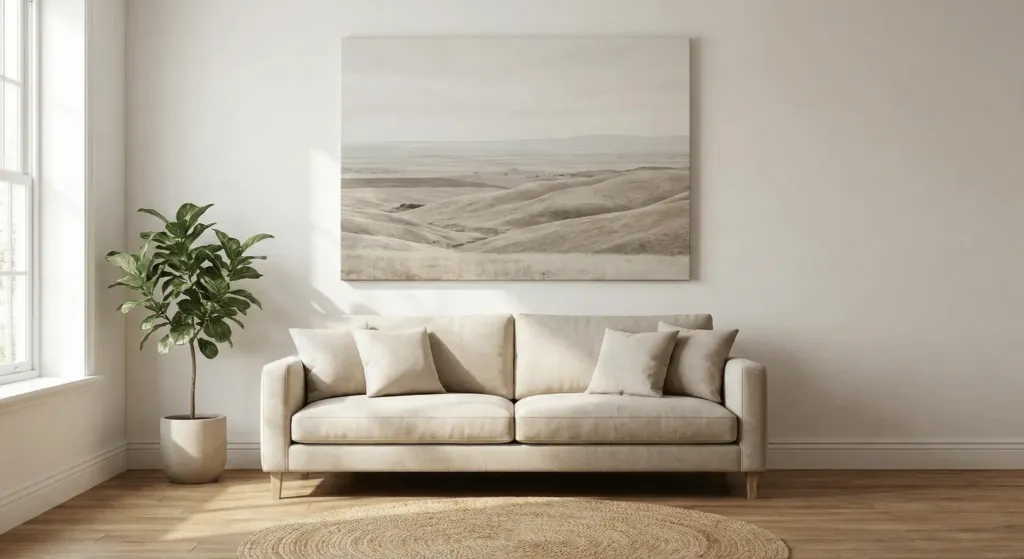
Gallery walls are popular, but they make small rooms feel busy. I had a wall with fifteen small frames. It looked like a puzzle. I took them all down and hung one massive canvas of a neutral landscape.
The room felt taller. Large art creates a focal point that anchors the space. It gives the eyes a place to rest. You can find affordable large scale prints on Etsy or at local thrift stores.
8. Switch to Uniform Hangers
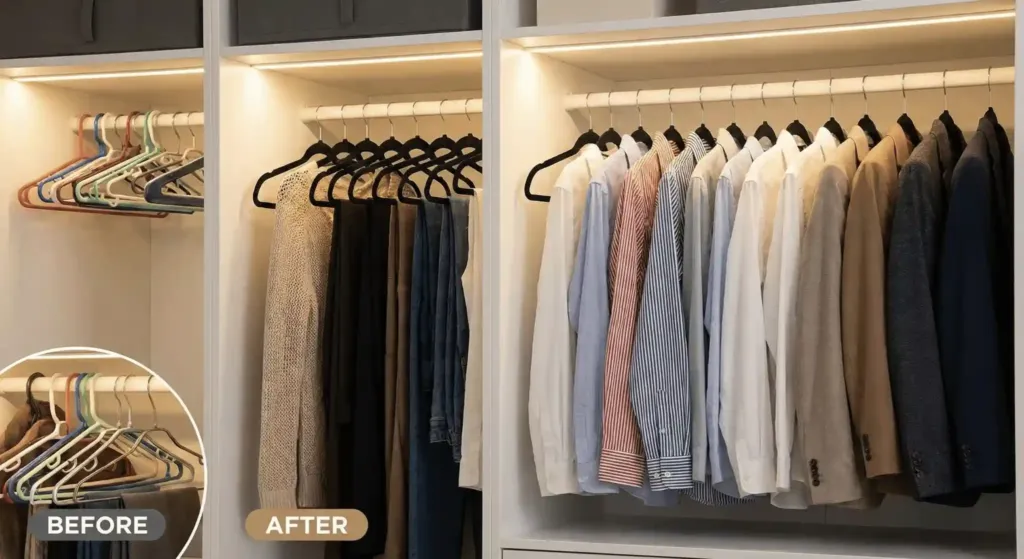
This sounds like a tiny detail. It changed my life. I replaced my mismatched plastic and wire hangers with black velvet ones. My closet went from looking like a disaster to looking like a boutique.
Velvet hangers are thinner, so you can fit 20 percent more clothes. They also prevent shirts from slipping off. This small investment costs about $30 but provides a massive psychological win every morning.
9. Use Floating Shelves Instead of Bookcases
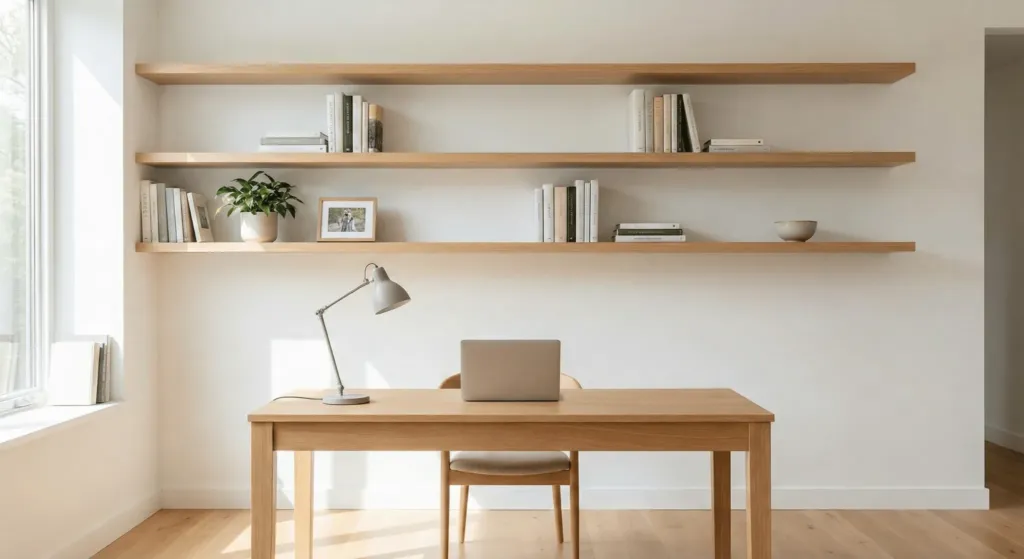
Bulky bookcases eat up floor space. They create “dead zones” in corners. I installed three long floating shelves from Rejuvenation above my desk. They hold my essentials without touching the floor.
Seeing the floor continue under your furniture makes the room feel larger. It creates a sense of airiness. Be careful not to overfill them. Leave at least 30 percent of the shelf empty to maintain the minimalist look.
10. Choose Glass or Acrylic Materials
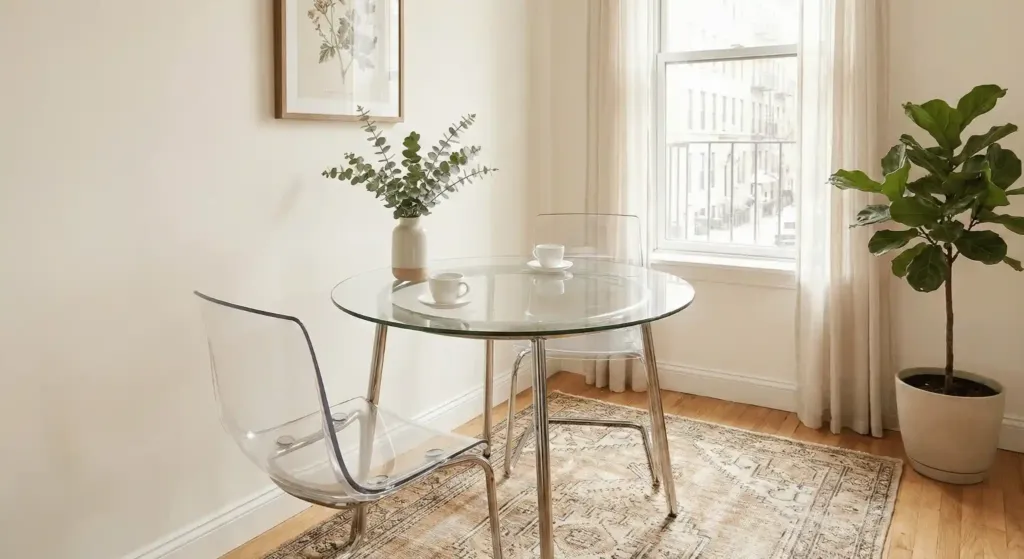
I bought a “ghost chair” for my small dining nook. Since it is clear plastic, it takes up zero visual weight. You can see right through it to the floor and wall.
Use a glass coffee table if your rug is beautiful. This prevents the center of the room from feeling heavy. Brands like Kartell make the best acrylic furniture, but Amazon has great affordable alternatives.
11. Define Zones With Low Profile Rugs
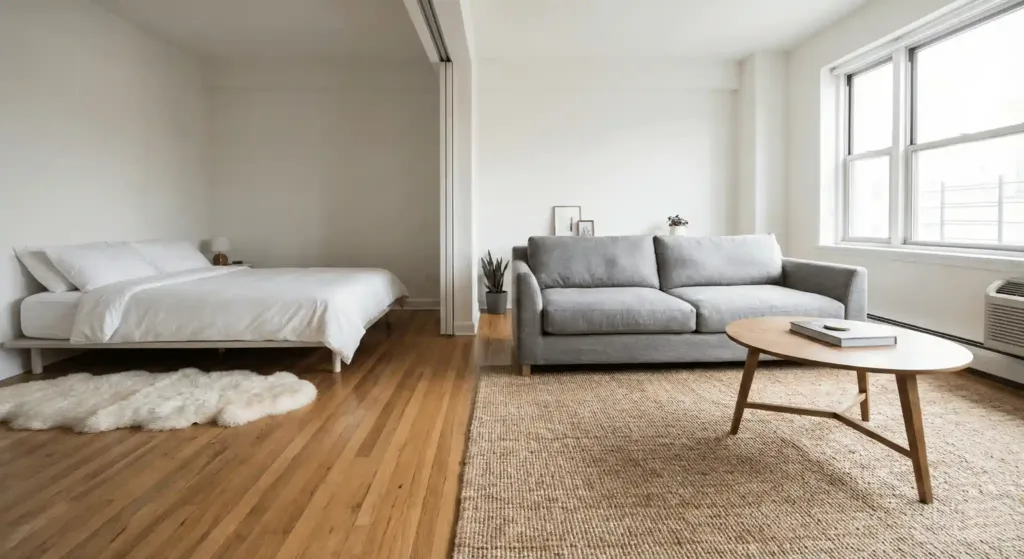
In a studio, your bed is often three feet from your sofa. This can feel chaotic. I used a large jute rug to “ground” the living area. I used a smaller sheepskin rug by the bed.
Rugs act as invisible walls. They tell your brain where one room ends and the next begins. Stick to low pile rugs. Shag rugs trap dust and look messy in minimalist settings.
12. Minimize Your Tech Cords
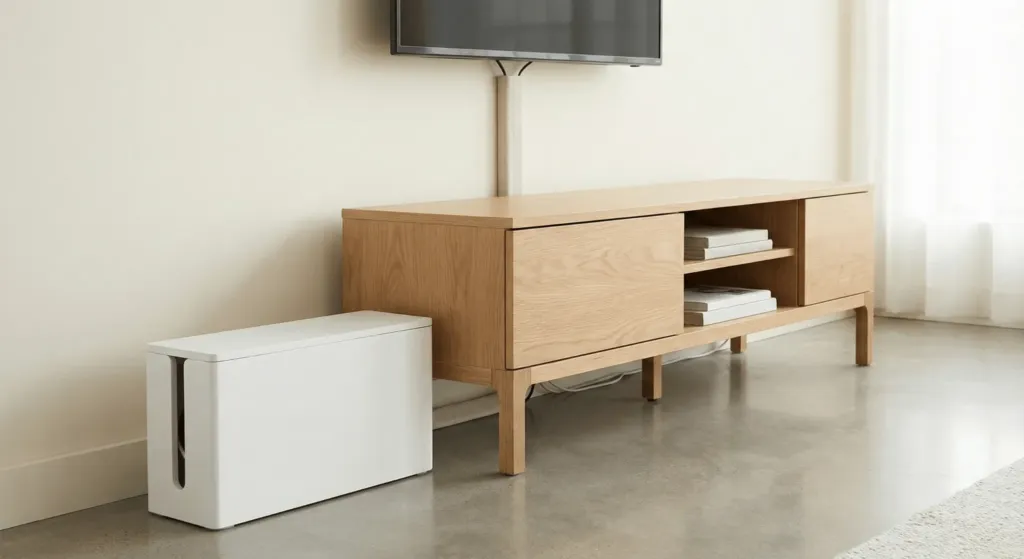
Cables are the ultimate minimalist fail. I used to have a “snake pit” behind my TV. I bought a cable management box for $15. I tucked the power strip and all the excess wire inside.
I also used command hooks to run cords down the back of furniture legs. If a cord must be visible, use a fabric cord cover that matches your wall color. Clean lines should never be broken by a black plastic wire.
13. Create a Capsule Kitchen
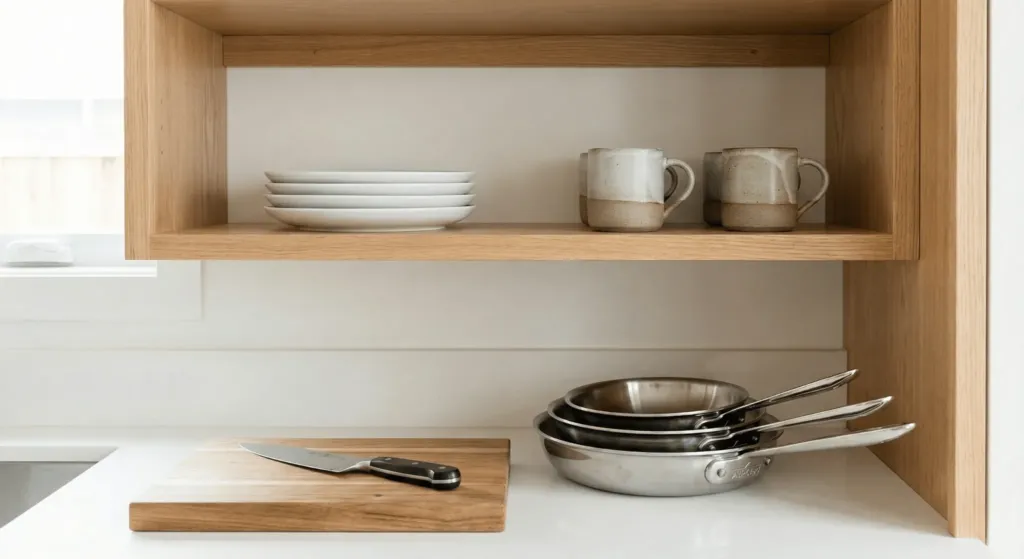
Do you really need twelve coffee mugs? I realized I only lived with one other person. We had twenty plates. I donated everything except four of each item.
I kept my All-Clad pans because they last forever. I got rid of the specialized “egg cookers” and “garlic presses.” A good chef’s knife does everything. My kitchen cabinets are now half empty, and I never struggle to find a lid.
14. Prioritize Natural Textures
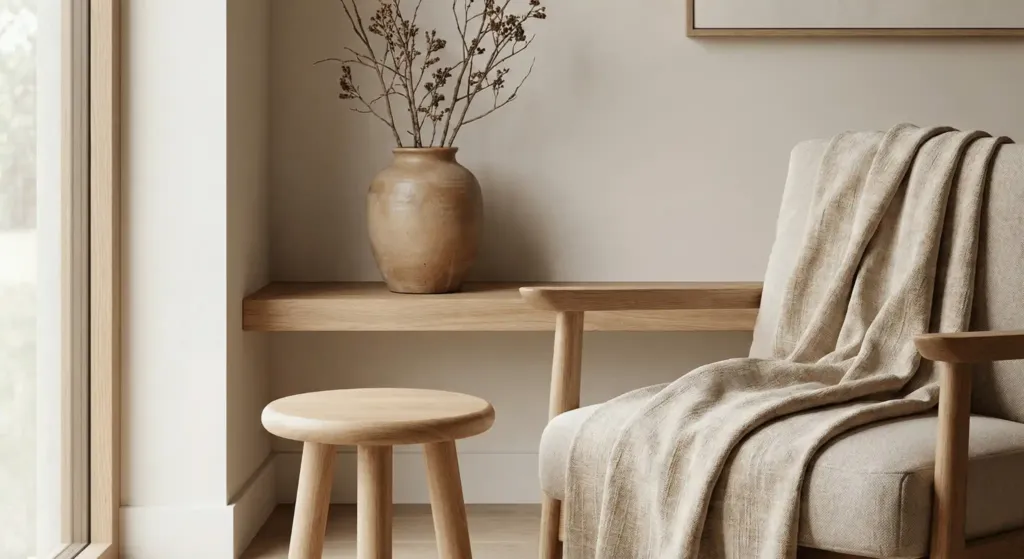
Minimalism can feel “surgical” if you only use metal and plastic. I brought in a wooden stool, a linen throw, and a ceramic vase. These organic elements add warmth.
This is the “Japandi” style. It combines Japanese function with Scandinavian comfort. It makes a rental feel like a home. Natural materials age better than synthetic ones, saving you money on replacements.
15. Opt for Wall Mounted Lighting
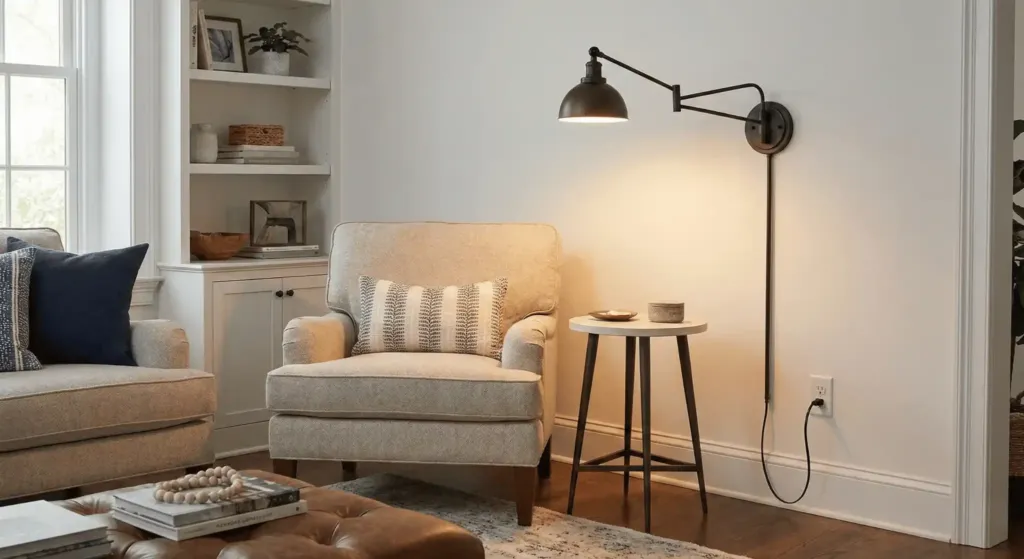
Floor lamps take up valuable square inches. I replaced mine with “plug in” wall sconces. They swing out when I need to read and fold back against the wall when I am done.
This keeps the floor clear and adds a sophisticated touch. Look for sconces with dimmers. Controlling the light level is the easiest way to change the mood of a small space.
16. Edit Your Entryway Drop Zone
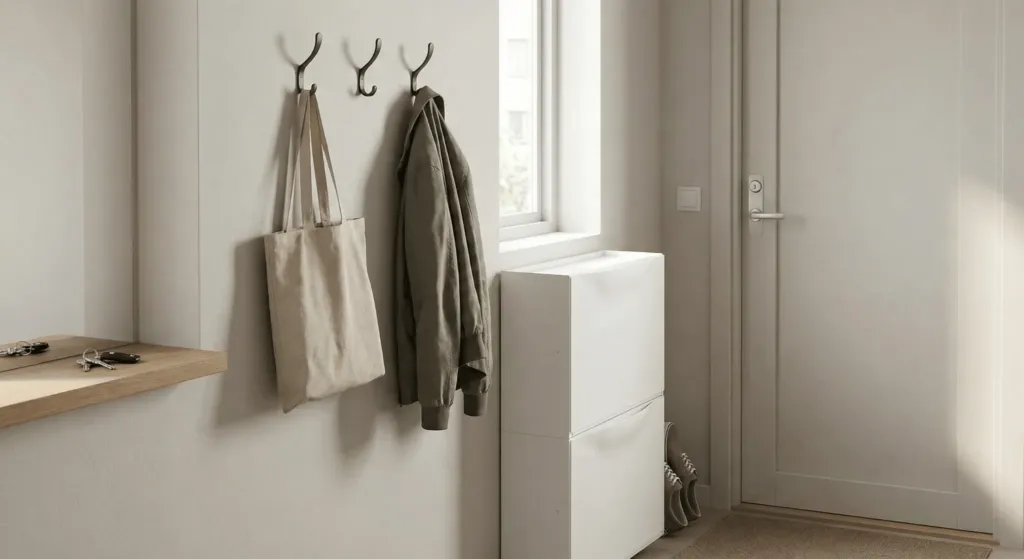
The first three feet of your apartment sets the tone for your day. If you walk into a pile of shoes, you feel stressed. I installed three simple hooks and a small wooden ledge.
One hook for keys. One for a bag. One for a coat. Shoes go into a slim IKEA Trones cabinet. It is only seven inches deep. It fits behind almost any door.
17. Use Vertical Space for Plants
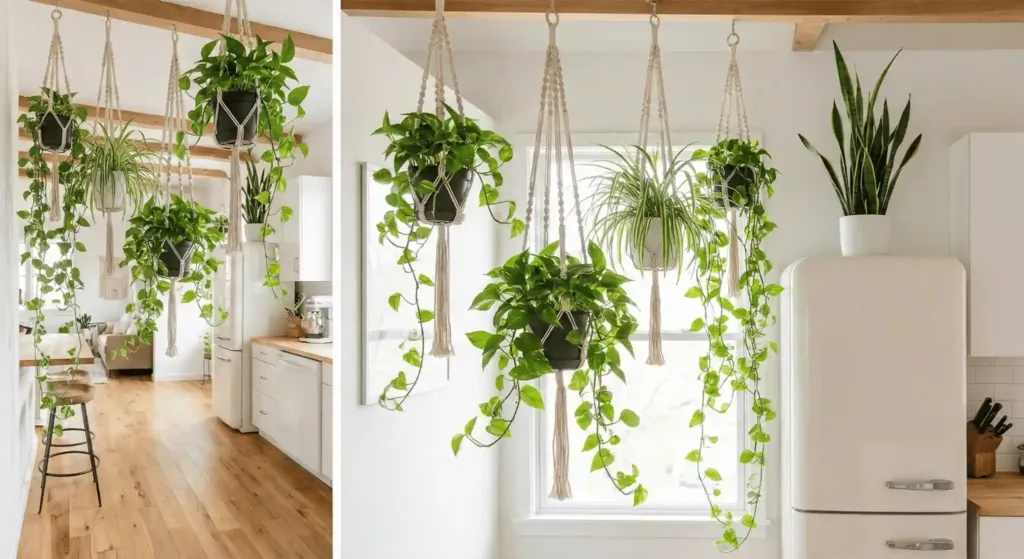
I love greenery, but pots on the floor felt cluttered. I started hanging my Pothos and Spider plants from the ceiling. I also put a tall snake plant on top of my fridge.
Plants improve air quality and add life to a room. By keeping them high, you enjoy the color without sacrificing walking space. Just make sure you can reach them for watering.
18. Switch to Digital Media
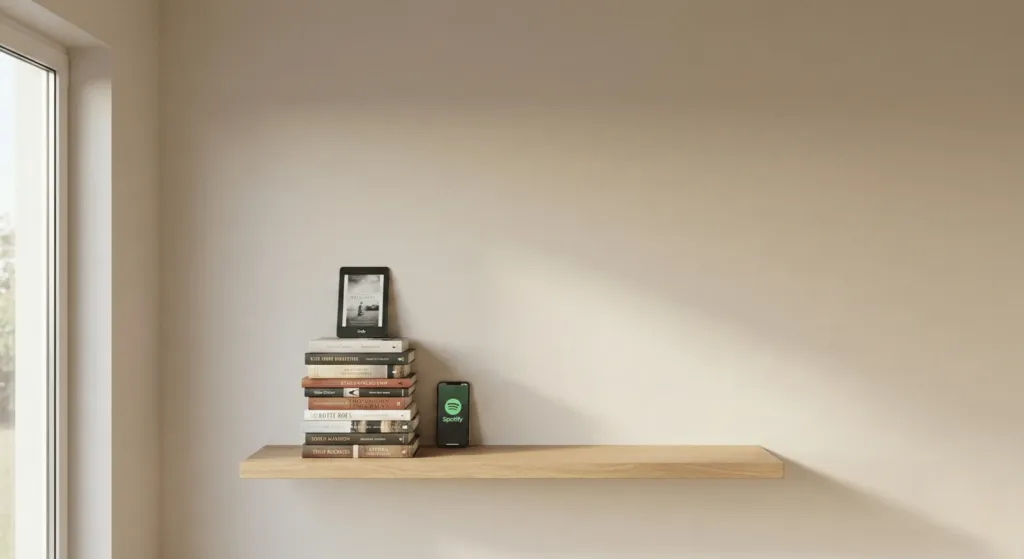
I sold my collection of 300 DVDs and 500 CDs. I kept ten books that truly meant something to me. Everything else moved to my Kindle and Spotify.
This cleared an entire wall of shelving. That wall is now empty. The silence of an empty wall is more beautiful than a collection of plastic cases you rarely touch.
19. Implement a “No Junk Mail” Rule
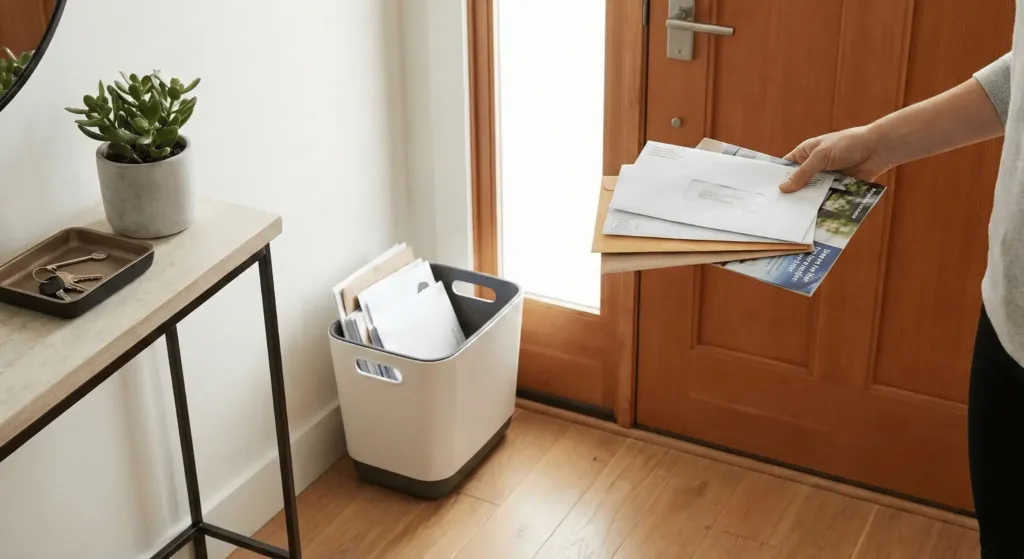
Paper clutter is a silent killer of minimalism. I put a small recycling bin right by the front door. I drop flyers and menus there before they ever hit my kitchen table.
I also spent one hour unsubscribing from physical catalogs. This reduced my incoming paper by 80 percent. Minimalism is as much about what you stop from entering as what you remove.
20. Choose Quality Over Quantity
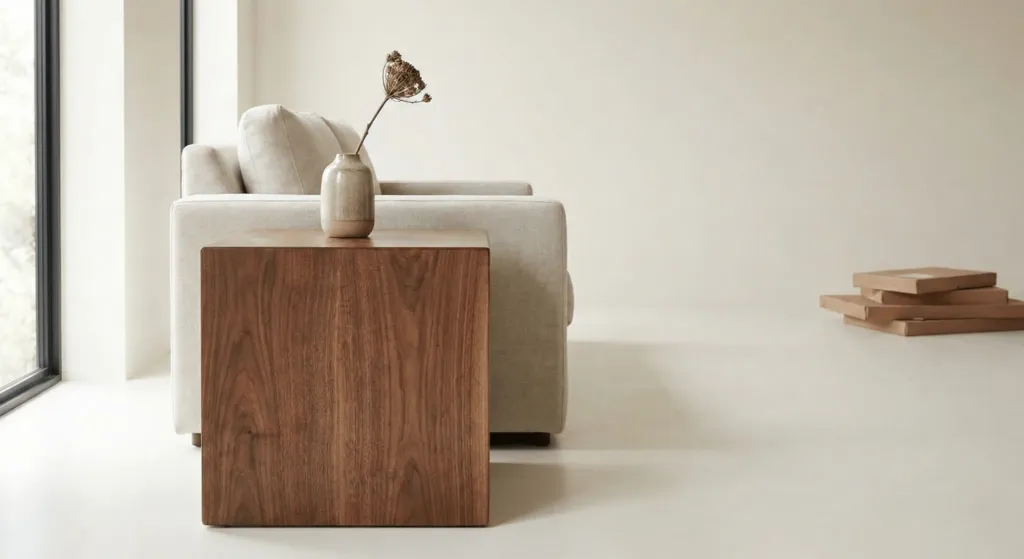
I used to buy $20 side tables from big box stores. They fell apart in a year. Now I wait six months and save for a solid walnut piece.
One beautiful, well made item looks better than five cheap ones. It also has a better resale value. Minimalism is an investment in things that last a lifetime.
21. Leave Some Space Empty
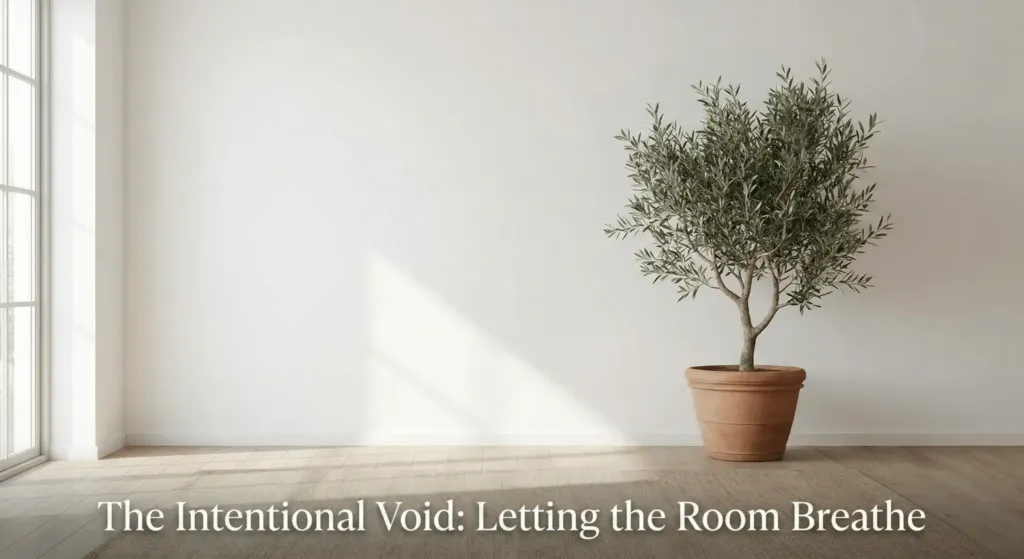
The most important minimalist idea is the “intentional void.” You do not need to fill every corner. You do not need a chair in every nook.
Empty space allows the room to breathe. it allows you to breathe. An empty corner is not a sign of an unfinished home. It is a sign of a disciplined mind.
Add Image Here
Frequently Asked Questions
How do I start minimalist decorating in a small apartment?
Start with your trash. Go through every drawer and remove things that are broken or unused. Do not buy new furniture yet. Clear the surfaces first. You cannot decorate your way out of a clutter problem.
Is minimalist furniture expensive?
It can be. High quality brands like West Elm or Muuto charge a premium for simple designs. However, you can find great pieces at IKEA or thrift stores. Focus on the “lines” of the furniture. Look for legs that are visible and shapes that are simple.
How do I make a minimalist apartment feel cozy?
Use the “Rule of Three” for textures. Combine a soft fabric, a natural wood, and a metal element. Add a single high quality candle or a soft wool throw. Warm lighting is also essential. Avoid “daylight” bulbs which can feel cold.
Can I be a minimalist with kids or pets?
Yes. It just looks different. Use closed storage for toys. Choose performance fabrics that are easy to clean. Minimalism with a family is about having “enough” rather than “nothing.” It actually makes cleaning up much faster.
What are the best colors for a minimalist apartment?
Stick to a base of white or light grey. Add “earth tones” like sage green, terracotta, or sandy beige. These colors are timeless. They do not go out of style like bright “trend” colors.
How much does a minimalist makeover cost?
If you sell your old clutter, it can actually make you money. A basic refresh with new hangers, a few mirrors, and some paint might cost $300 to $500. A full furniture replacement can cost $2000 to $5000 depending on the brands.
What if I live in a rental and cannot paint?
Use large scale art to cover the walls. Use removable “peel and stick” wallpaper. Focus on your furniture and rugs. Good lighting also changes how the wall color looks without needing a paintbrush.
How do I deal with sentimental items?
Keep a “memory box.” Limit yourself to one box. If it doesn’t fit, it doesn’t stay. You can also take high quality photos of sentimental items before donating them. You keep the memory without the physical weight.
Does minimalism save money?
Yes. You stop buying things “just because.” You invest in quality that doesn’t need replacing. Most minimalists find they spend significantly less on “lifestyle” shopping after the first six months.
How do I handle guests in a minimalist home?
Use nesting tables that can be pulled out for drinks. Keep a high quality air mattress or a stylish sofa bed. You do not need a dedicated guest room that stays empty 90 percent of the year.
Conclusion
Minimalist living in an apartment is a journey toward freedom. It took me two years to truly master these 21 ideas. My home is now a place where I actually want to spend time. I no longer feel the urge to “get away” for the weekend because my sanctuary is right here.
Start small. Change your hangers today. Clear your coffee table tonight. You will feel the weight lift off your shoulders immediately. A simple home leads to a simple life. That is the greatest luxury of all.