You walk into a house. The walls are gone. You see the kitchen, the living room, and the dining space all at once. It looks big. It looks bright. But then you live in it. You hear the blender while watching TV. You see the messy dishes from the sofa. Your home feels like a giant, loud box. I have seen this happen too many times.
I spent ten years fixing floor plans that felt like warehouses. In 2022, a client in Seattle spent $200,000 on a renovation. They tore down every wall on the first floor. Three months later, they called me crying. They could not find a quiet place to read. The kids were too loud. The kitchen smells drifted into the bedroom upstairs. This is the dark side of open design.
You do not need to choose between a cramped house and a noisy hall. You can have both flow and function. I will show you how to master this layout. These 21 ideas come from real failures and big wins. We will look at how to define zones without building walls. We will fix the noise. We will make your home feel like a professional designed it. This is about more than just looks. It is about how you feel when you wake up and walk to your coffee machine.
Executive Summary
Modern homes need a balance of open space and private nooks. This guide gives you 21 specific ways to get that balance. You will find ways to use rugs, lighting, and furniture to create “rooms” without barriers. I cover the costs for these fixes. I also list the tools you need to plan your space. We look at common mistakes like “postage stamp rugs” and “airport lighting.” You will see how to fix sound issues with soft materials. We also look at the “Invisible Kitchen” trend for 2025. By the end, you will have a plan to make your open home feel warm, quiet, and organized.
How do you define zones in an open floor plan?
The biggest mistake people make is thinking open means empty. If you just push your furniture against the walls, you lose the “room” feel. You need to create invisible borders.
1. Large Scale Area Rugs
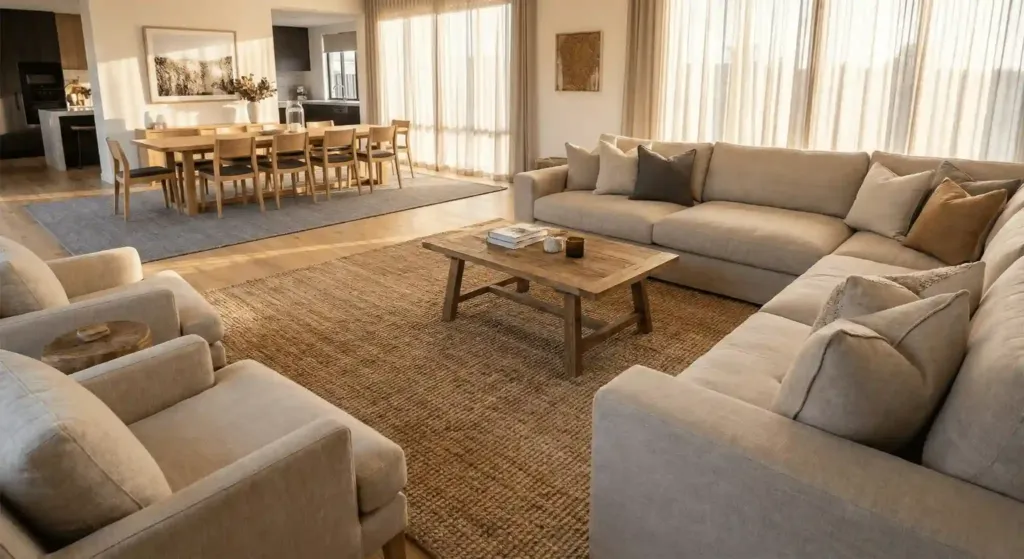
Rugs are the most vital tool for zoning. A rug acts as an island for your furniture. If your sofa legs are not on the rug, the rug is too small. I once visited a luxury condo where the owner used small mats under each chair. It looked like a series of lily pads in a pond. It was a mess.
Go big. For a living area, a 9×12 or 10×14 rug is usually the minimum. In my 2023 project in Austin, we used a custom jute rug to anchor a massive sectional. It immediately stopped the “floating” feel of the room.
Pro Tip: Use different textures for different zones. Use a plush wool rug for the lounge. Use a flatweave or natural fiber rug for the dining area. This tells your brain you are moving from one “room” to another.
Cost: $500 to $4,000 depending on material. Brand Suggestion: Loloi or Jaipur Living offer great sizes for the price.
2. Zoned Lighting Plans
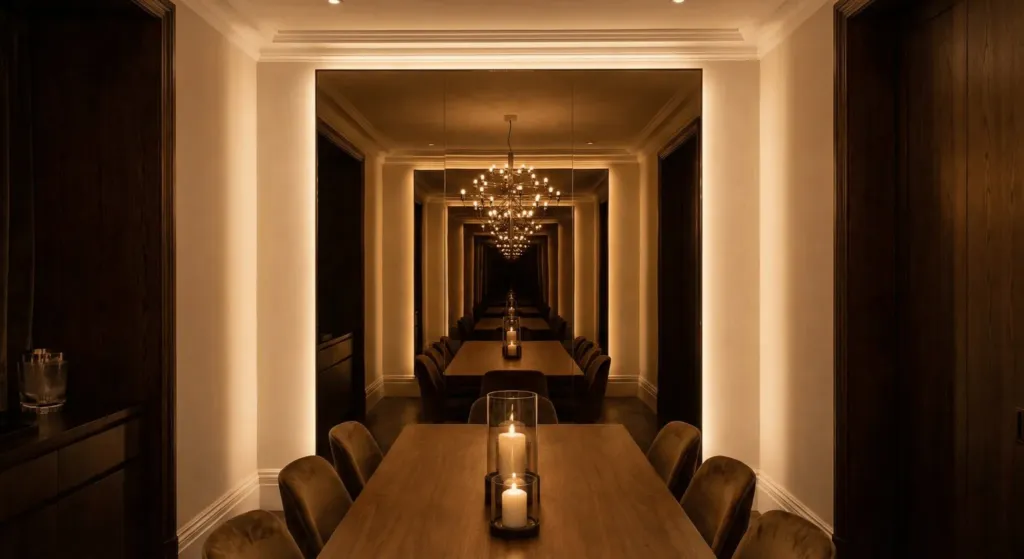
Stop using just recessed cans in the ceiling. If every light is on one switch, your home feels like a grocery store. You need layers. I call this the “Three Layer Rule.”
First, you have your general lights. Second, you have task lights like pendants over the kitchen island. Third, you have accent lights like floor lamps by a chair. In a 2024 remodel, we installed three separate dimmers for one large room. When the sun went down, the owners could dim the kitchen and brighten the living nook. It changed the mood instantly.
Failure Story: I once worked on a house where the contractor put all 24 ceiling lights on one switch. It was blinding. We had to rip out the drywall to add zones. Do not skip the wiring plan.
Tools: Use the Lutron Caseta system for smart dimming control.
3. Double Sided Fireplaces
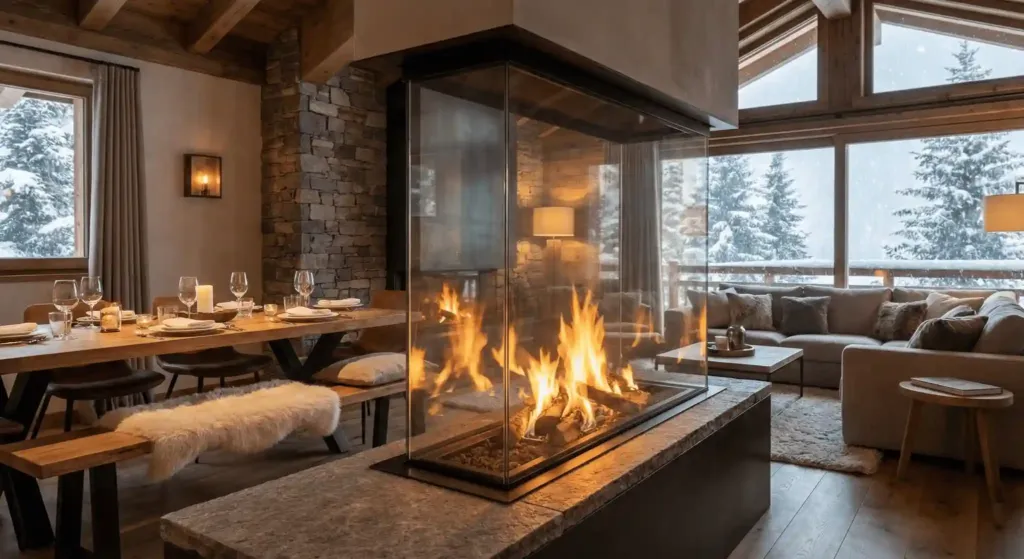
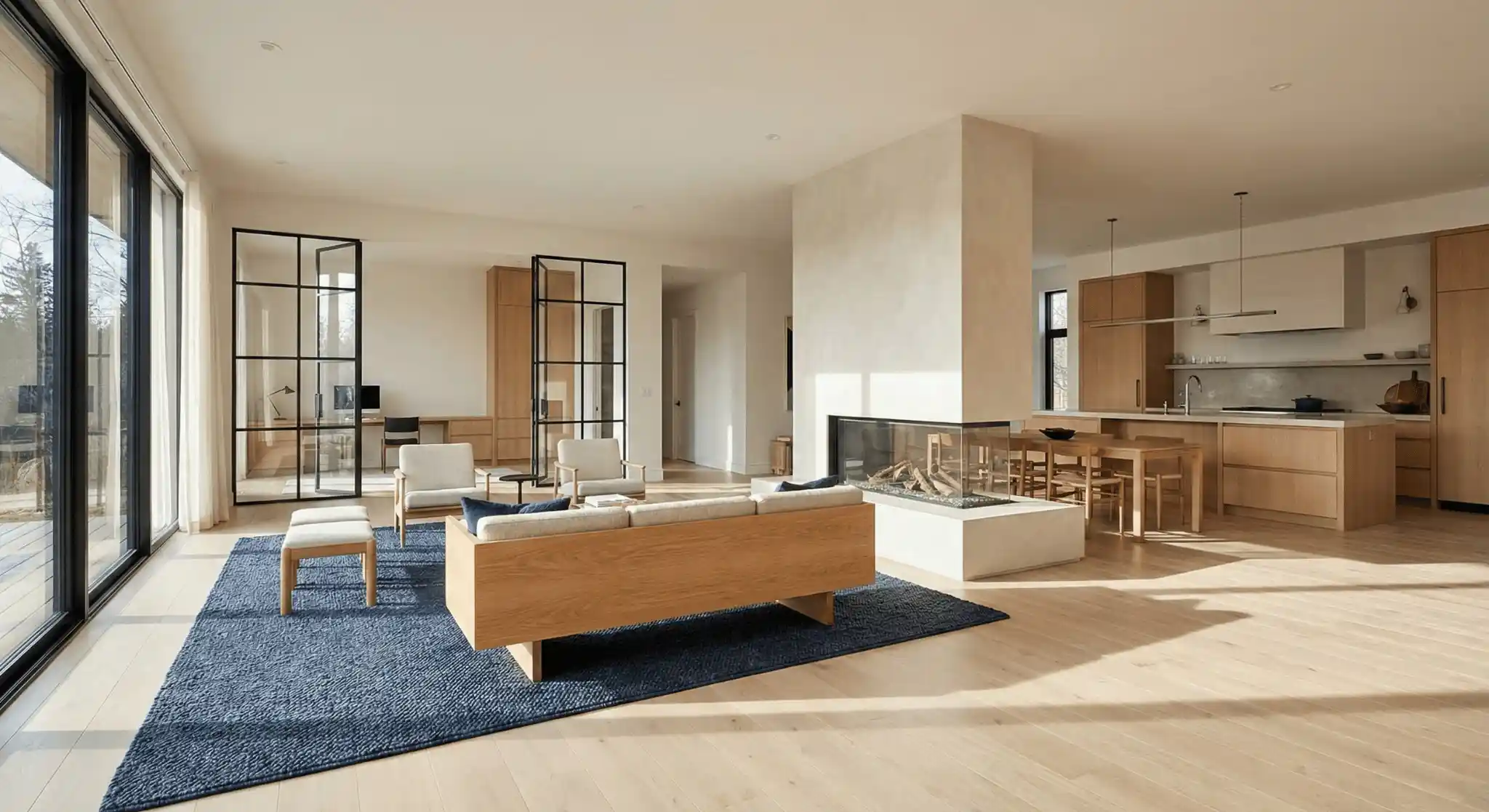
A fireplace in the middle of a room is a bold move. It creates a physical break without blocking the view. I love using these between a dining room and a living room. You get the warmth and the look from both sides.
In a mountain home I designed, we used a glass-enclosed gas fireplace. It acted as a transparent wall. It gave the owners a sense of privacy while they ate dinner. But they could still see the snow falling through the living room windows.
Cost: $6,000 to $12,000 for installation and venting. Brand: Heat & Glo has excellent see-through models.
4. Glass Partition Walls
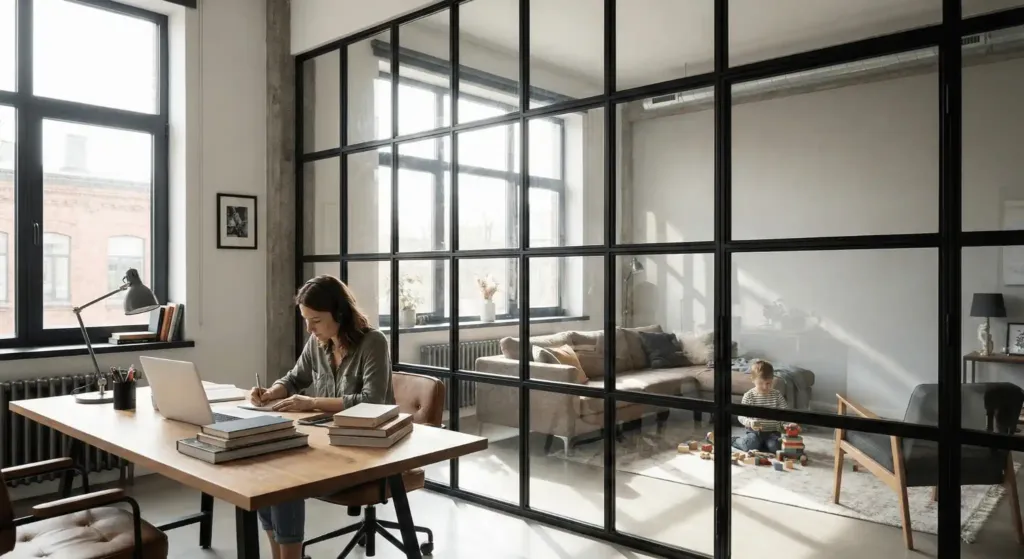
Black steel glass walls are the “it” item for 2025. They give you the “open” look but stop the “noise” problem. I call this “Broken Plan” living. You can see the whole house, but you cannot hear the dishwasher.
I used this in a small loft for a writer. She needed to see her kids, but she needed silence to work. We put in a floor-to-ceiling glass wall with a sliding door. It kept the light flowing but cut the noise by 40 decibels.
Note: Keep the glass clean. Fingerprints will ruin the look fast.
5. Floor to Ceiling Shelving
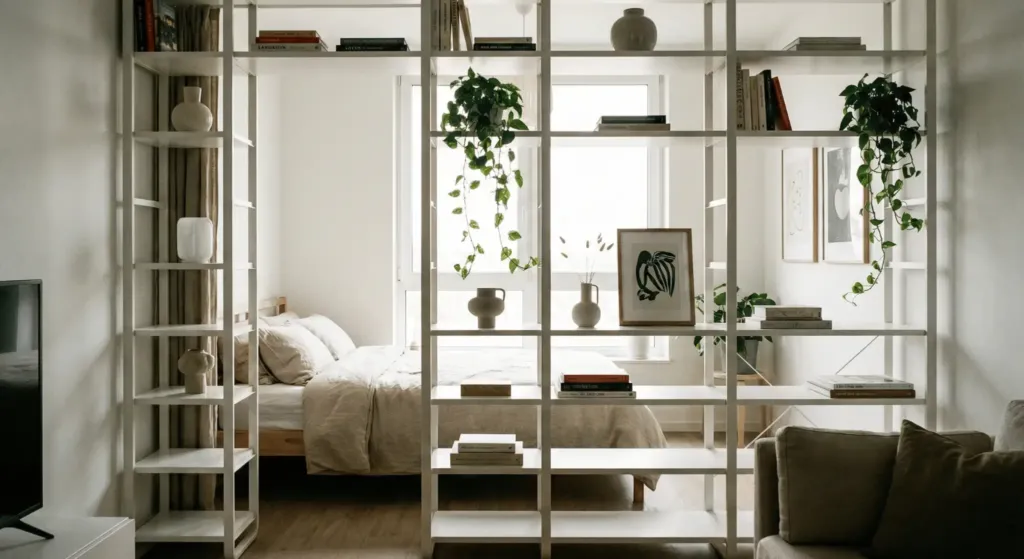
Bookshelves are not just for books. They are walls that breathe. Use an open-back shelving unit to divide an entry from a living room. It holds your keys and bags but lets you see into the house.
I tell my clients to avoid “cluttering” these shelves. If you fill every hole, it becomes a heavy wall. Leave 30% of the space empty. Use a mix of books, plants, and art.
Case Study: In a 800 sq ft apartment, we used the IKEA Elvarli system to create a “bedroom” nook. It cost under $600 and felt like a custom build.
What are the best colors for open layouts?
Color is how you tie everything together. If you change colors at every corner, the house feels choppy. If you use one color everywhere, it feels flat.
6. The 60-30-10 Color Rule
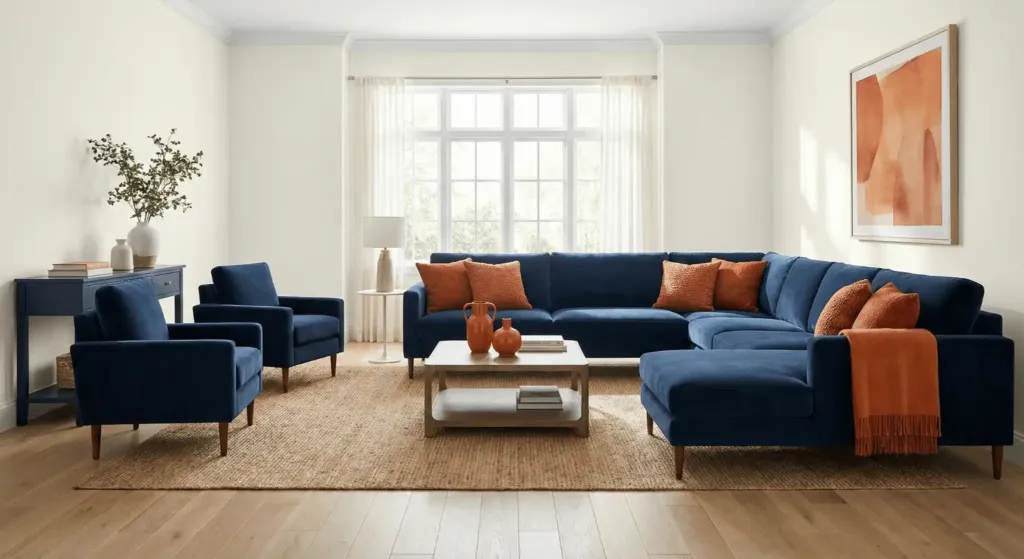
This is a classic rule for a reason. Use one neutral color for 60% of the space. This is usually your walls and floors. Use a secondary color for 30% of the space. This is your furniture and rugs. Use an accent color for 10%. This is your pillows, art, and vases.
In a recent project, we used “Swiss Coffee” by Benjamin Moore for the 60%. We used navy blue for the 30%. We used burnt orange for the 10%. It felt cohesive but not boring.
7. Continuous Flooring Materials
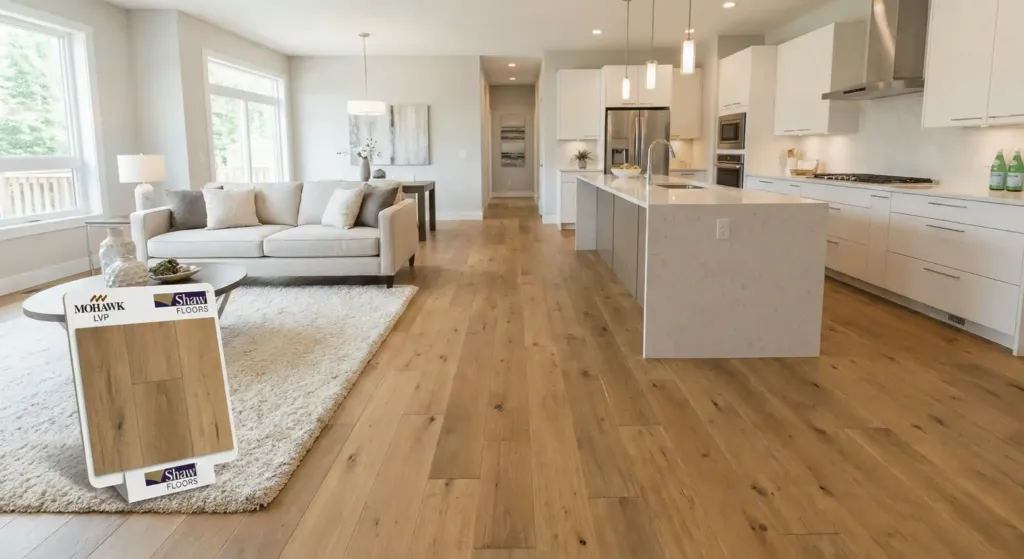
Never change your flooring between the kitchen and the living room in an open plan. It creates a “line” that cuts the room in half. It makes the house look smaller.
I always suggest engineered hardwood or luxury vinyl plank (LVP) for the whole floor. Modern LVP is waterproof. You can put it in the kitchen without worry. I saw a house last month with tile in the kitchen and wood in the living room. The transition strip was a huge trip hazard. It looked dated.
Brand: Mohawk or Shaw offer high-end LVP that looks like real oak.
8. Ceiling Height Variations
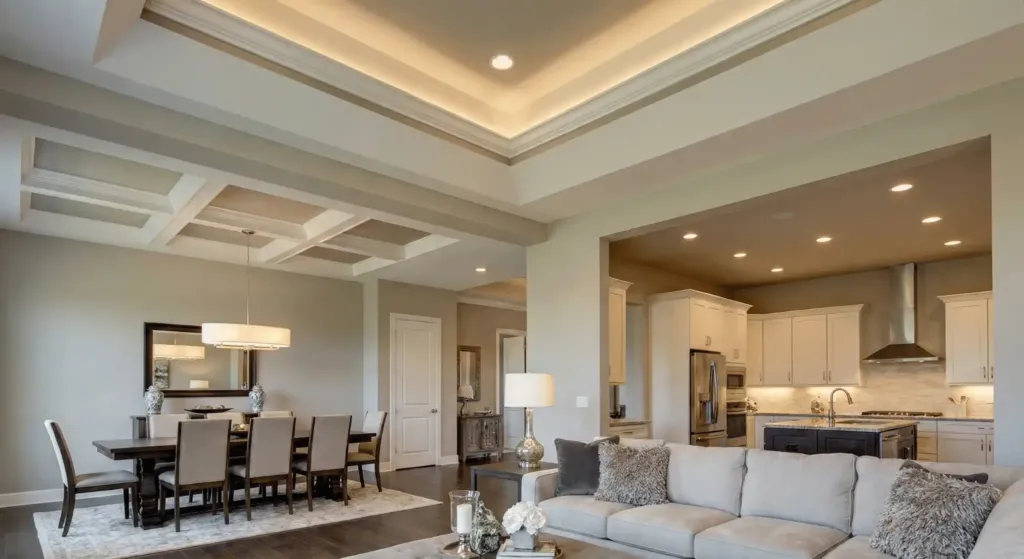
If you want to define a room, look up. A coffered ceiling over the dining table tells people where to sit. A tray ceiling in the living room adds drama.
I worked with a builder who lowered the kitchen ceiling by six inches compared to the living room. That small change made the kitchen feel like a separate, cozy “work zone.” It did not need a single wall to do it.
9. Strategic Furniture Placement
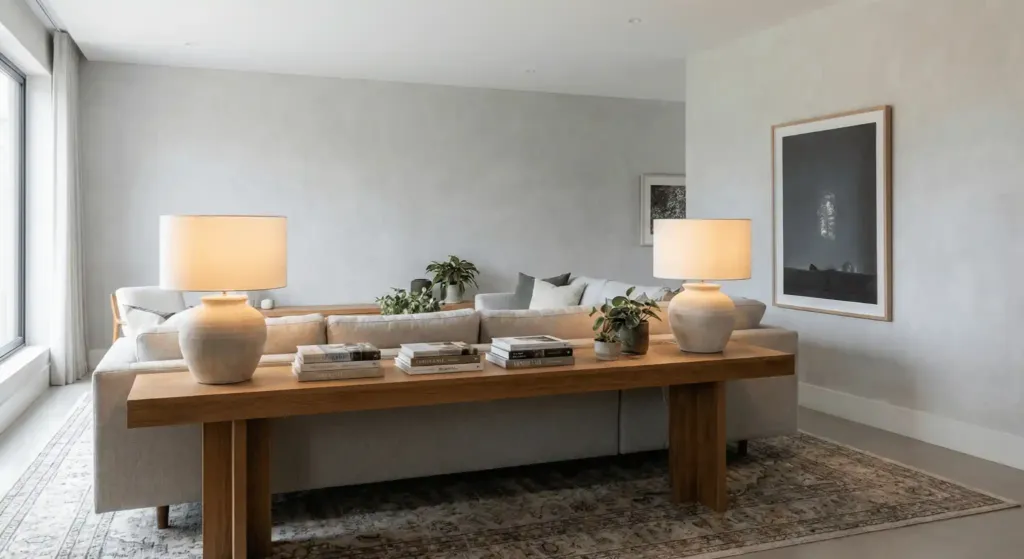
Do not push your sofa against the wall. This is the “waiting room” look. Float your furniture in the center of the space. The back of a sofa can act as a wall.
In my own home, I put a long console table behind the sofa. It holds lamps and books. This creates a clear walkway behind the seating area. It defines the “hallway” without needing a hallway.
10. The Invisible Kitchen Concept
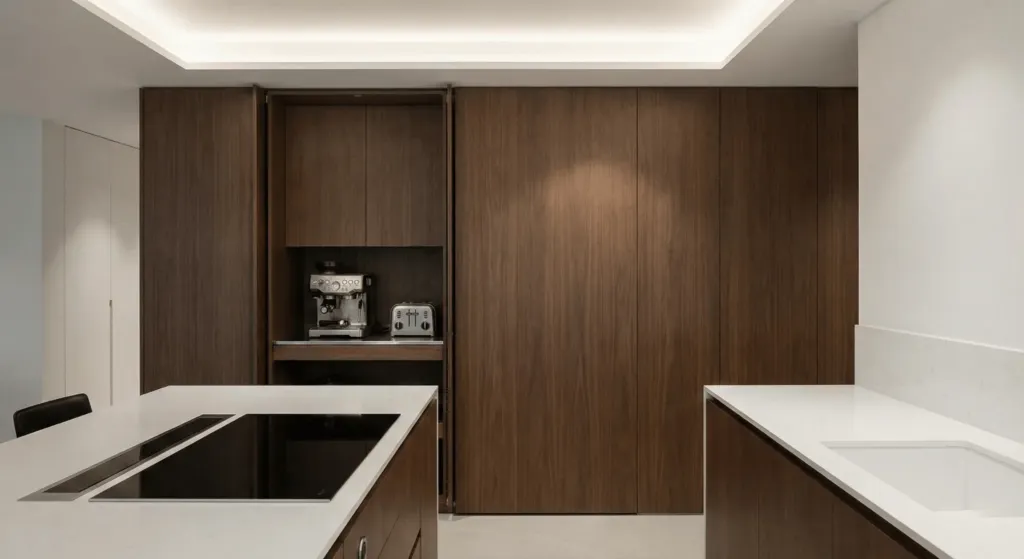
Kitchens are messy. In an open plan, that mess is always on display. The “Invisible Kitchen” uses cabinets that look like wall panels. You hide the fridge. You hide the dishwasher. You might even hide the stove behind sliding doors.
A client in Chicago hated seeing her toaster. We built a “garage” for all small appliances. When she finished cooking, she shut the doors. The kitchen looked like a sleek wood wall. This is great for people who entertain a lot.
11. Indoor-Outdoor Biophilic Flow
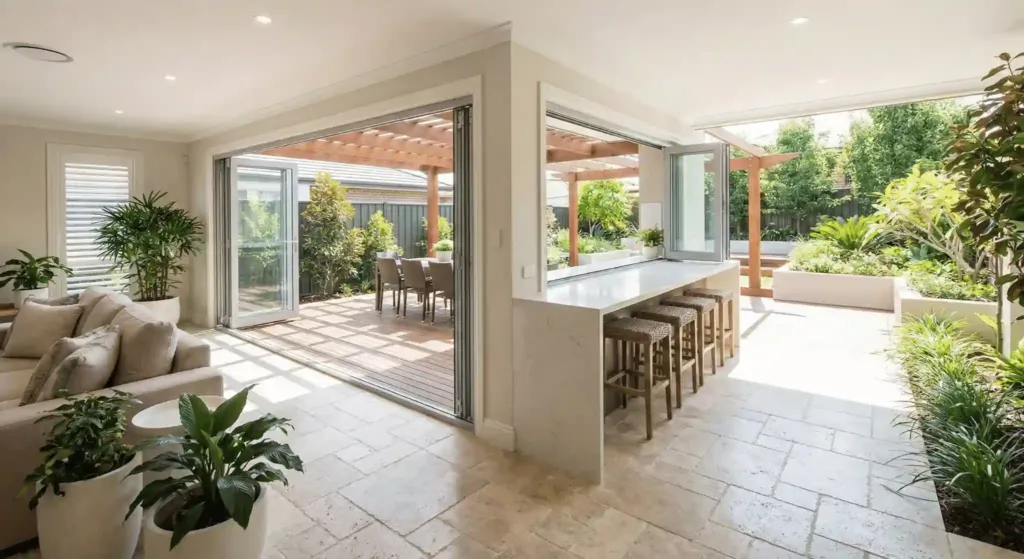
Open concept should also open to the outside. Use large sliding glass doors to connect your living room to a deck. Use the same color for your indoor floor and your outdoor pavers.
I once did a house where the kitchen island extended through a window to become an outdoor bar. It was the ultimate party setup. It made the 1,500 sq ft house feel like 3,000 sq ft.
Cost: Folding glass doors (like NanaWall) start at $1,000 per linear foot.
How do you fix acoustics in a big open room?
Sound is the enemy of open living. Sound waves bounce off hard floors and tall ceilings. You need to “soak up” the noise.
12. Acoustic Ceiling Panels
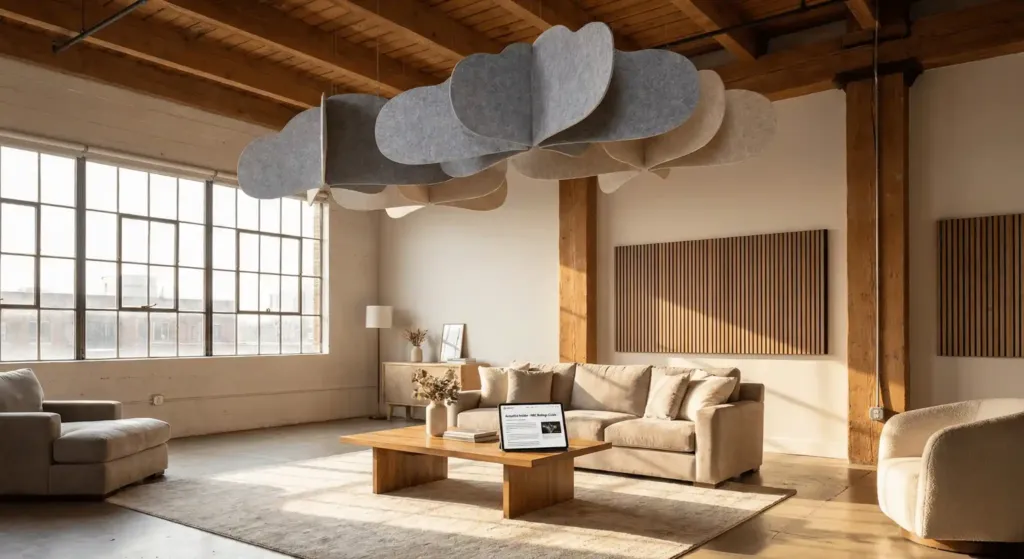
You do not need ugly foam squares. Modern acoustic panels look like wood slats or felt art. In a high-ceiling loft, we installed felt “clouds” hanging from the roof. They looked like art but stopped the echo.
If you have a loud family, this is not optional. I once sat in a beautiful open kitchen where I could hear a person whispering 30 feet away. It was creepy.
Tool: Use the “Acoustics Insider” guide to find NRC ratings for materials.
13. Soft Window Treatments
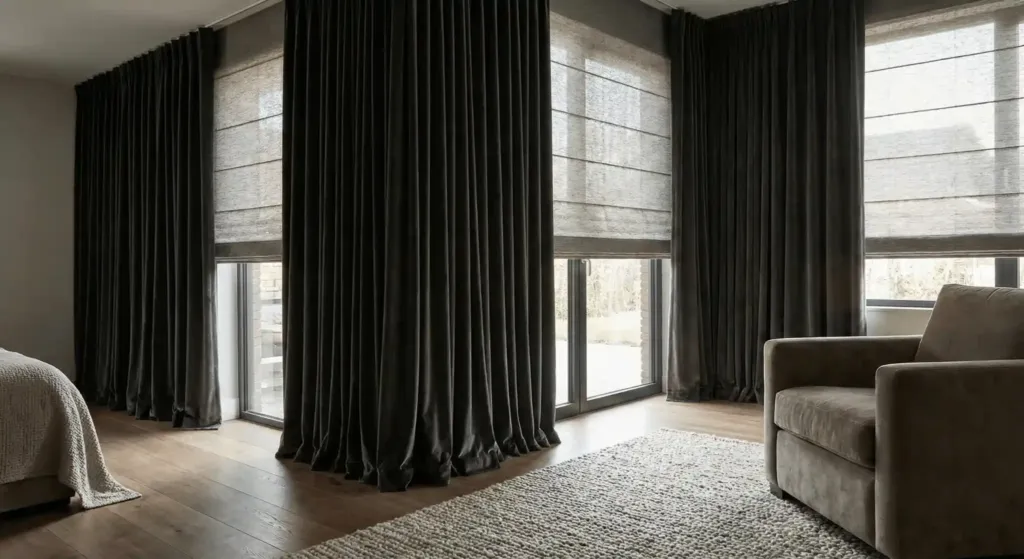
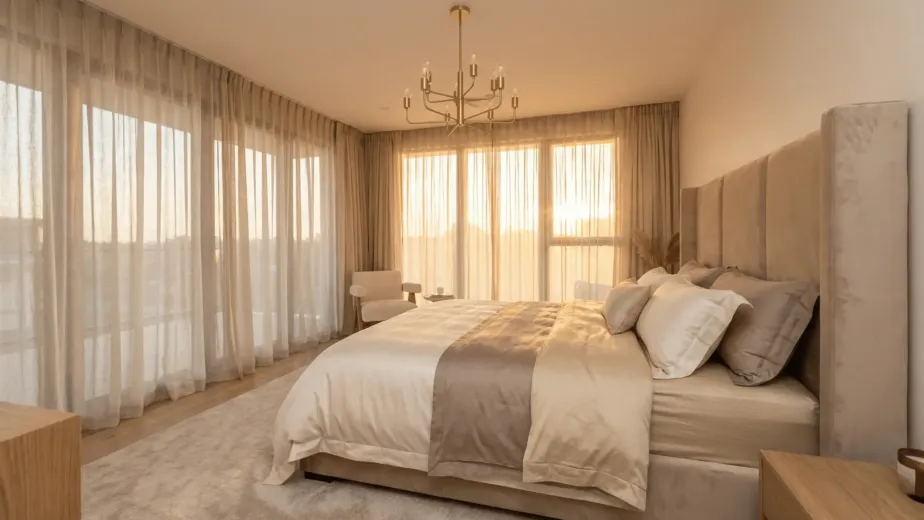
Blinds are fine, but curtains are better for sound. Floor-to-ceiling drapes add massive amounts of fabric to a room. This fabric eats sound.
I suggest velvet or heavy linen. Even if you never close them, they work as “sound sponges.” In a glass-heavy modern home, we used motorized Lutron shades with a thick weave. It made the room feel quiet and expensive.
14. Half Walls with Planters
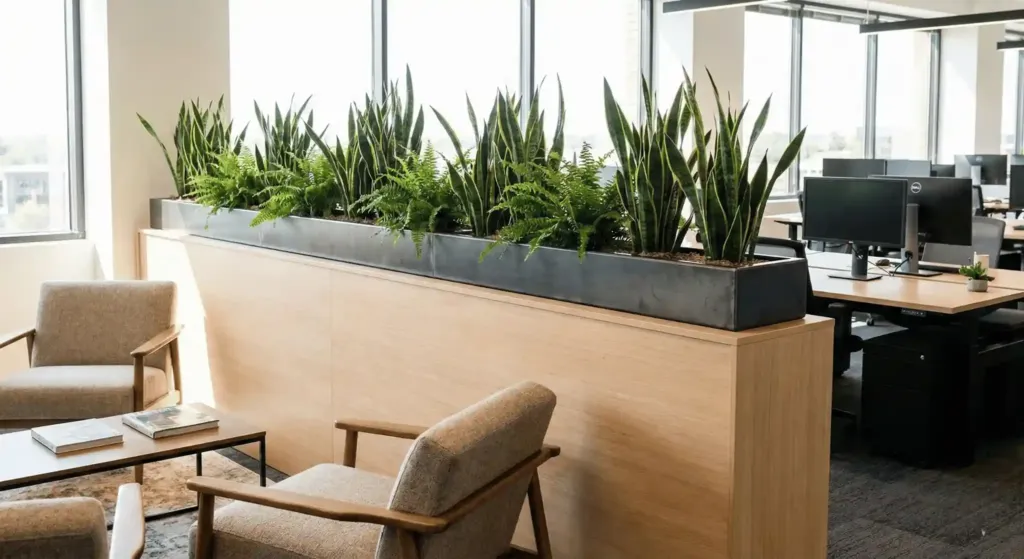
The 1970s had “pony walls.” They are back, but better. Use a waist-high wall to divide a space. Top it with a long planter box.
Plants add life and help clean the air. They also act as a soft barrier. I used this in a tech office to separate the lounge from the desks. It felt private but stayed bright.
15. Sunken Living Areas
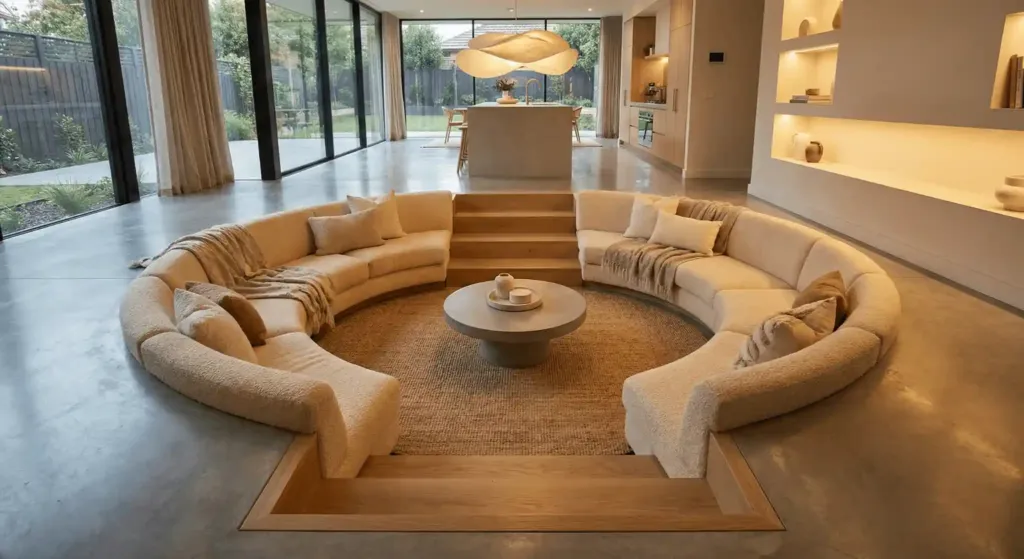
Also known as “Conversation Pits.” These are hard to add to an existing home, but great for new builds. By dropping the floor two steps, you create a room within a room.
I love these because you can sit on the floor and the “walls” are just the rest of the house. It feels very safe and cozy. My friend built one with a built-in U-shaped sofa. It is the only place people want to hang out.
16. Statement Staircases
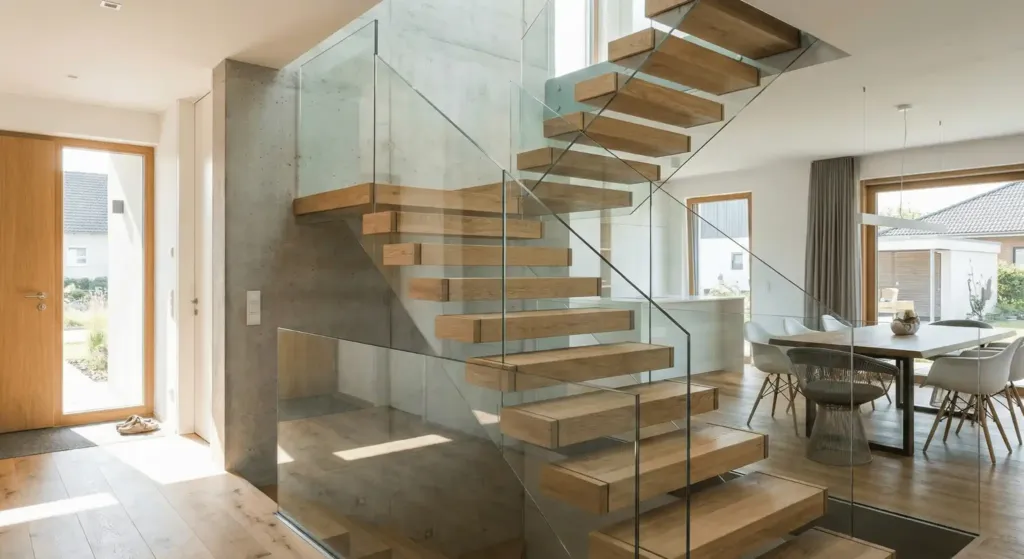
In an open plan, the stairs are a sculpture. Do not hide them. Use glass railings or open risers. This keeps the sightlines clear.
I saw a home where the stairs were made of thick oak planks “floating” out of the wall. It was the first thing you saw when you walked in. It acted as a divider between the dining room and the entrance.
17. Multi-Functional Kitchen Islands
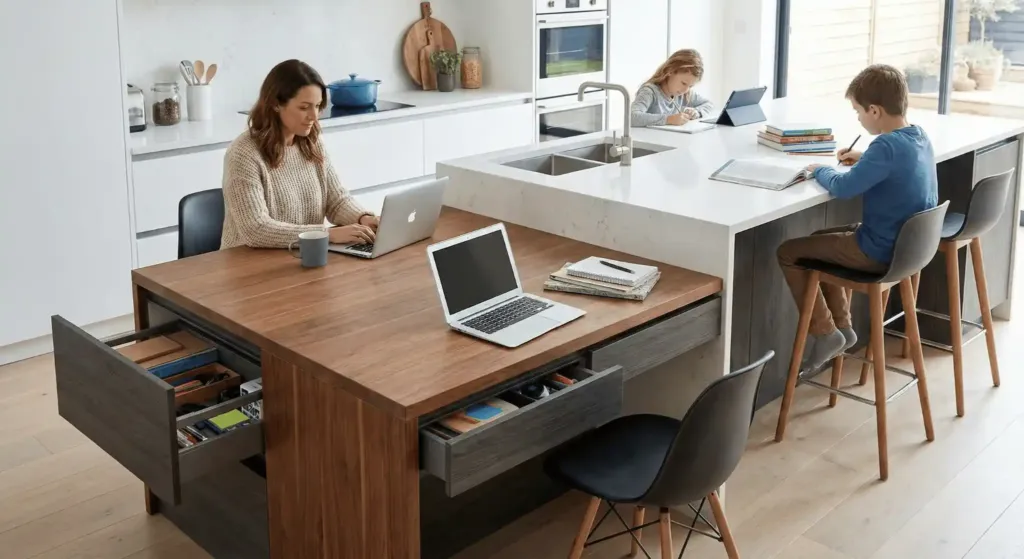
Your island is the heart of the home. But don’t just make it a big box. Give it levels. One level for prep. A lower level for a built-in dining table.
In a 2023 case study, we added a “waterfall” edge to an island. One side had bar stools for coffee. The other side had deep drawers for a home office setup. The mom could work on her laptop while the kids did homework on the other side.
18. Hidden Storage Walls
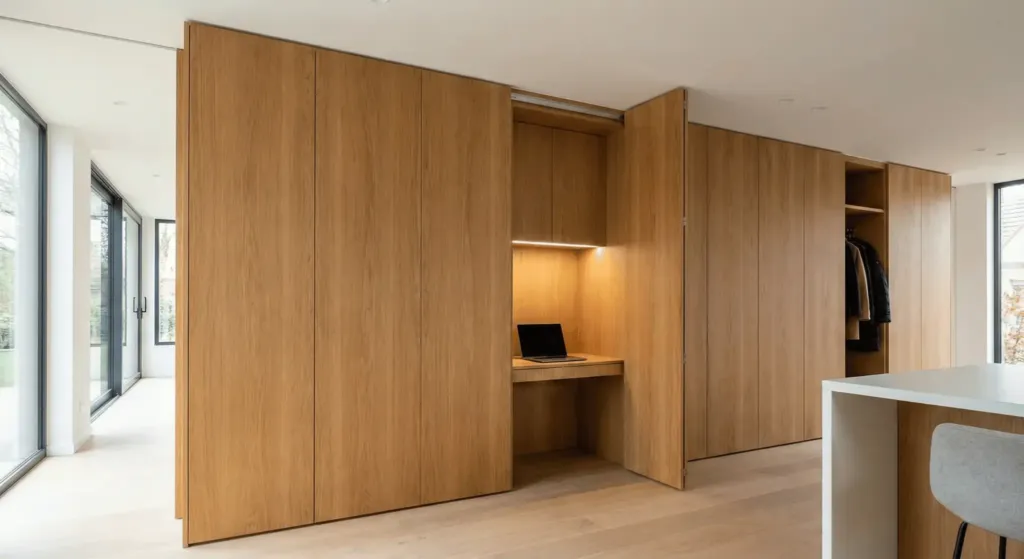
When you have no walls, you have no closets. You need to build storage into your “dead” spaces. I like using “Push-to-open” cabinets that have no handles. They look like a flat wall.
I once designed a 15-foot wall of these cabinets. It held the pantry, the coats, the vacuum, and a hidden desk. When closed, it looked like a beautiful oak feature wall.
19. Industrial Structural Beams
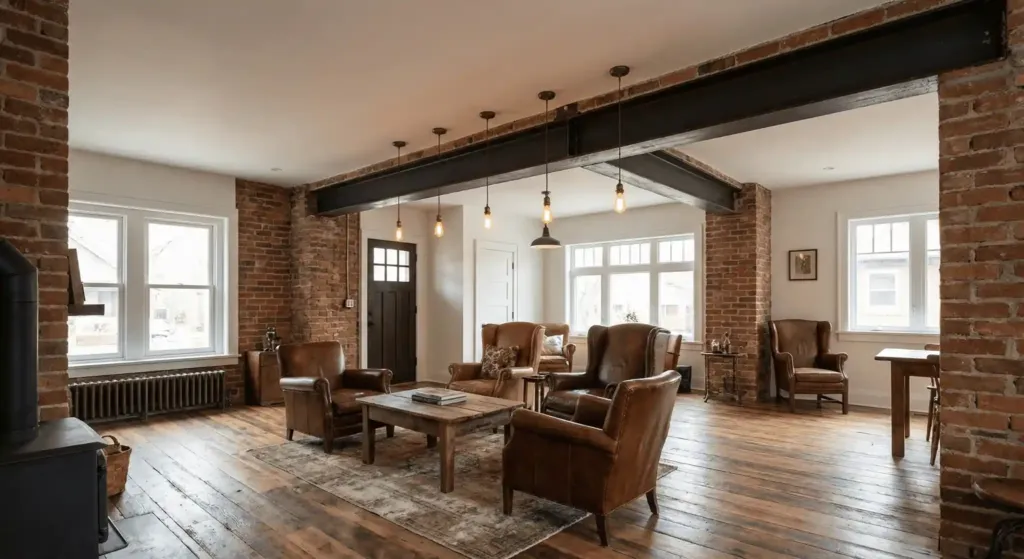
If you remove a wall, you often need a beam. Do not hide it in the ceiling. Wrap it in wood or paint it black. It adds “bones” to the room.
I worked on a 1920s bungalow where we opened the whole floor. We left the original steel beam exposed. It gave the room a sense of history and strength. It also provided a natural place to hang pendant lights.
20. Pocket Doors for Flexibility
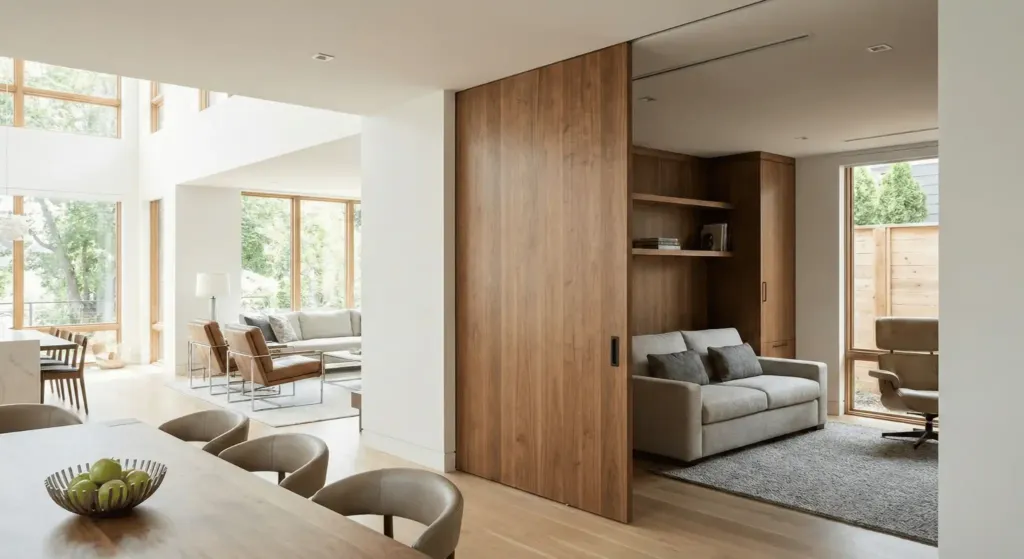
Total open concept is a lie. Sometimes you want to hide the mess or have a private talk. Large pocket doors that slide into the walls are the answer.
I call these “The Magic Walls.” You can have a 10-foot opening most of the time. When guests stay over, you slide the doors shut and turn the “den” into a bedroom.
21. Mirror Placement for Depth
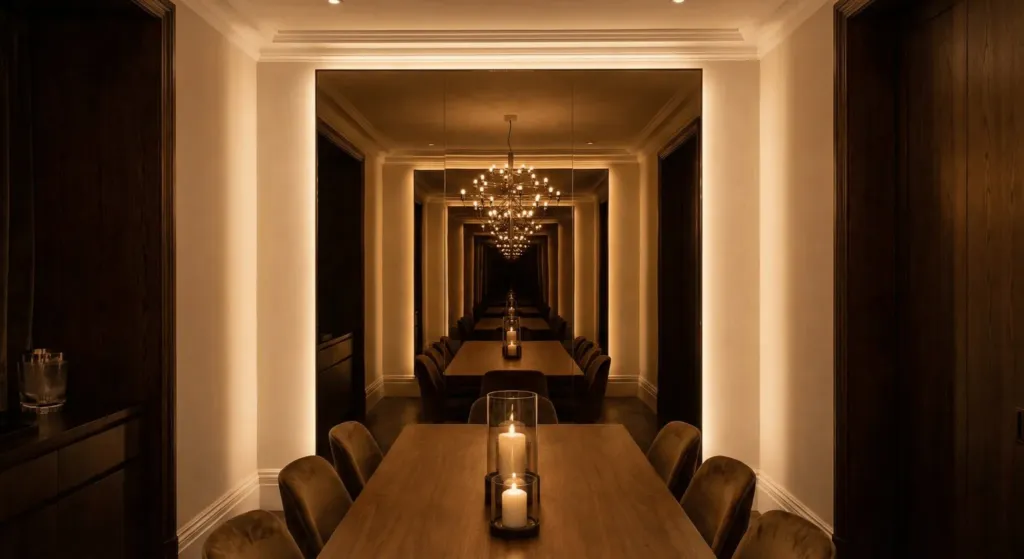
Mirrors are not just for bathrooms. A floor-to-ceiling mirror at the end of an open room makes the space look infinite. It also bounces light into dark corners.
I used a smoked bronze mirror in a dining room last year. It didn’t just reflect the room. It added a warm, moody glow. It made the narrow room feel twice as wide.
FAQ: Your Open Concept Questions Answered
1. Is open concept going out of style in 2025?
No. But it is changing. People want “Broken Plan” now. This means large spaces with some glass walls or sliding doors. People realized they need privacy for Zoom calls and quiet time. Pure “wall-less” living is less popular than it was five years ago.
2. How do I stop kitchen smells from filling the whole house?
You need a high-power range hood. Look for a “CFM” rating of at least 600 or 900. Also, keep your hood running for 10 minutes after you finish cooking. High-quality air purifiers like Molekule or Blueair also help a lot.
3. Will an open floor plan lower my home value?
Usually, no. Most buyers still want a bright, open kitchen and living area. However, if you remove too many bedrooms to make an open space, you will lose money. Always keep at least three defined bedrooms in a family home.
4. How can I make a big open room feel “cozy”?
Use the “Rule of Three” for textures. Mix wood, fabric, and metal in every zone. Use warm light bulbs (2700K). Avoid white walls if you don’t have enough furniture. A soft “Greige” or warm white makes a big room feel smaller and safer.
5. What is the cheapest way to divide an open room?
Rugs and plants. You can buy a large jute rug and a 6-foot Fiddle Leaf Fig tree for under $300. Place the tree at the corner of your “living zone” to create a natural visual break.
6. Do I need a professional designer for this?
If you are moving walls, you need a structural engineer. For the layout, you can use apps like RoomSketcher. If you feel overwhelmed by color and scale, a designer can save you from making a $5,000 “bad sofa” mistake.
7. How do I handle the TV in an open plan?
Don’t make the TV the only focal point. I suggest using a “Frame TV” that looks like art when it is off. Or, put the TV on a swivel mount so you can see it from the kitchen or the sofa.
8. What flooring is best for dogs in an open home?
Luxury Vinyl Plank (LVP). It is scratch-proof and waterproof. Hardwood gets ruined by dog claws and “accidents” fast. LVP also has a bit of grip so the dog doesn’t slide around.
9. How do I choose a color for a big open space?
Pick one “hero” color. Use it on a large rug or a single accent wall. Keep everything else neutral. If you use too many bright colors, your eyes will get tired.
10. How do I organize an entry with no hallway?
Use a “Console and Mirror” setup. Put a slim table near the door. Add a bowl for keys and a basket under the table for shoes. This creates a “foyer” feel in a wide-open room.
11. Can I have a home office in an open plan?
Yes, but you need “Visual Silence.” Put your desk behind a bookshelf or a tall plant. Use noise-canceling headphones. If you have the budget, a glass partition is the best fix.
12. What are the best brands for open concept furniture?
West Elm and Article are great for “floating” sofas that look good from the back. Restoration Hardware is good for large-scale rugs. Room & Board has excellent slim console tables.
Conclusion
Open concept living is a journey. It is not just about tearing down walls. It is about building a space that fits your life. I have seen people fail by being too minimal. I have seen them fail by being too messy. The secret is in the “zones.”
Use the 21 ideas here to look at your home with fresh eyes. Start with a rug. Fix your lighting. Add some plants. You will find that your “loud box” starts to feel like a sanctuary. My client in Seattle? We added three glass partitions and five massive rugs. Now, she says it is her favorite place on earth. You can get there too.