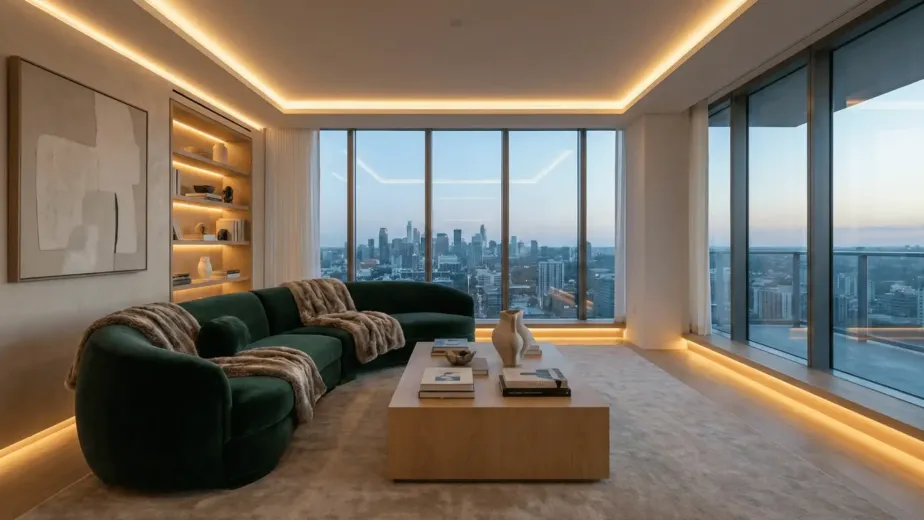
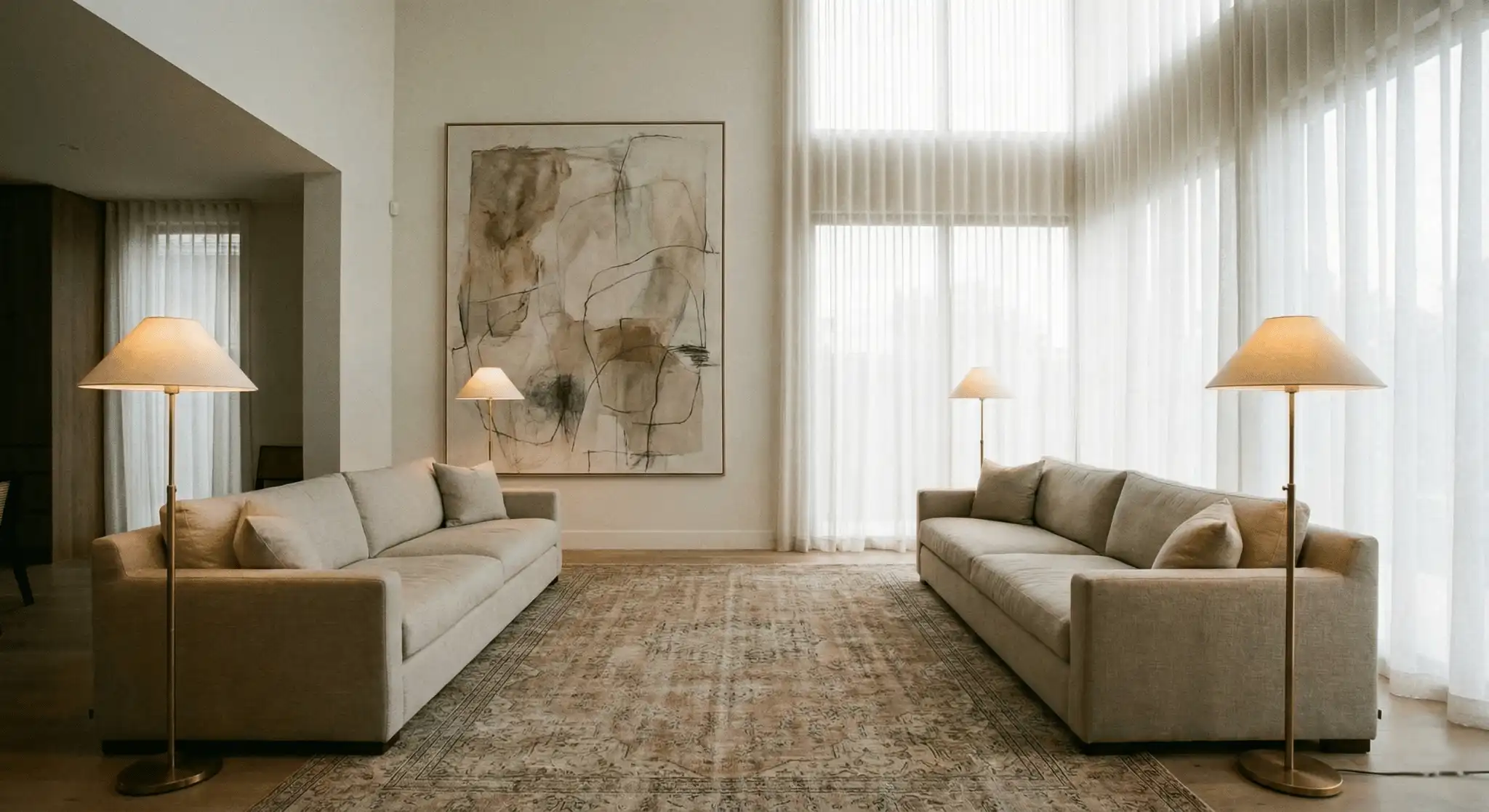
I spent three years living in a rental that felt like a beige box. I wanted that high-end, Nancy Meyers movie aesthetic, but my bank account said otherwise. I tried buying cheap, trendy furniture from big-box stores. Within six months, the veneer peeled and the cushions sagged. It looked cheap because it was cheap.
Everything changed when I stopped buying “stuff” and started studying “structure.” Luxury isn’t about the price tag on a chair. It is about how light hits a wall, the weight of a curtain, and the scale of a rug. I transformed that apartment for under $2,000, and my landlord asked for my decorator’s number when I moved out. This guide shares the exact 25 strategies I used to bridge the gap between a tight budget and a five-star home.
Executive Summary
You can achieve a luxury home without a six-figure renovation. This guide breaks down 25 actionable ideas that focus on high-impact visual changes. We will cover architectural additions, lighting secrets, and the art of the “high-low” mix.
What you will gain:
- A roadmap to prioritize spending on items that offer the highest ROI.
- Specific DIY projects that add thousands in perceived value for under $100.
- A list of 10+ real tools and brands that professional designers use to save money.
- Strategies to avoid the “cheap” look of fast-furniture trends.
Most homeowners fail because they try to decorate a whole room at once. I recommend a “layering” approach. Start with paint and lighting, then move to textiles. Expect a full room transformation to take 4-8 weeks if you are sourcing second-hand items.
1. Install Oversized Crown Molding
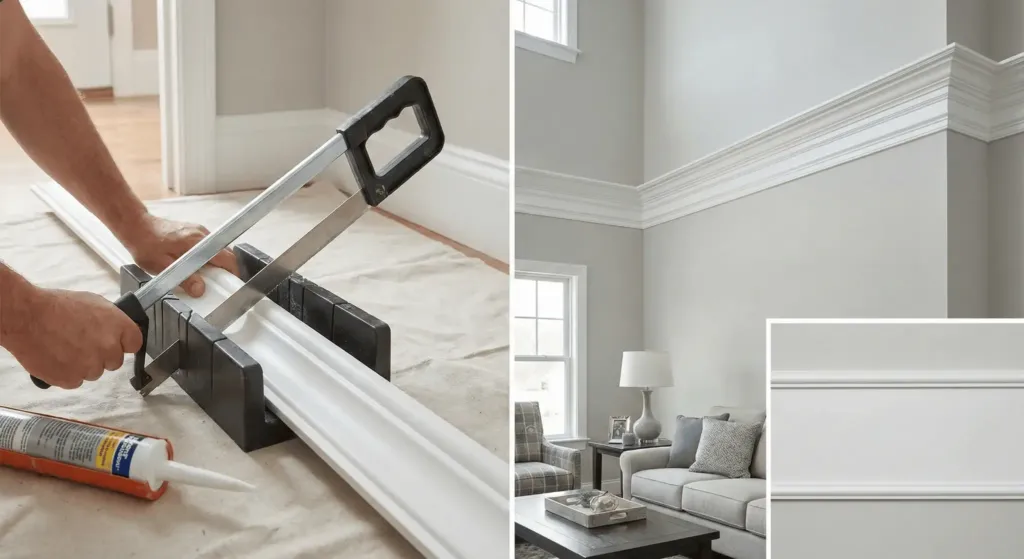
Standard builder-grade molding is often too thin. It looks like an afterthought. High-end homes use thick, architectural trim that draws the eye upward. You do not need a carpenter for this.
I used a lightweight polyurethane molding from Architectural Depot. It is easier to cut than wood and looks identical once painted. Use a miter box and some construction adhesive. If you cannot afford thick molding, install two thin strips of trim two inches apart. Paint the wall between them the same color as the trim. This creates the illusion of a massive, custom architectural feature for the price of a few boards.
2. Apply the “Color Drenching” Technique
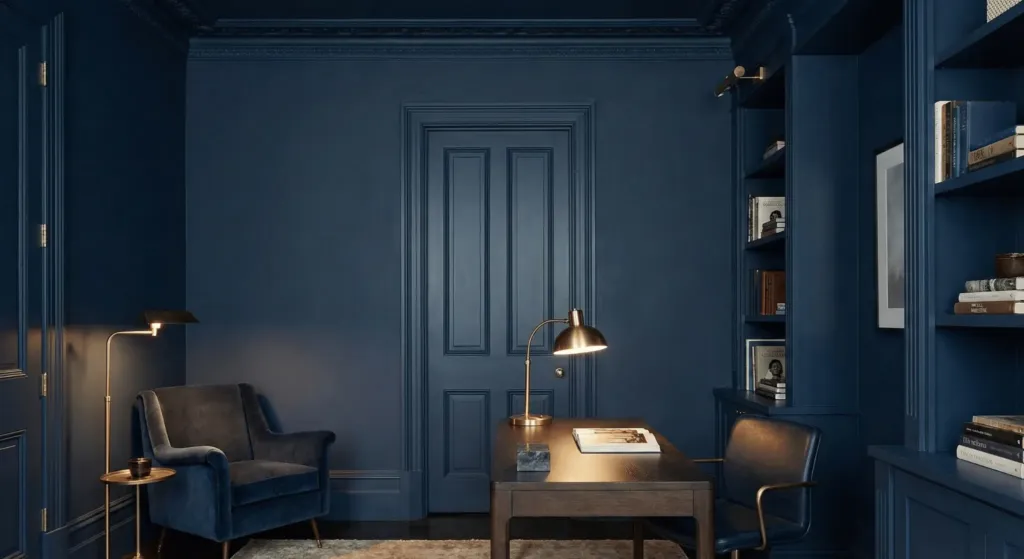
Luxury is often found in the unexpected. Most people paint walls one color and keep ceilings white. This creates a visual break that makes a room feel smaller and “standard.”
Color drenching involves painting your walls, baseboards, doors, and even the ceiling the same color. I recommend a sophisticated neutral like Sherwin-Williams Accessible Beige or a moody tone like Benjamin Moore Hale Navy. This hides ugly heaters and mismatched trim. It makes the room feel like a custom-designed suite. I did this in my small home office. The room felt twice as big and ten times more expensive instantly.
3. Replace All “Boob Lights” with Statement Pendants
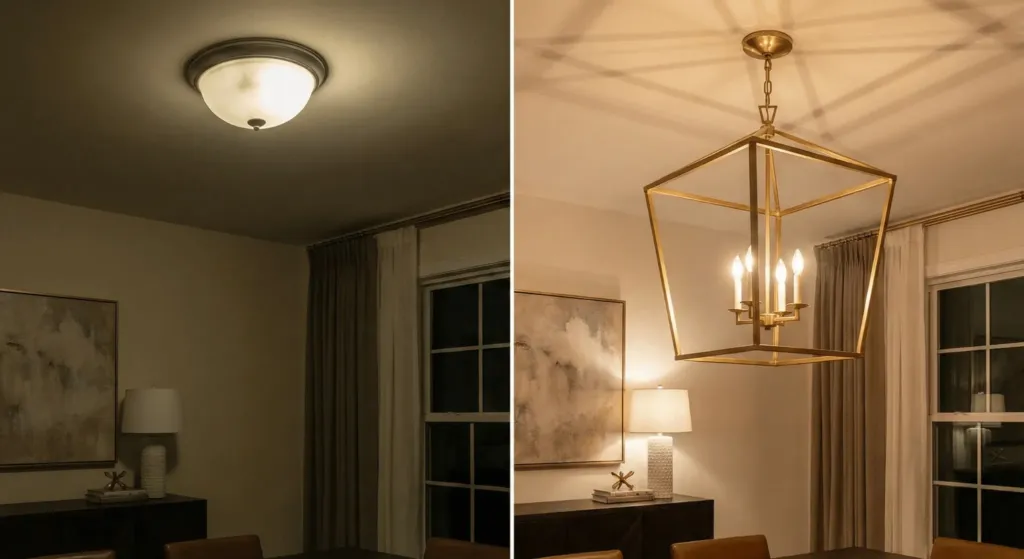
Standard dome lights are the enemy of luxury. They provide flat, unflattering light. I replaced every flush mount in my house with oversized pendants.
Look for brands like Article or CB2 for modern shapes. If those are too expensive, check Wayfair for “Open Box” deals. I found a $400 brass lantern for $85 because the box was slightly crushed. Scale is key here. Most people buy lights that are too small. Go bigger than you think you need. A large light fixture acts as jewelry for a room.
4. Source Large Scale Vintage Rugs on Facebook Marketplace
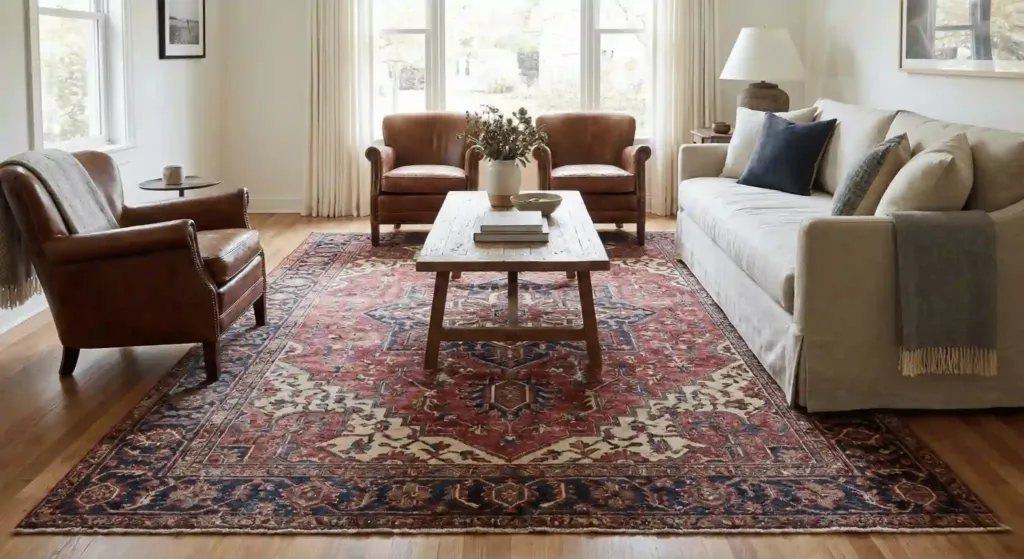
A tiny rug is the fastest way to make a room look cheap. You need your furniture to sit comfortably on the rug. Authentic Persian or Turkish rugs are the gold standard for luxury, but they cost thousands new.
I set alerts on Facebook Marketplace for keywords like “hand-knotted,” “wool rug,” or “vintage Oushak.” People often sell these when they move and don’t want to carry the weight. I scored a 9×12 wool rug for $200 that would have cost $3,000 at a showroom. Wool ages beautifully. Even a worn vintage rug looks more intentional than a brand-new polyester one.
5. Use Rub ‘n Buff on Cabinet Hardware
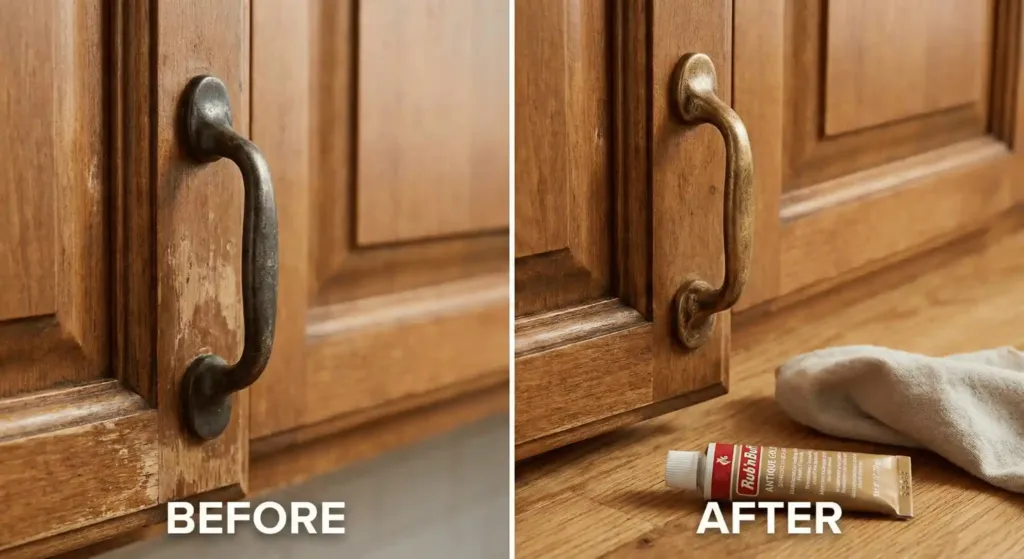
Do not buy new hardware if your current handles are the right shape but the wrong color. I used Rub ‘n Buff in Antique Gold to transform my kitchen.
It is a wax-based metallic finish. You apply it with your finger or a soft cloth. It does not look like spray paint. It looks like real, aged brass. I spent $8 on a tube and did my entire kitchen. Three years later, the finish is still perfect. It creates that high-end unlacquered brass look that designers like Amber Lewis often use.
6. Install Floor-to-Ceiling Sheer Curtains
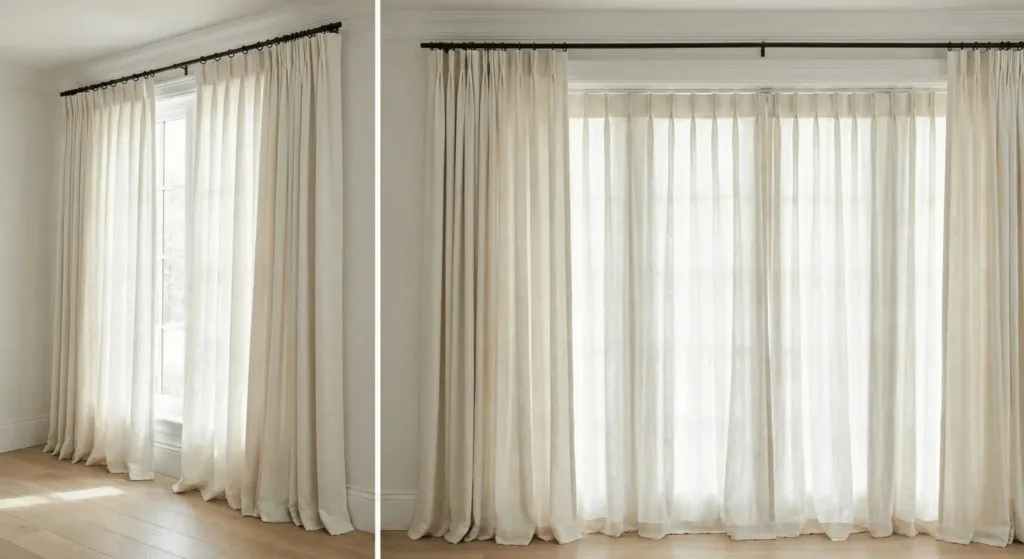
Short curtains are a design crime. Luxury homes have curtains that kiss the floor and start as close to the ceiling as possible. This creates vertical height.
Buy the IKEA RITVA curtains. They are 100% cotton and have a heavy, linen-like weight. They come in extra-long lengths. Hang them on a simple black rod from Amazon Basics. Use curtain rings and “pleating tape” to give them a custom, tailored look. I tell my clients to buy two pairs for every window. Double the fabric makes the window look expensive and full.
7. Frame Personal Photos in Oversized White Mats
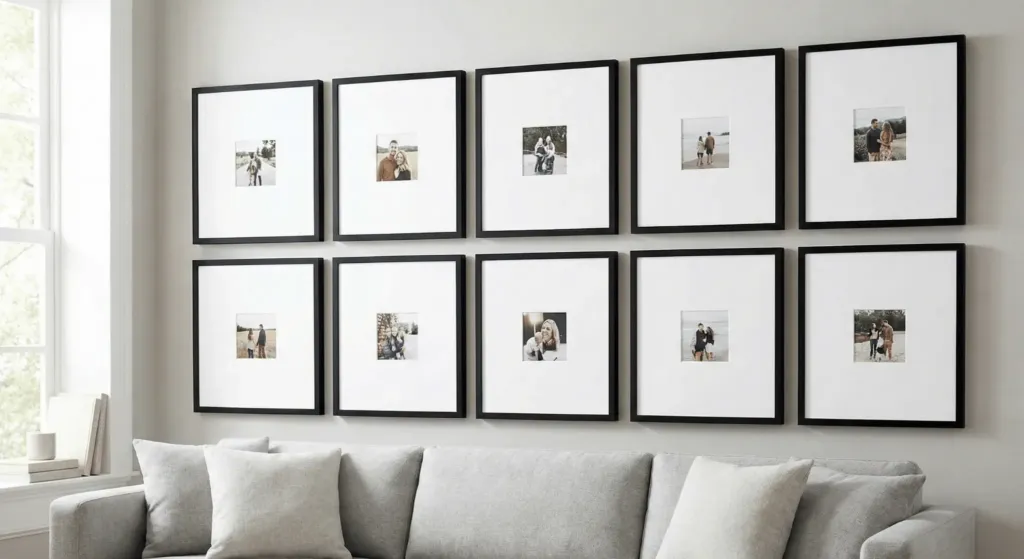
Empty walls feel cold, but cluttered walls feel cheap. The middle ground is the “Gallery Wall” with a twist. Use identical frames with very large white mats.
I bought 10 black frames from Target and used FrameItEasy to order custom mats with small 4×6 openings for a 16×20 frame. Putting a tiny photo in a massive mat is a classic trick used in high-end art galleries. It makes your iPhone photos look like professional art. It fills a large wall for under $150.
8. Swap Plastic Switch Plates for Metal
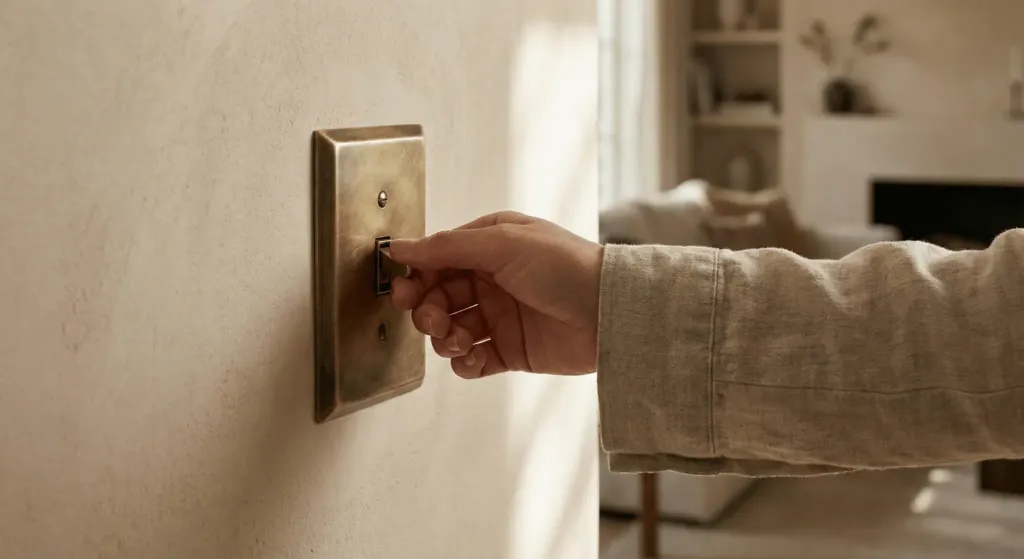
Details matter. You touch your light switches every day. Standard white plastic plates scream “builder-grade.”
I replaced mine with brass and matte black plates from Rejuvenation. If you are on a strict budget, buy metal plates at Home Depot and spray paint them a soft metallic bronze. The weight and texture of metal under your hand feel much more substantial. It is a small change that guests notice subconsciously.
9. Create a Faux Built-In Library with IKEA Billy Hacks
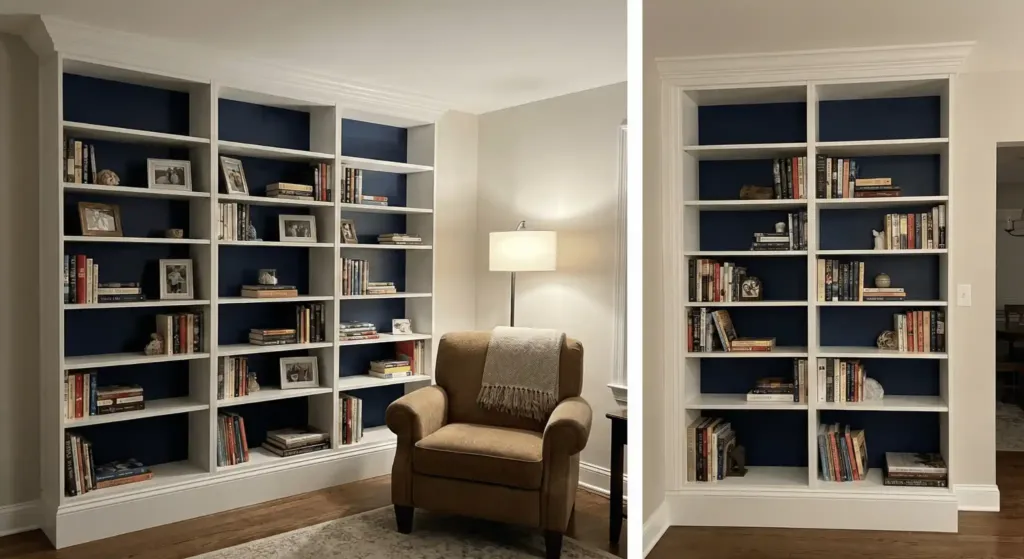
Custom cabinetry costs $5,000 to $10,000. You can get the same look for $500 using the IKEA Billy bookcase.
The secret is adding crown molding to the top and a thick baseboard to the bottom. I used wood filler to hide the adjustable shelf holes. Painting the back of the shelves a contrasting color or adding peel-and-stick “grasscloth” wallpaper adds incredible depth. My neighbor thought I hired a contractor for my living room wall. I just spent a Saturday with a nail gun and some MDF scraps.
10. Incorporate “Live Edge” or Natural Wood Elements
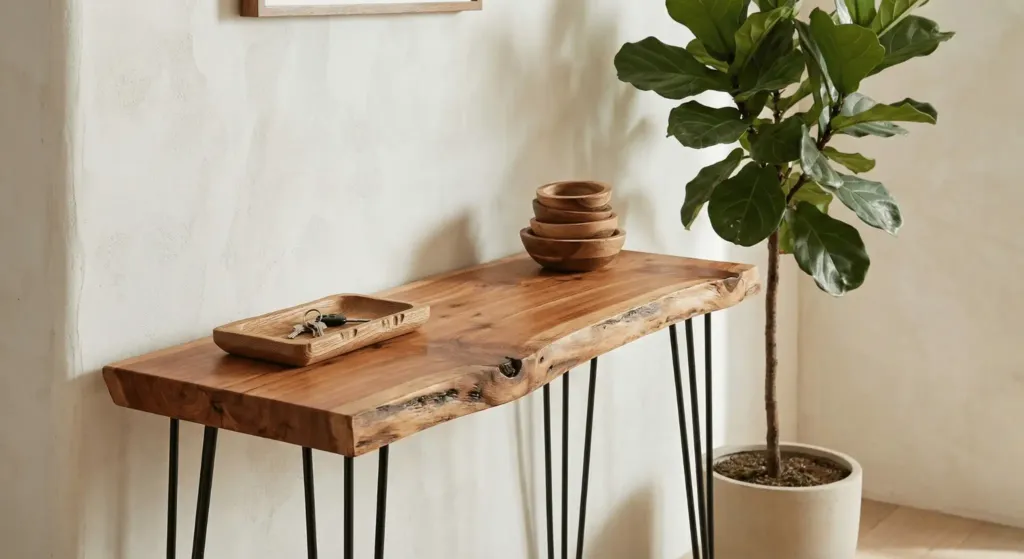
Man-made materials like laminate and plastic can look sterile. High-end design always includes organic textures.
I found a local sawmill and bought a cedar slab for $40. I sanded it down and added “hairpin legs” from Amazon. It became a stunning entryway console. The imperfections in the wood provide a “found” quality that mass-produced furniture lacks. Look for stools, bowls, or small trays in natural oak or walnut.
11. Use Peel-and-Stick Molding for Wall Panels
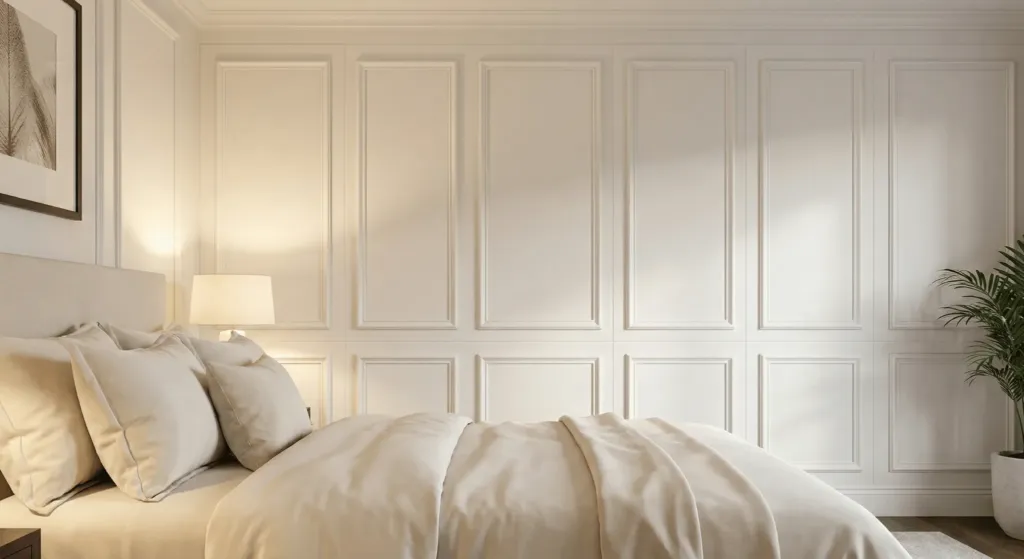
Picture frame molding (wainscoting) adds instant history to a home. You do not need to be a carpenter to do this.
I used LuxeWall peel-and-stick trim kits. You measure, peel, and stick them to the wall. Once you paint over them, they look like permanent architectural features. I did my master bedroom for $120. The wall panels make the bed feel like it is in a luxury hotel suite. Avoid complex patterns. Simple rectangles are the most timeless.
12. Mix Your Metals (The 80/20 Rule)
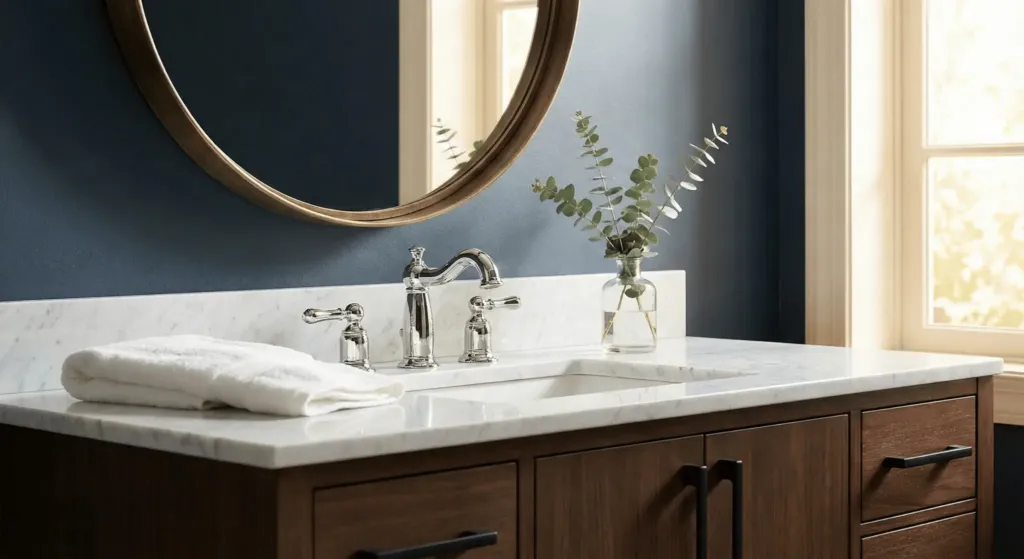
Matching all your metals (all chrome or all brass) looks like a showroom bundle deal. Designers mix metals to create a layered, lived-in feel.
Use one dominant metal for 80% of the room and an accent metal for 20%. In my bathroom, I kept the chrome faucets but added a brass mirror and black cabinet pulls. This makes the space look curated over time rather than bought in a single trip. It allows you to keep existing fixtures while adding “expensive” accents.
13. Upgrade Your Bedding with a “Cloud” Layering Method
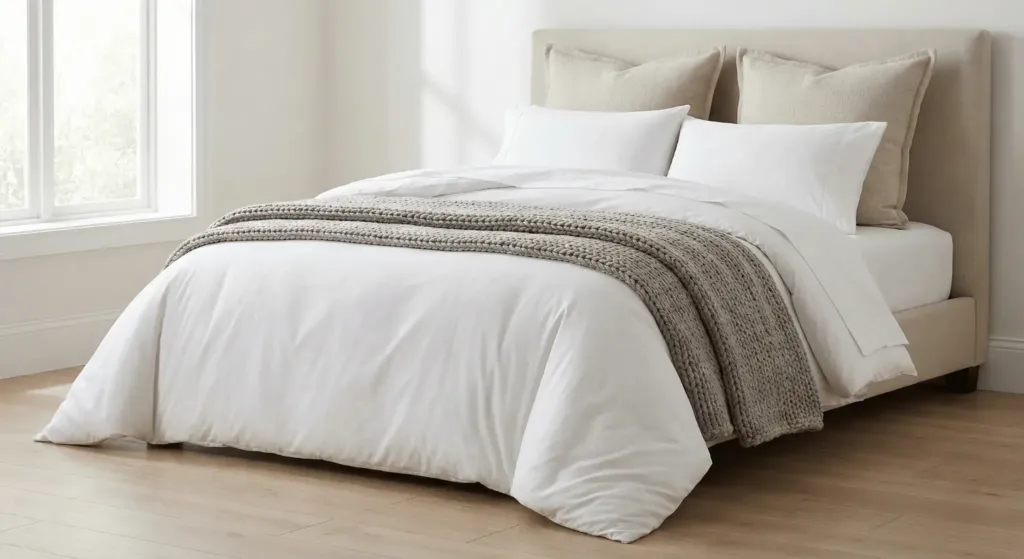
A flat bed looks sad. Luxury hotels use layers. I start with high-quality white cotton sheets from Quince. They offer luxury quality without the retail markup.
Add a down alternative duvet that is one size larger than your bed. If you have a Queen bed, use a King duvet. This makes the sides hang over perfectly. Fold a textured quilt at the foot of the bed. I use Target’s Threshold line for affordable quilts. Finally, use two Euro shams (the big square pillows) against the headboard. It creates height and volume.
14. Hide Your Television with Art
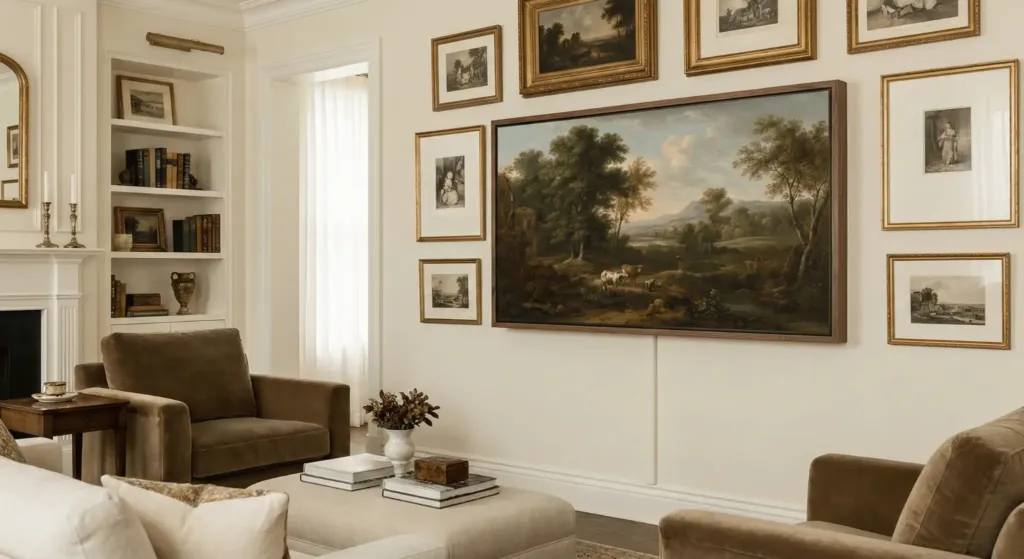
A giant black rectangle ruins the “vibe” of a luxury living room. If you cannot afford a Samsung Frame TV, use the “YouTube Art” trick.
Search for “Vintage Art for TV” on YouTube. It will play a static image of a painting. Frame your TV with thin wood trim to make it look like part of the gallery wall. I also hide my cables using a $10 plastic cord cover painted the same color as the wall. Visible wires are the fastest way to kill a luxury look.
15. Source Large Scale Branches Instead of Small Flowers
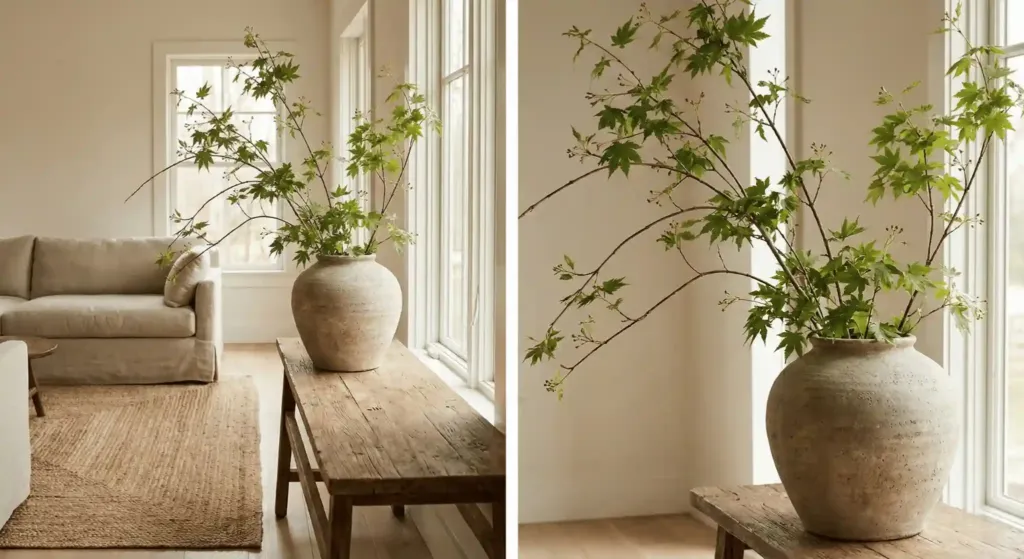
Small grocery store bouquets look fine, but they don’t command attention. Look at any high-end interior design magazine. You will see massive, five-foot tall branches in a heavy ceramic vase.
I go to my backyard or a local park and clip branches from maple or oak trees. Put them in a large vessel from HomeGoods. The height creates a sculptural element that fills vertical space. It costs $0 and lasts longer than roses.
16. Install a Mirror Wall to Double the Light
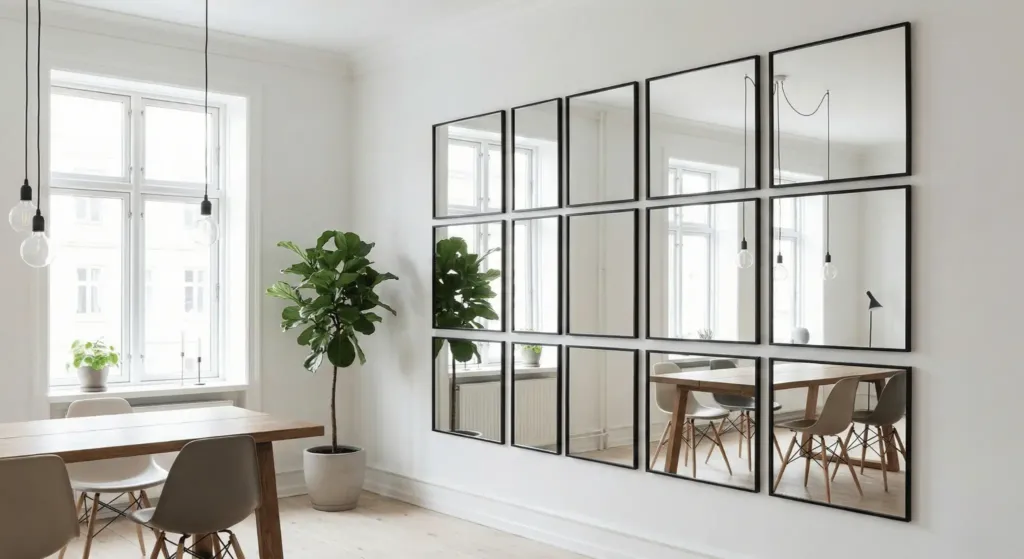
Mirrors are the oldest trick in the book for a reason. They make a space feel infinite. Instead of one small mirror, create a “window” using several framed mirrors.
I bought 12 square mirrors from IKEA and mounted them in a grid on my dining room wall. It looks like a custom glass installation. It reflects the light from the opposite window and makes the room feel airy. For a more “antique” look, use a light mist of vinegar and black spray paint on the back of a mirror to create faux foxing.
17. Trade Your Sofa Legs for Wood
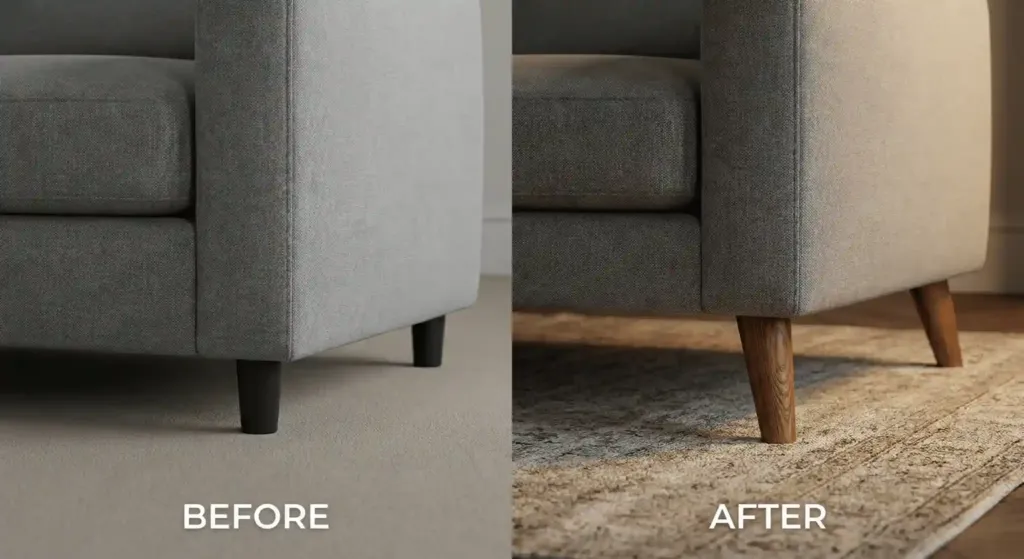
Many affordable sofas come with cheap plastic legs. This is a dead giveaway of the price point.
I ordered solid oak tapered legs from Uncle Bob’s Workshops on Etsy for $30. I swapped the plastic legs on my IKEA Landskrona sofa. It instantly changed the silhouette and made it look like a $3,000 mid-century modern piece. Ensure the thread size matches your sofa before ordering.
18. Style Your Coffee Table in “Triads”
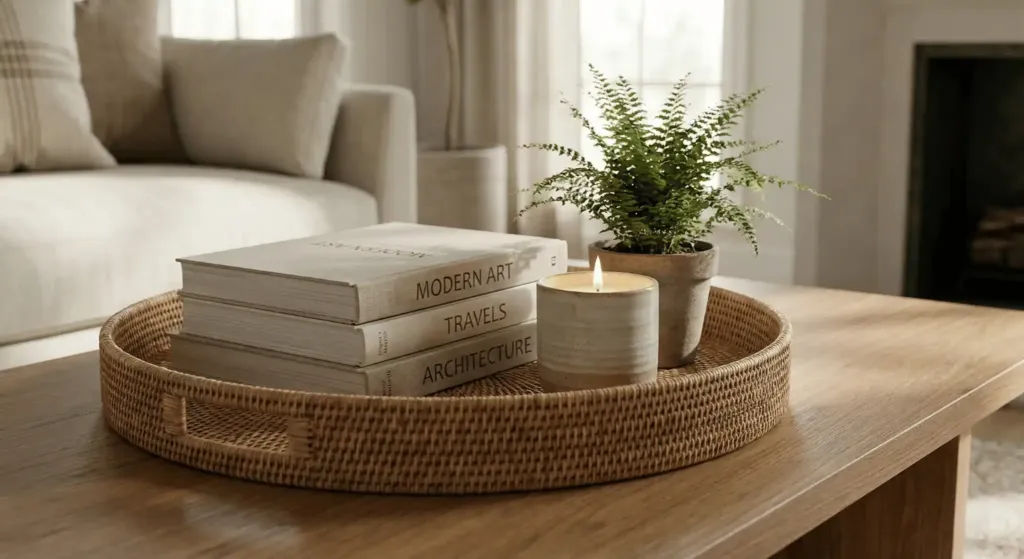
A cluttered coffee table looks messy. A bare one looks unfinished. Professional stylists use the “Rule of Three.”
Place a tray on the table. Inside, place a stack of books (remove the colorful dust jackets for a neutral look), a candle, and something organic like a small plant. Vary the heights. I buy “Coffee Table Books” at thrift stores for $2 each. Look for books about art, travel, or architecture. They provide a high-end, intellectual feel to the room.
19. Add “Visual Weight” with a Dark Door
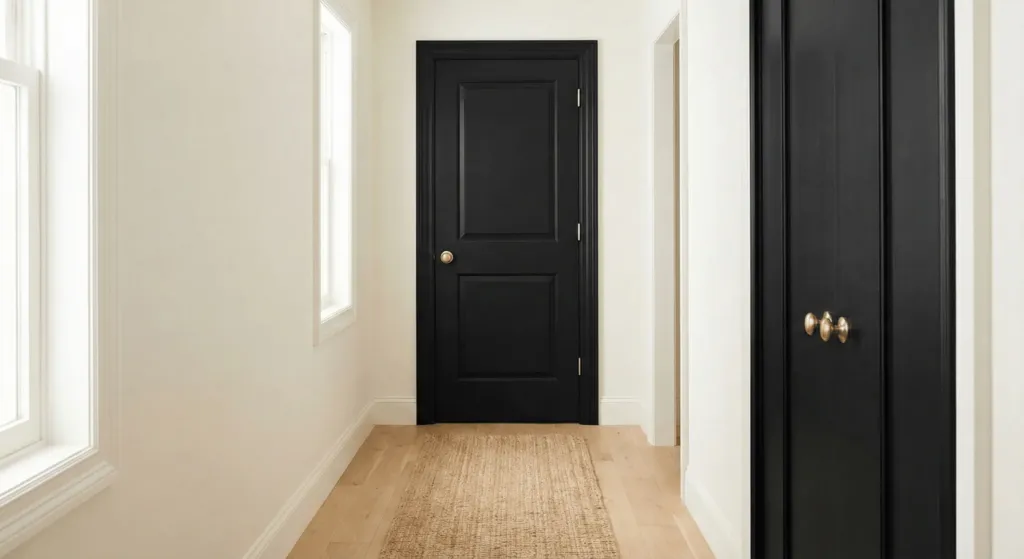
White doors are standard. A black or charcoal door is a statement.
I painted my interior doors Tricorn Black by Sherwin-Williams in a satin finish. It made the cheap hollow-core doors look like solid ebony. It provides a focal point in a long, boring hallway. Use a high-quality brush to avoid streak marks. This project takes two hours and costs the price of a quart of paint.
20. Invest in “Touch Points” First
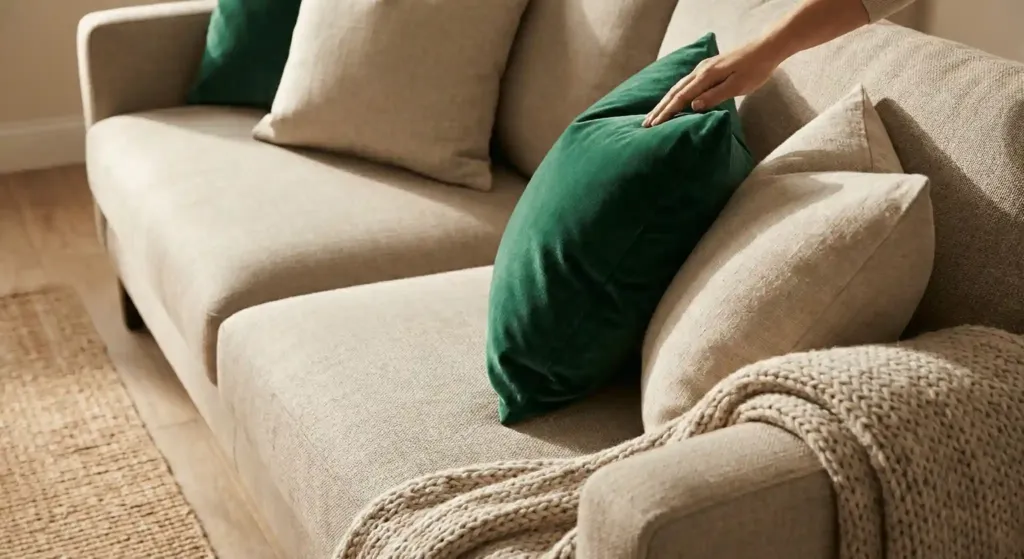
I have a “High-Low” philosophy. Buy the cheap rug, but buy the expensive velvet throw pillows.
Your skin knows the difference between cheap polyester and real linen or wool. I source my pillow inserts from Amazon (look for duck down) and the covers from H&M Home. They have 100% linen covers for $15. A high-quality pillow makes a cheap sofa feel much more expensive because of the tactile experience.
21. Create a Scent Identity
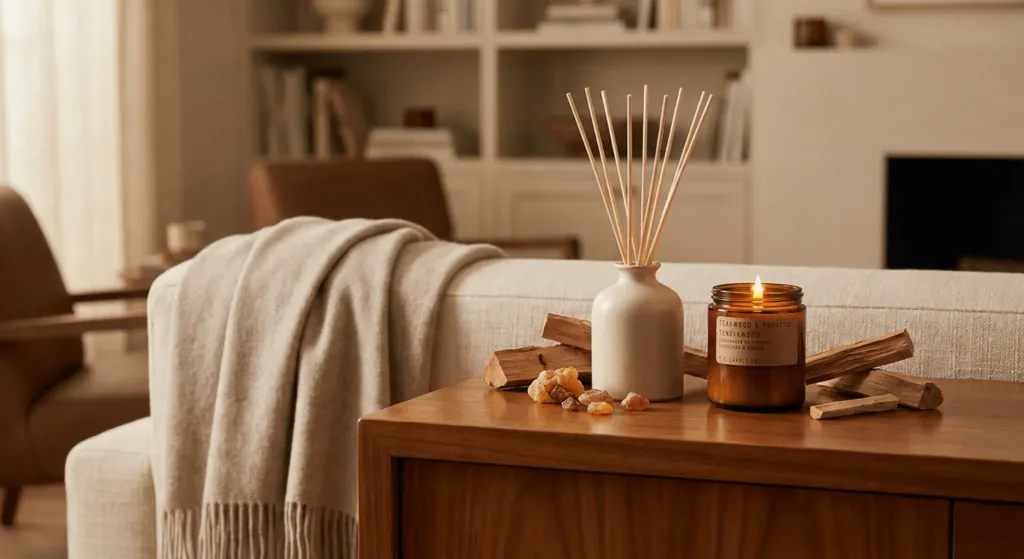
Luxury is a multi-sensory experience. High-end hotels have a “signature scent.”
I stopped using cheap plug-in air fresheners. They smell synthetic. Instead, I use a reed diffuser with essential oils or a high-quality candle like P.F. Candle Co. Woodsy scents like sandalwood, amber, and cedar tend to feel more “expensive” than fruity or floral scents. It is a subtle way to make your home feel like a curated boutique.
22. Switch to Warm White LED Bulbs (2700K)
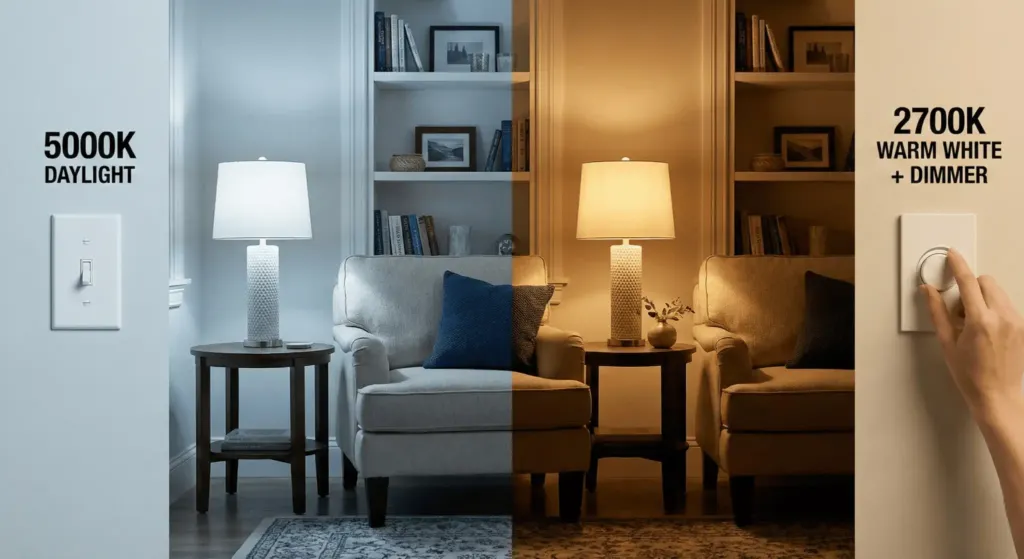
Lighting temperature is the most overlooked design element. “Daylight” bulbs (5000K) make a home look like a hospital or a gas station.
I replaced every bulb in my house with “Warm White” (2700K) LEDs. It creates a soft, golden glow that mimics candlelight. It makes skin tones look better and colors look richer. Put your lights on dimmer switches. Being able to lower the light in the evening is the ultimate luxury.
23. Use Large Trays to Group Small Items
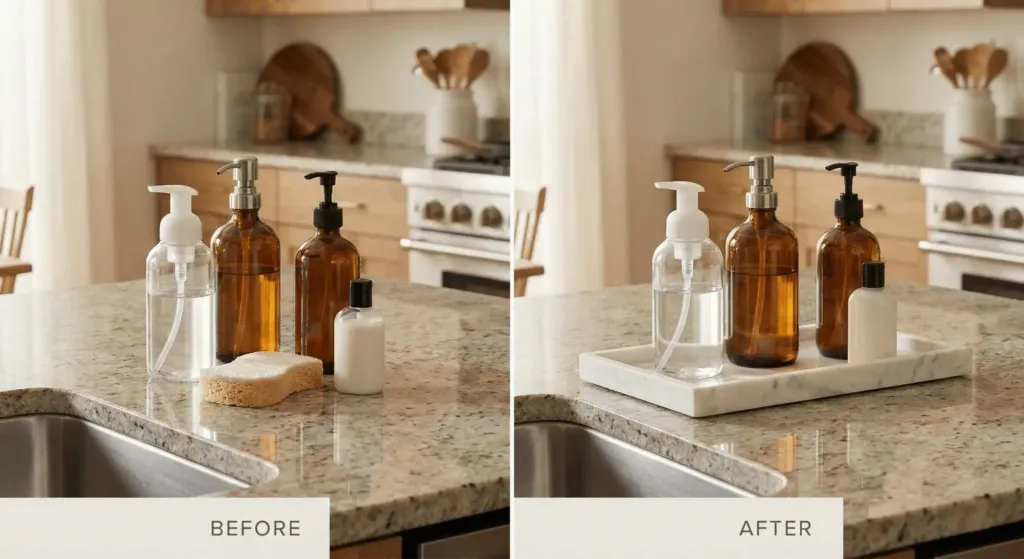
Clutter is the enemy of a luxury look. If you have soap, sponges, and lotion by your sink, they look like a mess.
Place them on a small marble or wooden tray. Suddenly, they look like a “vignette.” I use this in my bathroom for perfumes and in my kitchen for oils and spices. It creates “boundaries” for your items. I find my best marble trays at Marshalls for under $20.
24. Replace Your Shower Head

Standard rental shower heads are plastic and weak. For $50, you can buy a high-pressure rain shower head in a matte black or brushed gold finish.
I did this in my last three rentals. It takes five minutes and a wrench. It turns a boring morning routine into a spa experience. Just keep the old shower head in a box so you can swap it back when you move out.
25. Edit Your Space (The Power of Less)
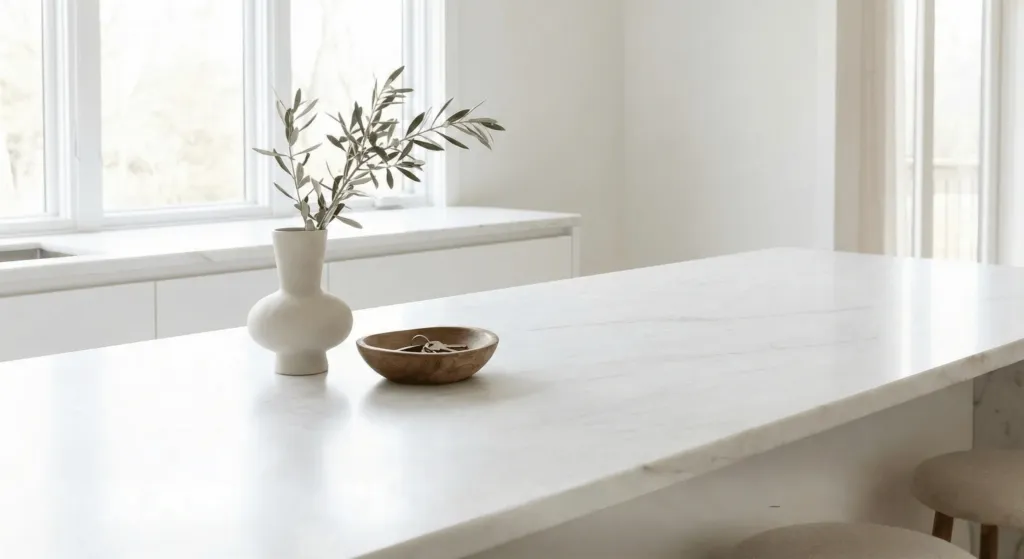
The most expensive thing you can do is remove what doesn’t belong. Luxury design needs “white space” or “breathing room.”
I do a “clutter audit” every three months. If an item doesn’t serve a purpose or bring me joy, I donate it. An overstuffed room looks cheap regardless of how much the furniture cost. Clear your counters. Leave one or two beautiful items. Silence the visual noise.
Case Study: The $450 Living Room Transformation
I worked with a client, Sarah, who had a $500 budget for her living room. We spent the money strategically:
- Facebook Marketplace Rug: $120 (9×12 Wool)
- IKEA Ritva Curtains + Rods: $90 (Three windows)
- Paint (Sherwin-Williams): $70 (Accent wall and doors)
- Thrifted Coffee Table + Sanding Supplies: $45
- Large Scale Branches + Thrifted Vase: $15
- Velvet Pillow Covers (H&M): $60
- New Brass Hardware for Media Console: $50
Outcome: The room’s perceived value increased by thousands. By focusing on scale (the rug and curtains) and texture (the pillows and wood), the space felt cohesive and high-end. Sarah’s guests now ask if she hired a designer.
Common Failure Points to Avoid
- Buying Sets: Never buy the matching sofa, loveseat, and chair set. It looks like a furniture warehouse. Mix your pieces.
- The Wrong Scale: Small rugs and small art make a room look like a dollhouse. Go big.
- Too Many Trends: Avoid things like “chevron” or “rose gold” that date quickly. Stick to classic shapes and materials like marble, wood, and linen.
- Neglecting the “Fifth Wall”: Don’t forget the ceiling. A white ceiling in a moody room can look unfinished.
FAQ: Budget Interior Design
How do I make my home look expensive when I rent?
Focus on “non-permanent” changes. Use peel-and-stick wallpaper, swap hardware, change light fixtures (save the old ones), and use large rugs to cover ugly flooring.
What is the best “luxury” paint color?
Neutral “Greige” colors like Benjamin Moore Revere Pewter or deep, rich tones like Sherwin-Williams Iron Ore are timeless. Avoid bright primary colors.
Where can I find the best cheap decor?
I recommend H&M Home for textiles, Facebook Marketplace for furniture, and Estate Sales for unique art and mirrors.
Does high-end design require a lot of money?
No. It requires a lot of “editing.” Removing 20% of your clutter will instantly make your home look more expensive.
How do I choose the right rug size?
At a minimum, the front legs of all your seating should sit on the rug. Ideally, all legs should be on it.
Conclusion
A luxury look is about intention, not income. By focusing on architectural details, correct scale, and high-quality textures, you can transform any space. Start with one room. Change the light bulbs. Paint the doors. Swap the hardware. These small wins build the momentum you need to create a home that feels like a sanctuary