I spent three years living in a 350-square-foot studio in New York. My front door hit my sofa every time I opened it. I felt trapped in a box. I tried to follow every magazine tip I found. Most of them failed. I bought tiny furniture that made the room look like a dollhouse. I used dark colors that made the walls close in on me.
Eventually, I stopped listening to generic advice. I started testing how light and scale actually work. I moved my furniture away from the walls. I swapped my heavy wooden table for a glass one. The room felt bigger overnight.
Small living rooms are puzzles. You have to fit your life into a limited footprint without losing your mind. Most people think they need to buy small things. That is a mistake. You need to buy the right things.
Here is what I learned from my failures and my wins. These 21 ideas will help you claim your space back.
1. Choose Furniture with Visible Legs
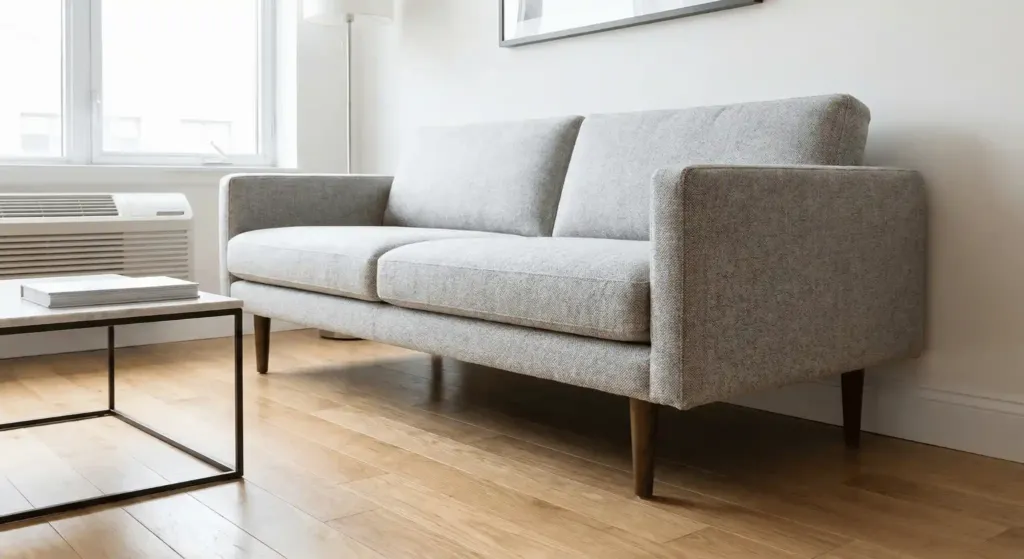
One of my biggest mistakes was buying a sofa that sat flat on the floor. It looked like a giant block of fabric. It ate all the floor space. Now, I always tell people to pick “leggy” furniture.
When you can see the floor underneath a sofa or a chair, the room feels open. Your eyes track the floor all the way to the wall. This creates an illusion of more area. Brands like Article or West Elm offer many mid-century styles that work well here.
Expect to pay $800 to $1,500 for a quality leggy sofa. It is a solid investment. You want a piece that feels light but stays sturdy. Avoid heavy skirts or boxy bases.
2. Use Acrylic or Glass Coffee Tables
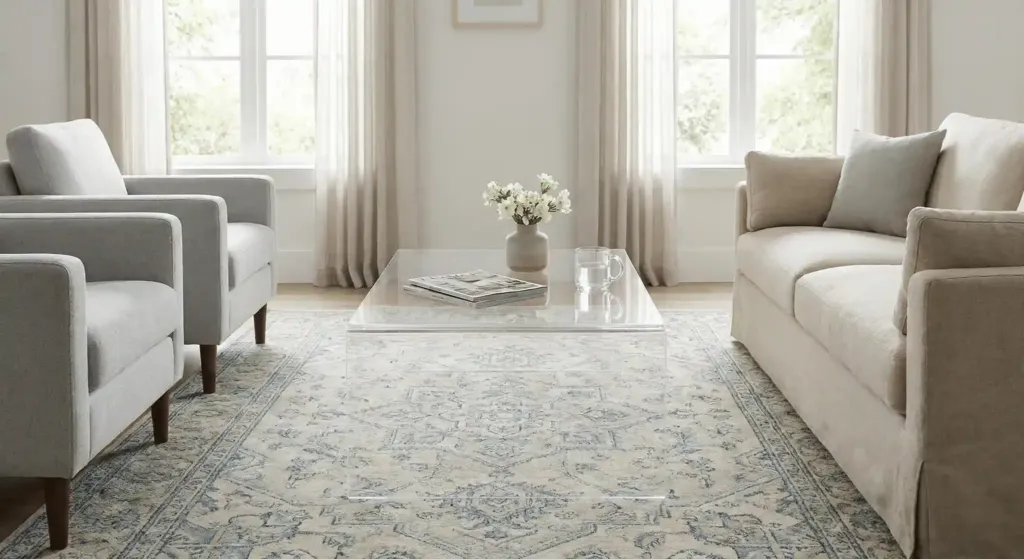
I used to have a dark oak coffee table. It was beautiful but it killed the flow of my room. It acted like a visual roadblock. I swapped it for a clear acrylic table from CB2.
The change was instant. Clear furniture is “ghost” furniture. It serves a function without taking up visual weight. You can see your rug through the table. This makes the floor plan look uninterrupted.
Acrylic tables usually cost between $150 and $400. They are easy to clean. Just use a soft cloth to avoid scratches. They fit into any style from modern to classic.
3. Hang Curtains High and Wide
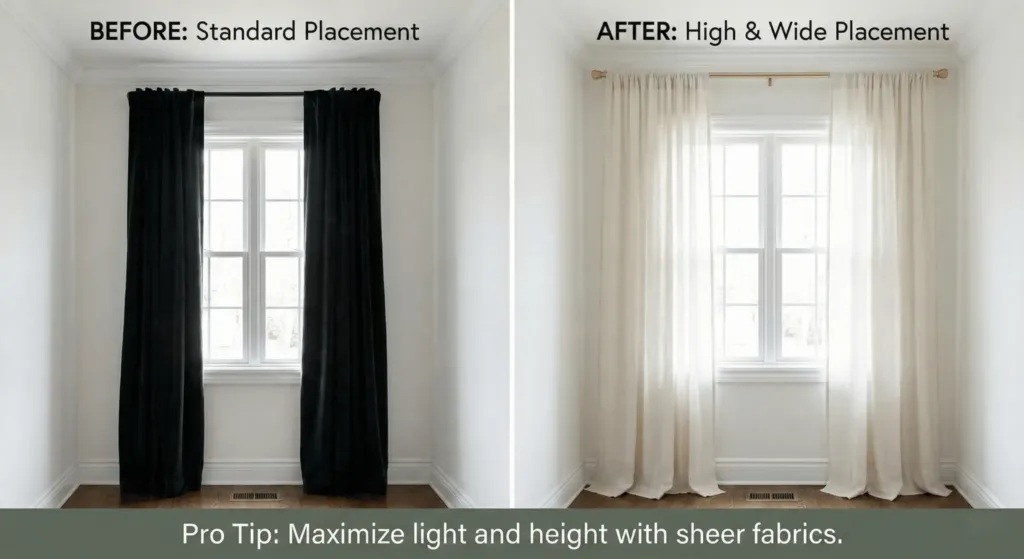
Most people hang curtain rods right above the window frame. This is a huge error. It makes your ceiling look lower than it is.
I learned to hang my rods about two inches below the ceiling. I also make the rod wider than the window itself. This allows the curtains to frame the window without blocking the glass. It tricks your brain into thinking the window is massive.
Go for sheer fabrics. They let light in while giving you privacy. Heavy velvet can feel suffocating in a small room. I suggest linen blends for a fresh look.
4. Mount Your Television to the Wall
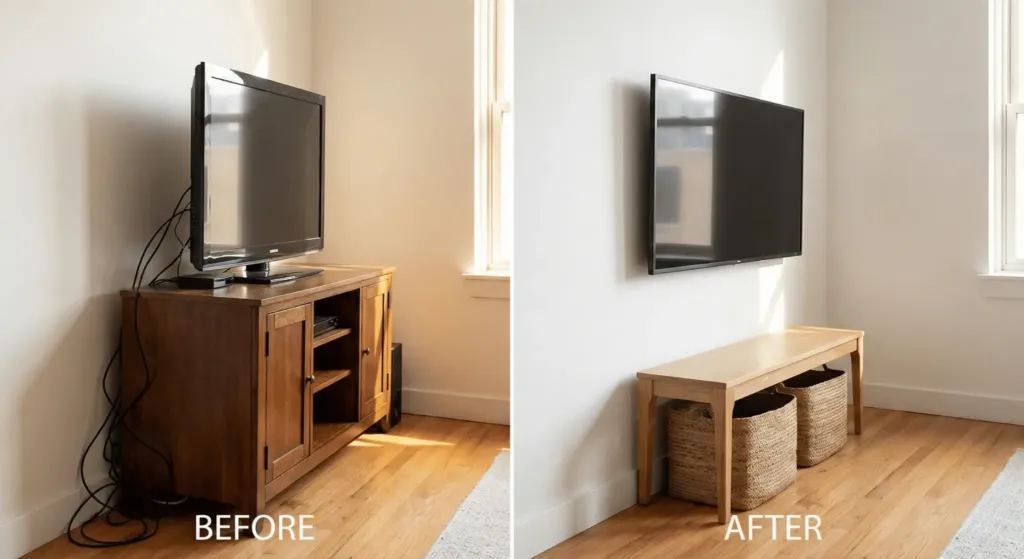
In my first apartment, my TV sat on a bulky stand. That stand took up three square feet of precious floor space. In a small room, every inch counts.
Mounting the TV clears the floor. It makes the room look cleaner. You can then use the space below for a slim bench or a few baskets. Use a swiveling mount if your room is awkwardly shaped.
You can find good mounts for $50 on Amazon. Professional installation might cost $100. It is worth it to hide the wires inside the wall. Wires create visual clutter that shrinks a room.
5. Prioritize One Large Statement Piece
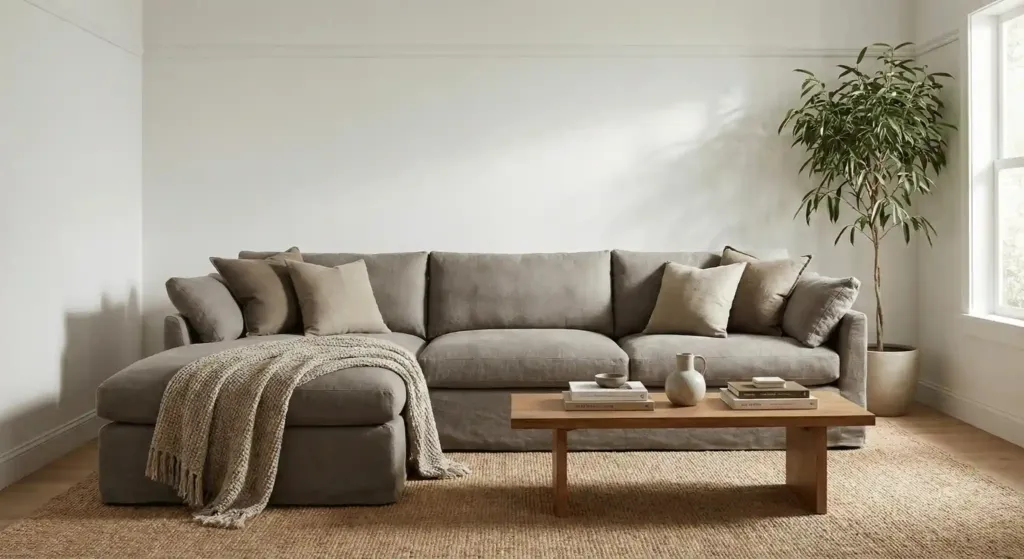
I used to think small rooms needed small furniture. I ended up with a bunch of tiny chairs and stools. The room looked messy and cluttered.
A designer friend told me to try one large sofa instead. I was scared it would overwhelm the room. I was wrong. One large, comfortable piece actually anchors the space. It looks intentional.
Pick a sofa that fits your wall but offers plenty of seating. This prevents the “waiting room” vibe that comes from having too many small pieces. Spend more on this one item. It is the heart of your home.
6. Place Mirrors Opposite Windows
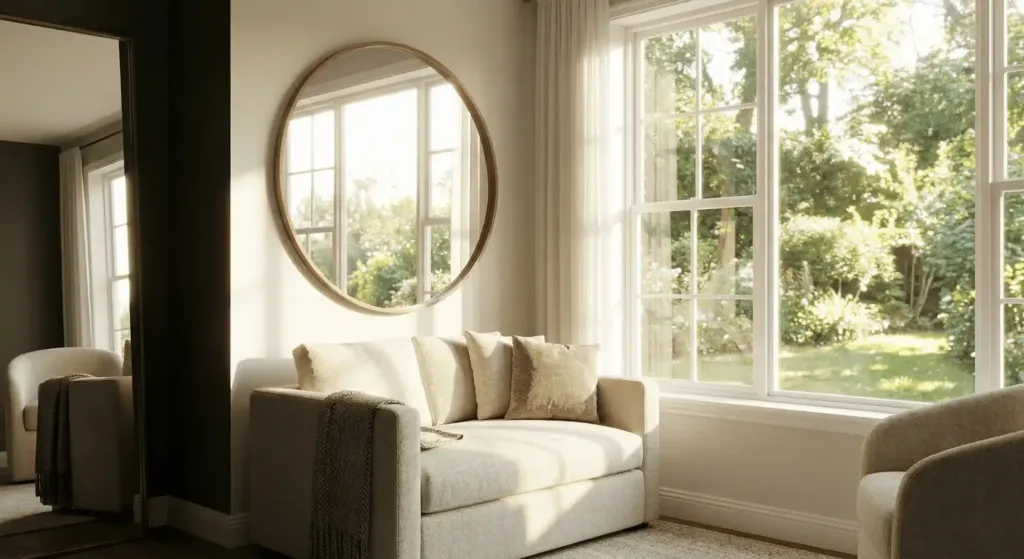
Mirrors are the oldest trick in the book for a reason. They work. But placement is everything.
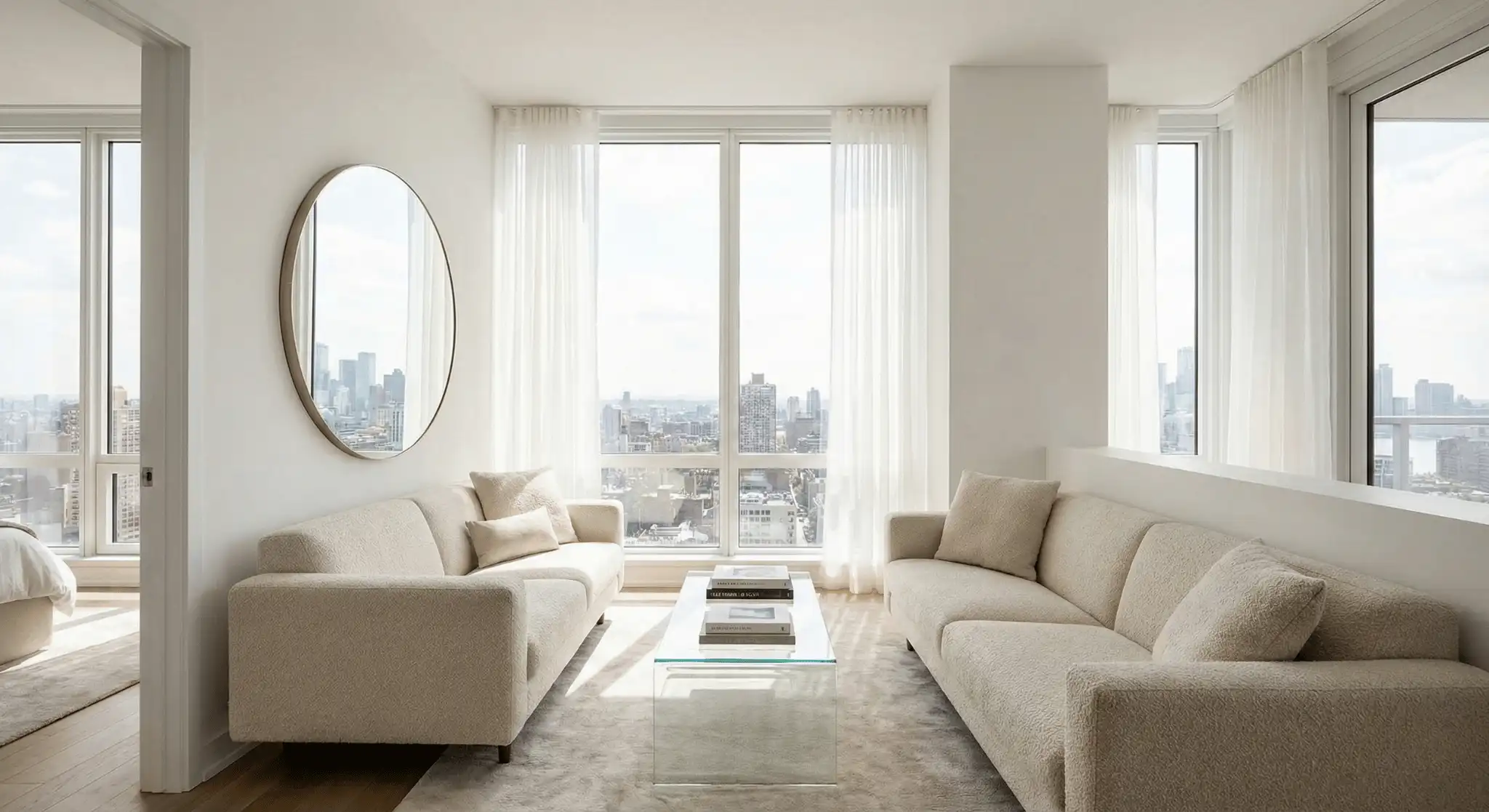
Don’t just hang a mirror anywhere. Place it directly across from your primary light source. This reflects the outdoors back into the room. It doubles the amount of light you get.
I once used a floor-to-ceiling mirror in a dark corner. It made the corner disappear. Large round mirrors are very popular right now. They break up the straight lines of the walls. Look for a 30-inch or 36-inch diameter mirror for the best impact.
7. Stick to a Monochromatic Palette
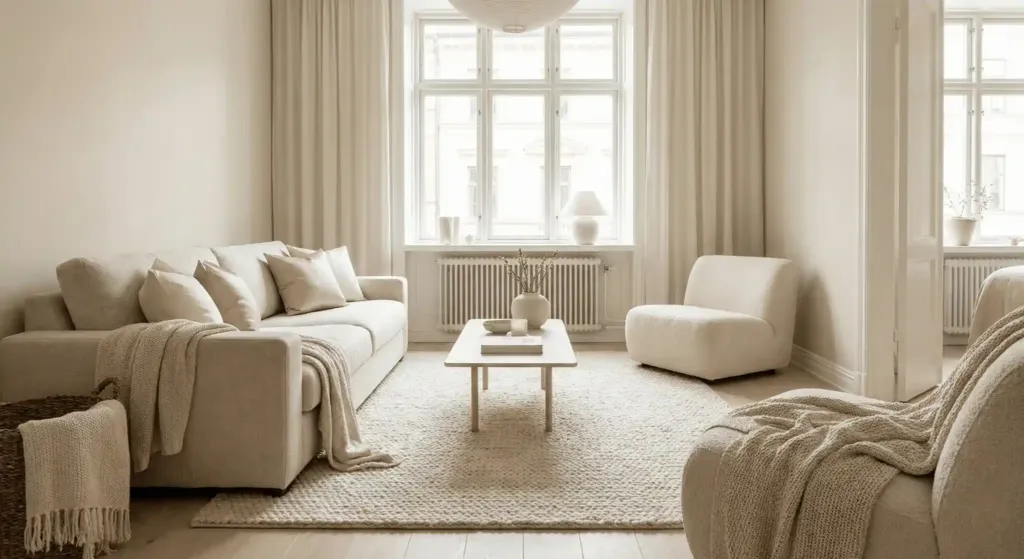
Color is powerful. In a small space, too many colors create “visual noise.” Your eyes jump from one color to the next. This makes the room feel small.
Try using different shades of the same color. I love using various creams and beiges. Use different textures to keep it interesting. A wool rug, a linen sofa, and a silk pillow in the same tone look rich.
This approach creates a seamless look. The boundaries of the room blur. It feels like one continuous, airy space. Avoid high-contrast wall colors if you want the room to feel big.
8. Use Multi-Functional Ottomans
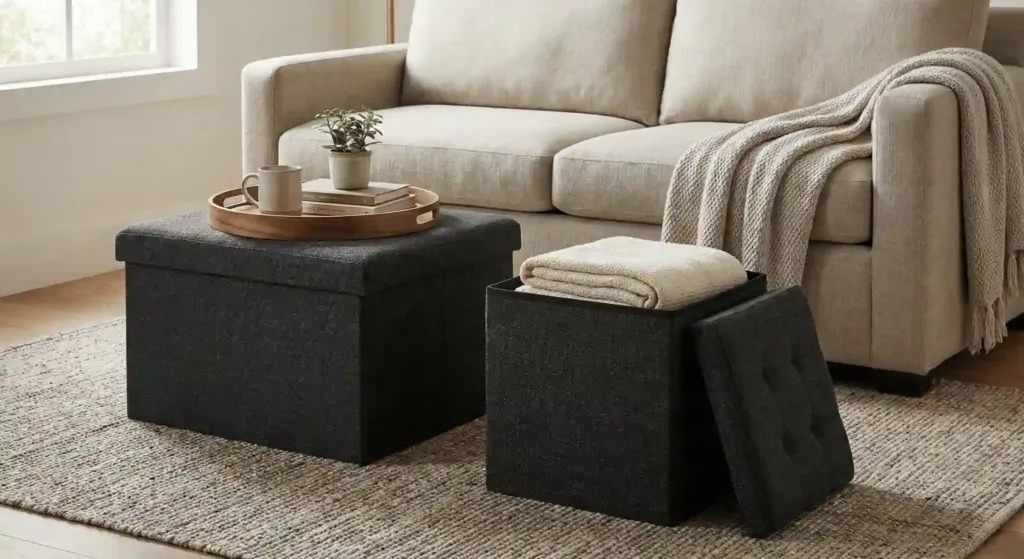
I hate coffee tables that offer no storage. In a small room, every piece of furniture must work twice as hard.
I replaced my glass table with two storage ottomans. They act as a coffee table when I put a tray on top. They become extra seating when guests come over. They hold my extra blankets inside.
You can find great options at Target or IKEA for under $100. Choose a fabric that is easy to spot clean. Darker tones or patterns hide wear and tear better on these high-use items.
9. Float Your Furniture
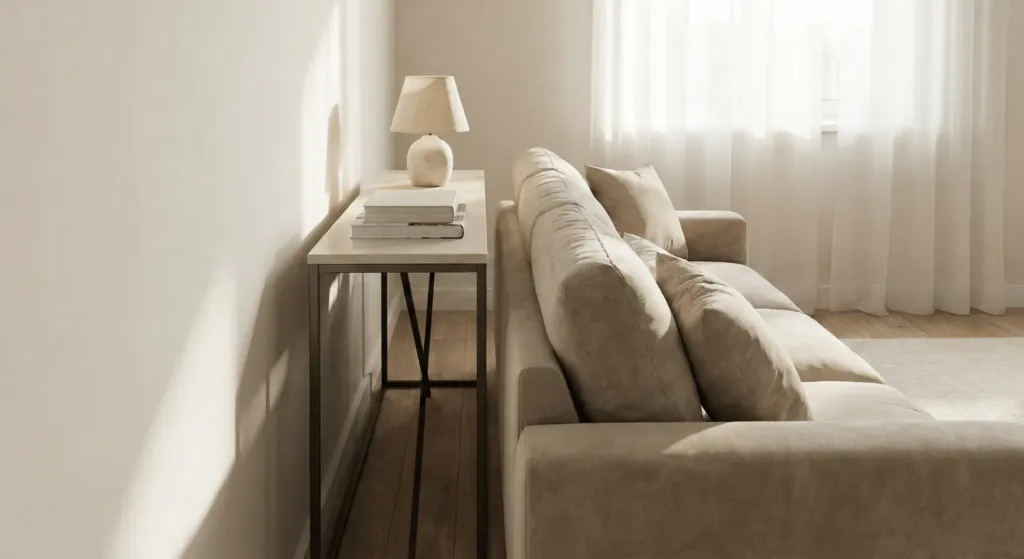
It is a natural instinct to push all furniture against the walls. We think this opens up the center of the room. It actually does the opposite. It makes the room look like a box.
Pull your sofa away from the wall by just a few inches. This creates “breathing room.” It makes the walls feel further away.
I did this in my last home and it changed the whole energy. Even a tiny gap makes a difference. If you have a bit more space, put a slim console table behind the sofa for lamps and books.
10. Go Vertical with Storage
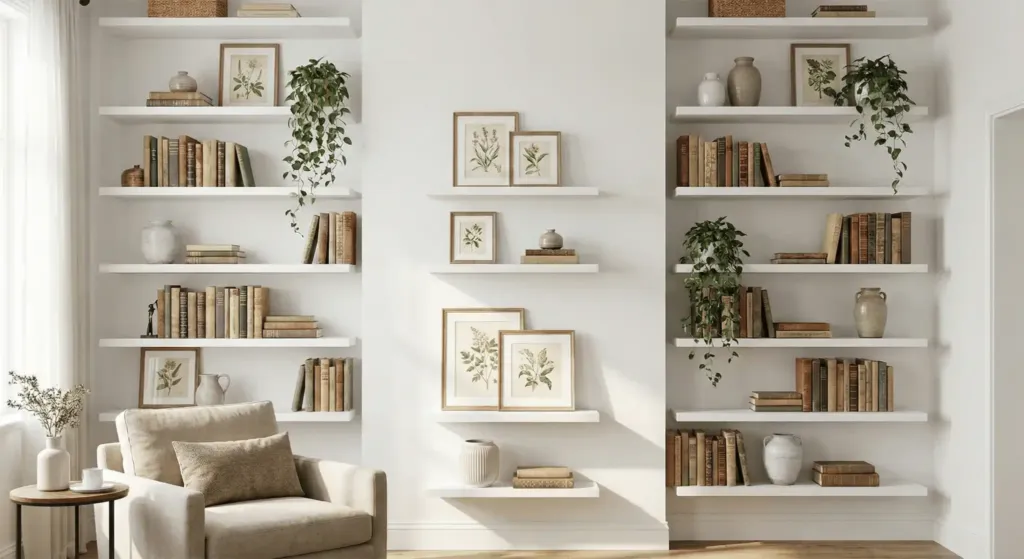
When you run out of floor space, look up. Most people leave the top half of their walls empty. This is wasted real estate.
Install floating shelves that go all the way to the ceiling. Use them for books, art, and plants. This draws the eye upward. It emphasizes the height of the room rather than the narrow floor.
Be careful not to overfill them. Leave some empty spots so the walls don’t feel heavy. Use white shelves on white walls to make them “disappear.”
11. Choose a Large Rug
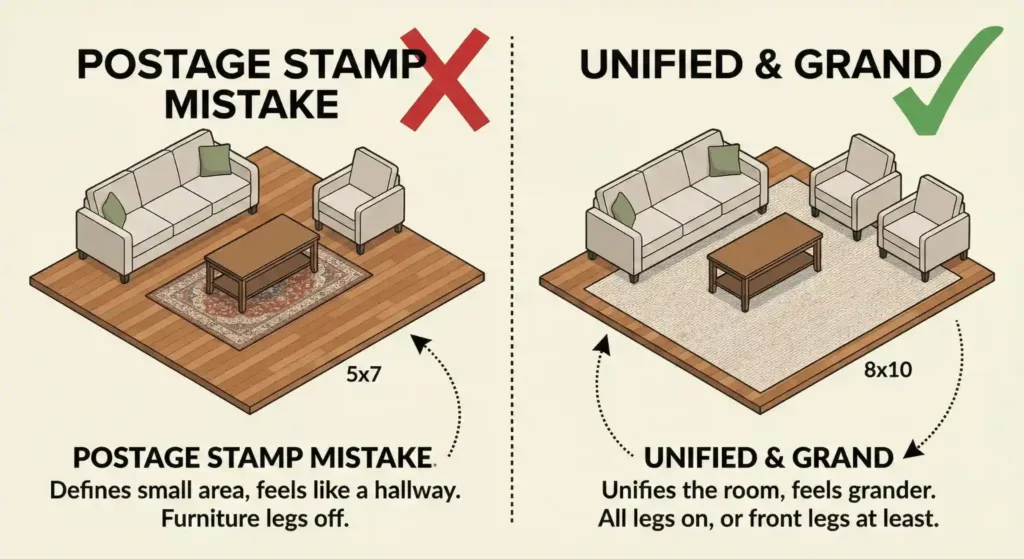
This is another area where people go small and regret it. A small rug looks like a postage stamp on the floor. It defines a small area and makes the rest of the room feel like a hallway.
Your rug should be large enough so that all furniture legs sit on it. At the very least, the front legs should be on the rug. An 8×10 rug is usually better than a 5×7 for most living rooms.
Ruggable offers many thin, washable options that are great for small spaces. They don’t add bulk. A larger rug unifies the room and makes it feel grander.
12. Use Sconces Instead of Floor Lamps
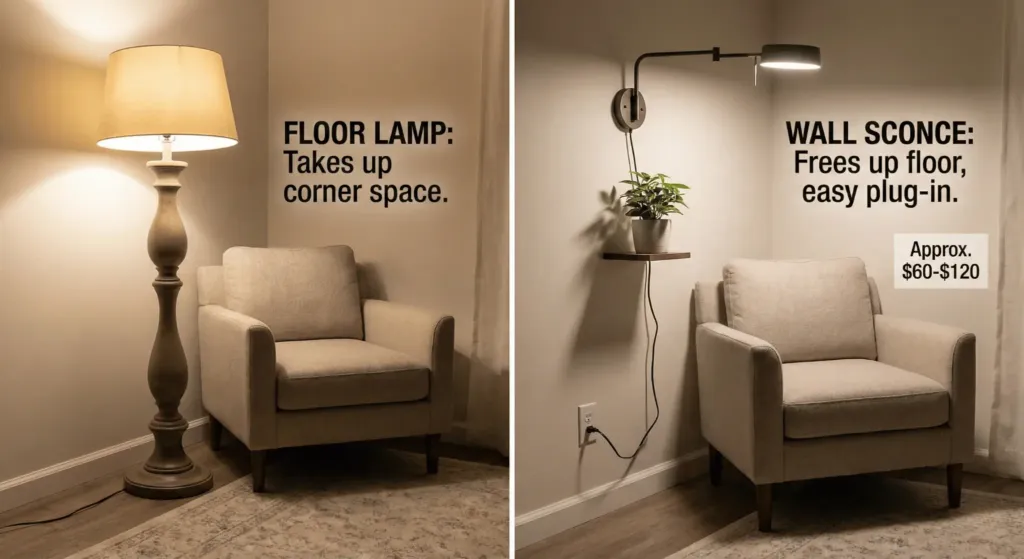
Floor lamps have wide bases. They take up corners where you could put a plant or a small chair.
I switched to wall-mounted sconces. Many modern versions are “plug-in,” so you don’t need an electrician. You just screw them into the wall and plug them into an outlet.
This frees up your floor and table surfaces. It also allows you to place light exactly where you need it for reading. Look for swing-arm sconces for maximum flexibility. They cost about $60 to $120 each.
13. Incorporate Rounded Furniture
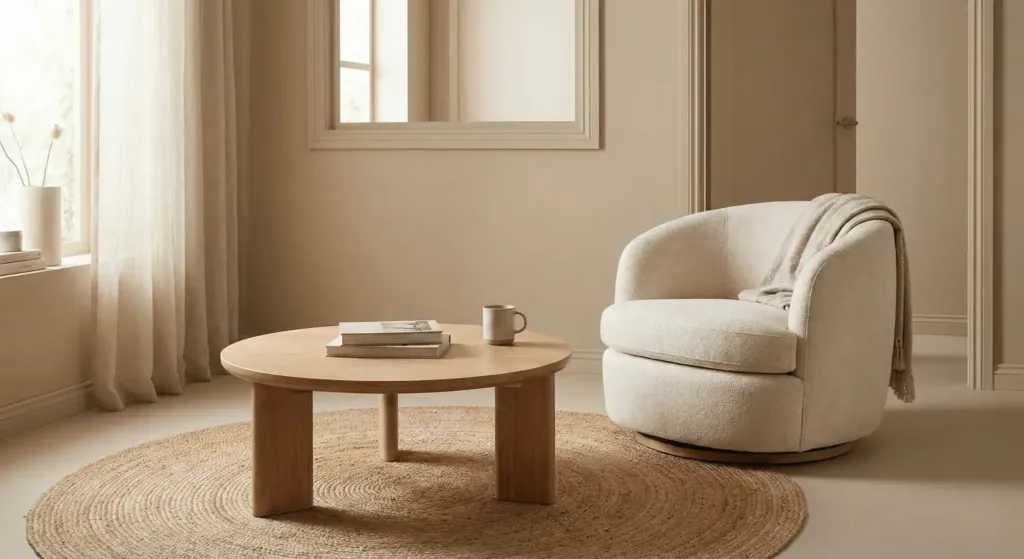
Small rooms are full of rectangles. The walls, the windows, and the doors are all sharp angles. This can feel stiff and harsh.
I like to add round elements to soften the space. A round coffee table or a curved armchair breaks the grid. It allows for better traffic flow because you won’t hit your shins on sharp corners.
Pathways feel more natural when furniture has soft edges. My favorite piece is a swivel barrel chair. It is compact but very comfortable for long movies.
14. Keep the Windows Clear
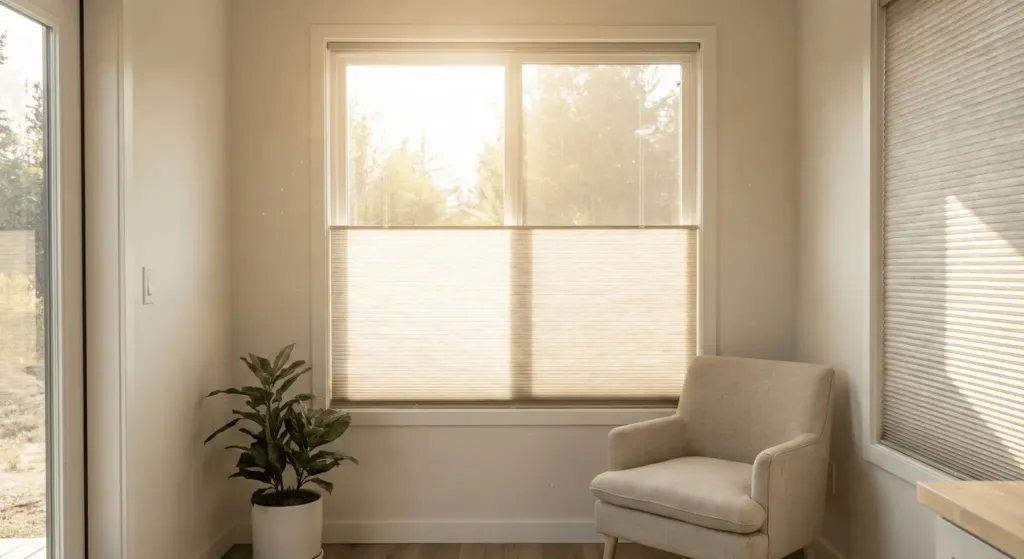
Never block your natural light. I once put a tall bookshelf next to my window. It cut off 20% of the sunlight. The room felt depressing.
Keep the area around your windows as open as possible. If you need privacy, use top-down, bottom-up shades. These allow light to come in through the top while keeping the bottom closed.
Clean your windows often. It sounds simple, but dirty glass kills the “airy” vibe you want. Natural light is your best friend in a tiny home.
15. Create a Focal Point
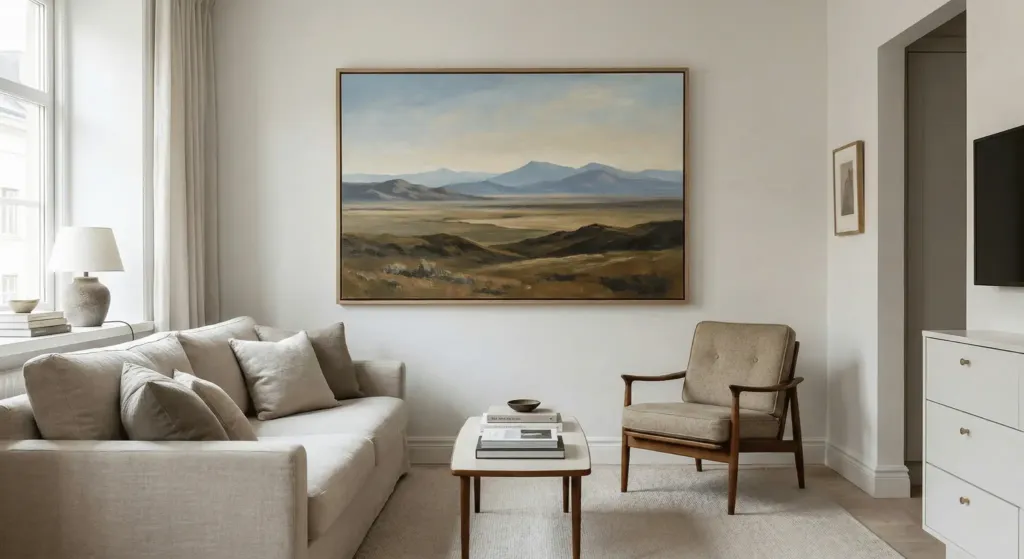
If a room is small and has no focus, it feels chaotic. You need one spot that draws the eye.
This could be a fireplace, a piece of art, or a beautiful window. Arrange your furniture to support this focus. Don’t let the TV be the only thing people see.
In my studio, my focal point was a large landscape painting. It gave the room a sense of depth. It felt like a window into another world. Choose art that has a horizon line to create a feeling of distance.
16. Use Low-Profile Furniture
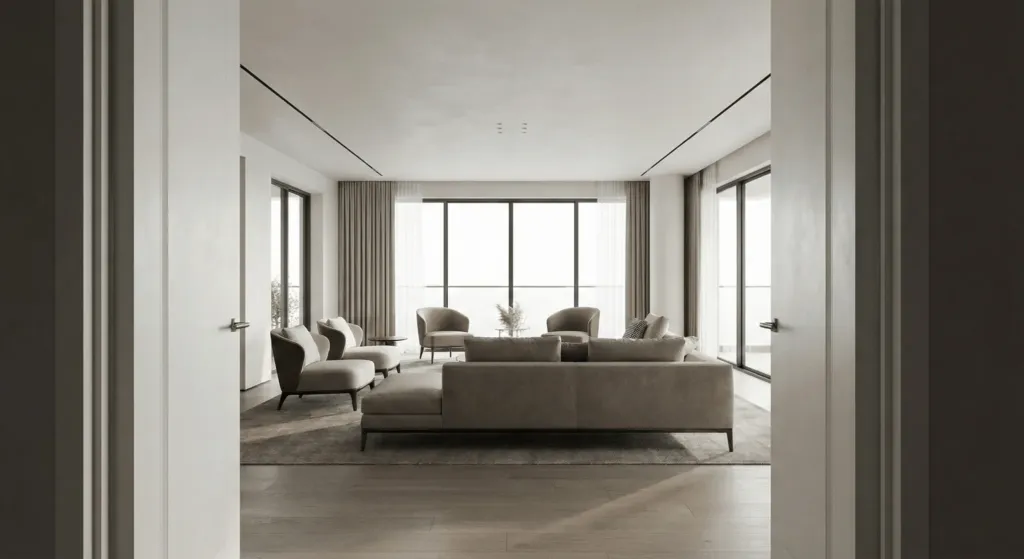
High-back sofas and chairs can act like walls. They block the view across the room.
I prefer low-profile pieces. These sit lower to the ground and have lower backs. This keeps the sightlines clear. When you stand in the doorway, you can see the whole room without obstruction.
Modern Italian designs often use this style. It feels very sophisticated. It also makes your ceilings look much taller by comparison.
17. Add Plants of Different Heights
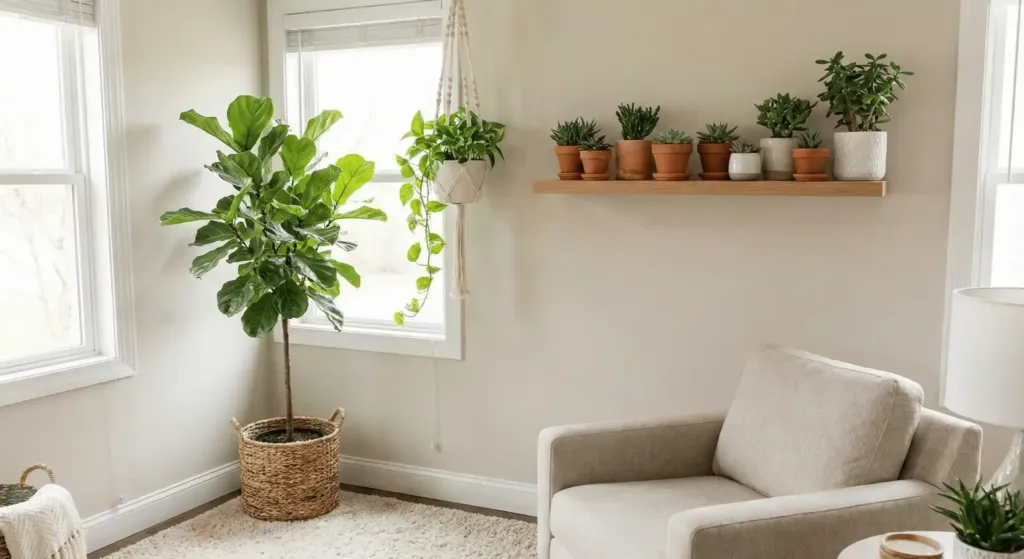
Plants bring life to a room. They also help blur the corners of a space.
I use a tall Fiddle Leaf Fig in one corner and small succulents on the shelves. This variety adds layers. It makes the room feel lush rather than cramped.
Use hanging planters if you have zero floor space. They add greenery without taking up an inch of your footprint. Just make sure they don’t block your walking paths.
18. Switch to Sliding Doors
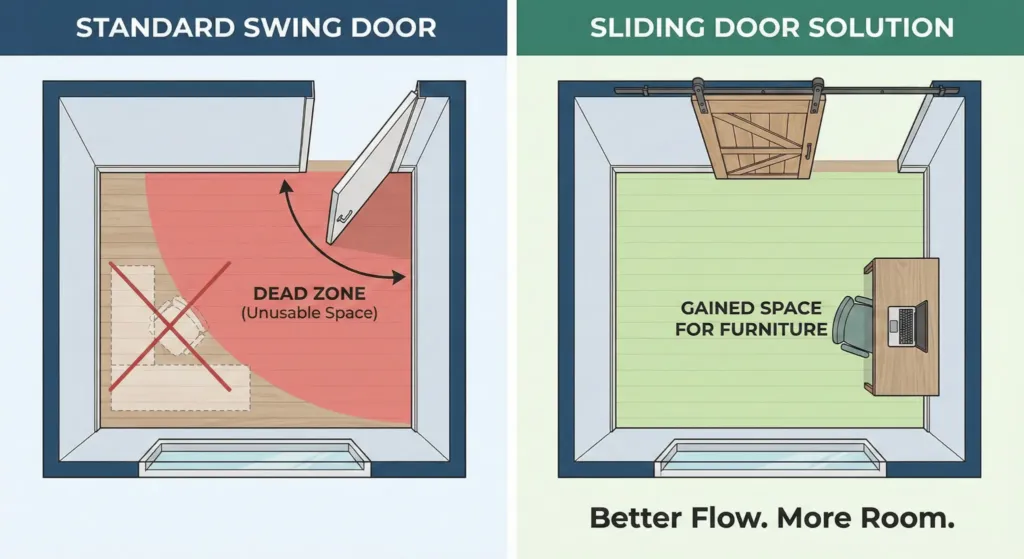
Standard doors swing inward. They require a few feet of clearance to open. This is a “dead zone” where you cannot put furniture.
If you can, swap your doors for sliding barn doors or pocket doors. I did this for my closet and it gave me enough room for a small desk.
If you rent, you can’t always change doors. In that case, consider removing the door entirely if it isn’t for a bathroom. An open doorway creates a better flow between rooms.
19. Declutter with Intent
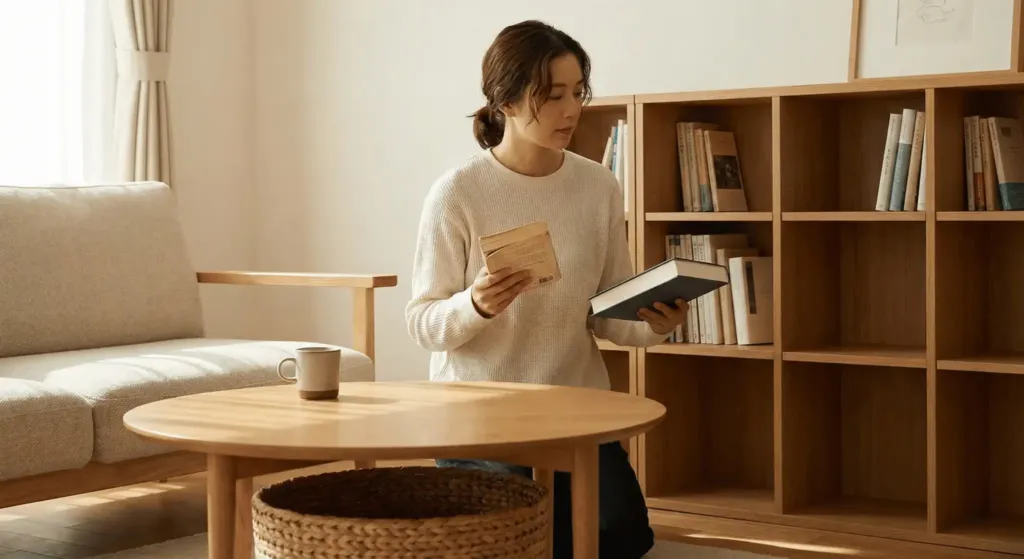
You cannot design your way out of a clutter problem. I used to keep every book and trinket I owned. My small living room felt like a storage unit.
I follow the “one in, one out” rule now. If I buy a new book, an old one goes to the library. Use hidden storage like baskets under the coffee table.
Minimalism isn’t about having nothing. It is about having what you love and keeping the rest out of sight. Clear surfaces make a room feel peaceful.
20. Use a Neutral Foundation
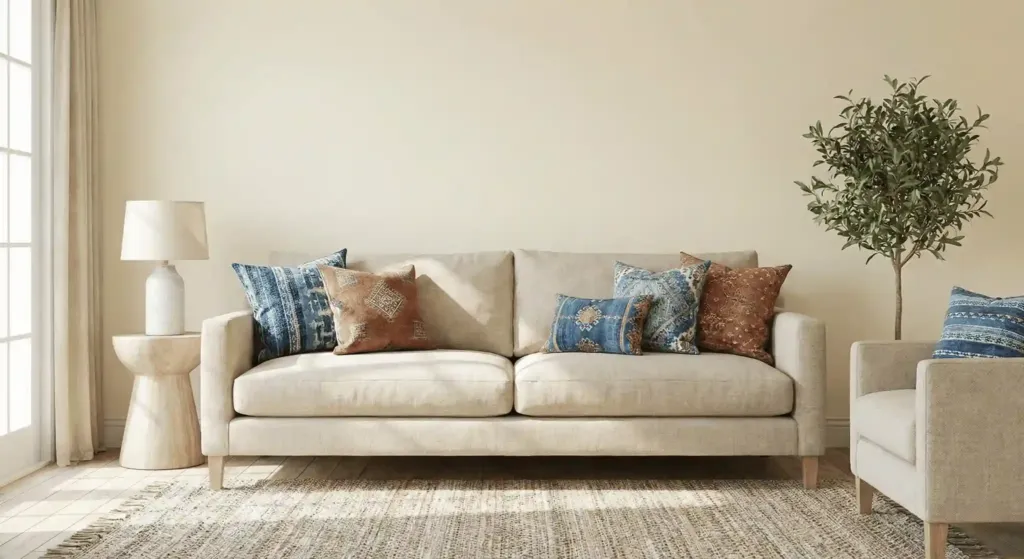
Start with a light, neutral base for your walls and large furniture. Whites, creams, and light greys are best.
You can add color with pillows and rugs. These are easy to change if you get bored. A dark sofa in a small room is hard to work around. A light one is a blank canvas.
I once painted a small room navy blue because I saw it on Pinterest. I hated it within a week. It felt like a cave. I went back to “Swiss Coffee” by Benjamin Moore and felt like I could breathe again.
21. Tailor Your Lighting
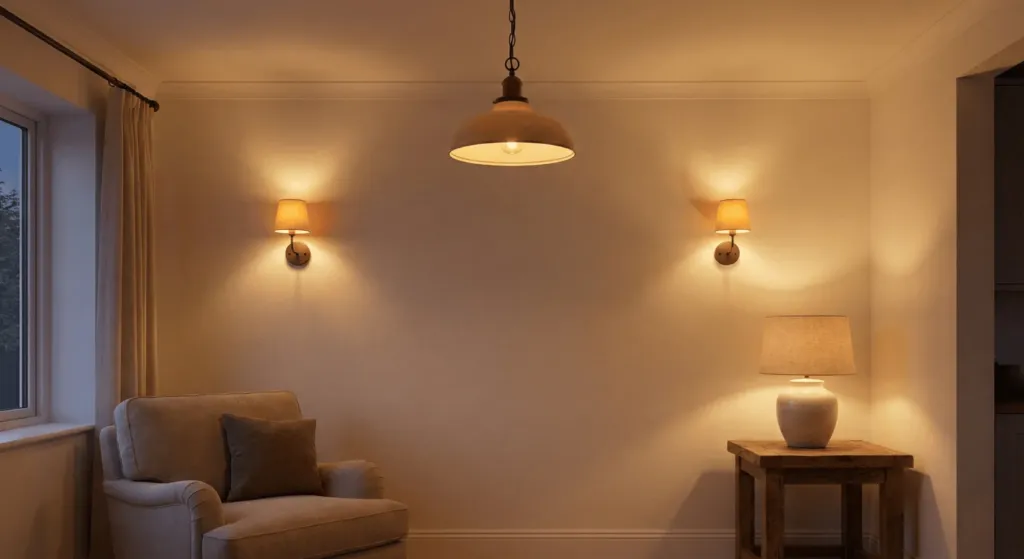
One overhead light is never enough. It creates harsh shadows and makes the corners look dark. Dark corners make a room look smaller.
I use three layers of light. I have the main overhead light, two sconces, and a small lamp on a side table. This fills the room with a warm glow.
Use warm white bulbs. Avoid “daylight” bulbs that look blue. They make a home feel like an office. Dimmable lights are even better for setting a cozy mood at night.
The Common Pitfalls of Small Room Design
I have seen many people fail at this. The biggest mistake is buying a “set” of furniture. A matching sofa, love seat, and chair usually won’t fit well. They are too bulky.
Another mistake is ignoring the scale. You need to measure everything. I once bought a rug that was six inches too wide for the room. I had to fold it against the wall. It looked terrible.
Don’t buy everything at once. Buy your sofa first. See how much space is left. Then buy the rest. Designing a small room is a slow process of trial and error.
Cost Analysis for a Small Living Room Refresh
Refreshing a small space doesn’t have to break the bank. Here is a realistic look at what you might spend.
| Item | Budget Option | Mid-Range Option |
| Area Rug (8×10) | $150 (IKEA/Amazon) | $450 (Ruggable/West Elm) |
| Acrylic Table | $120 (Wayfair) | $350 (CB2) |
| Wall Sconces (2) | $80 (Target) | $240 (Schoolhouse) |
| Large Mirror | $60 (HomeGoods) | $200 (Anthropologie) |
| Sheer Curtains | $40 (H&M Home) | $150 (Pottery Barn) |
You can transform a room for under $500 if you shop smart. Start with the rug and the mirror. Those offer the biggest visual change for the least money.
Frequently Asked Questions
How do I make a narrow living room feel wider?
Use your rug to draw the eye across the room. Pick a rug with horizontal stripes or patterns. Avoid placing all furniture on one long wall. Break it up with a small chair placed at an angle.
What is the best color for a small living room?
Light colors are generally better. Off-white, soft greys, and light blues reflect more light. If you love dark colors, use them on a single accent wall or through accessories like pillows and art.
Can I have a sectional sofa in a small room?
Yes, but be careful. A “chaise” sectional often works better than a full L-shape. It provides lounging space without blocking the room. Ensure the chaise is on the side that doesn’t block the main walkway.
Should I use small furniture in a small room?
No. Using too many small pieces creates clutter. Use fewer, larger pieces that fit the scale of the walls. One comfortable sofa is better than four small chairs.
How do I deal with a lack of natural light?
Use mirrors to bounce what little light you have. Stick to very light wall colors. Add multiple lamps at different heights to eliminate dark corners.
Is a gallery wall a good idea in a small space?
It can be, but it often looks busy. One large piece of art is usually a better choice. If you want a gallery wall, use matching frames and keep the layout tight to avoid a messy look.
Final Thoughts on Small Room Design
I used to hate my tiny living room. I felt limited by the walls. But once I understood how to use light and scale, I started to love it. A small room is cozy. It is easy to clean. It forces you to be intentional about what you own.
Don’t let the square footage define your style. Use these 21 ideas to create a space that feels open and welcoming. Start with one change. Maybe it is moving your sofa or hanging new curtains. You will see the difference immediately.
Small spaces have big potential. You just have to look at them differently.