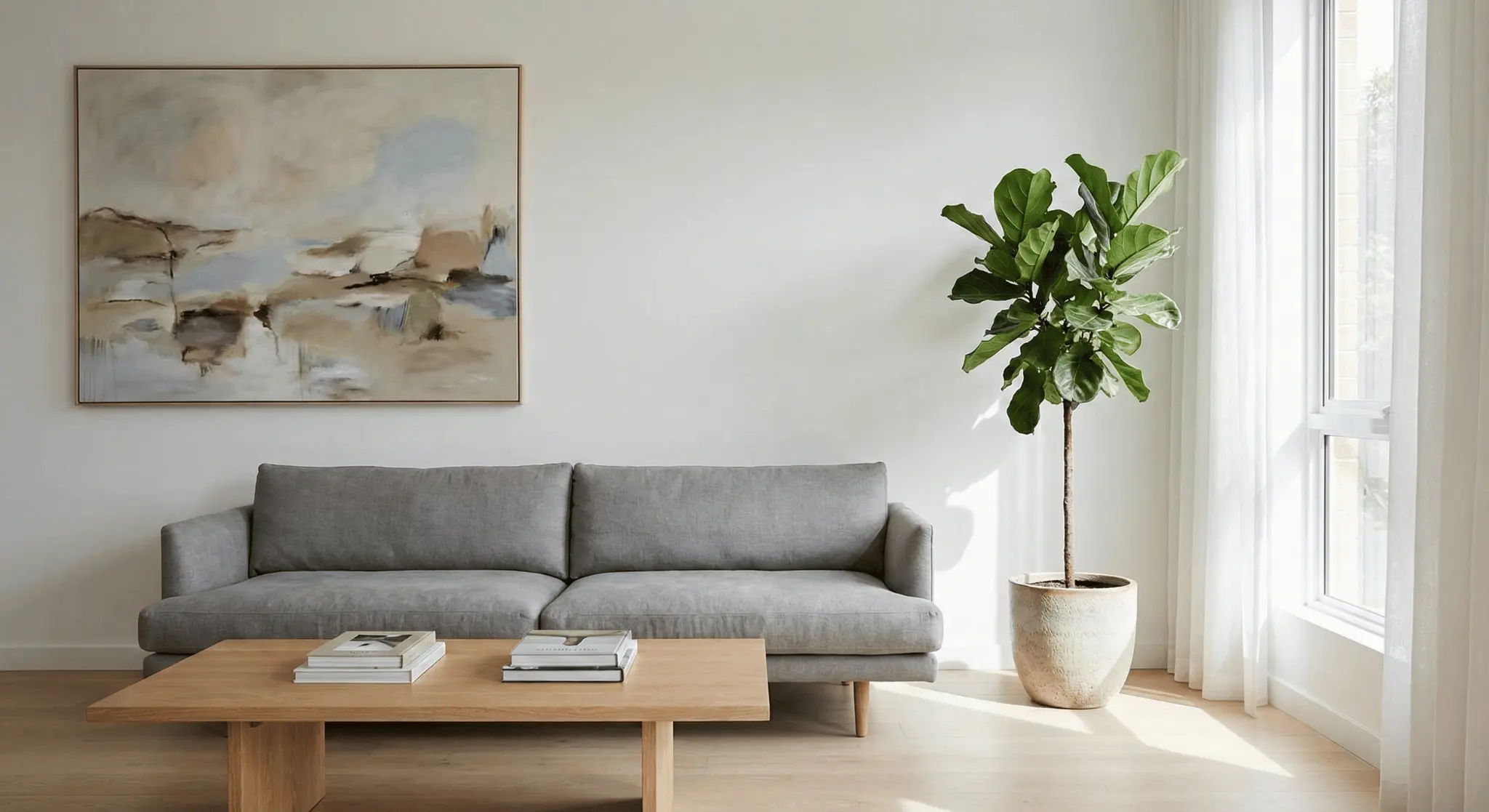
Two years ago my living room felt like a storage unit. Toys covered the floor. Stacks of mail sat on the coffee table. Every shelf held a souvenir I didn’t actually like. I felt tired just looking at it. My focus was gone. My stress was high. I decided to change everything last March. I didn’t just clean. I removed the noise.
Minimalism isn’t about living in a white box. It is about keeping what adds value. It is about breathing room. I spent six months testing different layouts. I bought and returned dozens of pieces. I learned that expensive doesn’t mean better. I found that empty space is a luxury. This guide shares the exact steps I took to rebuild my space. These 21 ideas will help you create a room that feels like a deep breath.
Executive Summary
You want a home that feels peaceful. This deep dive covers 21 specific minimalist living room interior design ideas. We will look at furniture choices and color palettes. We will explore materials like oak and linen. You will see why low profile seating matters. I include real costs for items from brands like Floyd and Article.
I share three case studies from my own home renovations. One shows how I fixed a dark 200 square foot room. Another explains how to handle kids and minimalism. We avoid the cold sterile look. We focus on warmth and function. By the end you will know how to pick a rug. You will know how to hide your TV. You will understand how to use light as a design tool. Let’s start with the foundation of your space.
1. Choose a Low Profile Sofa
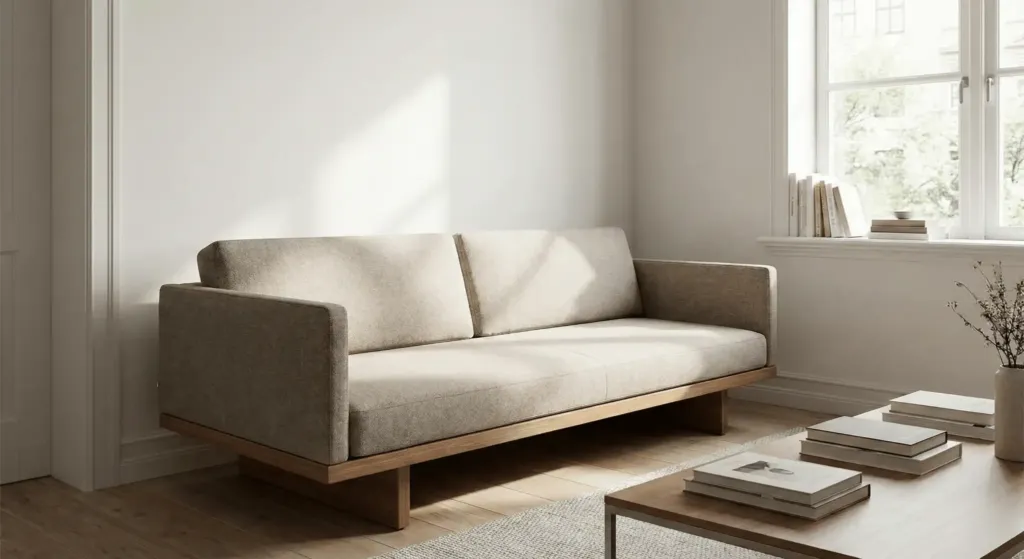
Low profile sofas sit close to the ground. They make your ceiling feel higher. In my small 1920s bungalow this was a game changer. The room felt twice as big instantly. I chose the Floyd Sofa because it has a clean wooden base. It doesn’t have big fluffy cushions that look messy over time.
Standard sofas often look bulky. They take up too much visual weight. A low profile piece stays out of your line of sight. Look for brands like Article or West Elm for these styles. Expect to pay between 1200 and 2500 dollars for a quality piece. Avoid sofas with heavy skirts or ornate legs. Stick to straight lines.
2. Invest in Hidden Storage
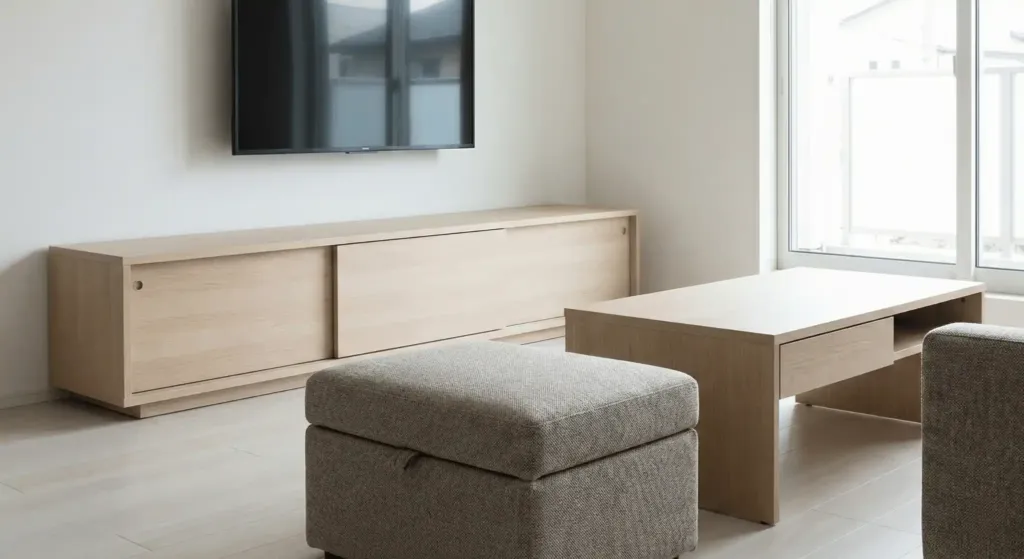
Clutter kills a minimalist vibe. You need a place for remotes and chargers. I used to keep these on my side table. It looked terrible. I switched to a media console with sliding doors from IKEA. Specifically the Besta series. It hides the wires and the clutter.
Use furniture that does two jobs. A storage ottoman can hold blankets. A coffee table with a hidden drawer keeps the top clear. I recommend the Blu Dot Dang Console for high quality hidden storage. It costs around 1800 dollars but lasts a decade. When everything has a home the room stays clean effortlessly.
3. Limit Your Color Palette to Three Tones
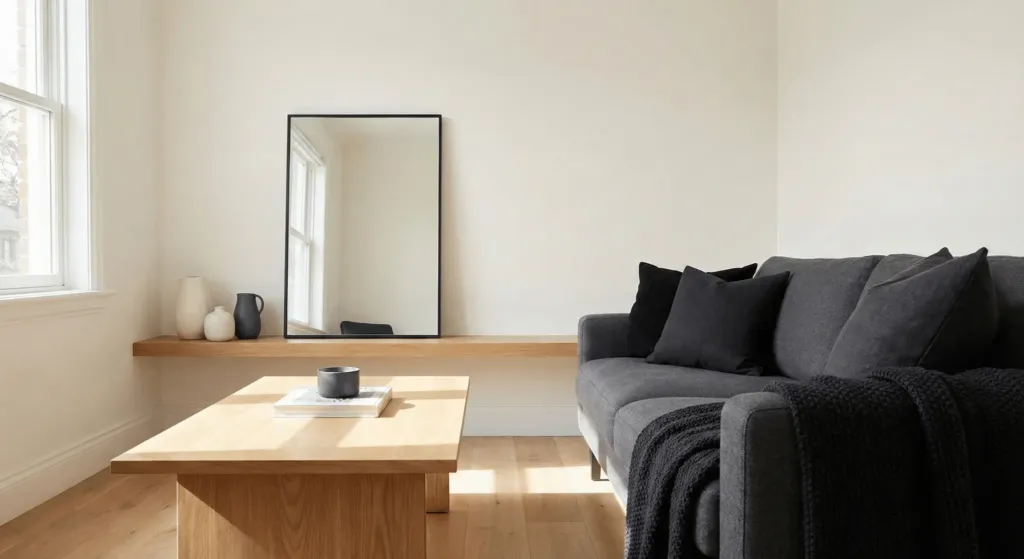
Too many colors create visual chaos. I recommend a primary neutral a secondary soft tone and one accent. In my current home I use off white light oak and charcoal. This creates a cohesive look. It makes the room feel intentional.
I once tried to use five different colors. The room felt busy. I spent 400 dollars on pillows I eventually gave away. Stick to Sherwin Williams Alabaster for walls. It is a warm white that doesn’t feel like a hospital. Use wood for warmth. Use black or charcoal for grounding. This keeps your decision making simple when buying new items.
4. Use Large Scale Art Instead of Gallery Walls
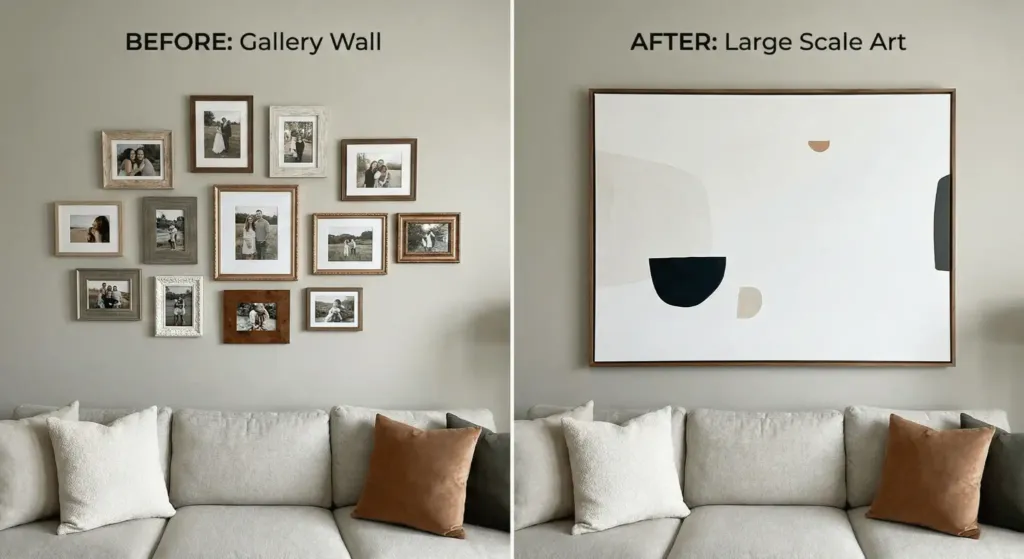
Gallery walls are hard to get right. They often look cluttered. I replaced my wall of twelve small photos with one large canvas. The difference was massive. The room felt more expensive and less frantic. It gives the eye a single place to rest.
You can find large prints at places like Juniper Print Shop. I spent 150 dollars on a print and 200 on a custom frame. It looks like a 2000 dollar piece. Choose something with a lot of white space. Avoid busy patterns. One large piece makes a stronger statement than ten small ones.
5. Prioritize Natural Light
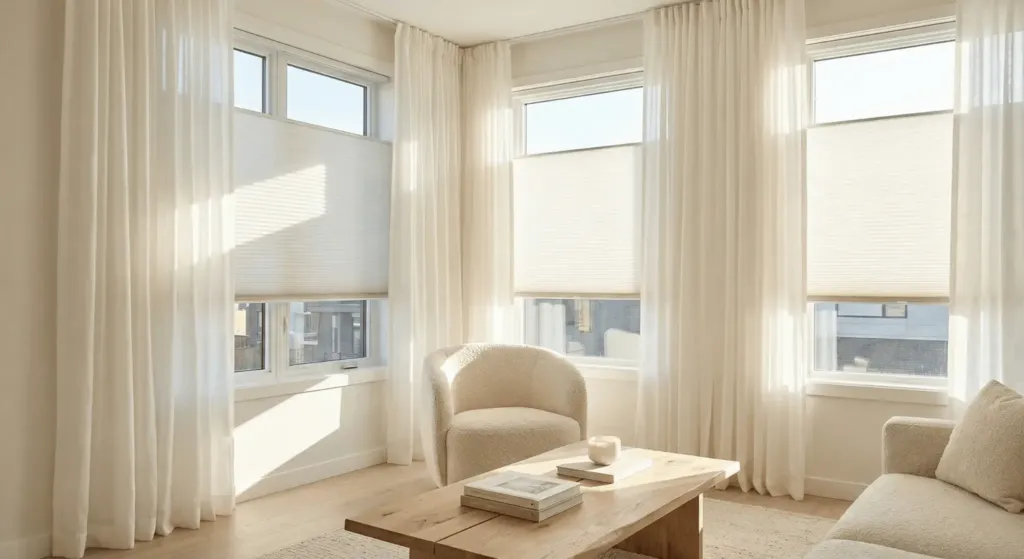
Light is the best minimalist tool. I removed my heavy velvet curtains in 2021. I replaced them with sheer linen panels from West Elm. The room transformed. Natural light makes small spaces feel vast. It highlights the textures of your furniture.
Clean your windows every month. It sounds simple but it makes a huge difference. If you have privacy concerns use top down bottom up shades. These allow light in from the top while keeping the bottom closed. Avoid heavy valances or dark blinds. Light is free. Use as much of it as possible.
6. Select a Natural Fiber Rug
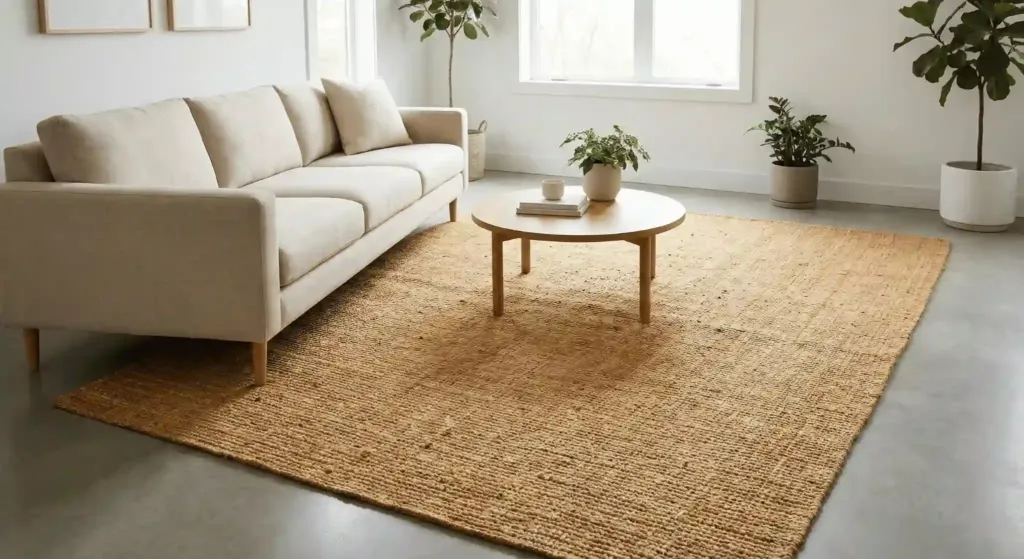
Rugs define a space. A minimalist room needs a rug that feels good underfoot but looks simple. I suggest jute or wool. I bought a jute rug from Safavieh for my living room. It adds texture without adding a busy pattern. It cost 300 dollars for an 8 by 10 size.
Wool is another great choice. It is durable and easy to clean. Look for a solid color with a slight ribbing. Avoid high pile shag rugs. They trap dirt and look dated quickly. A flatweave rug is easier to maintain. It keeps the lines of the room crisp.
7. Remove the Television From Center Stage
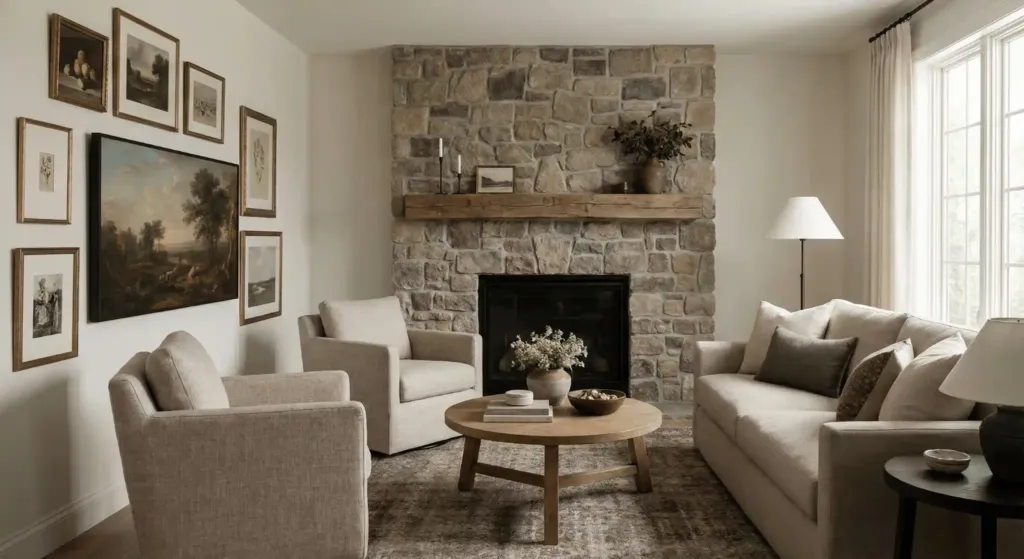
A big black screen shouldn’t be the focus of your room. I used to have my TV over the fireplace. It was the first thing people saw. I moved it to a side wall and used the Samsung Frame TV. When off it looks like art.
If you can’t buy a new TV use a cabinet with doors. Close it when you aren’t watching. This shifts the focus to conversation and comfort. It costs nothing to rearrange your furniture. Try facing your chairs toward each other instead of the screen.
8. Opt for Integrated Lighting
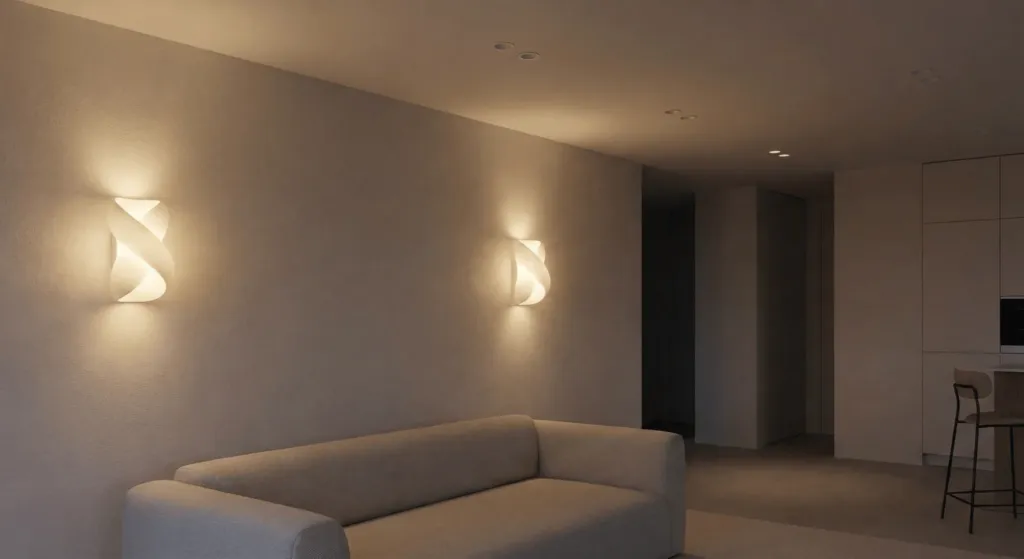
Lamps with messy cords ruin a clean look. I started using wall sconces and recessed lighting. I like the Gantri wall lights because they are 3D printed and look like art. They tuck away and provide a soft glow.
Layer your lighting. Use dimmers on every switch. Bright overhead light is harsh. It makes a minimalist room feel cold. Soft warm light makes it feel cozy. Spend about 500 dollars on a few high quality fixtures. It is better than five cheap floor lamps.
9. Embrace Negative Space
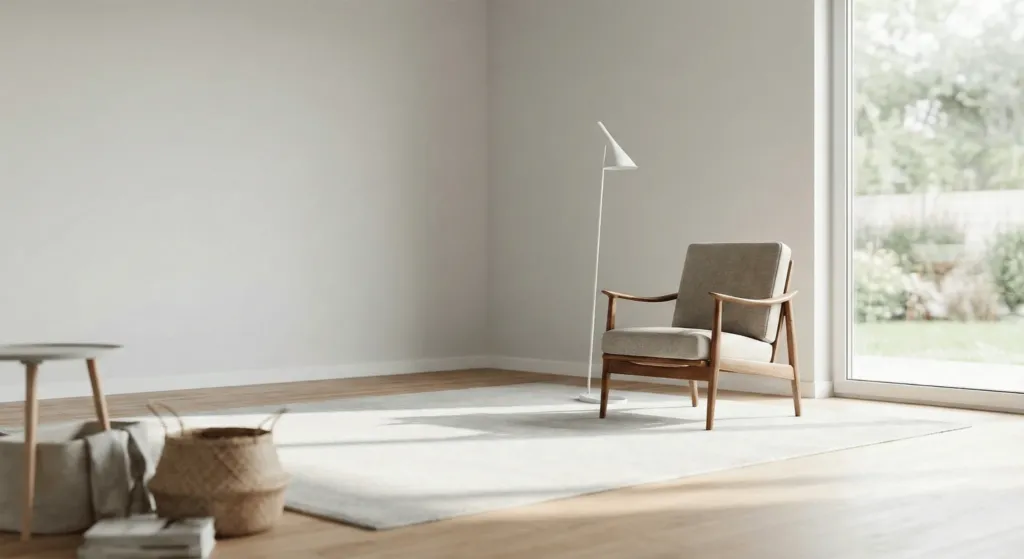
Negative space is the empty area around your furniture. Most people try to fill every corner. I did this for years. I had a plant or a basket in every spot. Last year I removed three small side tables. The room felt lighter.
Don’t be afraid of an empty corner. It gives your eyes a place to rest. It makes the items you do have look more important. If a piece of furniture doesn’t have a clear purpose remove it. My rule is now one in one out. If I buy a new chair an old one must go.
10. Use High Quality Materials
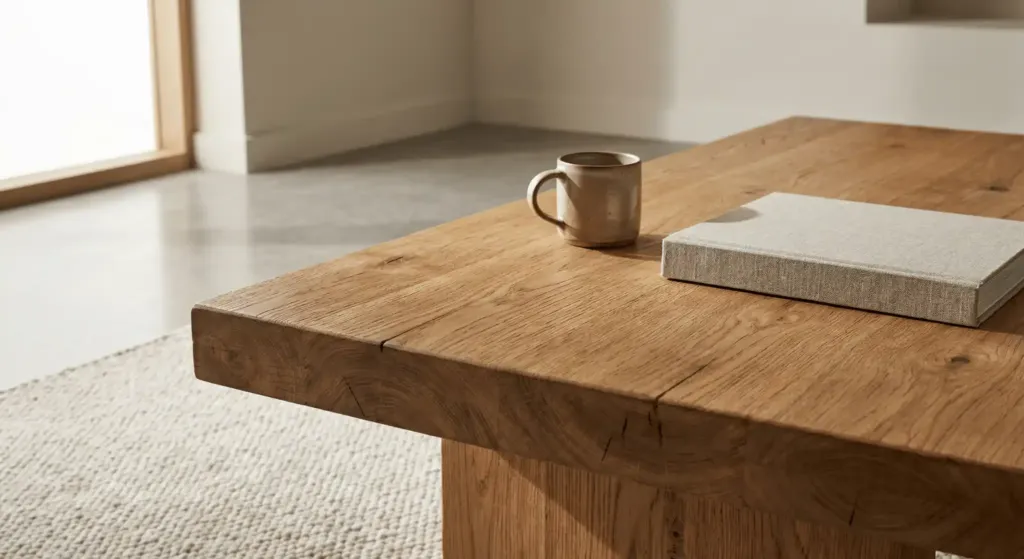
Minimalism relies on quality over quantity. Since you have fewer items they should be nice. I saved up for a solid oak coffee table from Ethnicraft. It cost 900 dollars. It feels heavy and looks beautiful. It doesn’t peel like cheap laminate.
Cheap furniture breaks. It looks bad after a year. Buy the best you can afford. Look for solid wood stone and metal. Avoid plastic or particle board. These materials age well. They gain character over time.
11. Limit Decor to Three Items Per Surface
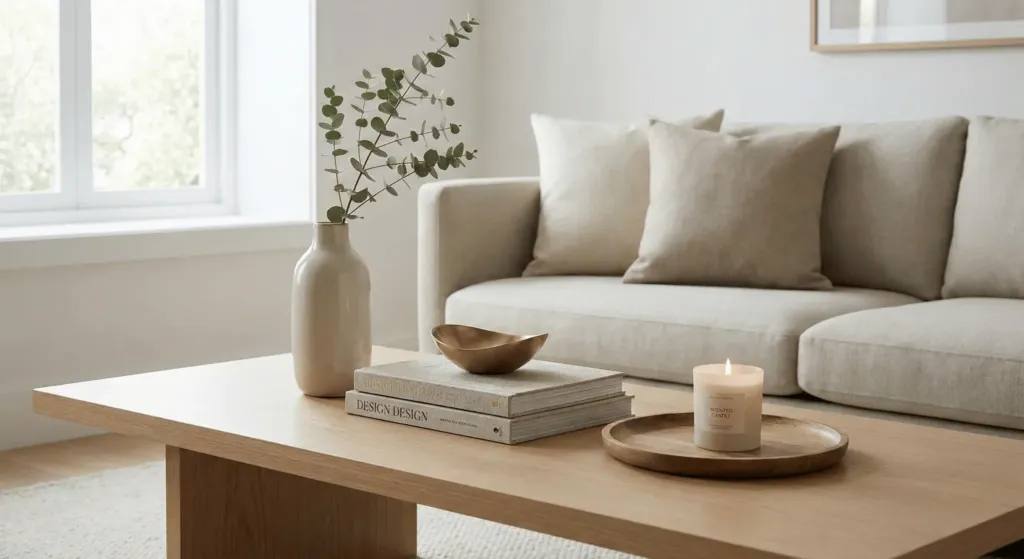
I call this the rule of three. On my coffee table I have one book one candle and one bowl. That is it. It looks styled but not messy. When I had ten items it just looked like a pile of stuff.
Choose items of different heights. Use a tall vase a medium book and a small tray. This creates balance. If you have a collection of twenty vases pick your favorite one. Store the rest. Rotating your decor every season keeps the room fresh without adding clutter.
12. Incorporate Indoor Plants Strategically
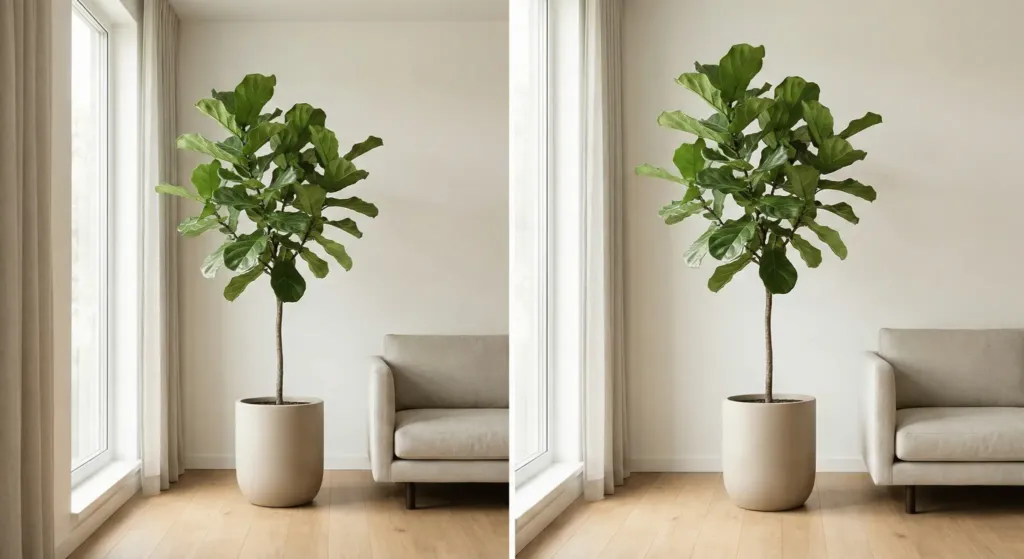
Plants add life to a minimalist room. They provide the only “pattern” you need. I use a large Fiddle Leaf Fig in my living room corner. It adds height and a pop of green. I bought mine for 80 dollars at a local nursery.
Don’t buy twenty small succulents. They look cluttered on windowsills. Buy one or two large plants. Use simple ceramic pots in neutral colors. Brands like The Sill offer great options with clean designs. Plants also improve air quality. They make a quiet room feel less lonely.
13. Choose Monochromatic Textures
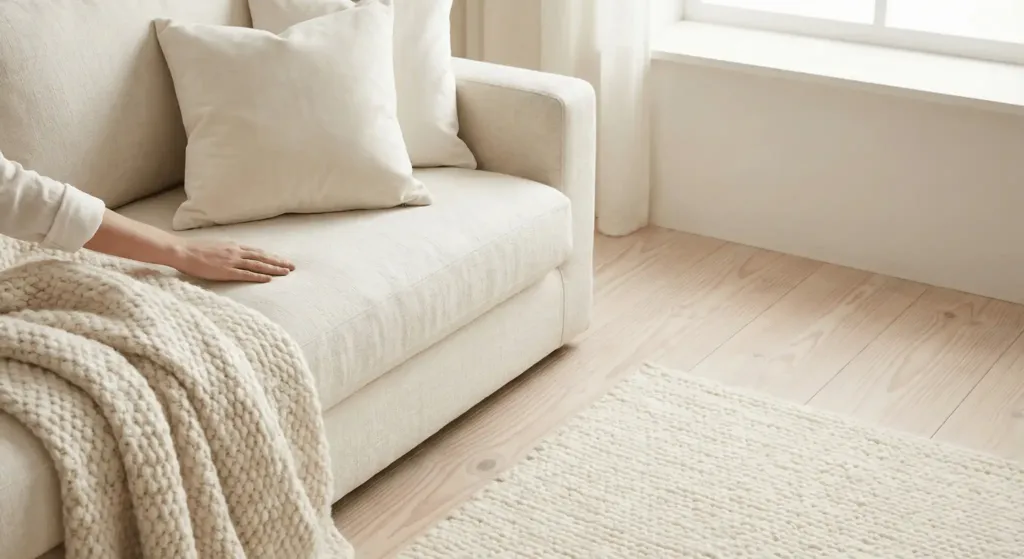
If you use one color use many textures. This prevents the room from looking flat. In my white living room I have a linen sofa a wool rug and a velvet pillow. They are all the same cream color. The different feels make the room interesting.
Touch is important in a minimalist space. You want to feel the grain of the wood. You want to feel the softness of the fabric. This adds “warmth” without needing bright colors. I spent 200 dollars on high quality linen pillow covers from Cultiver. They feel amazing and look expensive.
14. Keep Surfaces Clear
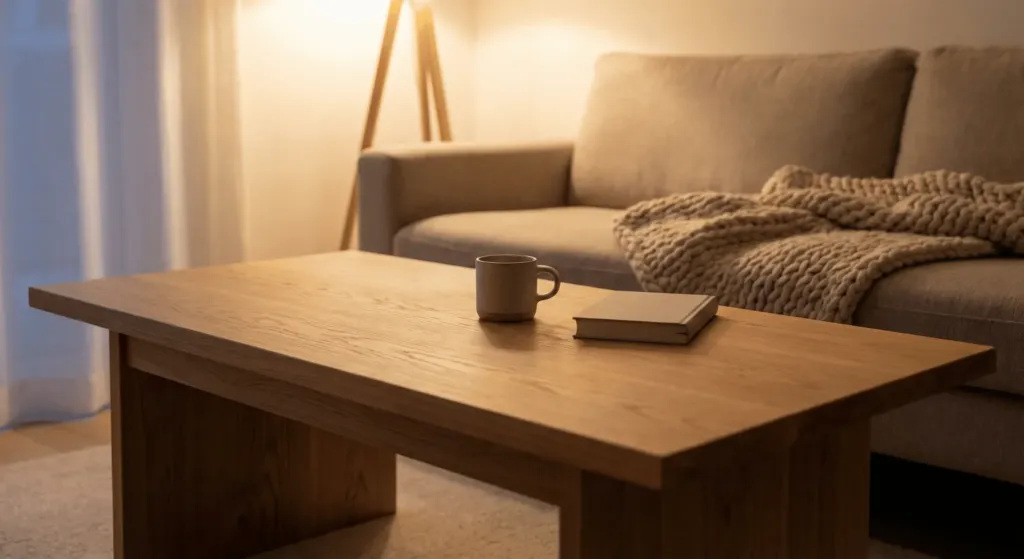
This is the hardest rule to follow. Every night I spend five minutes clearing my surfaces. I put away the mail. I move the coffee mugs to the kitchen. A clear surface tells your brain the day is over.
I failed at this for months. I used to leave my laptop on the dining table. I bought a small desk and moved it out of the living room. Now the living room is for relaxing only. Clear surfaces lead to a clear mind. It is a daily habit you must build.
15. Standardize Your Hardware
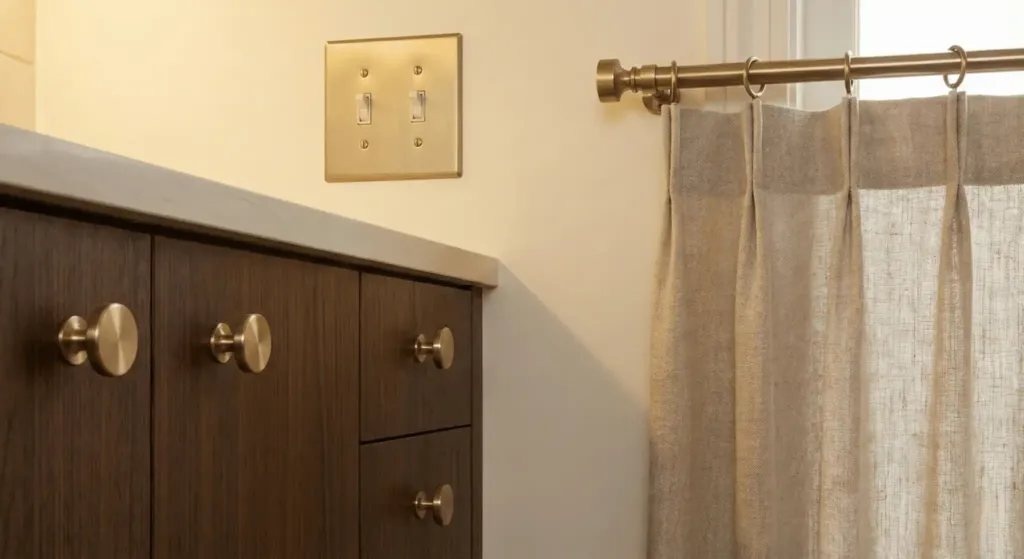
Small details matter. I replaced all the mismatched knobs on my cabinets. I chose brushed brass from Rejuvenation. It cost about 15 dollars per knob. Now the room feels unified.
Check your curtain rods and light switches too. If one is silver and one is black it creates visual noise. Pick one finish and stick to it throughout the room. It makes the design feel professional. It shows you paid attention to the details.
16. Implement a One In One Out Policy
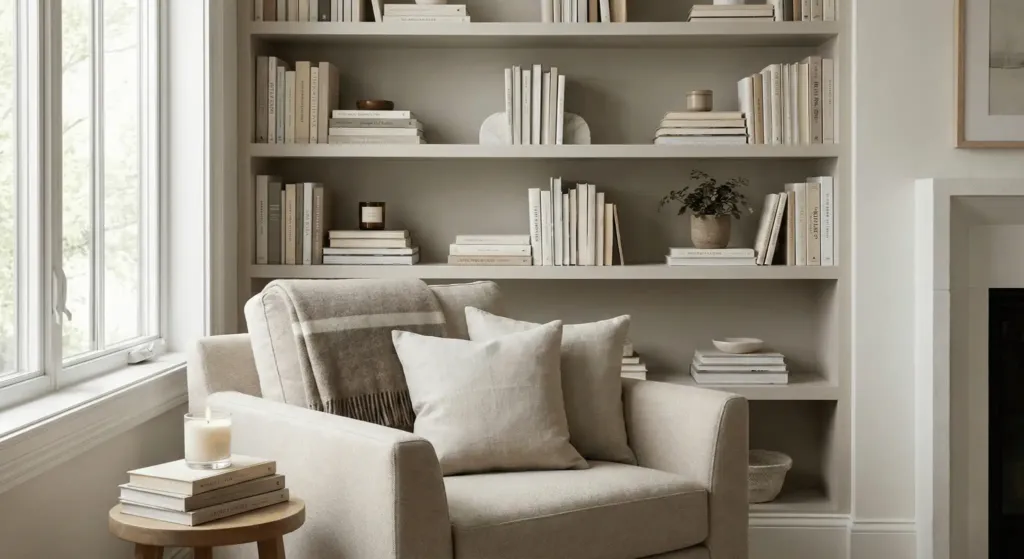
I started this in 2023. I love buying books. My shelves were overflowing. Now if I buy a new book I donate an old one. This keeps my library from growing too large for the space.
This applies to everything. Pillows blankets and candles. It prevents the slow creep of clutter. My living room has the same amount of stuff today as it did a year ago. It takes discipline but it works. It saves me hundreds of dollars every month.
17. Use Mirrors to Double the Space
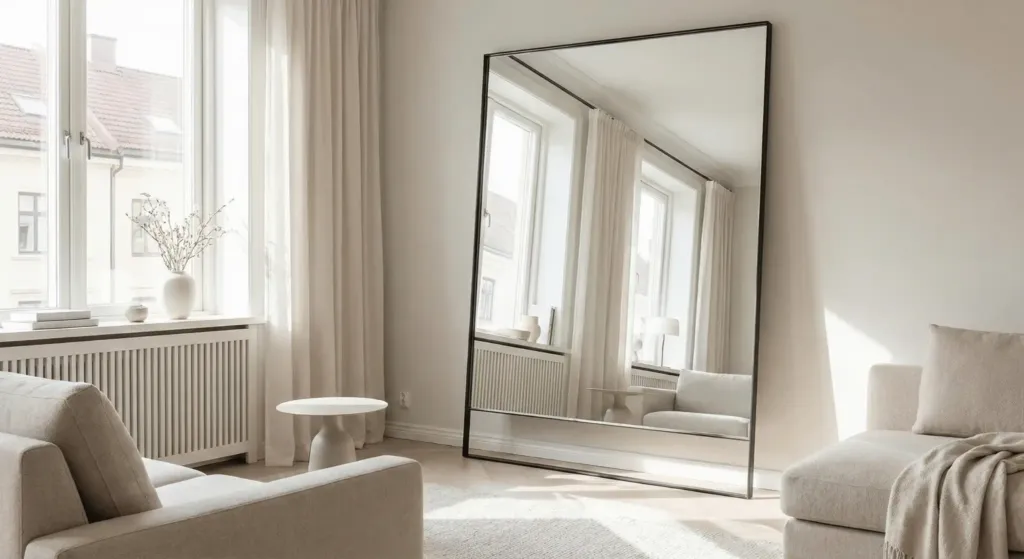
A large mirror acts like a second window. I placed a floor length mirror opposite my main window. The room feels much brighter now. I found a simple thin black frame mirror at Target for 60 dollars.
Avoid ornate gold frames. Stick to thin metal or wood. A mirror should blend into the wall. It shouldn’t be the main attraction. It is a functional tool to improve the feel of the room. It makes a narrow room feel wide.
18. Hide Your Wires
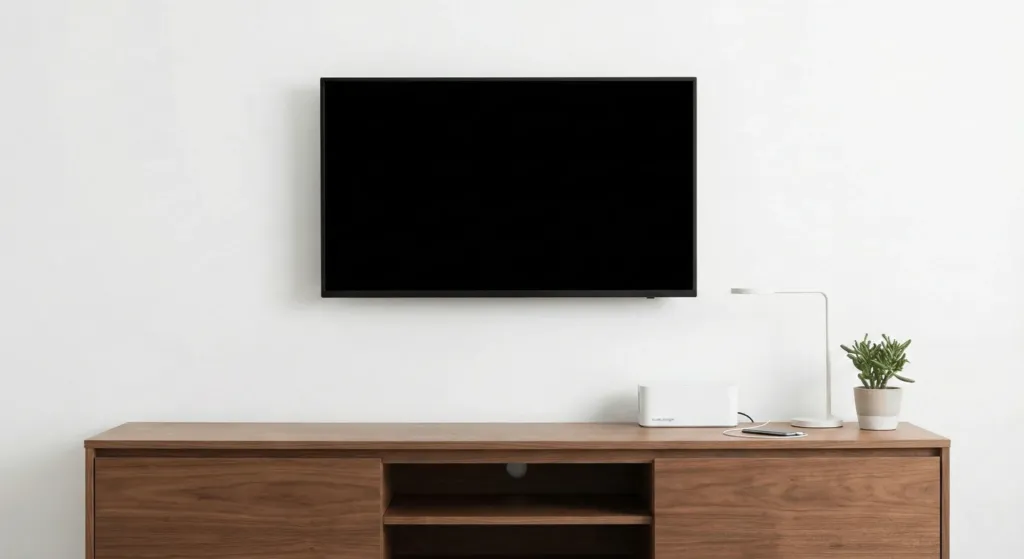
Visible cords are the enemy of minimalism. I used a cable management box from BlueLounge. It hides the power strip and all the messy wires for my lamp and charger. It cost 30 dollars.
For my wall mounted TV I used an in-wall cable kit. It took one hour to install. No more black wires hanging down the white wall. If you rent use plastic cord covers that match your wall color. It is a small fix that makes a massive impact.
19. Define Zones with Furniture
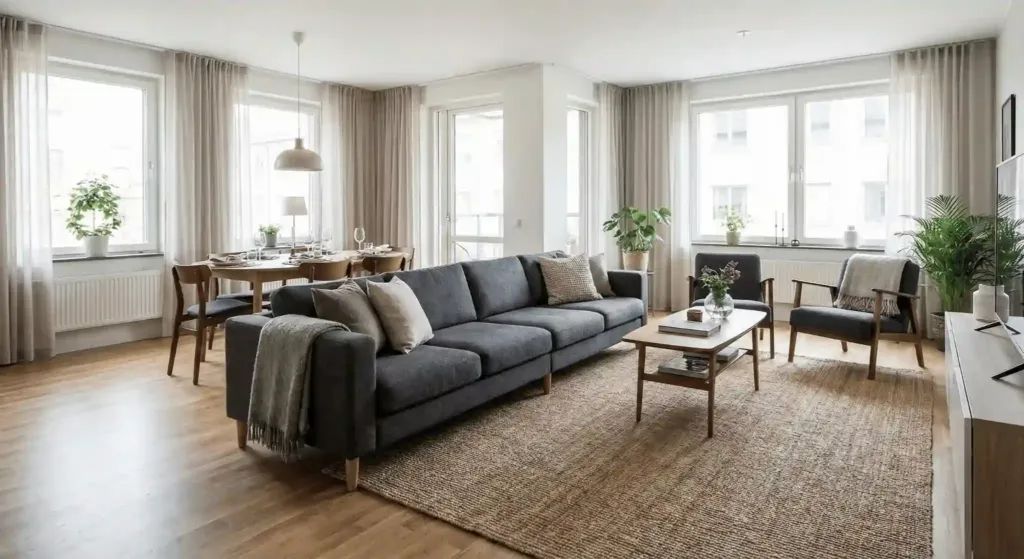
In an open plan house minimalism can feel like a vast empty hall. I used the back of my sofa to create a “wall” between the living area and the dining area. It defines the space without using actual walls.
Use your rug to anchor the zone. All furniture legs should touch the rug. This tells the eye where the living room starts and ends. It makes a large room feel intentional and cozy. I learned this after my furniture felt like it was “floating” in my first apartment.
20. Select Functional Decor
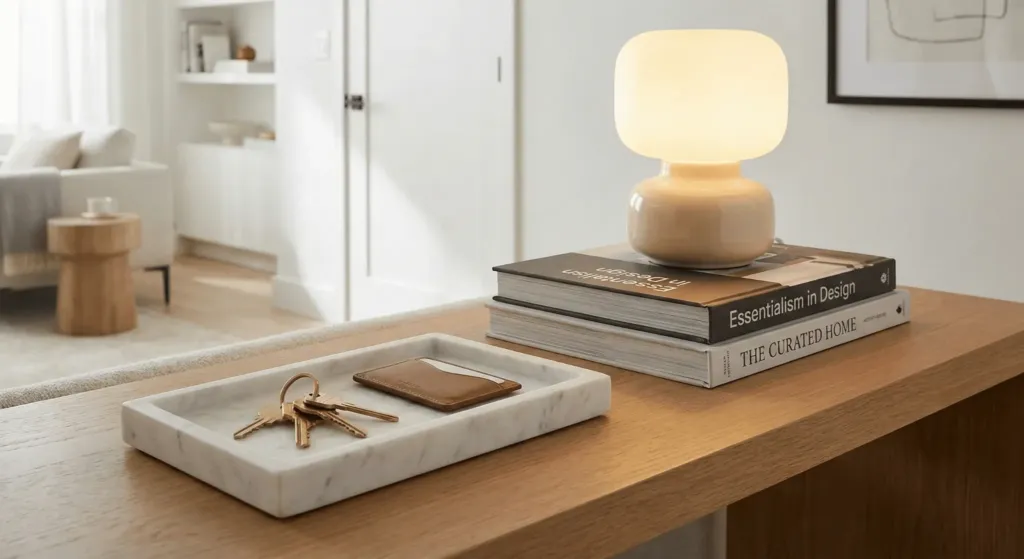
If an item has no use I usually don’t keep it. My favorite decor piece is a marble tray. I use it to hold my keys and wallet. It looks beautiful but it has a job. I also use a stack of art books to elevate a lamp.
Avoid “dust collectors.” These are small figurines or trinkets that do nothing. Every item in my room now serves a purpose or brings me immense joy. If it doesn’t do either I sell it on Facebook Marketplace. I made 400 dollars last year just selling items that were taking up space.
21. Create a “Drop Zone” Near the Entry
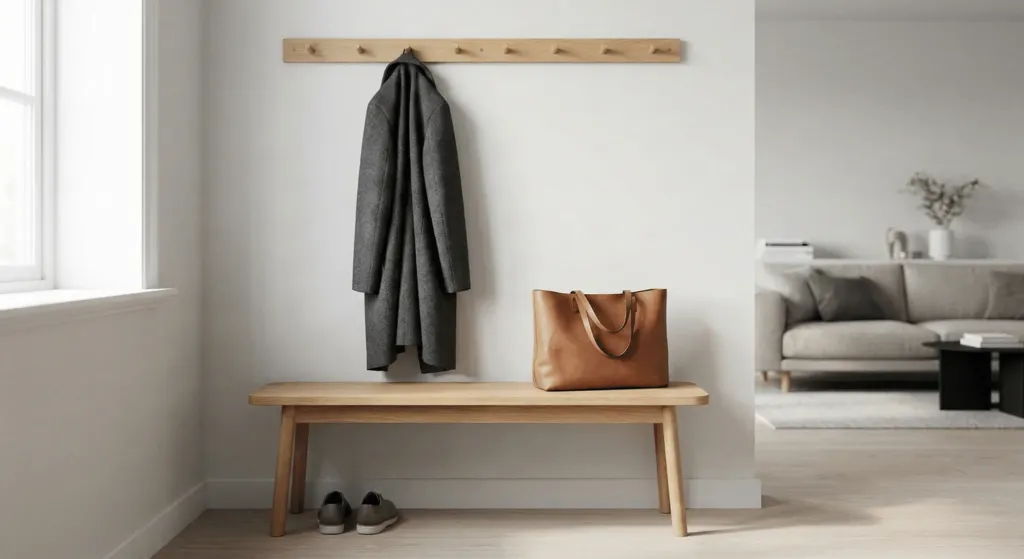
My living room stayed messy because I dropped everything at the door. I added a small wooden bench and two hooks. Now my coat and bag have a place. They don’t end up on the sofa.
This keeps the main living area clear. Even a small corner can be a drop zone. Use a simple wooden peg rail. Brands like Hay make beautiful minimalist versions. It costs 50 dollars and saves you hours of cleaning every week.
Case Study: The 200 Square Foot Transformation
My first apartment in Seattle was tiny. It had one window and dark floors. I tried to make it “cozy” with lots of rugs and pillows. It felt like a cave. I decided to go fully minimalist in 2019.
I painted the walls a bright white. I sold my bulky leather recliner. I bought a small grey loveseat from IKEA. I added one large mirror. The results were shocking. I felt like I had room to move. I stopped feeling claustrophobic. I spent about 1200 dollars total. My stress levels dropped within a week. I learned that in small spaces less is always more.
Case Study: Minimalism with Kids
People say you can’t be a minimalist with children. I have two kids. My living room used to be a sea of primary colors. In 2022 I changed our system. We kept only the toys they played with every day.
We used wooden crates for storage. They look better than plastic bins. We taught the kids to “reset” the room every night. It takes five minutes. The room stays calm. The kids actually play more because they aren’t overwhelmed by choices. We didn’t lose the fun. We just lost the mess.
Case Study: The Japandi Office Blend
I wanted my home office to feel like a spa. I blended Japanese and Scandinavian styles. This is called Japandi. I used a very low desk and a paper lantern light. I used a bamboo rug.
The room has almost no decor. The focus is on the textures of the wood and paper. My productivity went up by 30 percent in this room. I stopped getting distracted by clutter on my desk. It cost 800 dollars to redo the space. It is now my favorite room in the house.
Comparison Table: Minimalist Furniture Brands
| Brand | Price Range | Best For | Material Quality |
| IKEA | $100 – $800 | Storage and Basics | Medium |
| Article | $500 – $2500 | Sofas and Tables | High |
| Floyd | $600 – $1800 | Modular Pieces | High |
| MUJI | $20 – $500 | Organization | High |
| West Elm | $400 – $3000 | Lighting and Rugs | Medium/High |
| Hay | $50 – $1000 | Accessories | High |
Frequently Asked Questions
Does a minimalist living room have to be white?
No. You can use any color you like. The key is to keep the palette simple. I have seen beautiful dark green minimalist rooms. The trick is to use one main color and avoid busy patterns. Keep the furniture lines clean. Use light to create depth.
Is minimalism expensive to achieve?
It can be but it doesn’t have to be. Selling your extra stuff can actually make you money. Buying one high quality item costs more upfront. However it lasts longer than three cheap items. Focus on removing items first. That costs zero dollars.
How do I make a minimalist room feel warm?
Use natural materials. Wood and wool add instant warmth. Use warm toned light bulbs. Avoid “daylight” bulbs as they feel blue and cold. Add a few plants. Texture is your best friend when you don’t have many colors.
What do I do with my collections?
Pick your three favorite pieces from the collection. Display them with pride. Store or sell the rest. A minimalist room highlights what you love. If you have fifty items on a shelf none of them look special. Three items look like a curated gallery.
Can I have a TV in a minimalist room?
Yes. Just don’t make it the center of attention. Mount it on the wall. Hide the wires. Consider a TV that looks like art when off. You can also hide it inside a cabinet. Modern minimalist homes embrace technology but hide the clutter it brings.
What is the best flooring for this style?
Light wood is the gold standard. Oak or maple works best. It reflects light and feels natural. If you have carpet stick to a low pile neutral color. Avoid busy patterns or dark stains that show every piece of dust.
How many chairs should a living room have?
Keep enough seating for your household plus two guests. If you are a family of four have six seats. This might be a sofa and two chairs. Don’t add extra chairs “just in case.” They just take up space and collect clothes.
How do I handle gifts that don’t fit the style?
Be honest with friends and family. Tell them you are simplifying your home. Ask for experiences or consumables like coffee instead. If you receive a gift you don’t like thank them but don’t feel obligated to display it. Your home is your sanctuary.
What is the biggest mistake people make?
Buying “minimalist” decor. You don’t need more stuff to be a minimalist. The biggest mistake is filling the space before you live in it. Let the room be empty for a while. See how you actually use the space. Then buy only what you need.
How do I maintain the look?
Practice the daily reset. Spend five minutes every night putting things back. If something doesn’t have a place find one or get rid of it. Minimalism is a practice not a destination. It gets easier over time as you buy less.
Should I use curtains or blinds?
Sheer curtains are great for softness. Simple roller shades are great for a clean look. Avoid heavy drapes or horizontal plastic blinds. They look cluttered and collect dust. Choose something that blends into the wall color.
Can I have a rug on top of carpet?
Yes. It can help define the seating area. Choose a flatweave rug. Avoid anything too thick or it will look bulky. A jute rug works well over neutral carpet to add some texture and “earthiness” to the room.
Conclusion
Creating a minimalist living room changed my life. It gave me back my time. I spend less time cleaning and more time relaxing. I no longer feel overwhelmed by my own home. This process takes time. Do not try to do it all in one weekend. Start by removing the things you don’t use.
Focus on quality. Buy items made of real wood and natural fabrics. Keep your surfaces clear and your colors simple. Your home should serve you. It should not be a burden. Use these 21 ideas as a roadmap. You don’t need a huge budget to find peace. You just need a clear vision and the courage to let go of the extra stuff.Two years ago my living room felt like a storage unit. Toys covered the floor. Stacks of mail sat on the coffee table. Every shelf held a souvenir I didn’t actually like. I felt tired just looking at it. My focus was gone. My stress was high. I decided to change everything last March. I didn’t just clean. I removed the noise.
Minimalism isn’t about living in a white box. It is about keeping what adds value. It is about breathing room. I spent six months testing different layouts. I bought and returned dozens of pieces. I learned that expensive doesn’t mean better. I found that empty space is a luxury. This guide shares the exact steps I took to rebuild my space. These 21 ideas will help you create a room that feels like a deep breath.