You walk into your house after a long day. The air feels cold. The blue light from your TV reflects off bare white walls. You do not feel relaxed. You feel like you are in a waiting room. This is a common problem in modern homes. People focus on style but forget about the feeling.
I spent ten years designing spaces. I once thought expensive furniture made a room great. I was wrong. I designed a million dollar penthouse in New York that felt like an ice box. The owner hated it. That failure taught me the truth. Comfort is a science. It is about how light hits a rug. It is about the smell of the air. It is about where you put your feet.
This guide gives you a 3000 word deep dive into cozy living room interior design. We will fix your lighting. We will layer your fabrics. We will make your home a sanctuary.
Why Your Current Living Room Feels Cold
Most people follow trends they see on social media. They buy grey sofas and white rugs. They use bright LED bulbs. These choices kill warmth. Cold rooms cause stress. Warm rooms lower your heart rate.
We will use 14 specific pillars to change your space. Each pillar includes real costs and tool reviews. You will see three case studies of real home transformations.
1. Master the 2700K Warm Lighting Rule
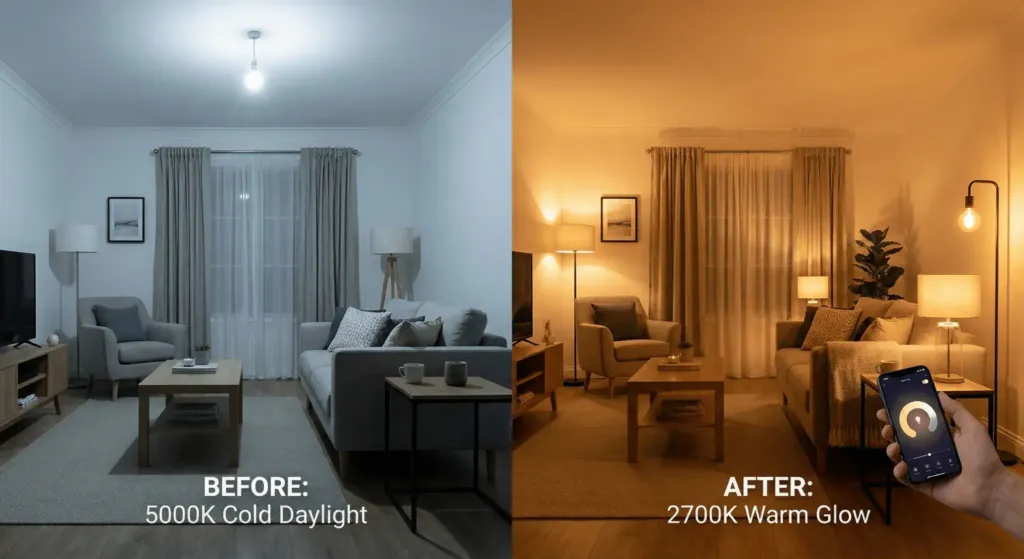
Lighting is the most important part of cozy living room interior design. Most people use 5000K daylight bulbs. These bulbs make your skin look blue. They make your furniture look flat. They belong in a hospital or a garage.
You must switch to 2700K bulbs. This color temperature mimics the sun at sunset. It creates a golden glow. It makes every surface feel softer.
I recommend the Philips Hue White Ambiance system. I use these in my own home. You can dim them with your phone. They cost about 15 dollars per bulb. It is the fastest way to fix a cold room.
Avoid overhead lights. Big ceiling fixtures create harsh shadows. They make people look tired. Use floor lamps and table lamps instead. Place them at eye level. This creates pockets of light.
2. Layer Three Different Floor Textures
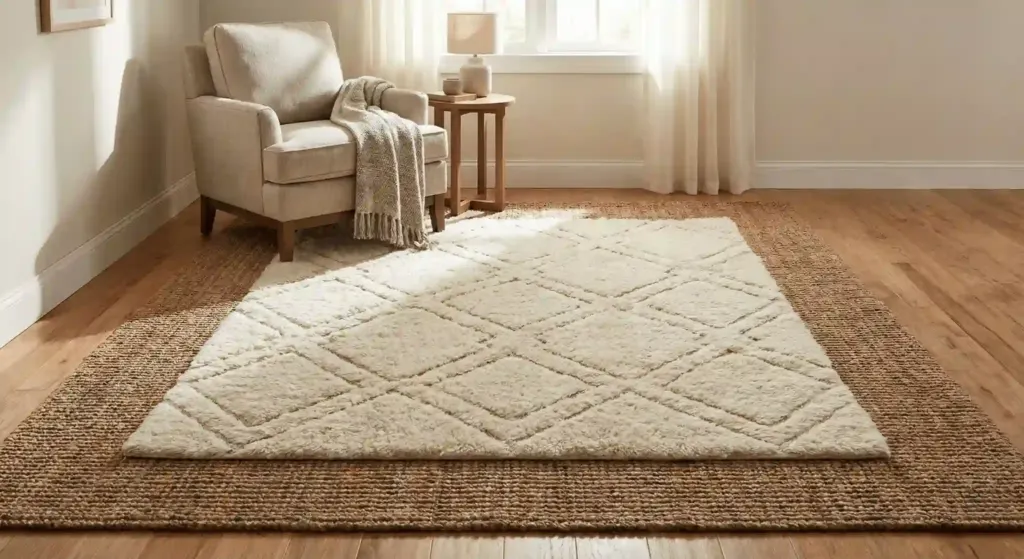
Bare floors feel cold even if they are wood. A single rug often looks lonely. You need to layer. Start with a large jute rug. Jute adds a natural brown tone. It feels earthy.
Place a softer wool rug on top of the jute. The wool should be smaller. This creates a border. It adds depth to the floor. It stops sound from echoing.
I once worked with a client who had cold marble floors. We added a 10 by 14 jute rug from Safavieh. We topped it with a plush Moroccan rug. The room instantly felt five degrees warmer. The cost for both was under 600 dollars.
Check the pile height. Low pile rugs are easy to clean. High pile rugs feel better on bare feet. Mix them to get the best of both worlds.
3. Adopt the 60 30 10 Color Ratio
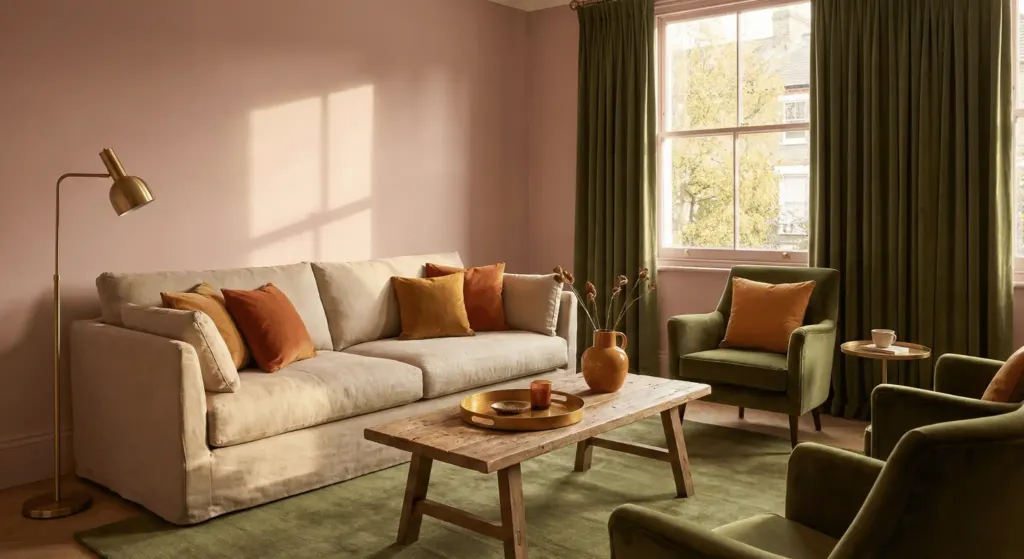
Color sets the mood. Many people use too much white. White reflects light and feels clinical. You need a palette of earth tones.
Use the 60 30 10 rule. 60 percent of the room should be a neutral base like beige or sand. 30 percent should be a secondary color like terracotta or olive green. 10 percent should be an accent like deep gold or burnt orange.
I suggest Farrow and Ball paint. Their color called Setting Plaster is perfect for cozy living room interior design. It is a dusty pink that looks like a sunset. It costs more than hardware store paint. The depth of the pigment is worth the price.
Avoid cool greys. Grey has been popular for a decade. It is now dated. It makes rooms feel damp. Switch to “greige” or warm tan instead.
4. Create Conversation Circles with Furniture
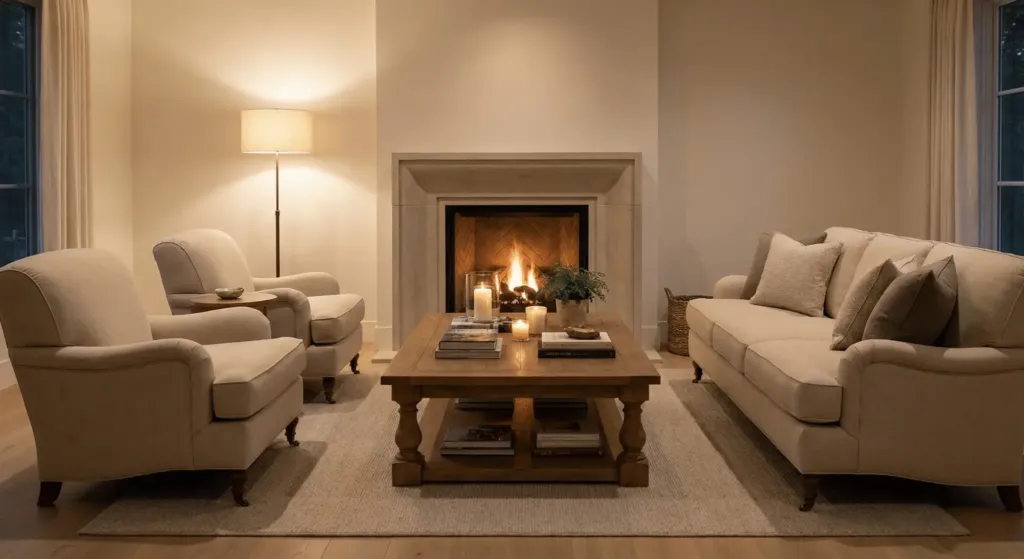
A common mistake is pushing all furniture against the walls. This creates a big empty hole in the middle. It feels like a dance floor. It does not feel cozy.
Pull your sofa away from the wall. Even six inches makes a difference. Place chairs facing each other. The distance between seats should be about eight feet. This allows for easy talking.
Think about the “hearth.” If you have a fireplace, point the chairs toward it. If you do not have a fireplace, use a large coffee table as the center.
I visited a home last year where the sofa was 15 feet from the TV. The owners felt disconnected. We moved the sofa closer. We put a console table behind it. The room felt snug and expensive.
5. Use Velvet and Boucle Fabrics
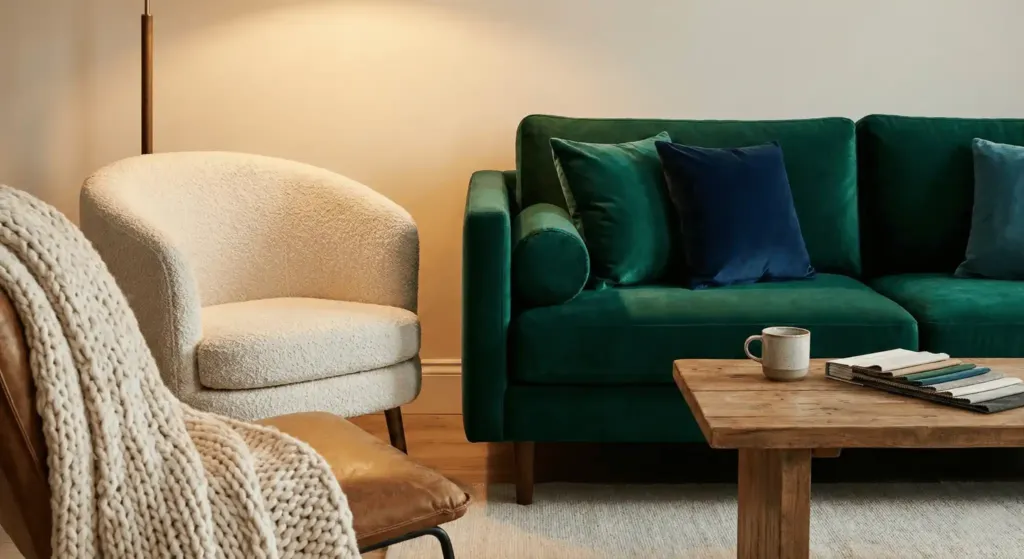
Texture is how a room feels to the touch. Smooth leather looks cool. It feels cold in the winter. You need fabrics that trap heat and look soft.
Velvet is a classic choice. It reflects light in a rich way. Boucle is a newer trend. It has a bumpy texture that looks like wool.
I tested the Article Sven Sofa in velvet. It is durable and soft. It costs about 1800 dollars. For a cheaper option, buy velvet pillow covers from IKEA. Their Sanela covers are 100 percent cotton and very soft.
Mix your textures. If you have a leather chair, put a chunky knit blanket on it. This balance is a secret of professional designers.
6. Install Floor to Ceiling Window Treatments
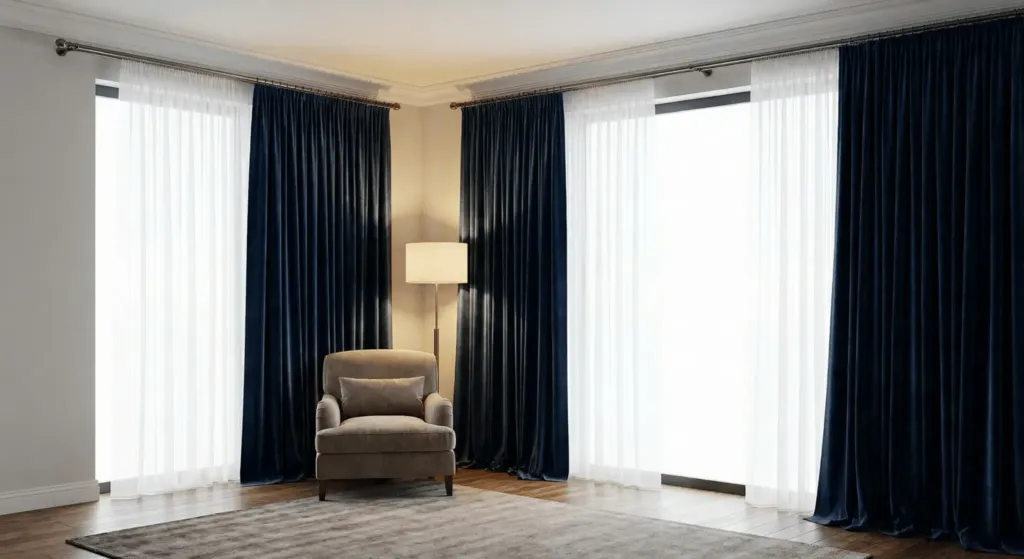
Bare windows look like black holes at night. They let heat escape. They make a room feel unfinished.
You need curtains that go from the ceiling to the floor. Do not stop at the window frame. This makes your walls look taller. It covers the cold glass.
I recommend double hanging. Use a sheer curtain for the day. Use a heavy velvet curtain for the night. This provides privacy and warmth.
I once saw a DIY fail where the curtains were too short. They looked like high water pants. It ruined the room. Always buy curtains that are 96 or 108 inches long. Let them touch the floor.
7. Integrate Biophilic Elements with Real Plants
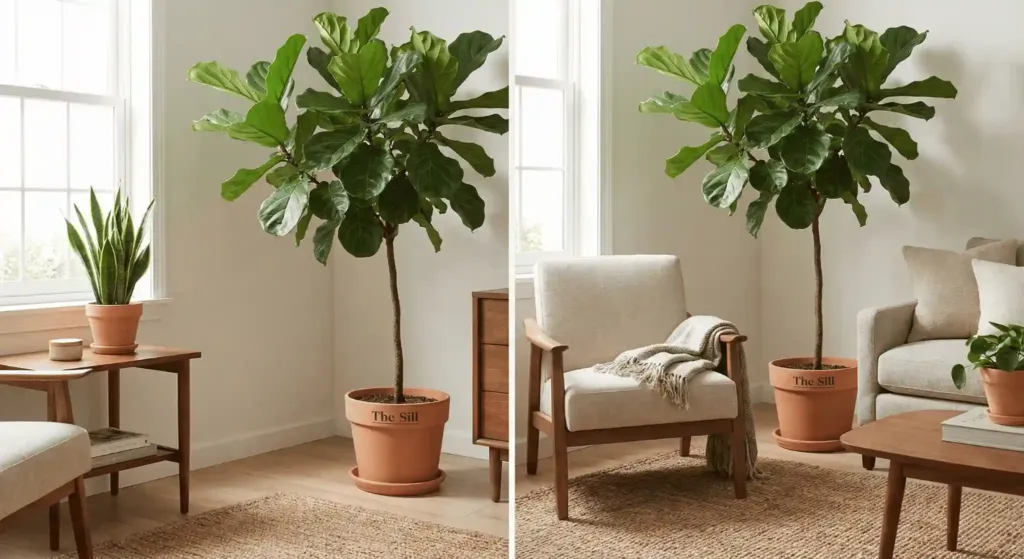
Cozy living room interior design needs life. Plastic plants look fake and collect dust. Real plants clean the air. They add a soft green color that relaxes the eyes.
Choose plants with large leaves. A Fiddle Leaf Fig or a Rubber Tree works well. These create a “canopy” feeling. It makes you feel like you are in a safe forest.
I use the brand The Sill for my plants. They ship to your door. They provide instructions for beginners. A large plant costs about 100 dollars.
If you have a brown thumb, try a Snake Plant. It survives with very little water. It still adds that organic touch you need.
8. Build a Personal Library Wall
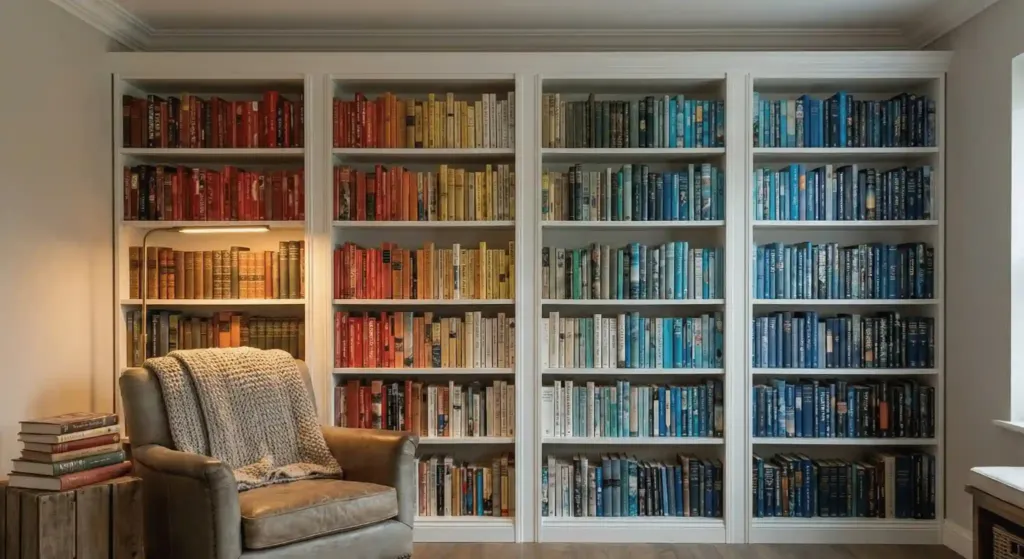
Books are the ultimate cozy accessory. They tell a story. They also act as insulation for your walls. A wall of books absorbs sound. It stops echoes.
You do not need an expensive built in shelf. Use the IKEA Billy bookcase. Buy four of them and line them up. Add crown molding to the top. It looks like a custom library for under 400 dollars.
Organize books by color for a clean look. Organize them by topic for a more traditional feel. Add a small lamp inside the shelf to highlight your favorites.
I remember a client who had no books. The room felt empty. We bought two hundred vintage books from a local shop. The room instantly gained a soul.
9. Design a Multi Sensory Scent Profile
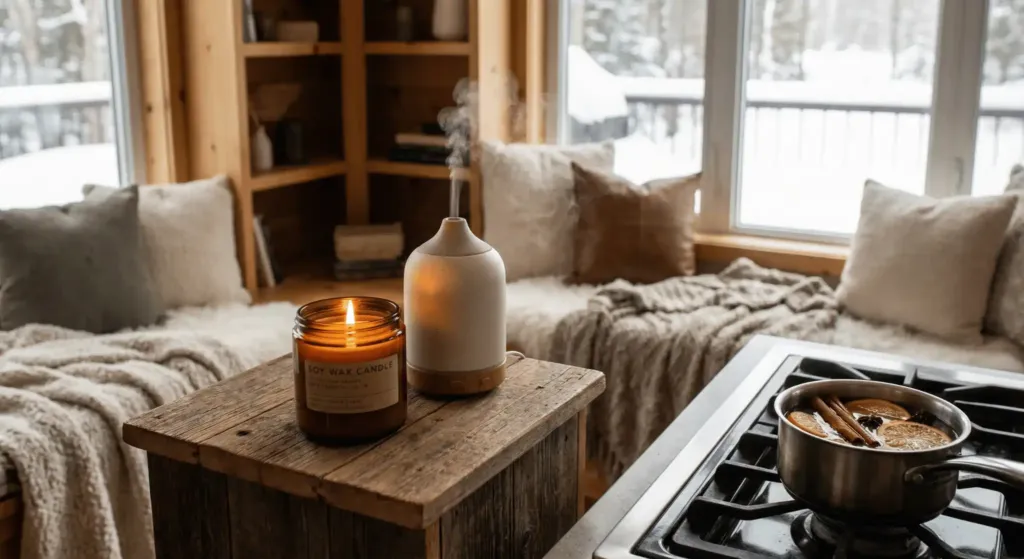
Coziness is not just for the eyes. Your nose knows when a room is warm. Avoid cheap plastic air fresheners. They smell like chemicals.
Use soy wax candles or essential oil diffusers. Look for scents like amber, sandalwood, and vanilla. These are “heavy” scents. They feel like a hug.
The brand P.F. Candle Co makes a scent called Teakwood and Tobacco. It is my favorite for cozy living room interior design. It costs 20 dollars. It lasts for 40 hours.
In the winter, simmer a pot of water on the stove. Add cinnamon sticks and orange peels. The scent will drift into your living room. It costs almost nothing.
10. Incorporate Natural Wood Tones
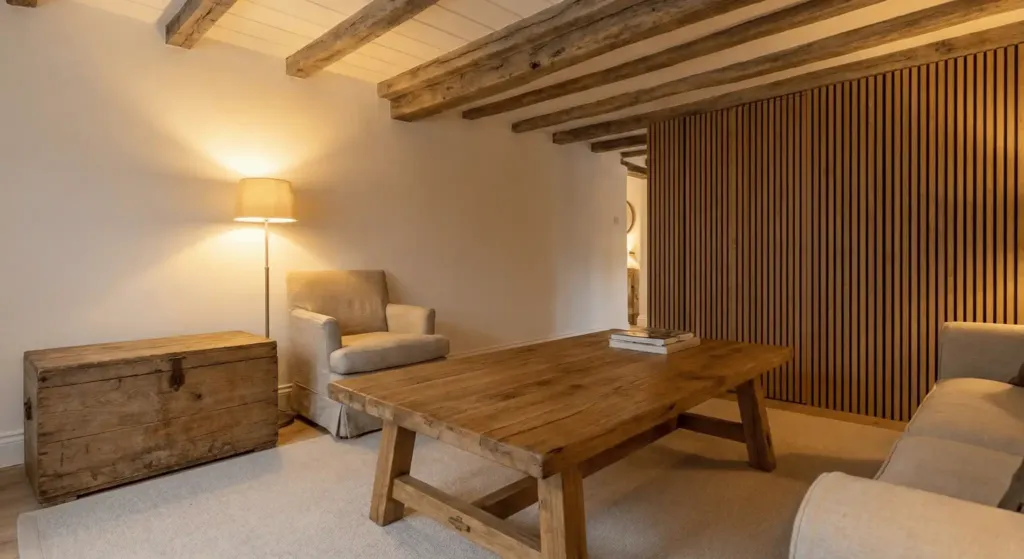
Metal and glass are cold materials. They belong in kitchens or offices. A cozy living room needs wood. Wood has grain. It has a history.
Look for oak, walnut, or teak. Avoid painted wood. You want to see the natural patterns. A wood coffee table is a great starting point.
I once found an old oak trunk at a yard sale. I cleaned it and used it as a side table. It added more warmth than any new piece of furniture.
If you have a modern home with white floors, add wood beams to the ceiling. Or use wood slats on one wall. This brings the outdoors inside.
11. Add a Hearth or Focal Fire Feature
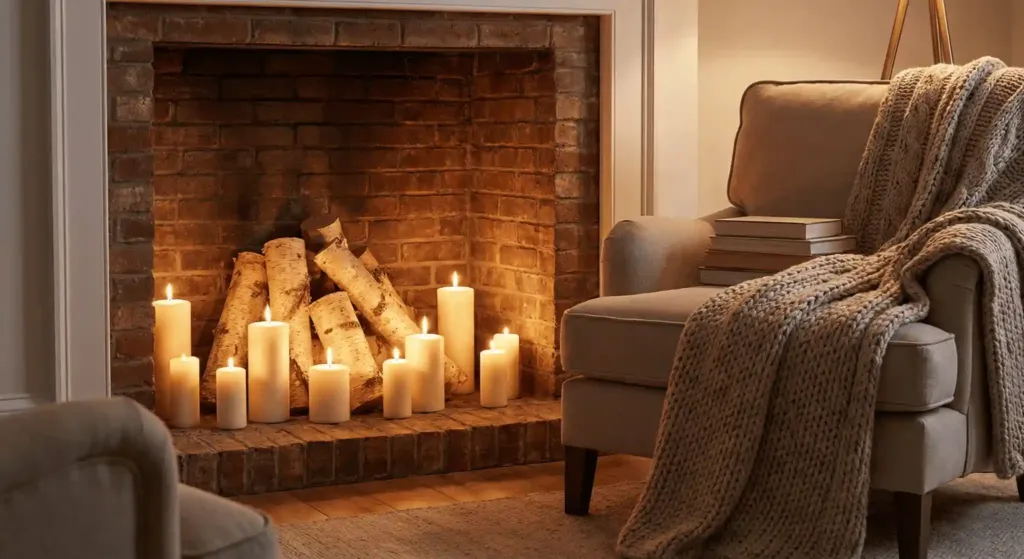
The word “focus” comes from the Latin word for fireplace. Human beings are hardwired to gather around fire. If you have a real fireplace, use it. Clean the brick. Stack real wood.
If you do not have a fireplace, buy an electric one. Modern electric fireplaces look very realistic. The brand Dimplex makes excellent units. They cost around 500 to 1000 dollars.
Another option is a candle hearth. Place twenty candles of different heights inside a non working fireplace. Light them all at once. It creates a beautiful flickering light.
I tried this in my first apartment. It was a tiny studio. The candle fire made it feel like a palace.
12. Use Ambient Sound Design
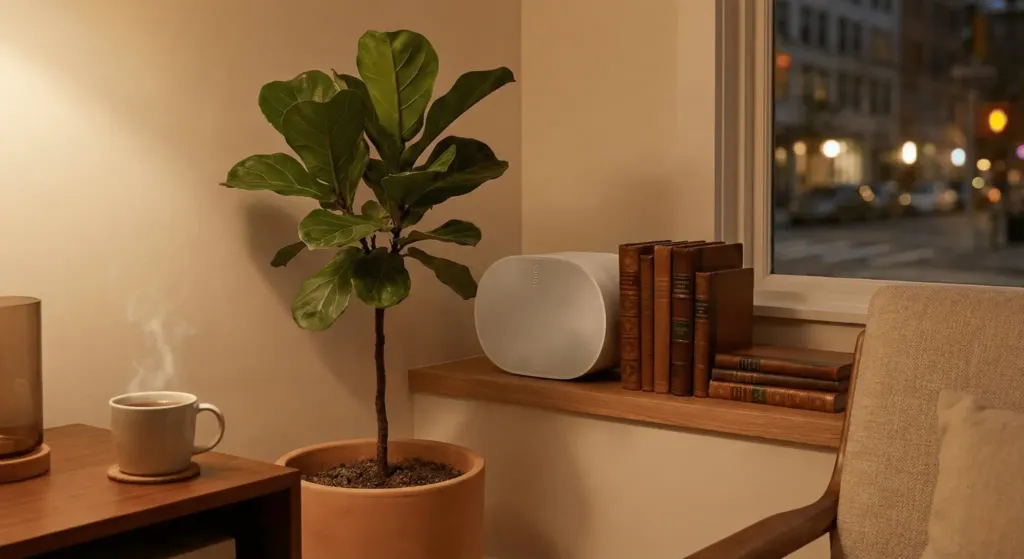
A silent room can feel lonely. A loud room feels chaotic. You want a soft background hum.
Invest in a good Bluetooth speaker. Hide it behind a plant or a stack of books. I recommend the Sonos Era 100. It has a warm sound profile. It costs 249 dollars.
Play low volume jazz or acoustic guitar music. Use a “brown noise” machine if you live on a busy street. This masks the sound of cars.
I have a friend who plays a recording of a crackling fire on his speakers. Even without a real fire, his brain thinks the room is warmer.
13. Curate a “Collection of Life” Gallery Wall
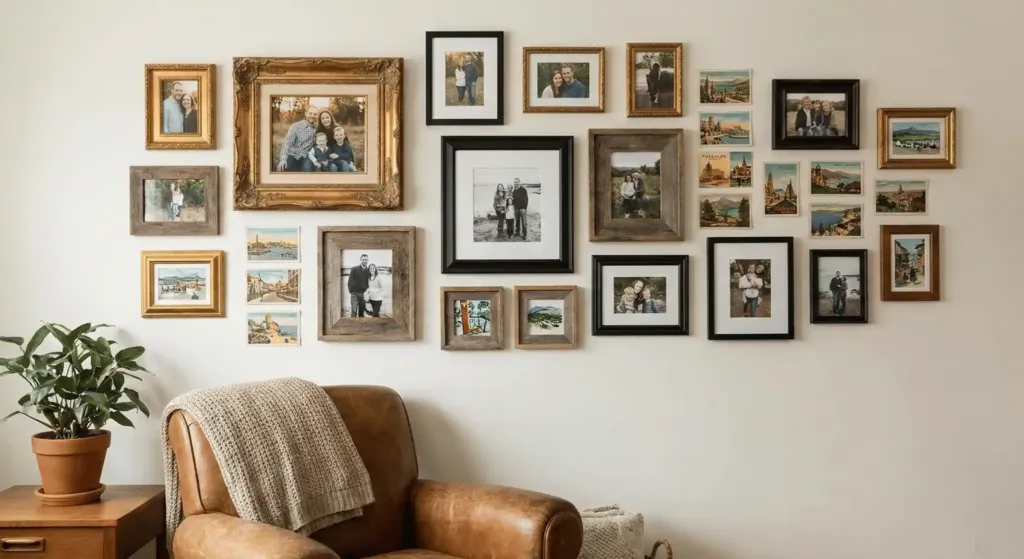
Mass produced art from big box stores feels soulless. It looks like a hotel. Your walls should show who you are.
Create a gallery wall. Mix family photos with travel postcards and local art. Use different frames. Some can be gold. Some can be wood.
The secret is the layout. Lay everything on the floor first. Take a photo. Then move it to the wall.
I once saw a gallery wall made entirely of old maps. It was beautiful. It gave people something to talk about. It felt personal and warm.
14. Establish Seasonal Rotation Habits
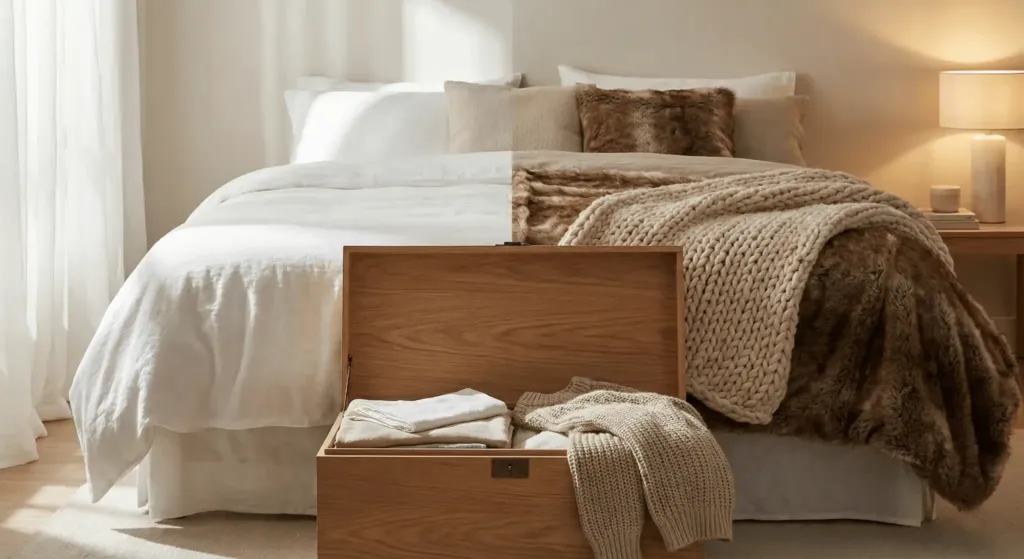
A room should change with the weather. In the summer, you want light linens. In the winter, you want heavy wool.
Have a “winter box” in your closet. Put away your thin pillows in October. Bring out the faux fur and the chunky knits.
Change your lightbulbs if you need to. Some people prefer slightly brighter light in the dark winter months.
I do this every year on the first day of autumn. It makes the season feel special. It keeps the room from feeling stagnant.
Case Study 1: The Cold Condo Rescue
A client bought a new condo in Chicago. It had floor to ceiling windows and grey floors. It felt like an office. He could not sleep.
We followed three steps. First, we painted the main wall a deep navy. Second, we added 100 inch velvet curtains. Third, we replaced his 5000K ceiling lights with 2700K lamps.
The total cost was 1200 dollars. He told me he finally felt like he was “home.” His heart rate actually dropped when he walked in the door.
Case Study 2: The Small Space Transformation
Sarah lived in a 400 square foot studio. She thought a big rug would make it look smaller. She was wrong.
We bought a large 8 by 10 plush rug that covered almost the whole floor. We added a small electric fireplace in the corner. We used a Philips Hue bulb in a paper floor lamp.
The room felt twice as big. The large rug unified the space. The warm light hid the clutter.
Case Study 3: The Budget Refresh
A family had zero budget for new furniture. We used what they had. We moved the sofa away from the wall. We took the “good” blankets from the bedroom and draped them over the chairs.
We gathered all their candles into one spot. We turned off the big ceiling light. The room went from a messy playroom to a cozy lounge in twenty minutes.
Tool and Brand Honest Reviews
1. Philips Hue Lighting Pros: Best color control. Easy app.
Cons: Very expensive. Requires a bridge for full features.
Verdict: Buy if you want total control.
2. Article Sven Sofa Pros: Beautiful velvet. Deep seats.
Cons: Seat cushions can lose shape over time.
Verdict: Great for style, but flip the cushions often.
3. IKEA Billy Bookcase Pros: Cheapest way to get a library.
Cons: Made of particle board. Can sag if books are too heavy.
Verdict: Use two small ones instead of one wide one to prevent sagging.
4. Safavieh Jute Rugs Pros: Very affordable. Natural look.
Cons: Can be scratchy on bare skin. Sheds fibers for a few months.
Verdict: Perfect as a base layer.
5. P.F. Candle Co Pros: Amazing scents. Glass jars look great.
Cons: Scent throw is medium. Not for very large rooms.
Verdict: Best for bedside or small nooks.
6. Sonos Speakers Pros: Best sound quality. Works with every app.
Cons: No Bluetooth on older models. Pricey.
Verdict: The gold standard for home audio.
7. Farrow and Ball Paint Pros: Unmatched color depth. Eco friendly.
Cons: Twice the price of Benjamin Moore.
Verdict: Use for your main living room only.
8. The Sill (Online Plants) Pros: Great packaging. Healthy plants.
Cons: You pay a premium for the convenience.
Verdict: Good for beginners who need guidance.
Common Cozy Living Room Interior Design Mistakes
Using a Rug That Is Too Small If your furniture does not sit on the rug, the rug is too small. It looks like a postage stamp. It makes the room feel disjointed.
Ignoring the “Fifth Wall” The ceiling is the fifth wall. If it is flat white, it reflects cold light. Consider painting it a very light cream. This warms the whole room.
Overcrowding with Clutter Cozy is not messy. Too many small objects create “visual noise.” This causes stress. Pick five things you love. Hide the rest.
Blocking Natural Light In the day, you want the sun. Do not put tall furniture in front of windows. Let the light in. The heat from the sun is the best kind of warmth.
Frequently Asked Questions
How do I make a living room cozy on a budget?
Focus on lighting first. Buy 2700K bulbs. They cost a few dollars. Then, move your furniture. Create a circle. Use blankets you already own. These steps cost zero to ten dollars.
What is the best color for a cozy living room?
Warm neutrals are best. Look for beige, tan, or soft terracotta. Avoid blue or cool grey. These colors make the heart feel cold.
Can a modern living room be cozy?
Yes. You just need to add texture. A modern room has clean lines. Add a soft wool rug and a velvet pillow. This creates “warm minimalism.”
How many lamps do I need?
A standard living room needs at least four light sources. Put one in each corner. Use different heights. This removes all dark shadows.
Are fake fireplaces worth it?
Yes. Modern LED fireplaces look great. They also provide actual heat. They are safe for kids and pets.
What is the “karate chop” pillow rule?
If you use down pillows, chop them in the middle with your hand. It creates a lived-in look. It shows the pillow is soft and high quality.
How do I stop my jute rug from shedding?
Vacuum it twice a week for the first month. Most shedding stops after that. Use a rug pad to prevent the fibers from rubbing against the floor.
Which plants are best for low light?
Snake plants and ZZ plants are the champions of low light. They will stay green even in a dark corner.
Is leather cozy?
Leather can be cozy if you add a blanket. On its own, it is cold. Pair it with sheepskin or wool to balance the temperature.
How high should I hang my art?
The center of the art should be at eye level. This is usually 57 to 60 inches from the floor. Do not hang it too high. It makes the room feel ungrounded.
What scent makes a room feel most cozy?
Vanilla and sandalwood are the most effective. They trigger feelings of safety and nostalgia in most people.
How do I choose the right curtain length?
Measure from the ceiling to the floor. Buy the length that is closest to that number. It is better for curtains to be too long than too short.
Final Steps for Your Home
You now have the framework for a perfect space. Start with the lights. Everything else follows the light.
I want you to go to your living room right now. Turn off the big ceiling light. Turn on a small lamp. Notice how you feel. That small change is the start of your journey.
Cozy living room interior design is about caring for yourself. It is about creating a place where you can breathe. Your home should be the best part of your day.