Last Tuesday I stood in a client’s master suite in Aspen. The room cost more than most suburban houses. Yet the owner could not sleep. The space felt cold. It lacked a soul. Many people think luxury means spending money. That is a mistake. True luxury is about how a room makes you feel when the sun sets. It is about the silence of a thick rug. It is about the weight of a linen sheet. I spent ten years designing spaces for people who want the best. I learned that the most expensive chair is useless if the lighting is wrong. This guide covers the exact steps I use to create world-class retreats. These are not just tips. These are the pillars of high-end living.
1. Install Bespoke Wall Paneling
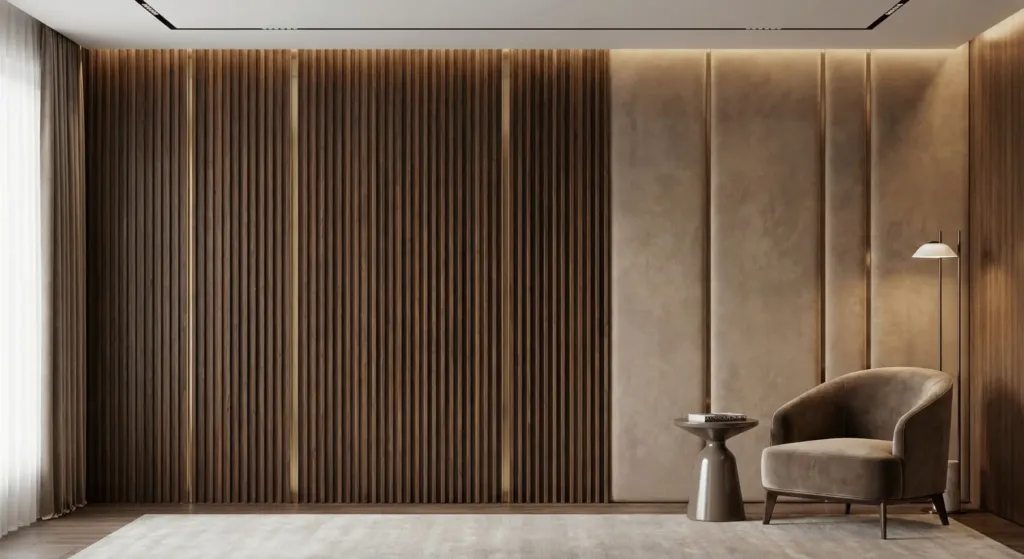
Flat walls are for apartments. Luxury homes require texture. Custom joinery changes the architecture of a room. I suggest floor to ceiling fluted wood panels. We did this for a project in London last year. The client wanted a focal point without using art. We used dark walnut with integrated brass strips. It added depth. It also muffled the sound from the hallway. You can use upholstered fabric panels too. Reach out to brands like Pierre Frey for silk or wool wraps. This creates a soft cocoon. It feels expensive because it is permanent. It shows you care about the bones of the house.
2. Layer Your Lighting Plan
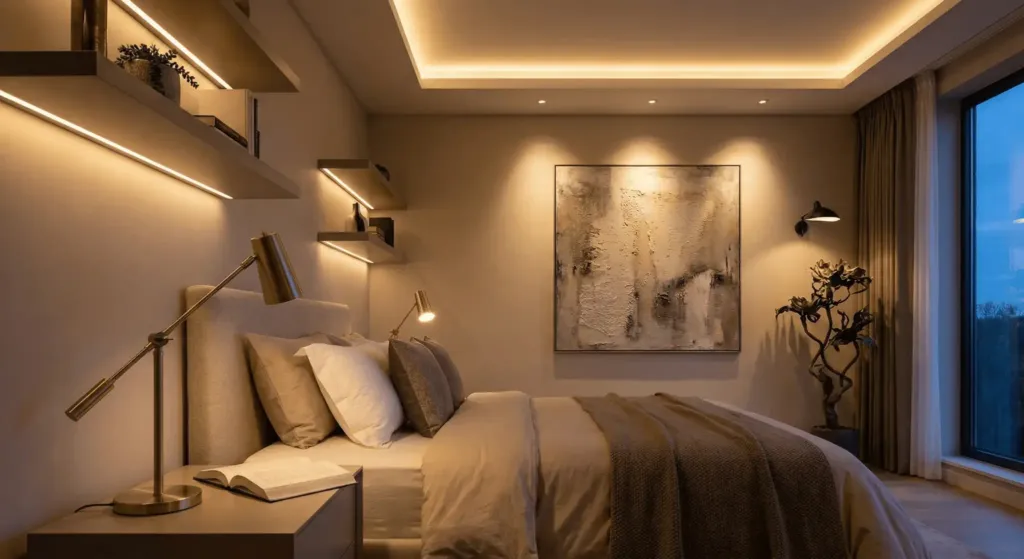
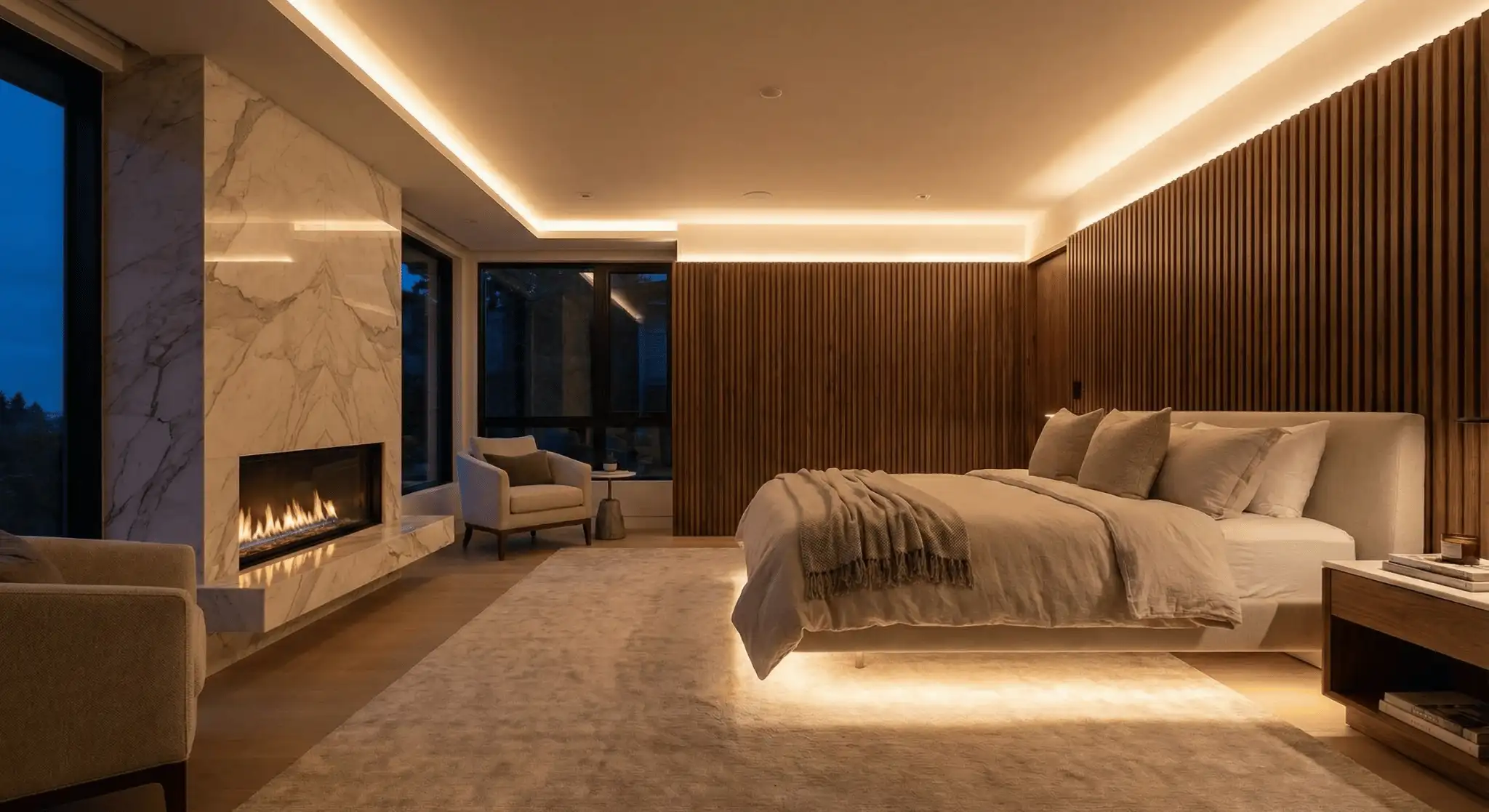
One overhead light is a crime in design. You need three layers. First is ambient lighting. Use hidden LED strips in the ceiling coves. Second is task lighting. This includes your reading lamps. Third is accent lighting. This highlights art or textures. I always use Lutron systems. This allows you to set scenes. One button for “Sleep” dims everything to two percent. One button for “Morning” opens the shades and mimics the sun. I saw a massive failure in a Miami penthouse where the designer used cool white bulbs. It looked like a hospital. Always stay between 2700K and 3000K for warmth.
3. Invest in a Statement Headboard
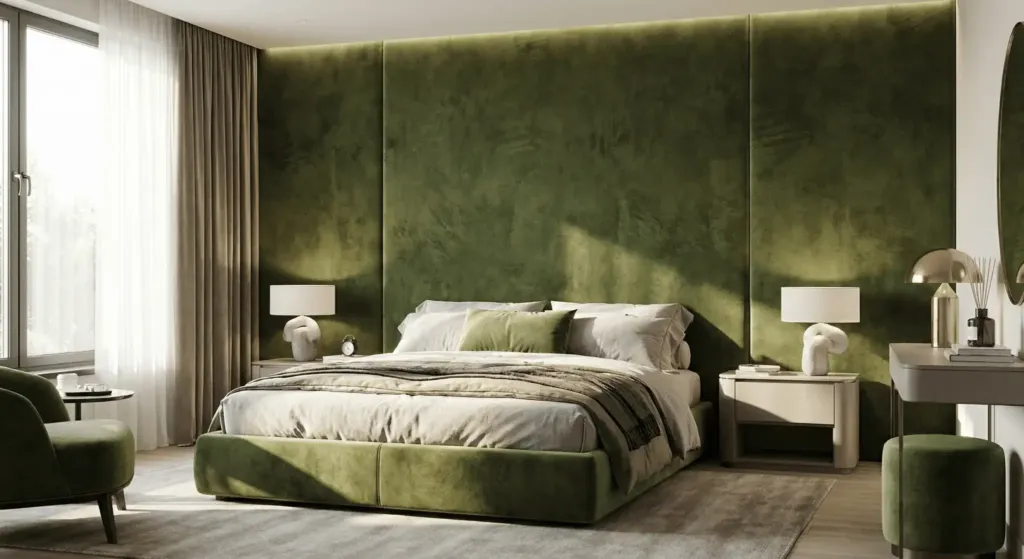
The bed is the heart of the room. A small headboard looks weak. Go big. I prefer wall to wall headboards. We recently used a deep moss green velvet for a client in New York. We wrapped the entire back wall in it. It served as both furniture and a wall treatment. It made the room feel twice as large. Look at brands like Roche Bobois for inspiration. They understand scale. If you want a classic look, use tufted leather. Just ensure the height is at least five feet. A tall headboard commands authority. It anchors the space.
4. Curate a Private Seating Nook
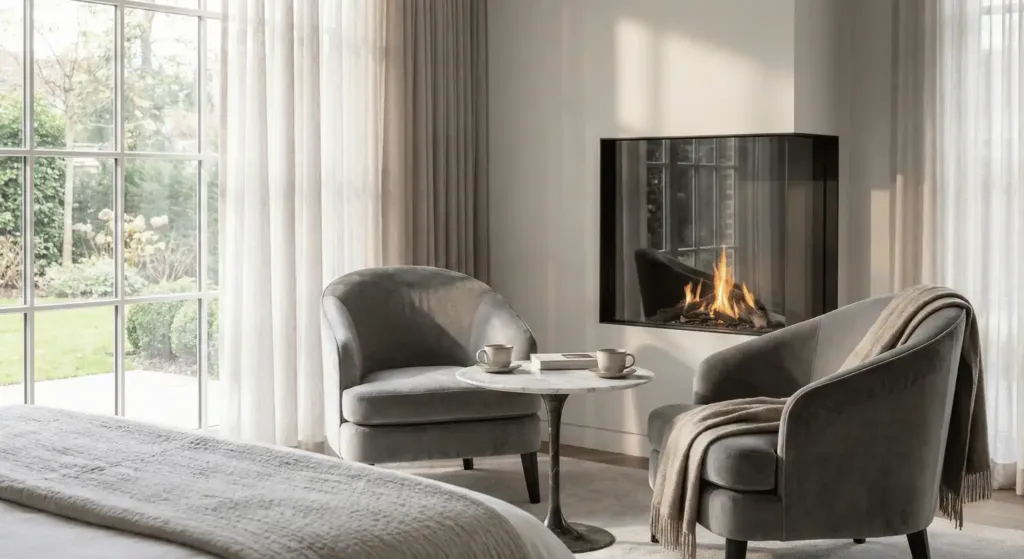
A bedroom is for more than sleep. It is a sanctuary. Add two club chairs and a small marble table. Put them near a window. I call this the “Morning Coffee Spot.” It separates the act of waking up from the act of being in bed. Use chairs from Minotti or B&B Italia. These pieces hold their value. They offer a place to read or talk. In a 2025 project, we added a small ventless fireplace to this nook. The client spent every evening there. It turned a bedroom into a suite. It adds a layer of sophistication that standard rooms lack.
5. Use High Thread Count Organic Linens
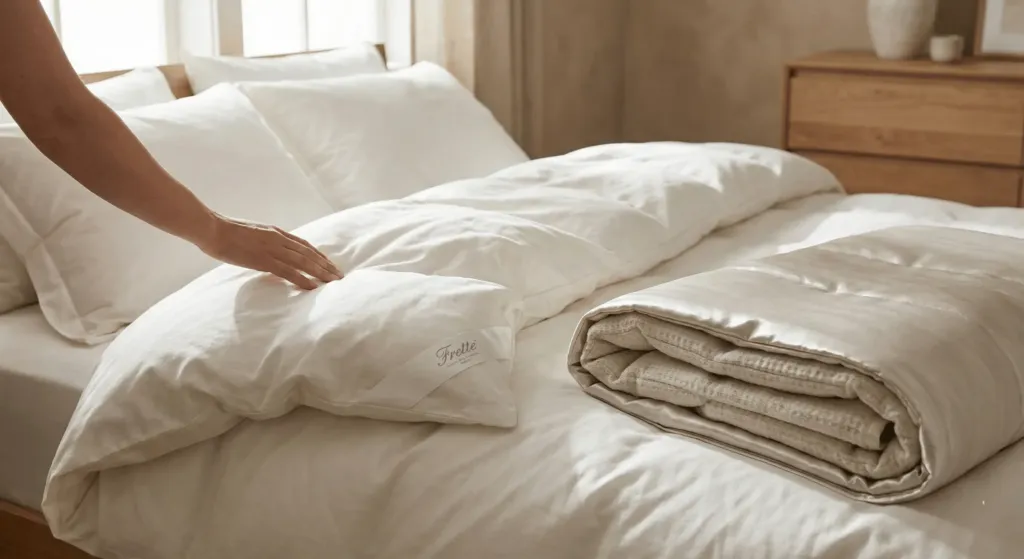
You touch your sheets every night. Do not skink here. Forget the 1000 thread count marketing myths. Look for long staple cotton or pure Belgian linen. Brands like Frette or Sferra are the standard. I personally use 600 thread count sateen. It feels like butter. I once worked with a client who insisted on polyester blends to save money. Three months later she replaced them all. The skin knows the difference. Add a heavy weighted blanket inside a silk cover. The weight provides a sense of security. It is a physical manifestation of comfort.
6. Integrate Invisible Technology
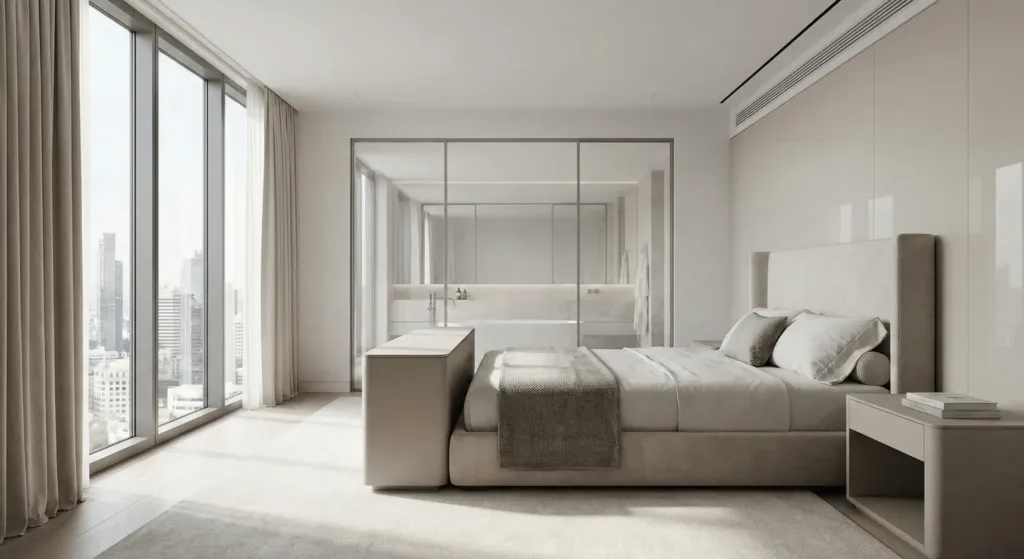
True luxury is silent. You should not see wires. I hide charging ports inside nightstand drawers. Use motorized tracks for your curtains. Somfy or Lutron are the best choices here. In a recent Chicago renovation, we installed “smart glass” on the ensuite bathroom walls. It turns opaque with a switch. We also hid the television inside a footboard lift. When the TV is off, the room looks like a gallery. When it is on, it is a cinema. This keeps the focus on the design. Technology should serve you without being heard.
7. Select Oversized Natural Fiber Rugs

Small rugs make a room look cheap. Your rug must go under the bed and extend at least three feet on all sides. This ensures your feet hit something soft every morning. I prefer wool and silk blends. They have a slight shimmer. Check out Stark Carpet for custom sizes. We used a hand knotted Tibetan wool rug in a Seattle home recently. It weighed 200 pounds. The thickness alone made the room feel silent. Avoid synthetic fibers like polypropylene. They flatten over time. Natural fibers age with grace. They are an investment in your comfort.
8. Opt for Noble Materials
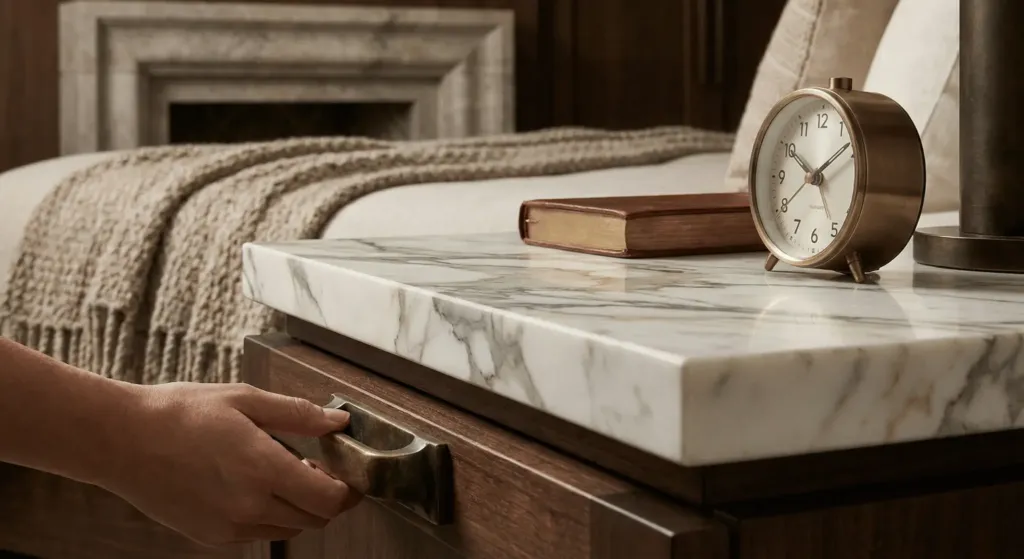
Plastic has no place in a luxury bedroom. Use marble, brass, solid wood, and stone. I like to use a single slab of Calacatta marble for nightstand tops. It is cold to the touch and heavy. It feels real. For hardware, look at brands like Rocky Mountain Hardware. Solid bronze handles have a weight that feels significant. I once replaced all the standard handles in a client’s home with solid brass. The cost was four thousand dollars. The impact was ten times that. It is the small touchpoints that define the experience.
9. Create a Symmetrical Layout
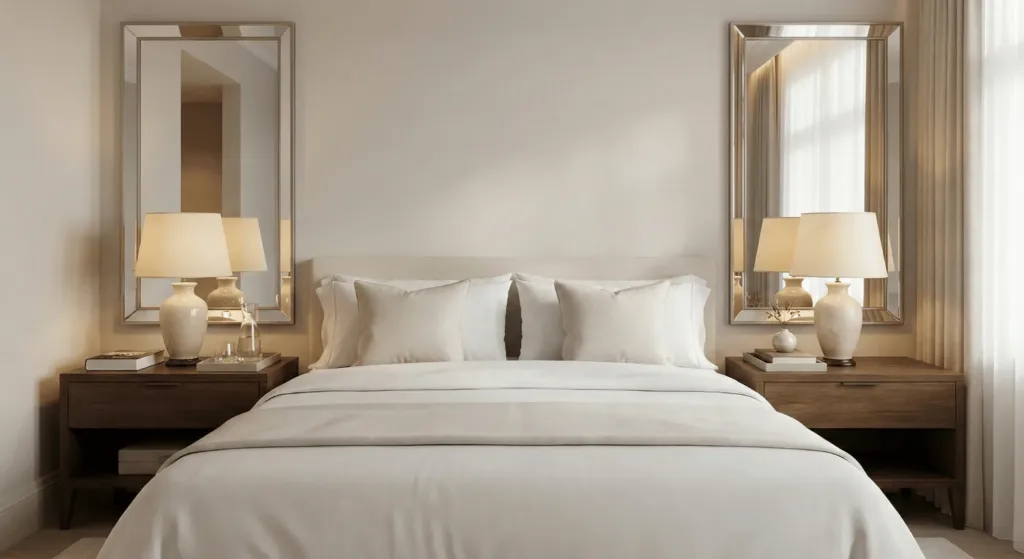
Symmetry signals order to the brain. It creates instant calm. Place matching nightstands on both sides of the bed. Use identical lamps. This classic approach works because it feels intentional. I often use the “Rule of Three” for styling these surfaces. One tray, one book, and one carafe of water. In a high end villa project, we used two large mirrors behind the lamps. It doubled the light and the depth. It looked balanced. A chaotic room leads to a chaotic mind. Balance is the foundation of rest.
10. Focus on Acoustic Comfort
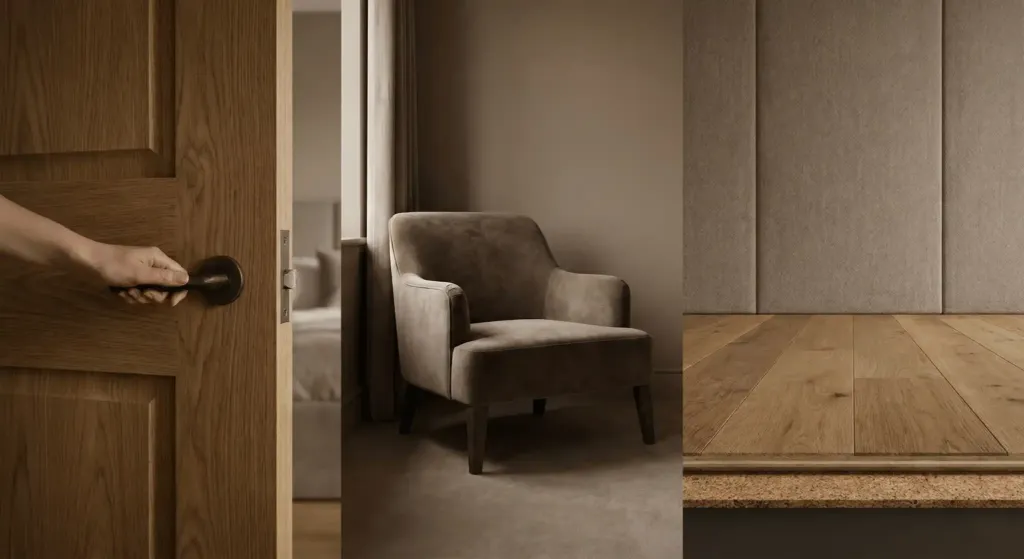
Luxury is quiet. If you can hear the AC or the neighbors, the design failed. I use acoustic wall panels hidden behind fabric. We also use solid core doors. A standard door is hollow and light. A solid oak door weighs a lot. It closes with a heavy “thud.” That sound is the sound of privacy. I worked on a guest suite where we added a layer of cork under the hardwood floors. It stopped all foot traffic noise. This is the “hidden” luxury that guests notice without knowing why. Silence is the ultimate status symbol.
11. Design a Walk In Dressing Room
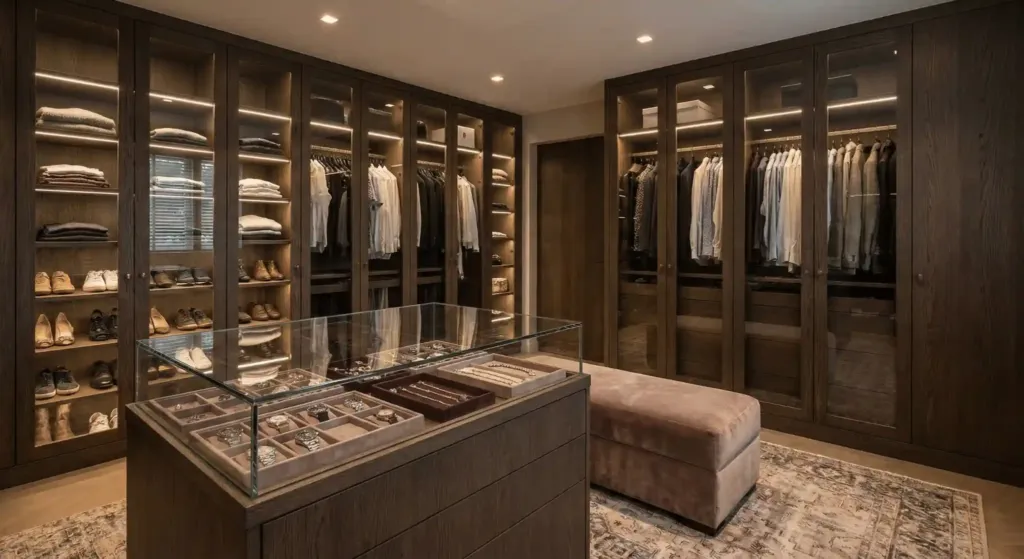
A cluttered closet ruins a beautiful bedroom. If space allows, move the storage to a separate room. Use custom cabinetry with glass doors. Add integrated lighting for every shelf. I recommend California Closets for high end modular work or a local carpenter for bespoke oak. In 2024, we designed a closet with a center island for watches and jewelry. It felt like a boutique. It makes the act of getting dressed a ritual. It keeps the sleeping area clean and focused on rest.
12. Incorporate Original Fine Art
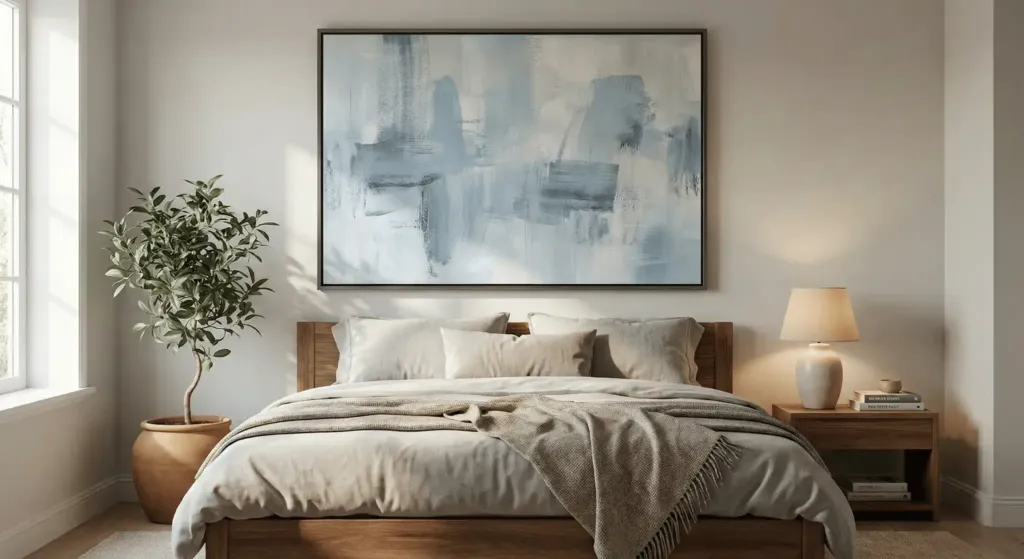
Do not buy mass produced prints. One large original canvas has more power than ten small frames. It shows personality. I suggest visiting local galleries or using platforms like Saatchi Art. I once had a client who hung a six foot abstract piece above their bed. The colors were soft blues and greys. It became the soul of the room. Art is a conversation. It reflects your journey. Frame it in solid wood or floating metal. It elevates the space from a room to a curated experience.
13. Add a Ceiling Treatment
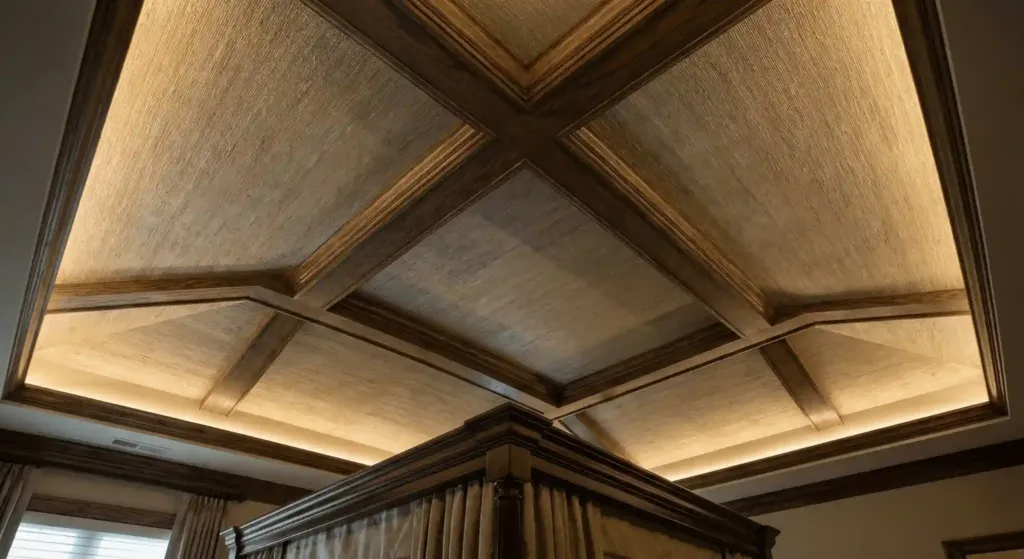
The ceiling is the fifth wall. Most people paint it white and forget it. In a luxury suite, we often use wallpaper or wood coffers. I love using a subtle metallic grasscloth on the ceiling. It catches the ambient light from the coves. For a project in Dallas, we installed oak beams across a vaulted ceiling. It made the massive room feel intimate. It draws the eye upward. It makes the volume of the space feel grand. Never ignore the view from the bed.
14. Choose a Signature Scent
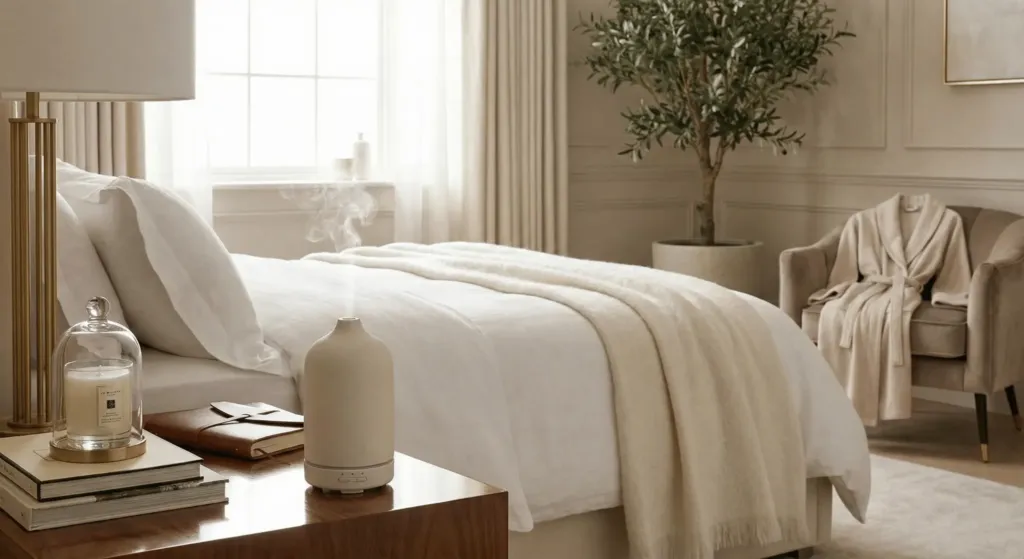
Luxury involves all senses. Smell is the strongest link to memory. I use scent diffusers from Hotel Collection or Jo Malone. I prefer notes of sandalwood, leather, or white tea. We installed a whole home scenting system in a California mansion last year. The bedroom always smelled like a five star spa. It triggers the brain to relax the moment you walk through the door. It is a small detail that leaves a massive impression on guests and yourself.
15. Prioritize Window Treatments
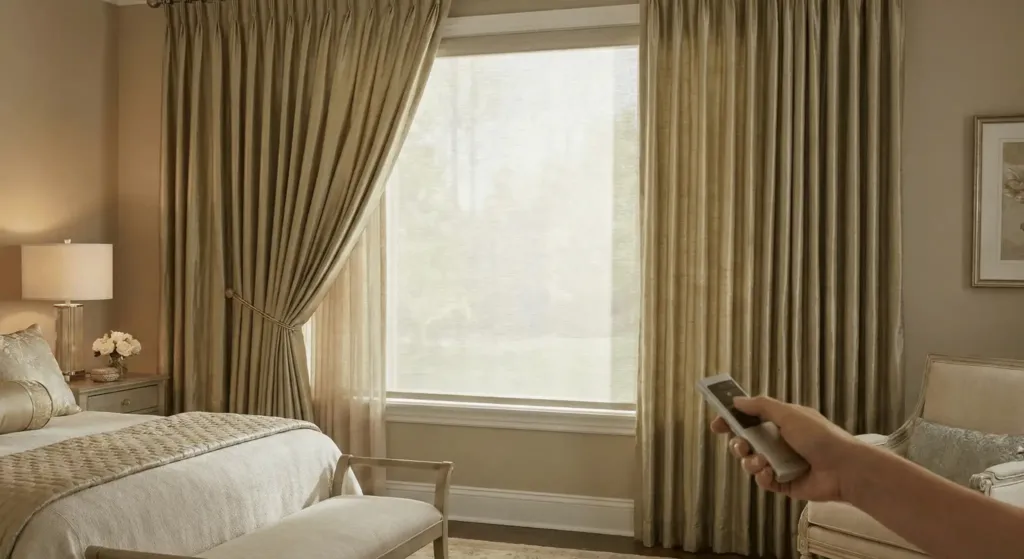
Cheap blinds ruin a room. You need blackout capability for sleep and sheers for privacy. I use a double track system. The first layer is a thick, interlined silk or linen drape. The second is a motorized solar shade. This gives you total control over the environment. I worked with a client who had chronic insomnia. We installed 100% blackout tracks that sealed the edges of the window. She slept through the night for the first time in years. Function is the highest form of luxury.
Case Study: The Manhattan Transformation
A client bought a 2,000 square foot loft. It was all white and glass. It felt like an office. We spent $150,000 on the master bedroom alone. We added walnut wall slats and a custom leather bed. We replaced the glass wall with fluted privacy glass. We installed a Lutron system. The result? The client stopped staying at the Four Seasons when he came to town. He preferred his own room. The ROI was not just in the home value. It was in his quality of life.
Expert Tool Recommendations
| Brand | Specialization | Why I Use Them |
| Lutron | Lighting & Shades | Reliability and “scene” programming. |
| Farrow & Ball | Paint | Rich pigments that change with the light. |
| Roche Bobois | Furniture | Bold, architectural pieces. |
| Hastens | Mattresses | The gold standard for sleep health. |
| Stark Carpet | Rugs | Endless custom patterns and fibers. |
| Dyson | Air Quality | Silent purification for better sleep. |
FAQ: Luxury Bedroom Interior Design
How much does a luxury bedroom remodel cost?
A high-end transformation typically starts at $30,000. This covers quality furniture and basic lighting. For bespoke joinery, motorized shades, and designer fabrics, the budget can exceed $100,000. The cost depends on material choices and structural changes.
Is a TV okay in a luxury bedroom?
I advise against it. A bedroom should focus on rest. If you must have one, hide it. Use a motorized lift or a “frame” style TV that looks like art. Never let a black plastic screen be the focal point of the room.
What is the best color for a luxury bedroom?
Neutral tones are timeless. Think mushroom, soft taupe, or charcoal. These colors allow the textures of the wood and fabric to shine. If you want color, use deep jewel tones like navy or emerald in small doses.
How do I make my small bedroom look luxurious?
Focus on scale. Use one large piece of art instead of many small ones. Use floor-to-ceiling drapes to make the walls look taller. Mirrors also add depth. Stick to a monochromatic color palette to reduce visual noise.
Does thread count matter?
Not as much as fiber quality. A 400-thread-count sheet made from Giza cotton is better than a 1,000-thread-count sheet made from cheap blends. Focus on the material and the weave. Sateen is smooth, while percale is crisp.
Would you like me to generate a high-resolution image of a luxury small bedroom following these design principles (monochromatic palette, floor-to-ceiling drapes, and large-scale art)?
Summary of Next Steps
Creating a luxury space takes time. Do not rush the process. Start with the lighting. It is the most impactful change you can make. Then move to the walls. Texture is what separates a house from a home.