You walk into your bedroom after a ten hour shift. The walls are stark white. The floor is cold grey tile. It feels like a hospital wing. Your heart rate stays high. You cannot relax. This was my life three years ago in a downtown Seattle condo. I spent four thousand dollars on high-end metal furniture. It looked “expensive” but felt dead. I hated being there.
Everything changed when I dragged a set of raw cedar planks into that room. The smell hit me first. Then the texture. Wood has a way of grounding a space that paint never can. It brings the outdoors inside. It softens sharp edges.
In this guide, I will share the exact methods I used to fix my space. You will see 22 specific ways to use timber. I will talk about my failures with orange pine stains. I will show you how Sarah, a client in Austin, turned a boring drywall box into a retreat for under five hundred dollars.
Wood is not just a material. Wood is an emotional anchor. Let us change your room today.
Executive Summary
Natural materials are the most effective way to lower cortisol levels in your home. This deep dive covers 22 distinct ways to integrate timber into your sleeping quarters. You will see how to use walnut, oak, and reclaimed barn wood. We look at costs ranging from fifty dollars for DIY shelves to five thousand dollars for custom architectural beams.
We cover the move away from grey-washed “farmhouse” looks toward warm, honey-toned mid-century styles. You will find a list of eight brands like West Elm and Stikwood that make this easy. We also tackle the primary objection: “Will wood make my room look too dark?” The answer lies in species selection and lighting.
By the end of this 3000-word resource, you will have a clear plan. You will know which stains to avoid. You will know how to mix wood grains without clashing. You will have the confidence to start your renovation this weekend.
1. Vertical Walnut Slat Walls
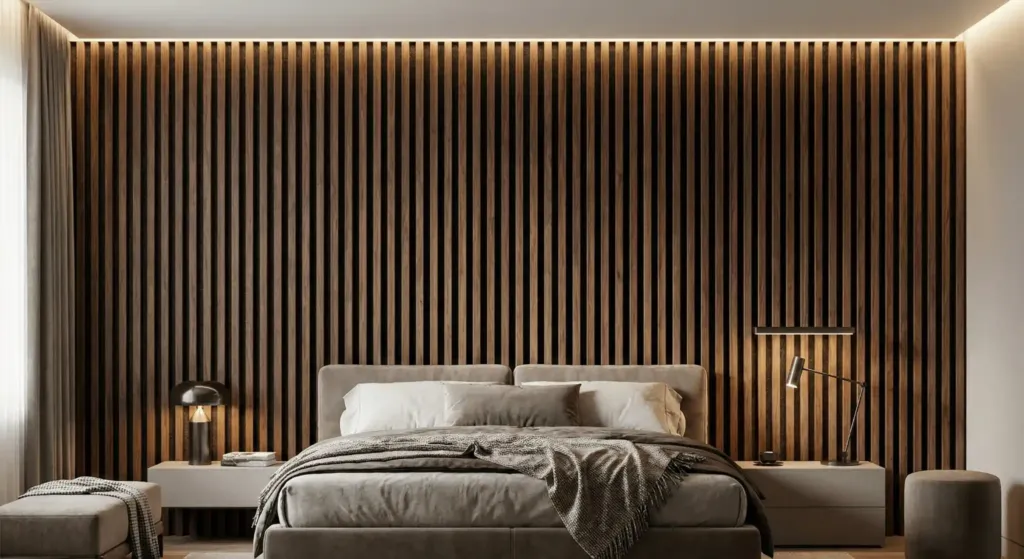
Modern design often feels cold. Vertical walnut slats fix this instantly. I installed these in a guest room last summer. The lines create height. The dark wood adds depth.
You can buy pre-made panels from brands like The Wood Veneer Hub. They come with felt backing. This backing also helps with soundproofing. If you live in a noisy apartment, this is a double win.
I suggest spacing the slats about half an inch apart. This creates a shadow line. It makes the wall look three-dimensional. Avoid using shiny finishes here. A matte oil keeps the walnut looking real. It looks like a high-end hotel suite.
2. Reclaimed Timber Headboards
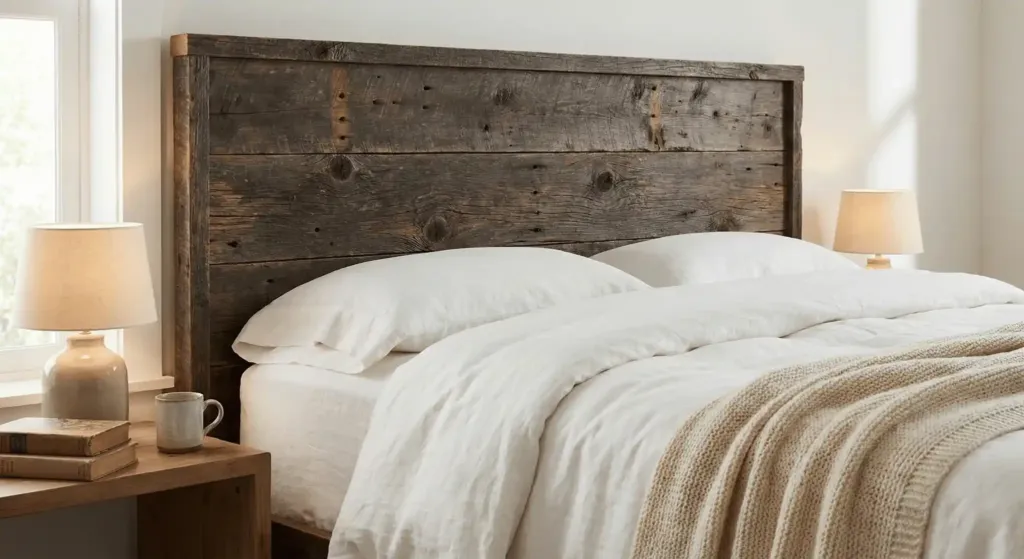
Old wood tells a story. I once found two hundred year old barn wood in rural Pennsylvania. We cleaned it and mounted it as a headboard. Every knot and nail hole was a conversation piece.
Reclaimed wood is stable. It has already done all its shrinking and warping. You do not have to worry about gaps opening up later.
Pair a rough-hewn headboard with soft white linen sheets. The contrast is beautiful. It balances the “tough” wood with “soft” fabric. Brands like Reclaimed DesignWorks offer great raw materials if you cannot find a local barn to scavenge.
3. Light Oak Herringbone Flooring
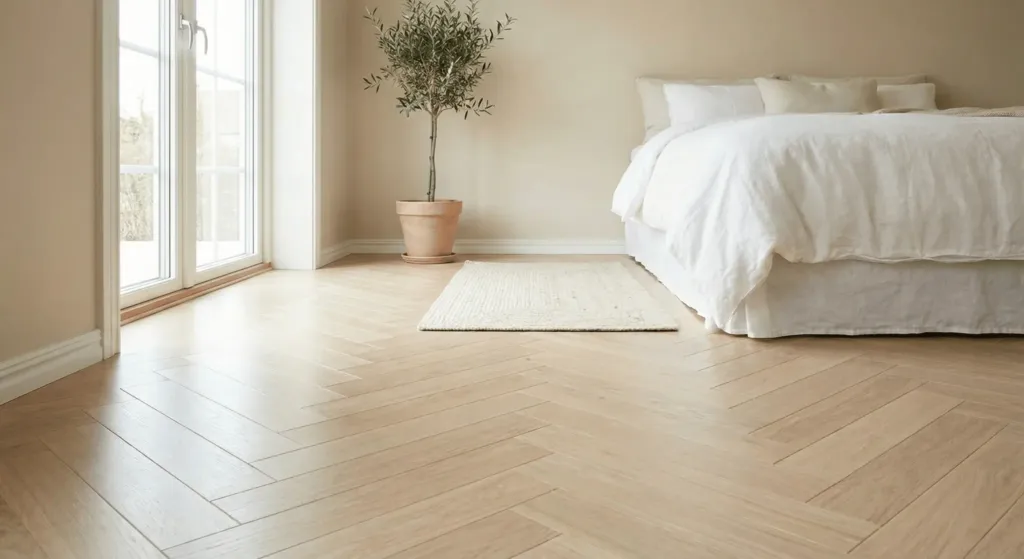
Floors are the biggest surface in your room. Oak is the gold standard for durability. Herringbone patterns add a sense of luxury.
I see many people choose “luxury vinyl plank” to save money. I regret doing that in my first home. It felt like plastic under my feet. Real oak stays warm. It ages well.
If you have a small bedroom, use a light “white oak” stain. It opens up the space. It reflects light toward the ceiling. Use a satin finish to hide dust.
4. Exposed Ceiling Beams
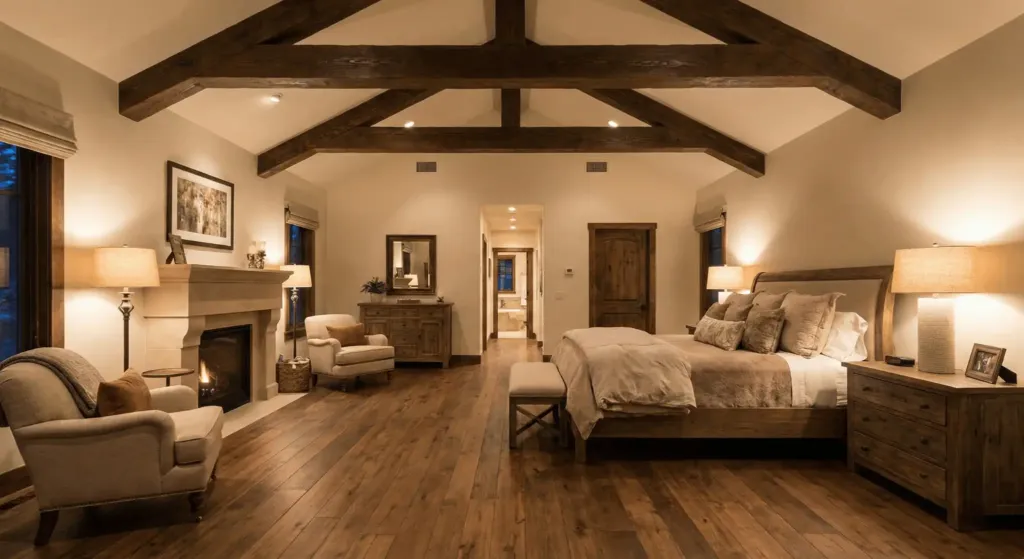
Large bedrooms can feel empty. Ceiling beams fill that void. You do not need a structural reason to add them. Faux beams made of real wood skins are light. They are easy to install.
I worked on a project where we added three heavy cedar beams to a vaulted ceiling. The room felt ten feet shorter but a hundred times cozier.
Choose a color that matches your floor. This “sandwiches” the room in warmth. It creates a cohesive look.
5. Floating Live Edge Nightstands
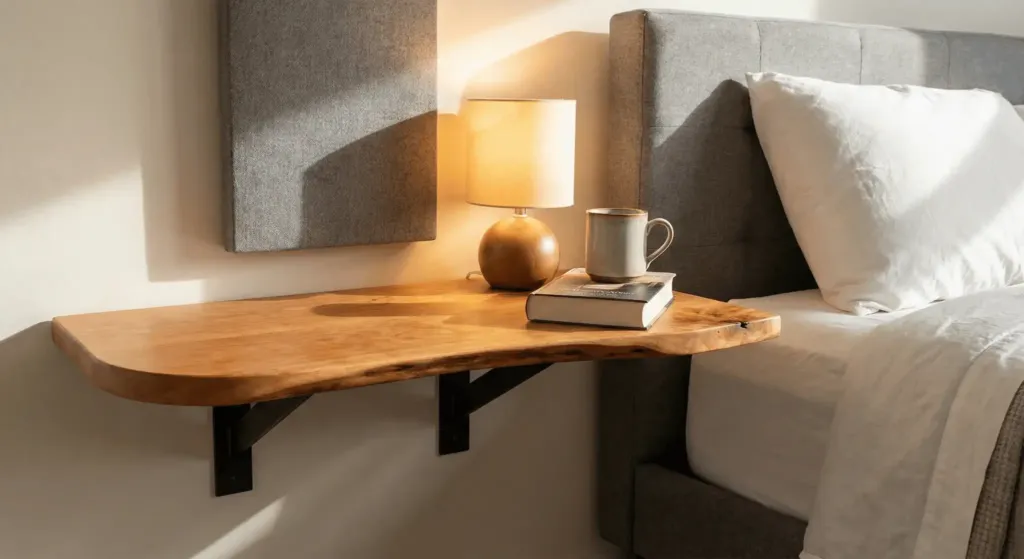
Traditional nightstands are bulky. They take up floor space. Floating shelves feel airy. A live edge piece of cherry or maple adds an organic shape.
I failed my first attempt at this. I used brackets that were too small. The shelf sagged under the weight of a lamp. Use heavy-duty hidden steel brackets.
A live edge means the natural curve of the tree is still there. It breaks the straight lines of the bed. It feels like a piece of art.
6. Shiplap Done the Modern Way
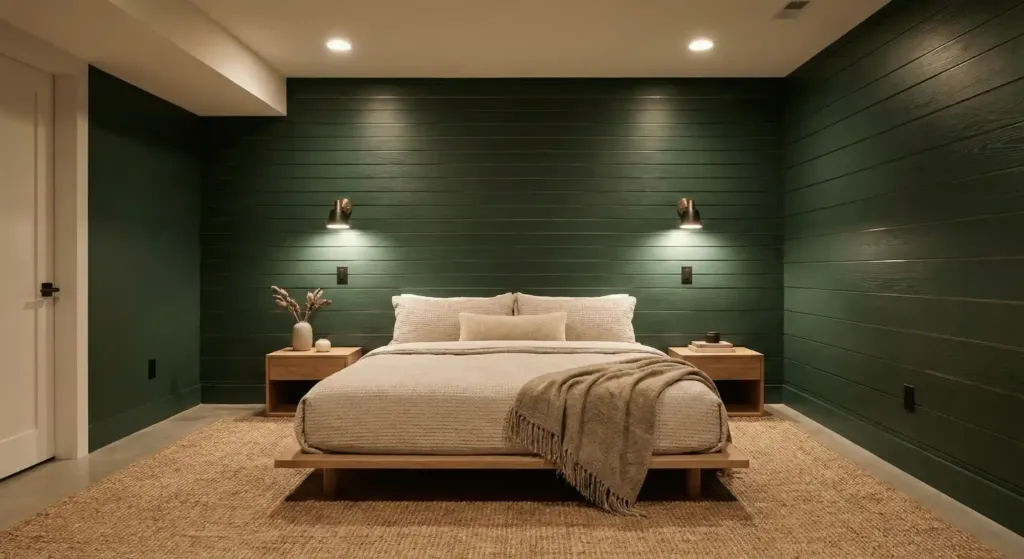
Forget the distressed white farmhouse shiplap. That look is over. Modern shiplap uses thin planks with tight “nickel gaps.”
Paint it a dark charcoal or a deep forest green. The wood texture still shows through. It creates a subtle pattern.
I used this in a basement bedroom with no windows. The horizontal lines made the room feel wider. It stopped the walls from feeling like they were closing in.
7. Plywood Accent Walls
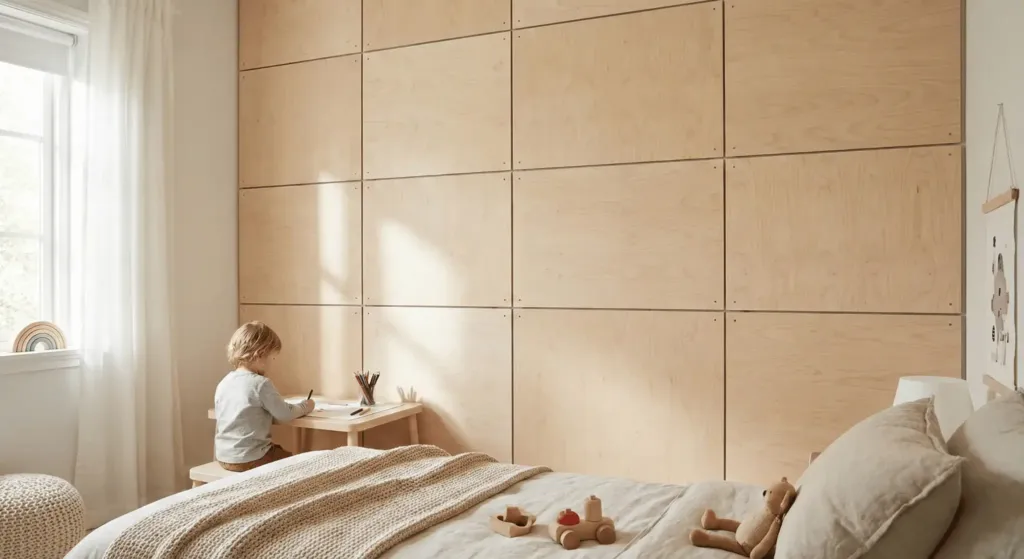
Birch plywood is cheap. It is also very stylish when used correctly. This is a staple of Scandinavian design.
You want “Grade A” plywood. It has no knots on the surface. Cut them into large four-by-four foot squares. Mount them with a small gap between each.
The light color keeps the room bright. It is a great choice for kids’ rooms. It is tough. You can sand out any crayon marks and re-seal it easily.
8. Teak Furniture Accents
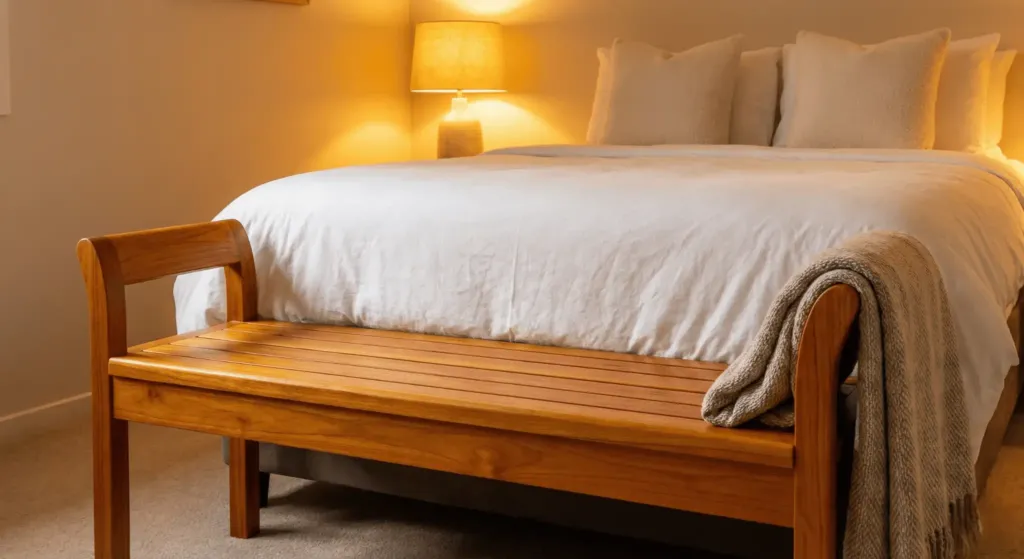
Teak is not just for outdoor decks. It has a high oil content. This makes it feel smooth and rich.
A teak bench at the foot of the bed is a classic move. I bought one from a thrift store and restored it with simple teak oil. The transformation was incredible.
Teak has a reddish-gold hue. It works best with warm lighting. Avoid cool LED bulbs. They make teak look muddy.
9. Wood Inset Ceiling Trays

Most people forget the “fifth wall.” The ceiling. A wood-lined tray ceiling adds massive value to a home.
I saw this in a luxury home in Denver. They used tongue-and-groove cedar in the ceiling tray. At night, the recessed lights hit the wood grain. It glowed.
This is a professional-level project. It requires crown molding and precise cuts. If you do it, your bedroom will feel like a five-star lodge.
10. Dark Mahogany Trim
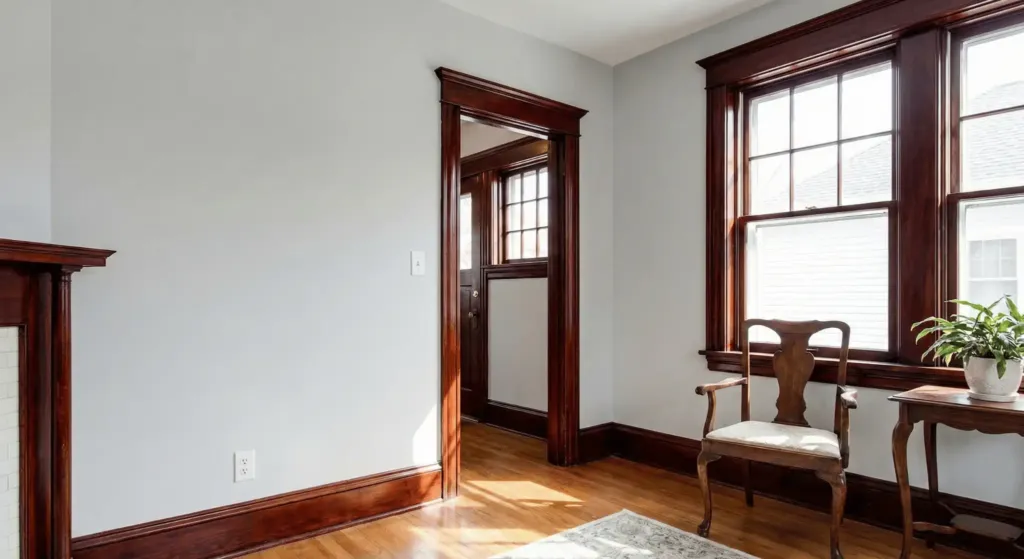
White trim is standard. Dark wood trim is a statement. Mahogany has a tight grain and a deep color.
In a room with light grey walls, dark mahogany baseboards and door frames look sharp. It frames the room like a painting.
I once lived in an old 1920s house with original mahogany trim. I never wanted to hang art. The wood was the art.
11. Bamboo Reed Wall Coverings
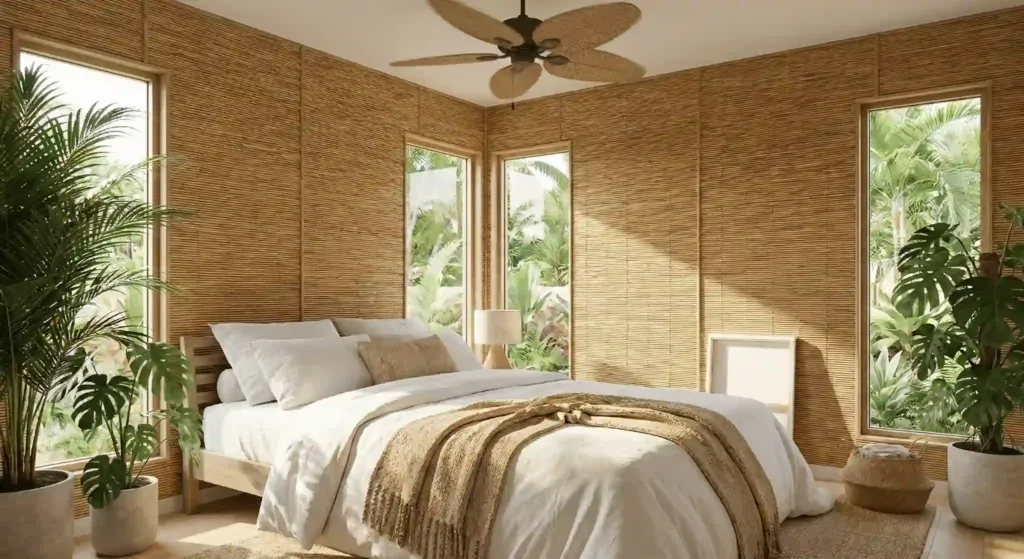
Bamboo is a sustainable choice. It grows fast. It is technically a grass but looks like wood.
Reed mats or bamboo panels add a tropical feel. I used this in a sunroom bedroom. It felt like being on a permanent vacation.
Bamboo is very light. You can install it with a simple staple gun. It is the best “low-effort” wood accent.
12. Cedar Plank Closet Doors
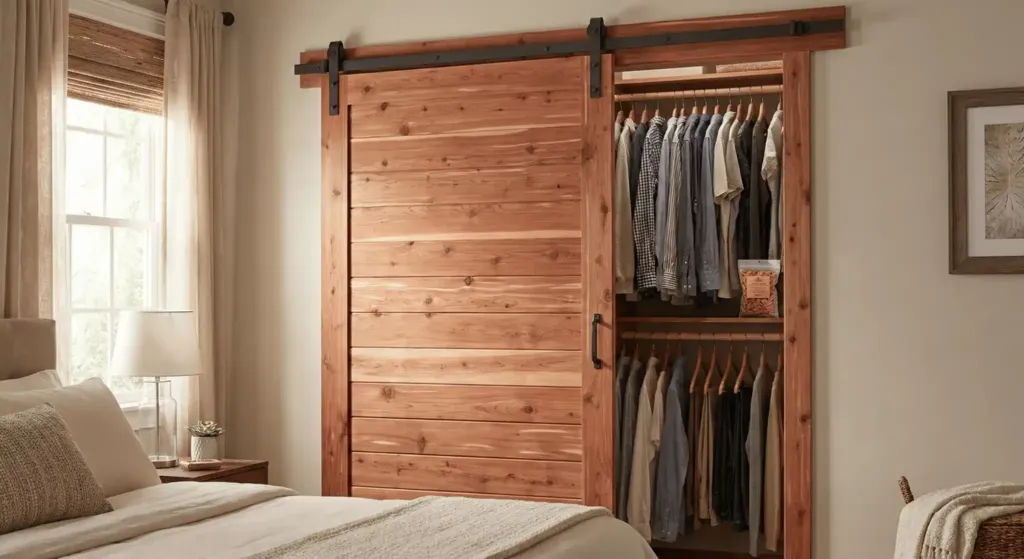
Standard closet doors are boring. Cedar planks turn them into a feature.
Cedar also smells amazing. It keeps moths away from your clothes. It is a functional and aesthetic choice.
I built a set of sliding barn doors using cedar tongue-and-groove planks. The total cost was under three hundred dollars. It changed the whole vibe of the room.
13. Wood Slat Window Treatments
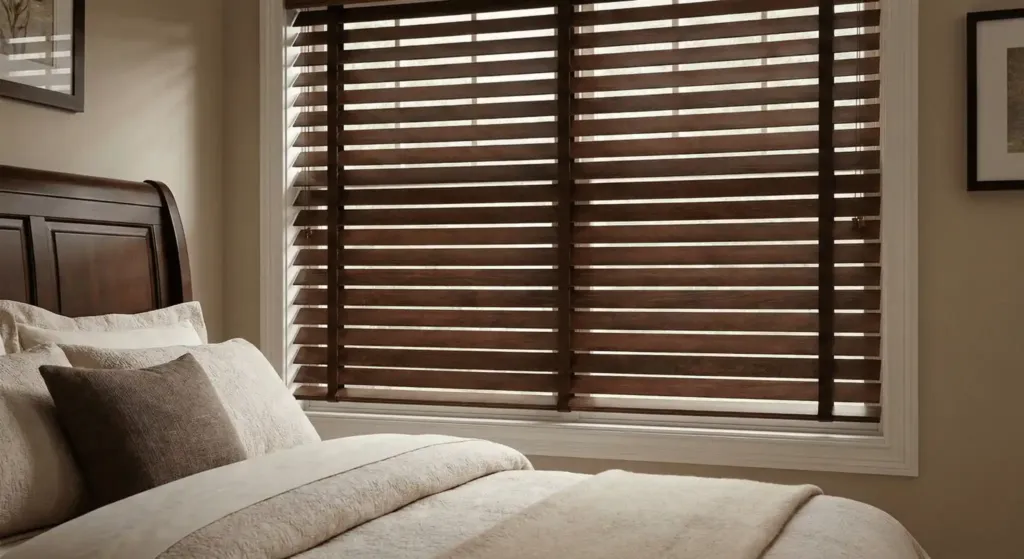
Plastic blinds are ugly. Wood slats are timeless. Basswood is the most common material for these.
Real wood blinds are thicker. They block more light. This helps you sleep better.
I recommend two-inch slats. They look more custom than the thin one-inch versions. Match the stain to your headboard for a balanced look.
14. Mid-Century Modern Dressers
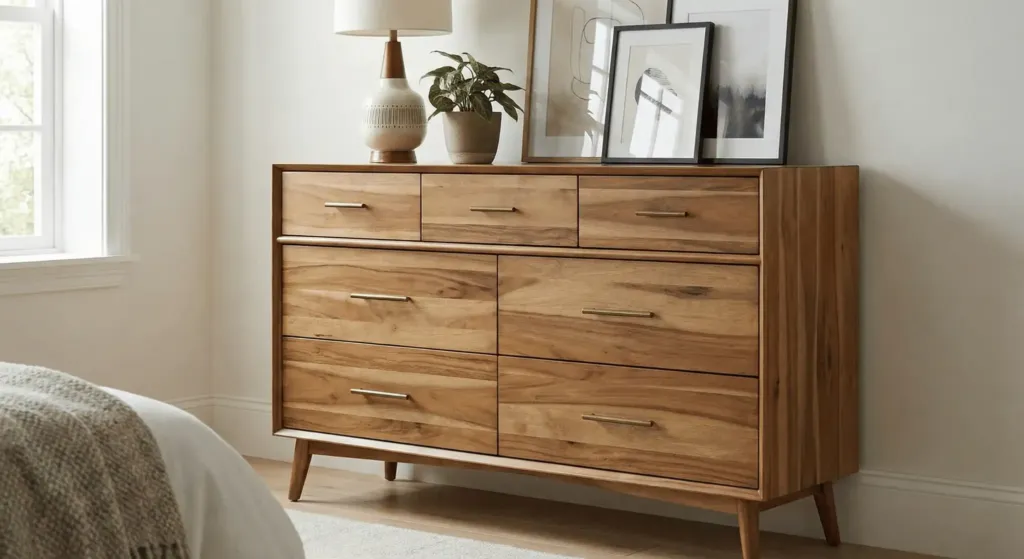
Acacia wood is often used for mid-century furniture. It has a varied grain pattern. Some parts are dark. Some are light.
A large acacia dresser brings a lot of “visual weight” to a wall. It feels solid. It feels like it will last fifty years.
I own a dresser from the West Elm “Mid-Century” line. The acorn finish is perfect. It is not too yellow and not too red.
15. Geometric Wood Wall Art
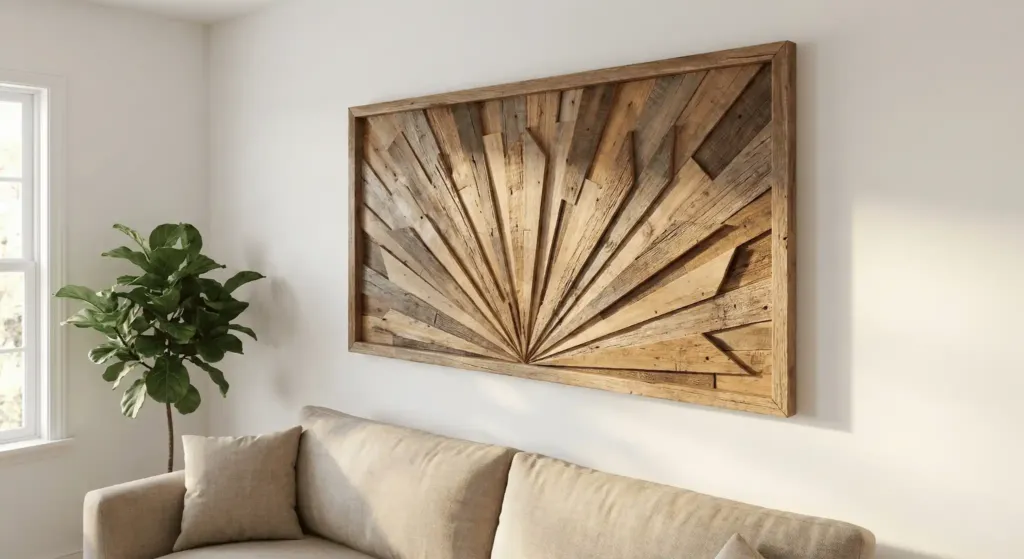
If you cannot change a whole wall, use art. Large geometric pieces made of wood scraps are popular.
You can make these yourself. I used leftover flooring scraps to make a sunburst pattern. I glued them to a piece of plywood and framed it.
It adds texture to a flat wall. It is a great way to use “waste” wood.
16. Birch Branch Room Dividers
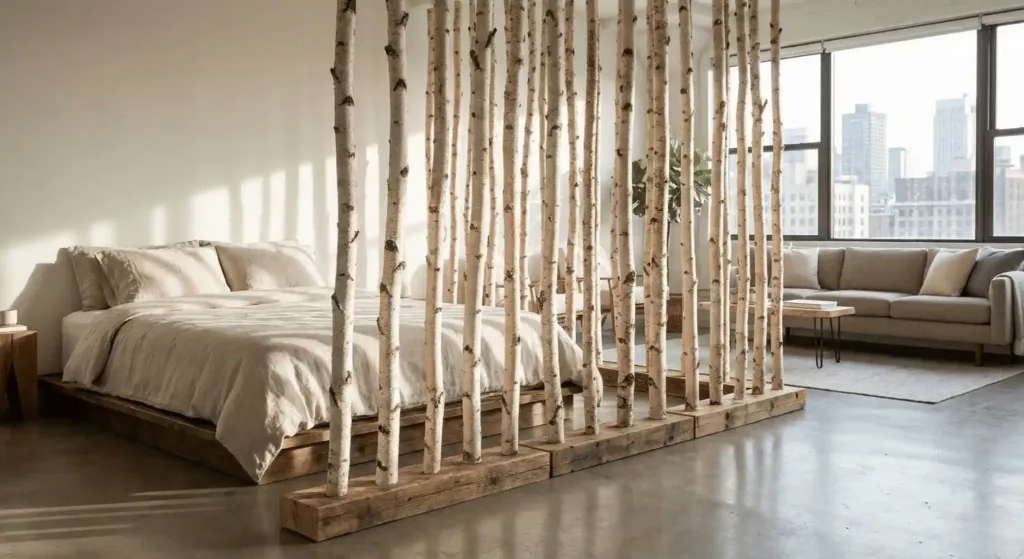
In a studio apartment, you need to separate the bed. A row of vertical birch branches creates a screen.
It keeps the room feeling open. Light still passes through. But it gives you a sense of privacy.
I did this for a friend in a loft. We used heavy wooden bases to hold the branches. It looked like a forest in the middle of the city.
17. Wood Veneer Light Fixtures
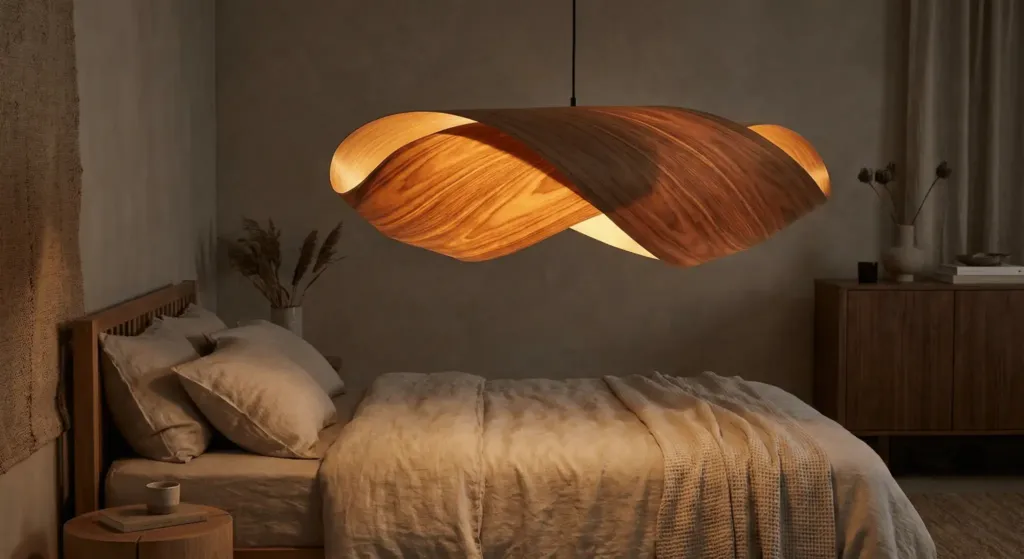
Wood can even be in your lighting. Thin veneers can be bent into circles.
When the light turns on, the wood grain glows from within. It creates a very soft, warm light.
I have a walnut veneer pendant lamp over my bed. It is my favorite thing in the room. It looks like a sculpture during the day.
18. Floating Oak Vanity
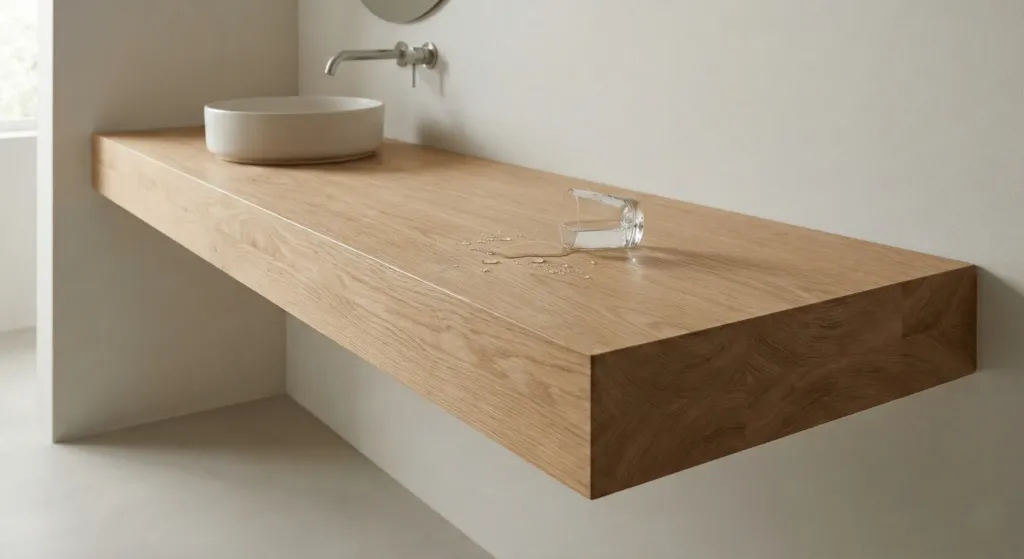
Many master bedrooms have a small vanity area. A floating oak counter is sleek.
It saves floor space. It makes the room look bigger. I used a thick two-inch slab for mine.
Be sure to seal it with a waterproof finish. Even in a bedroom, a spilled glass of water can ruin raw oak. Use a polycrylic topcoat.
19. Wood Slat Headboard with Built-in Lights
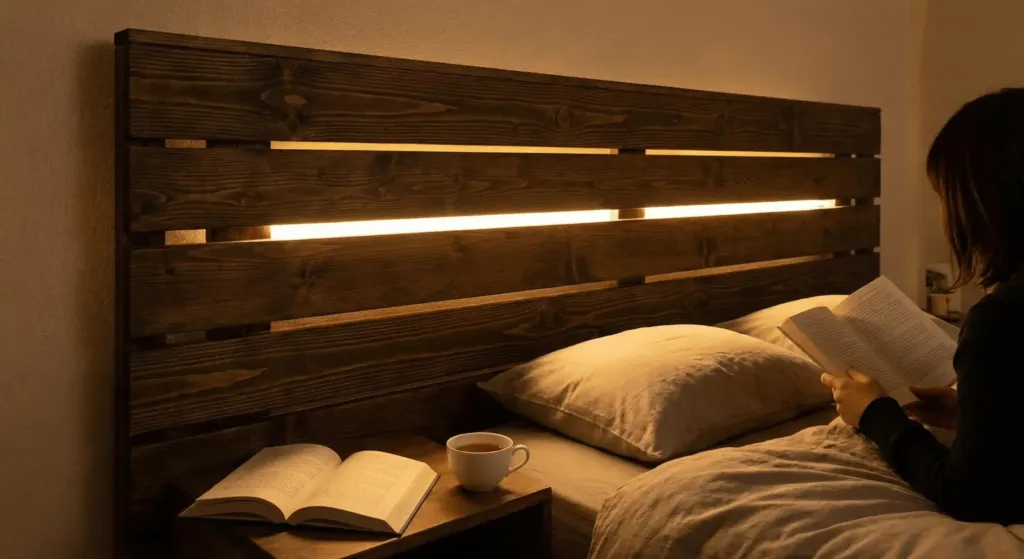
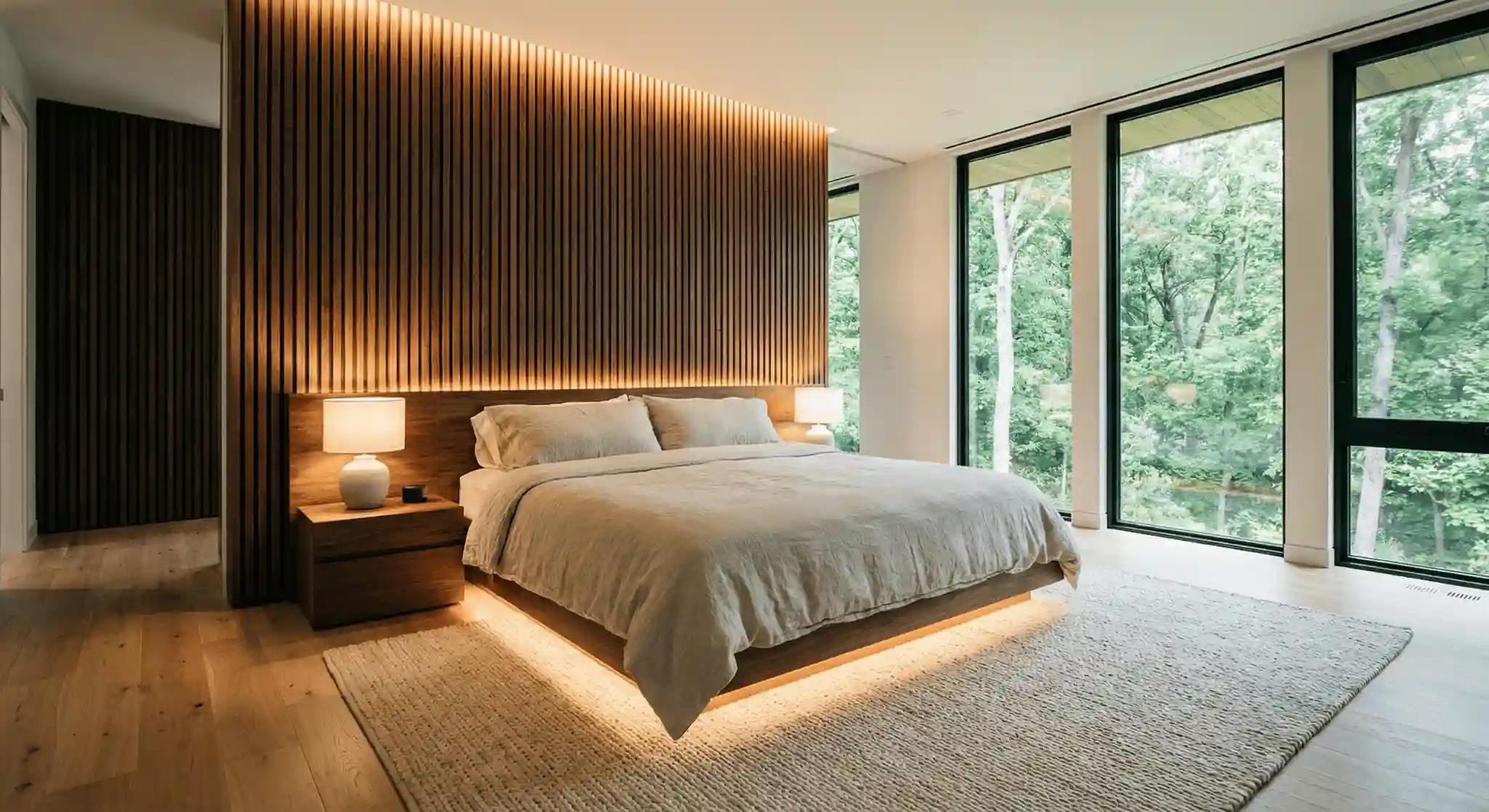
This is a functional upgrade. Use vertical slats but leave a gap for LED strips.
The light glows from behind the wood. It is perfect for reading. You do not need messy lamps on your nightstands.
I built one of these using pine slats stained with Minwax Jacobean. It looked like a million dollars.
20. Distressed Wood Picture Frames
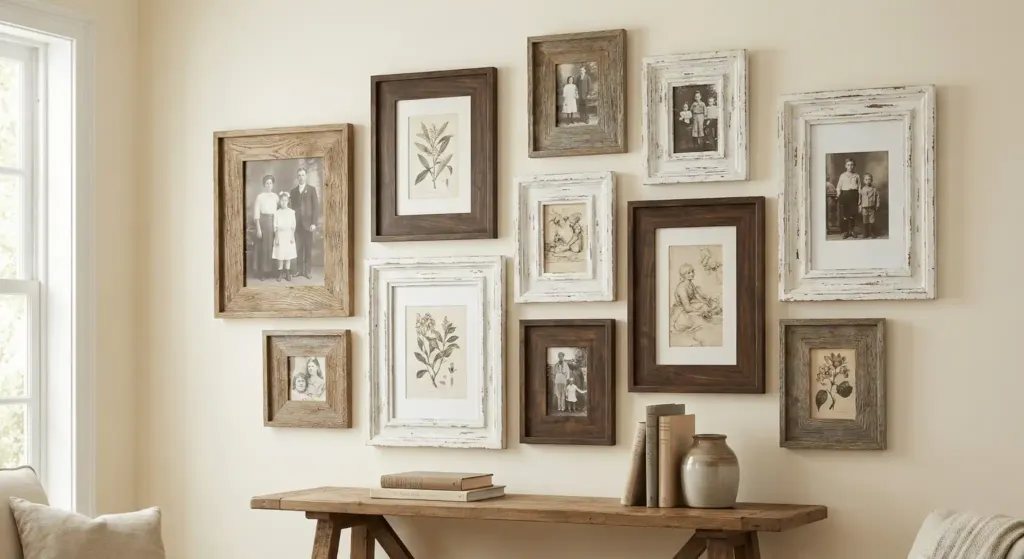
A gallery wall needs a theme. Using different types of wood frames works well.
Mix oak, walnut, and painted wood. This “curated” look feels more human. It looks like you collected pieces over time.
Avoid matching everything perfectly. That looks like a furniture catalog. A little chaos is good.
21. Pine Tongue and Groove Walls
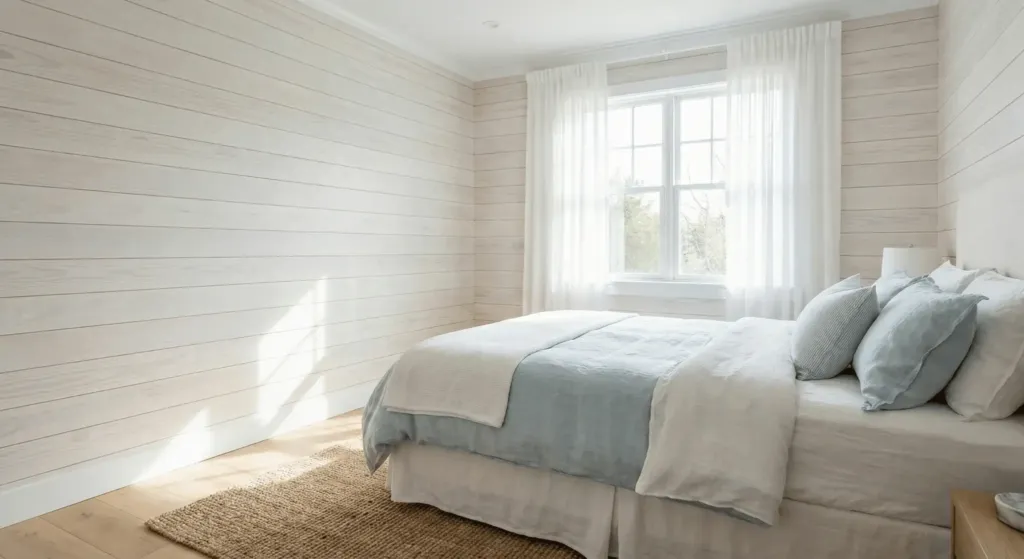
Pine is the most affordable wood. It can look “cheap” if you use the wrong stain.
I suggest using a “pickled” white stain. This hides the yellow tones. It gives you the texture of wood without the “cabin” look.
I used this in a guest bedroom. It made the room feel very “Cape Cod.” It was light and breezy.
22. Wood Footstools and Benches
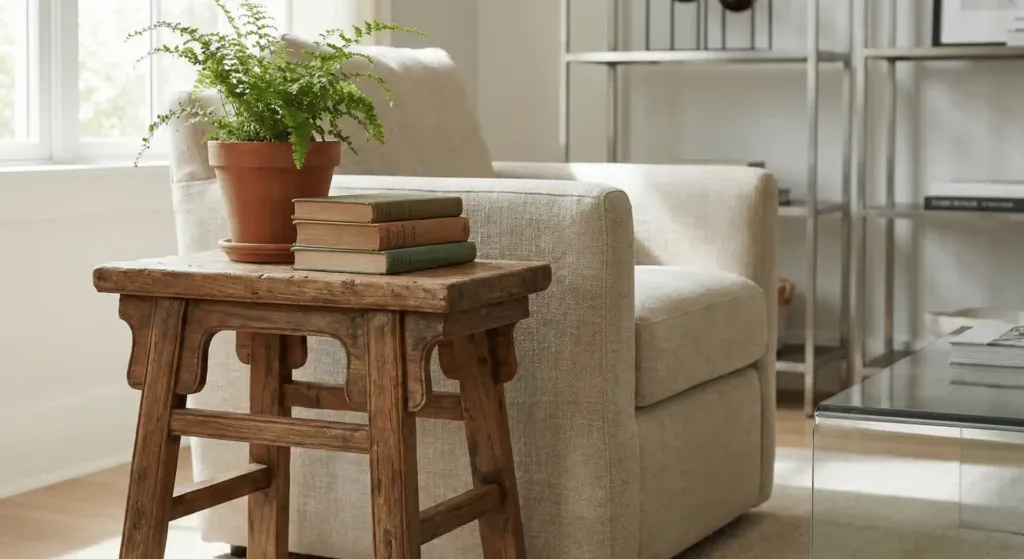
A simple wooden stool in the corner is a great touch. Use it to hold a plant. Use it to hold your books.
It is a small “pop” of wood. It works well if you already have a lot of metal or glass in the room.
I have a small teak stool next to my reading chair. It is over thirty years old. It only gets better with age.
Case Study | The Cold Condo Transformation
My client Sarah bought a new construction condo. Everything was grey. The floors were grey. The walls were “Agreeable Gray.” She felt depressed in her own home.
We had a budget of two thousand dollars. We spent twelve hundred on a walnut slat wall behind her bed. We spent another four hundred on oak floating shelves. The rest went to warm lighting.
The result? Her heart rate literally dropped when she entered the room. The wood absorbed the echo of the city. It felt like a cave in the best way. She stopped going to hotels to “get away.” She was already home.
Why Wood Works: The Science of Biophilic Design
Humans have a deep connection to nature. This is called biophilia. Studies show that seeing wood grain can lower blood pressure. It reduces stress.
In a bedroom, this is critical. You want your nervous system to shut down. Cold materials like steel and glass keep the brain “alert.” Wood signals safety.
I noticed this in my own life. I used to stare at my phone for hours in my old room. In my wood-accented room, I want to read. I want to sleep. The environment changed my behavior.
Dealing with Failure: The Orange Pine Incident
Early in my career, I tried to save money by using cheap pine for a headboard. I used a “Cherry” stain from a big box store.
The pine soaked up the stain unevenly. It turned a bright, neon orange. It looked terrible. I tried to sand it off, but the stain was too deep. I had to throw the whole project away.
The lesson? Pine needs a “wood conditioner” before you stain it. Or, better yet, just buy a better wood like Poplar or Oak. Spending twenty percent more on wood saves you eighty percent in frustration.
How to Mix Wood Grains Like a Pro
One big fear is “clashing” woods. You have an oak floor. Can you have a walnut bed? Yes.
The secret is the “undertone.” Look at the wood in the sunlight. Is it yellow? Is it red? Is it grey?
Keep all your woods in the same undertone family. Warm woods (Walnut, Cherry, Teak) go together. Cool woods (Ash, Grey Oak, Pine) go together.
Also, vary the scale. If you have big wide planks on the floor, use thin slats on the wall. This creates visual interest. It does not look like a “set.”
Tool Recommendations for Your Wood Projects
If you are going to do this yourself, you need the right gear. I have wasted money on cheap tools that broke. Here is what I use:Festool Sanders They are expensive but have the best dust collection. You can sand inside your bedroom without a mess.
Minwax Wood Finish
It is reliable and available everywhere. I like the “Weathered Oak” for a modern look.
Stikwood
This is real wood with adhesive on the back. It is the easiest way to do an accent wall. No nails required.
Titebond III Glue
The only wood glue you will ever need. It is incredibly strong.
Troubleshooting Common Problems
My wood wall is shrinking
This happens if the wood was not “acclimated.” You must leave the wood in the room for at least 72 hours before installing it. It needs to match the humidity of your home.
The wood looks too dark at night
You need “layered lighting.” Do not just use a ceiling light. Use wall sconces. Use floor lamps. Light needs to “wash” over the wood to show the grain.
I am worried about splinters
Always sand your wood down to 220 grit. Then apply a clear sealer. This “locks” the fibers down. It makes the wood feel like silk.
Frequently Asked Questions
Is wood paneling out of style?
Old-fashioned 1970s fake wood sheets are certainly out. However, real timber slats and modern shiplap are very much in. The key to keeping the look contemporary is using authentic materials rather than plastic imitations.
How much does a wood accent wall cost?
The price varies significantly based on the approach. A DIY project using pine can be done for under $200. Hiring a professional to install solid walnut can cost up to $3,000. On average, most people spend about $800 for a standard wall.
Is wood hard to maintain in a bedroom?
Not at all. A simple monthly dusting is usually enough. If the wood begins to look dry, a quick application of furniture oil every few years will keep it looking brand new.
Can I use wood in a small bedroom?
Yes. In smaller spaces, it is best to use lighter woods like Birch or White Oak. Utilizing vertical slats is a great design trick to make a small room feel taller.
What is the best wood for a rustic look?
Reclaimed barn wood or “Knotty Alder” are the top choices for a rustic aesthetic. They offer a lot of character and natural imperfections that add warmth to a room.
What is the best wood for a modern look?
For a clean, contemporary vibe, Walnut or Rift Sawn White Oak are ideal. These species are known for their very straight, clean grain patterns.
Does wood help with bedroom acoustics?
Yes. Wood is much better at absorbing sound than drywall, which helps stop that “echo” feeling. Slat walls with felt backing are specifically designed to provide the best acoustic benefits.
Can I mix wood with metal?
Absolutely. This combination creates a popular “Industrial Modern” vibe. Black metal frames, in particular, look striking when set against light-toned wood.
What stain color is currently trending?
“Natural” or “Clear” finishes are the most popular right now, as people want to showcase the wood’s true color. “Honey” tones are also making a significant comeback in modern interiors.
Is bamboo better than wood?
Bamboo is often considered more sustainable and is highly scratch-resistant. However, it lacks the deep, complex grain patterns found in traditional hardwoods like oak or walnut.
How do I clean raw wood?
You should never use water on raw wood. Instead, use a dry microfiber cloth for regular maintenance. For a deeper clean, use a specialized wood soap, such as Murphy’s.
Will wood attract bugs?
As long as the wood is kiln-dried (which is standard for almost all store-bought lumber), you won’t have an issue. The heat from the drying process kills any larvae that might be inside..
The Future of Wood in Interior Design
I see a shift toward “sculptural” wood. We are moving past flat walls. We are seeing curved wood panels. We are seeing 3D textures.
Technology like CNC routing is making complex wood patterns cheaper. In five years, your bedroom might have a 3D-carved wood headboard that looks like ocean waves.
The core principle remains. We want to feel connected to the earth. No matter how digital our lives get, we still want to touch a piece of a tree before we go to sleep.
Final Thoughts on Your Bedroom Journey
You spend a third of your life in your bedroom. It is the most important room in your house. Do not settle for a boring, cold space.
Start small. Buy a wooden stool. Hang a few wood frames. Notice how it changes your mood. Then, when you are ready, tackle that accent wall.
You do not need to be a master carpenter. You just need to value your own peace of mind. Use these ideas to build your sanctuary.
What is the one thing stopping you from adding wood to your room? Is it the cost? The tools? The fear of picking the wrong color? Let me know. I want to help you get this right.