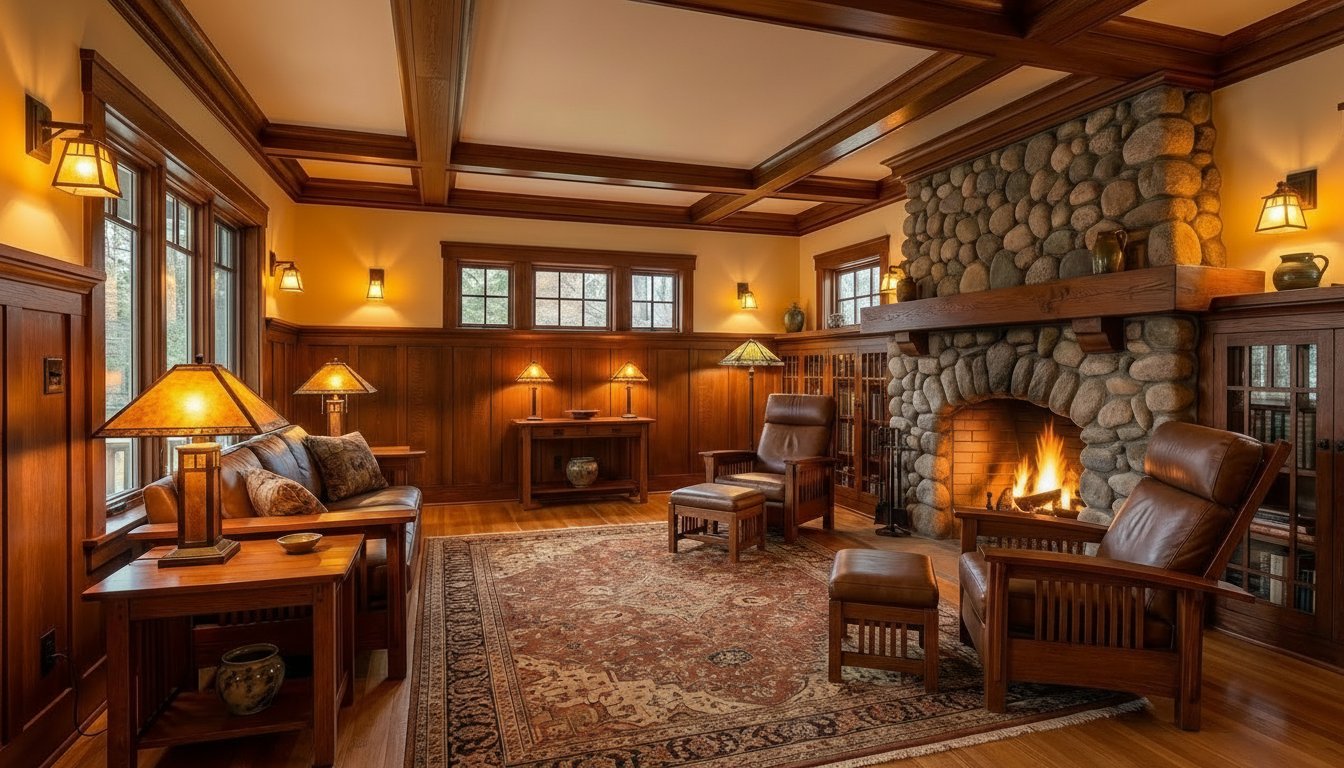
Stepping into a home with a true Arts And Crafts Aesthetic feels like a warm hug from history. You walk across a creaky oak floor. You see the light hit the Wood Trim. It is not just a room. It is a statement against the mass produced junk of the modern world. In 2024, I helped a couple in Seattle restore a 1912 bungalow. They wanted to paint the original mahogany trim white. I nearly quit. We compromised. We stripped forty years of grime instead. The result changed their lives. They stopped buying flat pack furniture. They started buying pieces that last a century. That is the power of Craftsman Style Homes Interior design. It changes how you live. It makes you slow down.
Many people think Craftsman Interior Design is just dark wood and heavy rugs. They are wrong. It is about honesty. It is about showing how a house is built. You see the joints. You see the grain. You see the work. This guide shows you how to get that look. We will look at fifteen specific rooms. We will talk about costs. We will talk about common mistakes. I will share why my own attempt at a Timeless Bedroom once failed because I used the wrong stain. Whether you live in a Modern Bungalow or a new build, these Craftsman Home Interiors will work. Let’s look at the wood, the stone, and the soul of these Craftsman Interior spaces.
Executive Summary
This deep dive covers the best Craftsman Home Interiors for 2026. You will see how to balance heavy Wood Trim with light. We look at fifteen distinct setups. Each one solves a specific problem like low light or small footprints. You will learn why quarter sawn oak costs 30% more but is worth every cent. I include price ranges for built in cabinets and custom windows. We avoid the clinical feel of modern minimalism. Instead, we lean into the Craftsmen Homes tradition of handmade quality. You will find tips on Stickley furniture and William Morris patterns. We also tackle the big debate: can you mix Craftsman Style Homes Interior with modern tech? Yes. I show you how to hide a 75 inch TV in a room designed in 1910.
1. The Heritage Oak Lounge With Quarter Sawn Grain
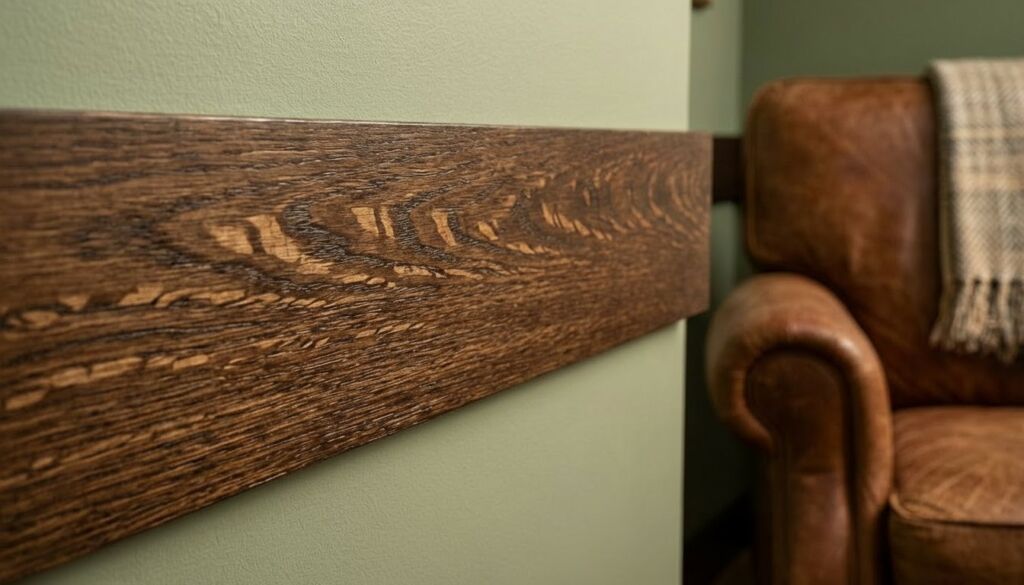
The heart of Craftsman Interior Design is the wood. In this room, quarter sawn white oak takes center stage. This specific cut shows off medullary rays. People call them “flakes.” They look like tiger stripes in the wood. I once saw a contractor use regular red oak for a mantle. It looked cheap. It lacked the depth. This room uses a dark “Fumed” finish. This is a process using ammonia to darken the wood without thick stains.
The walls are a soft sage green. This color comes from the Sherwin Williams Arts and Crafts collection. It costs about $75 per gallon in 2026. The furniture is heavy. Think of a Morris chair with leather cushions. These chairs cost between $3,000 and $5,000 at Stickley today. It is an investment. But it will outlive your kids. The lighting uses mica shades. Mica gives a warm orange glow. It makes the room feel like it is lit by a campfire.
[Internal Link: Best Woods For Craftsman Trim]
2. The Modern Bungalow Hybrid With White Accents
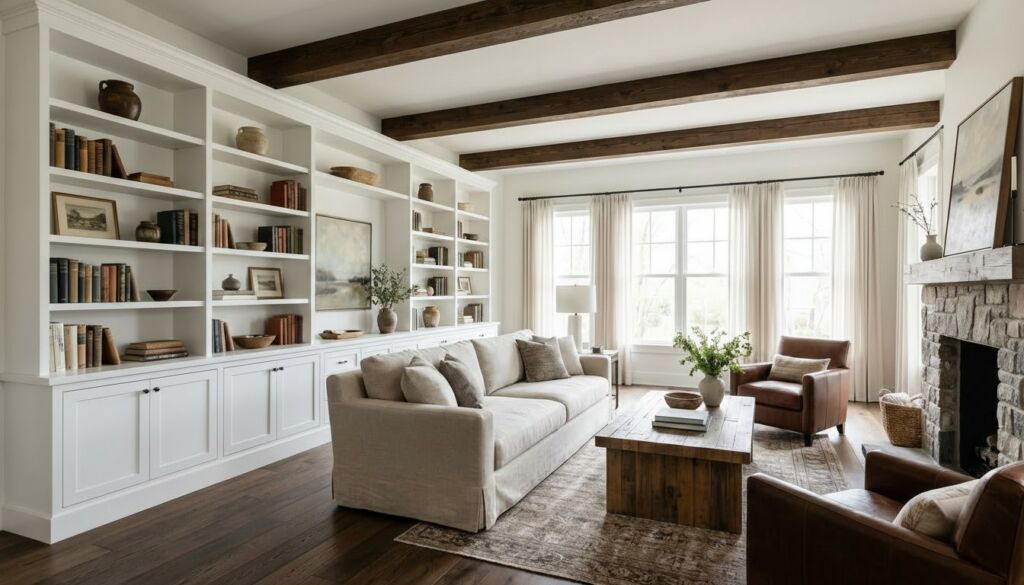
Some people hate dark rooms. I get it. If you have a Modern Bungalow with small windows, dark oak feels like a cave. This room solves that. We kept the Wood Trim on the windows. But we painted the built in bookcases a creamy off white. Purists will scream. I say let them. If it makes the room livable, do it.
The trick is the contrast. The floor remains dark. The ceiling beams are dark. But the walls and cabinets stay light. This creates a “pinstripe” effect. It highlights the architecture without the gloom. We used a Rejuvenation light fixture here. It cost $800. It has clean lines but uses antique brass. This bridges the gap between 1920 and 2026. This setup works great for young families. It feels fresh.

Vorthio Oversized Modular Cloud Couch: 113.8″ Deep Seat Sectional with Ottoman
Experience ultimate relaxation with the Vorthio Cloud Couch. This 113.8-inch oversized sectional features deep, modular seating and a sturdy metal frame for durability. With machine-washable covers and a flexible layout, it combines luxury with practicality, making it the perfect centerpiece for any modern, cozy living room.
- ✓ Plush Cloud-Like Comfort
- ✓ Fully Modular Configuration
- ✓ Machine-Washable Removable Covers
- ✓ Heavy-Duty Metal Frame
- ✓ Oversized Deep-Seat Design
3. The Grand Stone Hearth Centerpiece
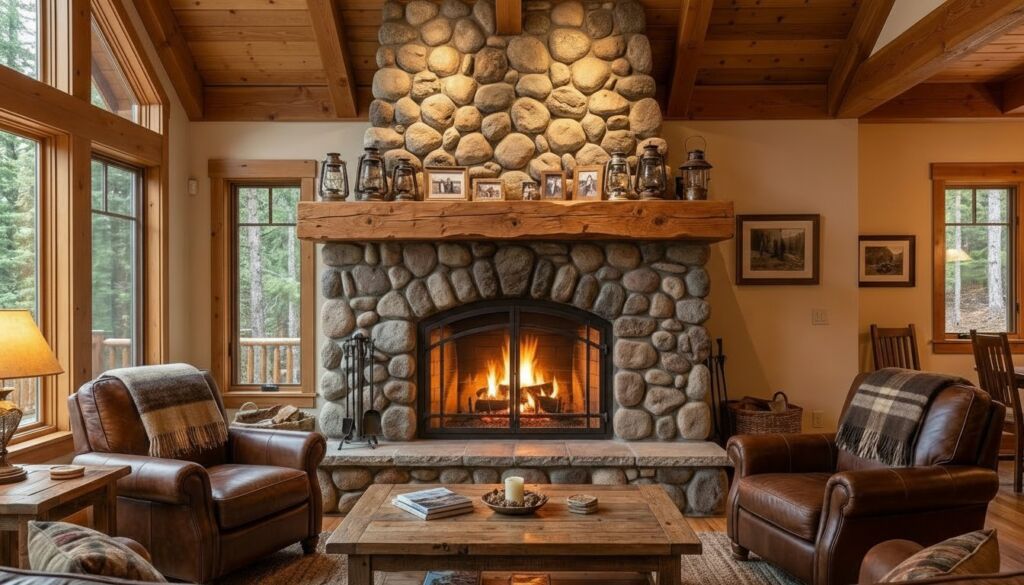
Every Craftsman Interior needs a focal point. Usually, it is the fireplace. This room uses river rock. The stones are rounded and smooth. They look like they came from a local creek. This is a core part of the Arts And Crafts Aesthetic. You use what the land gives you.
The mantle is a single slab of reclaimed Douglas Fir. It is thick. It is heavy. I remember installing one in a Craftsmen Homes project in Oregon. We needed four men to lift it. The cost for a custom stone hearth like this ranges from $8,000 to $15,000. It depends on the stone type. We paired this with a low, wide hearth. It invites people to sit right by the fire. It is practical. It is honest.
[Internal Link: Choosing Stones For Your Fireplace]
4. The Library Wall With Integrated Seating
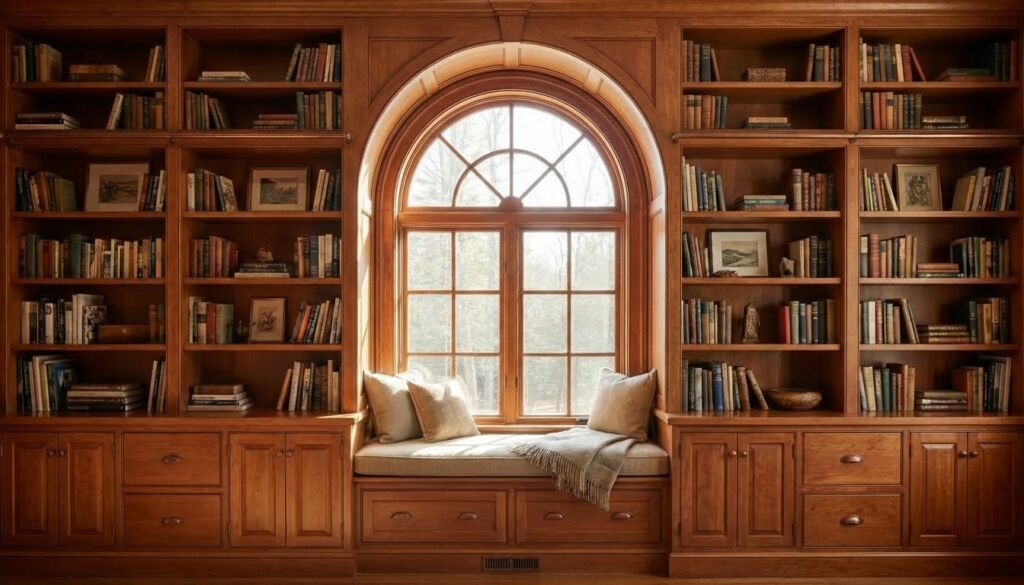
Craftsman Home Interiors love built ins. This room features a full wall of books. It includes a window seat. The seat has storage underneath. This is great for small Craftsman Interior spaces. It turns a wall into a multi tool.
The wood here is cherry. Cherry starts light and darkens with age. It turns a deep reddish brown. I love watching this happen over a few years. We used hardware from House of Antique Hardware. The pulls are hammered copper. They cost $12 each. It is a small detail that makes a huge difference. The cushions are a heavy tapestry fabric. They feature a pinecone motif. This is a classic William Morris vibe.
5. The Geometric Stained Glass Sanctuary
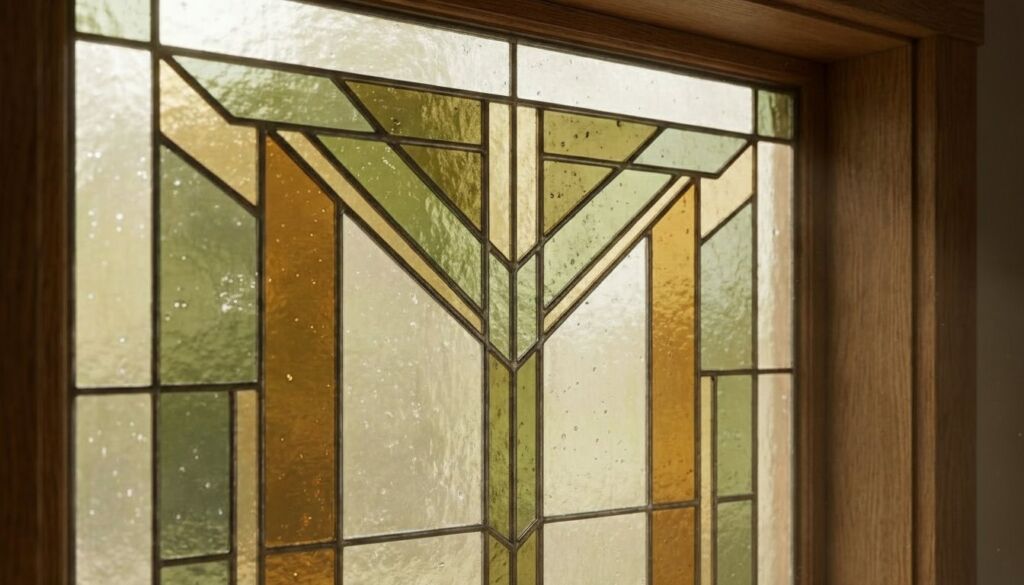
Windows in Craftsman Style Homes Interior are not just for views. They are art. This living room features “prairie style” windows. They have small square panes near the edges. Some have stained glass inserts.
The colors are amber, moss green, and deep red. When the sun hits them, the room turns into a kaleidoscope. I once worked with a glass artist in Asheville. A single custom window cost $2,200. It was the only “art” the client needed for the whole room. We kept the furniture simple. We used a low profile sofa in a neutral taupe. This lets the windows speak. If you have a beautiful view, keep the glass clear in the center. Only border it with color.
[Internal Link: Guide To Stained Glass Patterns]
6. The Olive and Ochre Earth Tone Room
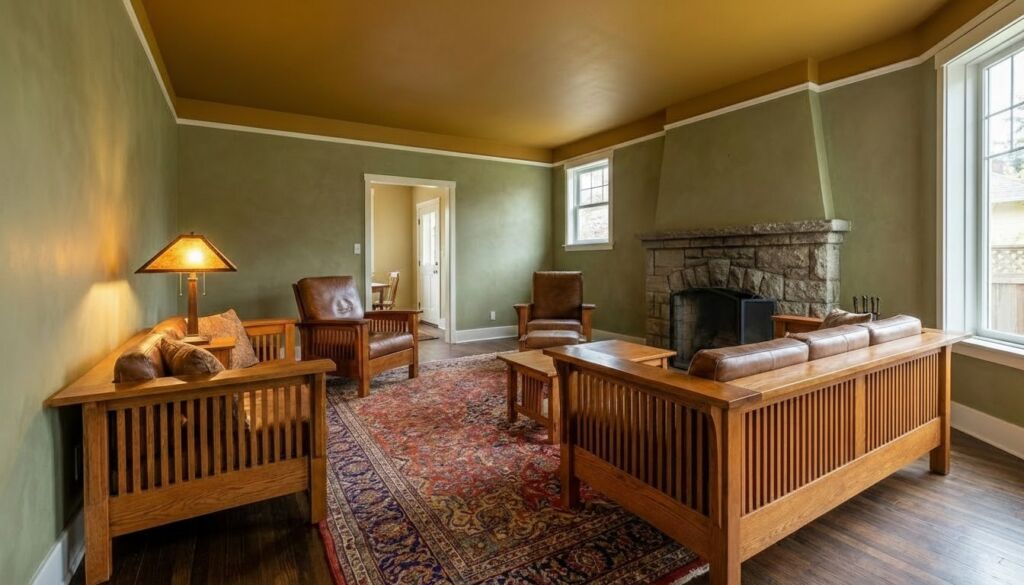
Colors in Craftsman Interior Design should feel like a walk in the woods. This room uses olive green on the walls and ochre on the ceiling. It sounds bold. It works because the Wood Trim anchors it.
The rug is a Persian style with earth tones. It ties the greens and browns together. We used a wool rug from Ruggable for a client with pets. It was $600. It looks high end but handles mud. A common failure is using cool grays in these rooms. Do not do that. Cool grays kill the warmth of the wood. Stay with warm, muddy tones. They feel grounded.
7. The Tapered Column Entryway Transition
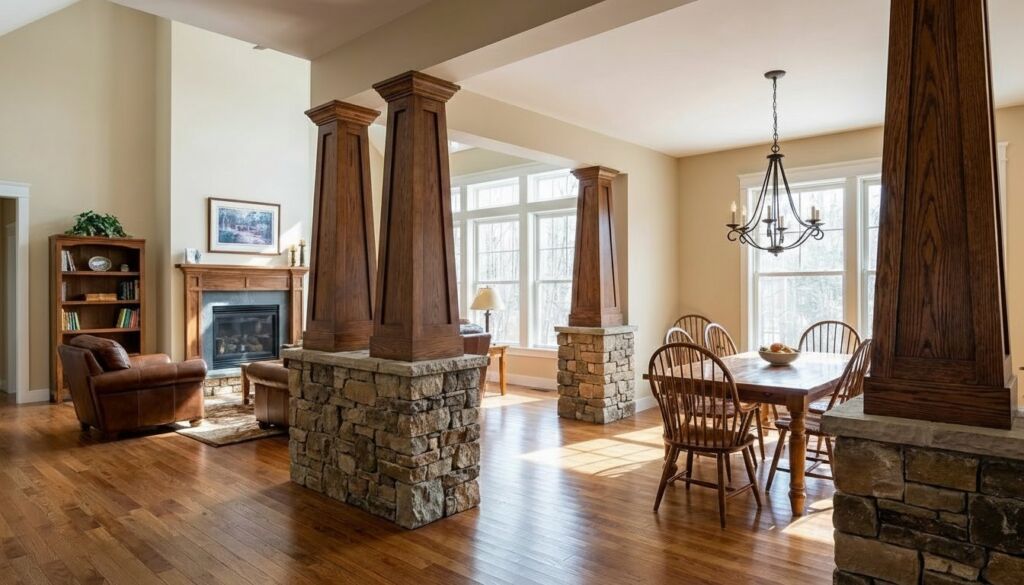
Craftsman Style Living Rooms often open into the dining area. Instead of a solid wall, use columns. These columns are tapered. They are wider at the bottom than the top. They sit on stone or wood pedestals.
This room uses these columns to create a “room” without losing light. It feels grand. The pedestals have built in cabinets for glass displays. I saw a DIY version of this go wrong once. The person used skinny poles. It looked like a basement support. These need to be thick. At least 12 inches at the base. It gives the house a sense of strength.
8. The Soaring Box Beam Ceiling Hall
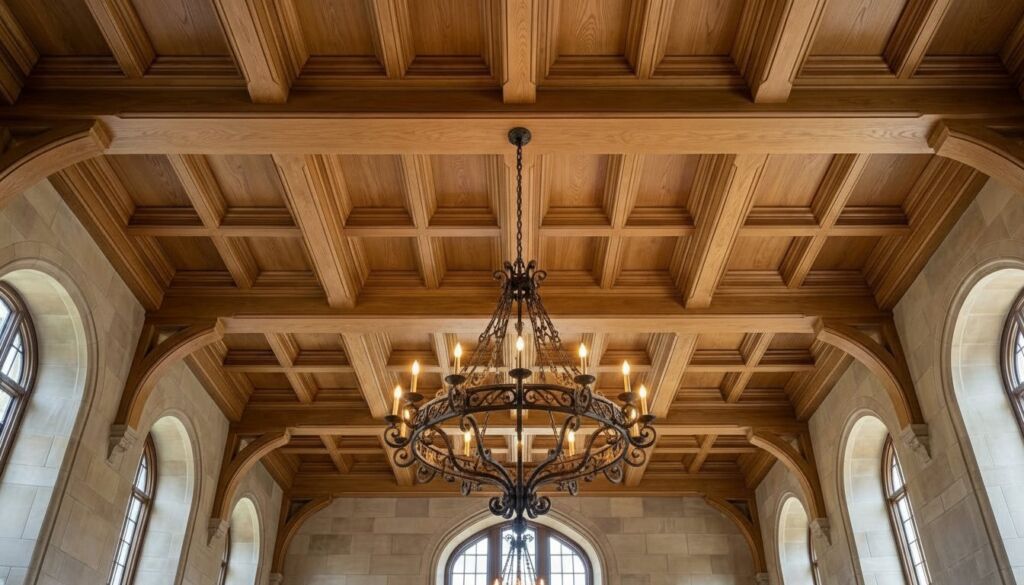
If you have high ceilings, use box beams. These are hollow wooden beams that form a grid. They add massive visual weight. This room uses white oak beams against a cream ceiling.
The cost to install a box beam ceiling in a 20×20 room is about $6,000 to $9,000. It is a big spend. But it is the first thing anyone notices. We added a large “Evergreen” chandelier from Hubbardton Forge. It is hand forged iron. It cost $2,100. The scale is important. Small lights look silly in a box beam ceiling. Go big or go home.
[Internal Link: Ceiling Beam Installation Costs]
9. The Minimalist Craftsmen Interior
Can you have a Craftsman Interior that feels modern? Yes. This room strips away the clutter. No heavy rugs. No busy patterns. Just the Wood Trim and the furniture.
The sofa is a clean lined leather piece from Room & Board. It cost $3,500. The floor is slate tile. Slate is cold, so we added radiant heating underneath. This adds about $15 per square foot to the cost. But in 2026, it is a standard for luxury Craftsmen Homes. It feels clean. It feels open. It still honors the Arts And Crafts Aesthetic because the materials are real.
10. The Cozy Inglenook Nook
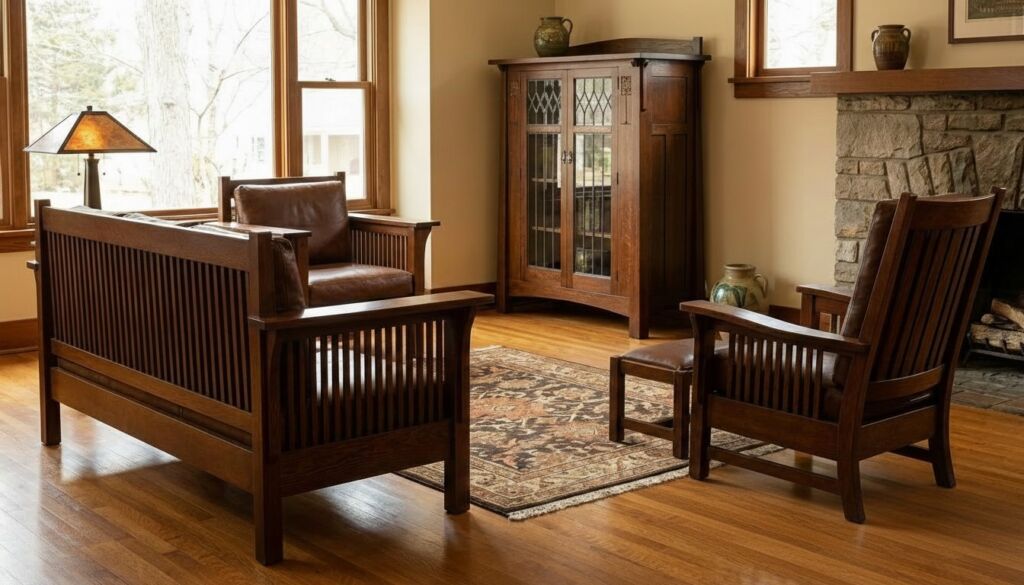
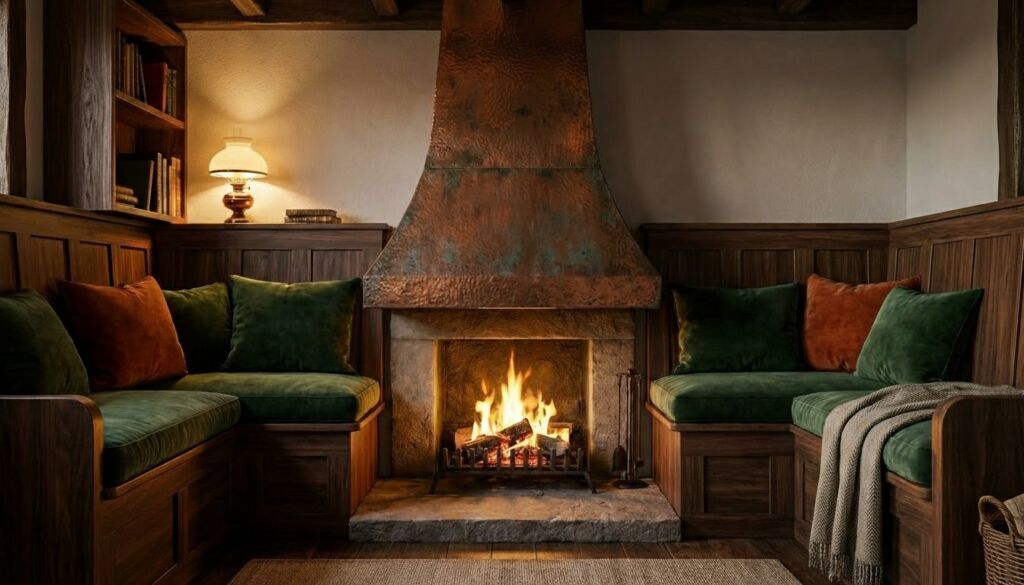
An inglenook is a small recessed area around a fireplace. It usually has benches. This room is the ultimate “cozy” setup. It is perfect for winter nights.
We used dark walnut for the benches. Walnut is expensive. It is about $12 per board foot right now. We added velvet pillows in a burnt orange. The fireplace has a hammered copper hood. I found a vintage one at an architectural salvage yard for $1,200. New ones cost $4,000. Always check salvage yards. You find the best soul there.
11. The Stickley Furniture Showcase
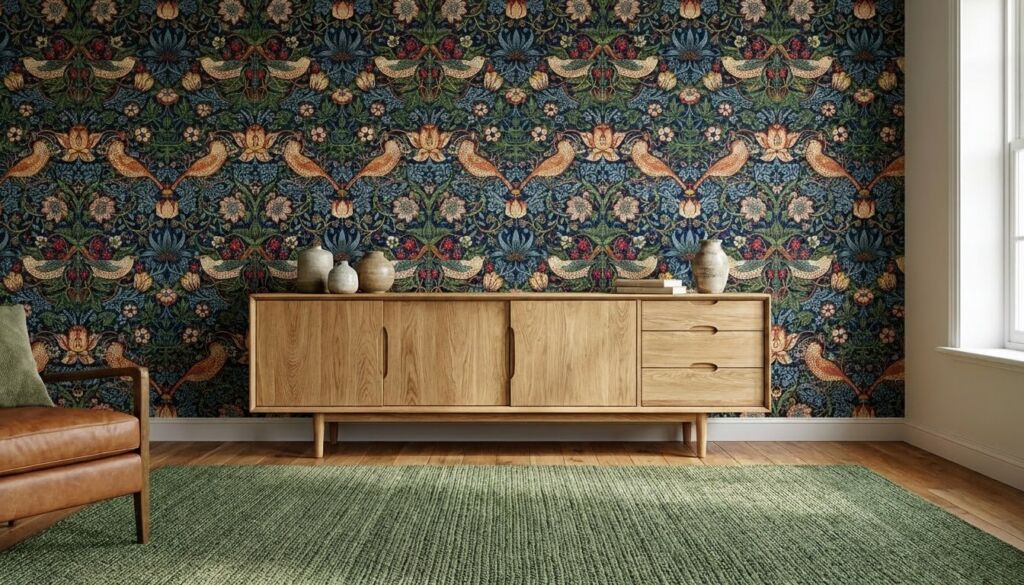
This room is for the purist. Every piece is a licensed Stickley design. The “Spindle” sofa. The “Bow Arm” chair. The “Harvey Ellis” cabinet.
It looks like a museum. It feels like quality. The total cost for a room like this is high. You are looking at $25,000 in furniture alone. But these pieces hold their value. I sold a used Stickley sideboard last year for 80% of its original price. You cannot do that with IKEA. The room uses a neutral backdrop so the furniture shapes stand out.
12. The William Morris Pattern Room
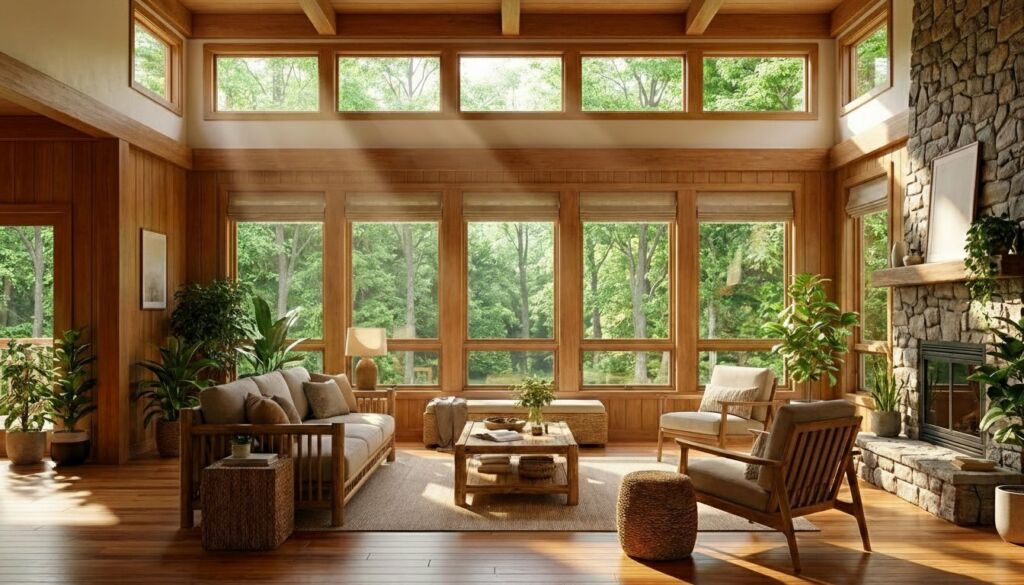
William Morris said “Have nothing in your houses that you do not know to be useful or believe to be beautiful.” This room takes that literally. One wall features “Strawberry Thief” wallpaper. It is busy. It is colorful.
Because the wallpaper is so bold, we kept the Wood Trim natural. No stain. Just a clear coat. This prevents the room from feeling too heavy. We used a simple green wool rug. The cost for Morris & Co wallpaper is about $150 per roll. You need a pro to hang it. It is thick and tricky.
[Internal Link: Hanging Historic Wallpapers]
13. The Clerestory Window Sunroom
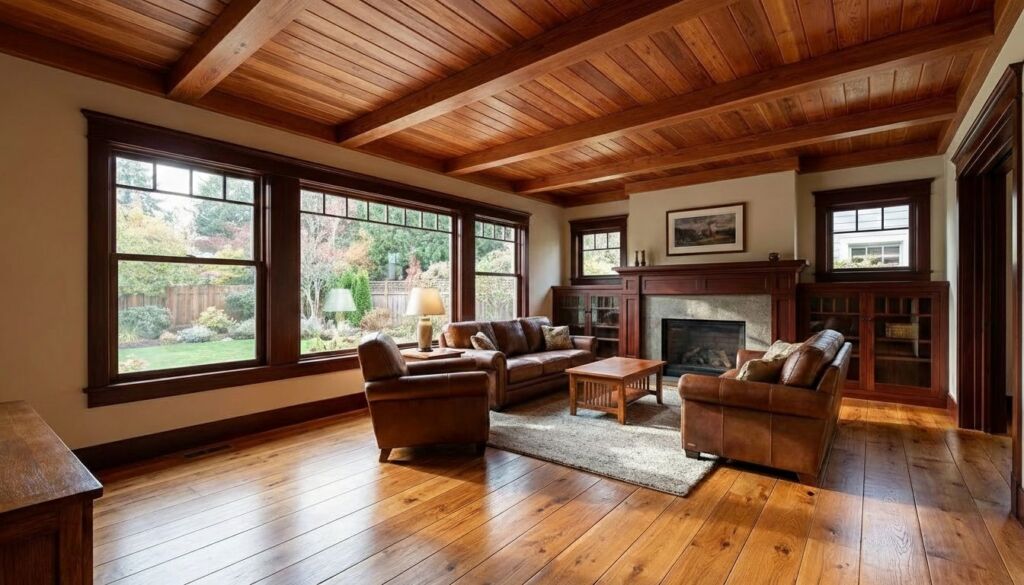
Clerestory windows are high on the wall. They let in light but keep privacy. This living room uses them above the main window line.
It makes the ceiling feel like it is floating. We used Marvin windows here. They have a wood interior and aluminum exterior. This protects the wood from rot but keeps the Craftsman Interior look inside. They cost about $1,100 per window. This setup is great for urban areas where neighbors are close. You get the sky but not the street noise.
14. The Mixed Wood Trim Suite
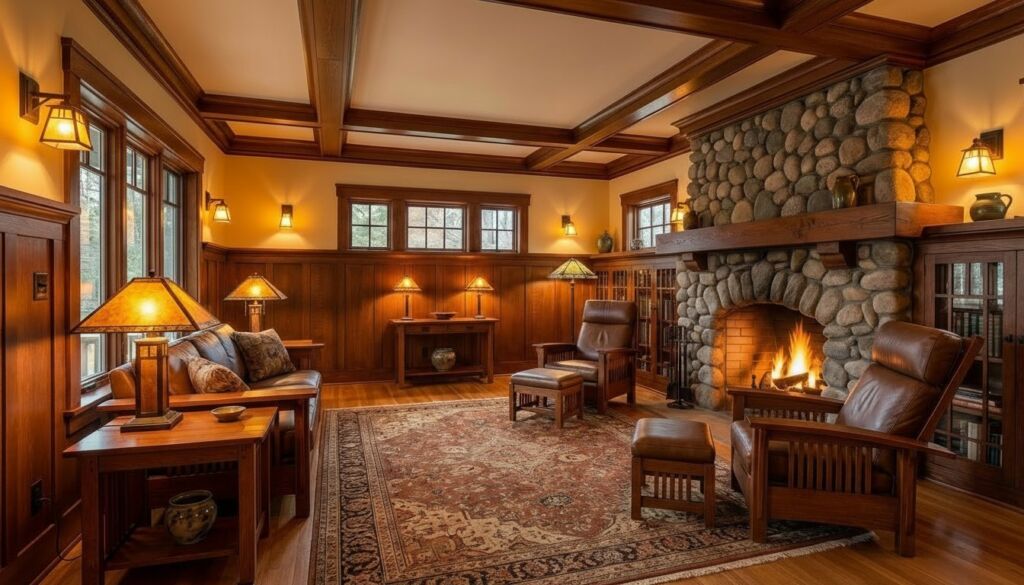
Who says you can only use one wood? This room mixes oak floors with cedar ceiling planks and mahogany window trim.
The key is the undertone. All these woods have a warm yellow or red base. Do not mix a “cool” gray wood with “warm” cedar. It will look like a mistake. I once saw a Timeless Bedroom where they used gray laminate next to cherry trim. It was painful to see. In this living room, the different grains add layers. It feels like a house that was built over decades.
15. The Prairie Style Open Plan
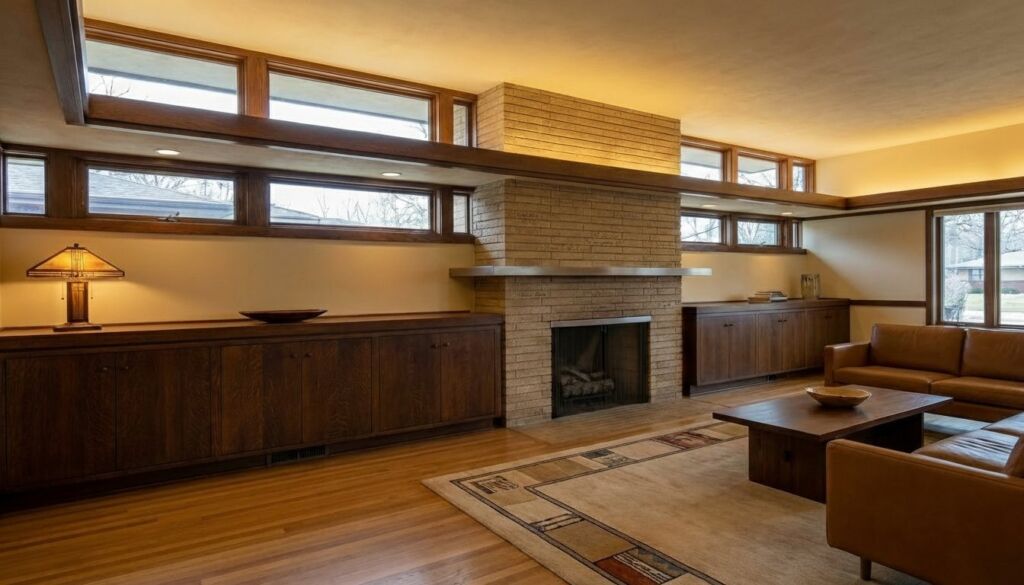
Frank Lloyd Wright loved the “Prairie” style. It is a subset of Craftsman Interior Design. It emphasizes horizontal lines. This room features long, low built ins that run the length of the space.
The furniture is also low to the ground. This makes the room feel wider. We used “Autographed” brick for the fireplace. These are long, thin bricks. They emphasize the horizontal vibe. It is a sophisticated look. It feels more “architectural” and less “cottage.”
Common Craftsman Design Mistakes
I have seen people ruin beautiful Craftsman Style Homes Interior projects. The biggest mistake? Using “ranch” baseboards. These are thin and curved. They look flimsy. Craftsman trim must be thick. Use 1×6 or 1×8 boards. They should be flat.
Another mistake is lighting. People use “cool white” LED bulbs. This turns the wood a sickly green color. Only use “warm white” or “soft white” bulbs. 2700K is the sweet spot. It mimics the glow of a candle. It makes the wood look rich and deep.
I also see people skip the “Picture Rail.” This is a piece of trim that runs about 12 inches below the ceiling. You hang art from it with hooks and cords. It means you do not have to put holes in your plaster. It is functional. It is beautiful. It costs about $300 to add to a room. Do it.
Tools and Brands for the Craftsman Look
If you are doing this yourself, you need the right stuff. Here is what I use:
- Stickley Furniture: The gold standard. Expensive but worth it.
- Sherwin Williams Arts and Crafts Palette: Perfect colors every time.
- Marvin Windows: The best “Ultimate” line for wood interiors.
- Rejuvenation: Great for lighting and hardware.
- Rookwood Pottery: For fireplace tiles. They have been around since 1880.
- Old Masters Stain: I use their “Wiping Stain” in American Walnut.
- Festool Sanders: If you are stripping old trim, you need a dustless system.
- Ann Sacks: For high end bathroom or fireplace tile.
- Kohler: Their “Artifacts” line fits the era perfectly.
FAQ
What is the difference between Mission and Craftsman style?
Mission is a subset of the broader Arts and Crafts movement. It is generally simpler and heavier in its construction, almost always utilizing oak. Craftsman is a broader term that includes more decorative details like stained glass, varied wood species, and intricate joinery. While Mission is about the “mission” (purpose) of the furniture, Craftsman focuses on the “craft” of the builder.
Is Craftsman style still in for 2026?
Yes. It is considered “trend-proof.” Because it focuses on natural materials and high-quality construction, it never truly looks dated. We are currently seeing a significant rise in “Modern Craftsman” interiors; in an increasingly digital and uncertain world, people want homes that feel solid, grounded, and permanent.
How much does it cost to add Craftsman trim to a room?
For a standard 12×15 room, expect to pay approximately $2,000 for materials if you are using authentic oak. Labor will typically range between $1,500 and $3,000. It is a notoriously slow process because the style demands that every joint be perfectly flush and precise.
Can I paint my Craftsman trim white?
You can, but proceed with caution as you may lose resale value. Authentic buyers specifically look for the natural wood grain. If the wood is a cheaper secondary wood like pine, go ahead and paint it. However, if it is oak or mahogany, it is best to leave it natural. If you want a lighter look without covering the grain, consider a “Wash” finish.
What colors go best with dark wood?
Stick to an earthy, organic palette: sage green, ochre, terracotta, and deep blue. Avoid cool grays and sterile, bright whites. A good rule of thumb is to look at the colors you would naturally see in a forest.
What is the best flooring for a Craftsman living room?
Oak or maple are the standard choices. Use wide planks, typically between 3 to 5 inches. You should avoid the “super wide” 10-inch planks that are currently popular in farmhouse styles, as they tend to look too modern for an authentic Craftsman aesthetic.
How do I hide a TV in a Craftsman room?
The most authentic way is to house it inside a built-in cabinet with pocket doors. Alternatively, use a “Frame” TV that displays art when not in use. In Craftsman layouts, we often recommend mounting screens above a low bookcase rather than the fireplace to maintain the hearth’s visual importance.
Are Craftsman homes energy efficient?
Original early 20th-century homes are generally not efficient and tend to be quite drafty. However, they can be upgraded effectively. Use high-quality weather stripping and storm windows to preserve the original glass. For wall insulation, you can have cellulose blown into the cavities from the exterior to avoid tearing down lath and plaster.
What rug styles work best?
Look for Arts and Crafts patterns, specifically “Voysey” or “Morris” designs characterized by stylized flora and fauna. Persian rugs also work beautifully in these spaces as they add a touch of “global craft” that complements the handmade nature of the architecture.
Where can I find authentic hardware?
House of Antique Hardware is widely considered the best resource for period-accurate pieces. They carry everything designed from the 1910s. Van Dyke’s Restorers is another excellent source for hinges, pulls, and latch sets.
What is a box beam ceiling?
It is a ceiling treatment featuring wooden beams arranged in a grid pattern. It creates the appearance of a series of sunken boxes (coffers). This architectural detail adds immense depth and structural character to rooms with high ceilings.
Can I mix Craftsman with Mid-Century Modern?
Absolutely. Both styles share a deep value for wood, function, and honesty in materials. A Mid-Century Modern sofa often looks stunning in a Craftsman living room. The key to success is ensuring the wood tones (the stains and species) are similar enough to feel cohesive.
Moving Forward
Building a Craftsman living room is a journey. It is not a weekend project. It takes time to find the right wood. It takes time to pick the right stain. But once it is done, you will never want to leave. You will find yourself touching the Wood Trim as you walk by. You will appreciate the way the light hits the grain.
I remember my first restoration. I spent three weeks sanding a single window frame. My hands hurt. I was frustrated. Then I put the first coat of oil on it. The wood “popped.” The red tones came to life. It was a religious experience. That is why I do this. That is why Craftsman Style Living Rooms matter. They connect us to the people who built them. They remind us that quality matters.