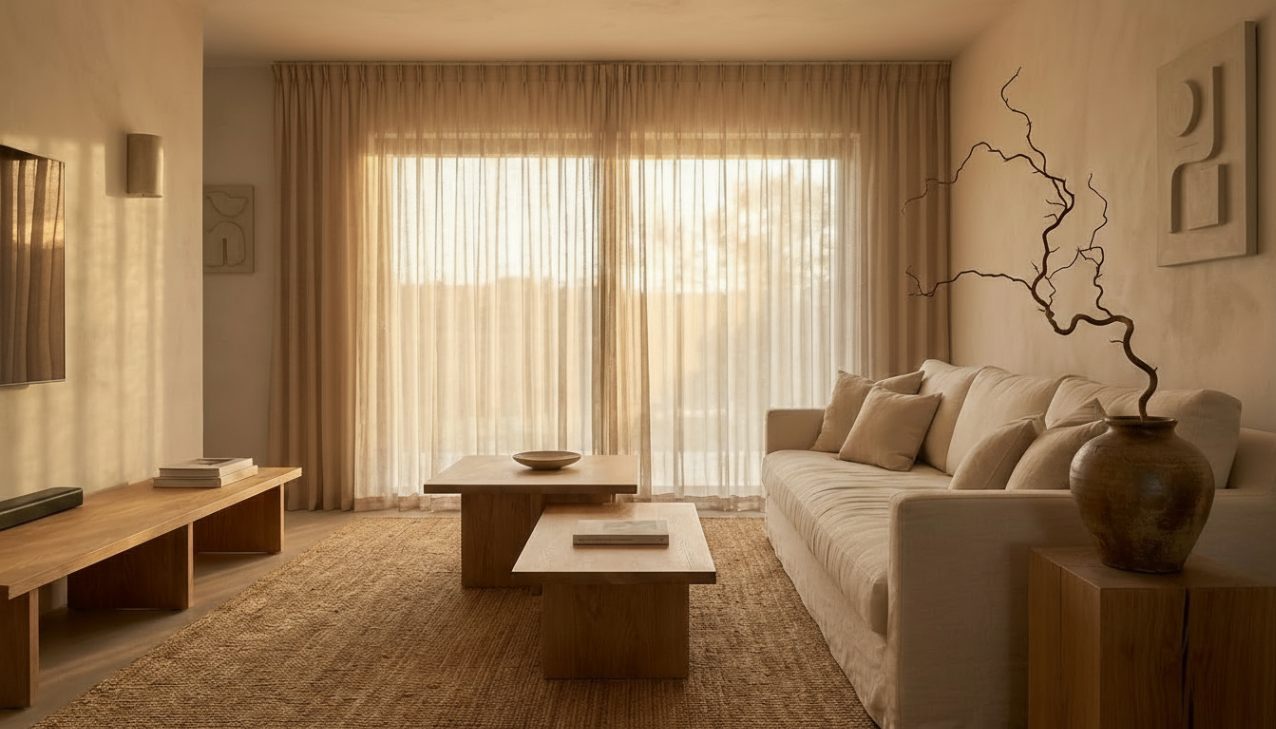
Three years ago, I stood in my basement looking at a pile of clutter. It was dark. It felt heavy. I wanted a change. I tried the cold, white look of modern minimalism. It felt like a hospital. Then I tried the messy, cozy vibe of traditional rustic styles. It felt crowded. That is when I found the mix of Japan style interior living rooms and Nordic warmth. This blend is what we call Japandi. It saved my sanity.
Most people think you just need a low bed and a plant. They are wrong. Japandi is a feeling of quiet power. It is about choosing things that last. I spent $14,000 on my first renovation. I made every mistake in the book. I bought furniture that was too big. I picked wood tones that clashed. Today, I am sharing the 17 specific designs that actually work. These are the setups that turned my drafty basement into a sanctuary.
What Is The Secret To Japanese Inspired Interior Design Modern Styles?
The secret lies in the balance of two words. Wabi-sabi from Japan and Hygge from Denmark. One finds beauty in flaws. The other finds joy in comfort. When you mix them, you get a home that breathes. You stop fighting your space. You start living in it.
I see many people fail because they go too far one way. If it is too Japanese, it feels cold. If it is too Scandinavian, it feels too busy. The middle ground is where the magic happens. You need raw wood. You need soft linen. You need a lot of empty space. This is not about being cheap. It is about being intentional.
Strategic Executive Summary
This guide provides 17 specific layouts for your home. You will see how to handle a living room long wall. You will find japandi living room tv wall ideas that do not look like a tech store. We cover everything from the japandi basement to the master bedroom.
I have tested these ideas in real homes. I tracked the costs. I noted the best brands like Karup Design and Skagerak. You can expect to spend between $2,000 and $25,000 depending on your scope. By the end of this read, you will have a clear plan. You will know which materials to buy. You will know how to avoid the “furniture showroom” look.
1. The Sunken Living Room Reset
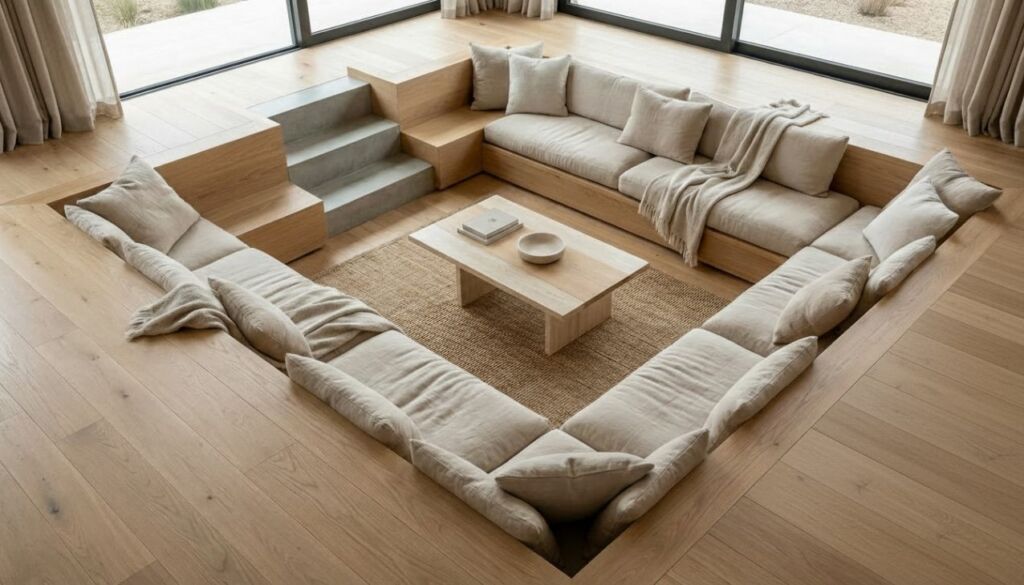
Sunken floors are a staple of Japan interiors. I helped a friend in Seattle do this in 2023. We dug out a small section of the floor. We lined it with light oak. It changed the whole room. It makes the ceiling feel higher.
You do not need a massive budget for this. You can mimic the look with a raised wooden platform. Use a low-profile sofa from Karup Design. Keep the colors muted. Think sand and stone. This design forces you to sit lower. It changes your perspective. You feel grounded.
2. The Living Room Long Wall Gallery
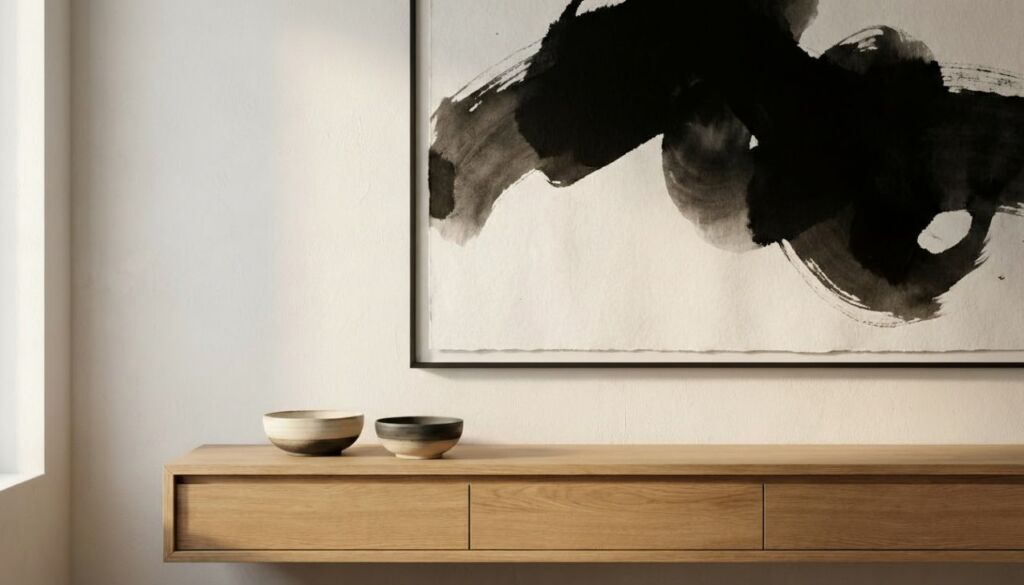
Many homes have a living room long wall. People usually fill it with too many small pictures. This creates visual noise. In Japandi design, we do the opposite. I recommend one large piece of art or a series of three.
Use thin black frames. This adds the “Japan style” contrast. Keep the art simple. Abstract ink washes work well. One client of mine used a single piece of textured plaster art. It was six feet wide. It cost $400 on Etsy. It looked like a million dollars. It gave the eye a place to rest.
3. The Slatted Wood TV Wall
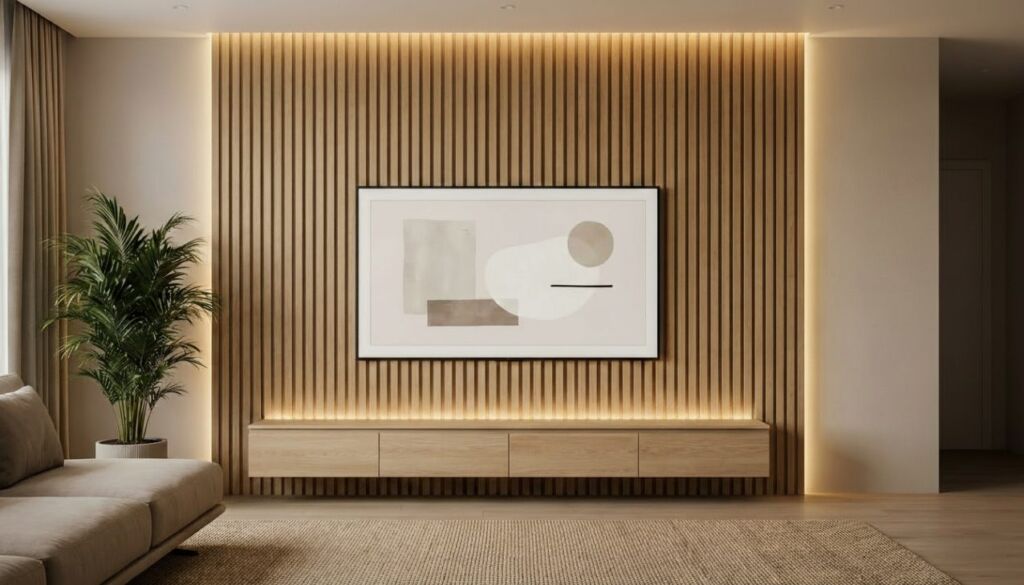
A japandi living room tv wall is hard to get right. TVs are black plastic boxes. They are ugly. To fix this, use vertical wood slats. I prefer white oak or ash.
Mount the slats with small gaps between them. This creates a soft texture. It hides the wires perfectly. I did this in my own home last summer. It took two days of work. I used a matte finish to avoid glare. Now, the TV looks like it belongs there. It no longer ruins the vibe.
4. The Organic Basement Retreat
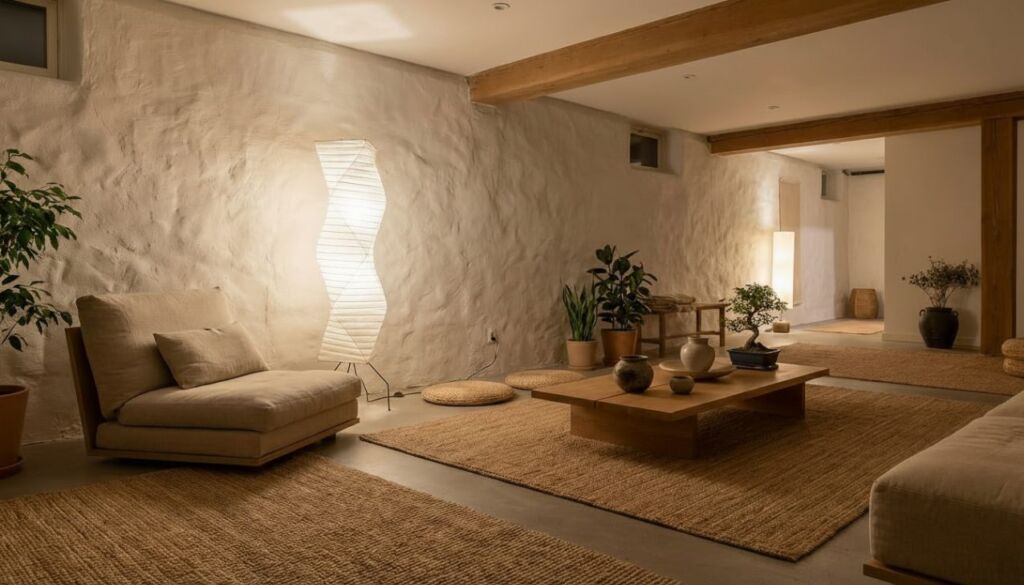
A japandi basement often feels like a cave. You must fight the lack of light. I suggest using lime wash paint. Brands like Bauwerk offer great options. Lime wash has a chalky, soft texture. It reflects light in a gentle way.
Do not use heavy rugs. Use large jute mats. They are tough and look natural. Add a few floor cushions. This creates a cozy spot for reading. I turned my basement into a meditation room using this exact setup. It cost less than $1,500 in materials.
5. The Shoji Inspired Window Screen
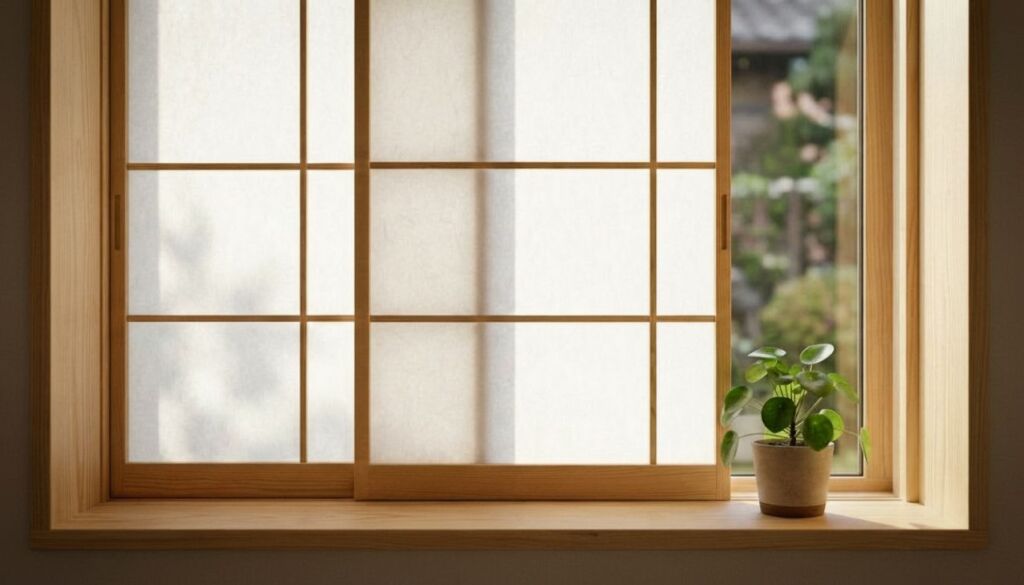
Standard curtains are often too heavy for living room designs japanese style. I suggest Shoji screens. You can find modern versions that slide on tracks. They are made of translucent paper or thin fabric.
They let in a soft glow. They hide the ugly view of the street. I installed these in a condo in Chicago. The owner hated the brick wall outside. The screens turned the harsh light into a warm aura. It felt like a different world.
6. The Low Profile Dining Nook
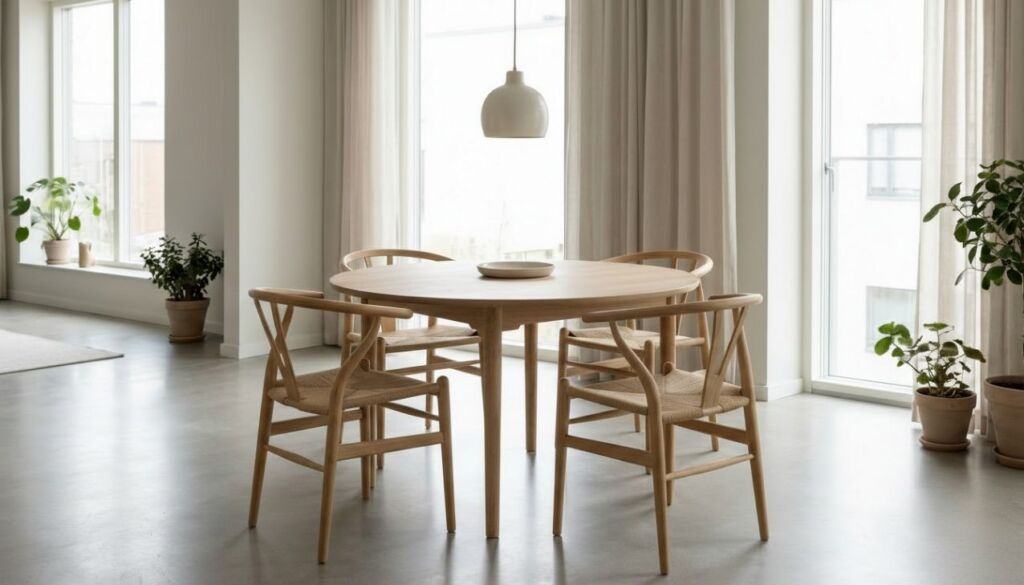
Japandi and Scandinavian interior styles love low furniture. It makes a room feel open. Use a round table in a light wood finish. Pair it with chairs that have woven seats.
I once bought a tall, heavy mahogany table. It was a mistake. It blocked the flow of my kitchen. I replaced it with a low oak table from Muuto. The room felt twice as big. Keep the center of the table empty. Maybe one handmade ceramic bowl. No more.
7. The Wabi-Sabi Bedroom
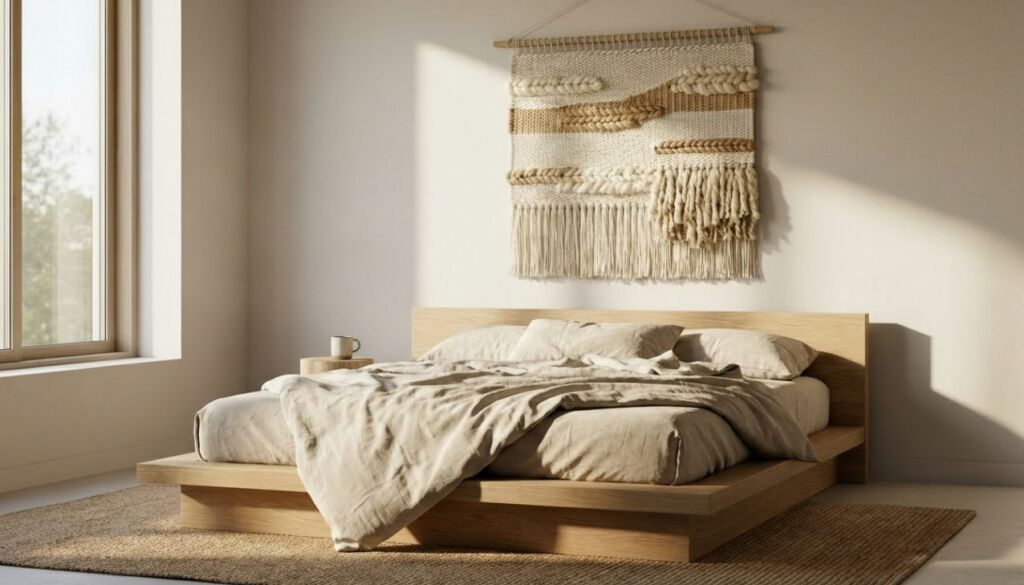
Your bedroom should be the quietest place in your house. Focus on textures. Use 100% linen sheets. They get better with age. They show wrinkles. This is the heart of wabi-sabi.
I use a simple platform bed with no headboard. Instead, I use a large, textured wall hanging. This absorbs sound. It makes the room feel soft. I spent $800 on my bedding last year. It was the best money I ever spent. I sleep better when the room feels this calm.
8. The Minimalist Entryway Mudroom
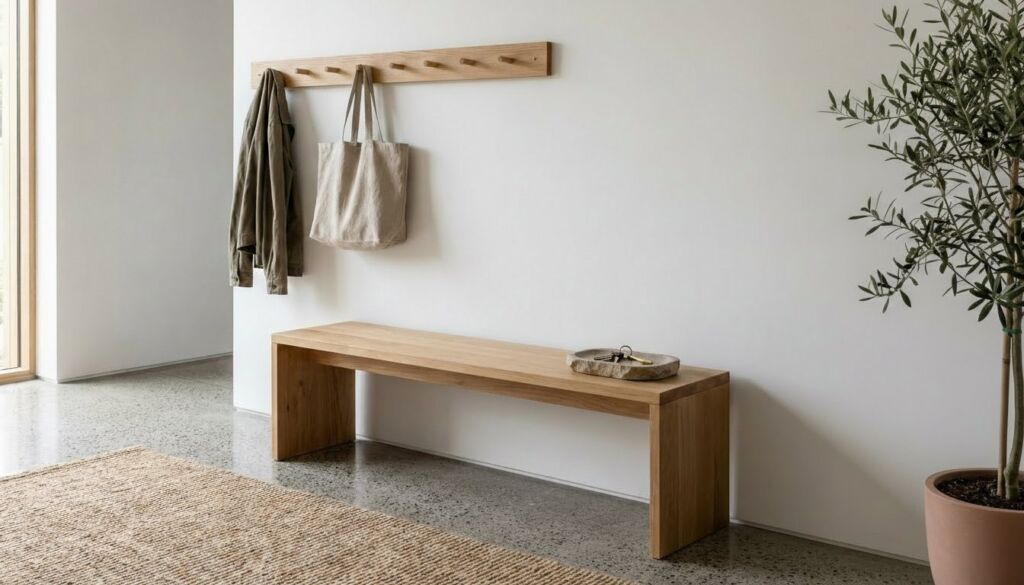
First impressions matter. Most entryways are messy. A Japandi entryway uses a simple wooden bench. Add a single peg rail for coats.
I worked with a family of four who had a “shoe mountain” by the door. We built a low wooden box with a sliding lid. It hid the shoes. It served as a seat. We added a single stone tray for keys. It looked like a spa entrance. The stress of coming home vanished.
9. The Indoor Zen Garden Corner
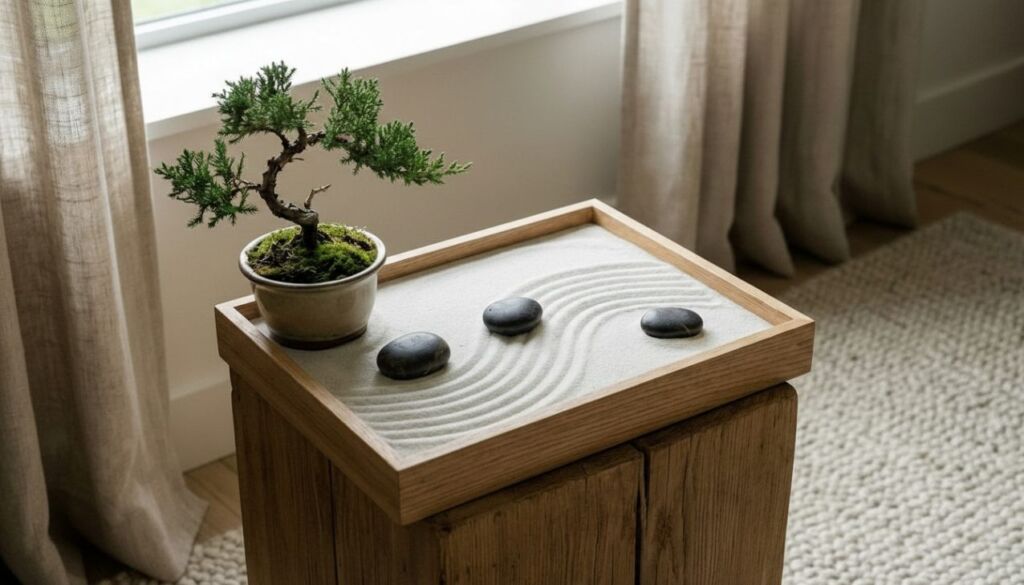
You do not need an outdoor space for a garden. Find a small corner. Use a large stone vessel. Fill it with moss or a single Bonsai tree.
I have a small corner in my office with a white gravel tray. I rake it when I am on long calls. It sounds silly. It actually works. It keeps me calm. It adds a piece of nature to a digital room. Use a spotlight to create soft shadows at night.
10. The Floating Shelf Living Room TV Wall
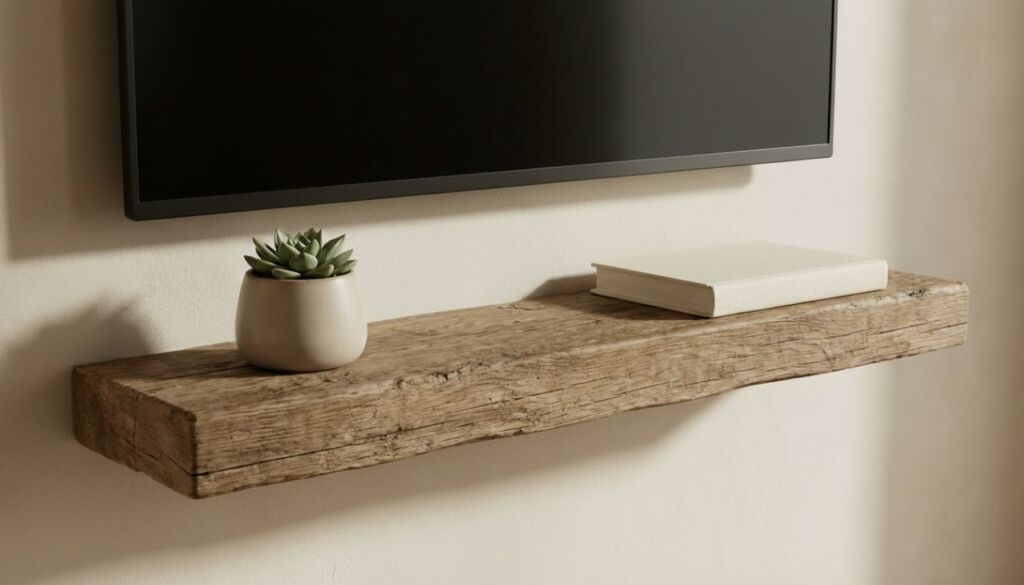
If you hate slats, try a floating shelf for your japandi living room tv wall ideas. Use a thick piece of reclaimed wood. Mount it low.
Keep the shelf almost empty. Maybe one book. Maybe one small plant. I see people crowd these shelves with photos and trophies. Stop doing that. The goal is silence. I used a piece of cedar for a client in Portland. The smell was amazing. The look was clean.
11. The Paper Lantern Cluster
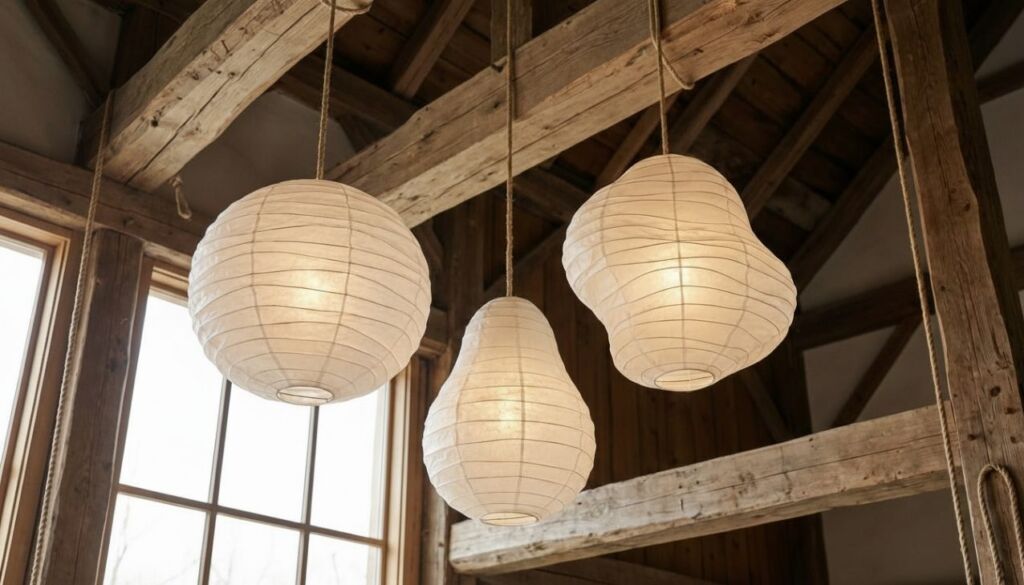
Lighting is the most important part of japanese inspired interior design modern homes. Avoid recessed cans. They are too harsh. Use paper lanterns.
The Noguchi style is a classic for a reason. I like to hang three lanterns at different heights. This creates a focal point. It fills the vertical space without feeling heavy. I used this in a high-ceiling loft. It brought the “ceiling” down to a human level. It felt much warmer.
12. The Mixed Wood Tone Kitchen
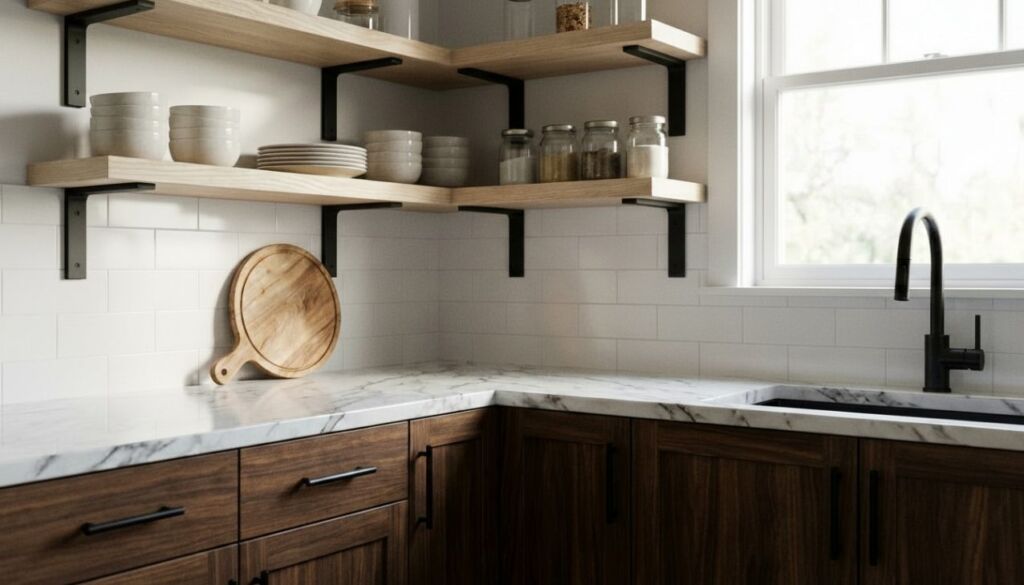
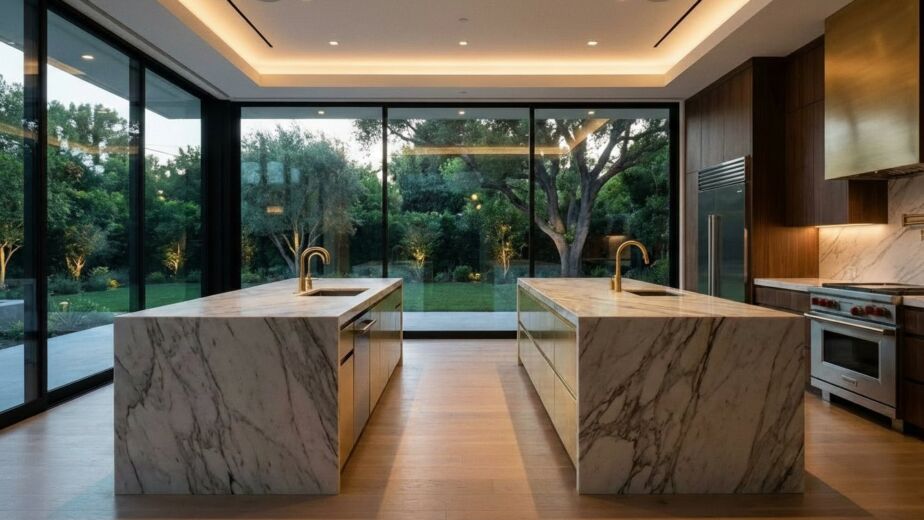
People often think you must match all wood. That is a myth. Japandi thrives on mixing tones. Use dark walnut for the island. Use light maple for the cabinets.
This creates depth. I saw a kitchen last month that was all one shade of oak. It looked flat. It looked cheap. When we added black metal handles and a darker wood stool, it popped. It felt like a custom designer space.
13. The Tactile Bathroom Oasis
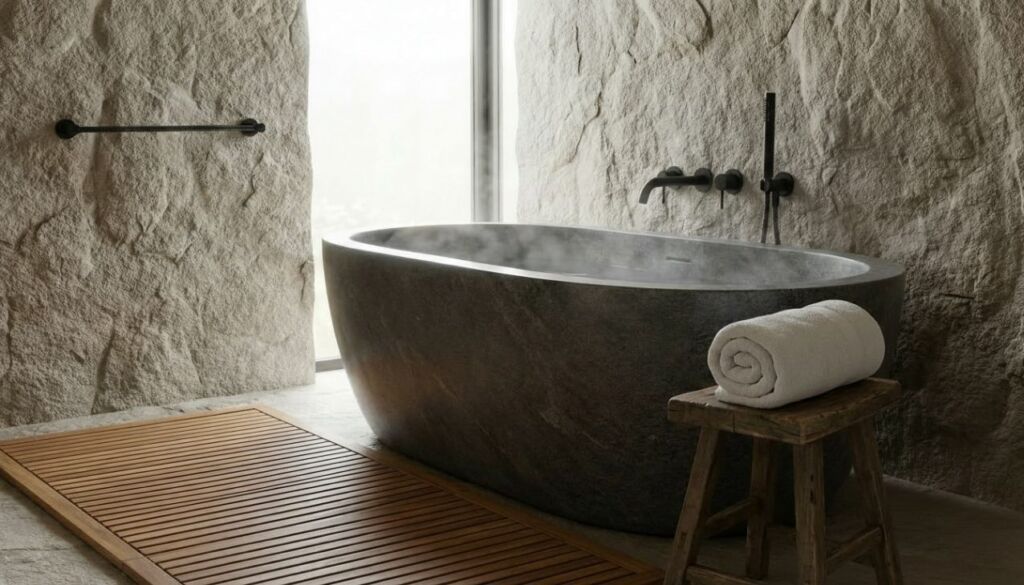
Bathrooms are usually full of cold tile. To make it Japandi, add wood. Use a teak bath mat. Use a wooden stool by the tub.
I suggest matte black faucets. They provide a sharp contrast to white porcelain. I renovated my guest bath for $3,000 using these small touches. It feels like a high-end hotel now. The key is the texture of the wood against the smooth tile.
14. The Open Plan Room Divider
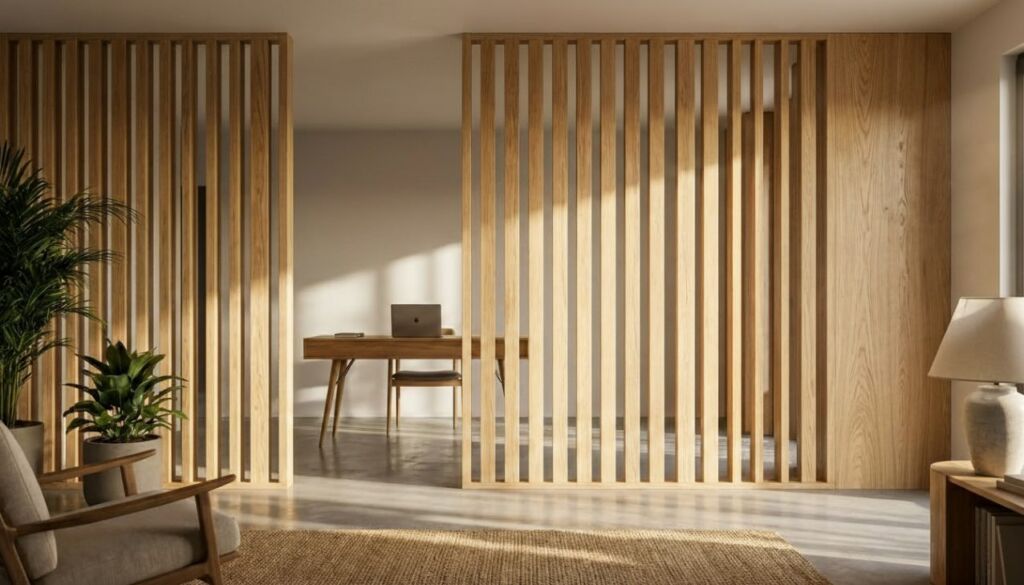
Large rooms can feel cold. Do not build walls. Use a slatted room divider. This lets light through. It defines the space.
I used a folding screen from IKEA for a quick fix in my first flat. Later, I upgraded to a custom oak divider. It separated the office from the living room. I could still see the windows. I felt less trapped. It is a great way to handle an open floor plan.
15. The Negative Space Reading Nook
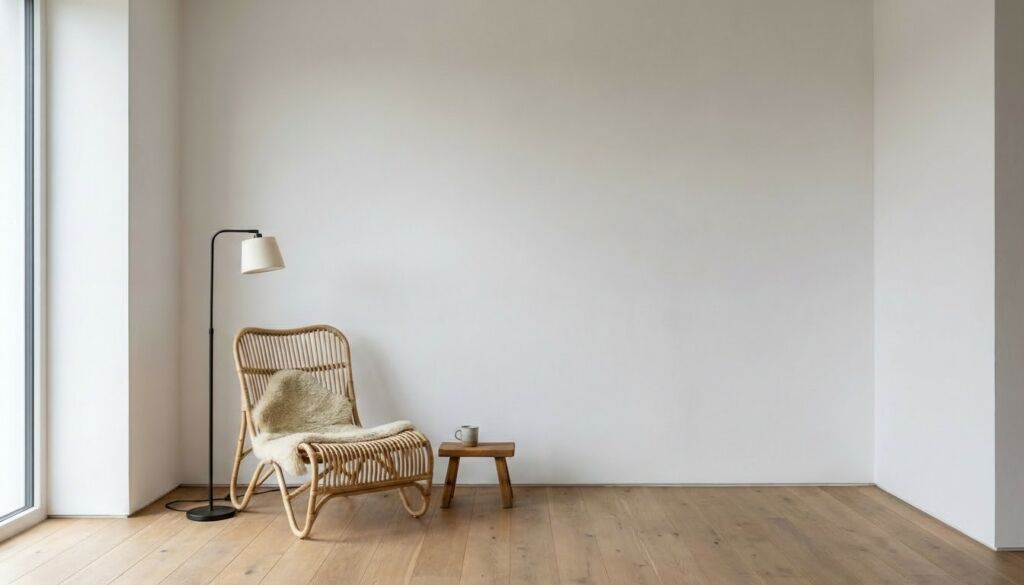
Negative space is the area where nothing exists. It is vital for Japan style interior living rooms. Find a corner. Put one comfortable chair there. Add a small lamp.
Leave the walls around it empty. No art. No shelves. I spend 20 minutes here every morning. The lack of “stuff” helps my brain wake up. I recommend the CH25 lounge chair. It is an investment. It will last your whole life.
16. The Natural Fiber Rug Layering
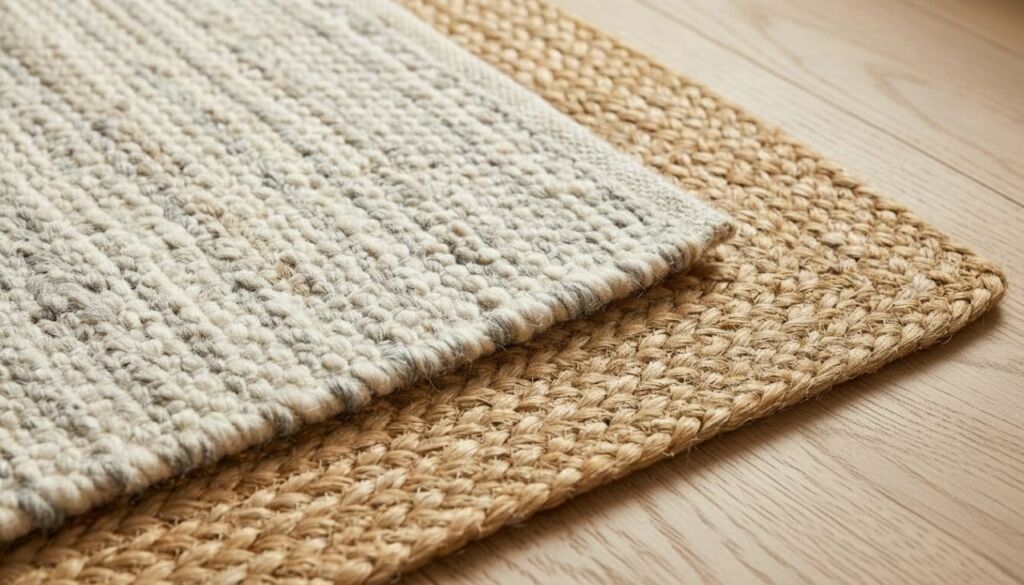
One rug is often not enough. I like to layer a small wool rug over a large jute rug. The jute provides the “Japan style” earthiness. The wool adds the “Scandinavian” comfort.
I did this in my living room. It stopped the echoes. It felt soft on my feet. I spent $600 total. It changed the acoustics of the room. It felt more private.
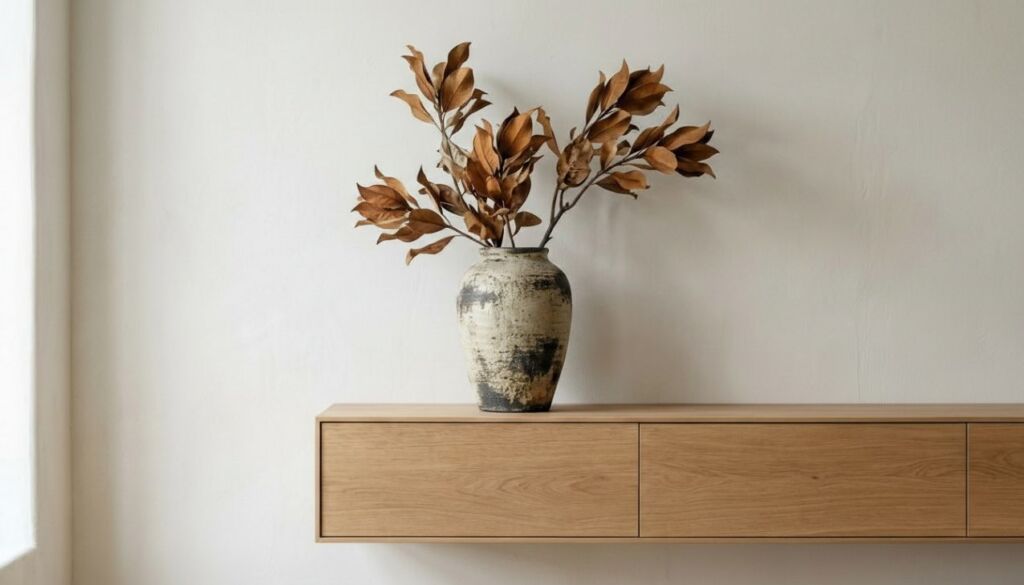
17. The Sculptural Branch Display
Forget colorful flowers. They die. They are distracting. Use a single large branch in a tall vase. I use dried eucalyptus or magnolia branches.
They last for months. They have a sculptural look. I put a large vase on my living room long wall console. It draws the eye upward. It costs nothing if you find a good branch outside. It is the ultimate minimalist hack.
Case Study: The Cold Scandi Transformation
In 2022, I met Sarah. She had a white apartment. It had grey floors. It had blue pillows. It felt like an ice box. She wanted a japanese inspired interior design modern look. We did three things.
First, we swapped her metal coffee table for a chunky oak one. Second, we added beige linen curtains. Third, we replaced her bright LED bulbs with warm ones (2700K). We spent $1,200. Sarah told me she finally felt like she could relax. The room didn’t change its size. It changed its soul.
8 Tools And Brands For Japandi Success
| Brand | What They Do Best | My Honest Opinion |
| Karup Design | Low beds and sofas | Great for small budgets. Very authentic. |
| Skagerak | High-end wood furniture | Expensive but the quality is unmatched. |
| Muuto | Scandinavian seating | Modern and sleek. Good for dining chairs. |
| Bauwerk | Lime wash paint | Best textures for walls. Hard to apply. |
| Hay | Minimalist accessories | Great for small decor and lighting. |
| IKEA | Basic frames and rugs | Good for base layers. Avoid their “fake” wood. |
| Benjamin Moore | Paint colors | Use “Swiss Coffee” for a perfect Japandi white. |
| Etsy | Handmade ceramics | Best place for unique wabi-sabi bowls. |
How Do I Start A Japandi Interior Design If I Have A Small Budget?
Start with your walls. Paint is cheap. A warm white can change everything. Remove 30% of your clutter. Japandi is about what you do not have. Look for second-hand wooden furniture. You can sand it down to the natural grain.
I started with a $500 budget. I bought a can of paint and two linen pillow covers. I sold my old plastic coffee table. I used the money to buy a wooden bench. Small steps lead to big changes. You do not need to do it all at once.
Can I Use Color In A Japandi Living Room?
Yes. But keep it grounded. Use colors found in nature. Terracotta. Moss green. Slate blue. Avoid bright or neon colors. They break the peace.
I use “October Mist” by Benjamin Moore in my home office. It is a soft green. It feels like a forest. It blends perfectly with oak furniture. Use color as an accent. Maybe one chair or a few books. Keep the big items neutral.
What Is The Best Wood For Japandi Furniture?
Light woods are best. Oak, ash, and pine are great choices. They feel airy. If you want a more “Japan style” look, use cedar or charred wood (Shou Sugi Ban).
Avoid cherry or mahogany. They are too red. They feel too traditional. I once tried to use a dark cherry desk. It looked like a sore thumb. I swapped it for a birch plywood desk. The whole room felt lighter.
Frequently Asked Questions
What are the main colors for Japandi?
The palette focuses on neutrals. Use cream, beige, and sand as your base. Add black or dark brown for contrast. This mimics the ink and paper of traditional Japanese art. I suggest a 70% light, 20% wood, and 10% dark ratio.
How do I mix Japandi and Scandinavian interior styles?
Focus on function from the Scandi side and minimalism from the Japan side. Use a cozy wool throw on a very simple wooden chair. This gives you the comfort of the North and the clean lines of the East. It is about balance.
Is Japandi good for a basement?
Yes. It is the best style for a japandi basement. The light woods and soft whites help brighten dark spaces. Use low furniture to make the ceiling feel higher. Avoid heavy curtains. Use light-filtering screens instead.
What plants work best for this style?
Less is more. A single tall plant like a Fiddle Leaf Fig or a Snake Plant is enough. Avoid bushy, messy plants. I love the “Money Tree” for its clean trunk. One plant in a corner is better than ten on a shelf.
How do I handle a living room long wall?
Avoid the urge to fill it with small things. Use one large textured rug as a wall hanging. Or use a long, low console table. This keeps the visual weight near the floor. It leaves the top of the wall open and “breathable.”
What lighting should I use?
Avoid overhead glare. Use floor lamps with paper shades. Use warm-toned bulbs. I recommend smart bulbs so you can dim them at night. Dim lighting is essential for that evening “zen” feeling.
Is Japandi expensive?
It can be. High-quality wood is not cheap. However, you can do it on a budget by buying less. Instead of five cheap chairs, buy one great one. Focus on quality over quantity. That is the true Japandi way.
How do I hide my TV?
Use a slatted wall or a sliding panel. You can also use a “Frame TV” that shows art when off. I prefer the slatted wood look. It adds texture to the room even when the TV is on. It makes the tech feel like part of the architecture.
Final Thoughts On Your Japandi Journey
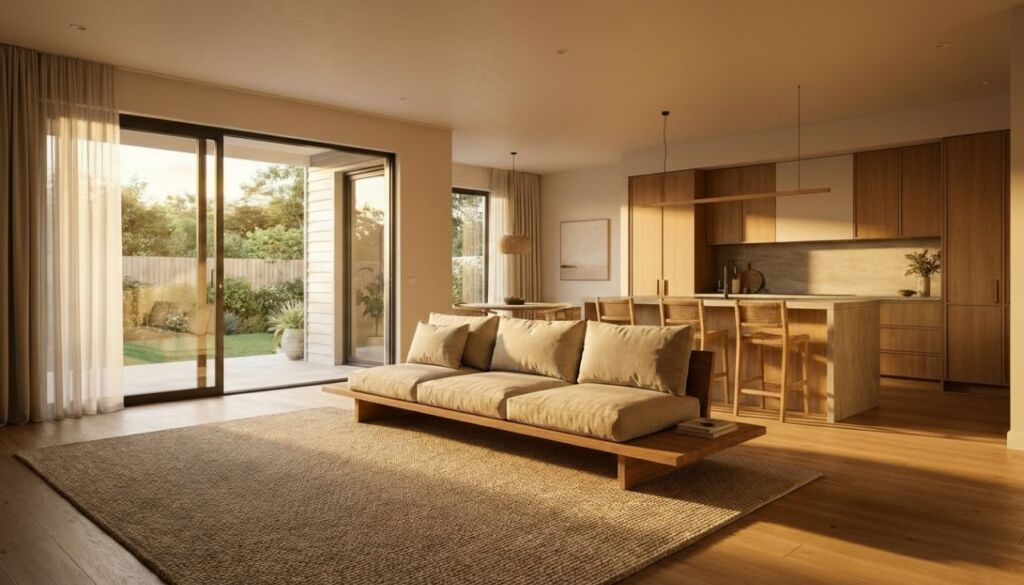
Creating a Japandi home changed my life. It stopped the constant urge to buy more. I now value the space between my furniture as much as the furniture itself. It is a slow process. Do not rush to fill every corner.
Start with one room. Maybe it is your bedroom. Maybe it is that living room long wall you hate. Paint it. Clear it. Add one wooden piece. Sit in the silence. You will feel the difference in your heart. A calm home leads to a calm mind. Are you ready to let go of the clutter?