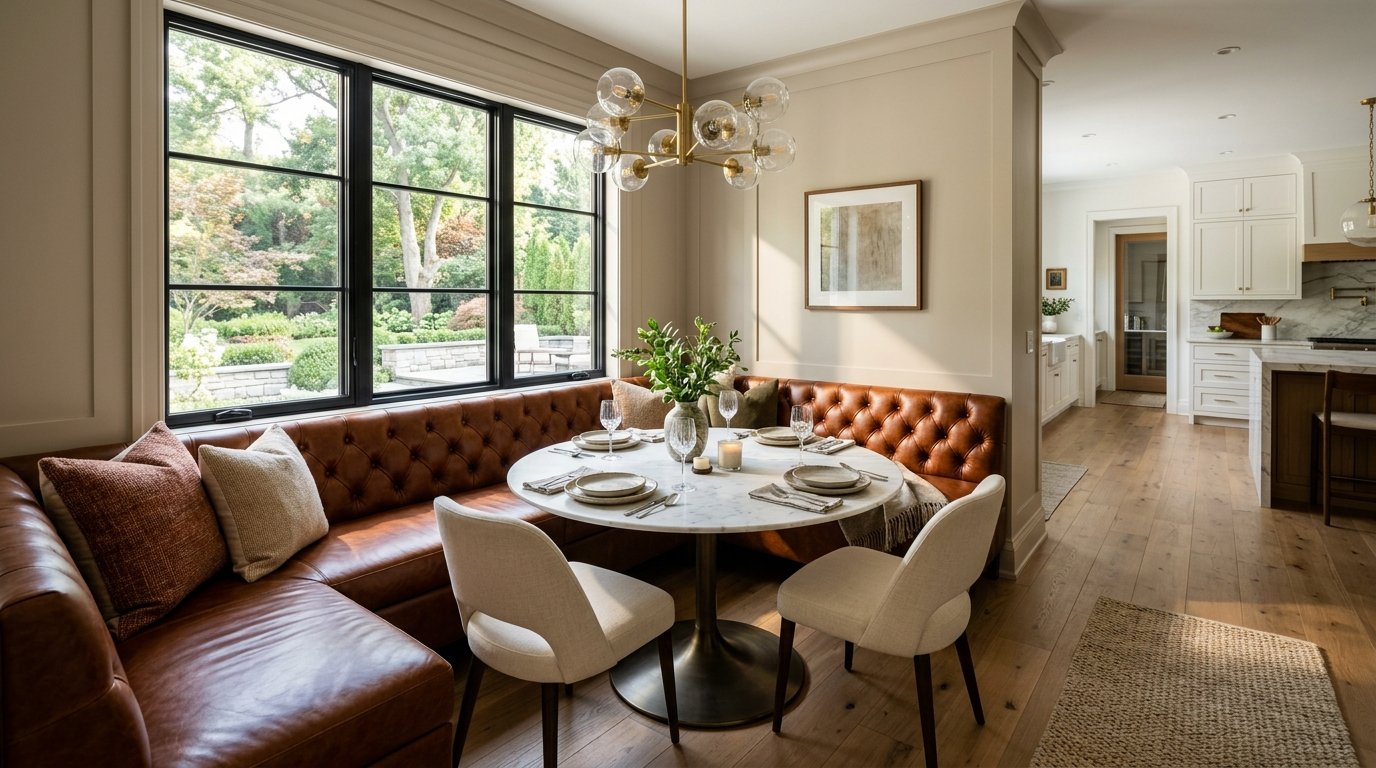
A client in Chicago recently spent twelve thousand dollars on a formal mahogany dining set. Two months later, they called me. The room felt cold. It felt like a museum. Nobody wanted to sit there. We ripped out the chairs. We installed a custom cognac leather banquette along the back wall. Now, they eat every meal there. They even work there.
Leather banquettes change how a home feels. They turn a stiff room into a cozy spot. This trend is not just about looks. It is about how we live now. We want comfort. We want style that lasts. Leather provides both. It handles spills from kids. It looks better as it ages. Most people get the dimensions wrong. They pick the wrong leather. I have seen these mistakes cost homeowners thousands.
This guide shares everything I learned from fifteen years of interior design. I will show you how to avoid the “booth squeeze.” You will see why the table leg choice matters more than the bench itself. We will look at real costs. We will look at brands that actually last. Forget the generic advice you see on Pinterest. Let’s get into the hard facts of creating a luxury dining nook.
Executive Summary
You can turn any corner into a high-end dining area with the right leather bench. This deep dive covers fifteen specific secrets. We look at the ergonomics of back angles. We discuss the difference between aniline and protected leather. You will find a list of eight brands I trust. I also share a case study of a New York apartment remodel. That project proved how banquettes save three feet of floor space.
Expect to spend between two thousand and seven thousand dollars for quality. Cheap options exist but they fail within two years. I will explain why kiln-dried frames are the only way to go. You will also get a checklist for pairing your seating with the right lighting. By the end, you will have a plan that works for your specific home layout.
1. Pick the Right Leather Grade
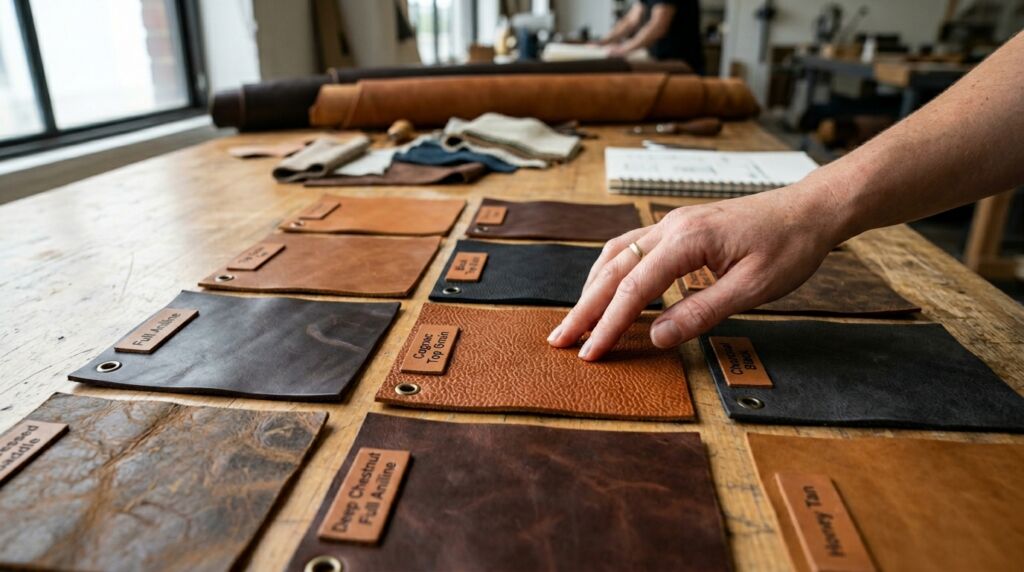
Most people think all leather is the same. It is not. For a dining room with banquette seating, you need durability. I always suggest top grain leather. It has the natural grain but also a protective layer. My firm worked on a project in Austin last year. The family had three dogs. We used a distressed top grain leather. One year later, it looks brand new.
Avoid bonded leather. It is just scraps glued together. It will peel within months. If you want the softest feel, go for full aniline. Just know it stains easily. I tell my clients to stick with semi-aniline for nooks. It gives you the soft touch but resists the Sunday morning coffee spill. Check the “rub count” of the material. You want something above thirty thousand for daily use.
2. Master the Bench Height
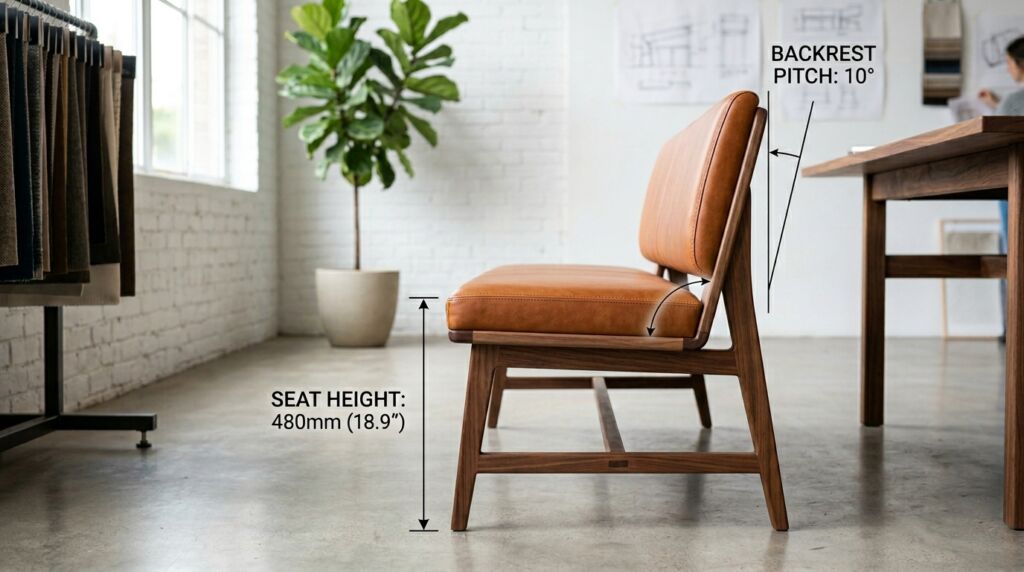
The biggest mistake is sitting too low. Standard dining chairs sit eighteen inches high. Your banquette should match this. But you must account for “sink.” Foam compresses when you sit. If your foam is soft, start at nineteen inches. I once visited a home where the bench was sixteen inches. The guests looked like kids at the adult table.
Measure from the floor to the top of the cushion. Ensure your table sits thirty inches high. This twelve-inch gap is the sweet spot for leg comfort. I suggest using high-density foam. It holds the shape. It prevents that saggy look after a long dinner party. In my own house, I used a firm four-inch foam core. It still feels great after five years of use.
3. The Power of the Pedestal Table
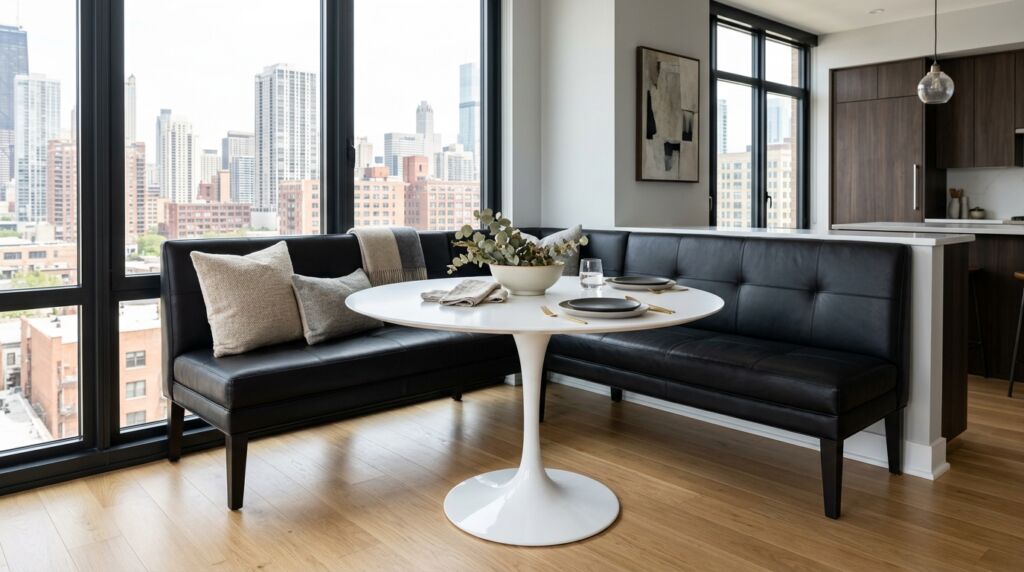
Never use a four-legged table with a banquette. It is a trap. Guests will hit their knees every time they slide in. Banquet seating dining room setups require a pedestal base. Or use a trestle table where the legs sit far back from the ends. This allows people to slide in and out without a struggle.
I recommend the Tulip table for modern looks. For a farmhouse feel, look at heavy wood pedestals from Arhaus. I saw a disaster in a Seattle remodel where the client kept their old four-legged table. Nobody could get into the corner of the L-shaped bench. We swapped it for a single center pedestal. The room suddenly felt twice as large. [Internal Link: Pedestal Table Reviews]
4. Angle the Backrest
Flat backs are for waiting rooms. Comfortable dining banquette ideas always include a pitch. The backrest should lean back by about five to ten degrees. If it is perfectly vertical, you will feel pushed forward. This makes long conversations impossible.
I prefer a lumbar support bump. A small curve at the lower back makes a huge difference. When we design custom pieces, we always test the pitch with a plywood mock-up first. If you buy pre-made, check the side profile. If it looks like a 90-degree angle, skip it. You want your guests to lounge, not sit at attention.
5. Overlap the Table and Bench
Your table should overlap the bench by about two inches. If the table just meets the edge, guests will lean too far forward. This causes back pain. I learned this the hard way on a cafe project in 2019. We left no overlap. The customers complained. We had to move every fixed table two inches closer.
This overlap makes the space feel integrated. It creates that cozy dining room with banquette seating vibe. It also keeps crumbs from falling into the gap between the seat and the floor. Just ensure the table is not so close that people cannot fit their midsection comfortably. Two inches is the professional standard for a reason.
6. Choose a Tufting Style
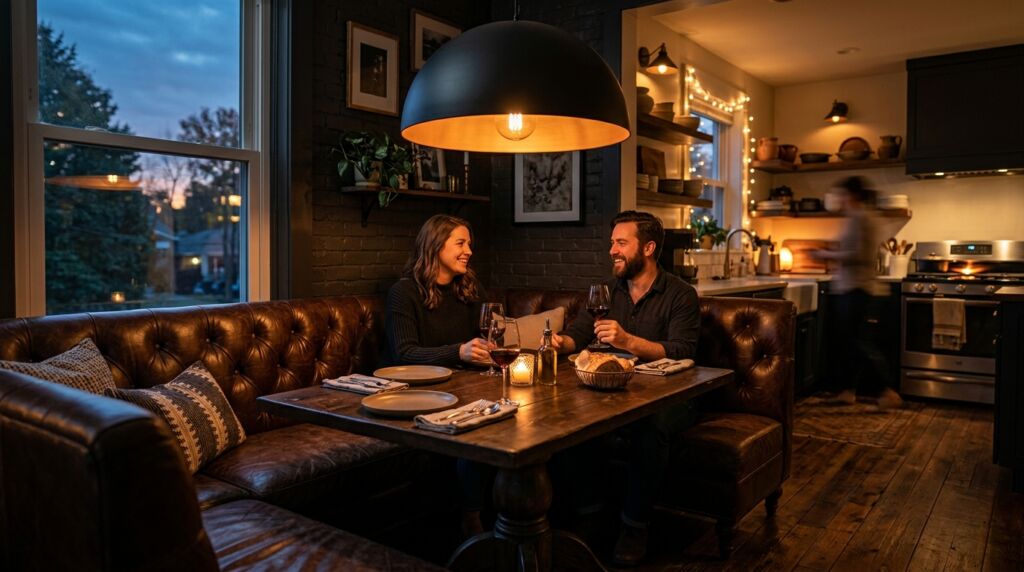
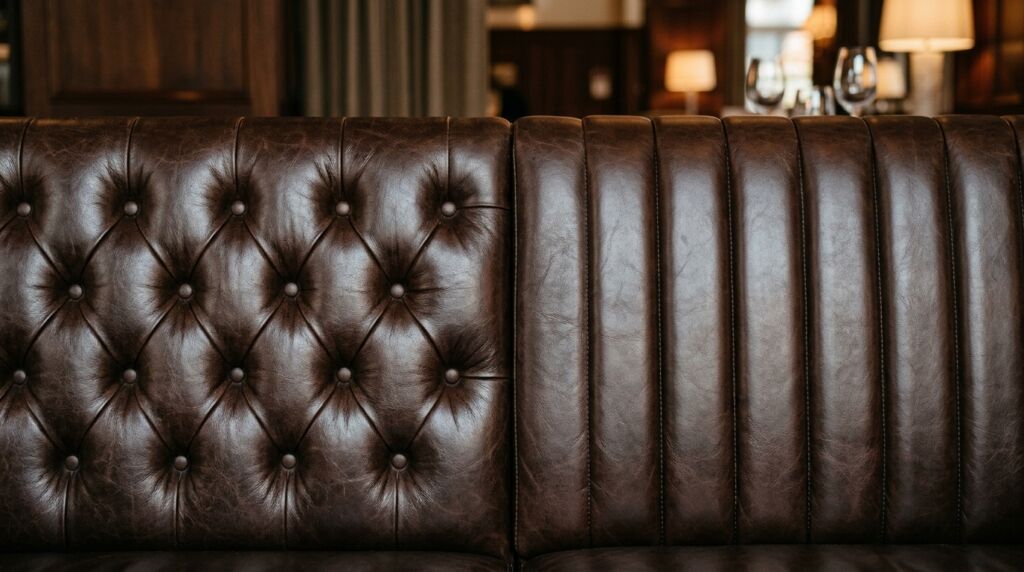
Leather looks amazing with texture. You have three main choices. Diamond tufting looks classic and expensive. It fits a traditional home. Vertical channel tufting is very popular now. It looks mid-century and modern. It also makes the ceiling feel higher.
The third option is a smooth back. This is the easiest to clean. If you have small children, go smooth. Crumbs hide in tufted buttons. I once spent twenty minutes digging Cheerios out of a diamond-tufted bench in a client’s kitchen. Now, I always ask about their cleaning habits before picking a style. [Internal Link: Leather Maintenance Guide]
7. Integrate Hidden Storage
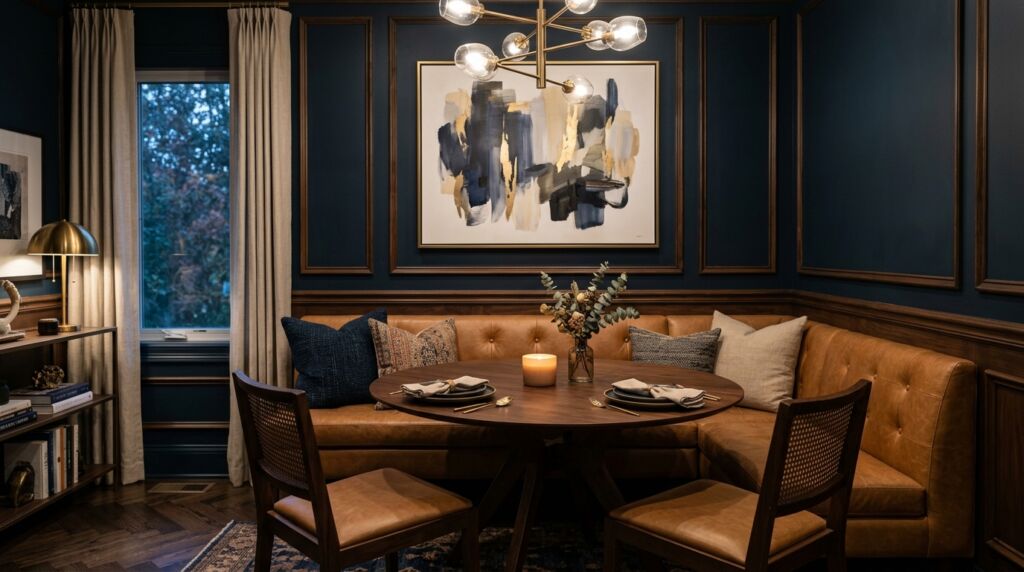
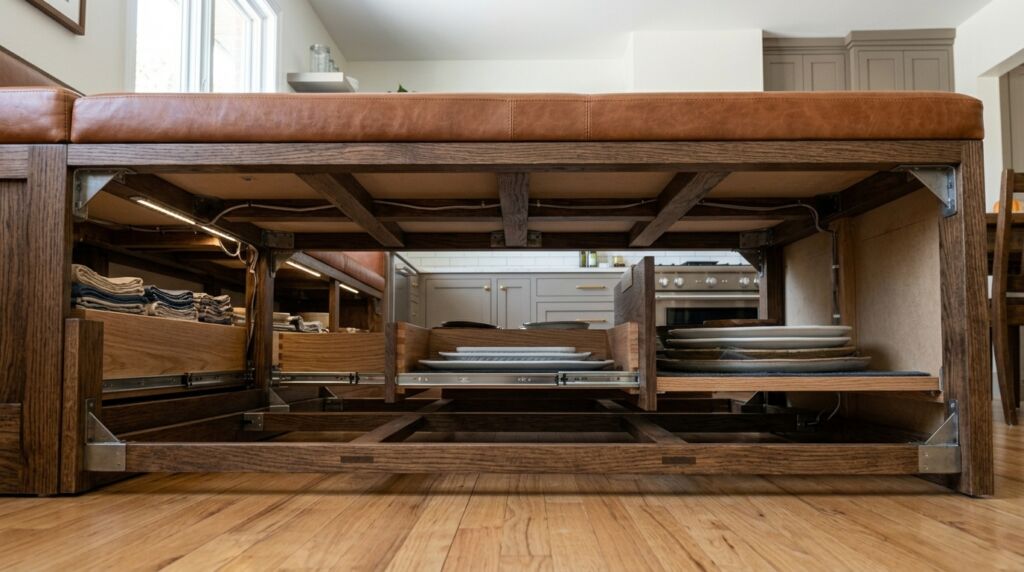
Dining room design ideas banquette seating often overlook the space under the seat. In small homes, this is prime real estate. You can use flip-top seats or drawers. Drawers are better. You do not have to move the cushions to get your items.
I use these drawers for seasonal linens and heavy pots. A client in a tiny Brooklyn apartment used her banquette for all her baking supplies. We used heavy-duty drawer slides from Blum. They can hold a hundred pounds. This turned her dining nook into a storage powerhouse. Just ensure the toe kick is recessed so your heels do not hit the wood.
8. Define the Zone With Lighting
A banquette needs its own light source. Do not rely on general kitchen lights. Hang a pendant directly over the center of the table. It should sit about thirty to thirty-six inches above the tabletop. This creates an “island” of light. It makes the nook feel private and separate from the rest of the room.
I like oversized domes for leather setups. The soft light reflects off the leather beautifully. In a recent Nashville project, we used a brass light over a dark green leather bench. The glow was incredible at night. It felt like a high-end steakhouse. Avoid track lighting. It is too harsh and creates weird shadows on the leather.
9. Consider the Wall Treatment
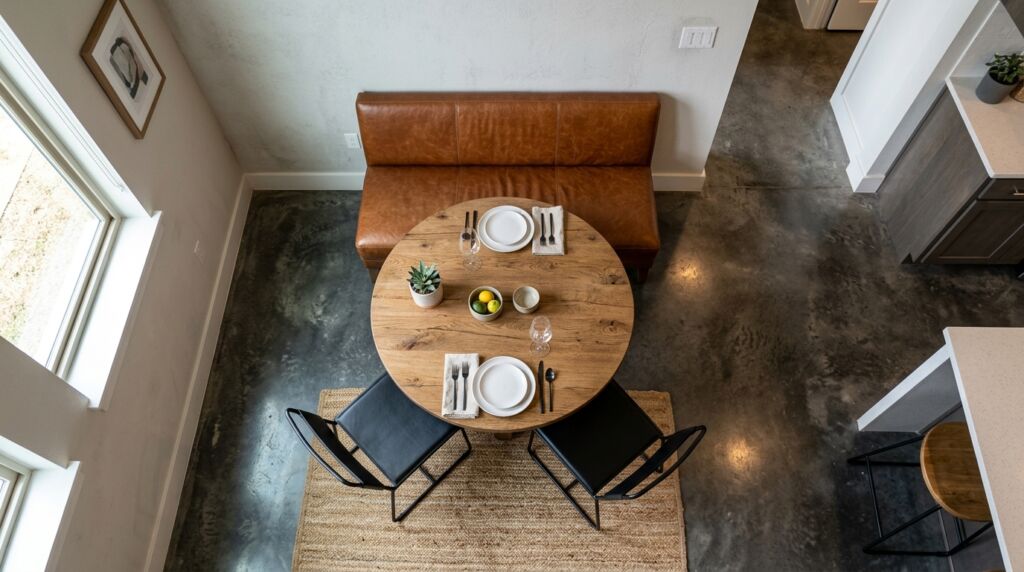
Do not just push a bench against a plain white wall. It looks unfinished. Add some weight to the wall. Use wood paneling or a dark paint color. I often suggest “wainscoting” that goes slightly higher than the bench back. This protects the wall from head marks and scuffs.
Wallpaper also works well. Use a textured grasscloth for a luxury feel. I saw a beautiful nook in Denver that used a moody floral wallpaper behind a tan leather seat. It felt like a cozy cocoon. If you are on a budget, just paint that one corner two shades darker than the rest of the room. It creates a “destination” feel.
10. Frame Material Matters
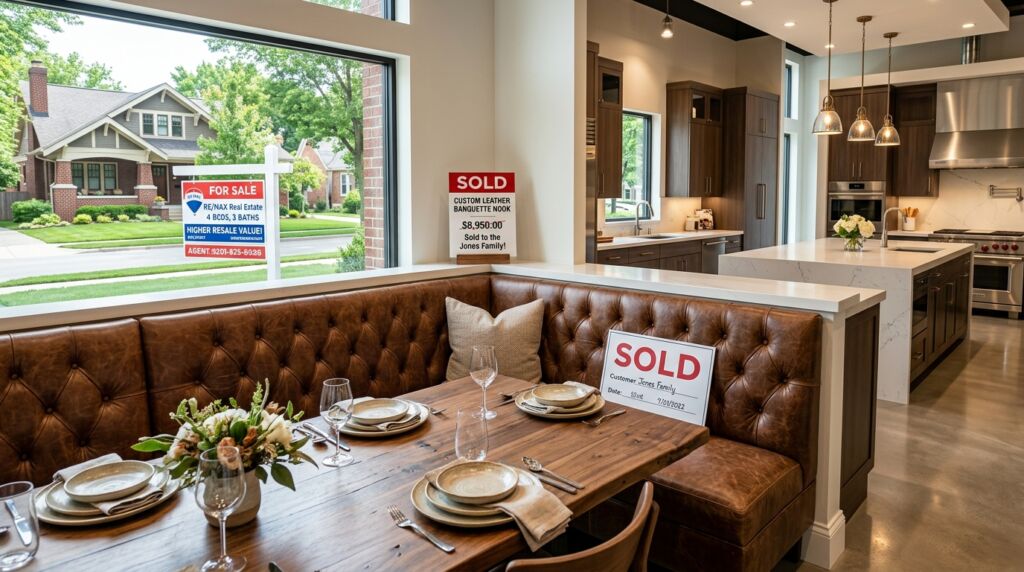
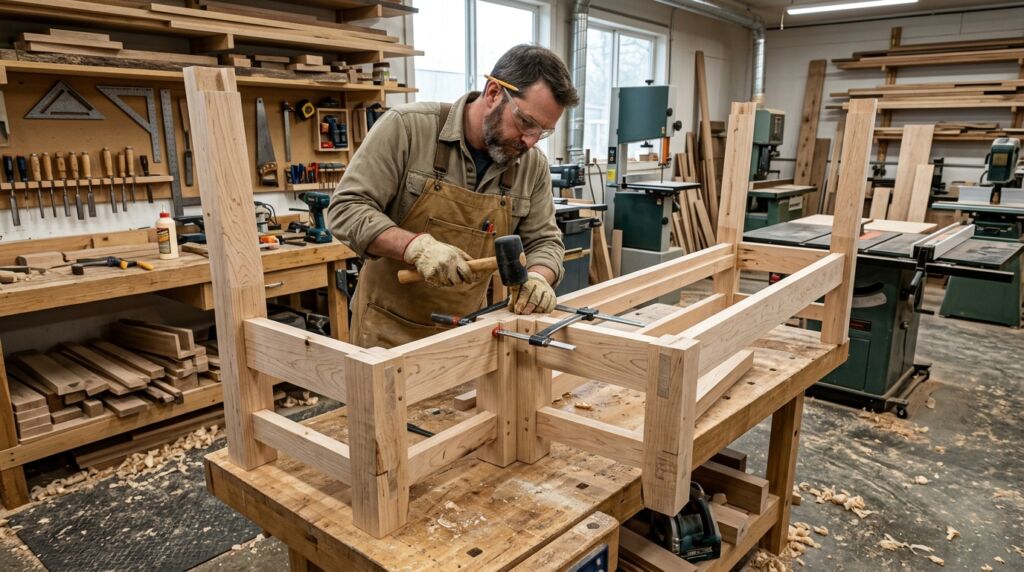
The frame is the skeleton of your seating. Never buy a banquette made of particle board or MDF. It will crack under the weight of three adults. You need kiln-dried hardwood. Maple or oak are the best choices. They do not warp with the heat from the kitchen.
I have seen cheap benches from big-box stores fall apart in two years. The joints loosen. The bench starts to squeak. Spend the extra money on a solid frame. If you are hiring a local carpenter, ask how they join the wood. You want mortise and tenon joints or heavy-duty screws. Never just nails and glue. [Internal Link: DIY Banquette Plans]
11. Scale the Rug Correctly
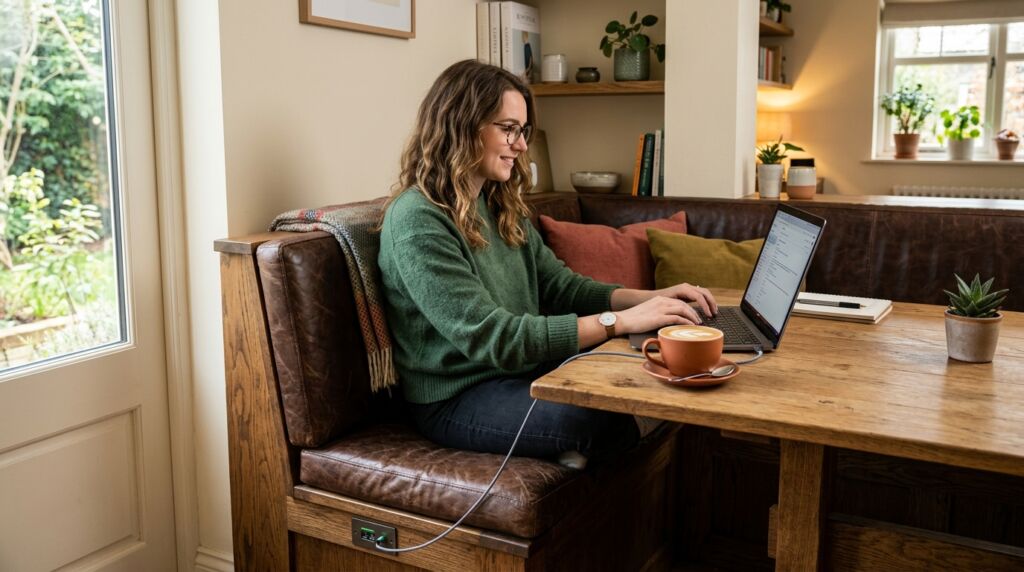
Most people put a rug that is too small under their banquette. If the rug ends right at the bench, it looks choppy. The rug should be large enough that the table and any extra chairs sit fully on it. But for the bench itself, the rug usually stops at the base.
I often suggest skipping the rug in a kitchen nook. Leather is easy to clean, but rugs under a dining table are magnets for stains. If you must have one, use a performance rug like Ruggable. Or use a sisal rug. They handle the heavy traffic of a banquette area well. I prefer the look of bare wood floors against rich leather.
12. Mix Your Materials
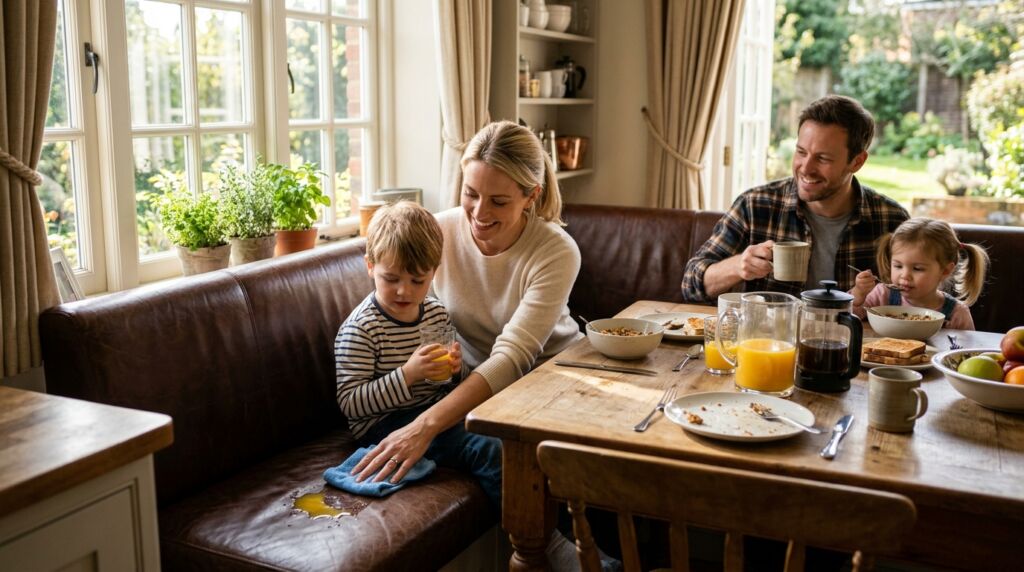
A room full of leather is too much. Balance the leather bench with other textures. Use a wooden table. Use metal chairs on the opposite side. This mix makes the room feel “collected” rather than “bought from a catalog.”
In a luxury home in Dallas, we used a black leather banquette with a white marble table. We added two cane-back chairs. The contrast was perfect. It felt modern but warm. If everything is one material, the eye gets bored. Use the leather as your anchor piece, then build around it with different finishes.
13. Optimize for Corners
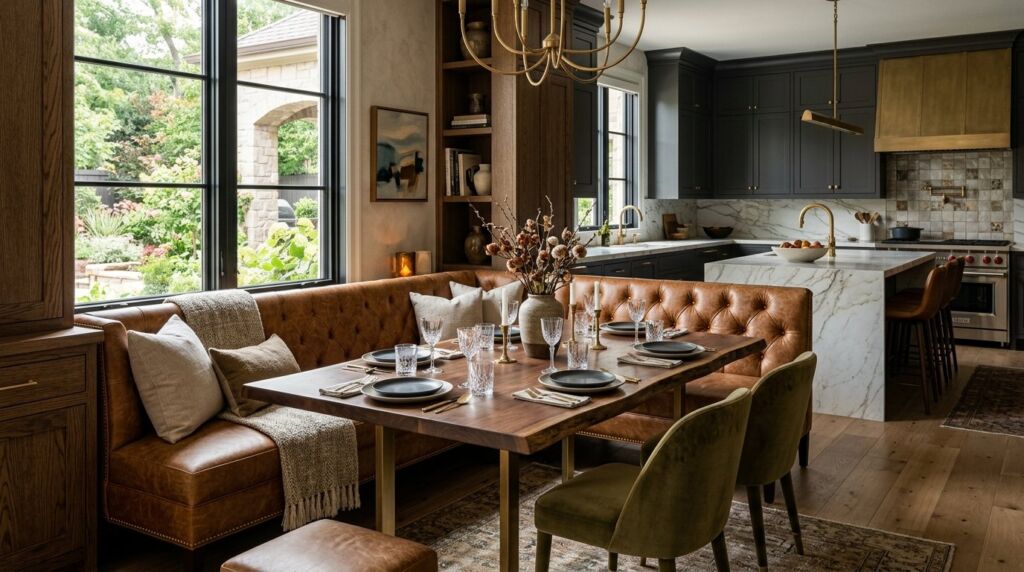
L-shaped banquet seating ideas are the most popular. They use wasted corner space. But the corner is the “dead zone.” It is hard to get into. I suggest making the corner seat slightly rounded. This allows the person in the middle to slide more easily.
Or, place a small side table in the very corner of the bench. This gives people a place to set a drink. I did this for a family in Oregon. They used the corner for a lamp and their morning books. It turned the “bad seat” into the best seat in the house.
14. Plan for Power
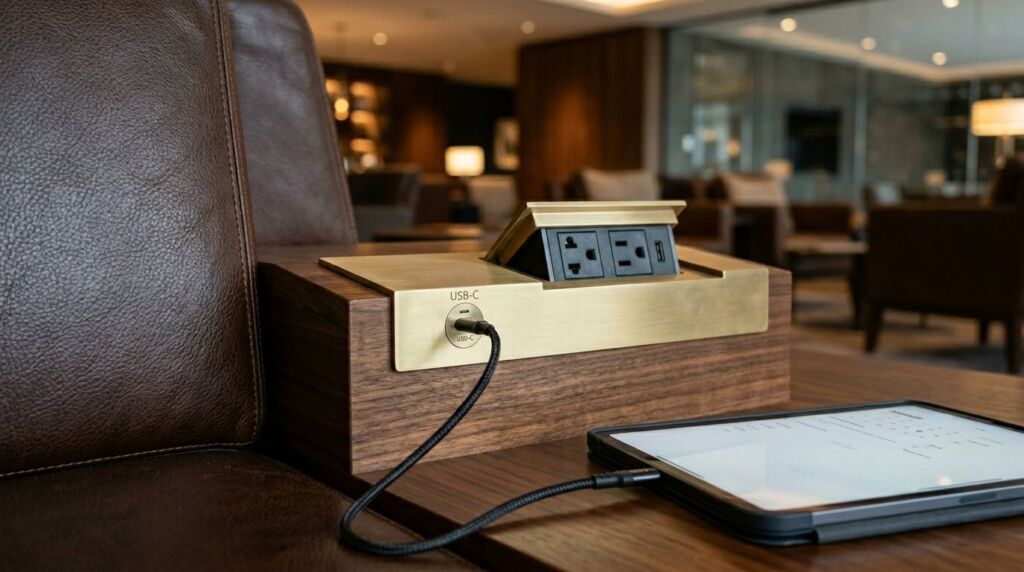
We live on our devices. A dining nook is a common spot for homework or remote work. Ask your electrician to install a pop-up outlet in the top of the banquette or a USB port in the side panel. I do this for almost every client now.
It is much better than having cords draped across the floor. I once saw a guest trip over a laptop cord in a dining room. It pulled the computer off the table. A simple outlet in the bench base prevents this. It costs about two hundred dollars during construction but saves a lot of hassle later.
15. The Real Cost and ROI
Let’s talk money. A custom leather banquette costs between five hundred and a thousand dollars per linear foot. A six-foot bench will run you at least three thousand dollars. This includes quality leather and a solid frame. Pre-made options from places like West Elm or Pottery Barn are cheaper, around fifteen hundred dollars.
The ROI is high. Banquettes are a huge selling point in modern homes. They signal a custom, thoughtful design. I have seen homes sell faster because the “breakfast nook” looked so inviting. It adds usable square footage to your kitchen without an addition. It is a smart investment if you plan to stay for five years or more.
The Best Brands for Leather Banquettes
I have tested many brands. Here are eight that I trust for different budgets and styles:
- Maiden Home: Their “The Noho” bench is incredible. The leather is top-tier.
- West Elm: Good for mid-range budgets. Their “Anton” collection is a solid choice.
- Arhaus: Best for heavy, rustic, and luxury leather benches.
- Pottery Barn: Great for traditional styles. Their “build-your-own” sections are helpful.
- Room & Board: Very reliable construction. Made in the USA.
- Restoration Hardware: The gold standard for luxury, but very expensive.
- Ballard Designs: Excellent for custom fabrics and traditional banquette shapes.
- Interior Define: They allow for extreme customization of length and leather color.
Pros and Cons of Leather Banquette Seating
| Feature | Pros | Cons |
| Durability | Lasts for decades with care. | Can be scratched by sharp objects. |
| Cleaning | Wipes clean with a damp cloth. | Needs occasional conditioning. |
| Comfort | Provides a soft, lounge-like feel. | Can feel cold in the winter. |
| Space | Saves about 3 feet of floor space. | Fixed in place, hard to move. |
| Cost | Increases home resale value. | Higher upfront cost than chairs. |
Frequently Asked Questions
How much space do I need for a banquette?
You need a wall at least five feet long for a comfortable two-person bench. For an L-shape, aim for five feet by five feet. This allows for a table and enough room to slide in without hitting the wall.
Is leather better than fabric for kitchen seating?
Yes. Fabric absorbs smells and stains. Leather is non-porous. Spilled milk or wine will not ruin leather if you wipe it up quickly. For a high-traffic kitchen, leather is the only choice I recommend.
Can I install a banquette myself?
You can buy pre-made units and bolt them to the wall. But custom builds are tricky. They require knowledge of upholstery and framing. If you are handy, you can build the wood base and hire a pro for the cushions.
What is the best table shape for an L-shaped banquette?
A round pedestal table is the best. It eliminates sharp corners that people might hit while sliding. If the bench is very long, an oval pedestal table also works well.
How do I clean a leather banquette?
Use a vacuum with a soft brush for crumbs. Every six months, use a high-quality leather conditioner like Lexol. Avoid harsh chemicals or dish soap. They will dry out the leather and cause it to crack.
Will a leather banquette make my room look small?
No. Because it sits against the wall, it opens up the center of the room. It actually makes small kitchens feel more spacious. It removes the “clutter” of many chair legs.
The Bottom Line
Leather banquettes are a rare design choice. they are both trendy and timeless. They solve the problem of small, cramped dining rooms. They provide a level of comfort that a standard chair cannot match. I have never had a client regret installing one.
Start by measuring your space. Look at your floor plan. Can you reclaim a corner? Pick a leather that fits your life. If you have kids, go for a protected top grain. If you want pure luxury, go for the aniline. Pair it with a sturdy pedestal table and a beautiful light. You will find that your dining nook becomes the heart of your home. It is where the best conversations happen.