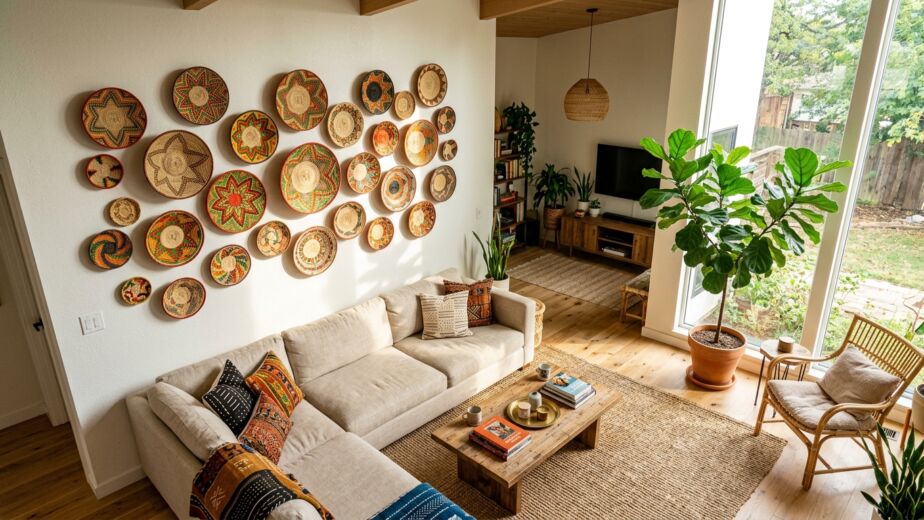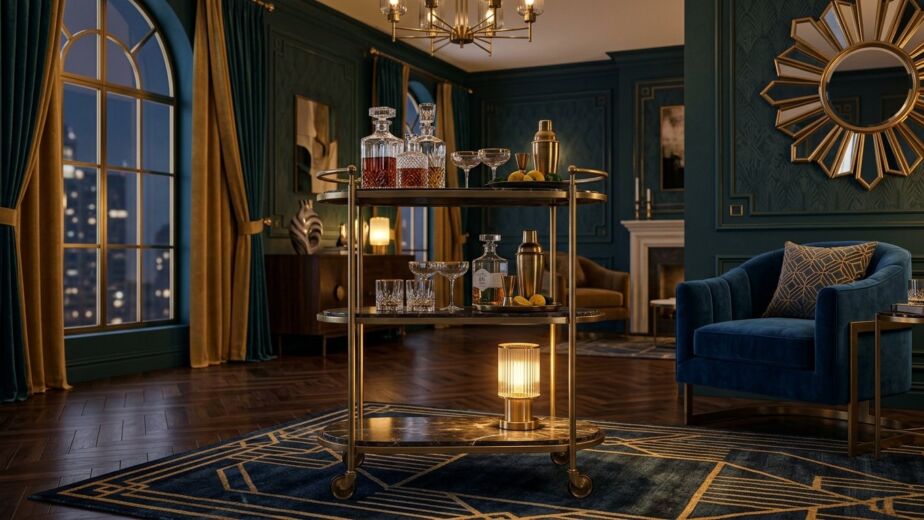
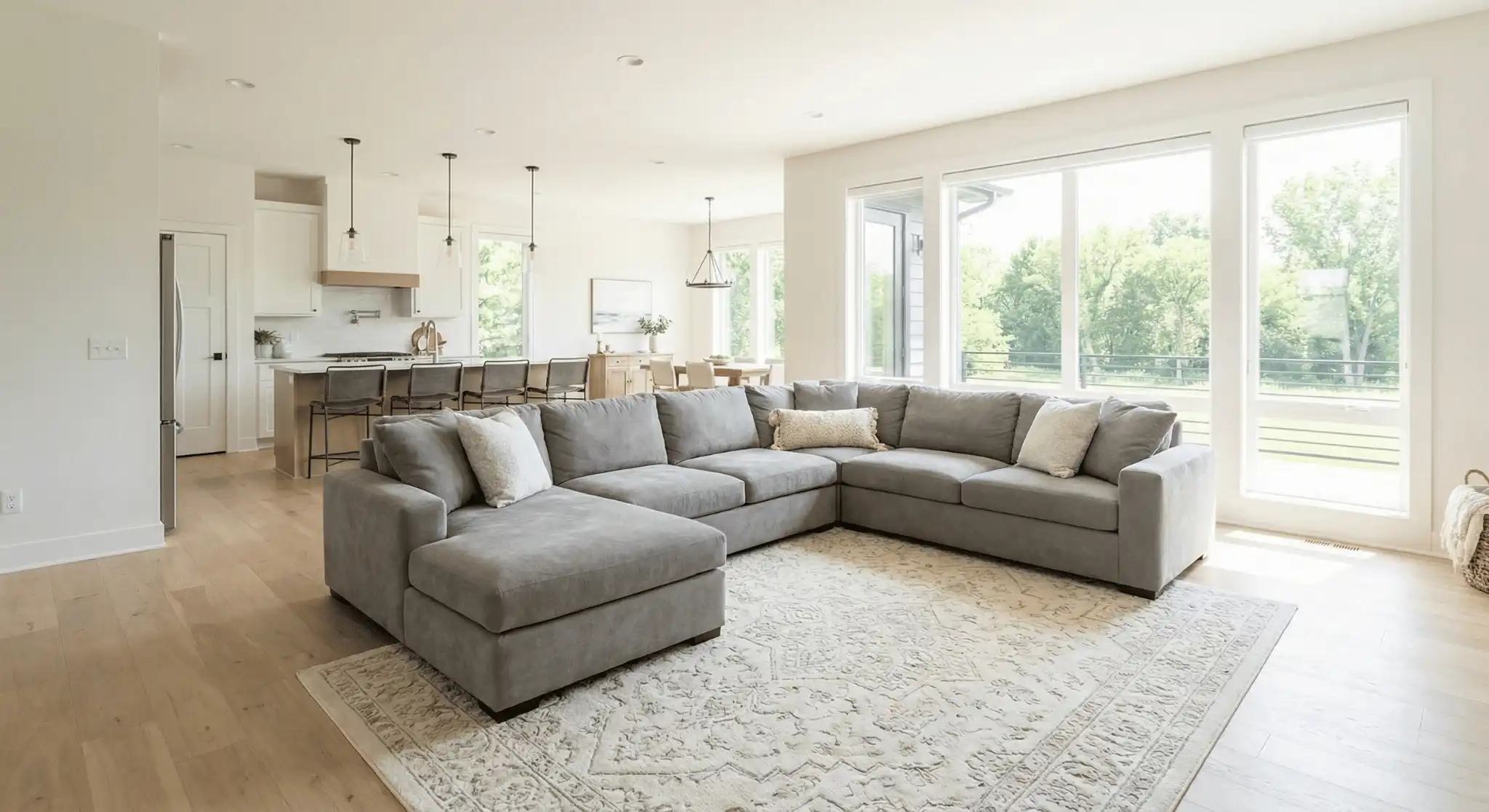
The air felt thin in my first open plan project. It was a 1,200 square foot loft in Chicago. The ceiling was fourteen feet high. The floors were cold concrete. My client, Sarah, looked at me with panic. She said it felt like living in a parking garage. Every cough echoed. Every kitchen smell drifted to the sofa. This is the dark side of open living.
Many people think knocking down walls fixes everything. They want light. They want a sense of scale. But they forget about human comfort. You need a place to feel tucked in. You need to know where the kitchen ends and the lounge begins. Without a plan, your furniture looks like it is floating in a sea of wood or tile.
I spent ten years fixing these mistakes. I have seen big budgets wasted on tiny rugs. I have seen “modern” homes that feel like doctors’ offices. The good news is simple. You can have the big view and the cozy feel. It takes a shift in how you see your floor.
Here are 17 open plan living room interior design ideas that work in the real world.
1. Use Large Area Rugs to Define Zones
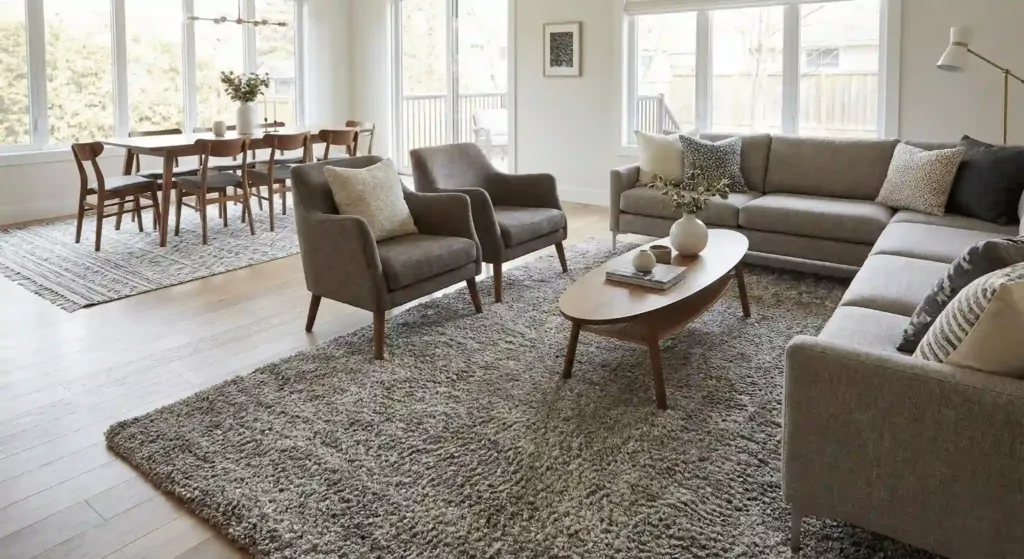
The most common mistake is the “postage stamp” rug. I did this in 2018. I bought an 8×10 rug for a massive seating area. The sofa legs sat outside the rug. The room looked disjointed. A rug is a boundary. It tells your brain where a “room” starts.
In an open plan, you need rugs that are bigger than you think. For a living zone, all furniture legs should sit on the rug. This creates an “island” of comfort. Use a different texture for the dining area. A flatweave rug works well under tables. It stays clean. A plush rug works for the TV area.
I recommend Ruggable for families. Their rugs come in two pieces. You can wash the top layer. This is a game changer for open spaces where you eat and live in one spot.
2. Vary Your Ceiling Heights
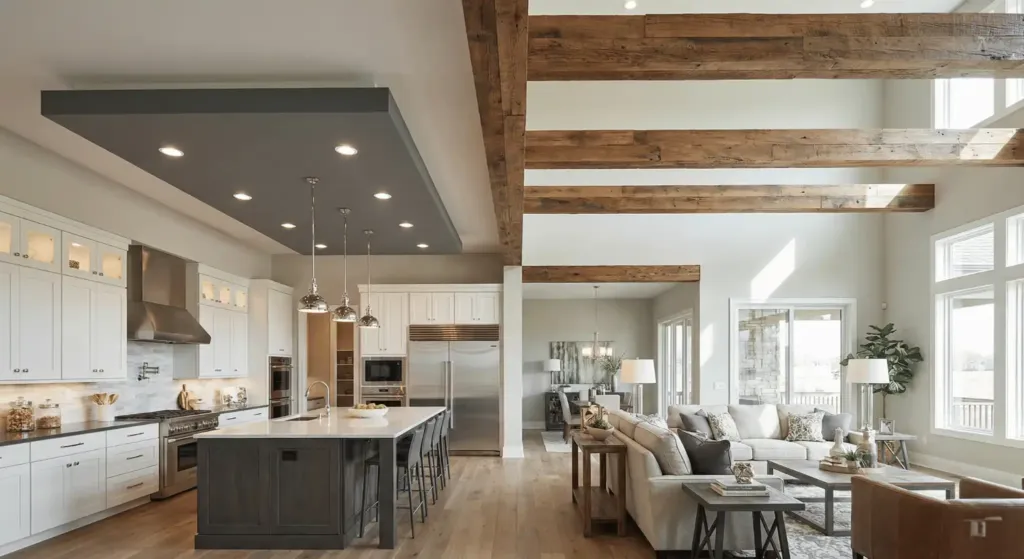
In a 2023 renovation in Austin, we had a flat, boring ceiling. The room felt like a box. We added a dropped ceiling over the kitchen. We left the living room at the full height. This change in volume acts like an invisible wall.
You do not need a major build for this. You can add faux beams. Wood beams over the living area create a “lid.” This makes the space feel grounded. You can also use paint. Painting the kitchen ceiling a shade darker than the rest of the room creates a zone. It draws the eye up and then back down to the specific area.
3. Position Furniture Away from Walls
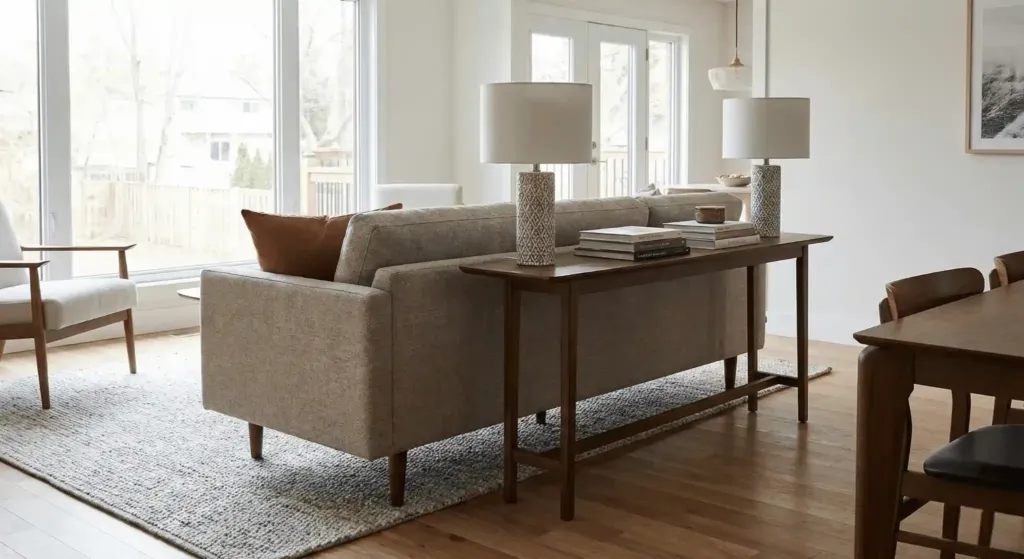
Walls are not anchors. In a traditional room, you push the sofa against the drywall. In an open plan, this is a mistake. It leaves a massive, empty hole in the middle of your home. It looks awkward.
Pull your sofa toward the center. Use the back of the sofa as a wall. This creates a walkway behind the seating. It helps traffic flow. In a Seattle condo project, we put a thin console table behind a floating sofa. It held lamps and books. It felt like a solid boundary without blocking the view.
Brands like Article make great sofas that look good from the back. Look for clean lines and finished upholstery on all sides.
4. Coordinate Your Color Palettes
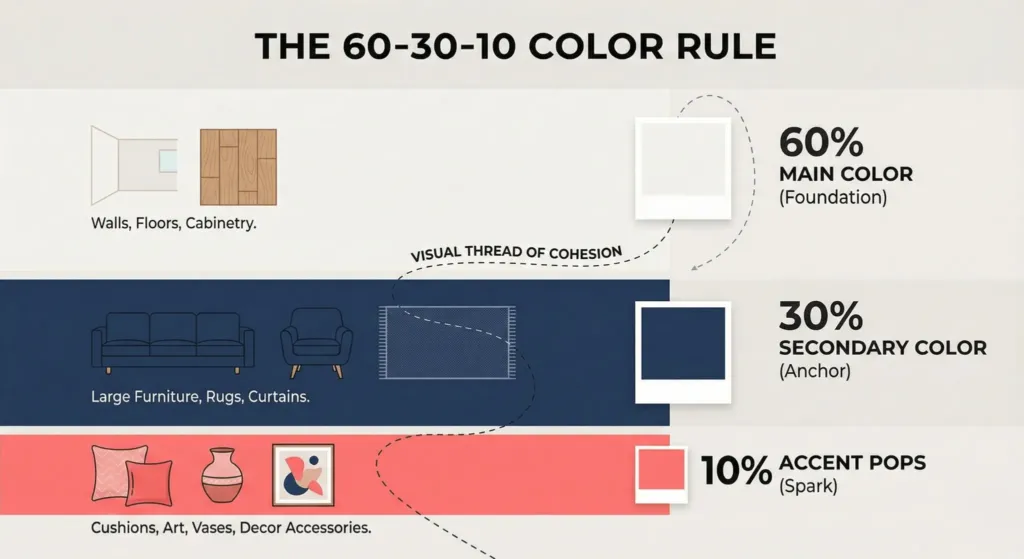
You do not want your home to look like a patchwork quilt. But you also do not want it to be one boring beige. Use the 60-30-10 rule. Pick one main color for 60 percent of the space. This is usually your walls and floors.
Pick a secondary color for 30 percent. Use this for your large furniture and rugs. Use the last 10 percent for “pops.” These are your cushions, art, and vases. In a coastal home I designed, we used soft white for the walls. We used navy blue for the kitchen island and the sofa. We used coral for the pillows.
This creates a “thread” that pulls the eye through the room. It feels like one thought.
5. Layer Your Lighting
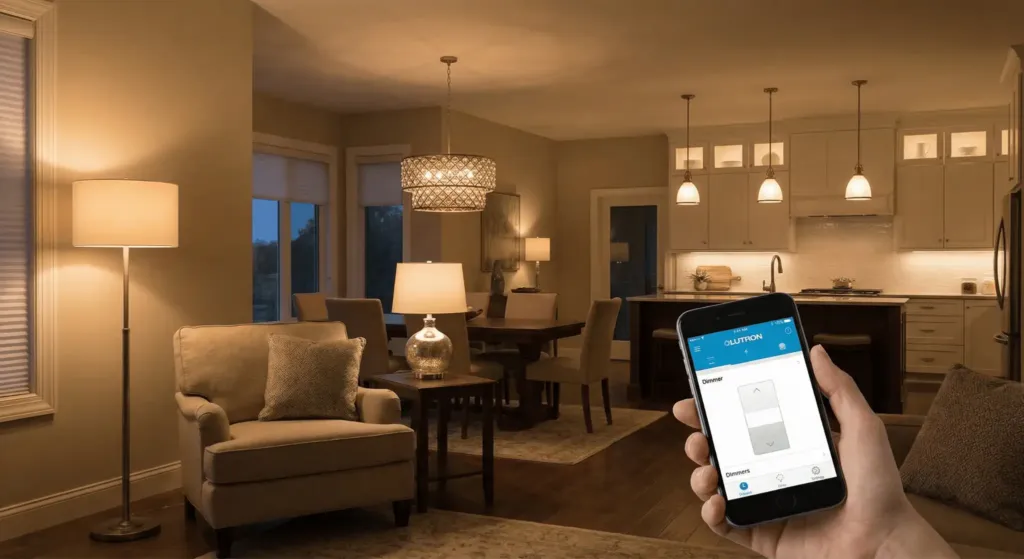
One big light in the middle of the ceiling is a disaster. It creates flat, ugly shadows. You need layers. I call this the “triangle of light.”
Every zone needs its own lighting. Put pendants over the kitchen island. Use a large chandelier over the dining table. Add floor lamps and table lamps in the living area. I love using Lutron Caseta smart dimmers. They let you change the mood with one tap.
When it is time to watch a movie, you can dim the kitchen lights. This makes the kitchen “disappear.” It helps you relax in the living zone.
6. Use Double Sided Storage
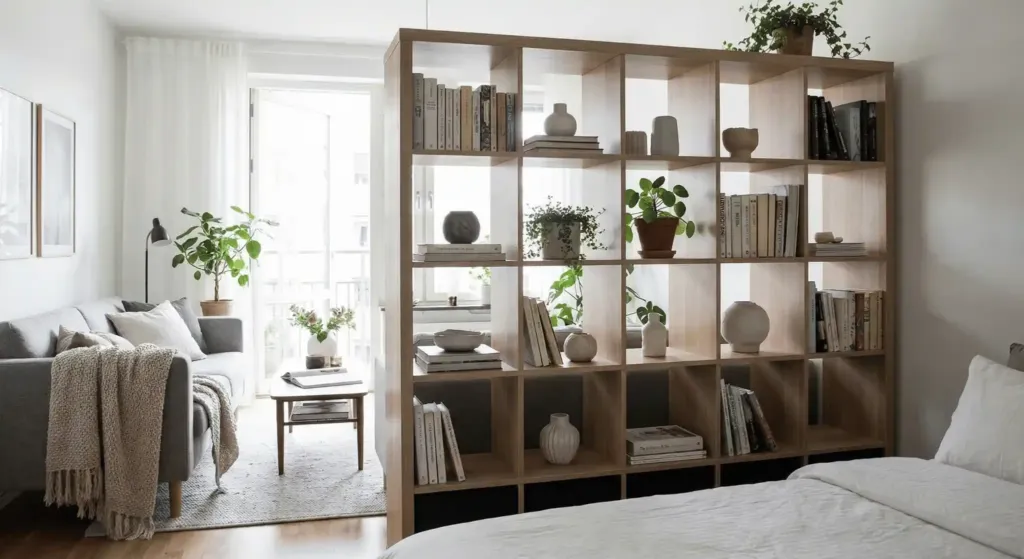
A bookshelf can be a wall that lets light through. This is my favorite way to split a room. I used this in a small New York City apartment. We put a custom oak shelf between the bed and the living area.
The shelf had no back. You could see through it. We filled it with books and plants. It felt private but not cramped. You can buy ready-made versions from IKEA. The Kallax unit is a classic for a reason. It is cheap and works from both sides.
Just keep it organized. A messy shelf looks bad from both rooms.
7. Install Glass Partitions
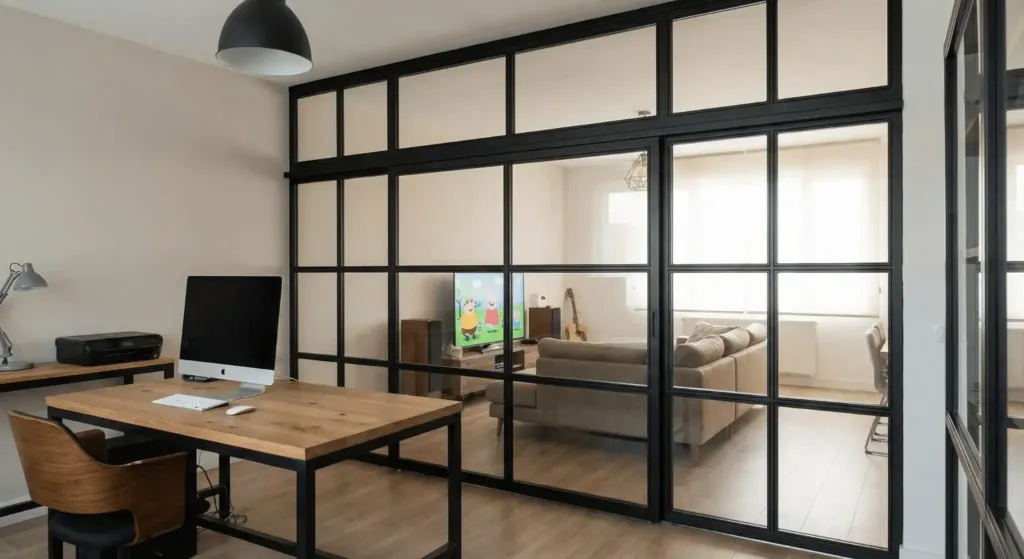
Sometimes you want the look of a wall without the weight. Black metal and glass partitions are very popular in 2026. They look industrial and chic.
I worked on a house where the home office was part of the living room. The owner hated the noise of the TV. We installed a glass wall with a sliding door. He could see his family, but he could not hear the cartoons.
It kept the “open” feel. It solved the noise problem. This is an expensive fix, but it adds a lot of value to a home.
8. Mix Textures for Depth

If everything is smooth, the room feels cold. Open plans need “tactile” interest. This means mixing things you want to touch.
Combine a leather sofa with a wool rug. Add velvet pillows and a marble coffee table. In a Denver mountain house, we used reclaimed wood on one wall. It warmed up the modern white kitchen.
Texture absorbs sound too. Hard surfaces like tile and glass make noise bounce. Soft things like curtains and rugs make the room quiet.
9. Create a Central Focal Point
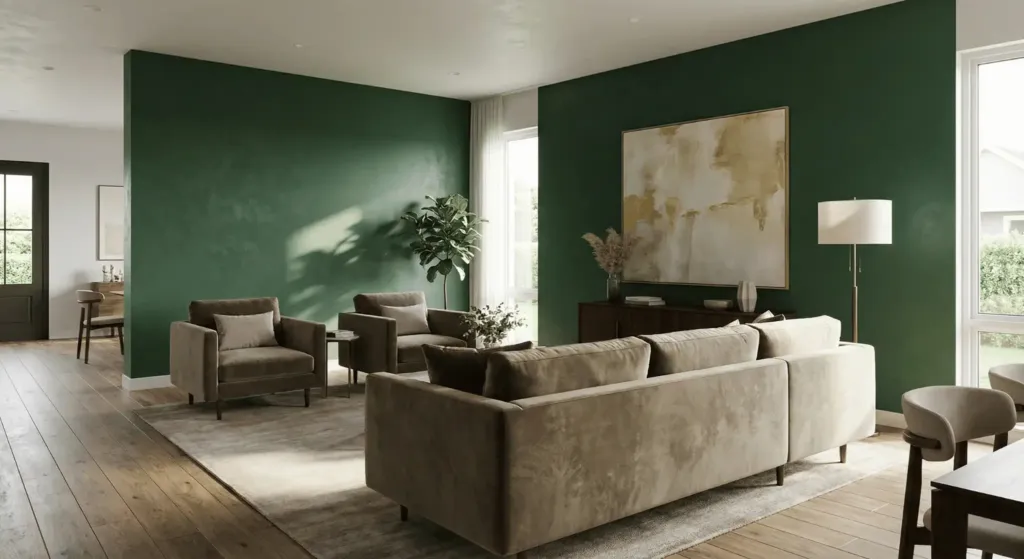
A big room needs a place for the eye to rest. Without a focal point, the eye wanders. This leads to a feeling of unease.
A fireplace is the best focal point. If you do not have one, use a large piece of art. Or use a bold accent wall. In one project, we painted the far wall of the living room a deep forest green. It pulled people into the seating area.
Everything else in the room should point toward this spot. It creates a sense of order.
10. Use Flooring Material Changes
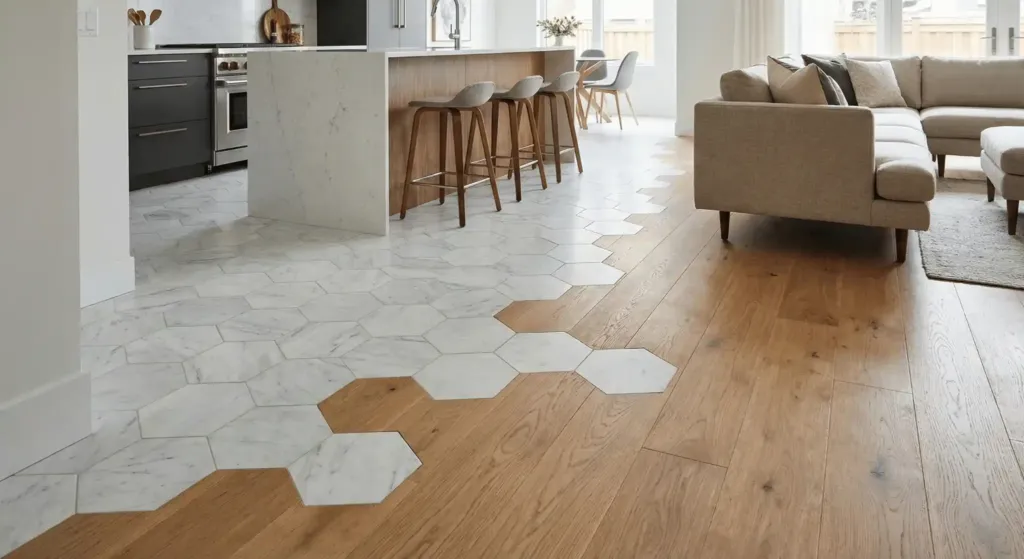
You can define a room without any walls at all. Just change the floor. I often use wood for the living area and tile for the kitchen.
The line where the two materials meet is a boundary. You can get creative here. Some designers use “hex” tiles that bleed into wood planks. It looks like art.
Be careful with the heights. You do not want a trip hazard. Use a proper transition strip. This is a small detail that makes a home feel high-end.
11. Add Indoor Plants for Softness
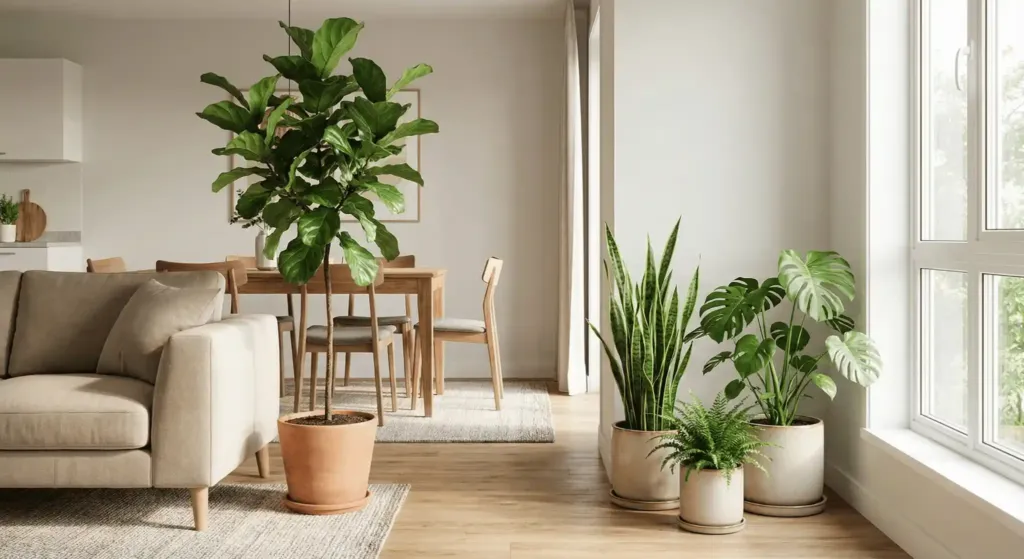
Plants are “living architecture.” They can be used to block views or fill empty corners. A tall fiddle leaf fig can act like a soft pillar between a sofa and a dining table.
I use “plant clusters.” Group three plants of different heights in a corner. It fills the “dead space” that often happens in open plans. Use brands like The Sill to find plants that match your light levels.
Plants also clean the air. In a big open room, they bring a sense of life that furniture cannot.
12. Integrate Built In Seating
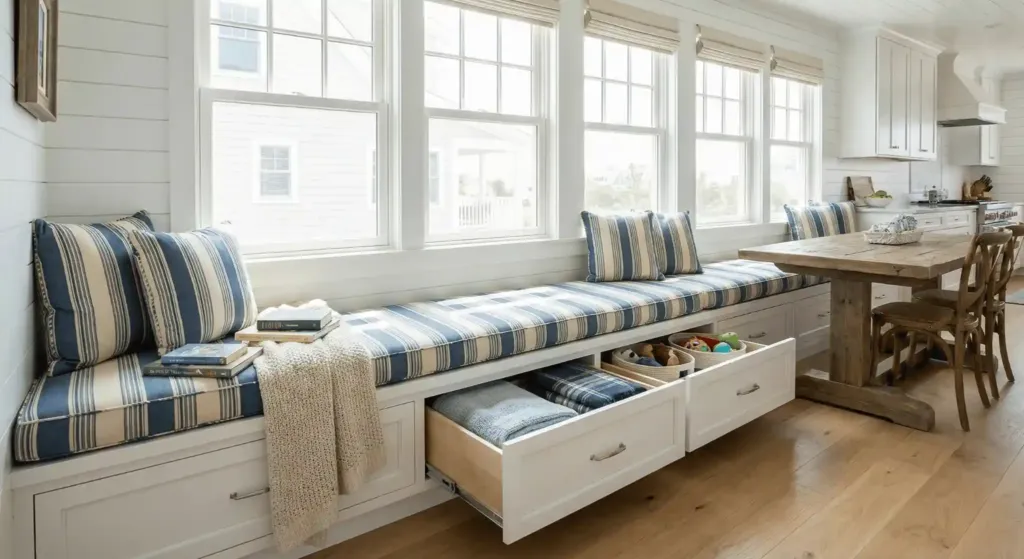
Window seats are a secret weapon. They provide extra seating without taking up floor space. In a narrow open plan, every inch matters.
We built a long bench under a window in a coastal cottage. It acted as a reading nook and extra chairs for the dining table. It made the room feel custom.
Built-ins make a house feel like a “home” rather than a box. They add storage too. Use the space under the bench for blankets or toys.
13. Use Oversized Art
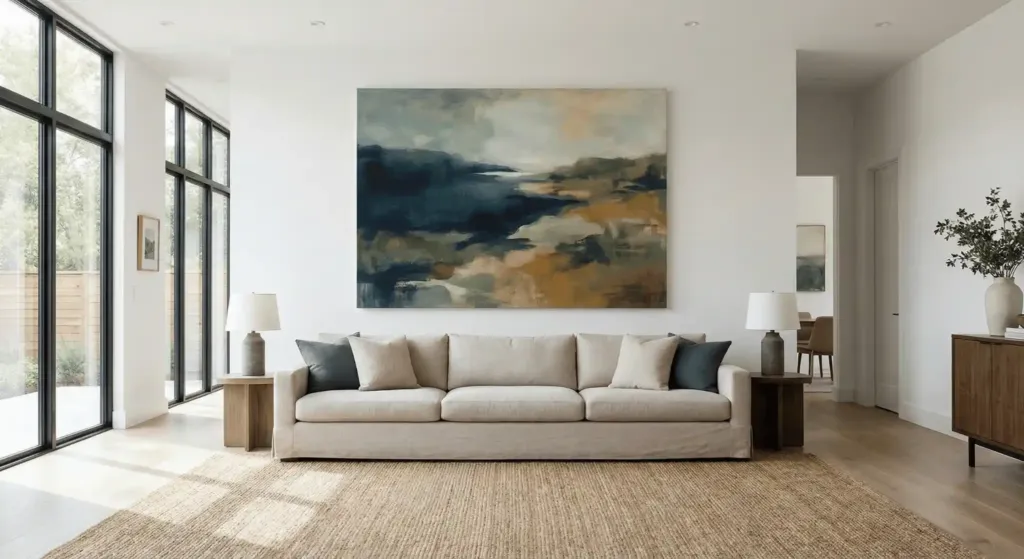
Small art gets lost on big walls. If you have an open plan, go big. One massive canvas is better than ten small frames.
A large piece of art creates a “destination.” It tells people “this is the living room.” I recommend checking out Minted for large-scale prints that do not cost thousands.
Hang the art so the center is at eye level. This is usually 57 inches from the floor. This grounds the room and makes it feel human-sized.
14. Keep Clear Walkways
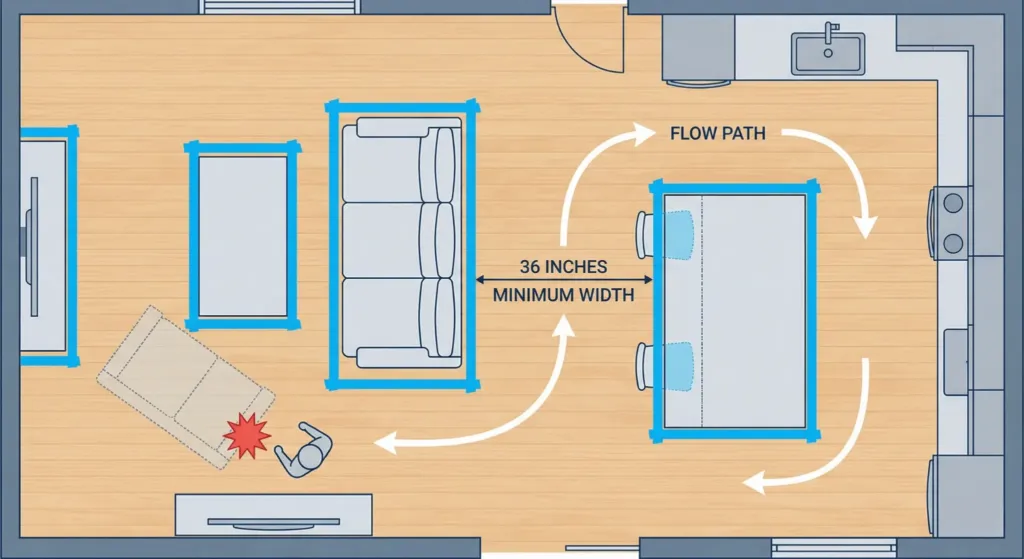
Flow is the most important part of open design. You should not have to dodge a coffee table to get to the fridge.
Map out your paths. You need at least 36 inches for a main walkway. I use blue painter’s tape on the floor before I buy furniture. I walk the paths for a day.
If I hit my shin on a “ghost” table, I know the layout is wrong. This simple step saves thousands in returns.
15. Use Mirrors to Reflect Light
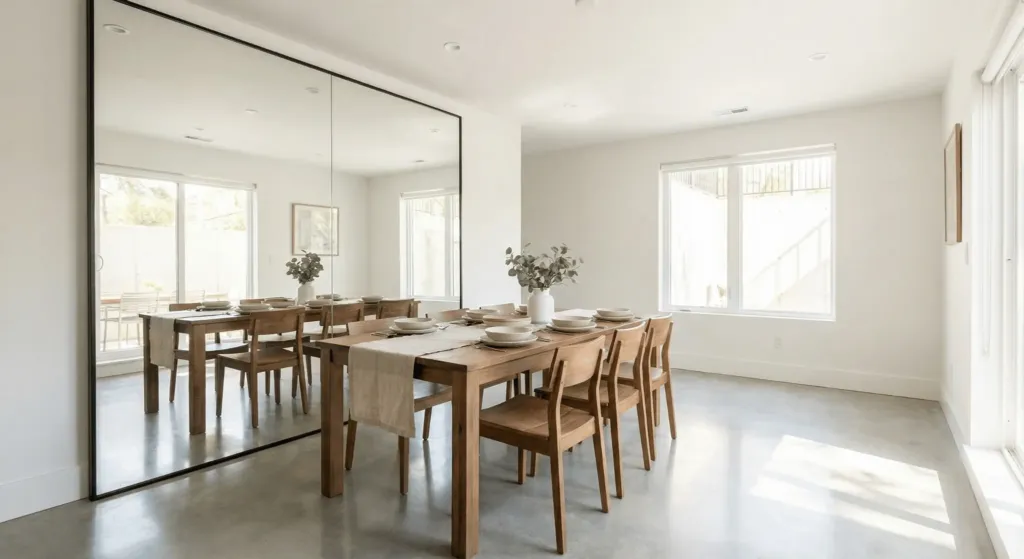
Mirrors are not just for bathrooms. A large floor mirror can make an open plan feel even bigger. It also bounces light into dark corners.
In a basement apartment with an open layout, we used a wall of mirrors behind the dining table. It doubled the perceived light. It made a windowless space feel airy.
Choose a frame that matches your style. A gold frame for a glam look. A thin black frame for a modern look.
16. Hide the TV
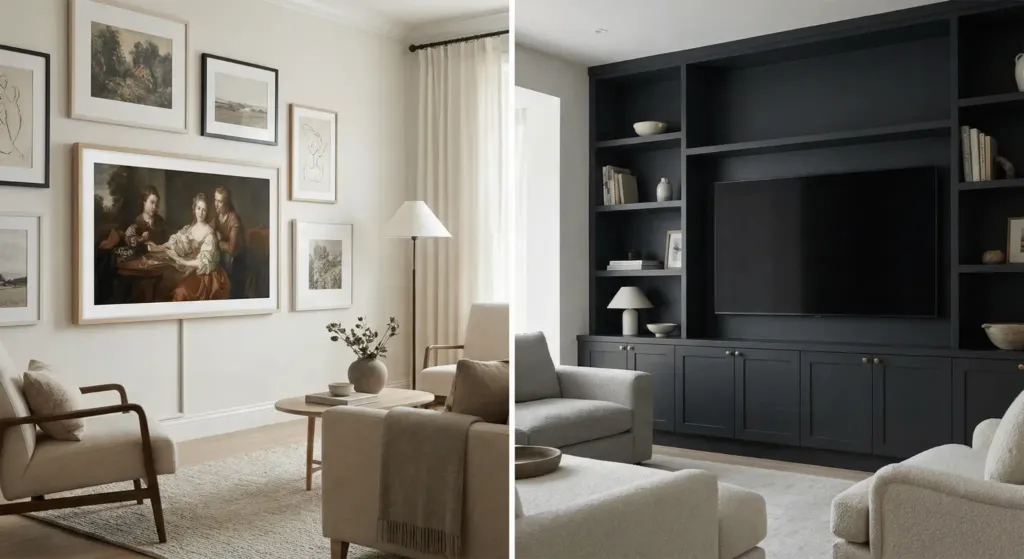
A giant black rectangle ruins a beautiful room. In an open plan, the TV is often visible from the kitchen and the front door.
I love the Samsung Frame TV. It looks like art when it is off. You can choose a wood frame that matches your decor.
Another option is a “media wall.” Use dark cabinetry to make the TV blend in. If you can hide the wires, the whole room feels cleaner.
17. Add Acoustic Panels
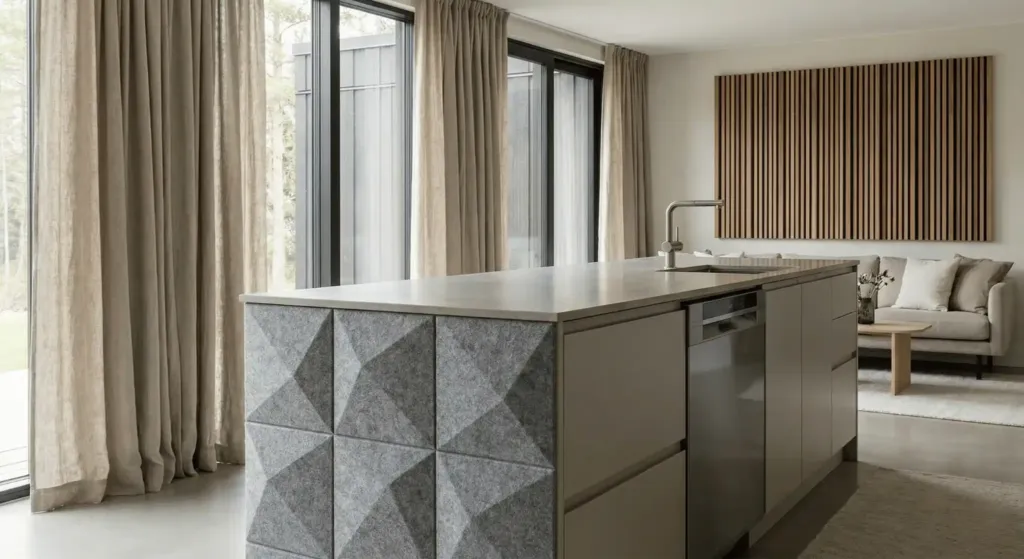
Noise is the biggest complaint in open homes. My client in the glass house hated how the dishwasher sounded like a jet engine.
We added felt acoustic panels to the back of the kitchen island. We also used heavy linen curtains from West Elm. These “soft” additions soak up the sound.
You can buy panels that look like art. They come in wood slats or geometric shapes. They look cool and make your home peaceful.
Case Study: The “Small Space” Zoning Success (Brooklyn Loft)
I took on a project in 2024 for a client named Mark. He had a 500-square-foot studio. It was just one room. He wanted a bedroom, a home office, and a living room.
Most people told him it was impossible. We used three rugs to create three “rooms.” We used a low bookshelf to hide the bed. We painted the office nook a dark navy blue.
The result? Mark felt like he had a three-room apartment. By using color and “floor boundaries,” we created a sense of scale. He stopped sleeping on the sofa because the “bedroom” felt like a real escape.
Case Study: The Acoustic Nightmare (Modern Glass House)
In 2025, I worked on a “dream home” in the suburbs. It had floor-to-ceiling glass and polished concrete floors. It was stunning. But it was unlivable.
The family of five could not hear each other talk. The sound of a spoon hitting a bowl sounded like a gunshot.
We fixed it without ruining the look. We added 12-foot velvet curtains. We put a massive wool rug in the center. We used “Hush” acoustic light fixtures. These are felt-covered lights that eat sound.
The house finally felt like a home. The family stopped wearing noise-canceling headphones at dinner.
Comparison of Popular Layout Tools
| Tool Name | Best For | Price | Pros | Cons |
| SketchUp | Pro Designers | Paid | Very detailed | Hard to learn |
| HomeByMe | Homeowners | Free/Paid | Easy 3D views | Limited furniture |
| Mood Boards | Free | Great for ideas | No layout math | |
| Roomstyler | Quick Layouts | Free | Good for rugs | Can be glitchy |
| Sherwin Williams | Paint Color | Free | See colors on walls | Not for furniture |
FAQ: Common Questions About Open Plan Design
How do I stop my kitchen from looking messy?
Use a “hidden” pantry or a deep island. An island with a “waterfall” edge hides the clutter on the counters. Also, invest in quiet appliances. A loud dishwasher ruins the living room vibe.
What is the best flooring for an open plan?
Engineered hardwood is great. It handles temperature changes well. It is softer than tile but tougher than solid wood. It looks consistent across the whole floor.
How do I choose a color for such a big space?
Start with a neutral base. Look at Farrow & Ball “Skimming Stone.” It changes with the light. Use bold colors only on things you can change, like pillows or one accent wall.
Is open plan living going out of style?
No. But “broken plan” is the new trend. People want the light of an open plan but the privacy of a closed one. Using glass walls and shelving is the best of both worlds.
How do I light a room with high ceilings?
Use “drop” pendants. Bring the light down to a human level. If the light is too high, the room feels cold. Aim for light to hit about 7 feet from the floor.
What rug size do I need for a 20×20 living area?
You likely need a 12×15 or a 10×14 rug. Do not go smaller than 9×12. Your sofa and chairs must sit on the rug to feel grounded.
How can I hide wires in the middle of the floor?
If you are building, install floor outlets. If you are not, use “cord covers” that match your floor. Or run wires under your large area rug.
Should my kitchen cabinets match my living room furniture?
They do not have to match exactly. They should “speak the same language.” If your kitchen is modern, do not buy a rustic farmhouse sofa. Keep the “vibe” the same.
How do I deal with smells in an open plan?
A high-quality range hood is a must. Look for one with a high CFM (cubic feet per minute) rating. This pulls the air out before it hits your sofa.
Can I use two different rugs in the same room?
Yes. Just make sure they share one color. Or use one patterned rug and one solid rug in a matching tone.
How do I make a big room feel cozy?
Lower the lights. Use warm wood. Add plenty of textiles. Softness is the enemy of “cold” open plans.
What is the biggest mistake in open plan design?
Under-furnishing. People leave too much empty space. This makes the room feel unfinished. Fill your corners with plants or chairs.
Final Thoughts on Open Plan Design
The best open plan living room interior design ideas focus on how you move. Think about your morning coffee. Think about your evening movie. Where do you sit? Where do you walk?
Do not be afraid to move your furniture. Try five different layouts. Use tape on the floor. Most people get it wrong the first time. I did too. My first loft was a mess for six months. I finally realized the sofa was facing the wrong way.
Designing a home is a journey. Your needs will change. Maybe you need a play area now. Maybe you need a home office later. An open plan lets you grow.
What is the biggest struggle you face with your open layout? Are the echoes driving you crazy? Or is it the messy kitchen?
Would you like me to help you pick a color palette for your specific room dimensions?