Living in a small room feels like a puzzle where the pieces keep growing. I remember my first apartment in Brooklyn. The bedroom was exactly nine feet by seven feet. I could touch both walls if I stretched my arms. I spent three months tripping over my own shoes before I realized the layout was the enemy.
Most people try to cram a standard bedroom set into a small footprint. This is a mistake. You cannot scale down a big room. You must rethink the function of every square inch. This guide breaks down exactly how to arrange a small bedroom for sleep, storage, and sanity.
1. The Classic Corner Bed Layout
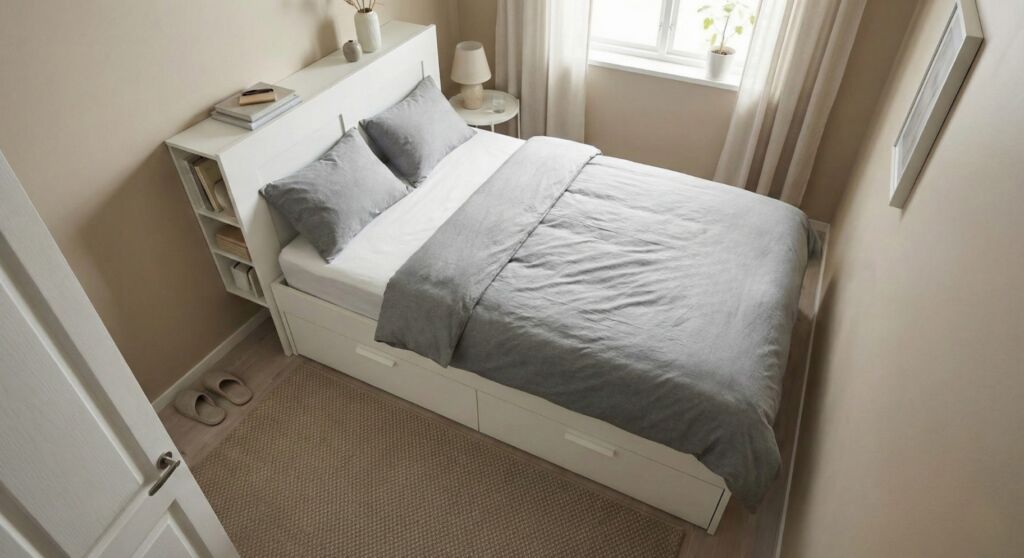
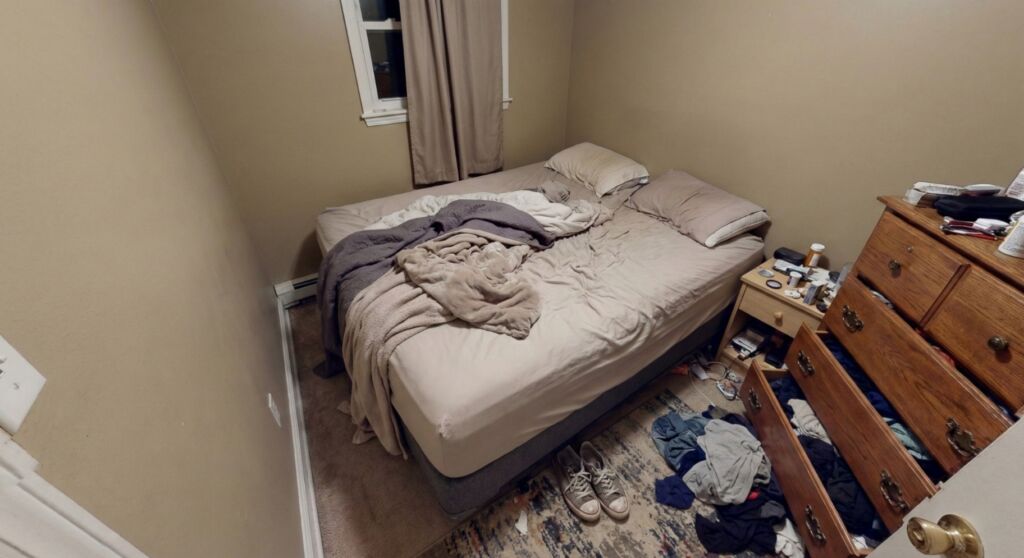
This is the most common starting point for a tiny room. You push the head of the bed into a corner so two sides touch the walls.
Why It Works
It opens up the maximum amount of floor space. By tucking the bed away, you create a central “living” area in the room. This makes a 100-square-foot room feel like it has actual walking paths.
The Downside
Making the bed is a nightmare. You will find yourself crawling across the mattress to tuck in the far corner. If you share the bed with a partner, the person on the inside is trapped.
Expert Tip
Use a headboard with built-in storage. Since you lose the space for two nightstands, a storage headboard provides a place for your phone and water. I used the Ikea Brimnes frame for two years. It is affordable but the assembly takes four hours.
2. The Floating Center Layout
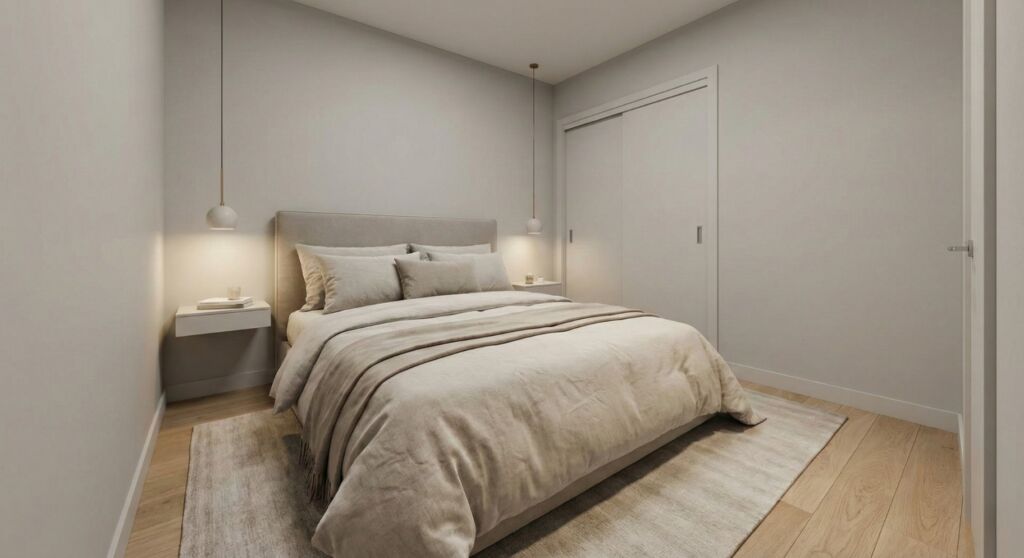
If your room is at least 10 feet wide, you can float the bed in the center of the main wall.
The Strategy
Leave 18 inches of space on both sides of the bed. This is the minimum width required for a human to walk comfortably.
The Benefit
The room feels symmetrical and high-end. It mimics a hotel suite. It also solves the “trapped partner” problem.
The Sacrifice
You lose the ability to have a large dresser. You will likely need to move your clothes storage into the closet or under the bed.
3. The Window Centered Layout
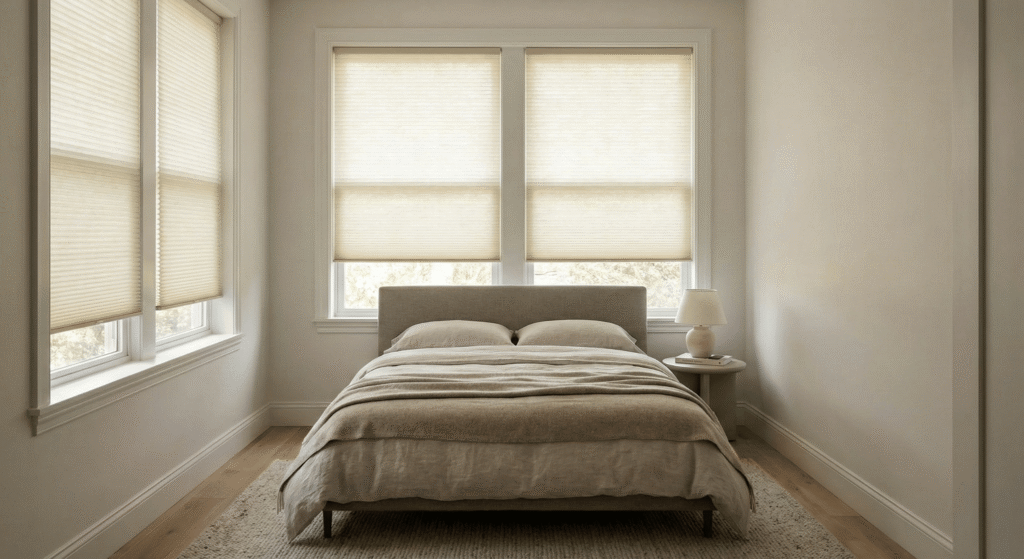
Many designers tell you never to put a bed in front of a window. I disagree.
The Logic
In a narrow room, the window is often the only logical focal point. Centering the bed under the window creates a strong visual anchor.
The Risks
Cold drafts and morning light. In 2024, I helped a client in Chicago with this layout. We used heavy cellular shades and a low-profile headboard. The headboard was short enough that it did not block the glass.
Warning
Ensure your window is well-insulated. A cold headboard leads to poor sleep.
4. The Lofted Workspace Layout
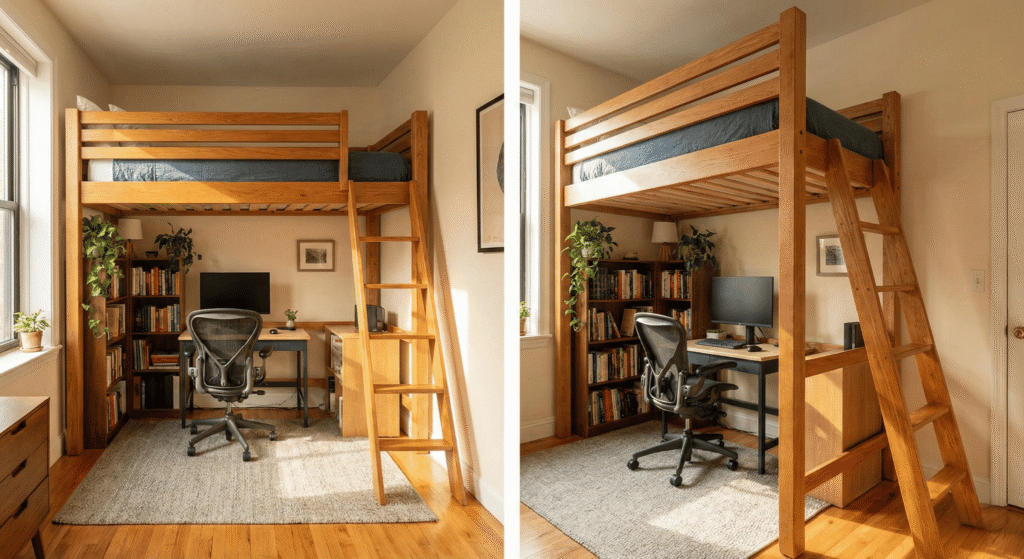
When you run out of floor space, you must look up.
The Execution
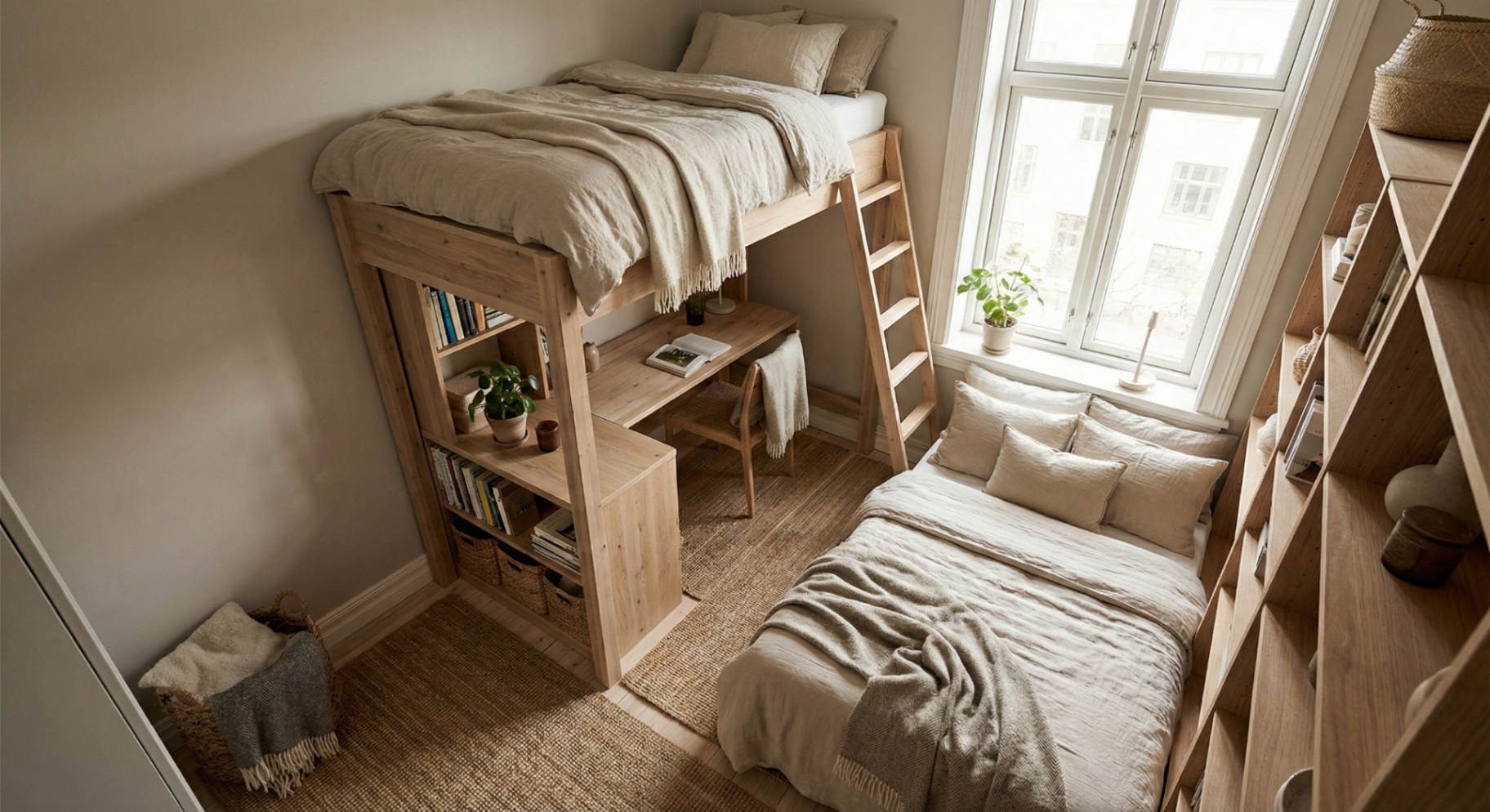
A loft bed lifts the sleeping area six feet off the ground. This leaves the entire floor area open for a desk or a seating area.
Real World Outcome
I installed a Max & Lily loft bed for a client who worked from home in a studio. The result was a 40% increase in usable floor space.
The Trade-off
You have to climb a ladder every time you want to nap. It is not ideal for anyone with joint pain or those who get up frequently at night.
5. The Murphy Bed Transformation
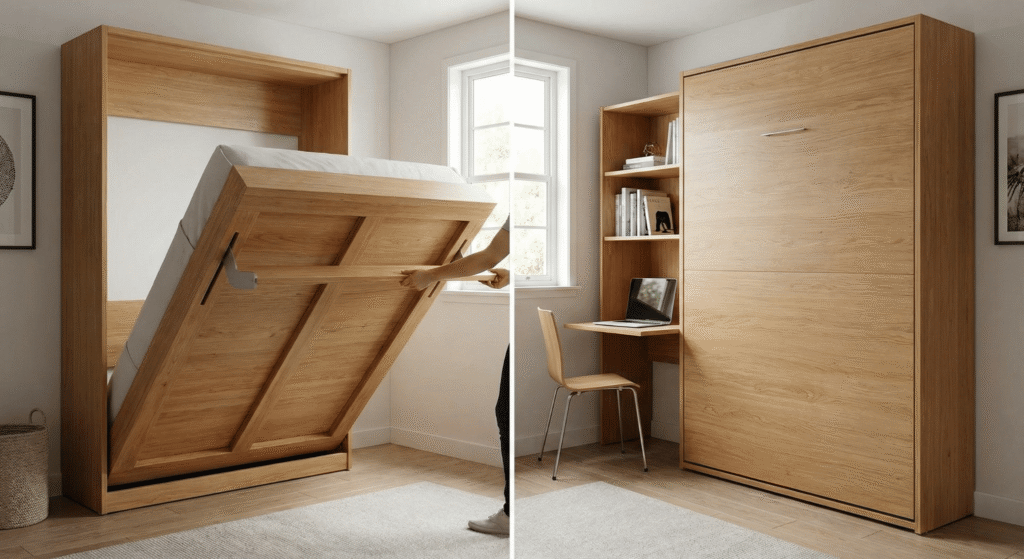
The Murphy bed is the ultimate small bedroom layout tool. It folds into the wall when not in use.
The Cost
Expect to pay between $1,500 and $4,000 for a quality unit. Cheap versions often have weak springs that fail within a year.
The Brand Review
I recommend Lori Bed for DIYers. It uses a manual lift system rather than complex pistons. This makes it more durable over a decade. Avoid the “off-brand” kits on big-box sites that use particle board. They sag.
6. The Long Wall Dresser Layout
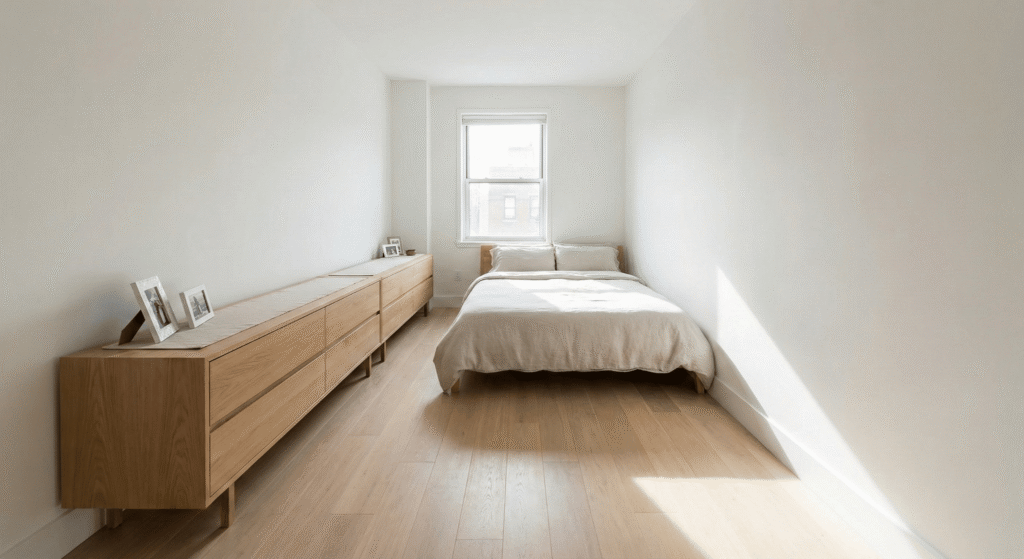
If you have a long, narrow “shoebox” room, place the bed against the short wall.
The Arrangement
Run a long, shallow dresser along the opposite long wall. Keep the dresser depth under 16 inches.
Visual Trick
A long, low dresser draws the eye horizontally. This makes the room feel wider than it is.
7. The Walk-In Closet Conversion
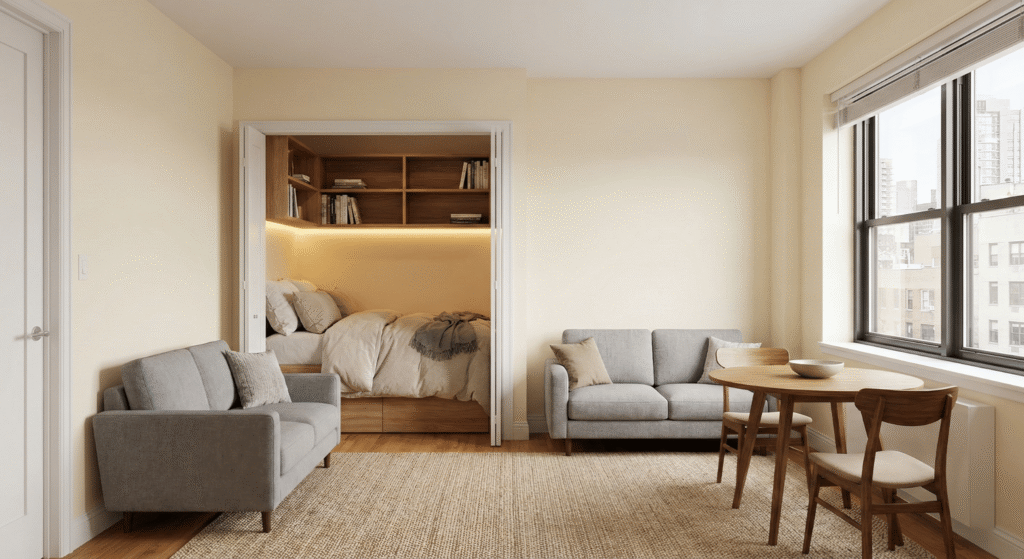
Can you fit a bed inside a closet? Yes.
The Method
Remove the closet doors. Slide a twin or full-sized bed into the niche. This creates a “sleeping nook” or “cloffice” vibe.
The Result
It frees up the entire main room for a sofa or a dining table. I saw this in a 250-square-foot micro-apartment in Seattle. It felt like a cozy alcove rather than a cramped closet.
8. The Foot-of-the-Bed Desk Layout
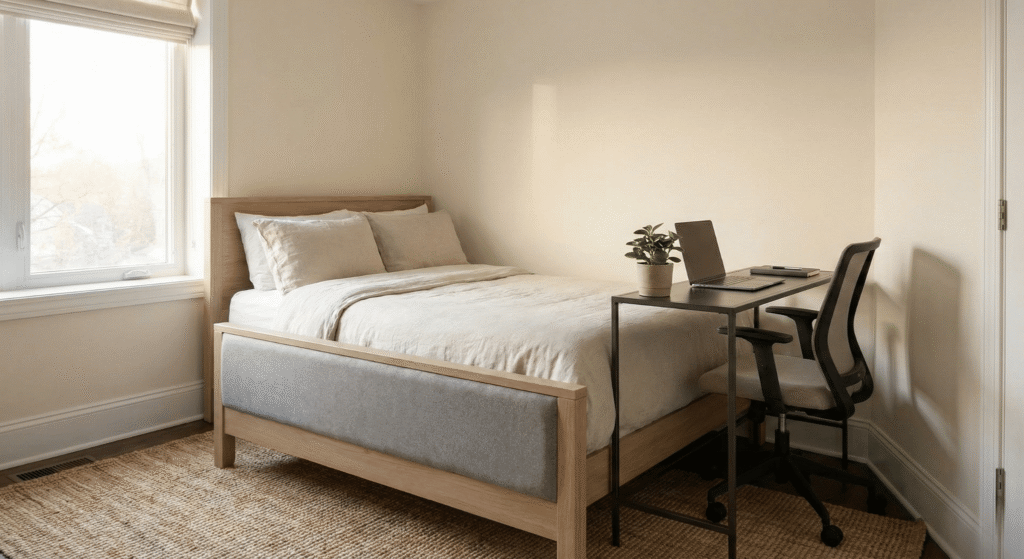
Stop trying to put your desk against a wall.
The Concept
Place a slim console table or desk at the foot of your bed.
The Advantage
It acts as a room divider. It separates the “sleeping zone” from the “work zone” without using a physical wall.
Measurement Note
The desk should be the same height or slightly lower than the footboard of your bed.
9. The Asymmetrical Nightstand Layout
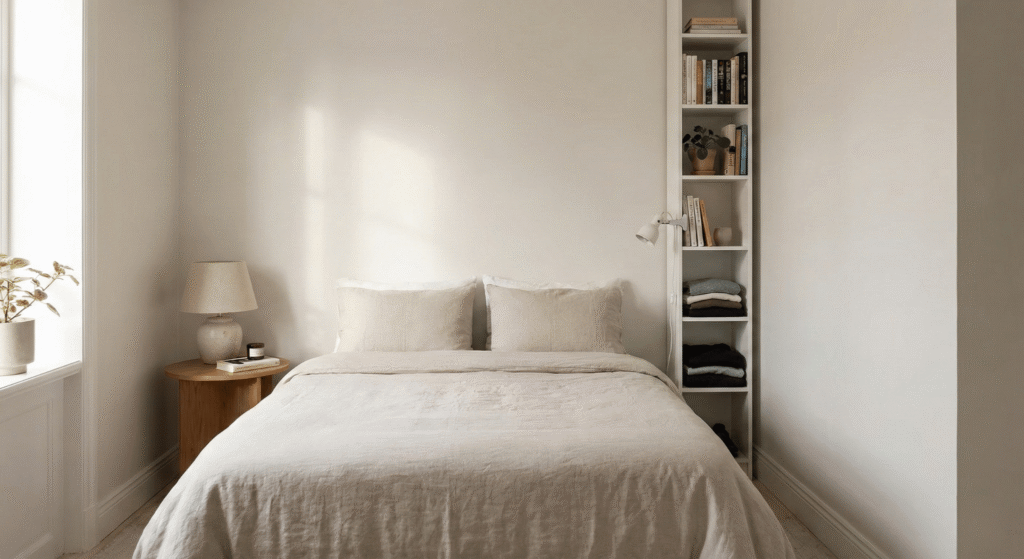
You do not need two identical nightstands.
The Setup
On one side of the bed, use a standard small table. On the other side, use a tall, narrow bookshelf.
The Function
The bookshelf provides vertical storage for books and clothes while still offering a surface for a lamp. This maximizes the utility of that 12-inch gap between the bed and the wall.
10. The Mirrored Wall Layout
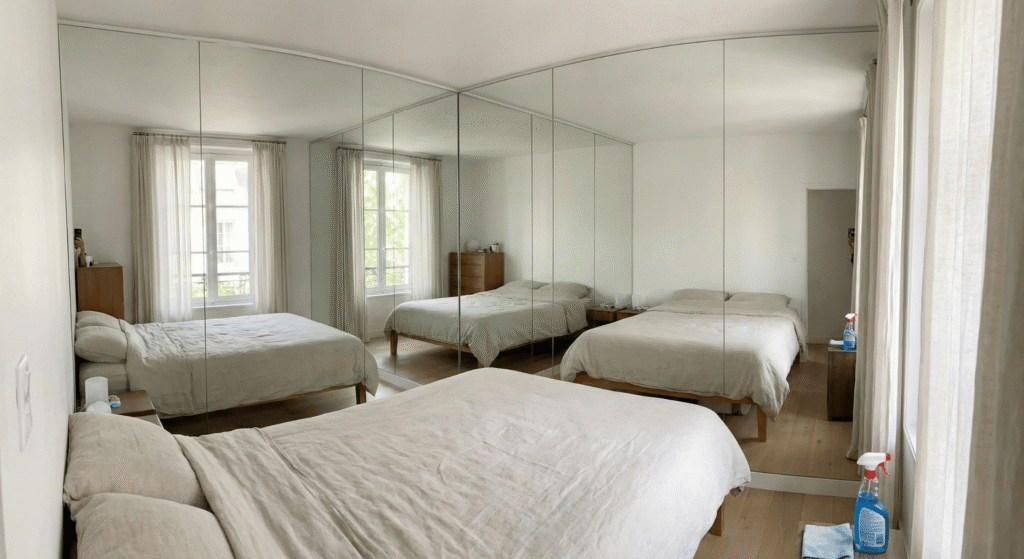
This is a classic trick for a reason.
The Application
Install floor-to-ceiling mirrors on the wall opposite the bed.
The Impact
It doubles the visual space. It also reflects light from the window, making the room significantly brighter.
Personal Experience
I once lived in a room with mirrored closet doors. While it made the room look huge, it was a lot of glass to keep clean. Use a high-quality glass cleaner every week to avoid a “grimy” feel.
11. The Wrapped Corner Shelving Layout
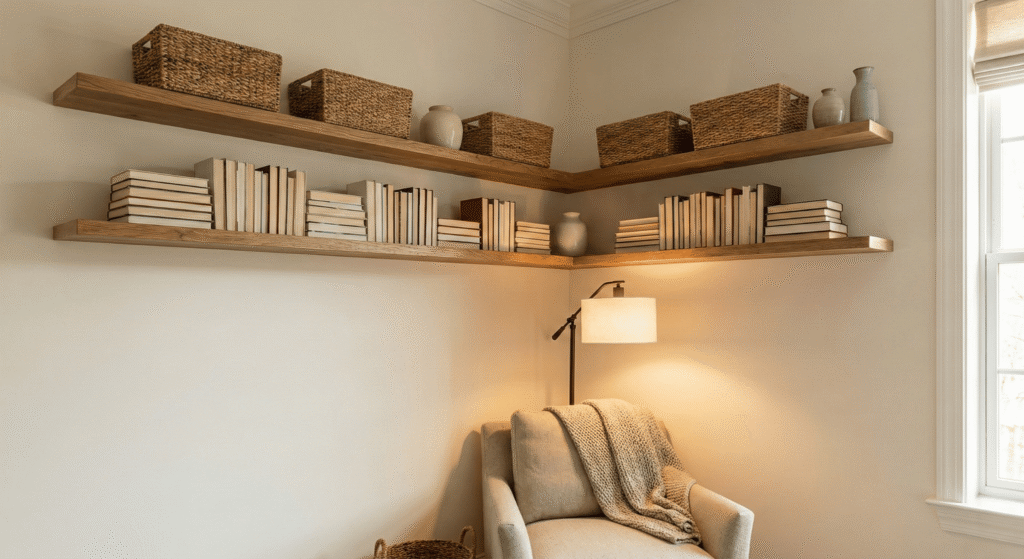
Use the corners of the room for storage.
The Design
Install floating shelves that wrap around the corners of the room near the ceiling.
Why It Matters
The space 12 inches below the ceiling is almost never used. Placing seasonal items or books up there keeps the floor clear.
Safety Tip
Use heavy-duty anchors. A falling shelf in a small room is a major hazard. I prefer the Toggler brand wall anchors for drywall.
12. The Bed-Under-the-Eaves Layout
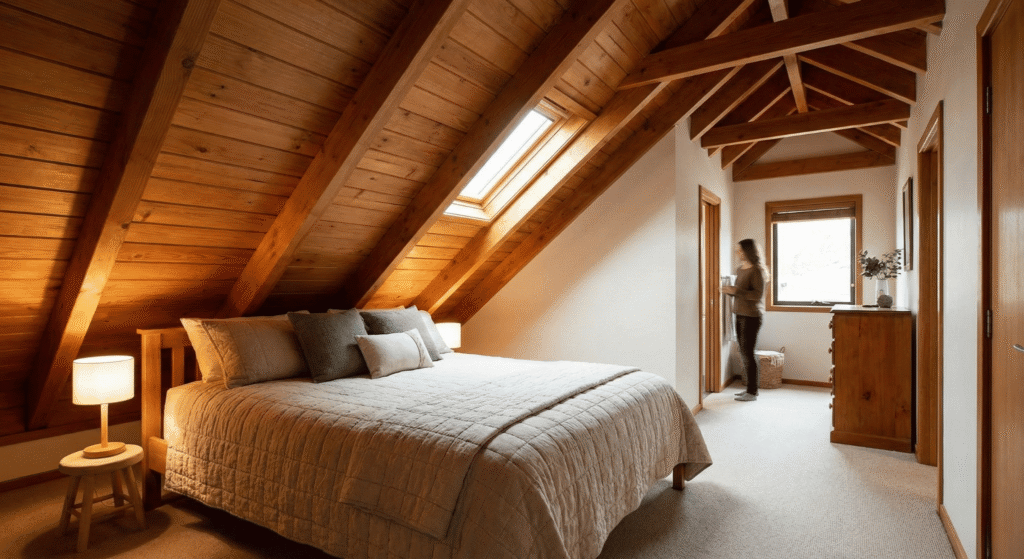
If you have an attic bedroom with sloped ceilings, layout is tricky.
The Rule
Place the head of the bed under the lowest part of the ceiling.
The Reasoning
You only need height when you are standing. You don’t need it when you are lying down. This allows you to use the “tall” part of the room for walking and dressing.
13. The Minimalist Platform Layout
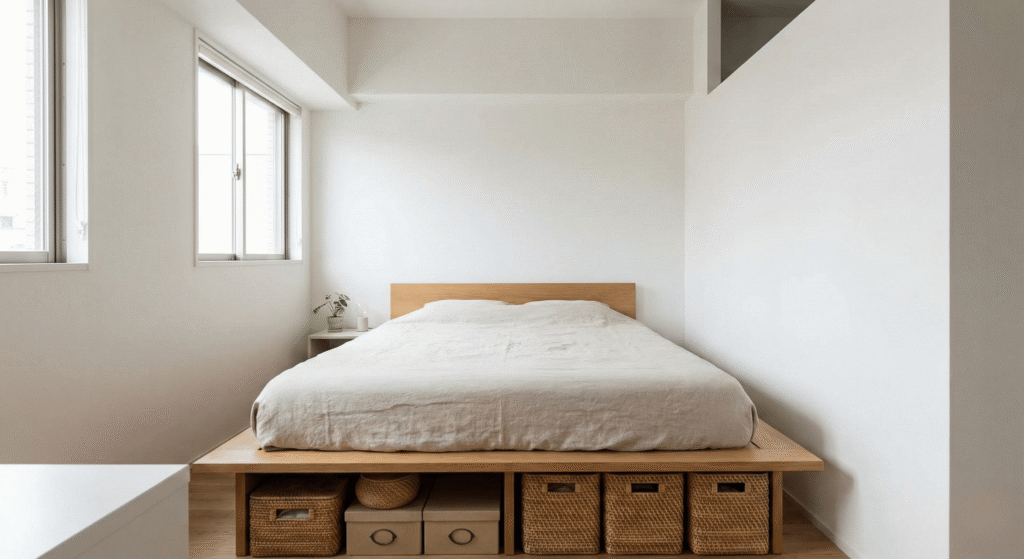
Bulky bed frames are the enemy of small rooms.
The Switch
Use a simple metal platform frame or a low-profile wooden base.
The Benefit
By lowering the bed, you create more “air” in the room. This makes the ceiling feel higher.
Recommended Tool
The Zinus Shawn SmartBase is a budget-friendly option that provides 13 inches of under-bed storage. I have used this in three different guest rooms. It is silent and sturdy.
14. The Partitioned Studio Layout
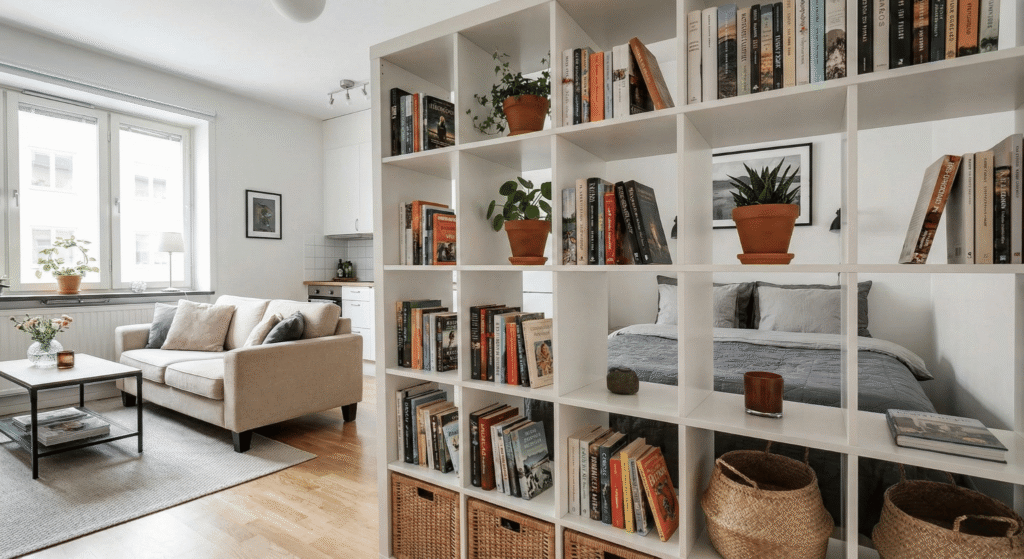
If your bedroom is part of a larger studio, use a layout that creates a “room within a room.”
The Tool
Use a kallax-style open bookshelf as a divider.
The Layout
Place the bed behind the bookshelf. It provides privacy and storage without blocking light.
15. The “No Nightstand” Layout
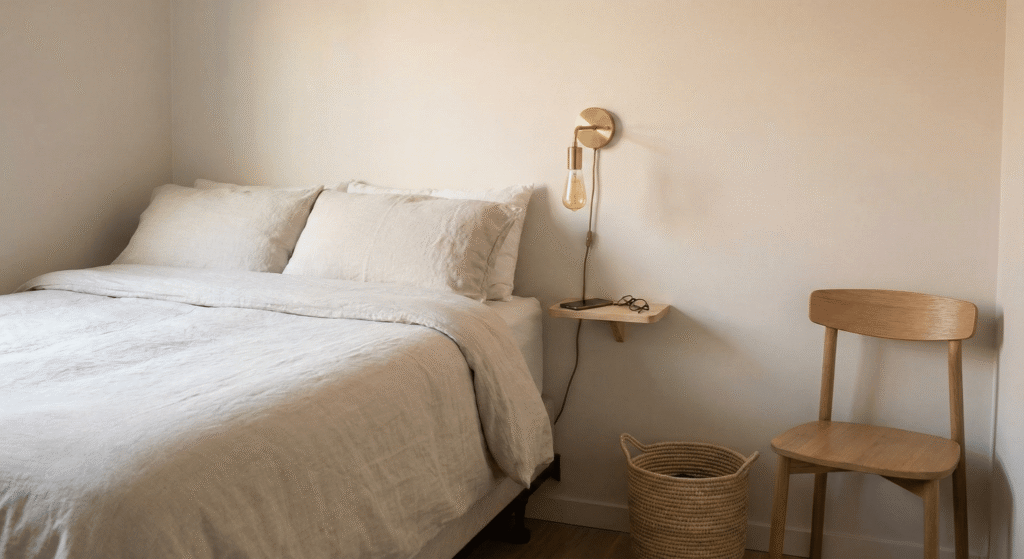
Sometimes, the best layout is the one with fewer pieces of furniture.
The Solution
Use a wall-mounted sconce for lighting and a small floating shelf for your phone.
The Result
You save at least four square feet of floor space. In a small room, four square feet is enough for a chair or a laundry basket.
How to Measure Your Small Bedroom for Success
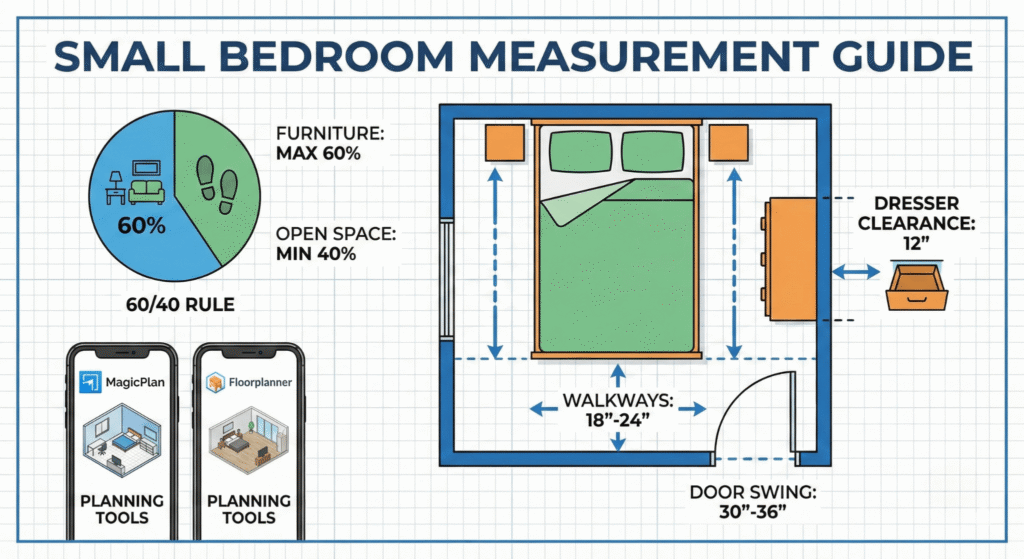
Before you move a single piece of furniture, you must measure. Most people guess and end up with a bed that blocks the closet door.
The 60/40 Rule
In a small bedroom, furniture should occupy no more than 60% of the floor space. The remaining 40% must be open for movement.
Vital Measurements
- Walkways: 18 inches to 24 inches.
- Door Swing: 30 inches to 36 inches of clear space.
- Dresser Clearance: 12 inches beyond the drawer depth.
Tools for Planning
I recommend using MagicPlan or Floorplanner. These apps allow you to see the room in 3D before you buy furniture. I used MagicPlan during a 2025 renovation, and it saved me from buying a rug that was six inches too wide.
The Hidden Costs of Small Bedroom Upgrades
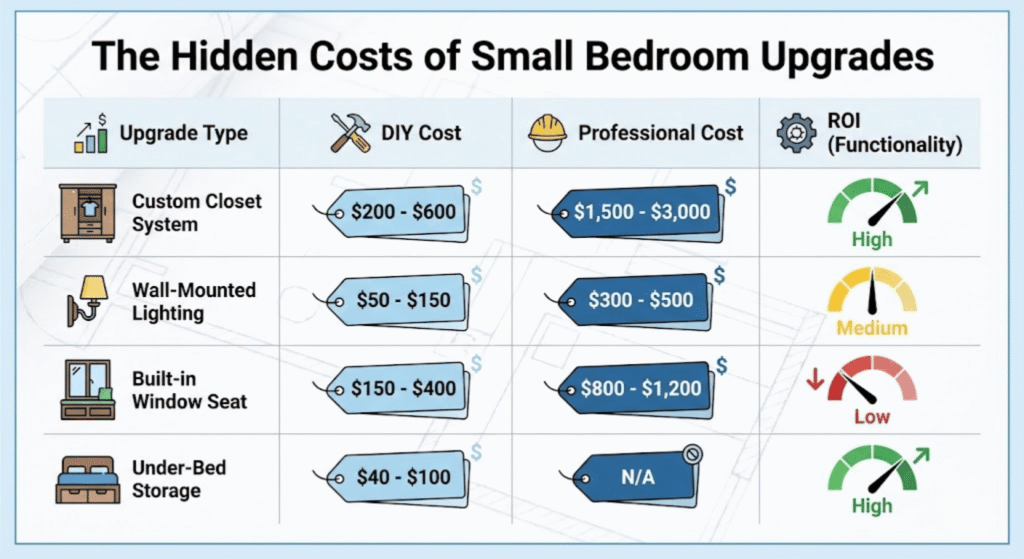
Small rooms often require custom solutions. These costs can surprise you.
| Upgrade Type | DIY Cost | Professional Cost | ROI (Functionality) |
| Custom Closet System | $200 – $600 | $1,500 – $3,000 | High |
| Wall-Mounted Lighting | $50 – $150 | $300 – $500 | Medium |
| Built-in Window Seat | $150 – $400 | $800 – $1,200 | Low |
| Under-Bed Storage | $40 – $100 | N/A | High |
Common Small Bedroom Layout Failures
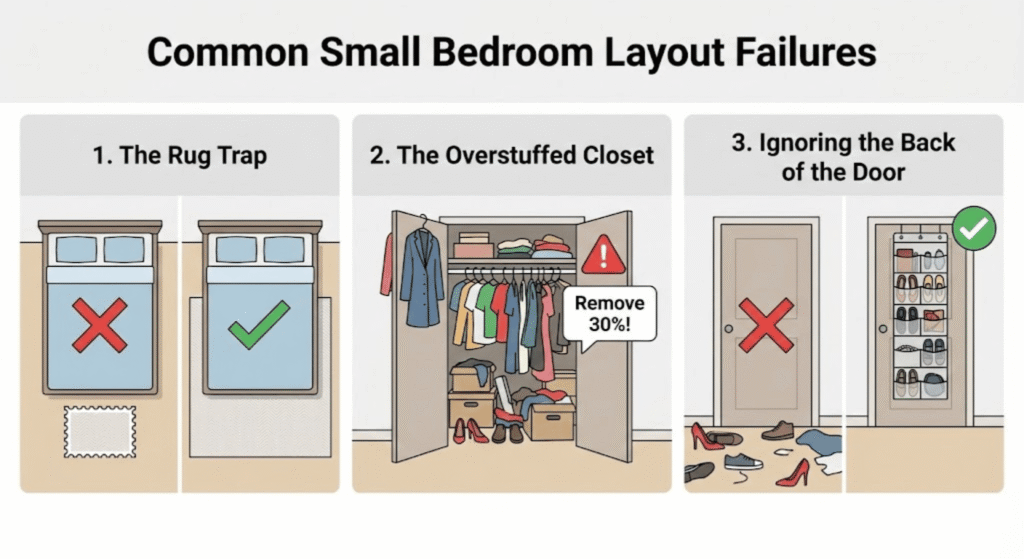
I have seen hundreds of small bedrooms. Here are the three most common mistakes people make.
1. The Rug Trap
People buy rugs that are too small. A tiny rug makes a tiny room look even smaller. It looks like a “postage stamp” on the floor. Buy a rug that fits under the bottom two-thirds of the bed and extends at least 18 inches on the sides.
2. The Overstuffed Closet
If your closet is full, your room will feel cluttered. I tell my clients to remove 30% of their clothes before they even think about a new layout. Physical space requires digital discipline.
3. Ignoring the Back of the Door
The back of your bedroom door is prime real estate. Use an over-the-door organizer for shoes or accessories. This removes a bulky shoe rack from your floor plan.
Expert Recommendations: Tools and Brands
Not all furniture is built for small spaces. Here is my honest assessment of current market leaders.
- Ikea: Best for modular storage (Pax and Billy series). Worst for longevity in beds.
- West Elm: Great for “mid-century” small-scale nightstands. Prices are high for the quality.
- Floyd: Their platform bed is excellent for small rooms because it is infinitely modular.
- The Container Store: The Elfa system is the gold standard for small closets. It is expensive but worth every penny for the 10-year warranty.
- Nanoleaf: Great for wall-mounted lighting that doesn’t take up any surface space.
Frequently Asked Questions
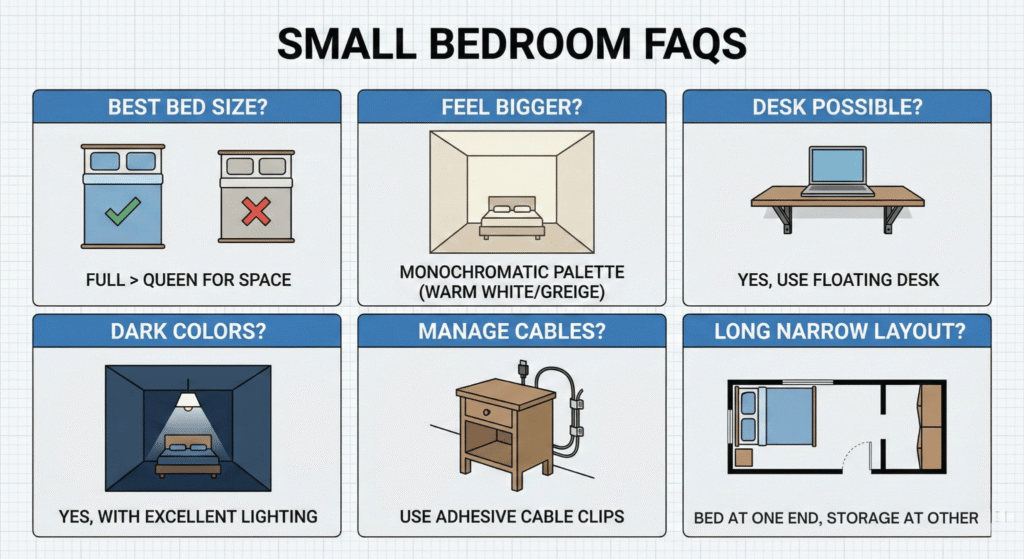
What is the best bed size for a small bedroom?
A full-size bed is usually the best balance between comfort and space. A queen bed is 60 inches wide, which often leaves no room for walkways in a standard 10×10 room.
How do I make a small bedroom feel bigger?
Use a monochromatic color palette. When the walls, curtains, and bedding are the same color, the boundaries of the room disappear. I prefer a soft “greige” or a warm white.
Can I put a desk in a small bedroom?
Yes, but use a “floating” desk that mounts to the wall. This keeps the floor clear and makes the room feel less crowded.
Should I use dark colors in a small room?
Contrary to popular belief, dark colors can work. A navy or charcoal wall can create a “jewel box” effect. However, you must have excellent lighting to prevent it from feeling like a cave.
How do I manage cables in a tiny room?
Use adhesive cable clips along the back of your bed frame or nightstand. Visible cables create visual “noise” that makes a small space feel messy.
What is the best layout for a long narrow bedroom?
Place the bed at one end and the storage at the other. Avoid putting furniture along both long walls, as this creates a “tunnel” effect that is hard to walk through.
The Future of Small Bedroom Living
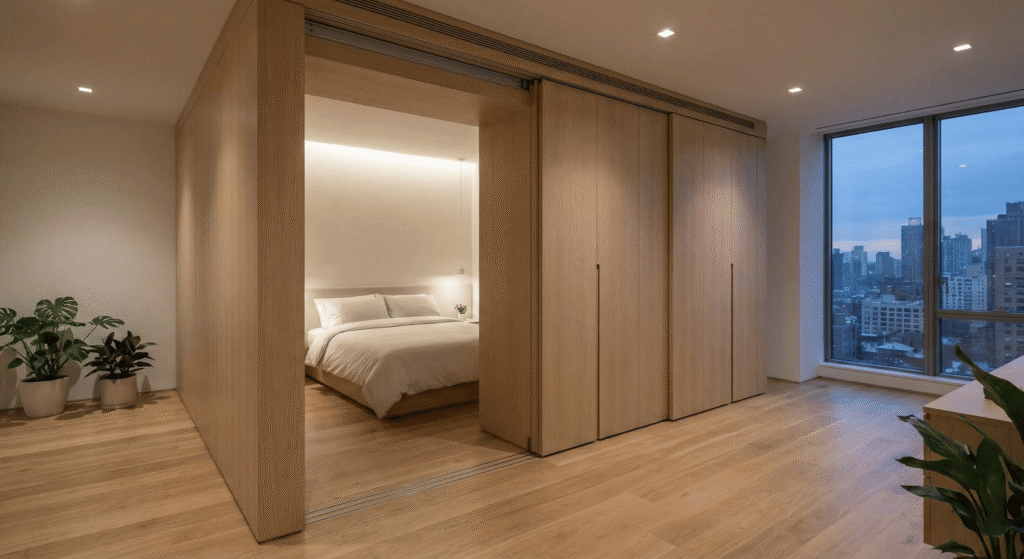
By 2027, I expect to see more “robotic” furniture in the mainstream market. Companies like Ori are already creating walk-in closets that slide across the room at the touch of a button. For now, we must rely on smart layout principles.
Your bedroom should be a sanctuary, not a storage unit. If you feel stressed when you walk in, your layout is failing you. Start by removing one piece of furniture that doesn’t serve a daily purpose. You will be surprised at how much better you sleep when the room has space to breathe.
What is the biggest challenge you face with your current bedroom layout? Leave a comment below. I read every one and try to offer specific advice.