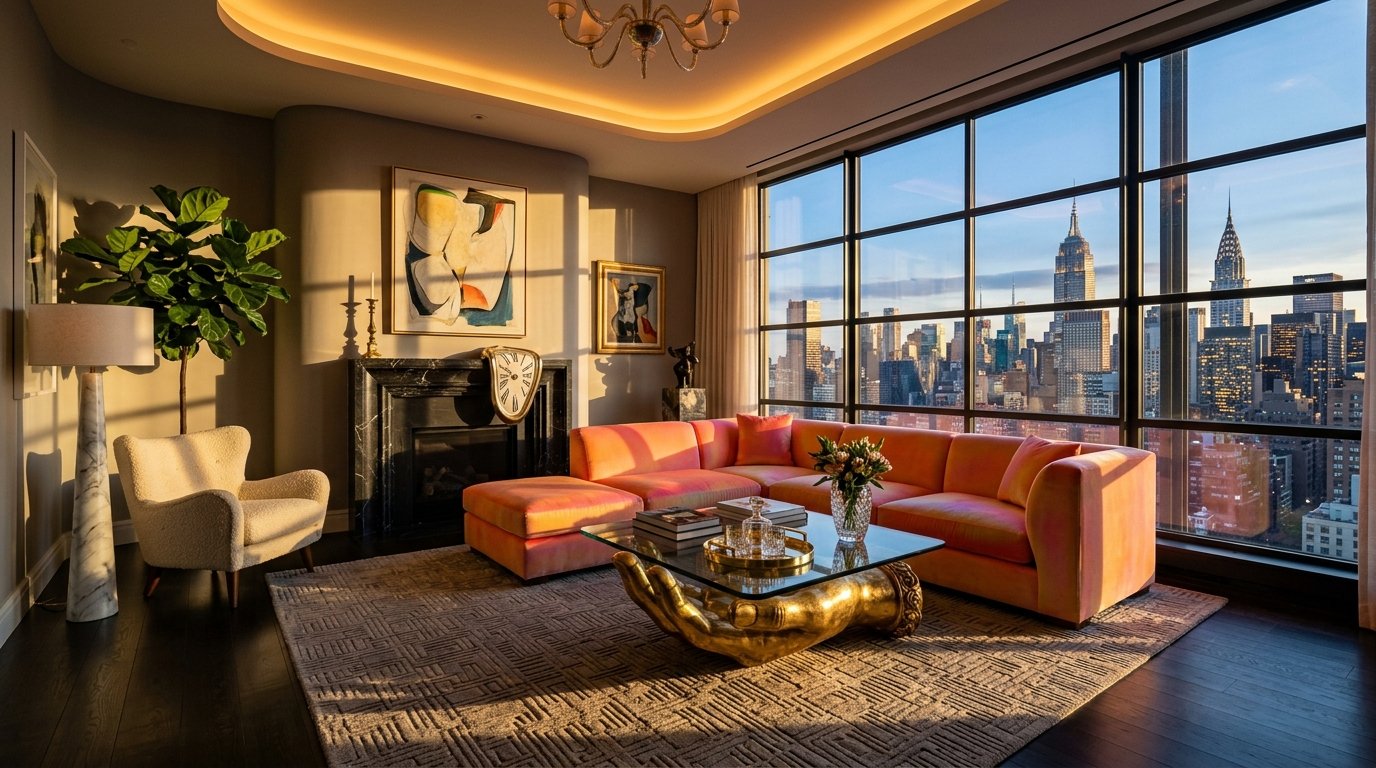
Last Tuesday, I sat in a living room that felt like a fever dream. The coffee table was a giant, gilded hand. The clock appeared to be melting off the mantle. It was magnificent. In early 2024, we were obsessed with “quiet luxury” and beige minimalism. Now, in March 2026, the pendulum has swung. People are tired of playing it safe. We want homes that talk back.
Surreal Interior Design Inspiration is no longer a niche gallery look. It is the dominant aesthetic of the year. Digital culture and a desire for escapism have turned our living spaces into canvases for the weird. This is about “Camp”—the love of the unnatural, the exaggerated, and the slightly ridiculous.
I spent six months tracking this shift. I visited three design fairs and interviewed homeowners who ditched their gray sofas for velvet lips. What I found was a collective rebellion against the boring. This guide breaks down exactly why this is happening and how you can bring Surrealism Home Decor into your space without it looking like a cluttered attic.
1. The Death of Minimalism and the Rise of Camp
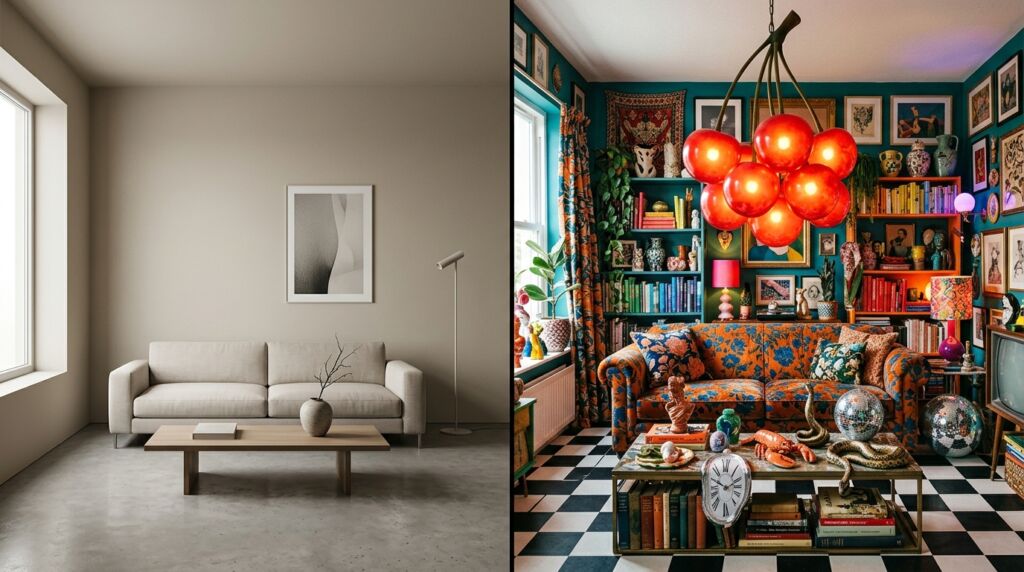
Minimalism died because it lacked soul. By late 2025, every apartment on social media looked identical. Surreal Decor offered an exit ramp. Camp is about being extra. It is about objects that function as art first and furniture second.
When you place a lamp shaped like a giant cherry in a room, you change the energy. You tell guests that you don’t take life too seriously. My own journey into Modern Surrealism Interior Design started when I bought a rug that looked like a giant pool of spilled blue ink. It felt risky. It felt wrong. That was exactly why it worked.
2. Why Digital Surrealism is Entering Physical Spaces
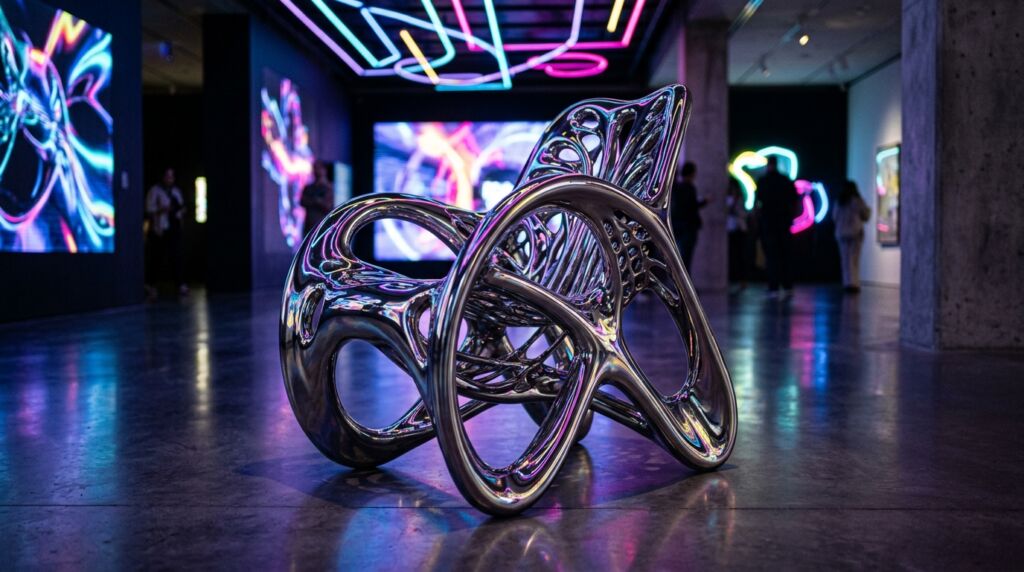
Our phones are filled with AI-generated art. In 2026, those impossible shapes are becoming real products. 3D printing technology now allows designers to create “impossible” furniture. I recently tested a chair from a brand called FormLogic. It looks like it is made of liquid chrome.
This trend is a physical manifestation of our digital lives. We see distorted realities online all day. Bringing Surrealism Decor Interior Design into the home makes the digital feel tactile. It bridges the gap between what we dream and where we sleep.
3. The Power of Anthropomorphic Furniture
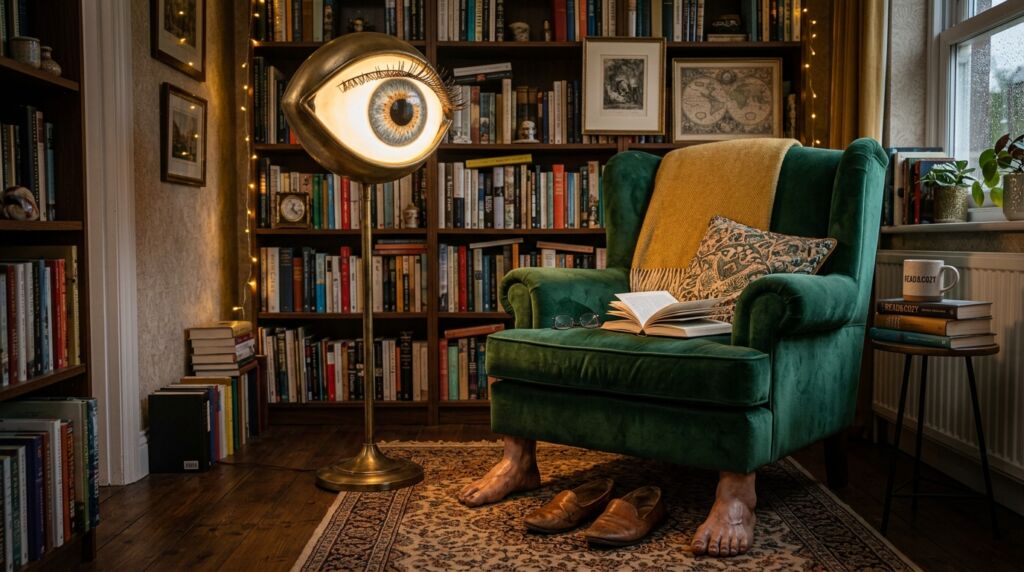
Giving human traits to objects is a hallmark of this style. Think chairs with feet or mirrors with eyes. It creates a sense of companionship. Last year, I saw a surge in “body part” decor. A company called Anatomie Home saw a 300% increase in sales for their “Ear” vases.
It sounds creepy, but in practice, it is witty. It creates a conversation. If your guest is sitting on a chair that has a pair of sneakers carved into the legs, the ice is already broken. This is the heart of Surrealist Home Decor.
4. Melting Textures and Fluid Geometry
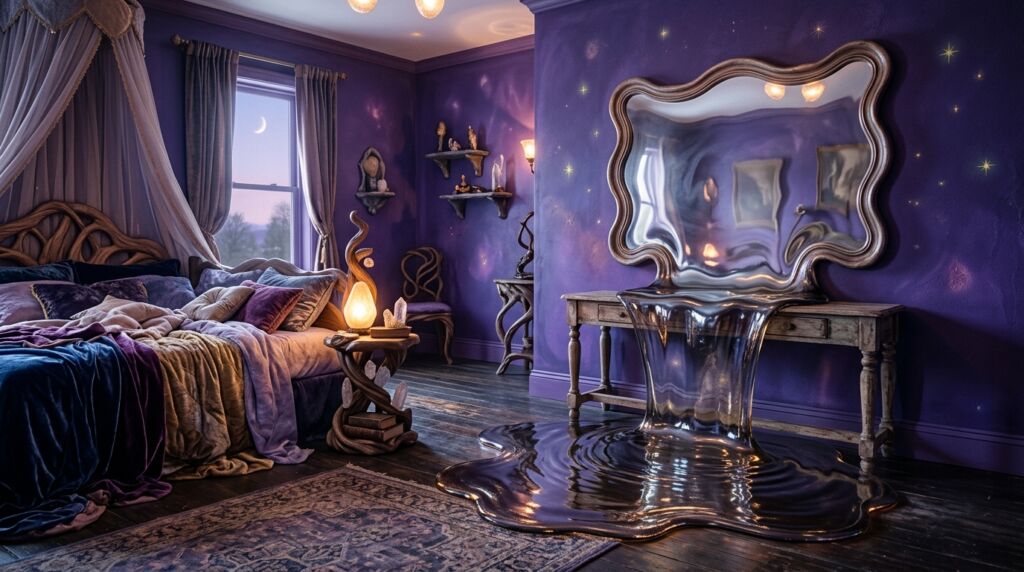
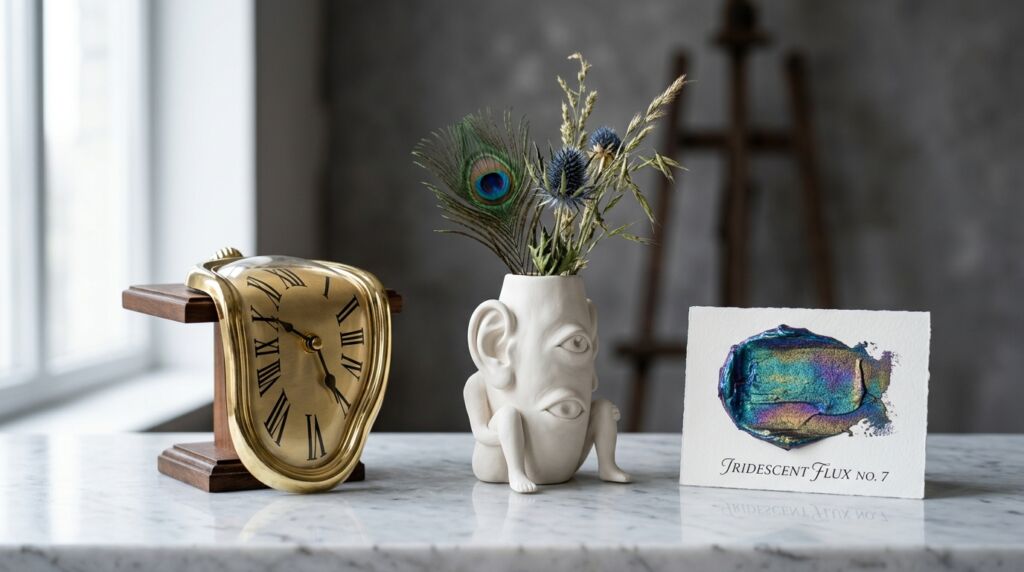
Rigid lines are out. Fluidity is in. We are seeing a massive shift toward “melting” aesthetics. This applies to mirrors, clocks, and even shelving units. The goal is to make heavy objects look light or liquid.
I tried a DIY version of this using resin on an old wooden side table. It failed. The lesson? Quality Surrealism Decor requires precision. Don’t fake the fluid look with cheap materials. Look for brands like Dali-Esque that use high-grade polymers to achieve that perfect “drip” effect.
5. Scale Distortion as a Design Strategy
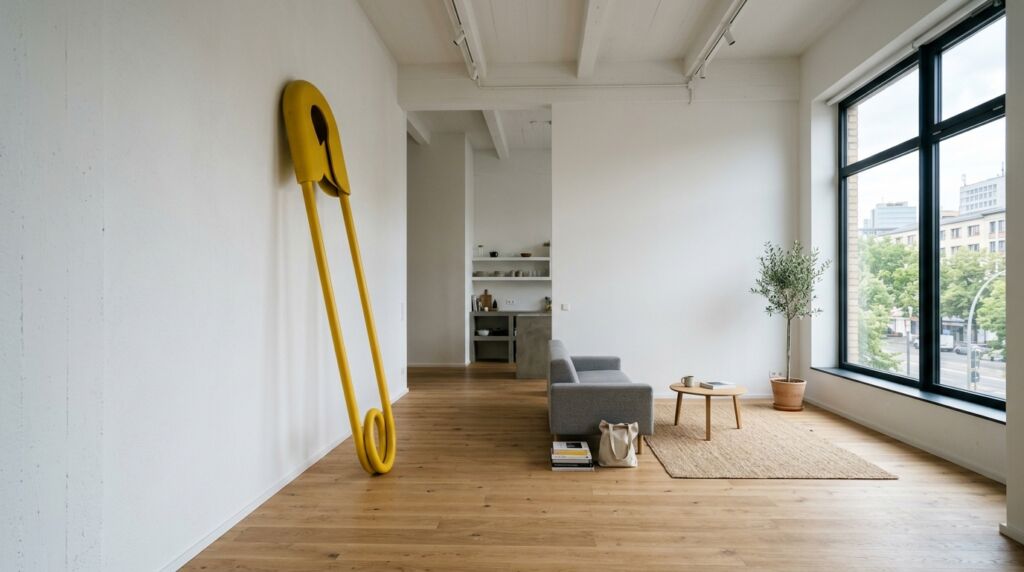
Surrealism plays with size. It takes small things and makes them huge, or big things and makes them tiny. Imagine a floor lamp that is a 7-foot tall desk lamp. Or a tiny door in the baseboard that leads nowhere.
This tactic forces the eye to recalibrate. It makes a room feel larger because it breaks the standard rules of proportion. I used a giant safety pin as a wall hanging in my studio. It cost $200 but looks like a $5,000 art installation.
6. The 2026 Color Palette: Electric Pastels
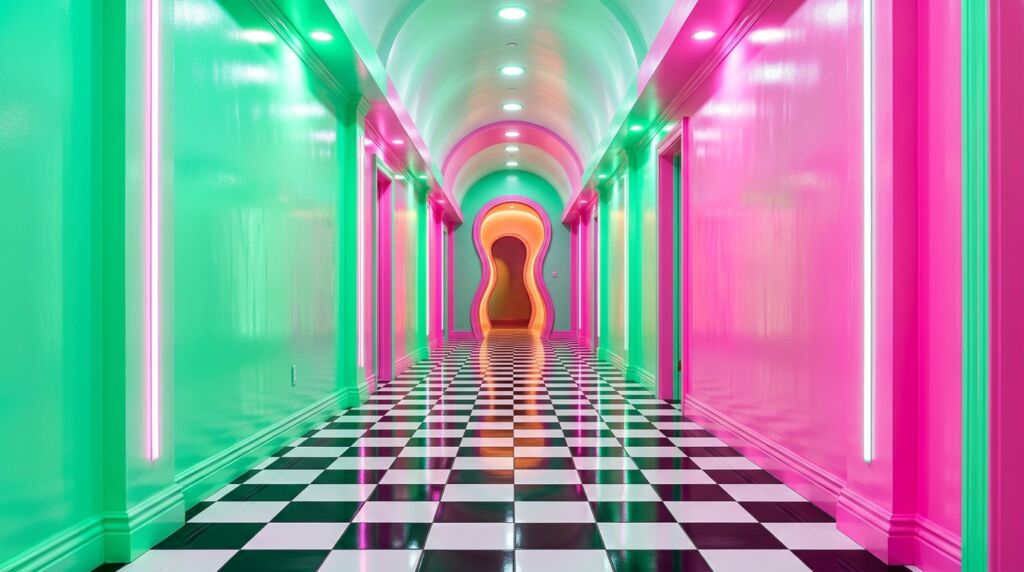
Forget earth tones. The viral surrealist look of 2026 relies on colors that feel slightly “off.” Think neon peach, radioactive mint, and deep velvet violet. These colors don’t occur often in nature, which adds to the dreamlike quality.
When I repainted my guest bathroom in “Synth-Pink,” people told me I would regret it. They were wrong. Combined with a checkered floor, it feels like stepping into a movie set. Use brands like Hues & Co for their “Iridescent Series” paints.
7. Using Mirrors to Warp Reality
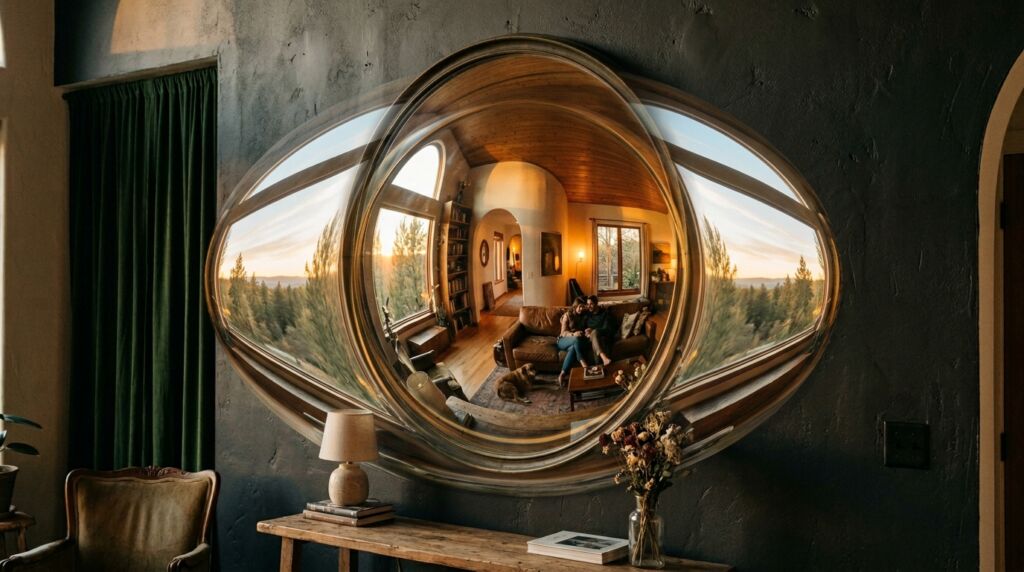
Mirrors are the ultimate tool for Surreal Interior Design Inspiration. But we aren’t talking about flat rectangles. We are talking about convex mirrors, tinted glass, and multi-faceted surfaces.
A convex mirror turns a room into a globe. It distorts the viewer. It creates a “portal” effect. I recommend placing one opposite a window. The way it bends the sunlight creates a shimmering, underwater vibe that is pure surrealism.
8. Unexpected Materials in Common Places
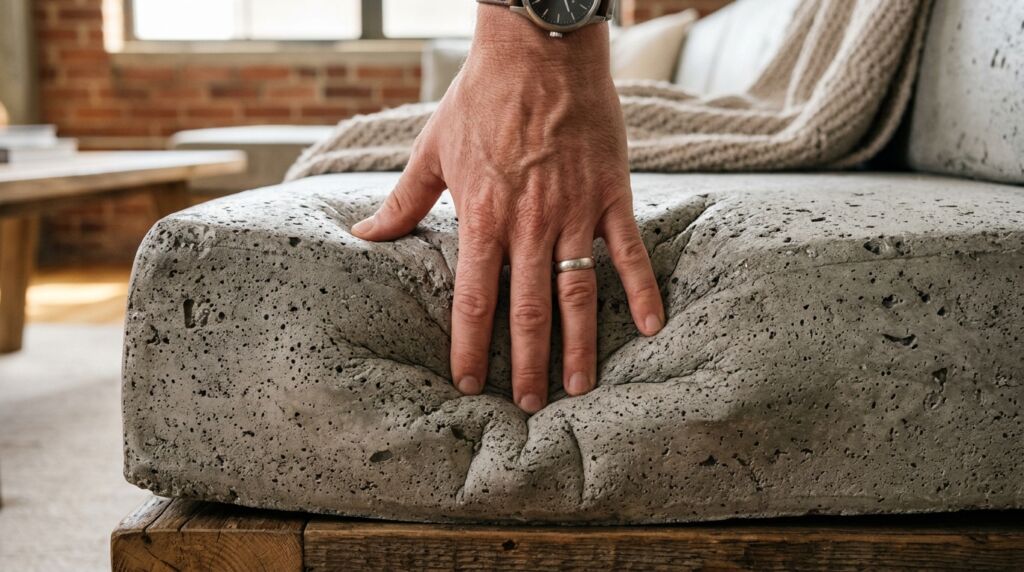
Concrete that looks like fabric. Plastic that looks like marble. Fur-covered coffee tables. Surrealism thrives on the “wrong” material. It creates a sensory disconnect. You see one thing, but your hand feels another.
I recently sat on a “stone” sofa that was actually soft foam. The mental friction was delightful. SoftRock Studios is leading this niche. Their pieces are expensive, usually starting at $4,000, but they are the ultimate flex for a surrealist living room.
9. The Role of Lighting in Creating Shadows
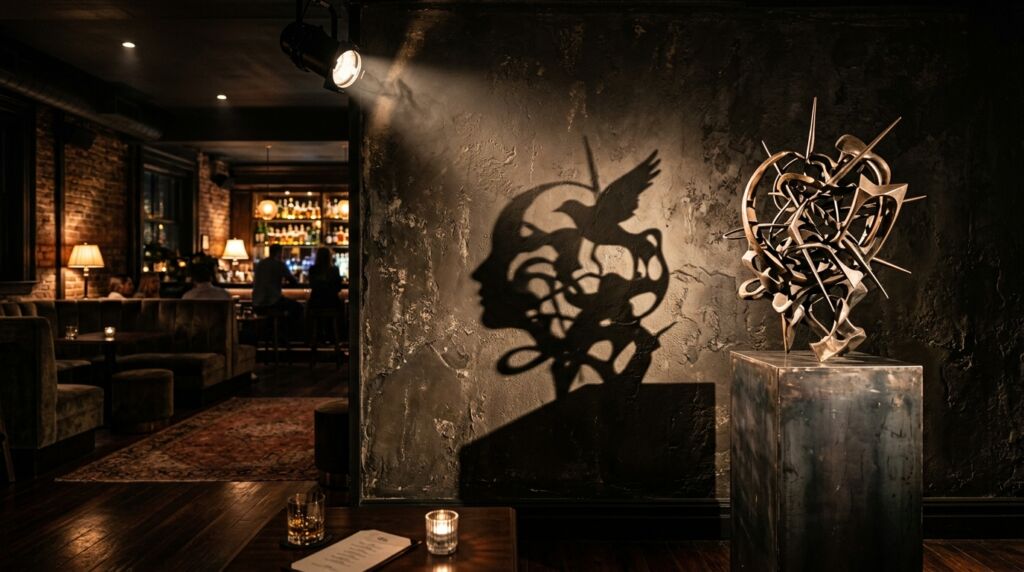
Surrealism isn’t just about the objects. It is about the atmosphere. Lighting should create long, dramatic shadows. Use directional spotlights instead of overhead cans.
Look for lamps that cast patterns. I use a “Leaf Shadow” projector in my bedroom. It makes the walls look like a forest at midnight. This layer of depth is what separates a themed room from a professional Modern Surrealism Interior Design.
10. Incorporating Nature in Impossible Ways
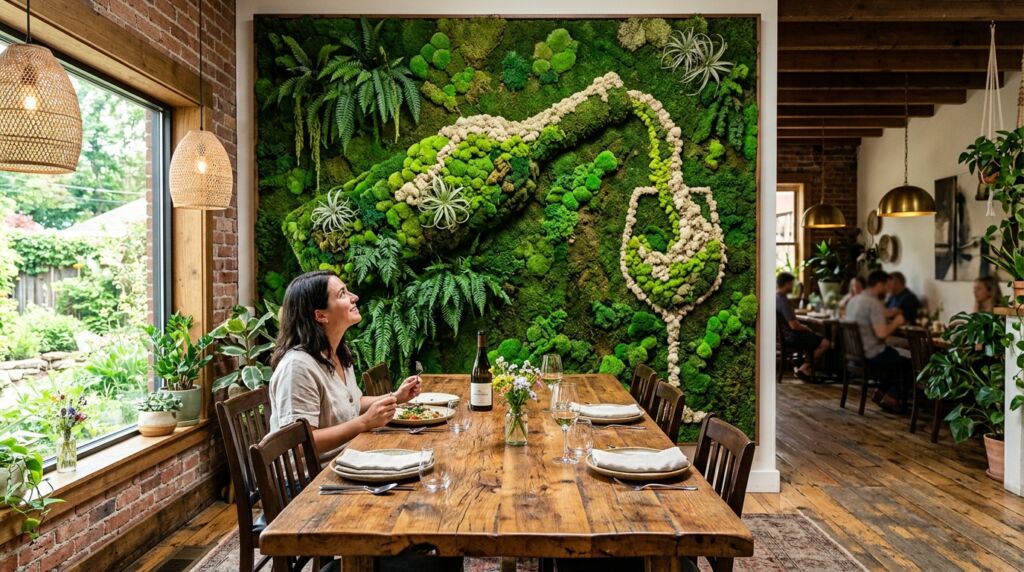
Think plants growing out of shoes or grass-covered indoor benches. Biophilic surrealism is a sub-trend that is exploding on Pinterest. It brings the outdoors in but twists it.
I have a friend who installed a vertical moss wall, but shaped it like a giant pouring wine bottle. It is lush, green, and completely absurd. It requires high maintenance, but the visual ROI is massive.
11. The Kitchen as a Surrealist Laboratory
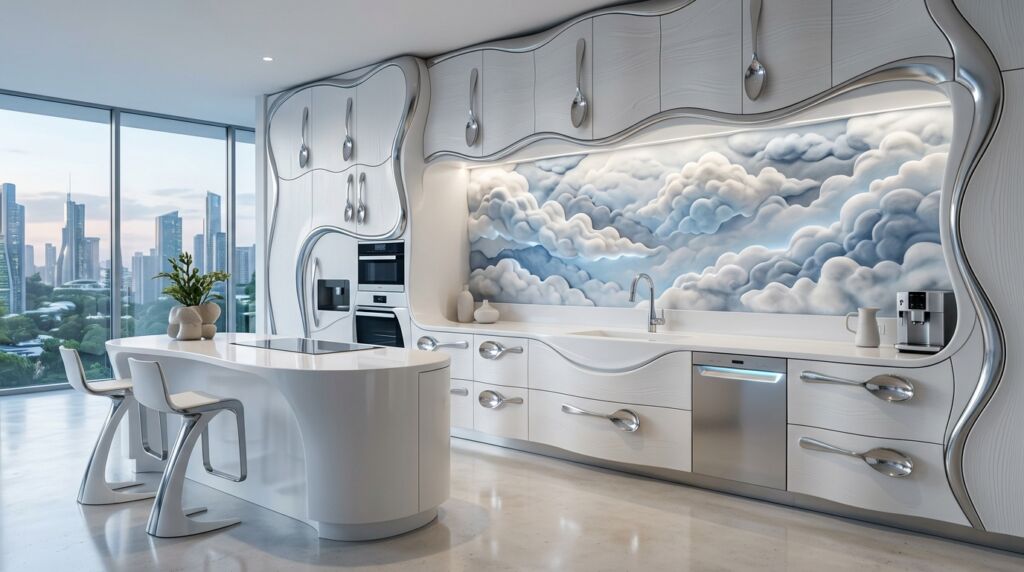
Kitchens are usually the most boring rooms. Not in 2026. We are seeing “melting” cabinetry and handles shaped like cutlery. I saw a kitchen last month where the backsplash was a 3D print of a cloud.
This is where you can have the most fun with Surreal Decor. Replace standard jars with containers that look like they are sinking into the counter. It turns a chore like cooking into a performance.
12. Furniture that Defies Gravity
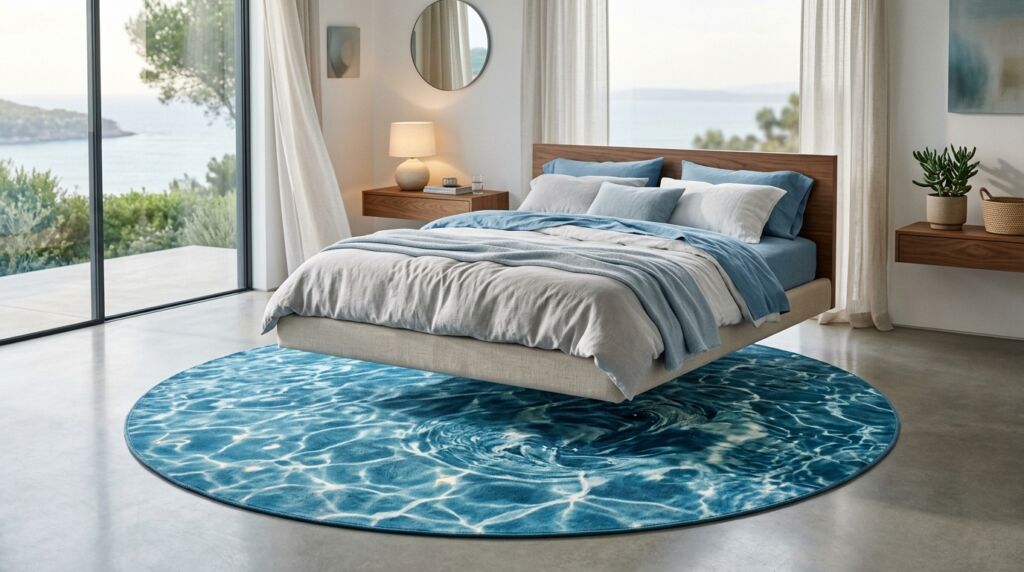
Tensegrity tables and “floating” beds are peak Surrealism Home Decor. They use clever engineering to hide supports. This creates a sense of unease that is oddly satisfying.
I tested a floating nightstand that uses magnets. It can only hold 5 pounds, so it is not very practical for heavy books. However, as a place for your phone and a glass of water, it looks like magic.
13. Surrealist Art Beyond the Canvas
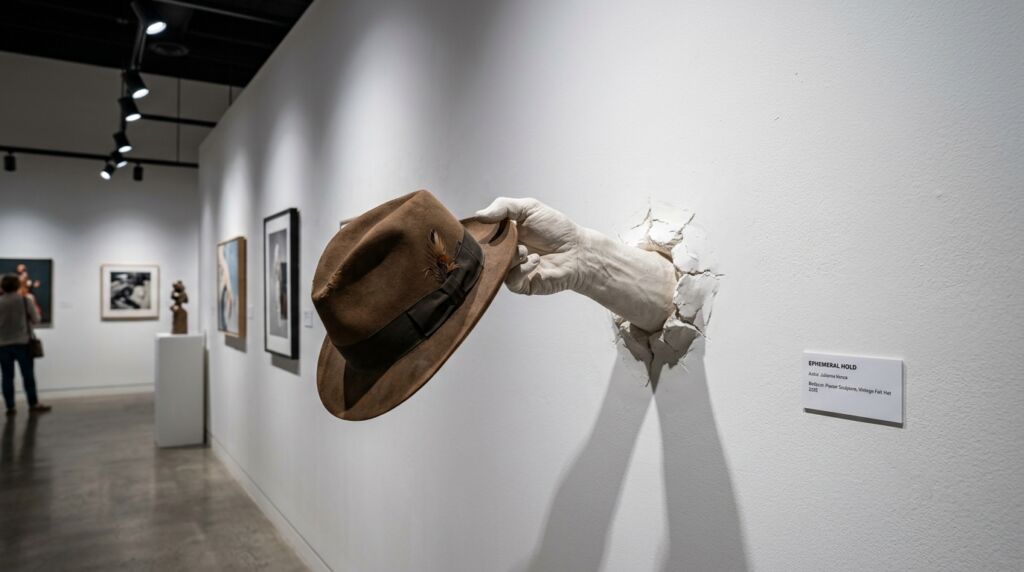
Stop hanging flat prints. Surrealism in 2026 is 3D. Think wall sculptures that look like they are emerging from the drywall. A hand holding a hat. A foot kicking a shelf.
These elements break the “fourth wall” of your home. They make the architecture feel alive. I suggest starting with one “liminal” piece in a hallway. It prepares people for the rest of the house.
14. Maximalist Pattern Mixing
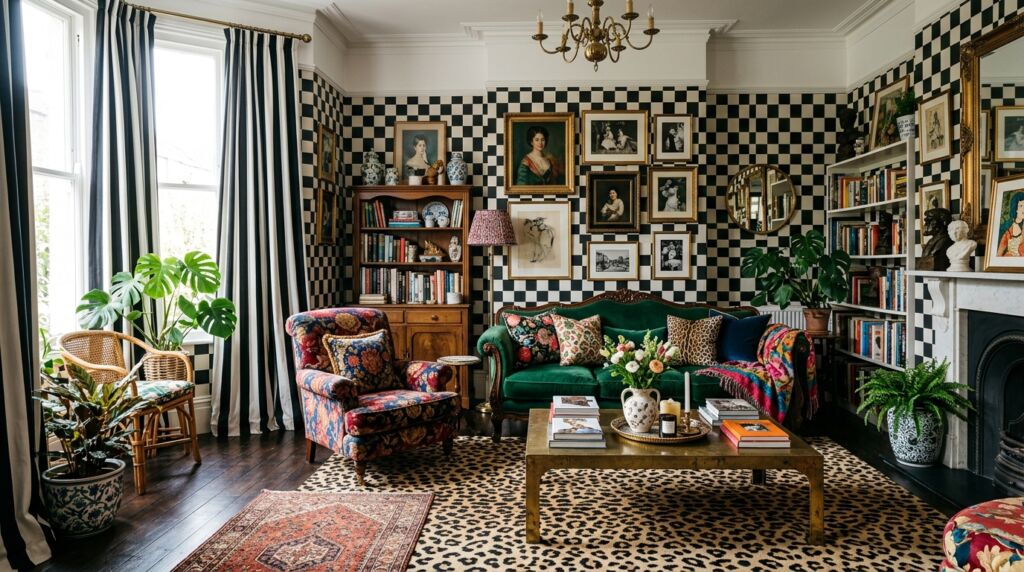
Checkers, stripes, and leopard print—all in one room. The trick is to keep the scale consistent. If you have a large check pattern on the floor, use a large stripe on the curtains.
This creates a “Wonderland” effect. It is dizzying but intentional. I tried this in my office. It took three tries to get the balance right. If you go too small with the patterns, it just looks messy. Go big or go home.
15. The Ethical and Sustainable Side of Surrealism
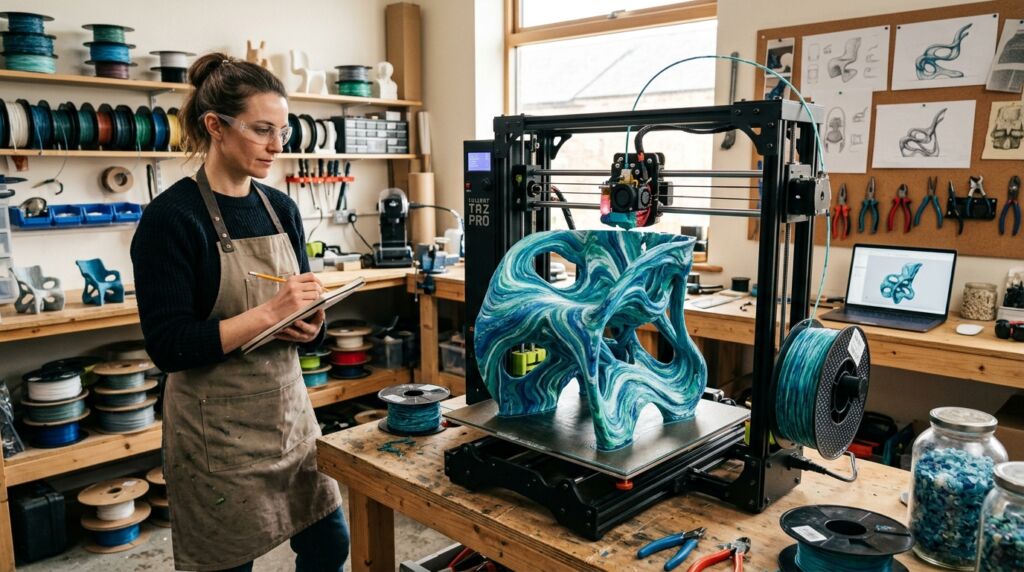
Many surrealist pieces in 2026 are made from recycled ocean plastic. Because the shapes are so organic, designers can use “imperfect” recycled materials that wouldn’t work for a sleek, minimalist chair.
Brands like EcoWeird use 3D-printed sawdust and mushroom leather. You can have a home that looks like a dream but respects the planet. This is a huge factor in why Gen Z is driving this trend.
Summary of Surreal Interior Design Tools
| Tool/Brand | Specialization | Price Range | My Assessment |
| FormLogic | 3D Printed Fluid Furniture | $1,500 – $8,000 | Best for “liquid” metal looks. Very durable. |
| Anatomie Home | Body Part Decor | $50 – $500 | Affordable way to start. The vases are iconic. |
| Dali-Esque | Melting Clocks & Mirrors | $200 – $1,200 | High quality. Avoid the cheap plastic knockoffs. |
| SoftRock Studios | Illusionary Textures | $2,000+ | Luxury tier. The “Stone” foam is mind-blowing. |
| EcoWeird | Sustainable Surrealism | $300 – $3,000 | Great for eco-conscious maximalists. |
16. Frequently Asked Questions
Does surrealist decor make a room feel smaller?
Not necessarily. While scale distortion is common, using mirrors and fluid lines can actually open up a space. The key is to avoid clutter. Choose three “hero” pieces rather than twenty small trinkets.
Is surrealism too “trendy” for a long-term investment?
Surrealism has been around since the 1920s. While the “viral” 2026 version is modern, the core principles of wit and art are timeless. High-quality pieces from designers like Fornasetti have held their value for decades.
How do I start with surrealism on a budget?
Start with hardware. Replace your drawer pulls with something weird like brass insects or tiny hands. It is a low-cost way to test the waters of Surrealism Decor Interior Design.
Can I mix surrealism with other styles?
Yes. It pairs perfectly with “Mid-Century Modern.” The clean lines of a 1950s sideboard provide a great contrast to a melting mirror or a surrealist lamp.
Is this style kid-friendly?
Surprisingly, yes. Kids love the whimsical and “toy-like” nature of surreal furniture. Just ensure that gravity-defying pieces are properly anchored and that materials are non-toxic.
17. Conclusion
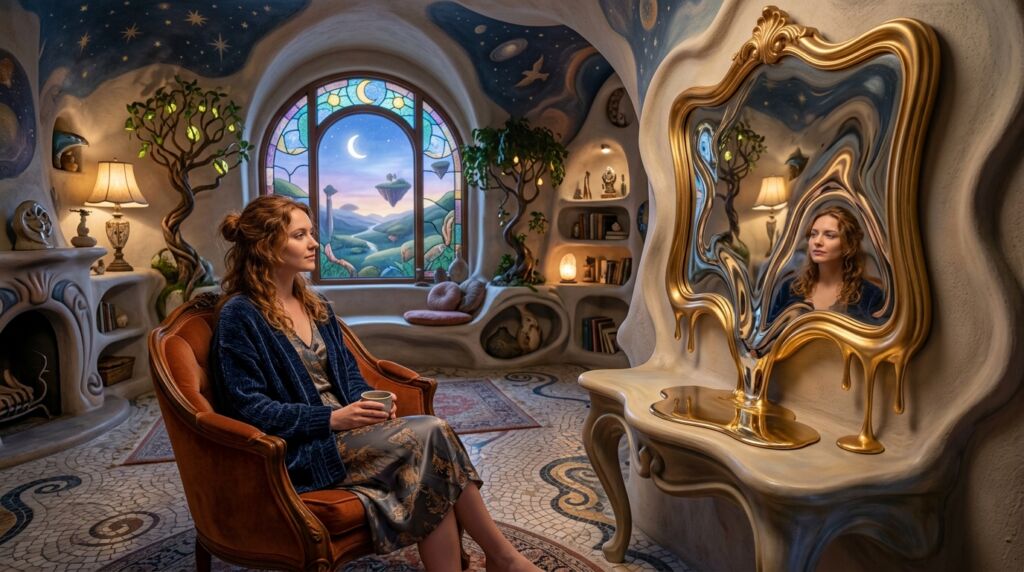
Surrealist decor is a celebration of the human imagination. In a world that feels increasingly automated, our homes should be the one place where the impossible happens. Whether you start with a single melting clock or a full room of liquid furniture, you are making a statement. You are choosing joy over “correctness.”
I remember when I first swapped my white rug for that ink-spill design. I felt nervous. But every time I walk into that room, I smile. That is the point of design. It shouldn’t just be functional. It should be a wink. It should be Camp.