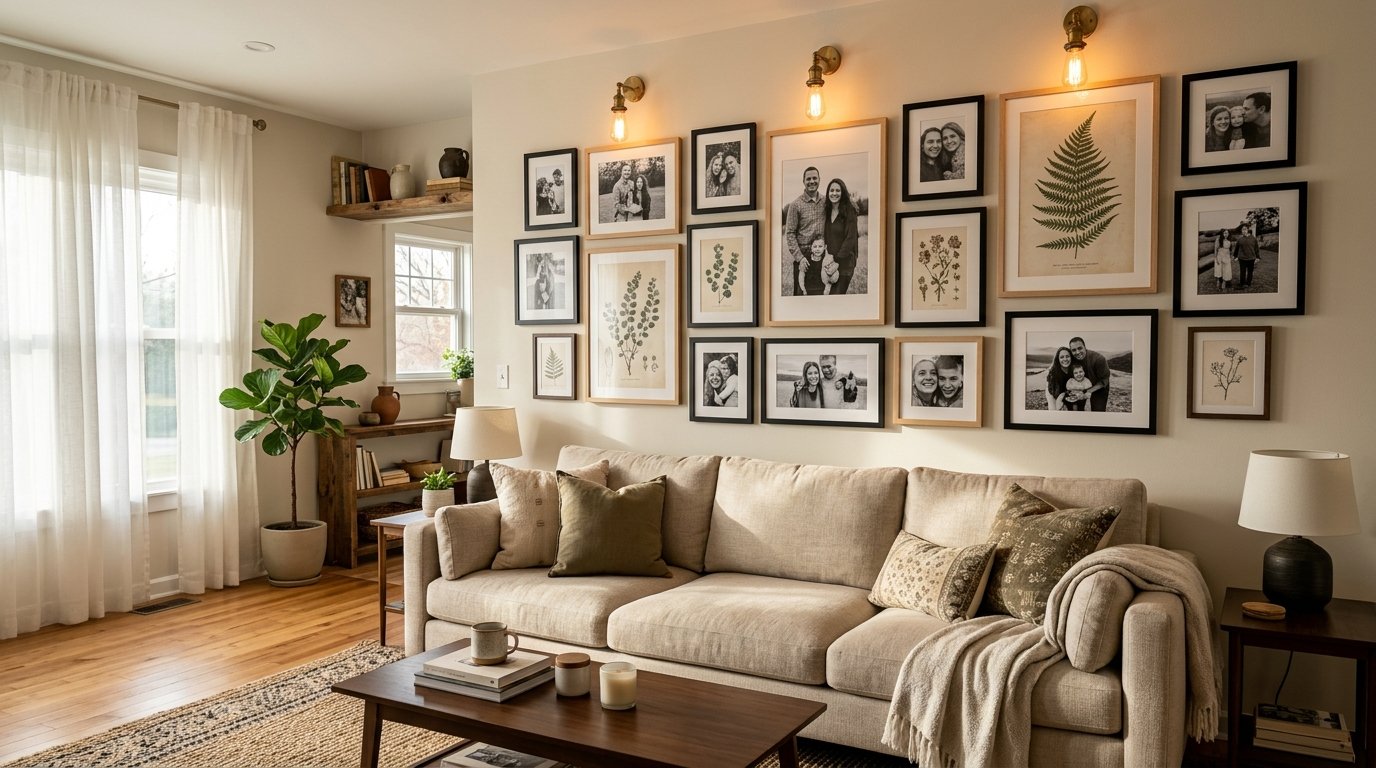
You walk into a friend’s living room and the wall stops you cold. Dozens of frames, different sizes, different styles, all arranged as if they grew there naturally. You take a photo for inspiration, go home, and stare at your own blank wall. Most people spend $800 to $1,200 recreating that look the wrong way. They buy all new frames, waste money on the wrong art, and still end up with something that feels off. What if the whole thing could cost under $100? I’ve gathered 23 gallery wall living room hacks that actually work, and almost none of them require a big budget to pull off.
This guide covers 23 practical ideas for building a stunning picture frame wall living room display on almost any budget. You will find ideas starting at $0 using what you already own, all the way up to $150 for a fully curated look. We cover small gallery decor ideas for tight spaces, how to mix frames without visual chaos, where to find art that costs almost nothing, and the exact layout methods designers rely on. I’ve tested these ideas across different room sizes and styles, from white wall living room decor setups to mid century modern living room photos arrangements. This guide does not cover wallpaper murals or built-in shelving. Everything here goes up with nails, tape, or ledge shelves. No contractor required.
1. Thrift Store Frame Mix
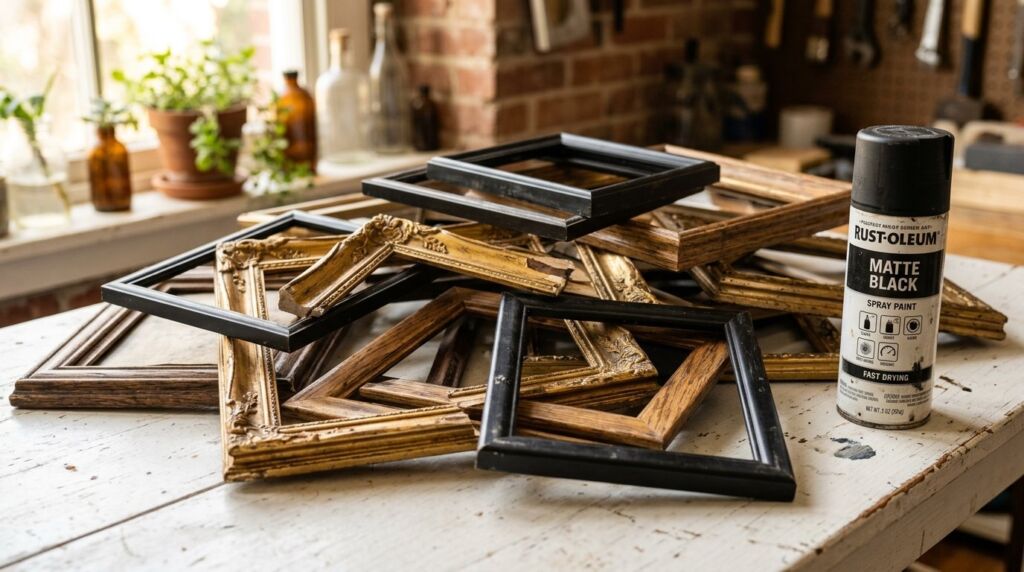
Thrift stores are the most underused resource for wall decor with frames. A standard 8×10 frame at HomeGoods runs $15 to $25. That same frame at Goodwill or Savers costs $1 to $3. I’ve built entire gallery walls for under $40 using this approach. The trick is not looking for matching sets. You want variety in shape and finish. Wood, metal, thin, ornate, all of it works together when you choose one unifying color, like black or gold, to spray paint any pieces that don’t fit. Pick up 8 to 10 frames on a single thrift run, coat the mismatched ones, and the result looks completely intentional. Most people make the mistake of buying matching frame sets, which actually looks far less interesting on the wall than a curated mix.
2. Paper Template Planning
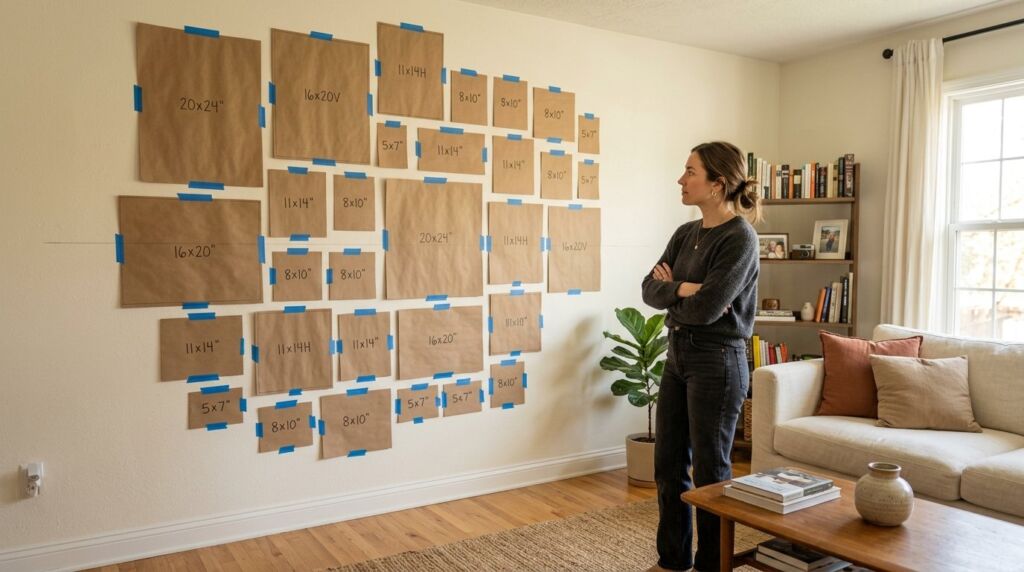
One of the most common gallery wall mistakes is hammering nails before planning the layout. Designers use brown kraft paper to make exact cutouts of each frame. Tape the cutouts on your wall with painter’s tape. Live with the arrangement for a day. Move things around until the spacing feels right. Only then put in real nails. This method costs nothing and saves you from filling dozens of extra holes later. Command strips also work on lighter frames under 8 pounds. I’ve seen people spend hours patching drywall because they skipped this planning step entirely. A roll of kraft paper and painter’s tape takes 20 minutes to set up and saves a weekend of frustration.
3. Grid Layout on Budget
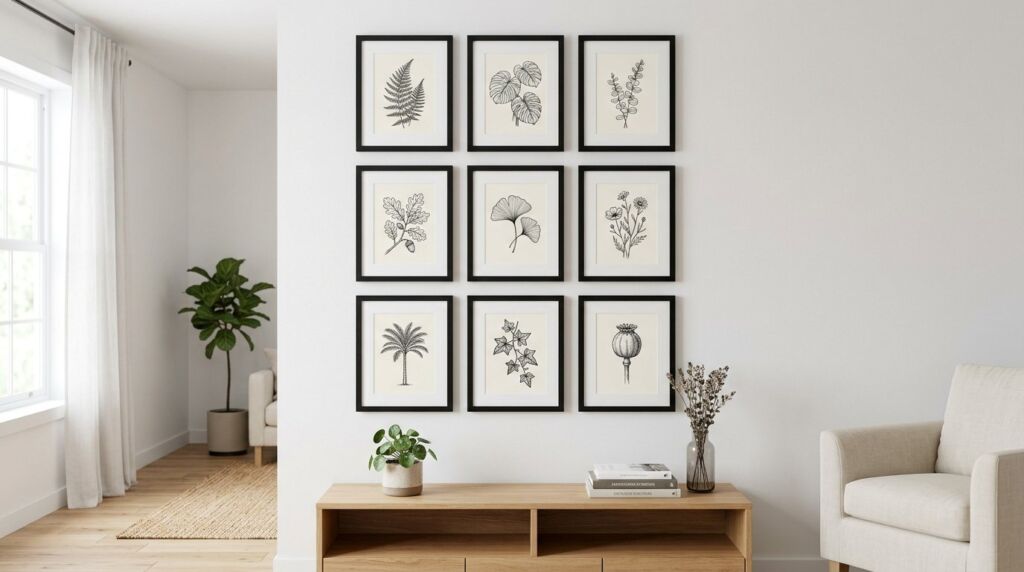
A grid arrangement is the easiest way to make a wall feel structured and intentional. Choose one frame size (5×7 or 8×10 works best) and repeat it in rows and columns with equal spacing. IKEA’s RIBBA frame in 5×7 costs $3.99 each. A 3×3 grid of nine frames costs about $36 and fills a large wall section beautifully. Spacing is everything here. Three inches between frames is the standard. Use a level and a tape measure for every row. The grid works especially well in white wall living room decor because the clean lines stand out crisply against a neutral background. Uneven spacing is the most common beginner mistake. Even a half-inch difference makes the whole grid look accidental.
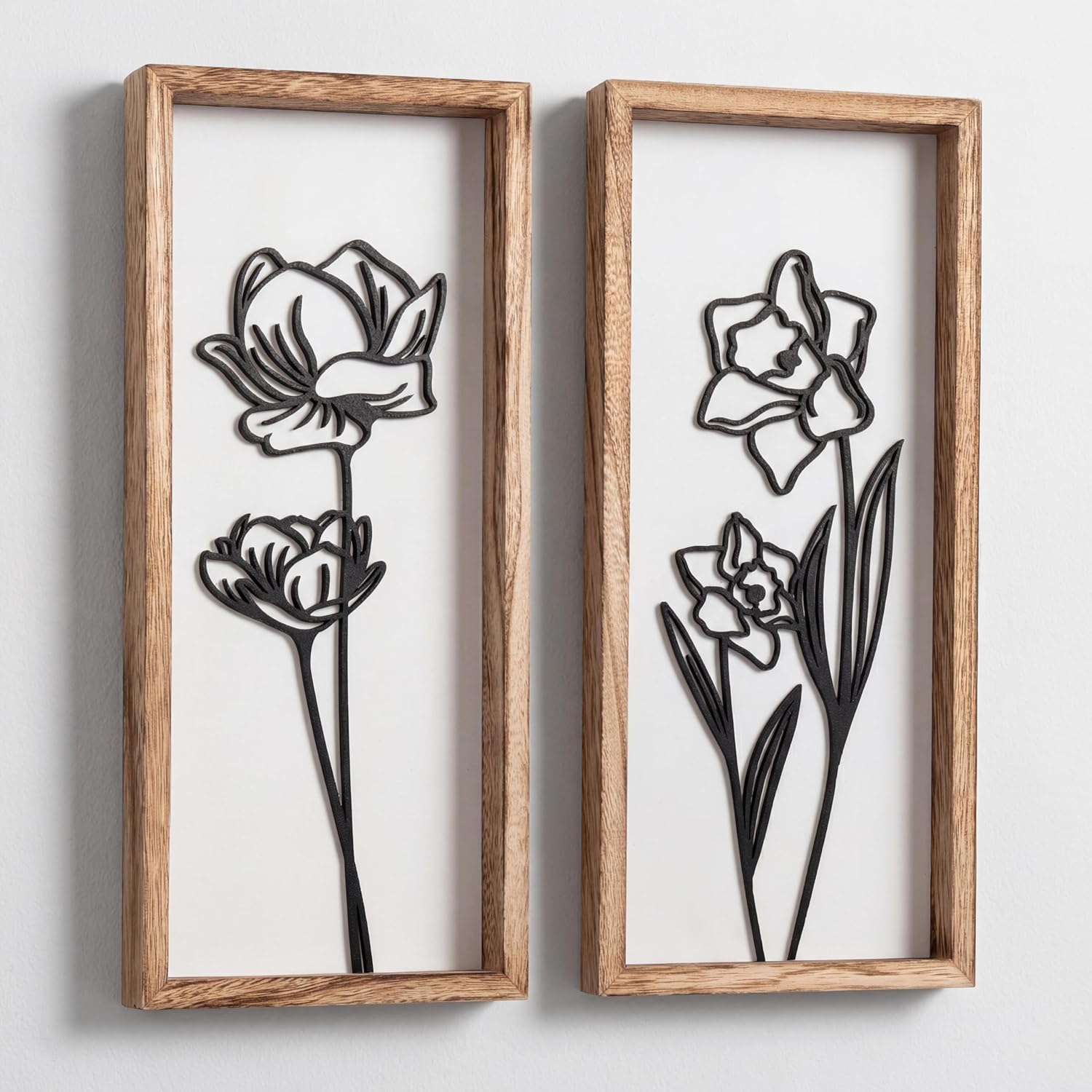
Tide and Tales 3D Wooden Floral Wall Art – 2-Piece Boho Botanical Decor
Enhance your home with this striking 2-piece set of 3D wooden floral wall art. Featuring elegant raised cutouts in a minimalist black and white palette, these lightweight frames add texture and depth to any room. Perfectly gift-boxed, they are ready to elevate your boho, farmhouse, or modern decor effortlessly.
- ✓ Unique 3D Raised Floral Cutout Design
- ✓ Versatile Minimalist Black and White Aesthetic
- ✓ Durable Lightweight Wooden Frame Construction
- ✓ Ready-to-Hang with Included Hardware
- ✓ Elegant Gift-Ready Premium Packaging
4. Free Printable Art
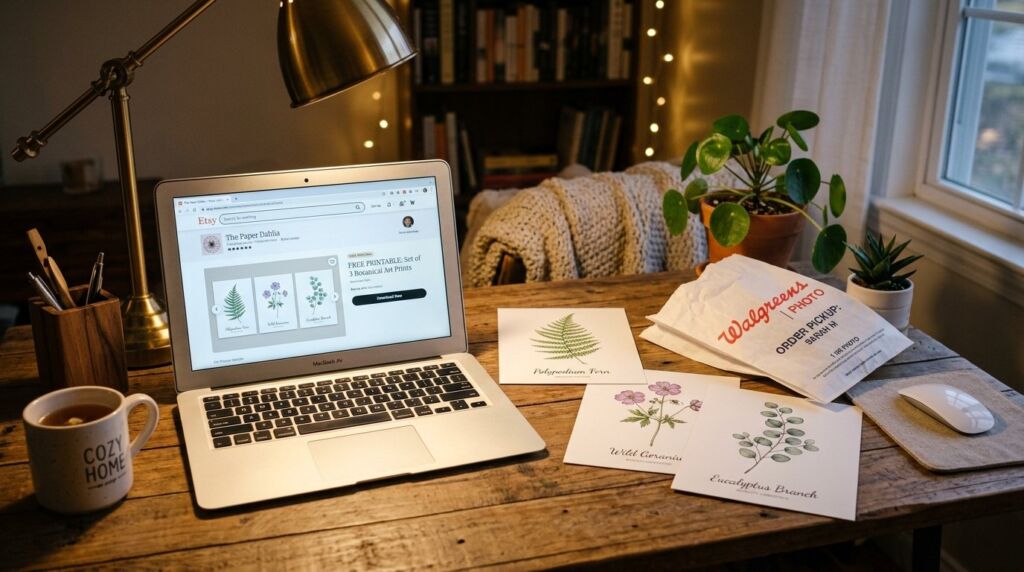
Art does not need to cost money. Canva, Unsplash, and Etsy’s free downloads section offer thousands of printable designs for $0. A standard 8×10 print at Walgreens or Costco costs $0.29 to $0.99. Botanical prints, abstract shapes, vintage maps, and minimalist line drawings all print beautifully. For a mid century modern living room photos aesthetic, search for “mid century geometric printable” on Etsy. Many sellers offer free samples alongside paid bundles. I’ve printed 12 art pieces for under $8 total this way. The only mistake to avoid is using standard copy paper, which looks thin and cheap. Use cardstock or have the prints made at a photo lab for a professional finish that rivals anything sold in a store.
5. Spray Paint Unification
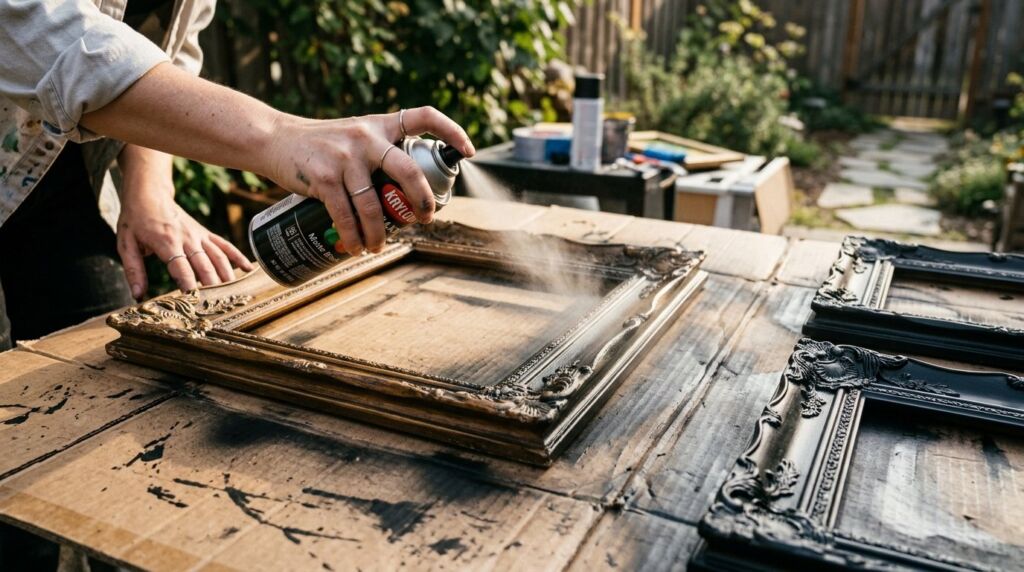
Mismatched frames look chaotic in their original colors but completely cohesive after one coat of spray paint. Rust-Oleum 2X Coverage in Matte Black or Gold Metallic costs $6 to $8 per can at Home Depot and covers 8 to 12 frames per can. Lay frames flat on cardboard outside. Apply two light coats from 12 inches away. Let dry 30 minutes between coats. This is the single fastest transformation in photo frame ideas on wall styling. A $1 thrift store frame becomes indistinguishable from a $30 boutique piece after painting. The most common mistake is applying one thick coat, which causes drips and streaky coverage. Thin coats always produce a cleaner, more professional result.
6. Black and White Photo Set
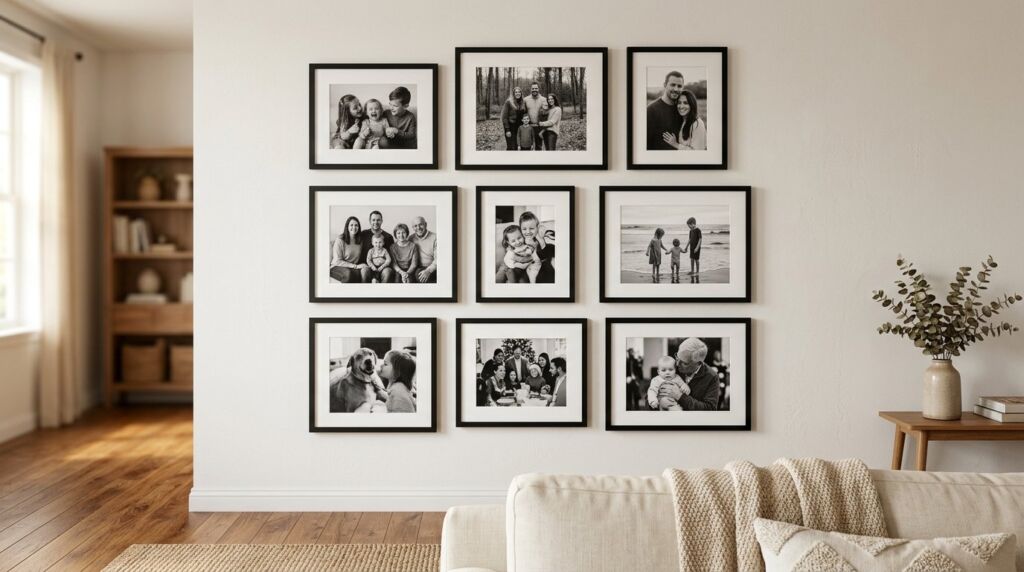
A black-and-white photo collection is one of the most timeless approaches to wall decor living room pictures. Family photos, travel shots, or even stock images converted to grayscale all work together visually regardless of subject matter. Convert any color photo to black and white in free apps like Snapseed or Lightroom Mobile in under 30 seconds. Print them all in the same size for consistency (5×7 or 8×10). Place them in simple black or white frames. The monochrome palette unifies the arrangement even when frames vary slightly in style. I’ve noticed this approach works across almost every decor style, from farmhouse to contemporary. It also photographs beautifully for social media, which matters if you share home content online.
7. Ledge Shelf Display
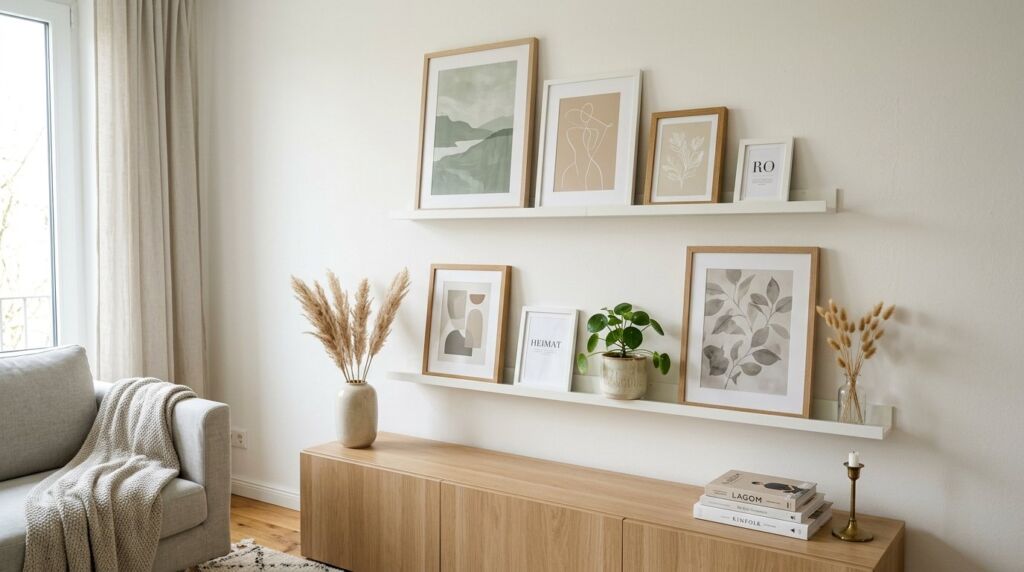
A picture ledge shelf lets you layer frames, swap art freely, and avoid dozens of nail holes. IKEA’s MOSSLANDA picture ledge costs $14.99 for a 55-inch version. One ledge takes only two screws. After installation, you can rearrange as many frames as you want with zero new holes. This works especially well for small gallery decor ideas in apartments where landlords restrict wall damage. Lean frames of different heights against each other for visual depth. Add a small plant or decorative object between frames to create texture. The biggest mistake people make with ledges is overcrowding them. Leave breathing room between pieces. The frames with space around them draw more attention than ones packed tightly together.
8. Mix of Art and Objects
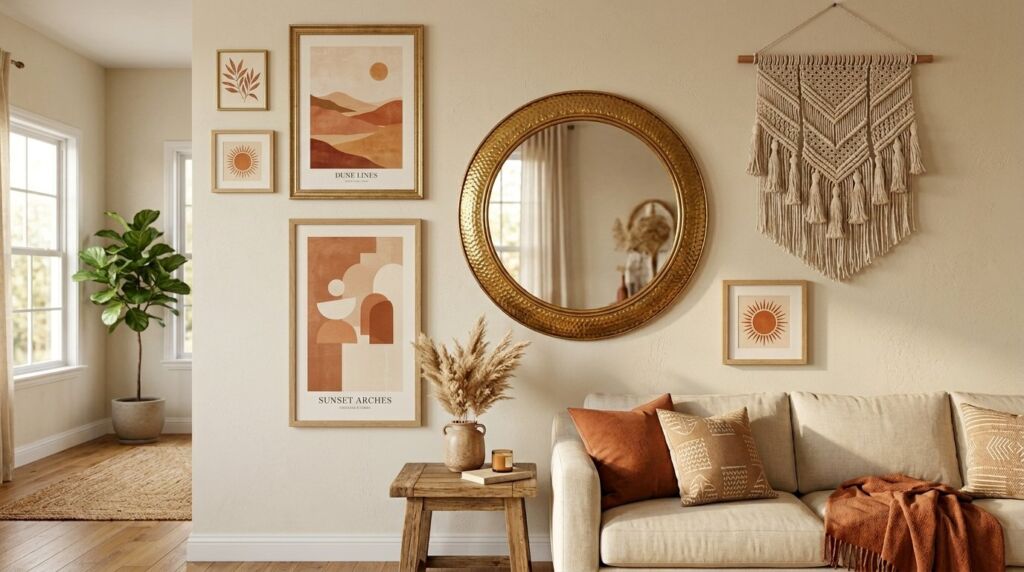
A great gallery arrangement includes more than just frames. Small mirrors, woven wall hangings, sculptural letters, and decorative clocks break up the visual rhythm and add real dimension. A round mirror placed within a grouping of rectangular frames creates an immediate focal point. HomeGoods and TJ Maxx frequently carry 8-inch round mirrors for $7 to $12. Hang the mirror at eye level as your centerpiece and build the frame arrangement outward from it. This works beautifully for arts on wall displays that feel personal rather than store-bought. The mistake most people make is treating the arrangement as frames only. Objects give a wall personality. Without them, even a beautiful set of prints can look flat and two-dimensional.
9. Oversized Anchor Piece
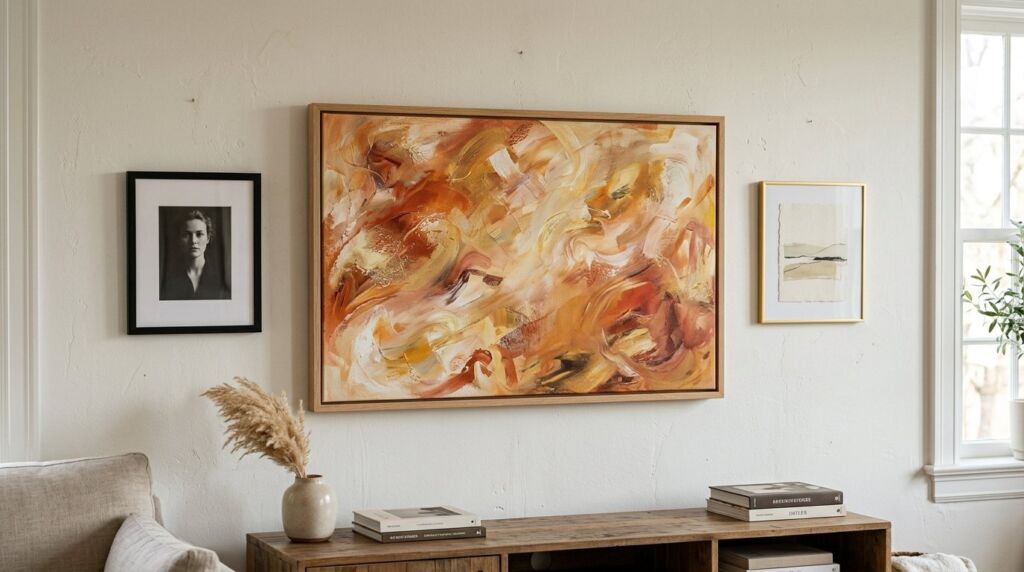
Every strong gallery wall starts with one dominant piece, typically 18×24 inches or larger. This anchor does not need to be expensive. Canvas prints at Canvaspop or Nations Photo Lab start at $25 to $35 for a 16×20. Upload a personal photo, a bold graphic, or a family portrait. Hang this piece first, slightly off-center from the wall’s middle. Build smaller frames and objects around it asymmetrically. The anchor creates visual weight that organizes everything else in the arrangement. I’ve seen gallery walls with 20 small frames that still look unfinished because there’s no dominant piece pulling them together. One strong anchor transforms the entire composition immediately.
10. Corner Wall Fill Method
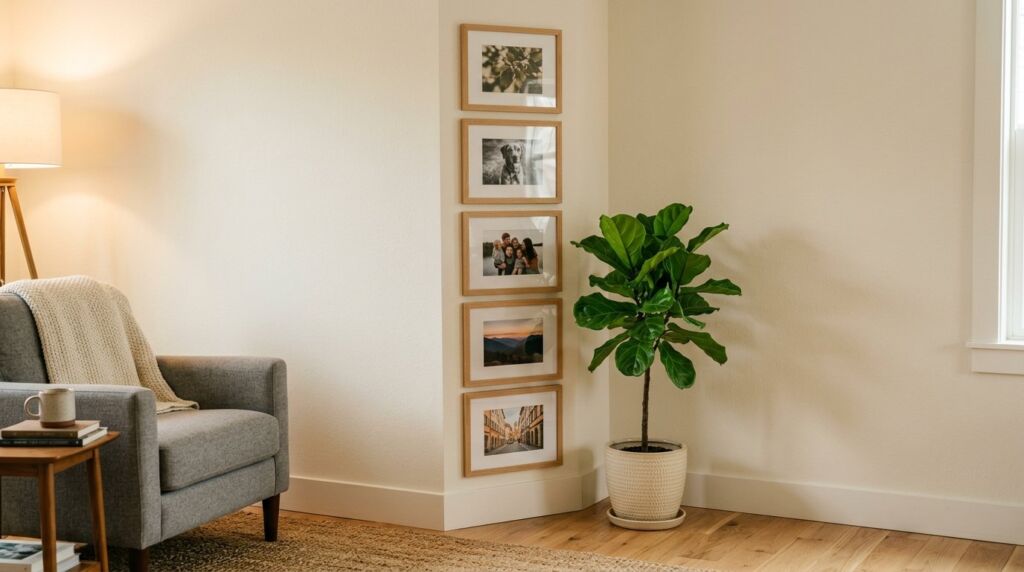
Blank corners between two walls are often wasted space. A vertical stack of three to five frames in a corner, from floor to approximately five feet high, fills dead space and makes a room feel fully intentional. Use tall narrow frames like 4×6 oriented vertically. Stack them with three to four inches of space between each. The corner stack works in hallways, entryways, and beside sofas. For a picture frame wall living room setup, this corner method extends the main gallery wall naturally without requiring a major rearrangement. Keep all corner frames in one consistent finish to differentiate the corner grouping from the main display. This small detail makes both arrangements look more deliberate and designed.
11. Floating Frame Effect
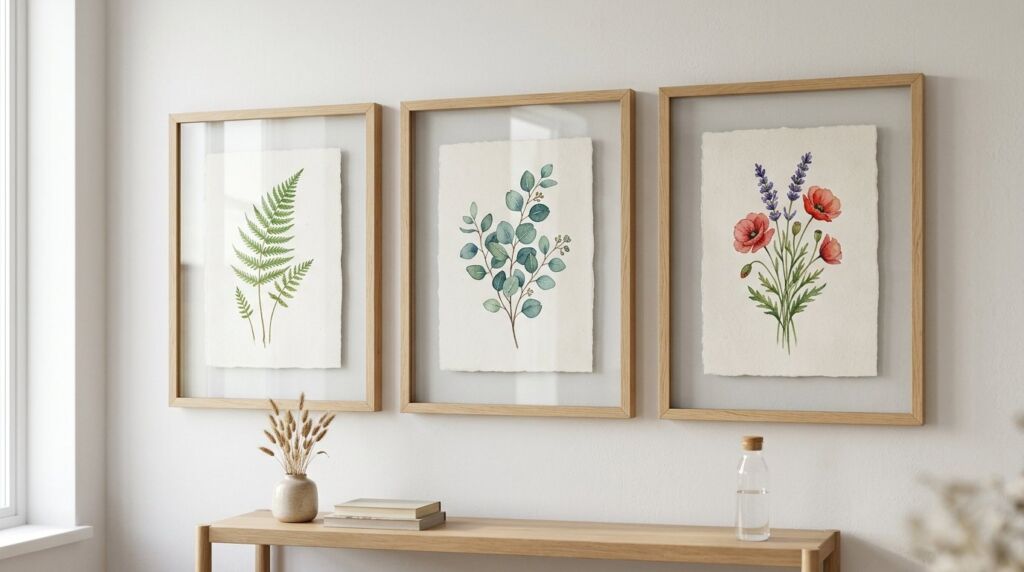
Floating frames give artwork the appearance of hovering inside the frame rather than being pressed behind a mat. IKEA’s HOVSTA and RIBBA frames both offer this look. Artwork sits flush against clear glass with visible space on all sides. This style works beautifully for watercolor prints, botanical illustrations, and vintage photography. The floating effect adds a gallery-level finish without gallery-level pricing. A floating frame at IKEA runs $7 to $15 depending on size. At an actual art gallery shop, the same look costs $60 to $120. For wall decor with frames that feels curated and considered, swapping just two or three standard frames for floating versions shifts the entire arrangement’s quality level noticeably.
12. Vintage Print Grouping
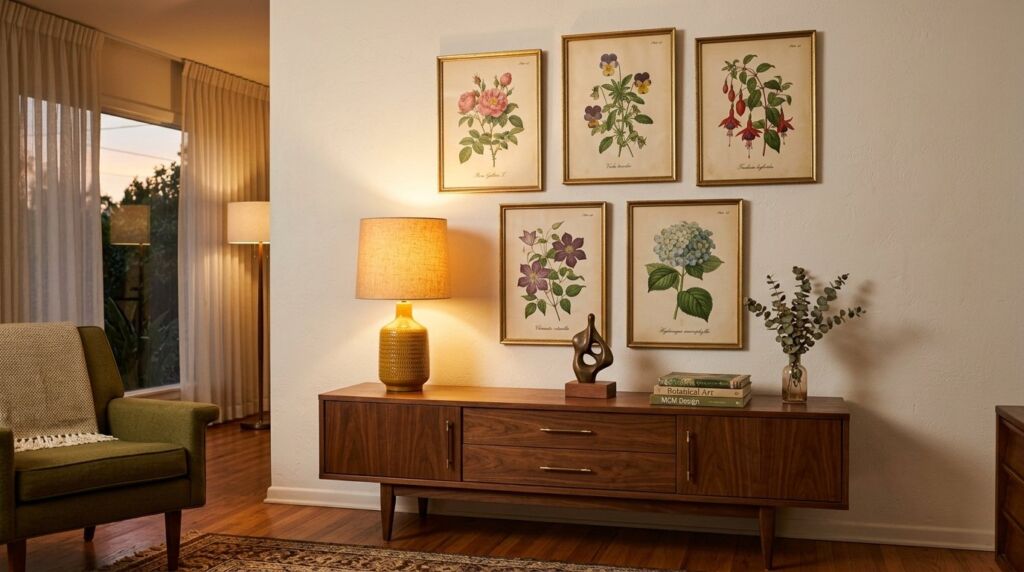
Vintage prints add warmth and character that modern art often lacks. eBay, Etsy, and local antique markets sell original vintage botanical prints, travel posters, and nature illustrations from the 1940s through 1970s. Prices range from $3 for digital downloads to $25 for original prints. A grouping of five related vintage prints (all botanicals, all maps, or all bird illustrations) feels cohesive and collected rather than random. Frame them in simple thin wood or gold frames to preserve the vintage feeling without tipping into dated territory. For mid century modern living room photos styling, look specifically for vintage geometric art or mid century advertising prints. These pair naturally with walnut furniture and warm-toned accent lighting for a complete look.
13. Symmetrical Arrangement
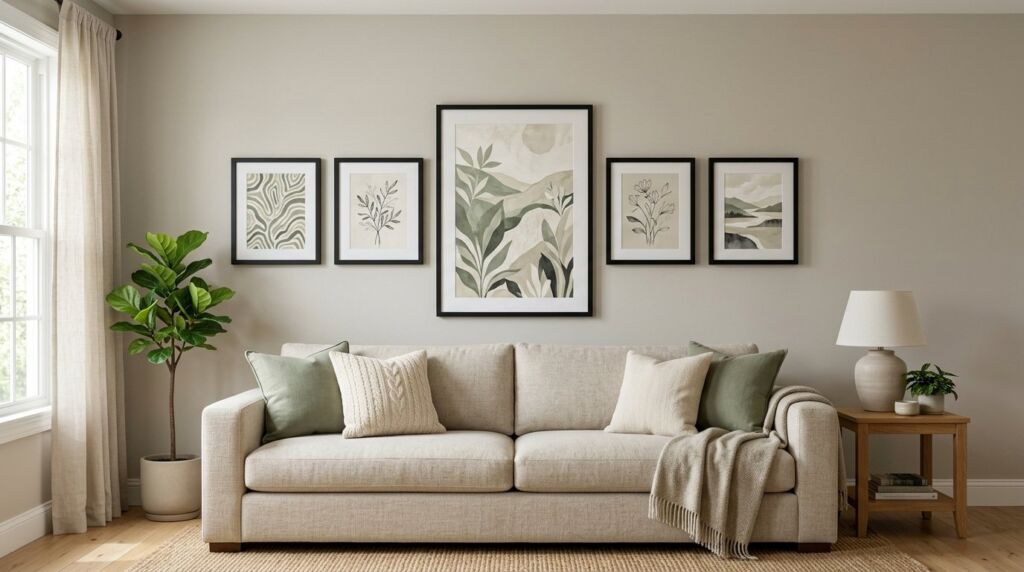
Symmetry is the most beginner-friendly gallery wall layout. Choose two identical or very similar frames and hang one on each side of a central anchor point such as a clock, a large print, or a window. Extend outward symmetrically, mirroring the same frame placement on both sides. This layout requires no design background and looks polished in almost every room style. A symmetrical arrangement above a sofa with a large central print flanked by four matching 5×7 frames takes about 45 minutes to hang and costs $50 to $80 total with IKEA or Amazon basics frames. The risk with strict symmetry is that it can feel stiff. Adding one slightly different piece in color or texture keeps the arrangement from feeling too formal.
14. Washi Tape Frame Alternative
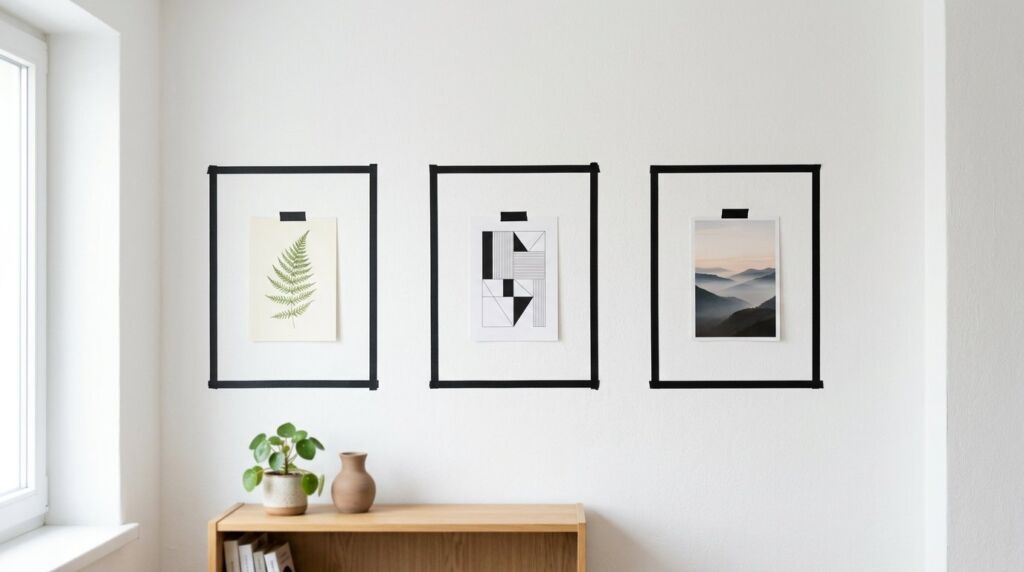
Washi tape creates the outline of a frame directly on the wall without any physical frame at all. Use thin black washi tape to outline a rectangle on a painted wall and hang a print inside the tape border using a single small nail or strip. This works well for renters who cannot use many nails and for anyone wanting to experiment with layouts before committing. A roll of thin black washi tape costs about $3. You can create a full display of eight to ten tape frames for under $12. The limitation is durability. Washi tape borders work best in low-traffic rooms and as temporary displays. For a permanent solution, physical frames are always the better choice. For testing small gallery decor ideas on a zero budget, washi tape is unbeaten.
15. White Mat Upgrade
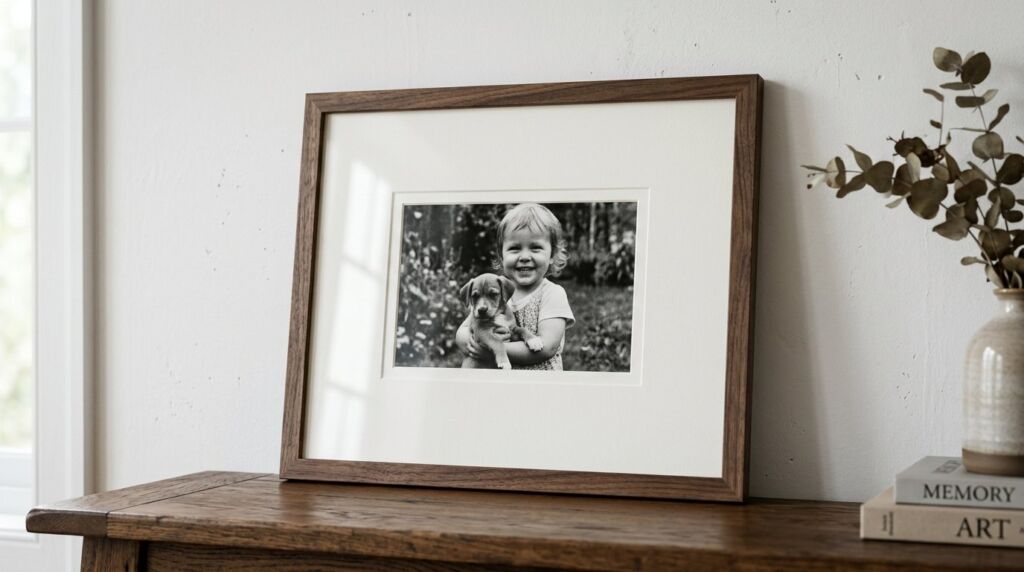
A simple white mat inside any frame makes the artwork inside look more important and more expensive. A standard 8×10 frame with a 5×7 opening mat transforms an ordinary photo into something that resembles a museum-quality piece. Pre-cut white mats are available at Hobby Lobby for $3 to $6 each, or in bulk packs of ten on Amazon for about $18 to $22. Mats also let you use smaller prints in larger frames, stretching your art collection further. I’ve placed 4×6 prints inside 11×14 frames with wide white mats and had guests assume the prints were professionally matted and framed. The mat does most of the visual work. The most common mistake is choosing colored mats, which distract from the art and complicate the palette.
16. Warm Lighting Placement
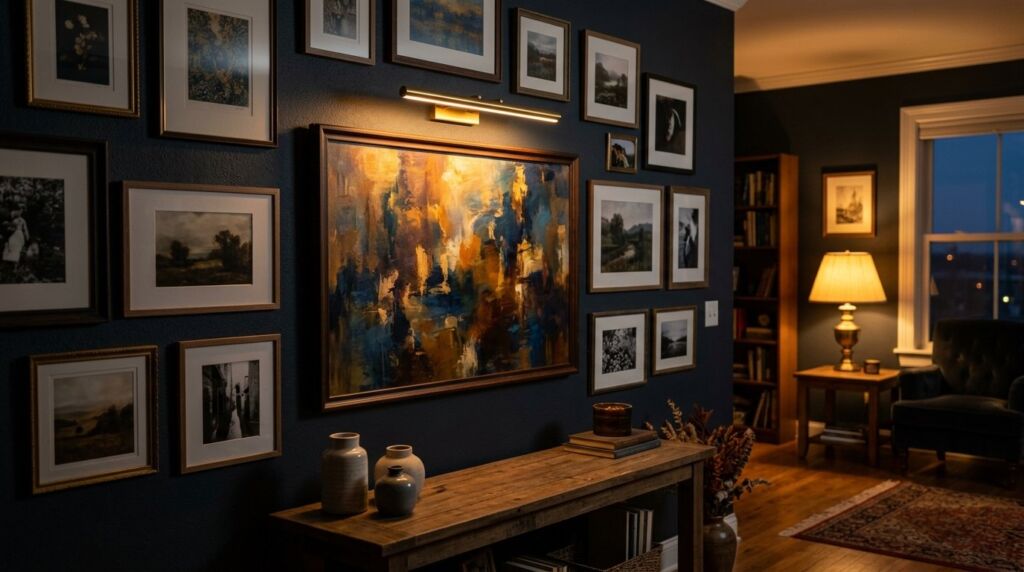
Gallery wall arrangements live or die by their lighting. A warm-toned picture light or clip-on spotlight changes how art reads from across the room entirely. Battery-powered LED picture lights on Amazon cost $15 to $30 and attach to the back of a frame with no wiring required. Position the light to wash down the art at a 30-degree angle. This is standard practice in actual galleries for a good reason. It adds depth and shadow that makes a flat print look dimensional. For white wall living room decor specifically, warm lighting (2700 to 3000 Kelvin) prevents the arrangement from looking cold or clinical. Cool-tone lighting washes out white walls and light-colored art, making the whole display feel flat.
17. Family Milestone Timeline
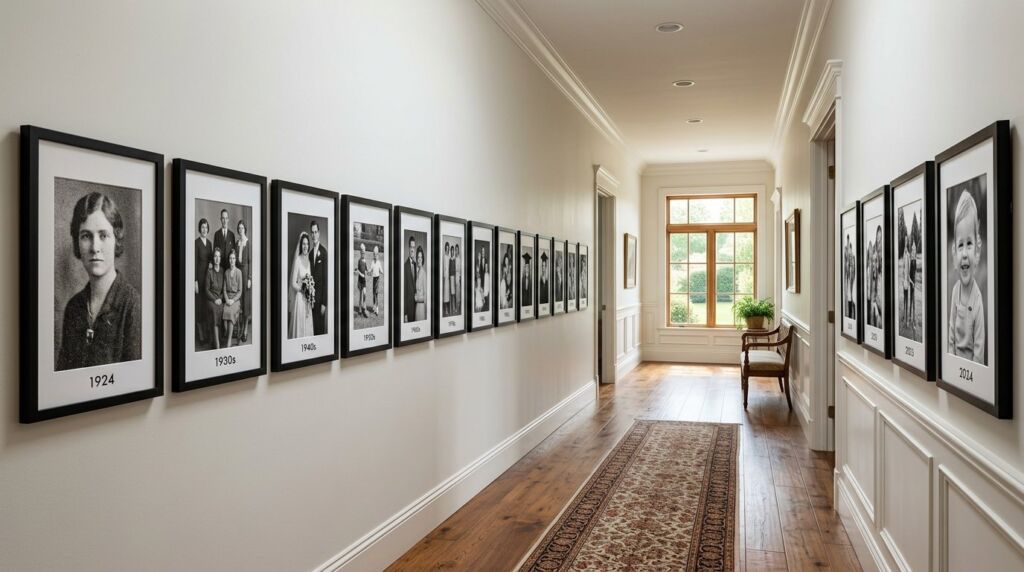
A chronological arrangement of family photos, one per year or one per major life event, tells a personal story across your wall. Start with the oldest photo on the left and move forward in time to the right. Use matching black frames throughout for visual consistency. This works especially well in longer hallways or wide living room walls. The timeline arrangement gives guests something specific to engage with and makes the wall feel deeply personal rather than purely decorative. It also gives you a reason to keep the wall current, adding a new frame each year. The main limitation is that it requires a long horizontal wall space of at minimum eight feet to feel properly spaced and legible.
18. Bookshelf Art Integration
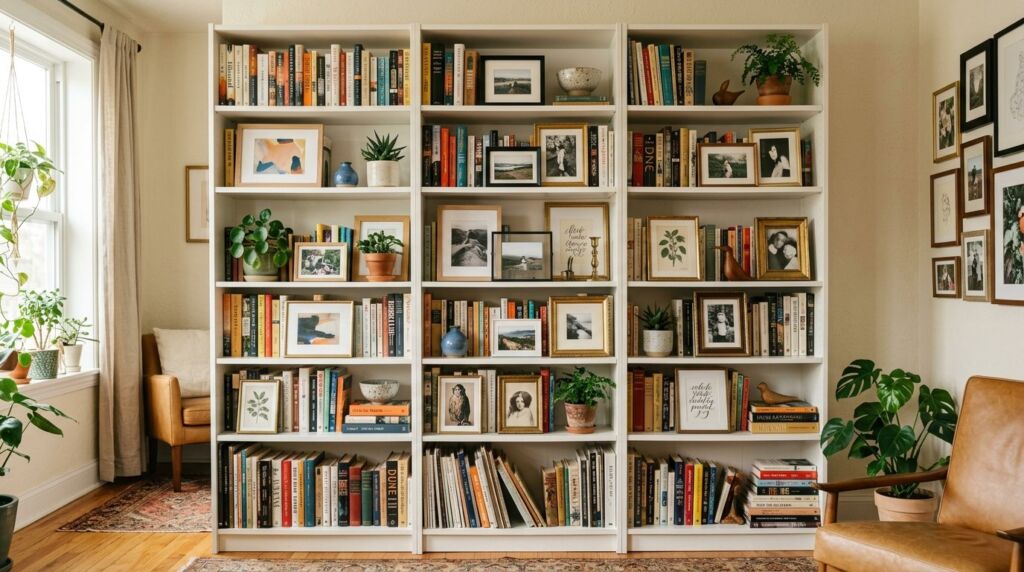
Instead of a dedicated wall area, you can integrate framed art directly into a bookshelf arrangement. Lean frames against books rather than hanging them. This works especially well for photo frame ideas on wall-adjacent displays. A mix of small frames, books, plants, and decorative objects creates an organic gallery effect without a single nail. This suits renters perfectly and makes rearranging effortless since nothing is fixed in place. IKEA BILLY shelves at $69 to $89 provide enough surface area for 15 to 20 framed pieces mixed with other objects. The visual effect rivals a traditional hanging gallery when the frames vary in height and the objects between them add depth and texture throughout the shelving.
19. Neutral Frame Palette
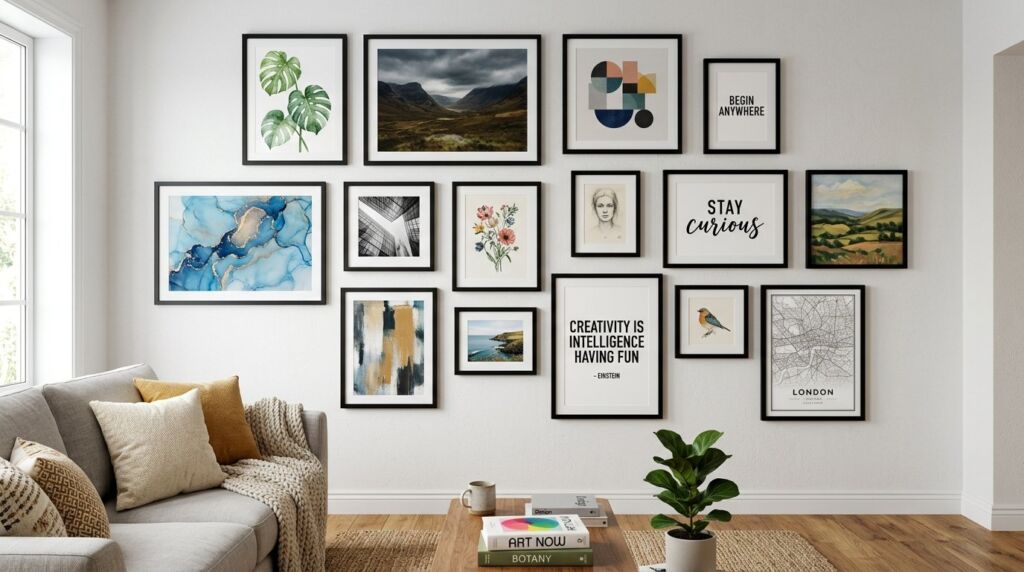
Limiting your frame colors to two or three neutral tones (black, white, and natural wood, for example) makes mixed frames on a wall look curated rather than chaotic. You can mix shapes, sizes, and art styles freely when the frame finish stays consistent. The eye reads a consistent frame color as a unifying element and forgives differences in everything else. This is the primary trick designers use for gallery walls with varied content. I’ve arranged 15 different frame sizes and styles, all in matte black, and the result looks completely deliberate. The common mistake is mixing metallic tones, for instance silver and gold together. The two metallics compete visually and make the whole arrangement feel unresolved and accidental.
20. Seasonal Swap System
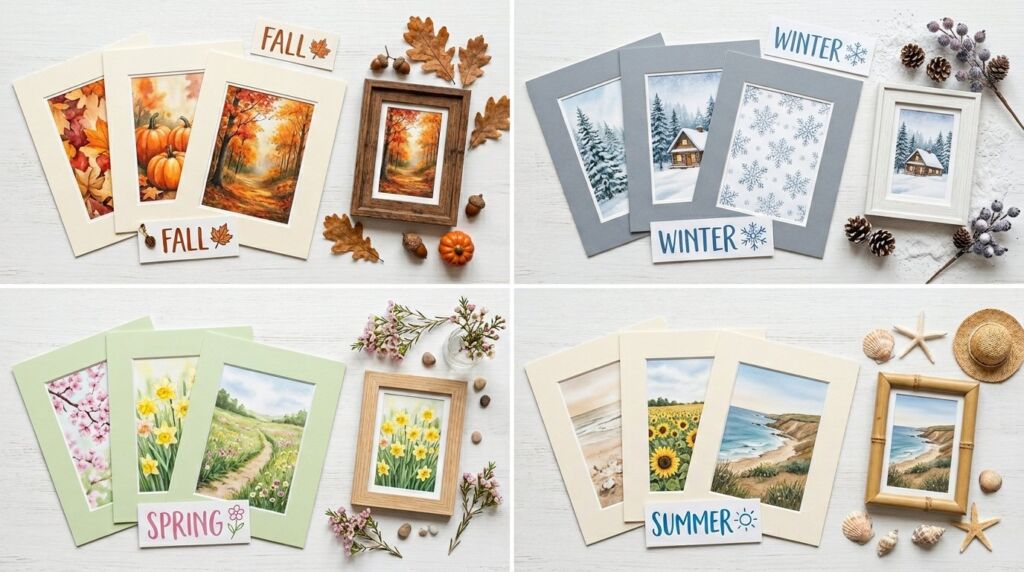
Designing your gallery wall for easy swapping makes the whole room feel fresh through the year without buying new art. Use frames with front-loading or easy-open backs. Design your arrangement so 30 to 40 percent of the frames can be swapped seasonally while the anchor pieces stay fixed. In fall, swap in warm-toned prints. In winter, move to cool blues and whites. Spring calls for botanical prints. This seasonal rotation costs nothing after the initial frame setup since you are rotating art you already own. The practical benefit is that your living room feels current without requiring a renovation. Most people dramatically underestimate how much rotating just three or four pieces refreshes the overall feel of an entire wall arrangement.
21. Oversized Letter Art
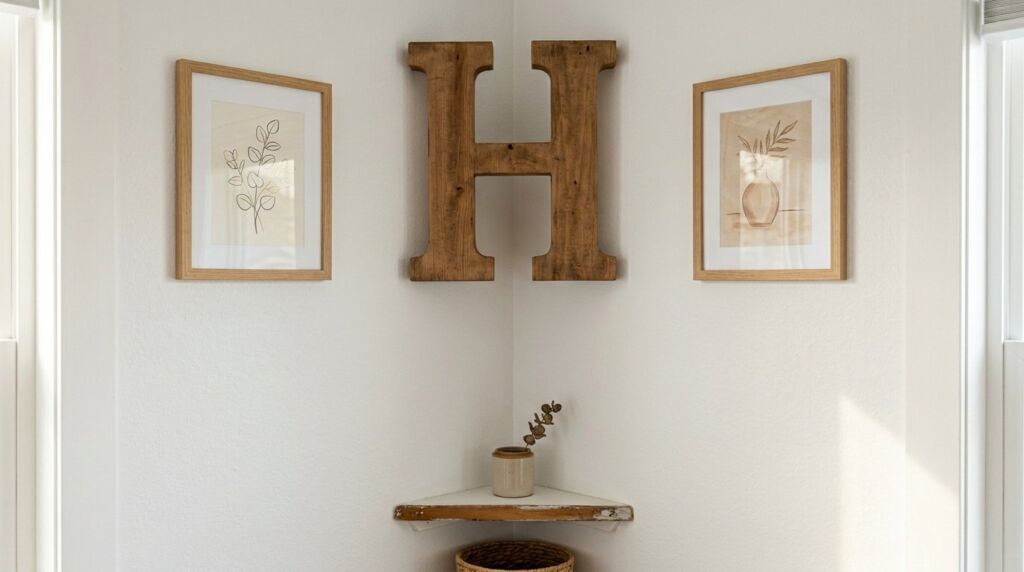
Large wooden or metal letters from Hobby Lobby, Michaels, or Amazon add a personal element to any wall arrangement. A 12-inch unpainted wooden letter costs $8 to $15. Paint or stain it to match your frame palette. Incorporate a family initial, a meaningful number, or a short word like “home” into the upper portion of your gallery arrangement. Letters and numbers add vertical height to a composition without adding heavy visual weight. They also photograph well and give the wall a personalized quality that purchased art cannot replicate. For arts on wall displays with strong personal character, a single large letter often does more visual work than three additional framed prints combined.
22. Salon Style Dense Fill
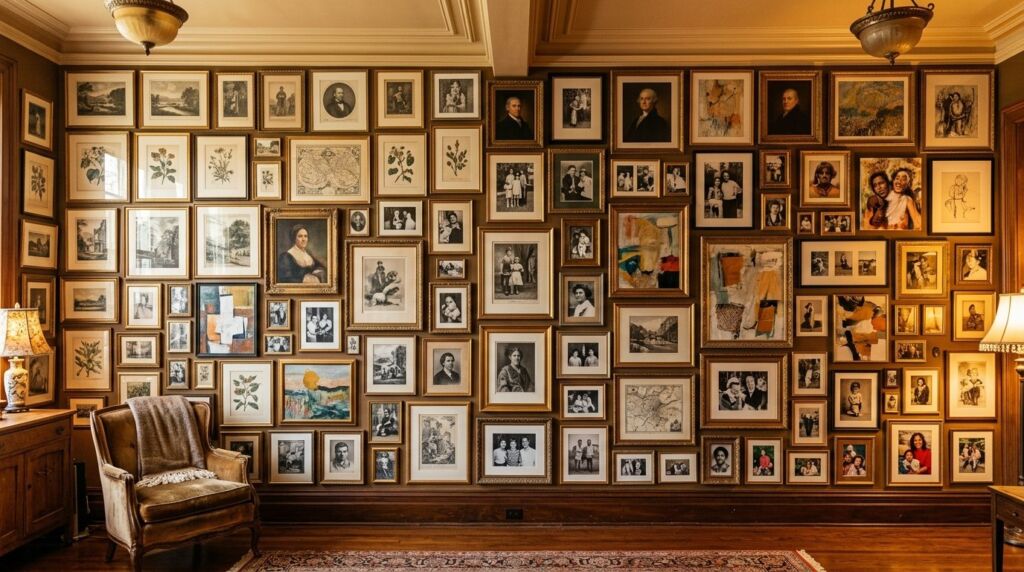
The salon-style arrangement fills an entire wall floor to ceiling with frames of all sizes and styles with minimal spacing between pieces. This was the original gallery wall approach, inspired by 19th century European art salons. It requires more frames and more art than a standard arrangement but costs less per piece because you’re mixing very inexpensive frames with occasional statement ones. The density of a salon-style wall is forgiving since slight misalignment or imperfect hanging becomes essentially invisible. Start from the center and work outward, placing larger frames at eye level and smaller pieces above and below. For wall decor living room pictures at scale, this is the most dramatic and impressive result achievable on a budget of $100 to $150.
23. Artistic Negative Space
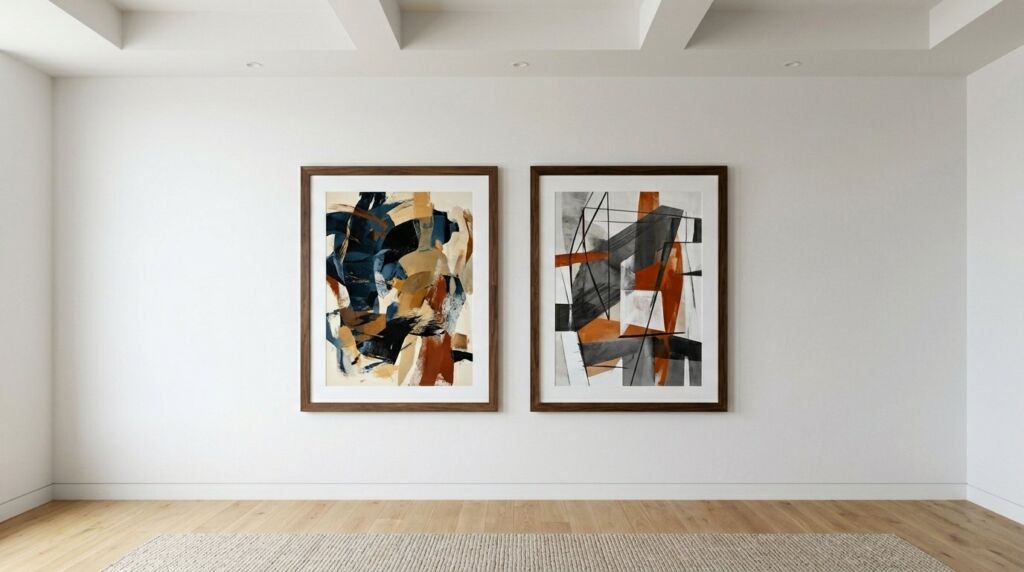
Here’s what most galleries know that home decorators miss: the empty space around art is part of the art itself. Leaving deliberate gaps in your gallery arrangement, placing one or two frames with significant breathing room around them, draws more attention to those pieces than packing the wall completely full. A single 24×36 canvas on an otherwise empty wall commands more attention than 20 small frames competing for the same space. Use negative space intentionally at the end of an arrangement or as a deliberate pause within a dense cluster. This mindset shift changes how you plan every future wall. The wall is not a problem to fill. It is a surface to compose thoughtfully.
Frequently Asked Questions
How do I start a gallery wall as a beginner?
Start with three frames. Most people overplan and buy 15 frames before knowing if they like the arrangement. Choose three frames in complementary sizes: one large (11×14) and two smaller (5×7 or 8×10). Hang the large one first at eye level, approximately 57 inches from floor to center. Place the two smaller frames around it with three inches of space between them. Live with it for a week. Add more pieces only after the starting placement feels right. Budget approximately $15 to $30 for a starter set of three frames, then build from there.
What is the best spacing between gallery wall frames?
Three inches is the standard spacing for most gallery walls. It creates visual connection between pieces without crowding. For larger walls or bold art, four to five inches adds breathing room. For a salon-style dense arrangement, one to two inches creates the intentional packed look. Consistent spacing matters more than the specific number you choose. Uneven spacing reads as a mistake. Even spacing reads as intentional and designed.
Can I create a gallery wall without making holes in the wall?
Yes. Picture ledge shelves (IKEA MOSSLANDA, $14.99) require only two screws and let you lean and swap frames freely afterward. Command strips hold frames up to 16 pounds without nails. Washi tape outlines work for very lightweight prints leaned against the tape. For heavier pieces over 10 pounds, nails remain the most reliable option regardless of what Command strip packaging promises.
How many frames do I need for a gallery wall?
A starter gallery wall needs five to seven pieces. A medium arrangement for a sofa-width wall needs nine to thirteen pieces. A full salon-style display needs fifteen to twenty-five or more. The size of your wall matters more than a set number. A useful starting rule is one frame per square foot of intended wall space as a baseline density, then adjust based on your personal style preference.
What size should the biggest frame be?
The anchor frame should be at least 16×20 inches for a typical living room wall. For wider walls (10 feet or more), go to 20×24 or 24×36 inches. The anchor needs to be large enough to create clear visual hierarchy. A too-small anchor causes the arrangement to look like a cluster of equal pieces with no focal point to hold the eye.
Is it better to use all one frame color or mix frame colors?
Mixing frame finishes works when you limit yourself to two finishes maximum. Three or more frame finishes create visual noise that reads as disorganized. One finish across all frames creates the cleanest and most flexible result. One finish with one contrast accent (all black with one gold frame as an accent, for example) is the most commonly used designer formula and works in almost every room style.
How do I hang frames level without a laser level?
A tape measure and standard bubble level work fine. Measure up from the floor to your desired center height on both ends of your planned arrangement. Mark with a pencil. Use the bubble level to draw a light horizontal guideline. Hang all frames with their centers on this line. Erase pencil marks afterward. A laser level (about $20 to $30 at Home Depot) speeds the process considerably for large arrangements with many pieces.
What kind of art works best for a gallery wall?
Art that has a consistent theme, color family, or subject matter works best. Black-and-white photography, botanical prints, abstract shapes, or vintage illustrations each create internal cohesion. Mixing completely unrelated styles creates visual chaos. Pick one visual thread and let variety happen within it rather than across the entire collection.
How do I keep my gallery wall from looking cluttered?
Three things prevent clutter: consistent frame finish, adequate spacing of at least three inches, and a clear anchor piece. When all three are present, even 20 frames look organized. When any one of the three is missing, even five frames can look cluttered. Leaving sections of wall intentionally empty around key pieces also prevents the overwhelming feeling that a too-dense arrangement creates.
Can a gallery wall work in a small room?
A gallery wall in a small room works best on a single focused wall rather than spreading across multiple surfaces. Keep frames no larger than 8×10 in rooms under 150 square feet. A tight grouping of five to seven small frames above a sofa or console table creates the full gallery effect without overwhelming the space. Small gallery decor ideas scale down naturally when you choose your wall placement strategically.
Gallery walls are not about perfection. They are about personality. The 23 gallery wall living room hacks in this guide give you every practical tool to build something meaningful from scratch or completely transform a wall you have been walking past for months without touching. I’ve seen small changes, a single ledge, a coat of spray paint, five free printables in thrift store frames, turn completely ordinary walls into the most talked-about feature of a room. Save this post on Pinterest so you can come back to it when you’re ready to start. Try one idea this weekend. Share it with a friend whose blank wall needs some love. What you choose to put on your walls says something real about who you are. Make it count.