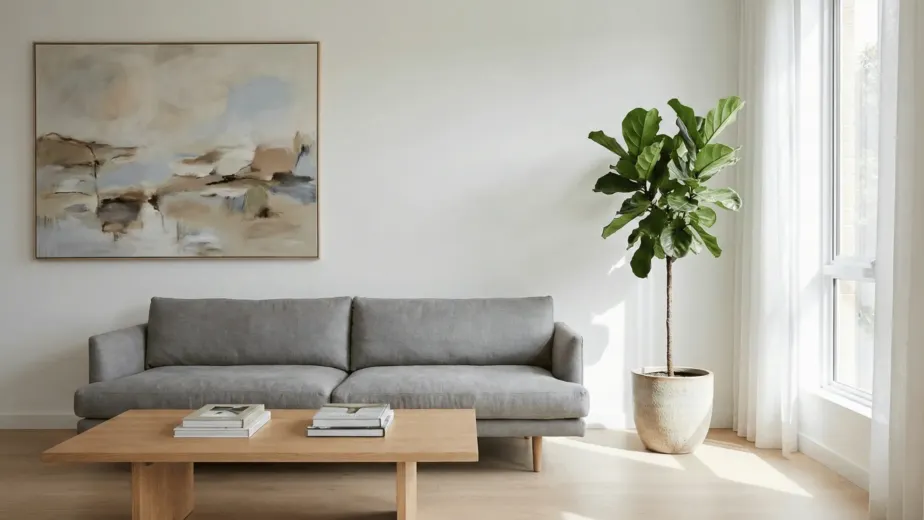
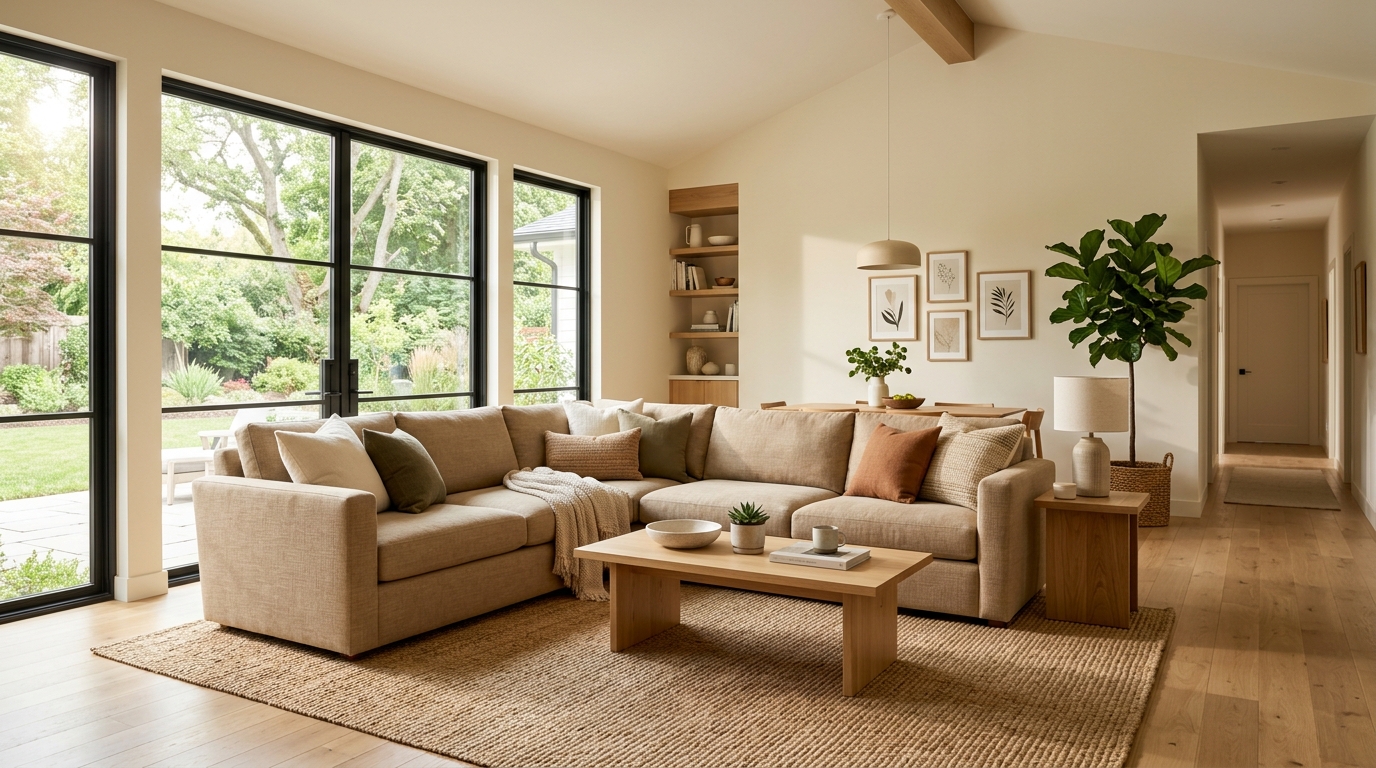
You finally bought a beautiful sectional and now it’s sitting there, pressed against the wall, making the whole room feel awkward and cramped. Sound familiar? The wrong furniture arrangement can make even a $4,000 sofa look cheap. The good news is that you don’t need a designer or a bigger room. You need a smarter layout. I’m sharing 23 proven couch arrangements that work in real homes, from tiny city apartments to wide-open family spaces, and most of them cost nothing to try.
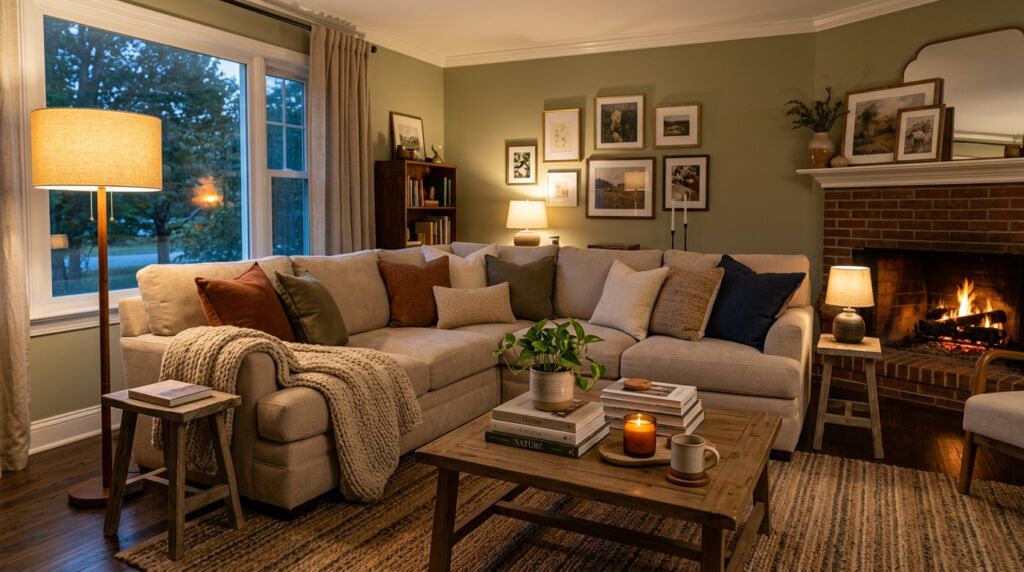
This article covers 23 real-world living room sofa configurations that work across different room sizes, shapes, and lifestyles. You will find ideas for tight spaces, open-plan rooms, family rooms, two-sofa setups that feel balanced without looking stiff, and U-shaped arrangements that wrap a room with genuine warmth. Each layout includes a specific action you can take today along with measurements, placement tips, and honest cost notes. I’ve left out impractical showroom-only configurations and focused entirely on setups that real people can pull off without a renovation budget.
1. Classic L-Shape Corner
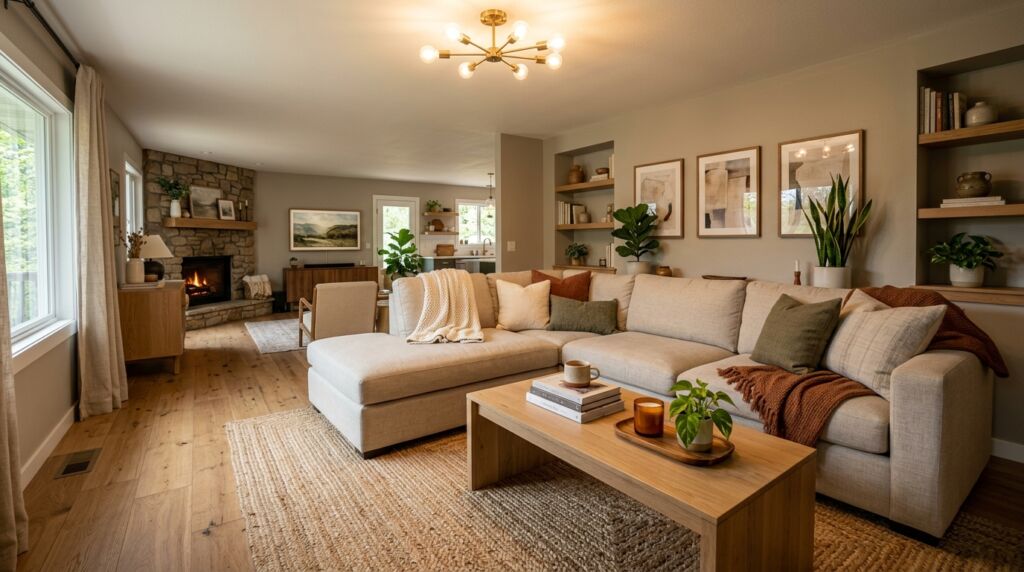
The L-shape is the most popular sofa configuration for good reason. It tucks neatly into a room corner, defines the seating zone clearly, and leaves the rest of the room open for traffic. I’ve seen this work beautifully in rooms as small as 12 by 14 feet. Place the longer arm along the largest wall and the shorter chaise extending toward the center of the room. This draws the eye inward and creates an inviting focal point. A coffee table measuring around 48 inches works well in the open space in front. Pottery Barn and IKEA both sell rectangular tables at this size starting around $250. One mistake people make is pushing the entire sofa flush against the wall, which kills any sense of depth and makes the room feel more like a waiting room than a living space.
2. Floating Center Island
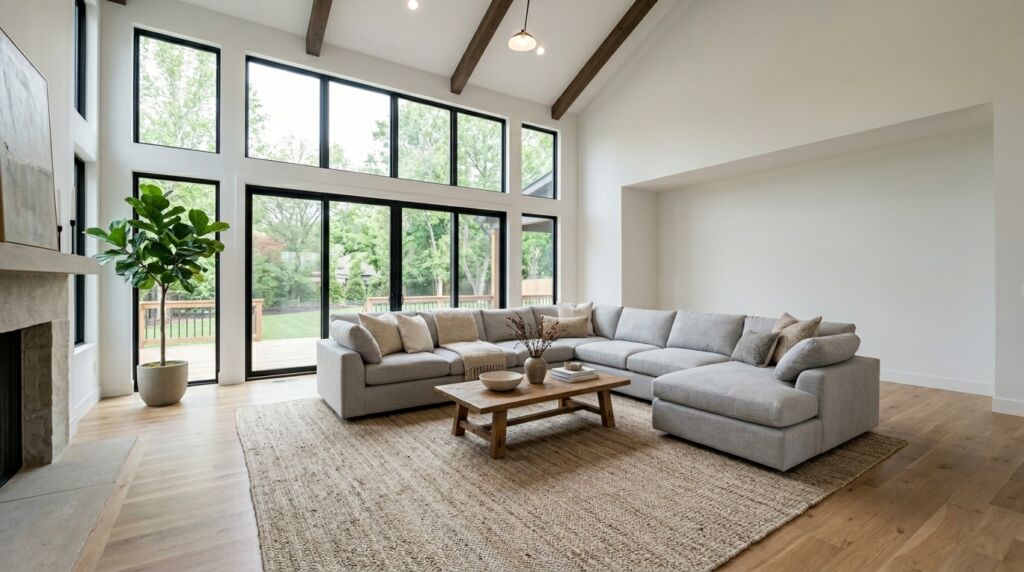
Pulling your furniture away from the wall is one of the most impactful things you can do in a living room. Floating a sofa toward the center of the room creates a defined seating island that feels intentional and design-forward. This works especially well in larger open-plan spaces where walls are far apart. Leave at least 18 inches between the back of the sofa and the wall behind it. A large jute rug from Ruggable, around 8 by 10 feet, helps anchor the floating arrangement and stops it from looking like furniture placed randomly. The most common mistake here is going too small with the rug. When the rug floats under only the coffee table without touching the sofa legs, the whole setup looks unmoored and unplanned no matter how beautiful the individual pieces are.
3. Two Sofas Face-Off
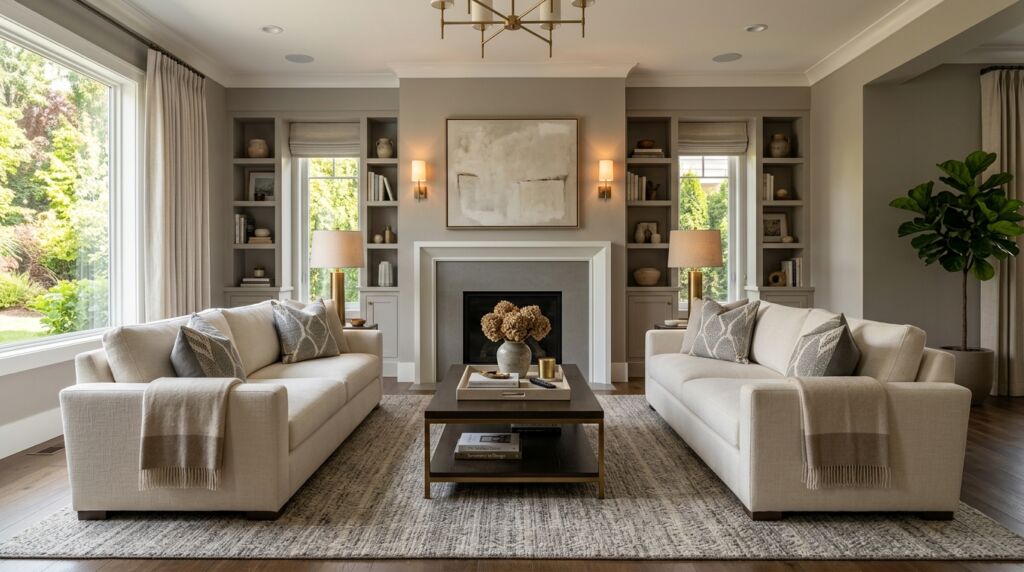
Using a two couches living room layout where sofas sit directly across from each other creates a formal, conversation-friendly space. This is a smart choice when you want plenty of seating without committing to one large sectional piece. Two identical sofas facing each other over a shared coffee table deliver the kind of symmetry that reads as polished and put-together. Keep the distance between the two sofas between 48 and 72 inches so conversation feels comfortable rather than shouted across the room. West Elm sells matching two-seat sofas starting at around $1,299 each. A round coffee table placed in the center keeps the flow loose and accessible. The mistake to avoid is buying two sofas of different depths, which creates visual imbalance even when the lengths appear to match from across the room.
4. U-Shape Around Coffee Table
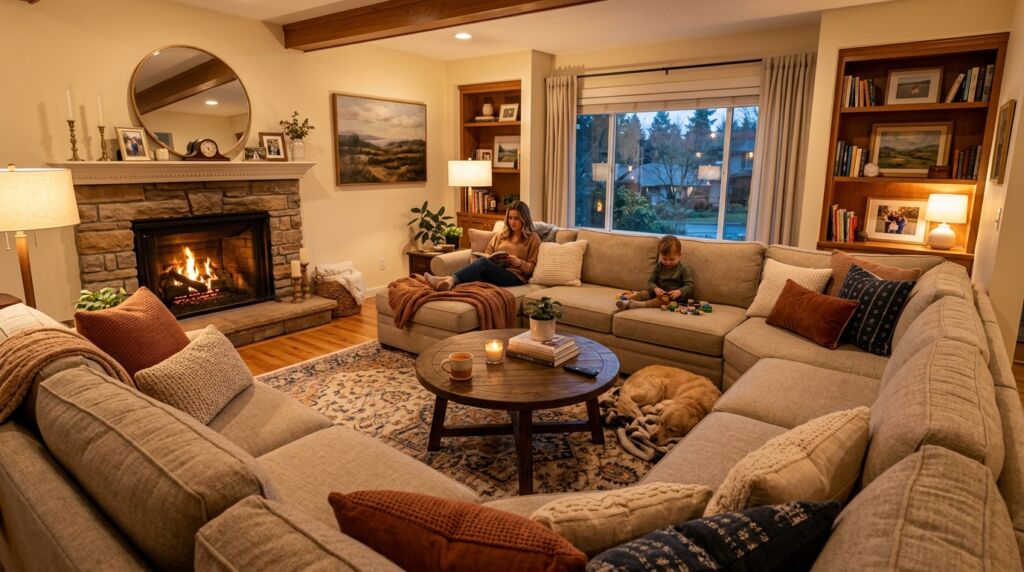
The U-shaped couch living room setup is the ultimate family gathering configuration. Three sides of seating wrap around a central coffee table, making it perfect for movie nights, game evenings, or simply accommodating everyone without anyone feeling like they got the bad seat. A U-shape typically requires a room that is at least 14 by 16 feet to feel comfortable rather than cramped. The coffee table should measure roughly half the total length of the sofa and sit directly in the center. Crate and Barrel offers modular sectionals that configure into U shapes starting around $3,500. Leave 16 to 18 inches of clearance between the sofa edge and the table edge for comfortable legroom. The most common mistake is choosing a coffee table that is too small, which makes the center of the arrangement look empty and unfinished.
5. Angled Wall Placement
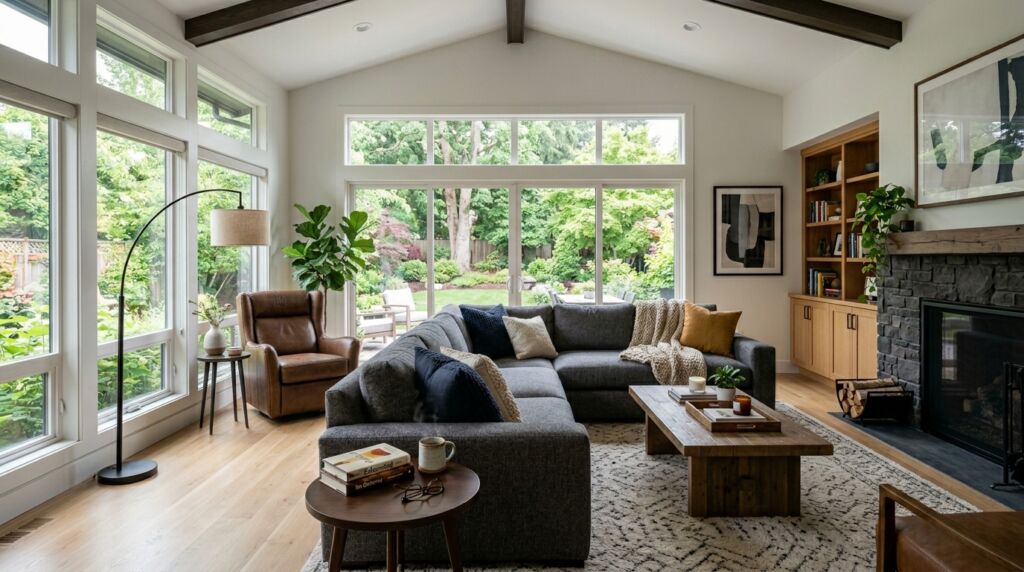
Not every room has a clean right-angle corner. Angled placements work well for rooms with awkward geometry, exposed beams, or walls that don’t meet at 90 degrees. Placing the end of a sectional at a 45-degree angle to the main wall softens the room’s shape and adds visual interest. This works particularly well in rooms where the fireplace or TV sits slightly off-center. An angled arrangement often creates a natural pocket of space that functions beautifully as a reading corner with a floor lamp and small side table. The SÖDERHAMN sectional from IKEA, available around $1,100, has separate modules that make angling much easier than fixed-frame sofas. The mistake here is forcing a strict 45-degree rule. Adjust the angle based on what faces toward the room’s main focal point, not based on geometry alone.
6. Open-Plan Divider Setup
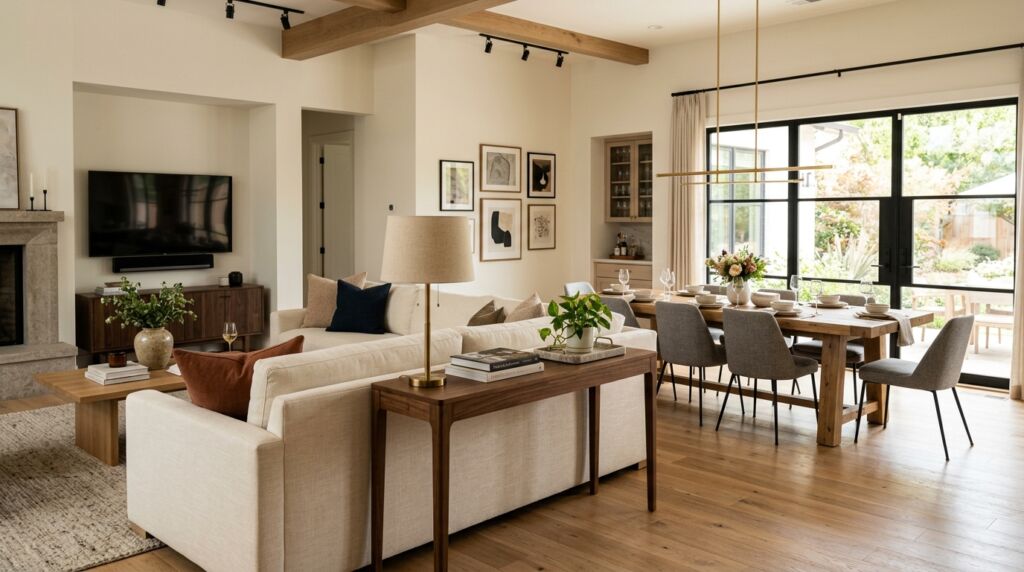
In open-plan homes where the living area connects directly to a dining space or kitchen, a sofa works beautifully as a room divider. Place the back of the sofa facing the dining area and you create a natural boundary without needing walls or shelving. The rear of the sofa acts as a subtle visual barrier separating zones while keeping the whole space feeling open and connected. A console table placed directly behind the sofa adds extra function, providing a spot for lamps, books, or small decorative objects. Wayfair sells console tables in the 52-inch range starting around $150. The biggest error people make is choosing a sofa with a very high back, which blocks light between zones and makes an open-plan space feel chopped into disconnected rooms.
7. Bay Window Alcove Fit
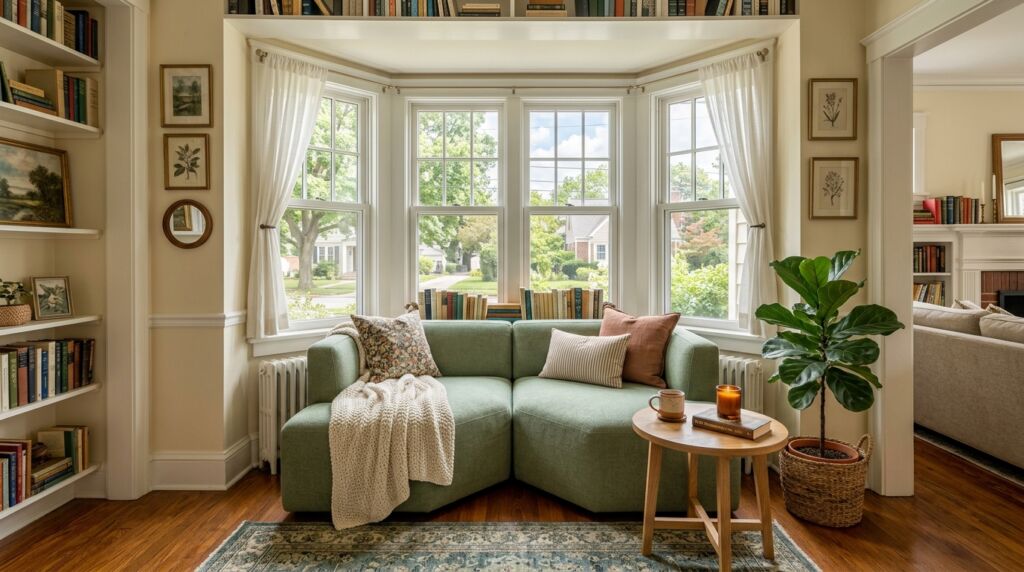
Bay windows are one of the most underused features in living rooms. Placing a compact sofa configuration inside or directly in front of a bay window alcove takes advantage of natural light and creates a cozy reading nook effect within the larger seating zone. Measure the bay’s width carefully before you shop. Most standard bay windows measure between 8 and 12 feet across. A modular piece with removable sections lets you fit the shape exactly without blocking window access. Joybird makes custom-sized sectionals starting around $2,200 that can be built to alcove dimensions. The common mistake is buying a standard-size sofa and trying to force it into a curved alcove, which results in gaps on the sides or awkward overhangs that make the whole corner look unfinished rather than intentional.
8. Symmetrical Sofa Pair
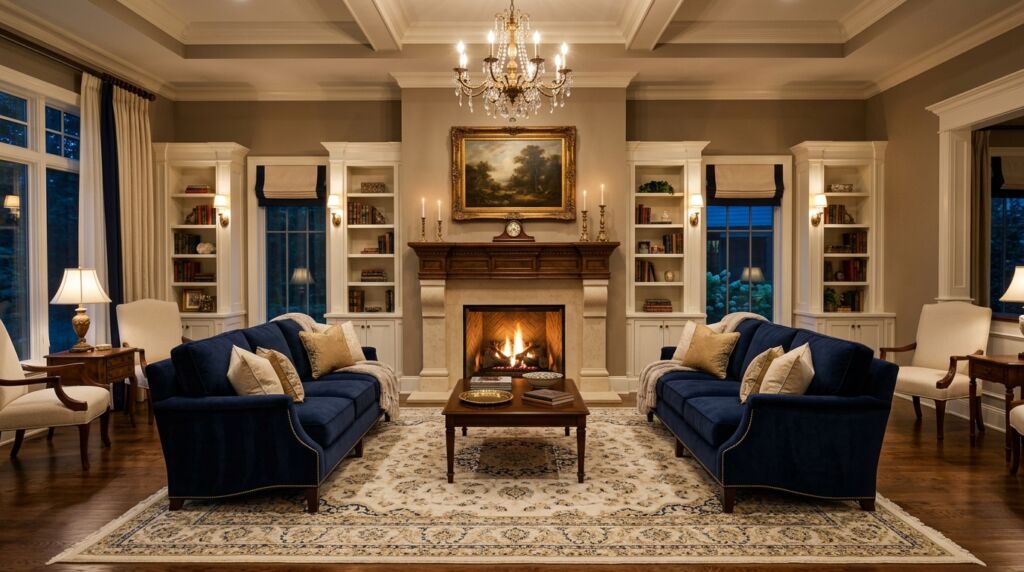
Two matching sofas flanking a fireplace or entertainment unit create one of the most timeless living room arrangements available. This is a particularly effective two couches living room layout for spaces where you want the room to feel balanced and refined without leaning too casual. The sofas should be identical in size, style, and color for true symmetry. Each one should sit the same distance from the central focal point. A matching pair of accent chairs can be added at the ends to complete a square arrangement. The total seating area works well anchored by a large rug, ideally 9 by 12 feet. The mistake is offsetting one sofa even a few inches from its mirror position. This breaks the visual balance even if it isn’t immediately obvious to someone walking into the room.
9. Chaise Lounge Extension
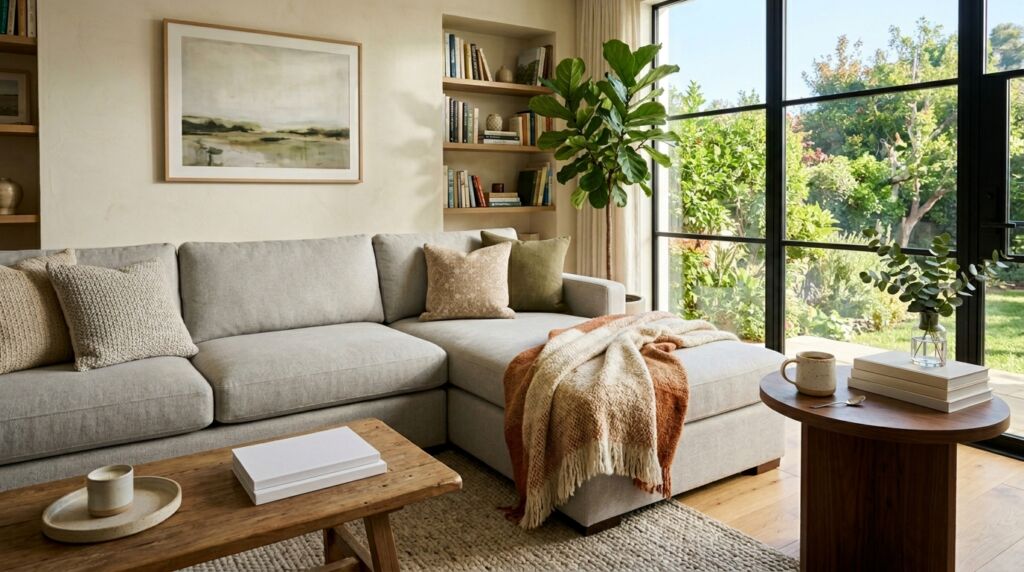
Many configurations include an attached chaise, and how you position that chaise matters enormously. The chaise should always face toward natural light or the room’s main focal point rather than pointing at a blank wall. A chaise that points toward the TV creates the perfect reclining spot for movie watching. One that faces a window becomes an ideal afternoon reading perch. In a 13 by 15-foot room, the chaise typically works best tucked to the right or left depending on which side has more wall clearance. La-Z-Boy sells sectionals with attached chaises starting around $2,000. The most common mistake is placing the chaise in a corner so tightly that the person reclining ends up staring directly at a wall, which defeats the purpose of having a dedicated lounging piece.
10. Modular Mix-and-Match
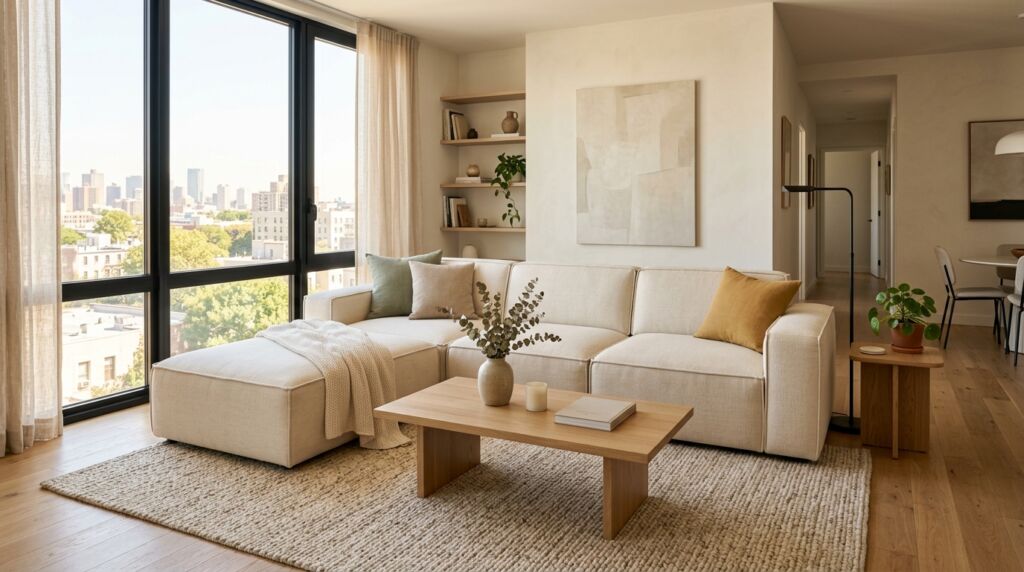
Modular sofas are the most flexible seating option available today. They allow you to add, remove, or rearrange individual pieces as your room needs change over time. A basic configuration might start with two corner pieces and a three-seat center module. Over time you can add an ottoman, extra armless chairs, or a chaise extension. Article and Burrow both sell modular systems where individual pieces start around $450 each, letting you build gradually without a large upfront investment. This works especially well in rented apartments where room dimensions change with every move. The arrangement I’ve seen work best for a mid-size room is a four-piece configuration in a gentle L-shape. The mistake to avoid with modular pieces is buying from different collections or brands, which almost never matches in seat height or cushion depth.
11. Small Room Tight Fit
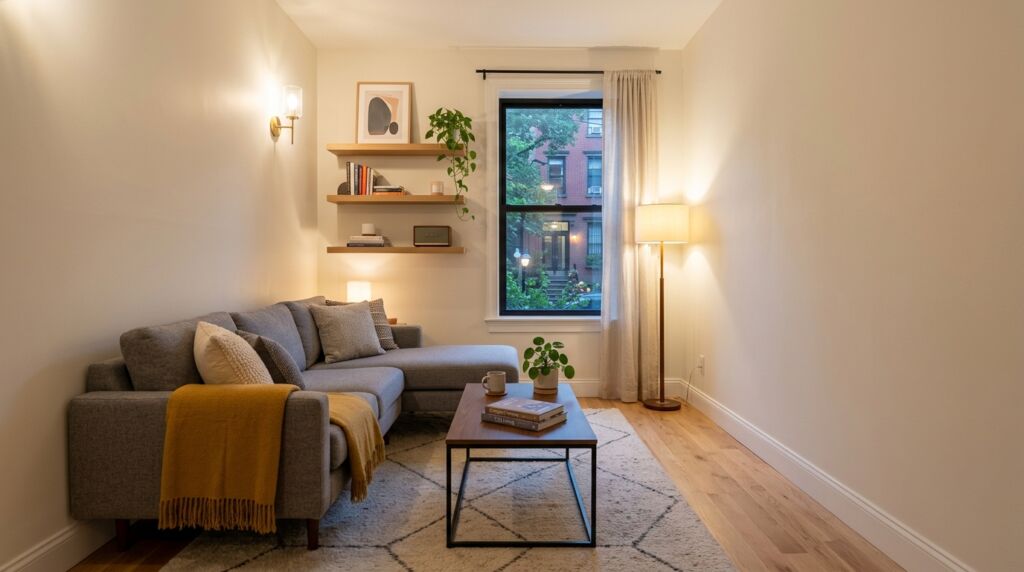
Working with a small living room doesn’t mean giving up a sofa entirely. Compact sectionals designed for small spaces typically measure around 90 inches on the longest side and 60 inches on the short side. This makes them viable in rooms as small as 11 by 12 feet when placed correctly. The key is resisting the urge to line every wall with furniture. Keep one wall completely clear to maintain visual breathing room. IKEA’s VALLENTUNA series, starting around $730, is one of the better small-room options currently on the market. Pair it with a slim-profile coffee table and wall-mounted shelving to keep floor space visually open. The biggest mistake in small rooms is choosing a piece with thick, bulky arms that eat significantly into the usable seating depth and make the room feel even tighter.
12. Oversized Sectional Edit
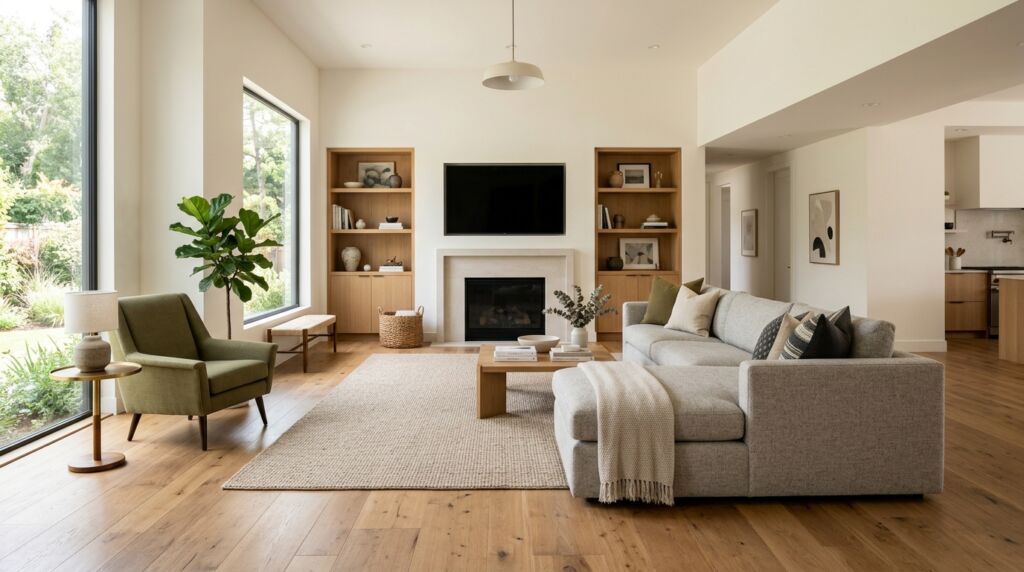
Going too large is a very real problem I’ve seen in dozens of homes. An oversized sofa that fills the entire room leaves no space for side tables, accent chairs, or comfortable walkways. The fix is editing rather than replacing. Remove one or two modular pieces from an oversized configuration and store them or sell individual units. This instantly opens the space and makes the remaining sofa feel more intentional and proportionate. Most modular sectionals can be reduced by at least one seat without any structural issue. Adding a single accent chair in the newly freed corner creates better visual balance than a wall of sofa. The mistake is assuming that more seating always equals better function. Often it just makes the room harder to move through and gives the impression the furniture chose the room rather than the other way around.
13. Apartment-Friendly Compact Build
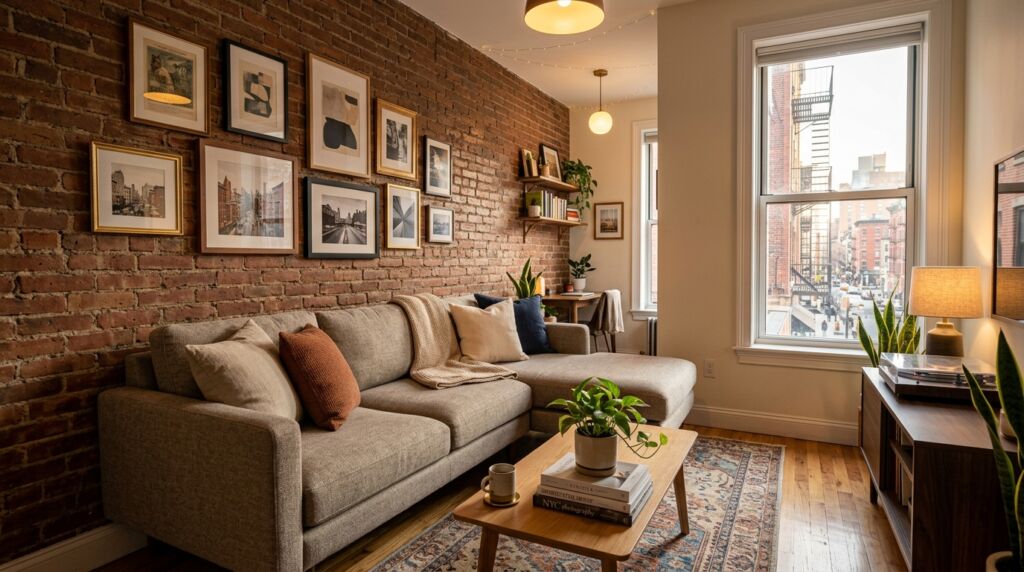
City apartment living rooms often measure between 150 and 200 square feet. In that range, a standard sectional is usually too large, but a compact two-piece configuration can still work beautifully when chosen well. Choose a sofa with a reversible chaise so you can flip the layout based on which direction the room flows best. Castlery sells a reversible chaise sectional around $1,500 that works particularly well in narrow rooms. Position the long seat along the longest wall and extend the chaise toward the center rather than tucking it into a corner. This frees up floor space while maintaining a relaxed, lived-in feel. The most frequent mistake in apartment setups is choosing deep-seat cushions that look luxurious in a showroom but make a small room feel claustrophobic and hard to navigate.
14. Two Couches Side Angle
Rather than placing two sofas directly opposite each other, angling them slightly inward creates a more casual and conversation-friendly arrangement. This two couches living room layout works particularly well in L-shaped rooms where one wall is significantly shorter than the other. Position each sofa at a very slight angle toward the room’s central gathering point rather than running strictly parallel to the walls. The effect is subtle but it changes how the whole room feels. A round coffee table placed between the two angled sofas keeps traffic flowing freely and avoids the corridor feeling that parallel sofas can create. CB2 sells round concrete and wood coffee tables in the 36-inch range starting around $499. The mistake is exaggerating the angle too much, which starts to look disorganized rather than deliberately styled.
15. Statement Rug Anchor
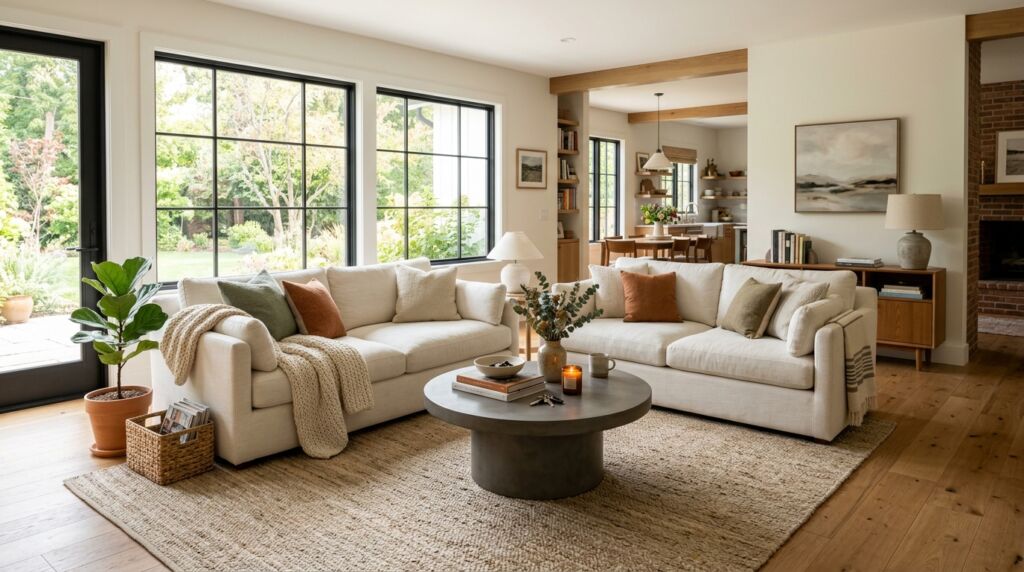
The rug you choose has more power over a sofa layout than most people realize. A properly sized rug anchors the entire seating zone and tells every piece of furniture where it belongs. For a standard sectional in a medium-size room, choose a rug that is at least 8 by 10 feet. All front legs of all seating pieces should rest on the rug. A rug that is too small, where only the coffee table sits on it while the sofa legs float on bare floor, makes the entire room feel scattered and incomplete. I’ve seen this mistake most often with homeowners who invest in a beautiful sofa and then try to save money on the rug beneath it. Loloi and Ruggable offer quality 8 by 10 rugs between $300 and $600 that hold up well to daily foot traffic and furniture weight.
16. Sectional With Accent Chairs
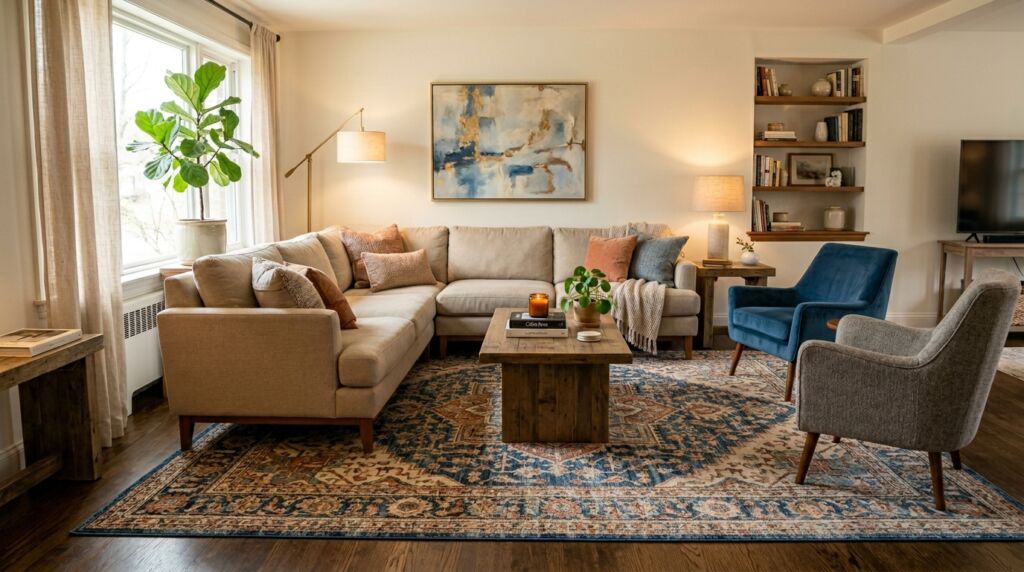
Adding one or two accent chairs to a sofa arrangement rounds out the seating zone beautifully without adding bulk. The chairs work best at the open end of an L-shape or at the corners of a U-shape configuration. Choose chairs with visible legs and an open frame rather than boxy upholstered pieces, which add visual weight and crowd the room. A pair of white boucle accent chairs from Target’s Threshold line, around $250 each, adds texture contrast without overwhelming the space. Position the chairs at a slight inward angle toward the coffee table so they feel part of the conversation circle rather than observers on the edge. The mistake is placing accent chairs directly against the wall instead of pulling them forward into the seating zone where they actually function as intended.
17. Curved Sofa Statement
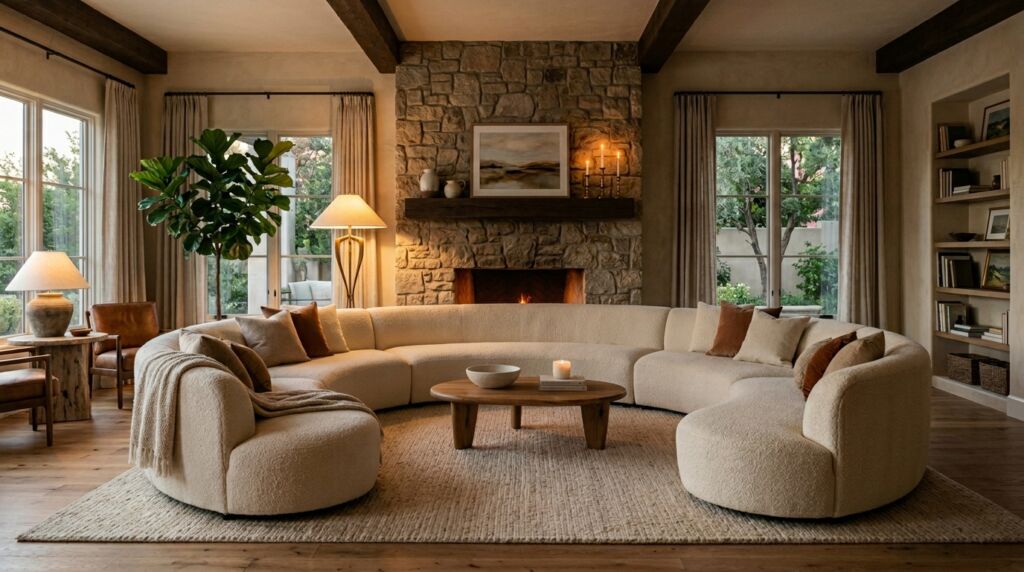
Curved sofas have had a major resurgence and for very good reason. A curved sectional softens the hard lines of a square room in a way that a standard L-shape never quite manages. The curve creates a natural gathering point that draws people toward the center of the seating area. Curved sofas work beautifully in round or octagonal rooms but also add visual relief in very boxy rectangular spaces. Anthropologie’s Lyre sectional and similar pieces from Arhaus start around $4,000. The key placement rule is that the curve should open toward the main focal point of the room, whether that is a TV, fireplace, or large window. The mistake is placing a curved sofa with the curve facing a wall, which defeats the welcoming effect entirely and wastes the most distinctive feature of the piece.
18. Media Room Wrap Around
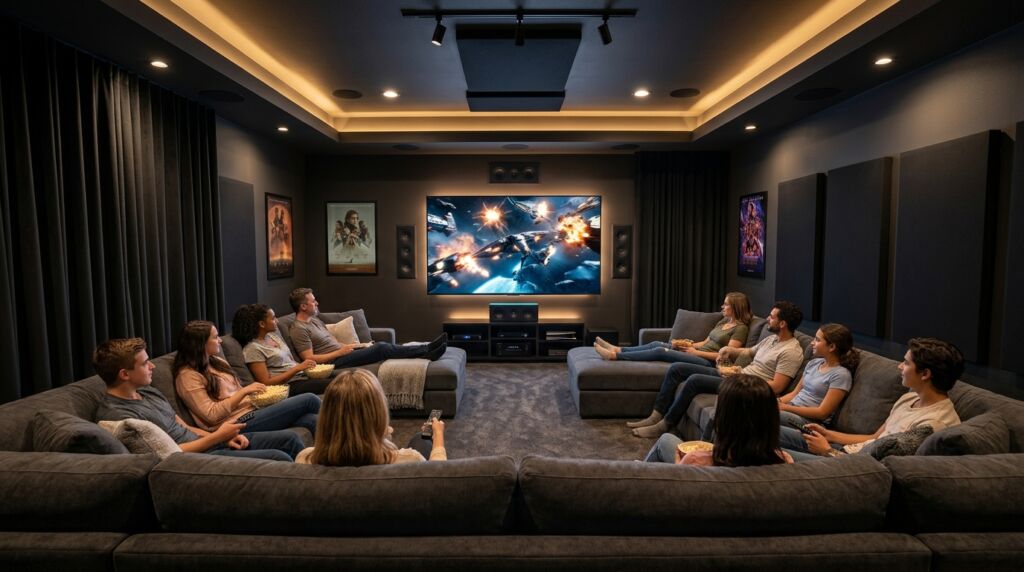
Home media rooms deserve seating that prioritizes clear sightlines to the screen from every position. A U-shaped couch living room configuration works exceptionally well here because every seat faces forward with no awkward corner angles. The U-shape should open directly toward the TV wall with the screen positioned at roughly eye level for seated viewers. For a dedicated media room, the screen center should sit between 42 and 48 inches from the floor. Adding blackout curtains controls glare without rearranging the furniture. Rowe Furniture and Flexsteel both make deep-seat U-shape configurations in the $3,000 to $5,000 range with built-in lumbar support for long viewing sessions. The mistake is mounting the TV too high, which strains the neck during extended watching and makes even the best seating arrangement uncomfortable over time.
19. Open Fireplace Facing
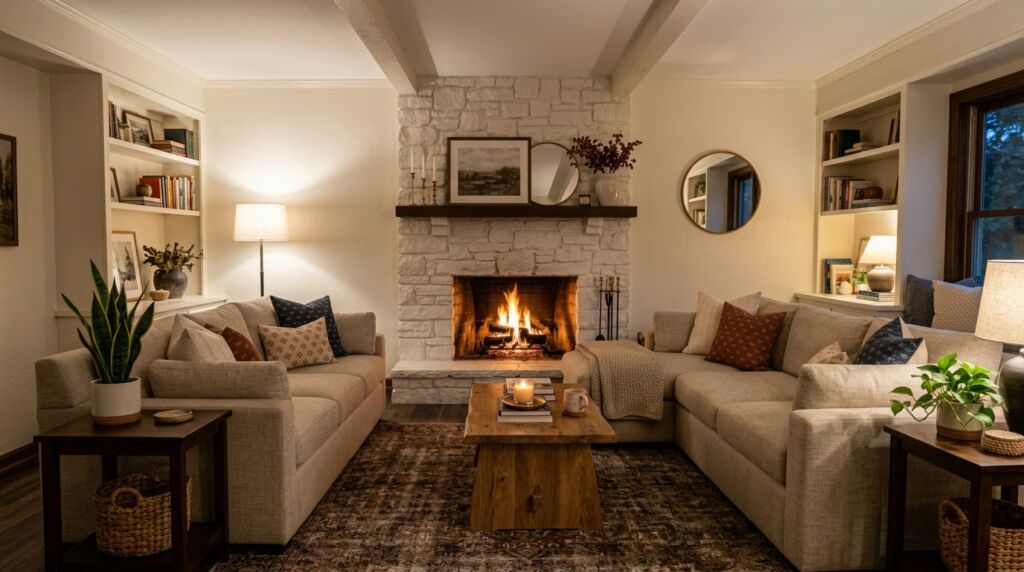
A fireplace is the strongest focal point a living room can have and every seating arrangement should acknowledge it clearly. A sofa works best placed directly opposite the fireplace, opening toward it, with the chaise or short arm positioned to the side rather than blocking the hearth view. Keep at least 36 inches of clearance between the sofa and the fireplace for safety. A low-profile coffee table keeps the sightline open so the fire remains visible from every seat. Low-profile frames with simple silhouettes work particularly well in fireplace-facing setups because they don’t compete with the fireplace itself for visual attention. The biggest mistake is placing a sofa back directly in front of the fireplace, which blocks the visual anchor that makes the entire room feel warm and drawn together.
20. Outdoor Patio Layout
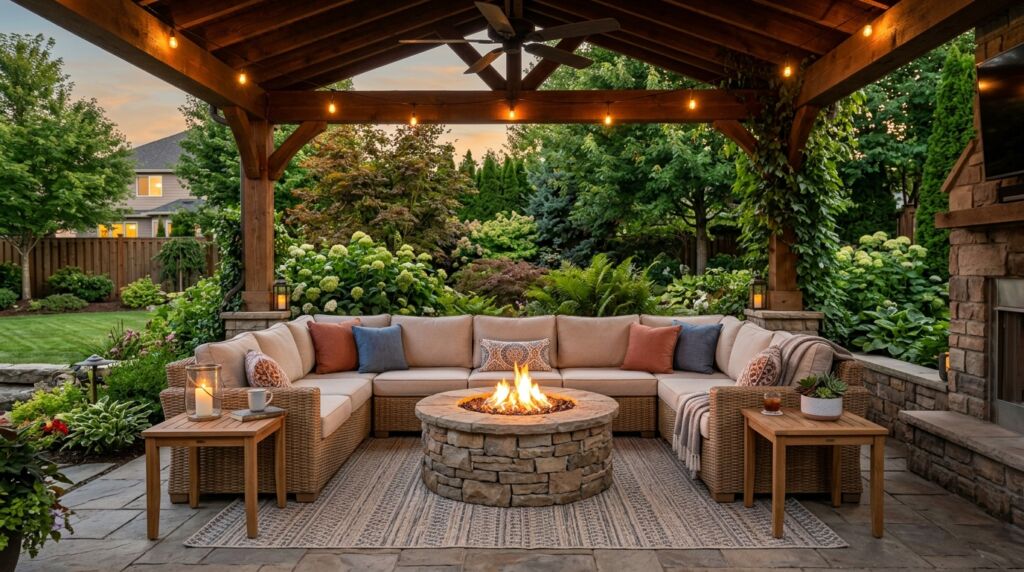
Sectional sofas are no longer just an indoor category. Outdoor pieces made from all-weather wicker and solution-dyed acrylic fabric bring the same layout logic to patios and decks. A floating arrangement that faces an outdoor fire pit mirrors the cozy logic of an indoor fireplace setup. Keep the sofa at least 24 inches from the fire pit edge for safety. Brands like Outer, Polywood, and Article offer outdoor sectional configurations starting around $2,000. Tie the arrangement together with an outdoor rug and weather-resistant side tables. This is particularly effective on covered patios where the furniture won’t need to be moved seasonally. The mistake is buying standard indoor pieces for outdoor use, which deteriorates within one season even under furniture covers, making it a costly error to undo.
21. Family Room Command Center
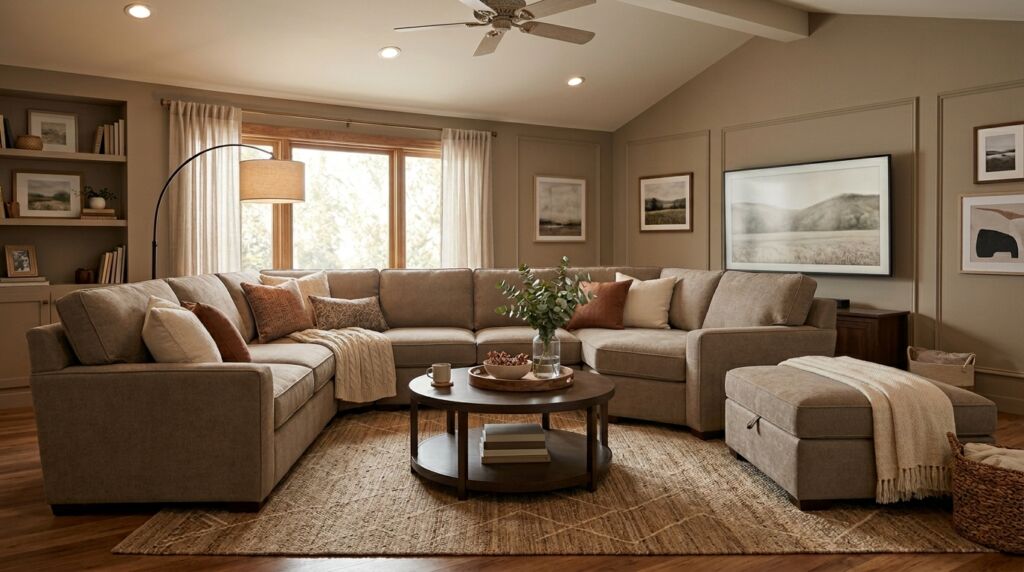
The family room layout is less about aesthetics and more about daily function. With children, pets, and constant activity, the best family configuration is a tight U-shape that faces the TV and keeps every seat within easy reach of a side table or surface. Durable performance fabrics like those from Crypton or Sunbrella hold up to spills and pet hair far better than standard upholstery. Benchcraft by Ashley and Abbyson Living offer family-focused lines starting around $1,800 with performance fabric options included. Keep the coffee table rounded rather than sharp-cornered for safety around young children. Place a storage ottoman at the open end of the U-shape for extra seating and toy storage in one. The mistake is prioritizing style over practicality in a family room, which leads to constant frustration and furniture that doesn’t last.
22. U-Shape With Chaise
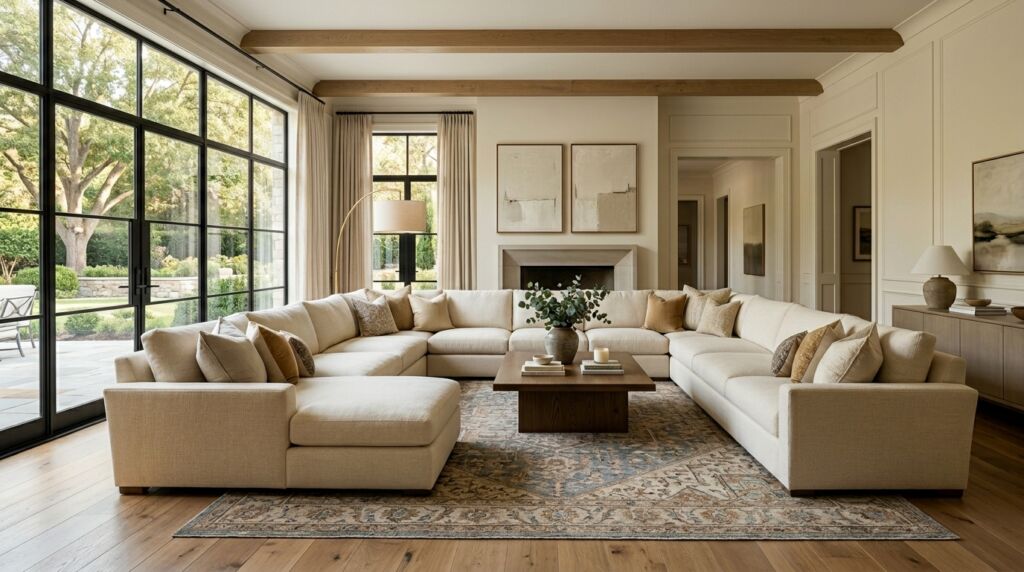
Adding a chaise to an existing U-shape creates what interior designers call a grand sectional configuration. The chaise extends one arm of the U-shape, giving the room an asymmetrical but richly layered look that feels more custom than anything sold as a single unit. This works particularly well in large rectangular rooms where a standard U-shape might look small relative to the available space. The chaise arm should always point toward a wall or window rather than blocking a walkway. Position a tall floor lamp directly behind the chaise for practical reading light in the evenings. Ethan Allen and Room and Board both offer these grand configurations in the $5,000 to $8,000 range with customizable chaise add-ons. The mistake is placing the chaise directly in front of the TV, which leaves other seats with an awkward sightline.
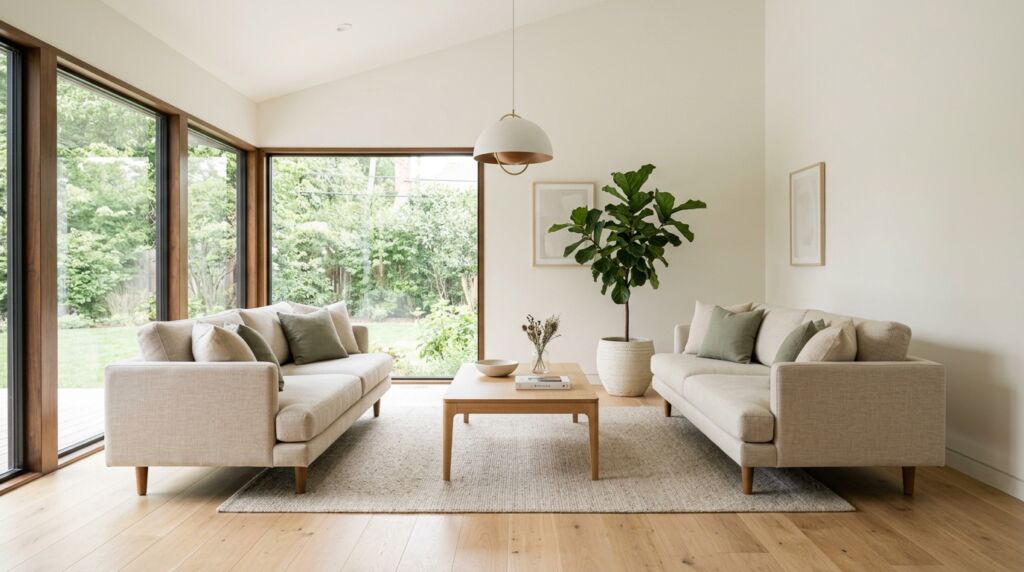
Two low-profile sofas placed in a clean parallel arrangement with a shared coffee table captures the Scandinavian design ethos better than almost any other configuration. The key is restraint: no extra chairs, no oversized rug, no decorative clutter competing for attention. The sofas are typically clean-lined with tapered wooden legs and neutral fabric in warm white, oatmeal, or soft gray. IKEA’s SÖDERHAMN and LANDSKRONA lines both execute this look well in the $900 to $1,400 range. The arrangement works best in rooms with good natural light and minimal wall art. One sculptural plant and a single pendant light above the coffee table complete the look without adding visual noise. The mistake is layering too many accessories onto a minimal setup, which quickly erases the intentional calm that makes this particular style so effective and appealing.
Frequently Asked Questions
What size room do I need for a U-shaped sectional?
A U-shaped couch living room setup works best in rooms that are at least 14 by 16 feet. This gives you enough space for the sofa itself plus comfortable clearance around it. In smaller rooms, a standard L-shape or a two-sofa arrangement gives you more flexibility without crowding the walkways.
Can two couches work in a small living room?
A two couches living room layout can work in a room as small as 12 by 14 feet if you choose the right sofa sizes. Opt for two-seat sofas rather than three-seaters, keep the coffee table low and narrow, and pull both sofas slightly away from the walls. This creates the illusion of more space even in a compact room.
How far should a sofa be from the TV wall?
The ideal viewing distance from sofa to TV is roughly 1.5 to 2.5 times the diagonal size of the screen. For a 65-inch TV, that works out to about 8 to 13 feet of viewing distance. Most living room sofa placements naturally fall within this range, but it is worth double-checking before finalizing any layout.
Should all sofa legs be on the rug?
Ideally, yes. All front legs of every seating piece should rest on the rug to create a unified seating zone. If the rug is too small to accommodate this, at minimum the two front legs of each sofa should be on the rug. Having all furniture floating off the rug makes the room feel disjointed regardless of how beautiful the individual pieces are.
What is the best layout for an open-plan living room?
For an open-plan space, floating the sofa away from the walls and using it as a room divider works better than pushing everything to the perimeter. Face the back of the sofa toward the dining area to naturally separate the zones. Add a console table behind the sofa for visual definition and practical storage.
How do I make a sectional work in a narrow room?
In a narrow room, position the long arm of the sectional along the longest wall and choose a piece with a reversible chaise so you can orient it toward the center rather than into a corner. Avoid large ottomans or oversized coffee tables that eat into the limited floor space. A wall-mounted TV frees up floor space and keeps the sightline clear.
What is the best coffee table shape for a U-shaped sofa?
A round or oval coffee table works best inside a U-shaped couch living room configuration. The curved edges allow easier movement around the seating area and soften the geometric weight of having three sofa sides. Square tables can work but require at least 18 inches of clearance on all sides to avoid a cramped feeling.
Can I mix two different sofa styles in one room?
You can mix two different sofas if they share at least one common element, whether that is color, fabric texture, leg finish, or overall scale. Avoid mixing extremely different styles like a tufted Chesterfield with a low-profile modern sofa as the contrast tends to look unplanned rather than eclectic. Matching leg height is especially important for visual consistency.
These 23 sectional couch layouts cover everything from the simplest L-shape placement to full grand U-shape configurations that make a family room feel like a retreat. The best layout for your space isn’t the most complicated one. It’s the one that fits your room, serves how you actually live, and gives every seat a clear view of what matters most in the room. Start with one idea that resonates with you, move your furniture, and see how it feels before buying anything new. I’ve seen small placement changes completely transform a space without spending a single dollar. Save this post on Pinterest, share it with someone who’s been struggling with their living room furniture, and give one of these arrangements a try this weekend.