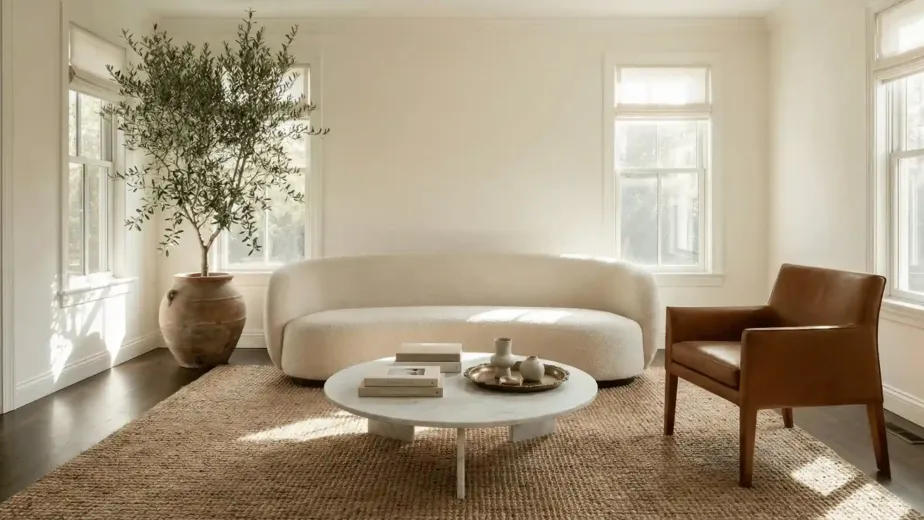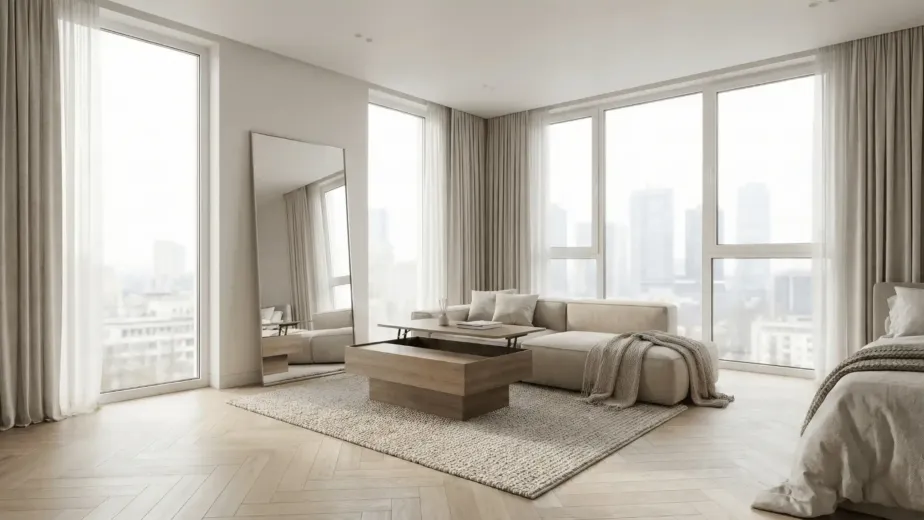
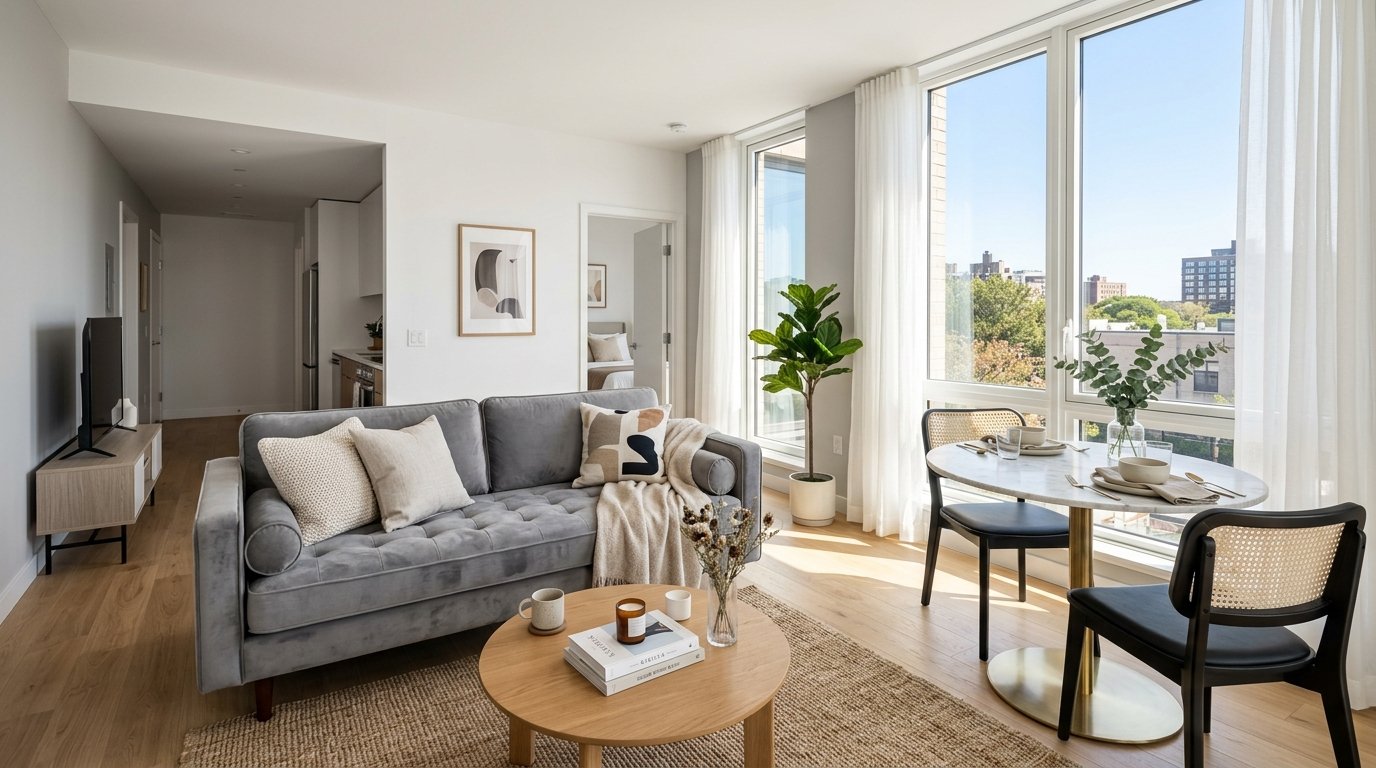
Last year I walked into a 450-square-foot studio in downtown Seattle that felt more like a hallway than a home. The owner was struggling to fit a dining table and a sofa without blocking the front door or the kitchen. Have you ever felt like your apartment is a giant puzzle where the pieces simply refuse to fit? Does your current layout make you feel claustrophobic every time you try to host a simple dinner? Why do we assume that a small living room dining room combo requires tiny, uncomfortable furniture that nobody actually enjoys using? In my experience working with urban rentals and high-turnover Airbnb properties, the tightest spaces often yield the most creative breakthroughs. I have seen tiny rooms transformed into high-functioning zones by breaking every traditional design rule. I promise you will see exactly how to reclaim your floor plan and your peace of mind using these specific layout strategies.
Executive Summary
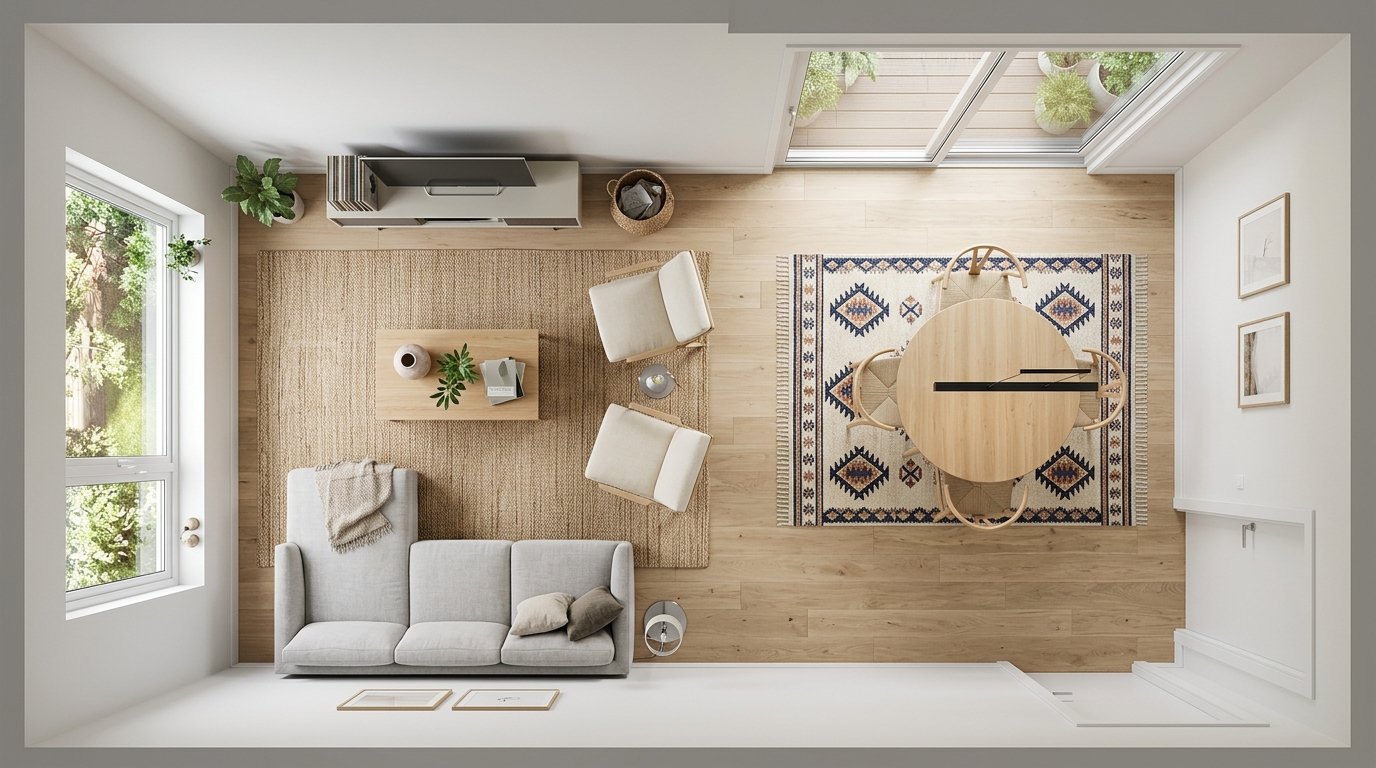
This guide provides 23 proven strategies to master the small living room dining room combo with a focus on maximizing square footage and aesthetic flow. You will discover how to increase your perceived floor space by up to 30% without removing a single wall. I cover everything from specific furniture dimensions for 1 bedroom apartment decor living room setups to cost-effective Airbnb decor room ideas living room guests will find irresistible. We will explore why the “traditional” sofa-against-the-wall approach is actually killing your room flow and how to use Sala ideas decor small living experts swear by. This article includes specific brand recommendations from IKEA and West Elm to high-end custom solutions. We will specifically exclude major structural renovations to focus on accessible design and layout shifts you can implement this weekend.
1. Floating Shelves
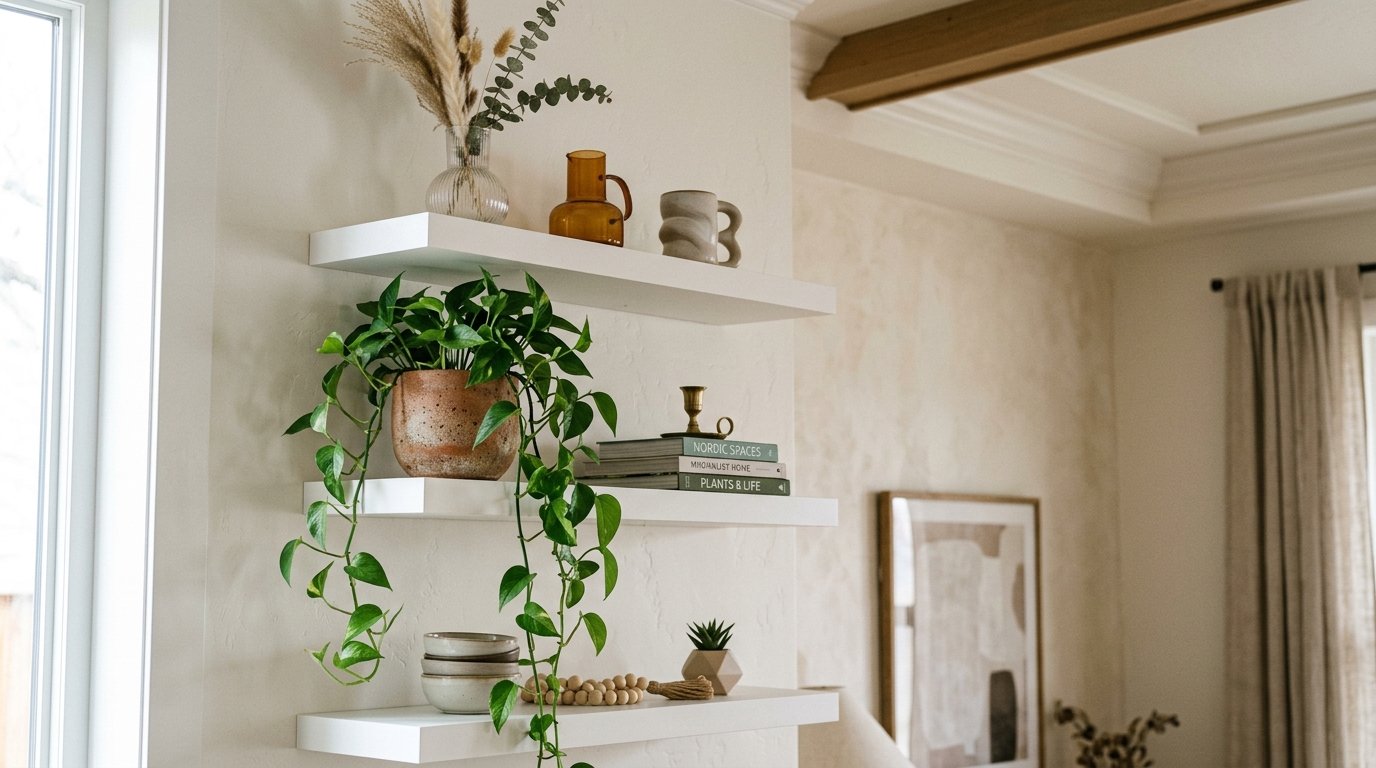
Vertical space is the most underutilized asset in any tight floor plan. In my experience most people stop decorating at eye level and leave the top four feet of their walls completely empty. I recently helped a client in San Francisco install three-inch deep floating shelves from IKEA above their dining nook to hold glassware and cookbooks. This simple move cleared an entire cabinet in their tiny kitchen. You should install these at least six feet high to keep the room feeling airy while adding significant storage. Expect to spend about $150 for a full wall setup including heavy-duty anchors. One common mistake is using shelves that are too deep which actually makes the room feel narrower and creates a “cave” effect over your seating.
2. Corner Banquettes
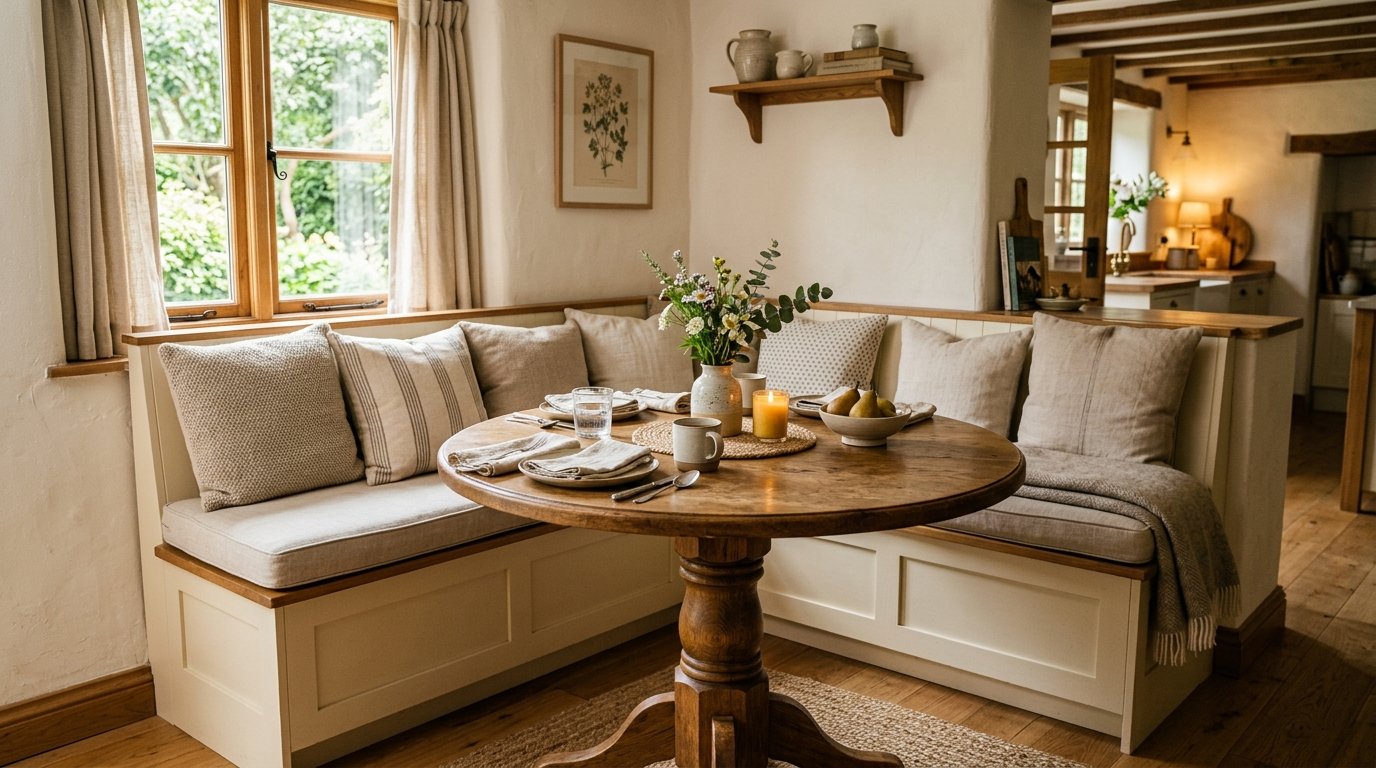
Built-in seating or a simple corner bench can save you nearly 10 square feet compared to four traditional chairs. I have noticed that dining with living room layouts often fail because chairs require a three-foot “pull-out” radius that eats into the walking path. By tucking a bench against the wall you eliminate the need for that clearance on two sides. You can find ready-made corner benches at Wayfair for under $400 or build a custom one using plywood for about $200. This setup also offers a hidden opportunity for flip-top storage for seasonal linens or bulky kitchen appliances. Many people fear banquettes feel too “kitchen-y” but you can elevate the look with high-end velvet upholstery or leather cushions.
3. Ghost Chairs
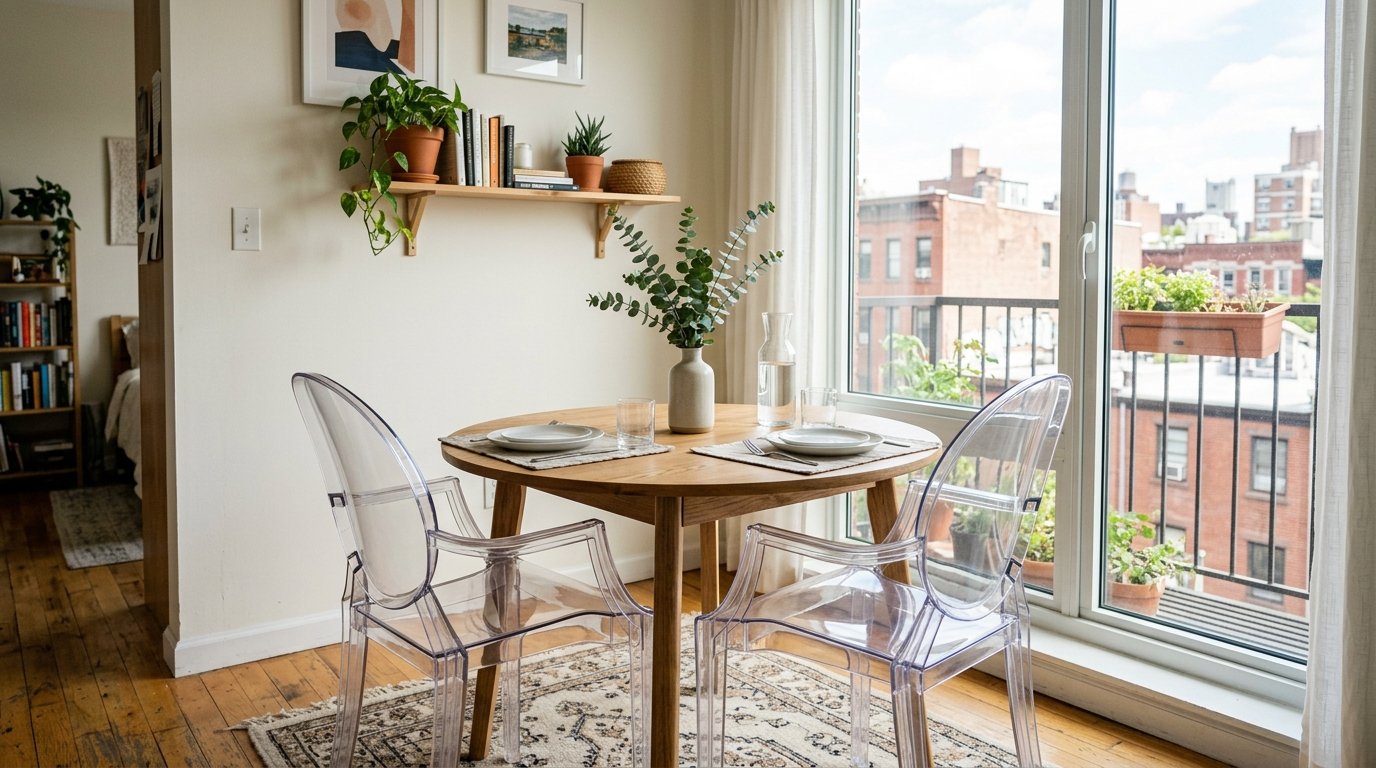
Visual clutter is just as damaging as physical clutter in a small living room dining room combo. Transparent acrylic chairs like the classic Louis Ghost style allow the eye to travel through the furniture to the walls beyond. I saw this work perfectly in a Manhattan loft where four dining chairs practically disappeared when not in use. You can pick up high-quality replicas on Amazon for approximately $80 each. This choice keeps the dining area from looking like a heavy “block” of furniture in the middle of your living space. The only downside is that acrylic requires frequent micro-fiber dusting to stay clear of fingerprints.
4. Zoned Rugs
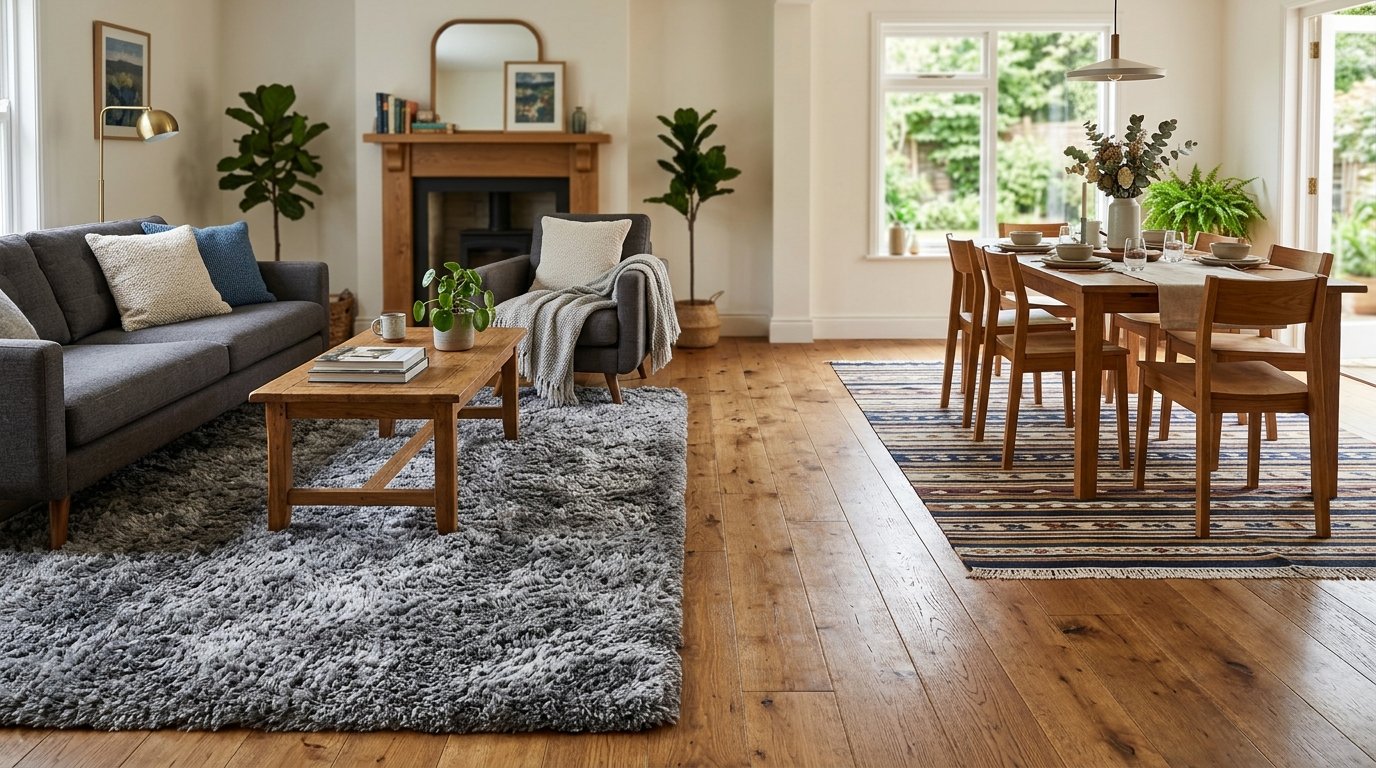
Rugs are the invisible walls of an open-concept layout. I recommend using two distinct rugs to define the living and dining areas but they must share a common color palette. For living room ideas grey sofa fans often choose a high-pile plush rug for the lounge area and a flat-weave washable rug like a Ruggable for the dining side. This creates a psychological boundary that tells your brain where one room ends and the other begins. In my experience a rug that is too small makes the entire room look cheap and disjointed. Your rug should be large enough that all furniture legs sit on top of it. Budget at least $300 per rug for decent quality that won’t curl at the edges.
5. Mirror Walls
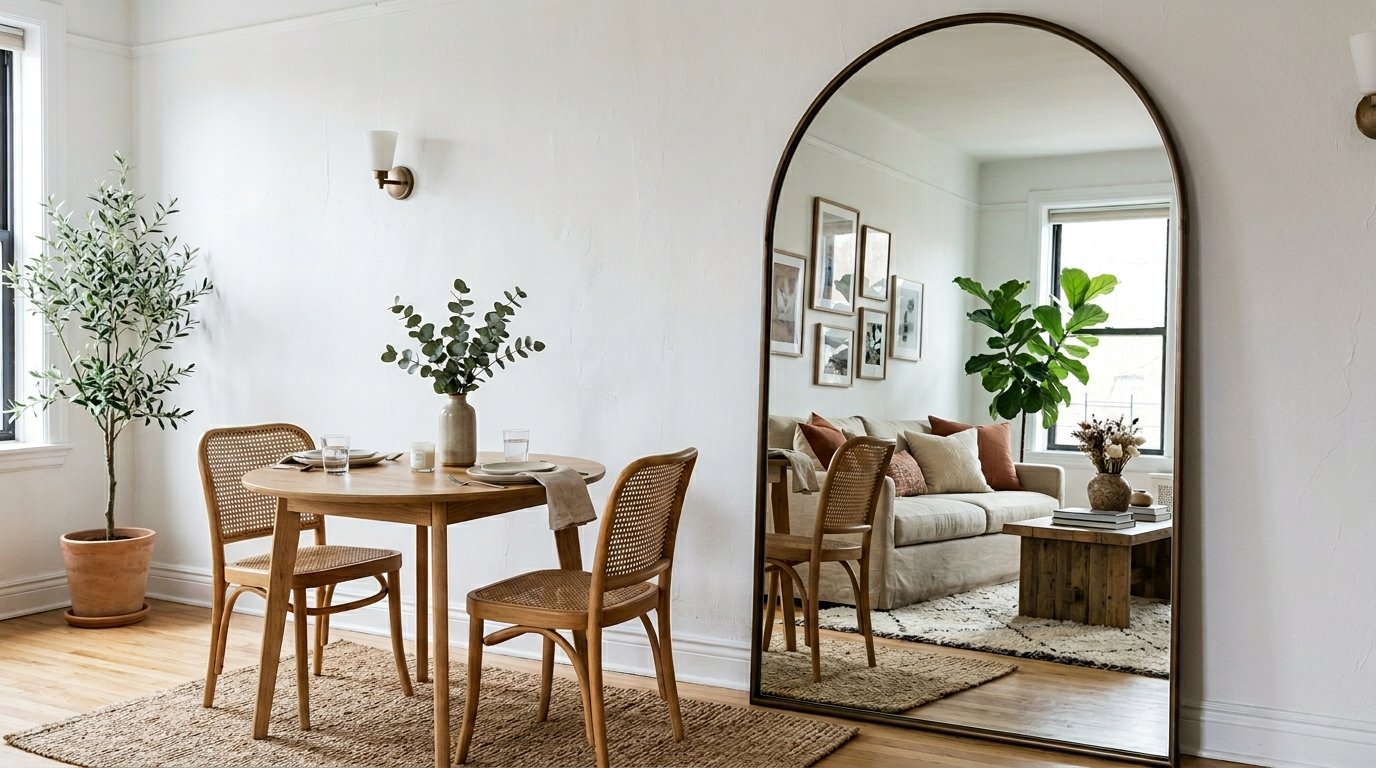
Large-scale mirrors are the oldest trick in the designer handbook for a reason. Placing a floor-to-ceiling mirror behind your dining table doubles the visual depth of the room instantly. I staged an Airbnb in Austin where we used three tall arched mirrors from Target to create a “window” effect on a windowless wall. This move cost $300 but made the 200-square-foot main room feel like a palace. The trick is to reflect something attractive like a piece of art or a plant rather than the back of your television. Avoid cheap plastic frames that warp over time because a distorted reflection makes the space feel dizzying and low-budget.
6. Round Tables
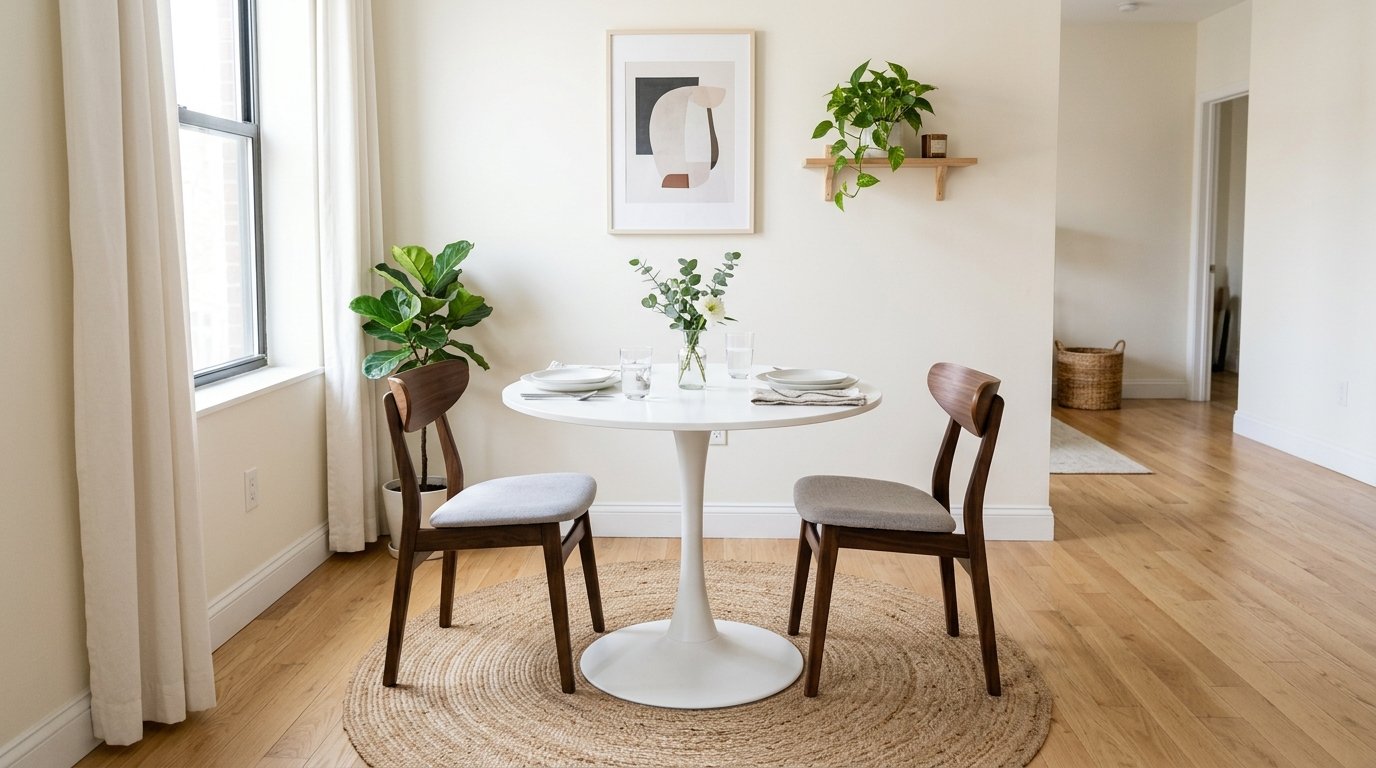
Rectangle tables create harsh traffic patterns that force you to walk in “L” shapes around the room. A round pedestal table allows for fluid movement and lacks sharp corners that bruise hips in tight quarters. In a 1 bedroom apartment decor living room setup a 36-inch round table can comfortably seat four people without dominating the floor. I often suggest the Docksta table from IKEA for its slim profile and easy-to-clean surface. It costs roughly $250 and fits perfectly into awkward corners. Note that pedestal bases are superior to four-legged tables because they offer more legroom and allow you to tuck chairs in completely.
7. Dual-Purpose Credenzas
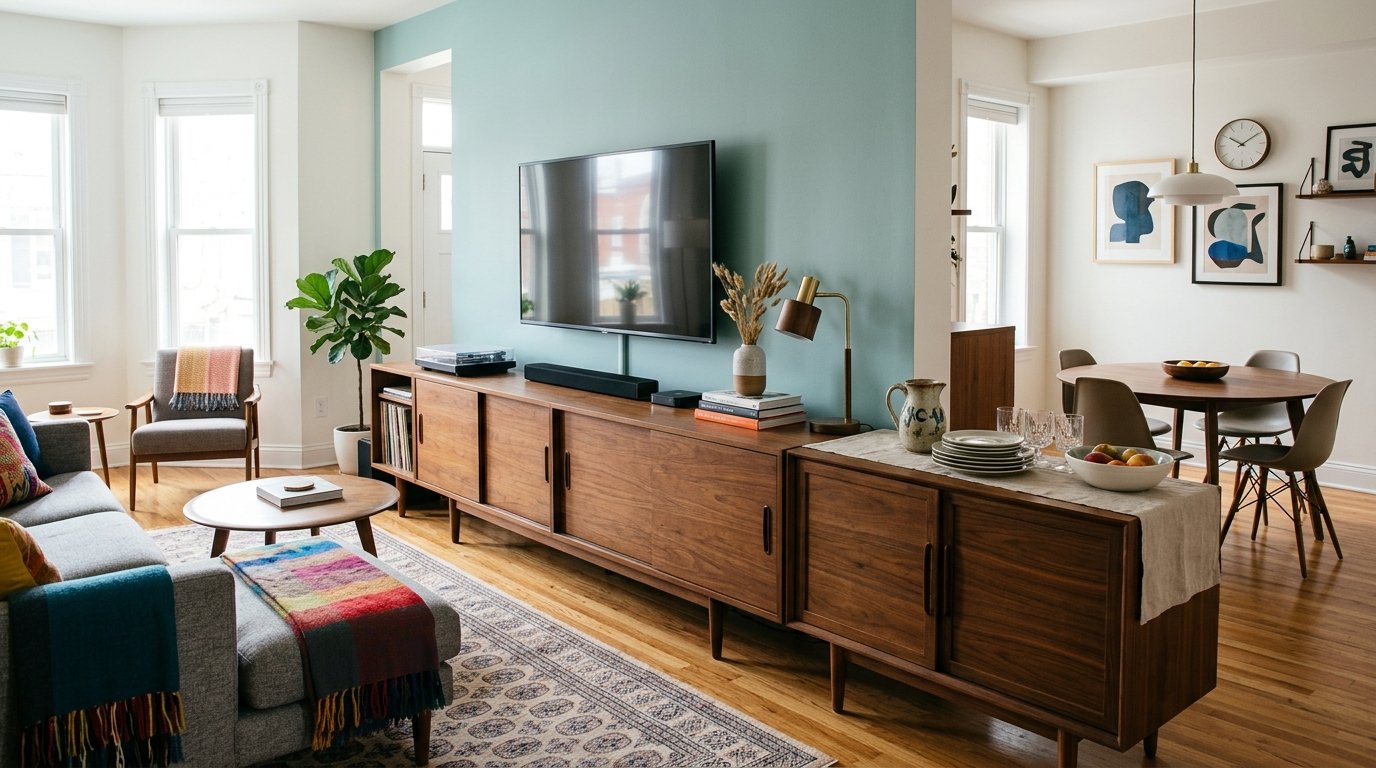
Stop buying separate TV stands and sideboards. A single long credenza can serve as your media center on one end and your buffet or bar area on the other. I have seen this “long-line” approach work beautifully to elongate a short wall. Choose a piece that is at least 72 inches long to create a sense of scale. A mid-century modern unit from West Elm might cost $1,200 but it replaces two pieces of furniture and streamlines your visual field. Make sure the height is around 30 inches so it works for both a seated diner and someone watching a movie from the sofa.
8. Vertical Dividers
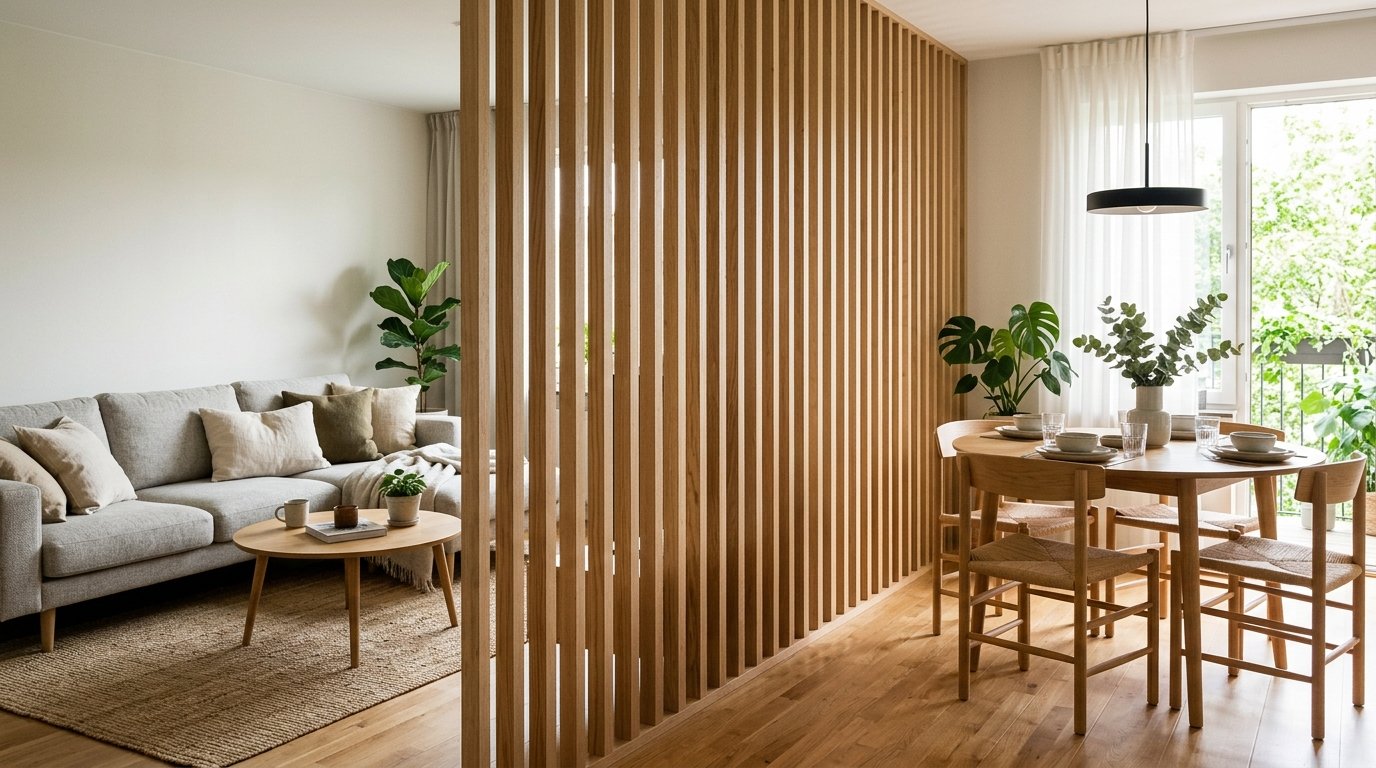
If you need a physical barrier but don’t want to lose light use vertical wooden slats or a semi-transparent bookshelf. The Kallax unit from IKEA is a staple for a reason but try turning it sideways for a lower profile. I’ve noticed that full-height solid dividers often make a small living room dining room combo feel like two tiny closets. A slat wall made of 2×2 oak boards costs about $150 in materials and takes an afternoon to install. It provides a sense of privacy for the dining area while maintaining an open feel. A common mistake is using a heavy curtain which often looks messy and absorbs too much light.
9. Nested Tables
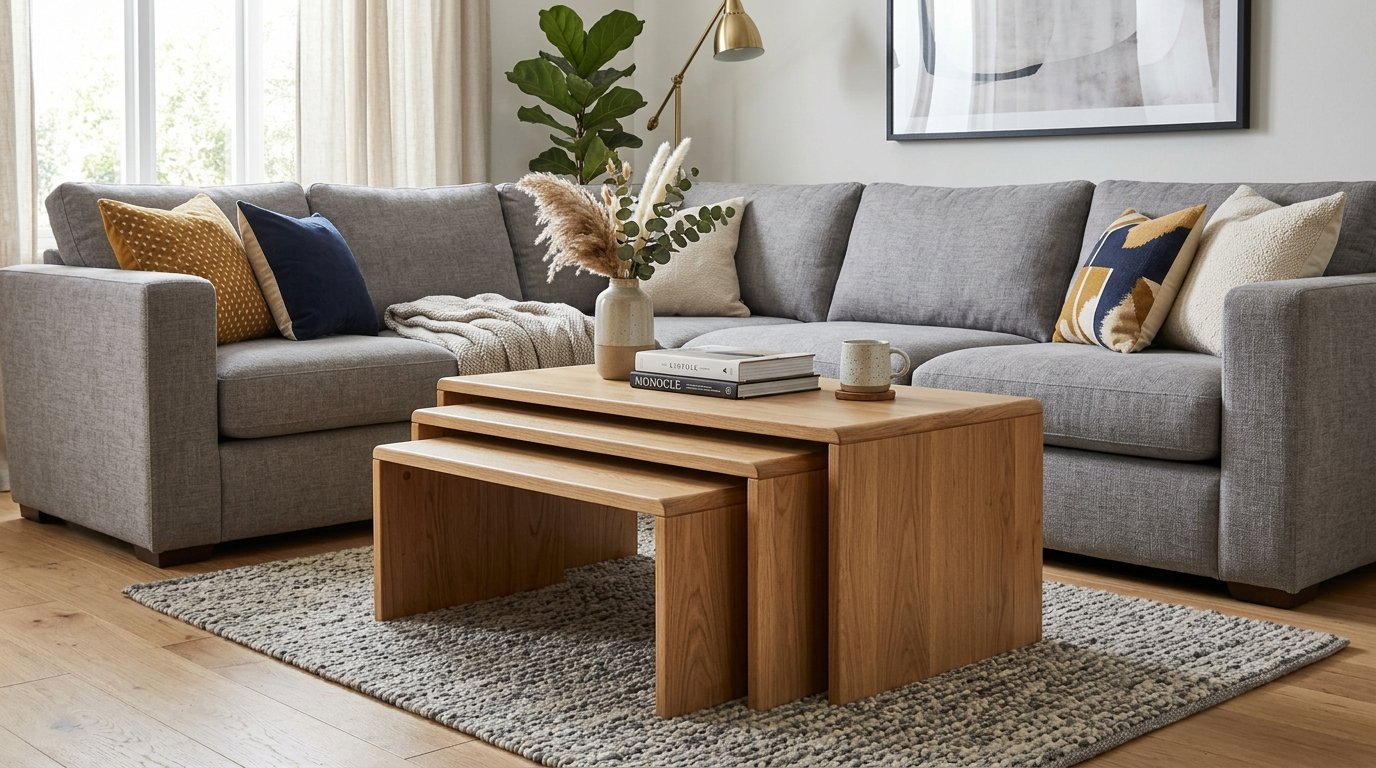
Coffee tables are often the biggest space-wasters in a lounge area. Nested tables allow you to have surface area when you need it for guests and a clear floor when you don’t. In my experience a single large coffee table in a small combo room usually ends up as a permanent obstacle. You can find beautiful nesting sets in wood or marble for $200 to $500. This flexibility is essential for Airbnb decor room ideas living room guests appreciate because it allows them to customize the space to their needs. Ensure the tallest table is roughly the same height as your sofa cushions for ergonomic comfort.
10. Low Profile Seating
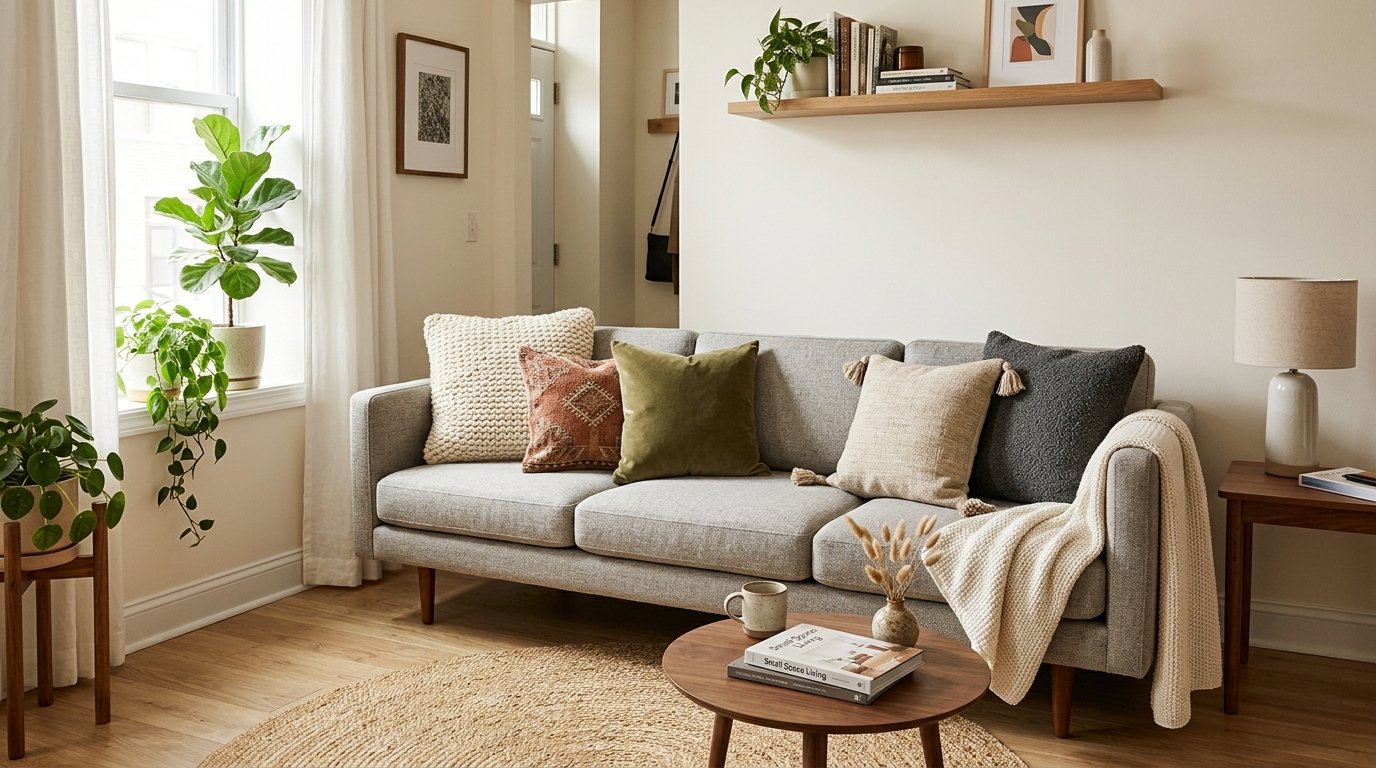
Furniture with high backs acts like a wall and blocks your sightline across the room. I always advocate for low-profile sofas and “slipper” chairs that sit lower to the ground. This leaves more “white space” on the walls and makes the ceiling feel higher. A sofa like the Sven from Article has a slim frame and low back that works perfectly for sala ideas decor small living enthusiasts. Expect to pay around $1,500 for a quality piece that won’t sag. Avoid overstuffed “marshmallow” sofas because they take up more physical space than their seating area justifies and look cluttered in a combo room.
11. Hidden Ottomans
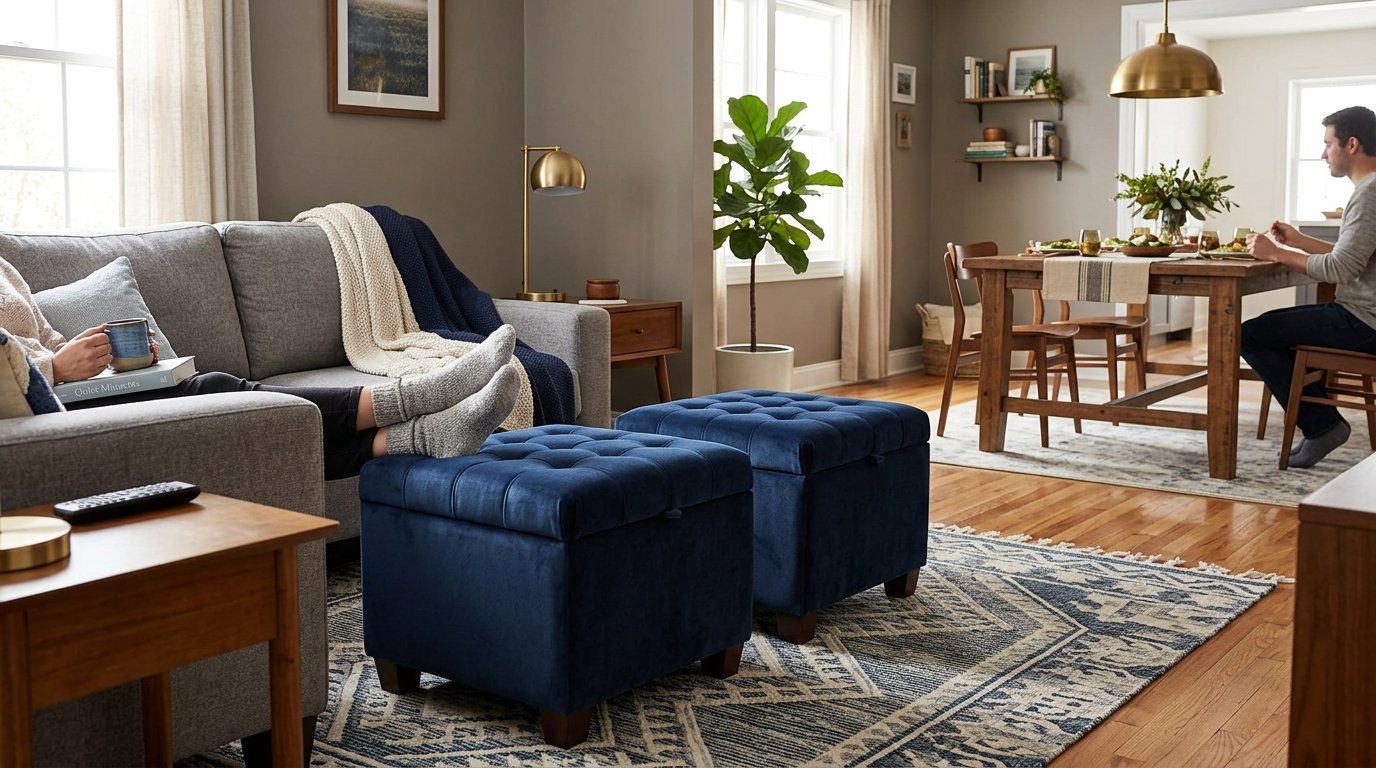
If you need extra seating for dinner guests but don’t have room for six permanent chairs use storage ottomans. These can live under your coffee table or against the wall as footrests and then move to the table when needed. I once saw a designer use four square velvet ottomans as a coffee table cluster that transitioned into dining seating in seconds. You can find these for $50 to $100 each at discount retailers like HomeGoods. This is a brilliant way to handle dining with living room needs without cluttering the path with rarely used chairs.
12. Drop Leaf Tables
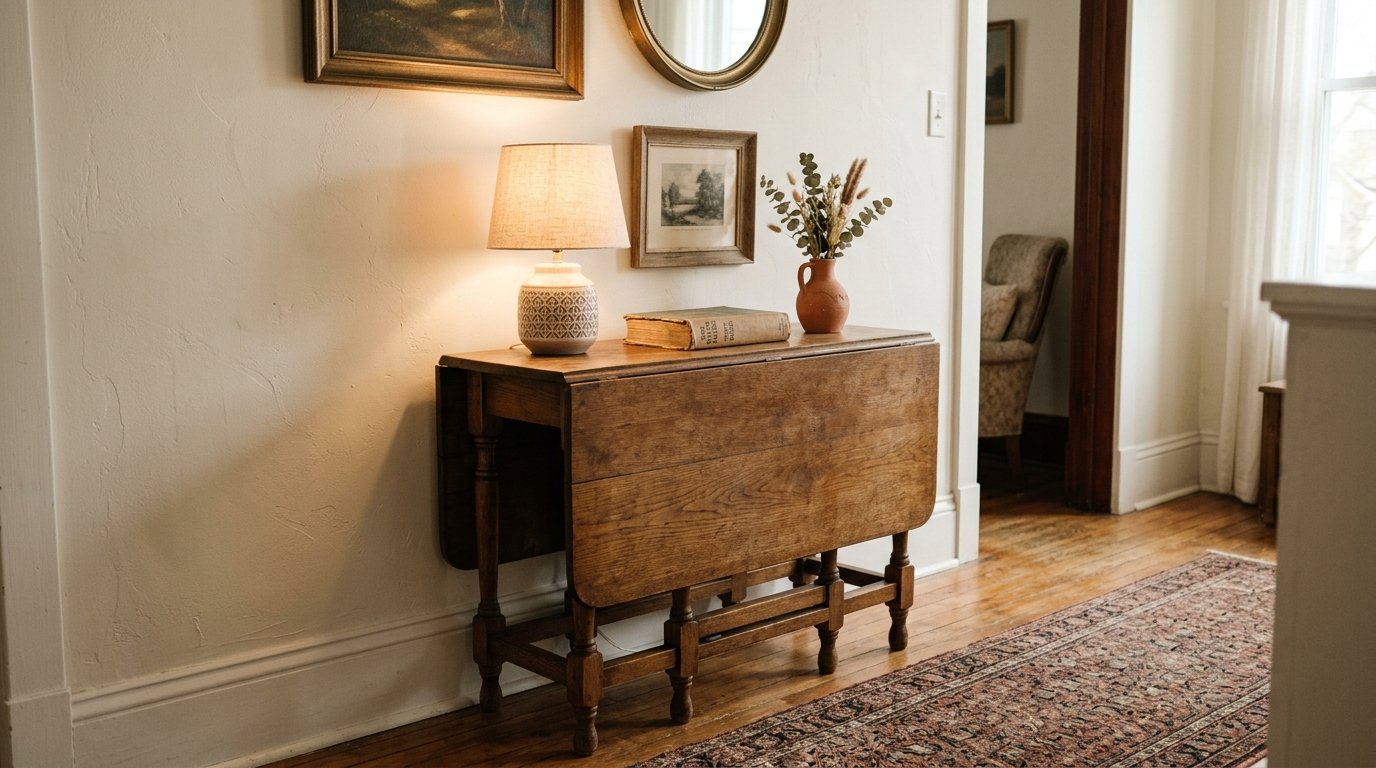
For those who rarely host big dinners a drop-leaf table is a lifesaver. It can function as a slim console table against a wall for daily use and expand to a full dining surface once a month. The Norden gateleg table from IKEA is a classic choice at $250 because it also includes drawers for silverware storage. I have noticed people often buy a table for the “dream” of hosting 10 people but live in the reality of eating alone or as a couple. Be honest about your daily needs to save significant floor space.
13. Monochromatic Palettes
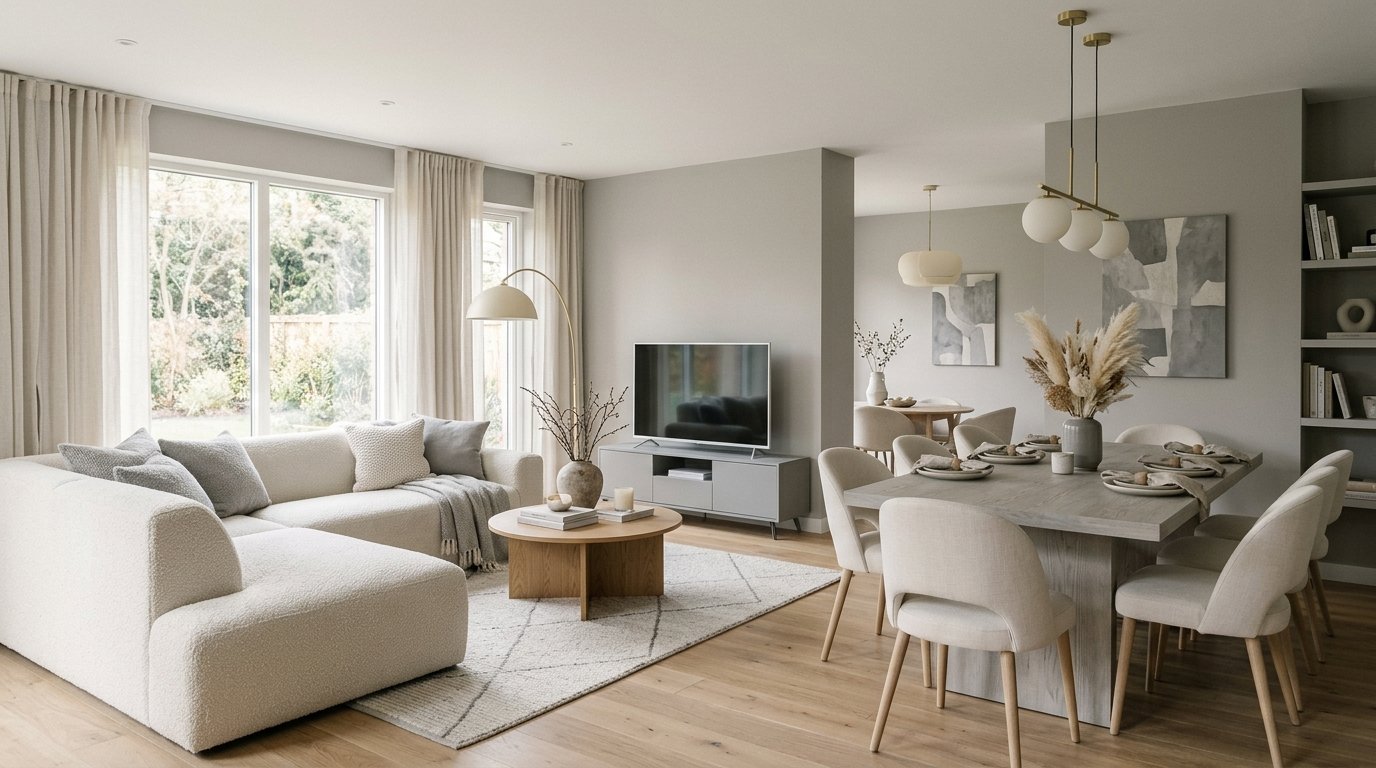
Using a single color family for both zones creates a seamless transition that makes the room feel larger. If you love living room ideas grey sofa styles try to carry those charcoal and dove tones into your dining chair upholstery and table linens. This “washes” the room in a single tone and prevents the eye from stopping at the border of each zone. I recommend using Benjamin Moore’s “Revere Pewter” as a base because it shifts beautifully between warm and cool light. A gallon of high-quality paint costs $70 and is the cheapest way to unify a disjointed combo room.
14. Strategic Sconces
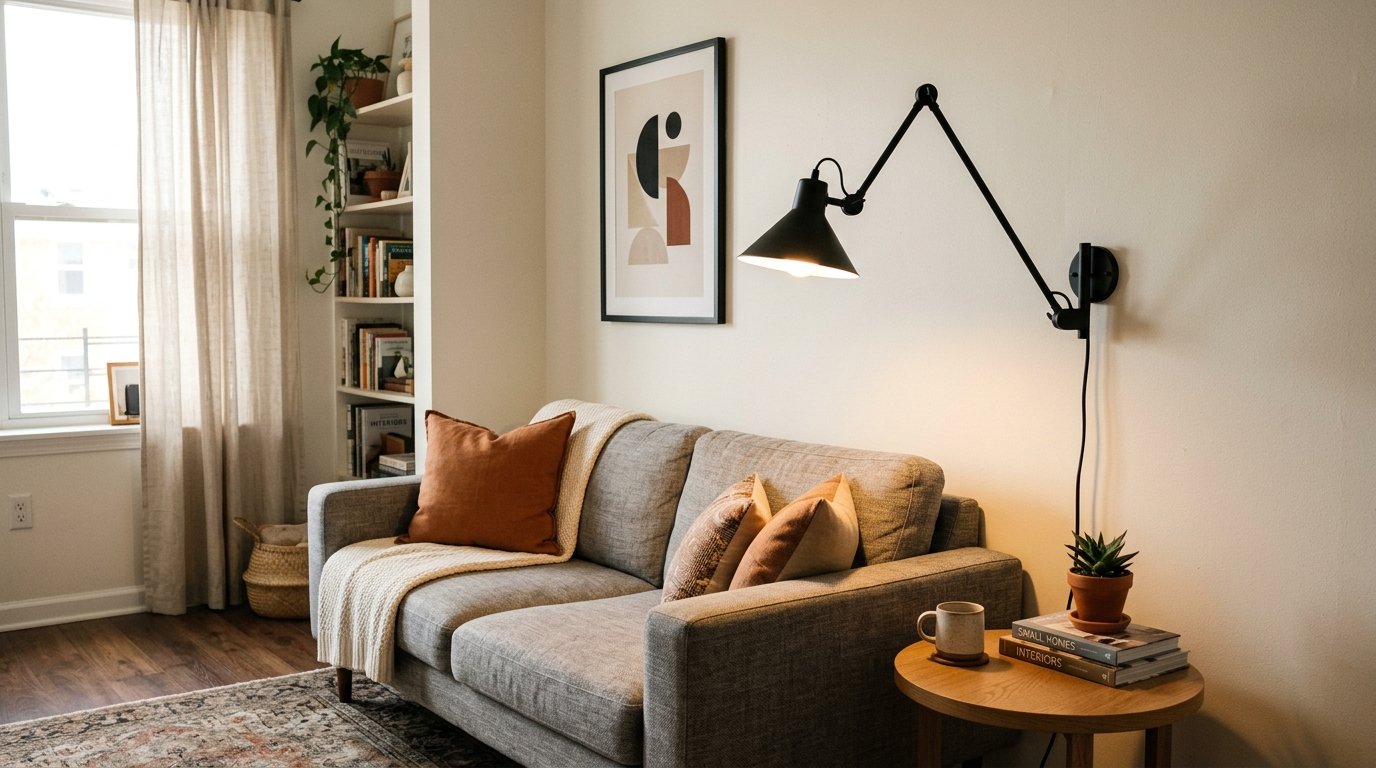
Floor lamps take up valuable floor “real estate” and cords create visual clutter. Switch to wall-mounted swing-arm sconces to free up your corners. I recommend placing one over the sofa for reading and another over the dining table for ambiance. This clears the floor for walking and makes the room feel more custom and high-end. You can find plug-in versions for $100 if you aren’t ready to hardwire. One contrarian tip: avoid “boob” lights on the ceiling as they flatten the room. Use layered wall lighting to create depth and shadows that disguise the room’s small size.
15. Partition Curtains
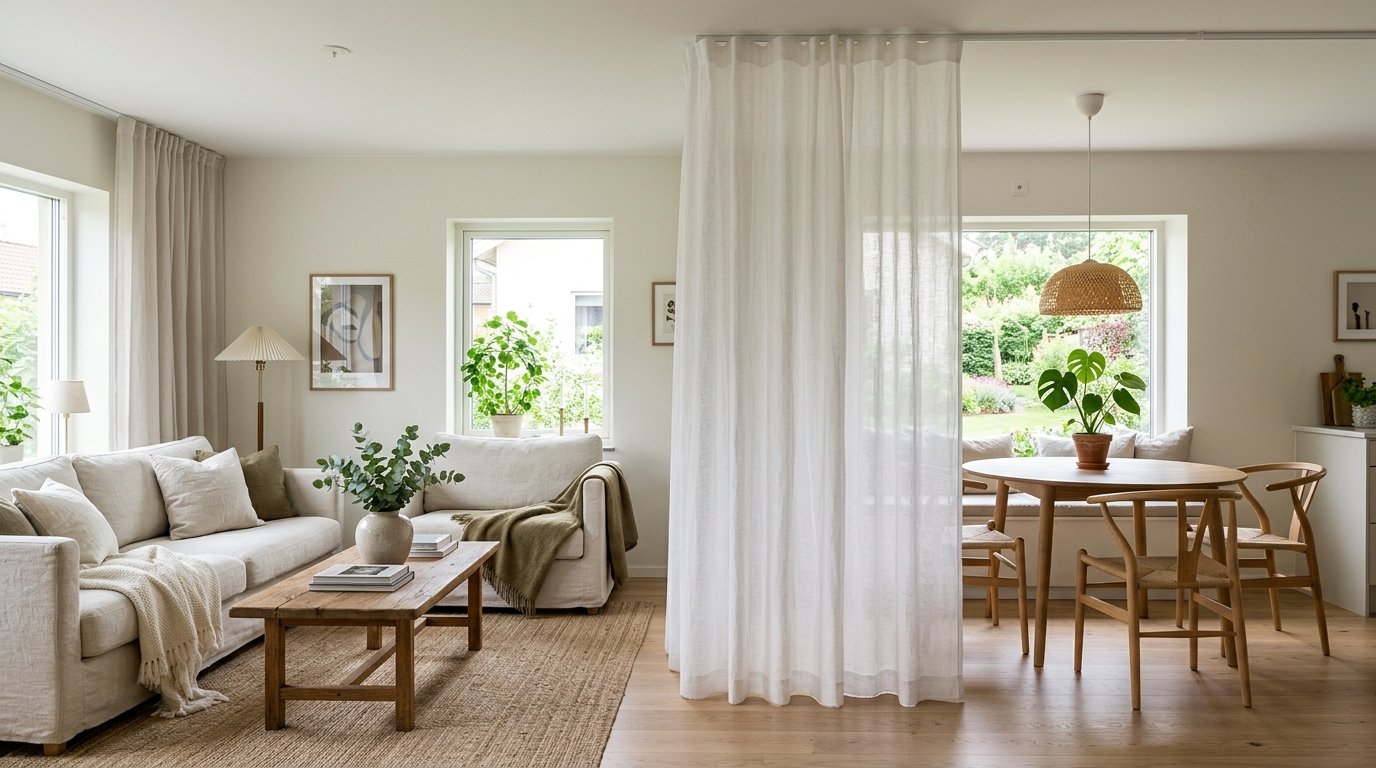
If you work from home in your small living room dining room combo a sheer partition curtain can help you “shut down” for the night. Use a ceiling-mounted track like the Vidga system which costs about $40. Choose a lightweight linen fabric that lets light through but provides a soft visual break. I’ve tried this in my own apartment and found it incredibly effective for mental health to hide the “office/dining” table during movie night. Avoid heavy blackout fabrics which feel oppressive and make the room look like a hospital ward.
16. Slim Consoles
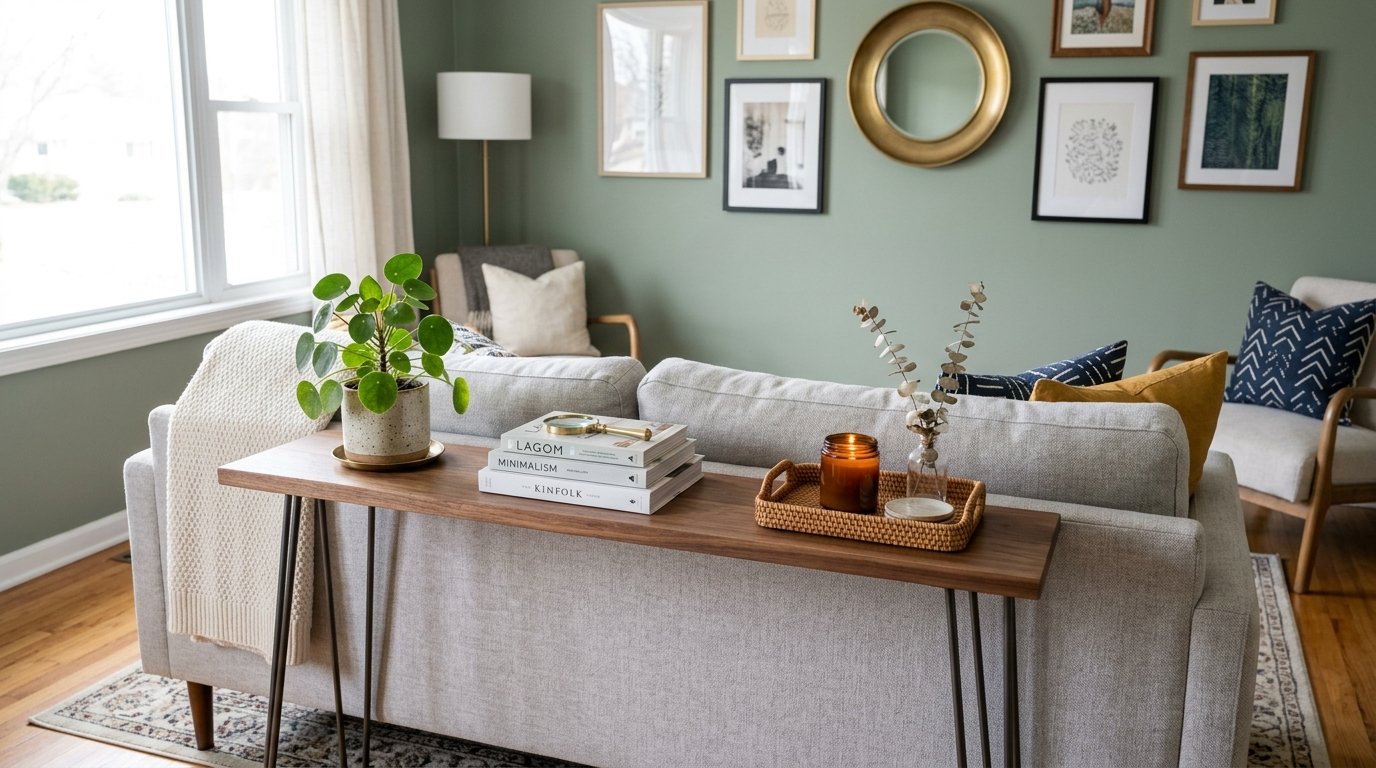
A console table that is only 10 inches deep can act as a bridge between your living and dining areas. Use it to hold a lamp and a few drinks or as a landing strip for keys and mail near the entry. This piece defines the transition without occupying the space a full-sized table would. I often find great reclaimed wood options on Etsy for around $200. This is a staple for 1 bedroom apartment decor living room layouts where every inch matters. Ensure the console is at least as long as your sofa to maintain proper proportions.
17. Integrated Benches
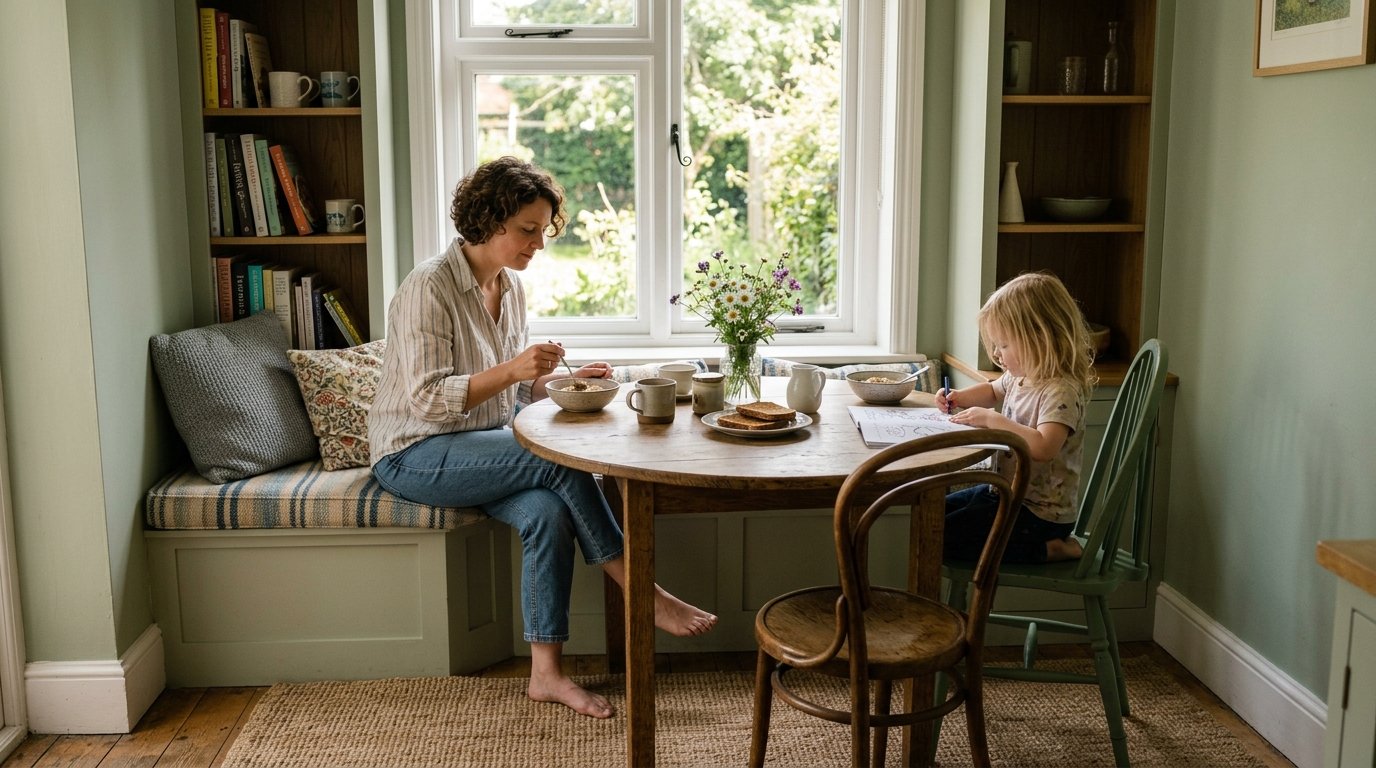
If you are lucky enough to have a window in your combo room install a window seat that doubles as dining seating on one side. This uses the “dead space” under the window and provides a cozy nook for reading. I worked on a project where we used stock kitchen cabinets from Home Depot to create a 6-foot bench for under $300. We added a custom foam cushion and it became the most popular seat in the house. This removes the need for two chairs and provides immense storage for bulky items like suitcases.
18. Barn Doors
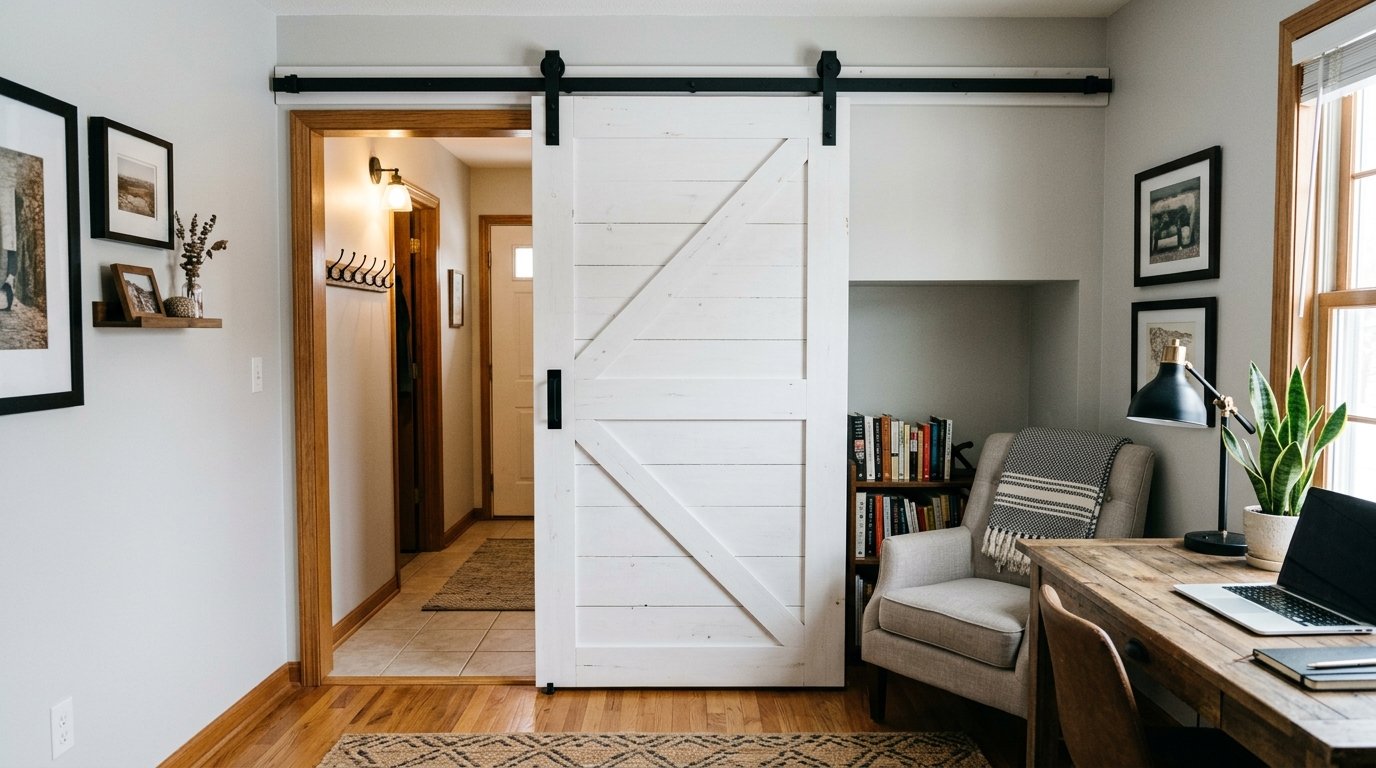
If your combo room has a closet or a bedroom entrance traditional swinging doors eat up a massive radius of floor space. Replacing them with a sliding barn door or a pocket door frees up that area for a dining table or a larger sofa. You can buy a hardware kit for $100 and a door for $150. I have seen this one change allow for a full dining with living room setup that was previously impossible. It also adds a touch of architectural interest to a plain “white box” apartment.
19. Layered Textures
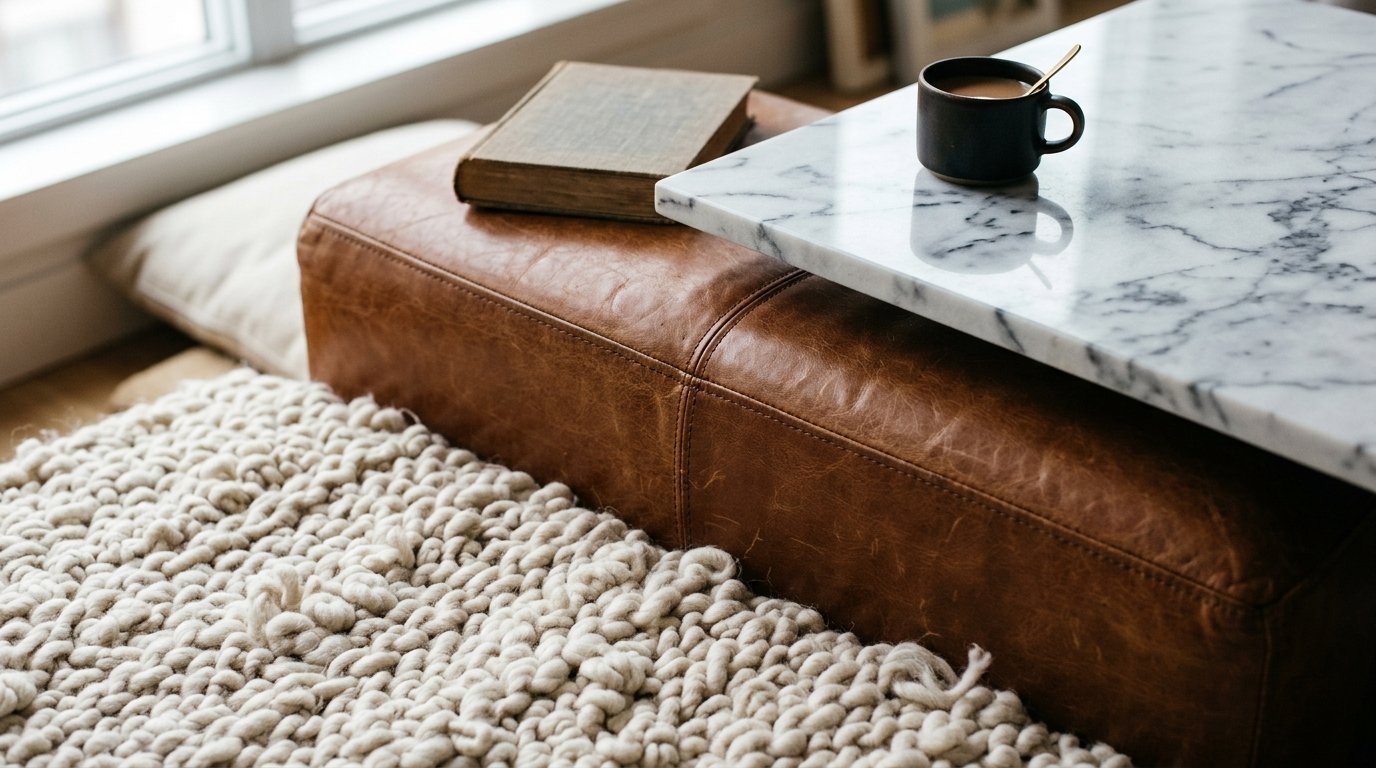
In a small space where you can’t have much furniture you must use texture to create interest. Mix a leather sofa with a wool rug and a marble table. I have noticed that flat, matching furniture sets make a room feel like a cheap hotel. By layering silk pillows on a linen sofa you create a “luxury” feel that distracts from the lack of square footage. This is essential for Airbnb decor room ideas living room hosts who want high-star ratings. You don’t need expensive items just a variety of surfaces like wood, metal, and fabric.
20. Minimalist Windows
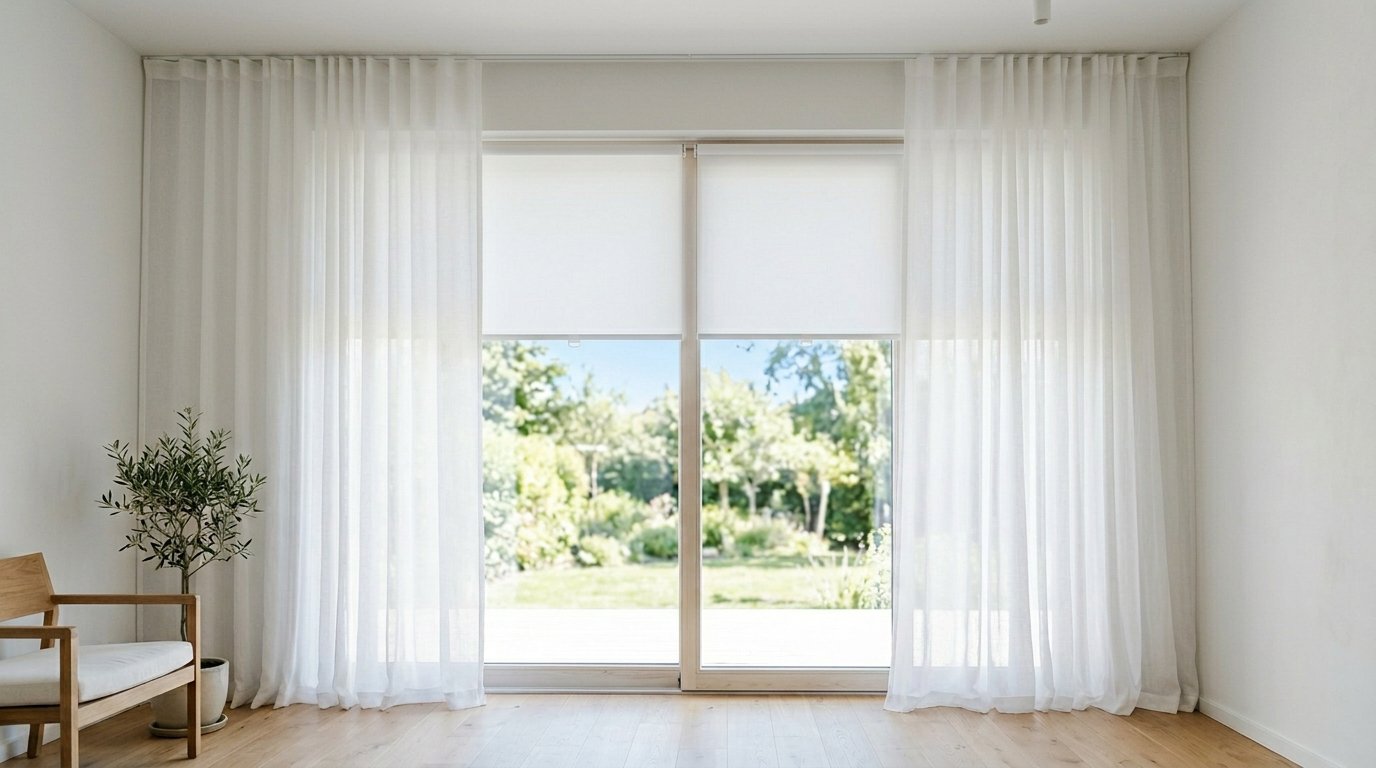
Heavy drapes with valances shrink a room and block natural light. Use simple roller shades or floor-to-ceiling sheer panels. I recommend hanging the rod as close to the ceiling as possible and extending it six inches wider than the window frame. This creates the illusion of a massive window and lets in every drop of light. You can find high-quality linen sheers at H&M Home for $40 a pair. Avoid “shorty” curtains that end at the windowsill as they look dated and visually cut the wall in half.
21. Symmetrical Layouts
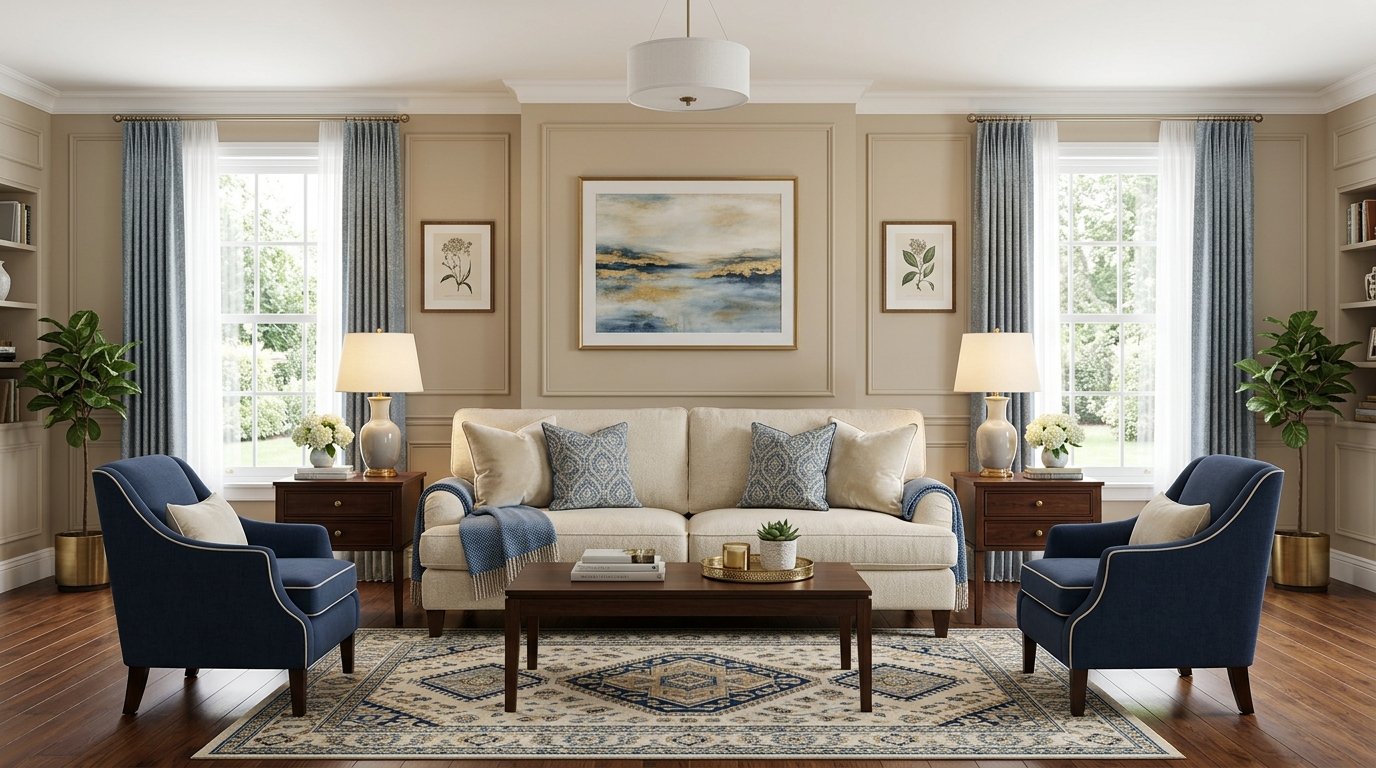
Symmetry creates a sense of order that calms the brain in a cluttered world. If your living area is centered on the TV try to center your dining area on a piece of art or a window on the opposite side. I’ve seen that lopsided rooms feel “heavy” and cramped even if they have plenty of floor space. Use pairs of items like two matching lamps or two identical plants to anchor the ends of the room. This balance makes sala ideas decor small living spaces feel intentionally designed rather than just “crammed together.”
22. Statement Pendants
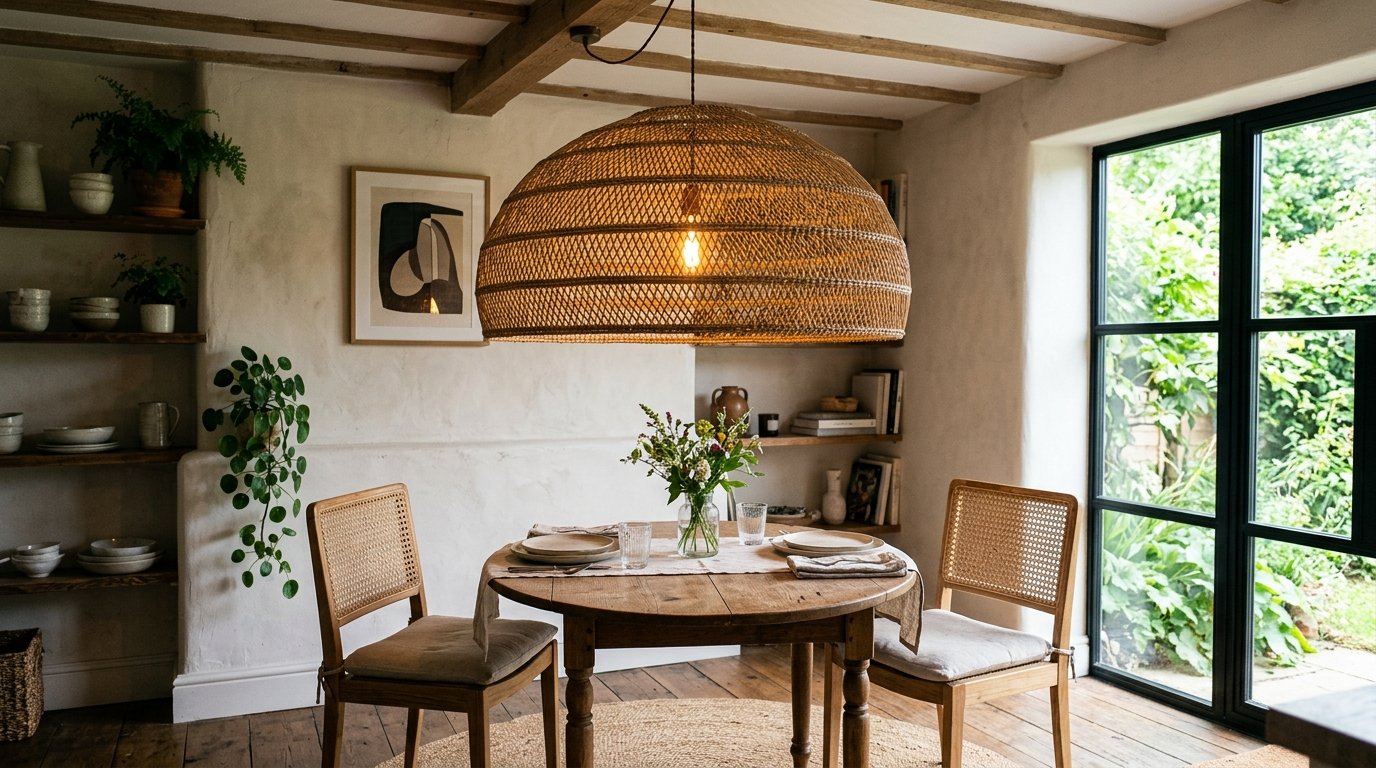
A bold light fixture over the dining table acts as an anchor for that entire zone. It draws the eye upward and defines the “dining room” without needing walls. I love using oversized woven pendants or mid-century sputnik lights which can be found for $150 to $300. Ensure the bottom of the light is about 30 inches above the tabletop. This is the single best way to make a cheap rental feel like a custom home. If you can’t hardwire use a swag kit and a wall hook for a “renter-friendly” statement.
23. Modular Sectionals
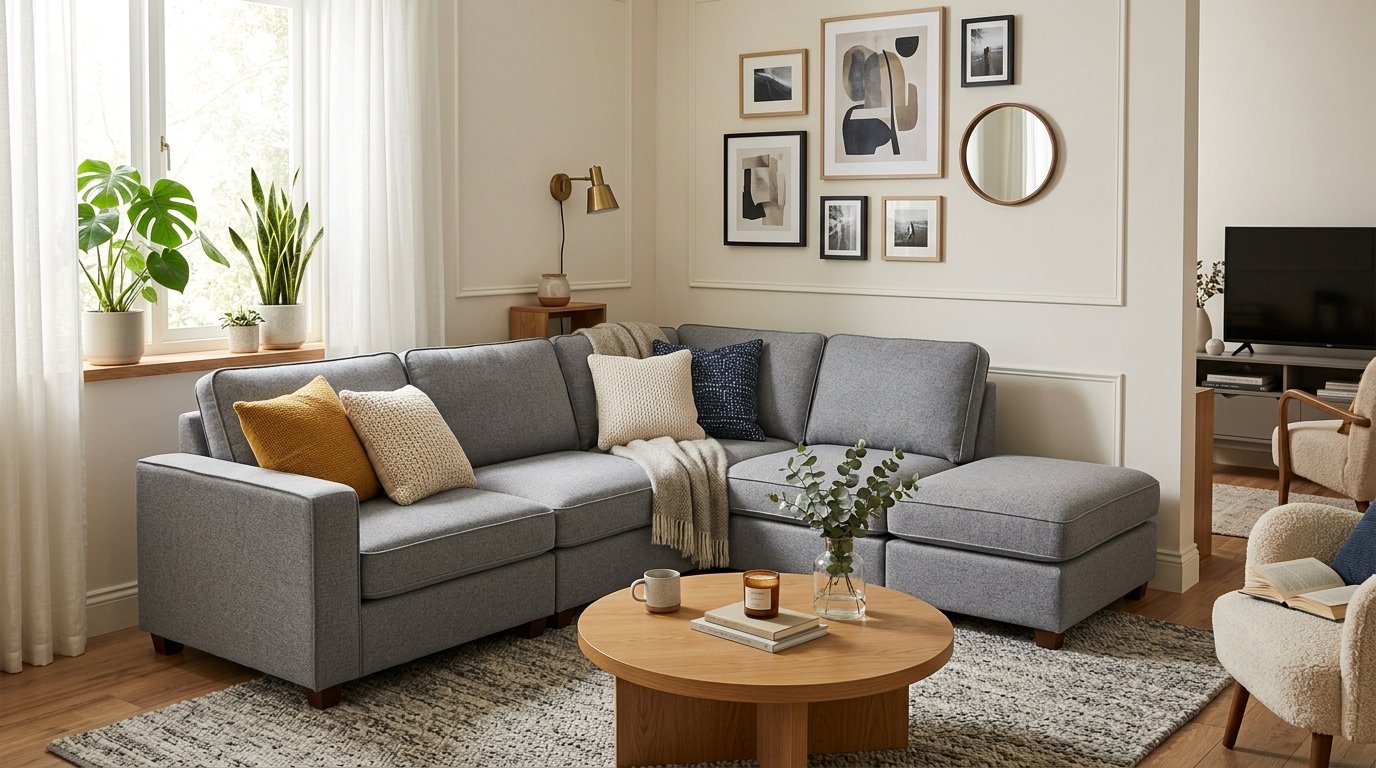
If you think sectionals are only for big houses you are missing out. A small-scale modular sectional allows you to “turn the corner” and maximize seating in a way a standard sofa cannot. I recommend a “reversible” chaise model so you can move the long end if you change your dining table size. The Burrow Nomad sofa is a great modular option starting at $1,400. This flexibility is the ultimate key to a successful small living room dining room combo that evolves with your life.
Frequently Asked Questions
How do I separate living and dining room in a small space?
The most effective way to separate these zones is through the “Rule of Rugs” and lighting. Use two distinct rugs to create visual islands for each area. Then, hang a pendant light over the dining table and use a floor lamp by the sofa. These visual anchors define the purpose of each space without the need for physical walls. In my experience, even a subtle color shift in the rugs—such as a light grey for the living area and a slightly darker charcoal for the dining side—can create a psychological boundary that makes the room feel much larger and more organized.
What size dining table is best for a combo room?
For most 1 bedroom apartments, a 36-inch round table or a 48-inch rectangular table is the maximum you should consider. Round tables are generally superior because they eliminate sharp corners and allow for more flexible seating when guests arrive. If you are extremely tight on space, look for a “bistro” style table that is 24 to 30 inches wide. I have seen many people make the mistake of buying a full-sized 6-person table “just in case,” only to realize it blocks the path to the kitchen every single day.
Can I put a sofa and dining table in a 12×12 room?
Yes, but you must use the “perimeter strategy.” Place a small sofa or a pair of club chairs on one side and a cafe-style dining set on the opposite side. Use a large mirror on the longest wall to “push” the boundaries of the room outward. I have staged several 144-square-foot rooms that felt remarkably spacious by using clear acrylic furniture and avoiding bulky armchairs. The key is to keep at least 30 inches of walking space between the two pieces of furniture to prevent the room from feeling like a storage unit.
Should my dining chairs match my sofa?
They should not be identical, but they must be “cousins.” Use a shared element like wood tone, metal finish, or fabric texture to bridge the gap. For living room ideas grey sofa enthusiasts, I often suggest dining chairs with black metal legs to match a black metal coffee table. This “hardware harmony” creates a cohesive look without being too “matchy-matchy.” In my experience, rooms that match perfectly often look like furniture showrooms rather than lived-in homes, so don’t be afraid to mix styles as long as the color palette is tight.
How do I light a room with no overhead fixtures?
If you are in a rental with no ceiling lights, use the “Three Points of Light” rule. Place a floor lamp in one corner, a table lamp on a console, and a plug-in wall sconce or a “swag” pendant over the dining area. This creates a triangle of light that illuminates the entire space and allows you to control the mood. I’ve noticed that relying on a single bright lamp makes a small room feel harsh and flat, whereas multiple soft light sources add depth and hide imperfections in the layout.
Is it okay to push my furniture against the walls?
Actually, “floating” your furniture—even just three inches away from the wall—makes a room feel bigger. When furniture is jammed against the baseboards, it highlights the exact limits of the room. By pulling the sofa slightly toward the center, you create a sense of airiness and shadows that trick the eye into seeing more depth. I always recommend leaving a small gap behind the sofa for a slim console table or even just “breathing room” to improve the energy flow of the space.
Conclusion
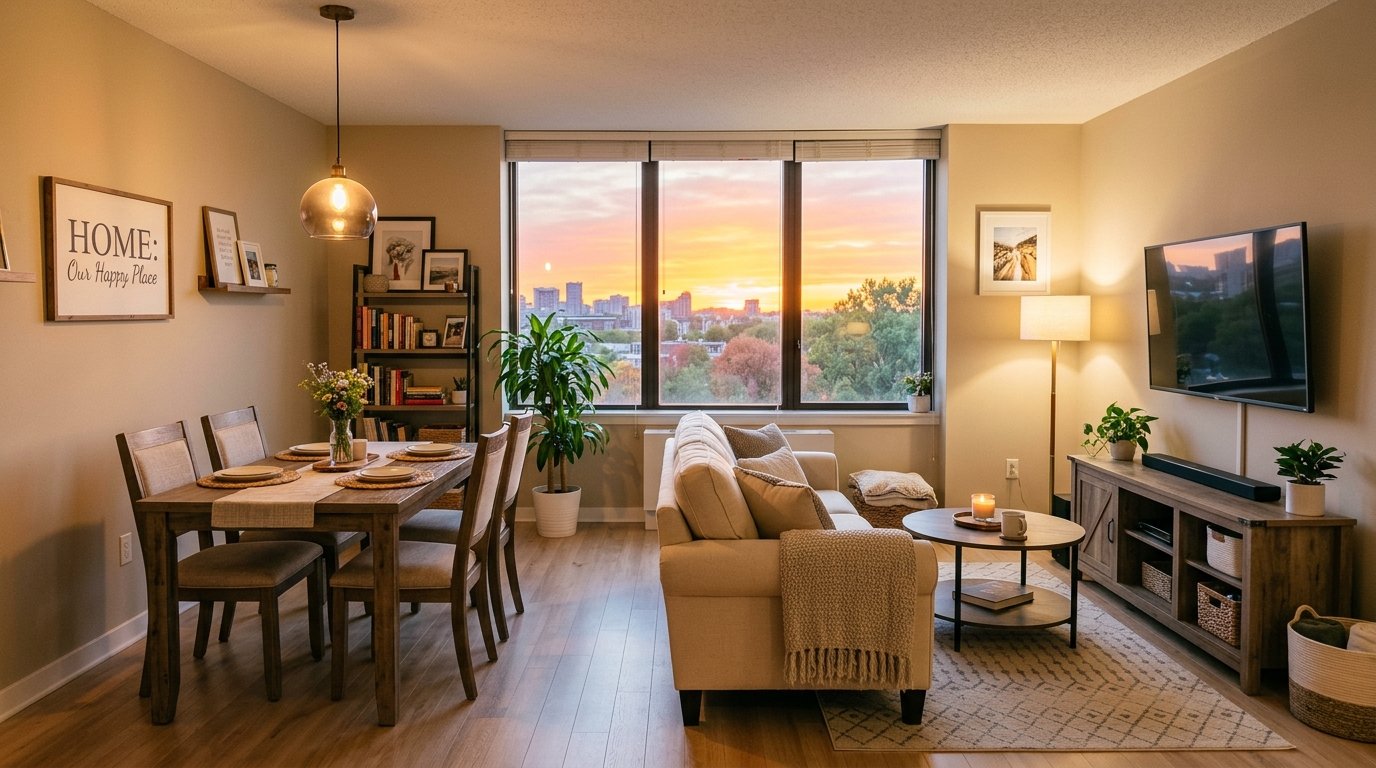
Transforming a small living room dining room combo is not about finding more square footage; it is about finding smarter ways to use what you already have. By implementing these 23 ideas, you can turn a cramped apartment into a sophisticated, multi-functional home that reflects your personal style. I have seen how small changes like switching to a round table or adding a few strategic mirrors can completely transform a person’s daily life and pride in their space. Start with one change this weekend—perhaps a new rug or a low-profile lamp—and see how much better your home feels. Save this post on Pinterest to keep these layout strategies handy for your next decorating project, and share it with anyone struggling to make their tiny urban space work.