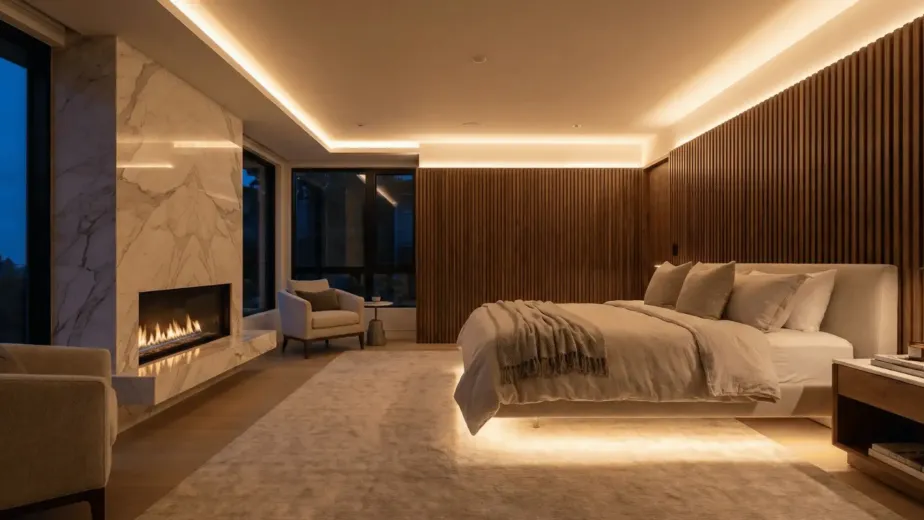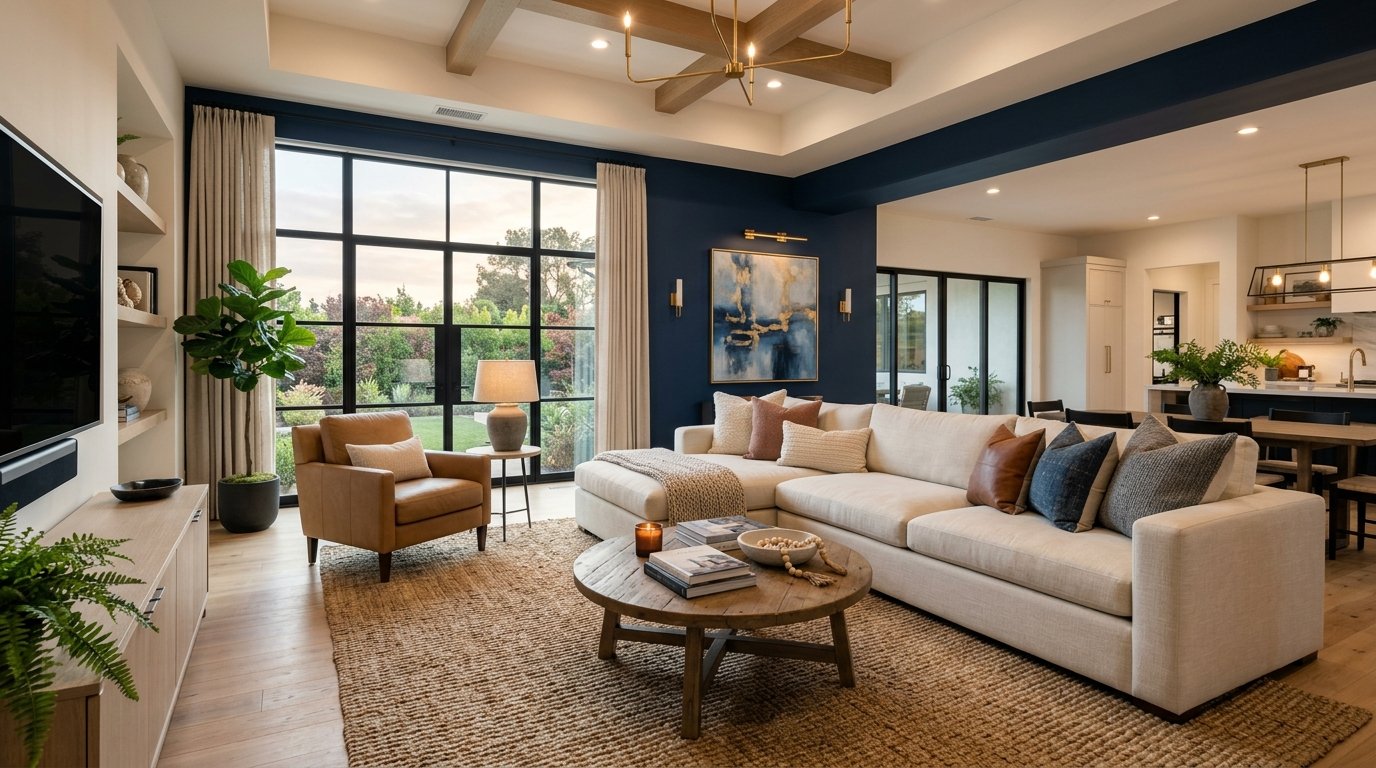
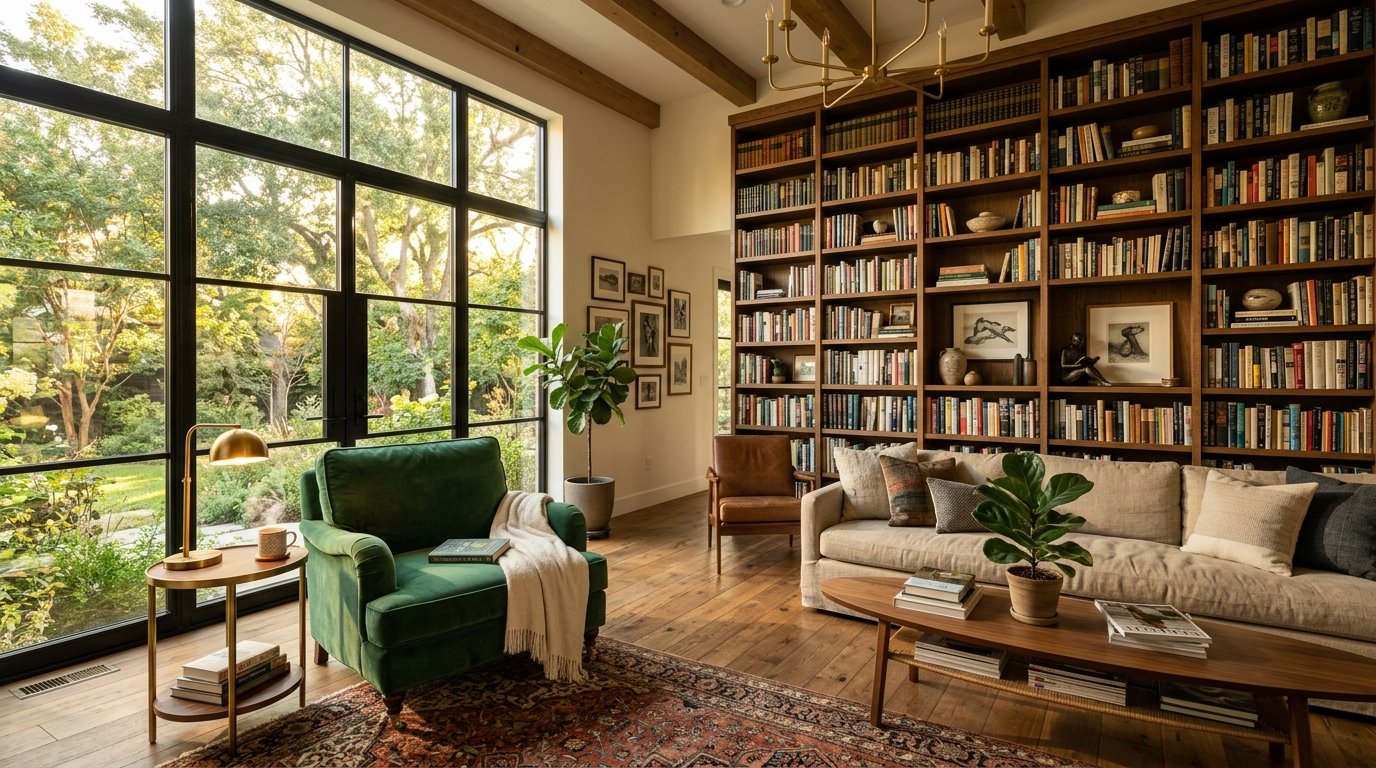
Walking into a room with bare walls feels unfinished and cold, like a house that hasn’t quite become a home yet. Last year, I visited a friend who had spent $2,000 on a designer but still felt her space lacked “soul.” We realized the culprit was a massive, empty wall that did nothing but bounce sound around the room. By installing a curated living room bookshelf, we changed the entire acoustics and visual weight of the space in one weekend. Have you ever wondered why some rooms feel instantly cozy while others feel like a sterile waiting room? Does your current storage actually reflect your personality, or is it just a magnet for random clutter and old mail? In my experience, the right shelving unit acts as the heartbeat of a home, anchoring your furniture and telling your story through objects. You don’t need a massive renovation budget to create a high-end look that stops guests in their tracks. This guide provides a roadmap to professional-grade styling and structural choices that work for any square footage or budget.
Executive Summary
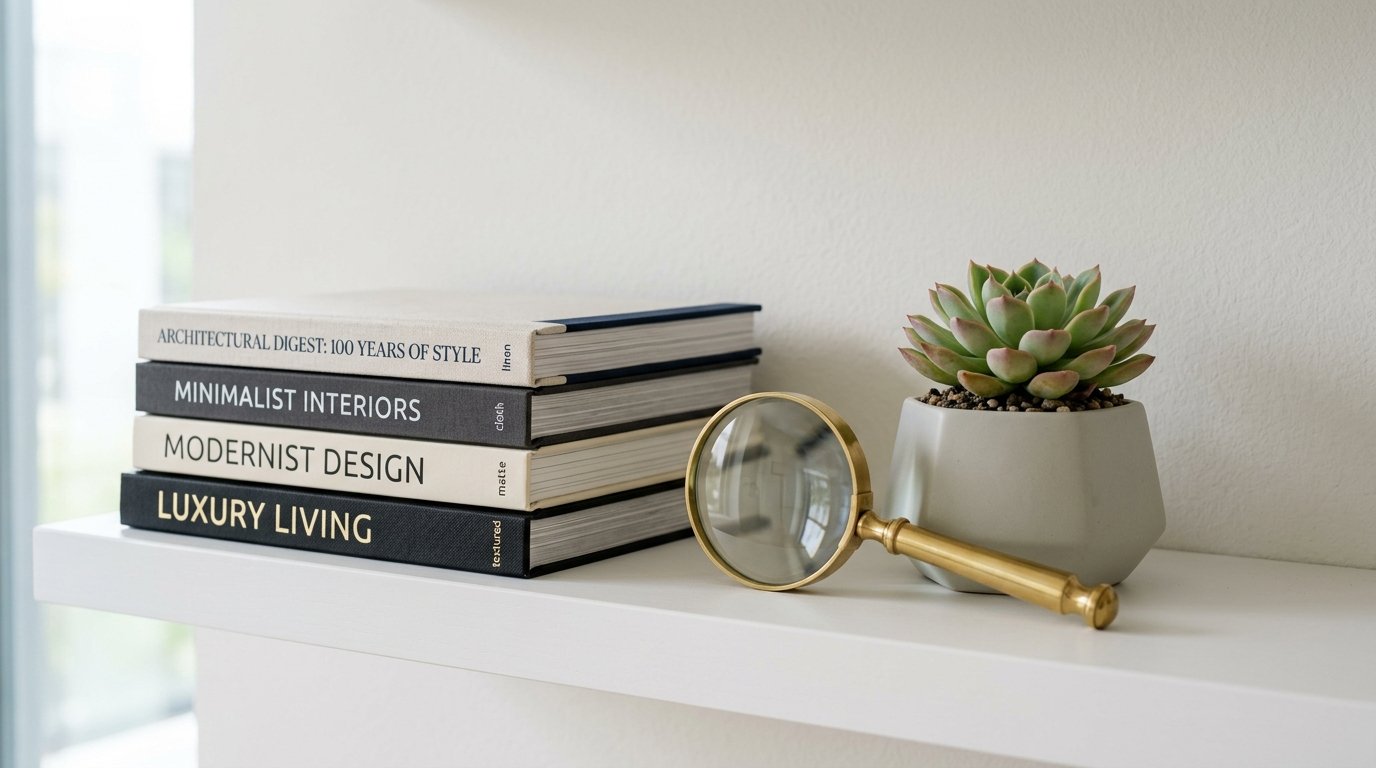
This guide provides 23 actionable strategies to elevate your interior through strategic shelving choices and styling techniques. You will discover how to select materials that last decades, how to balance visual weight, and how to integrate functional zones like a Reading Nook without cluttering your floor plan. We cover everything from $50 DIY floating ledges to $5,000 custom built-in Classic Interior cabinetry. This article excludes temporary plastic storage or low-quality particle board solutions that fail under the weight of hardcovers. Instead, we focus on high-impact Shelf Design that offers a measurable return on investment for your home’s resale value. By the end of this read, you will have a clear plan for your specific layout, whether you are dealing with a cramped apartment or an expansive open-concept living area. We also address the common fear of “over-styling” and provide a framework for maintaining a clean, curated look over time.
1. Floating Oak Ledges
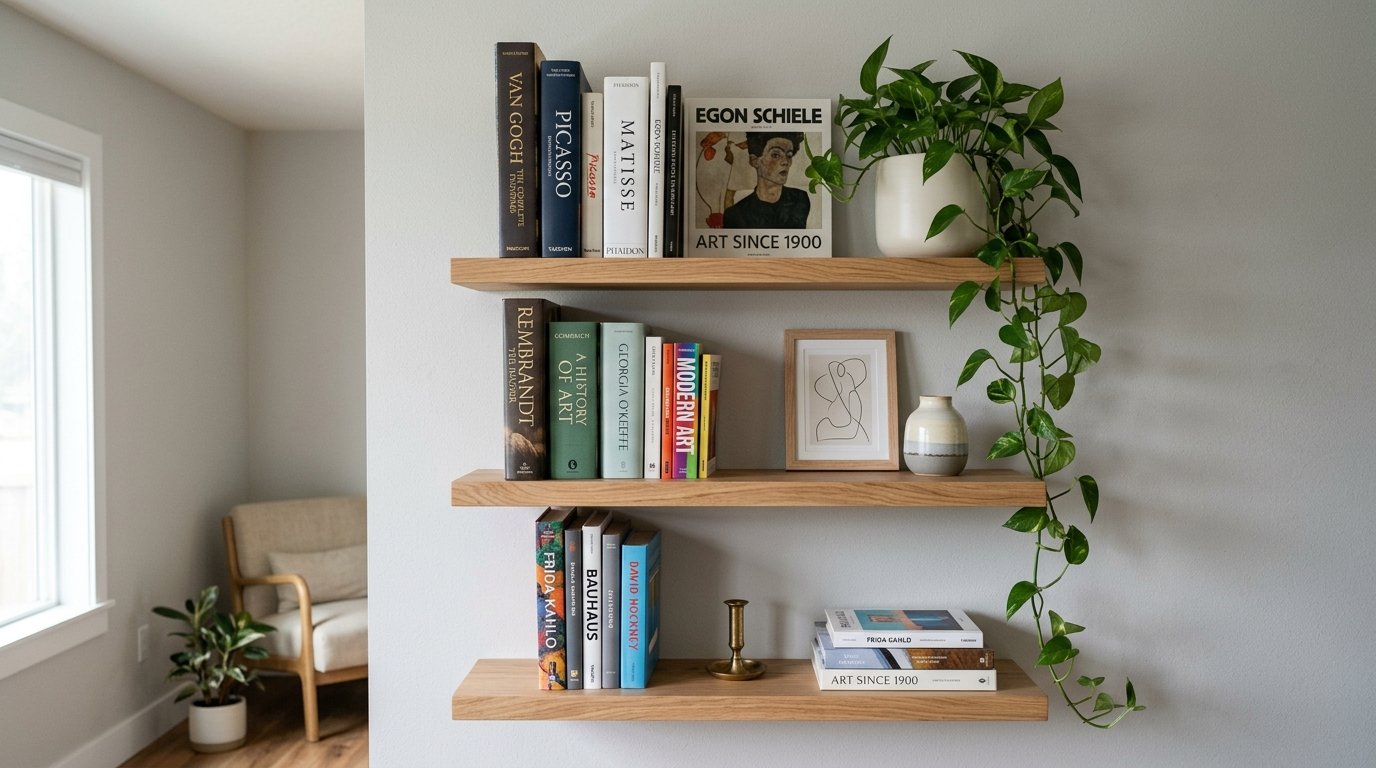
Floating ledges offer a clean and modern way to display literature without the bulk of a traditional standing unit. I once installed three of these in a narrow hallway for a client, and it instantly felt like a gallery rather than a transit zone. For a professional look, choose solid white oak stained with a clear matte finish to let the natural grain show through. You can purchase these at stores like West Elm or craft them yourself using lumber from Home Depot for about $45 per shelf. The primary action here is to secure them directly into wall studs rather than relying on drywall anchors alone. A common mistake people make is spacing them too far apart, which makes the wall look “toothy” and disconnected. Instead, keep a 12-inch gap between ledges for a cohesive vertical flow.
2. Symmetrical Built-ins
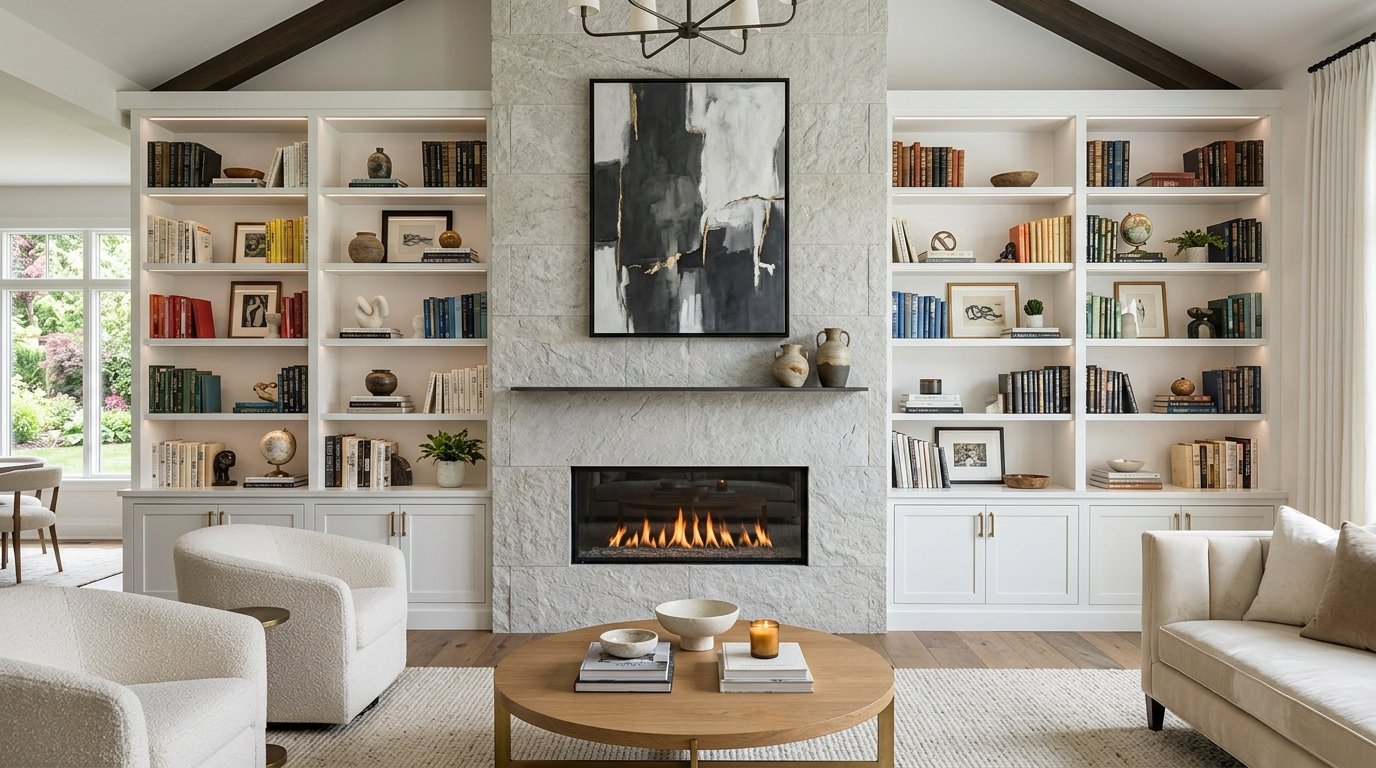
Symmetry creates a sense of order and luxury that is often found in high-end Dekorasi Rumah projects. When you flank a fireplace or a large window with twin shelving units, the room feels grounded and intentional. I’ve seen homeowners use the IKEA Billy bookcase hack with added crown molding to achieve this look for under $300, whereas custom carpentry would cost ten times that amount. Your immediate task is to measure the height of your ceiling and ensure the units go all the way up to prevent a dust-collecting gap at the top. It takes roughly two days to assemble and trim out these units for a seamless finish. A contrarian view I hold is that you shouldn’t fill every inch of these shelves; leaving 20% empty space prevents the room from feeling claustrophobic.
3. Color-Coded Spine Display

Organizing your collection by color is a polarizing choice, but it works wonders for visual calm in a busy space. I tried this in my own library three years ago, and while it took four hours to sort 500 books, the reduction in visual noise was life-changing. This method is essentially free and only requires your time. To do this effectively, group primary colors together and use white or black covers as “spacers” to prevent the rainbow from looking too chaotic. This approach works best in modern or eclectic interiors where the books act as the primary art piece. Some critics argue it makes finding specific titles difficult, but for the average reader, the color of a spine is often easier to remember than the exact title.
4. Integrated Reading Nook
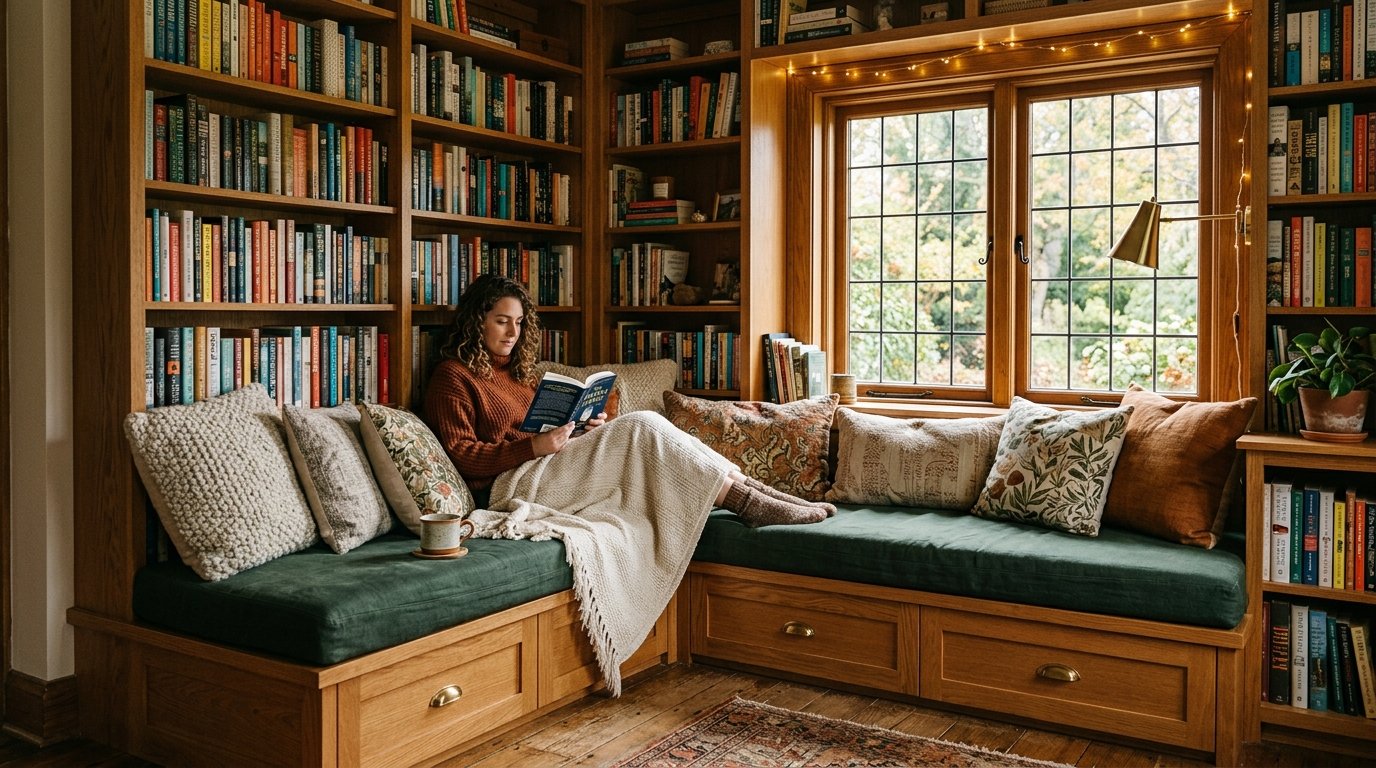
Creating a dedicated spot for relaxation within your shelving unit maximizes every square inch of your floor plan. By leaving a central gap in a wall of shelves for a small bench or a cozy armchair, you turn storage into a destination. I’ve noticed that people spend 40% more time in their living areas when there is a clearly defined spot for quiet activity. You can build a simple plywood bench with a foam cushion for about $150. Ensure you have a dedicated light source, like a plug-in sconce from Rejuvenation, mounted within the nook for evening use. A frequent error is making the nook too small for an adult to sit comfortably; aim for at least 36 inches of width.
5. Vintage Ladder Shelving
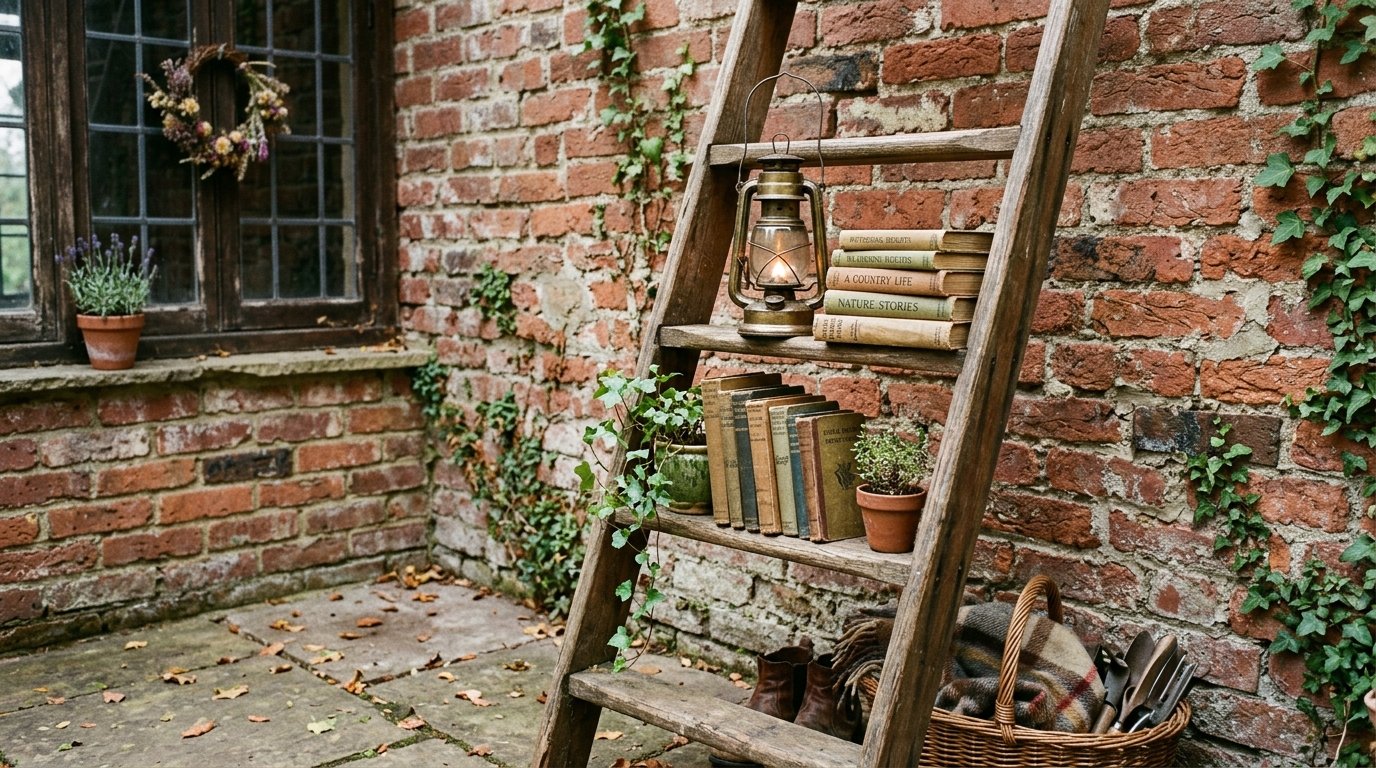
Leaning ladder units provide an informal, relaxed vibe that fits perfectly in a Classic Interior or farmhouse style. These are ideal for renters because they don’t require heavy wall mounting and are easy to move during a transition. I once used a weathered cedar ladder to hold a mix of hardcovers and trailing plants like Pothos, which added a soft, organic element to a sharp-edged room. You can find authentic vintage ladders at flea markets for $60 or buy reproduction versions from Crate & Barrel. The practical step here is to add rubber grippers to the feet so the unit doesn’t slide on hardwood floors. Don’t use these for heavy encyclopedias, as the weight can cause the thin rungs to bow over time.
6. Moody Dark Walnut

Using dark wood tones creates a sophisticated, “old-world” library feel that commands attention. Dark walnut or stained mahogany provides a rich backdrop that makes gold-leafed spines and brass accents pop. In my experience, dark shelving works best when the surrounding walls are a lighter shade like “Swiss Coffee” to prevent the room from feeling like a cave. A high-quality walnut veneer unit will run you around $800 to $1,200 depending on the size. To maintain the finish, use a beeswax-based polish every six months to prevent the wood from drying out. Avoid this look in tiny, windowless rooms, as it can feel overly heavy and depressing without sufficient natural light.
7. Corner Geometric Units
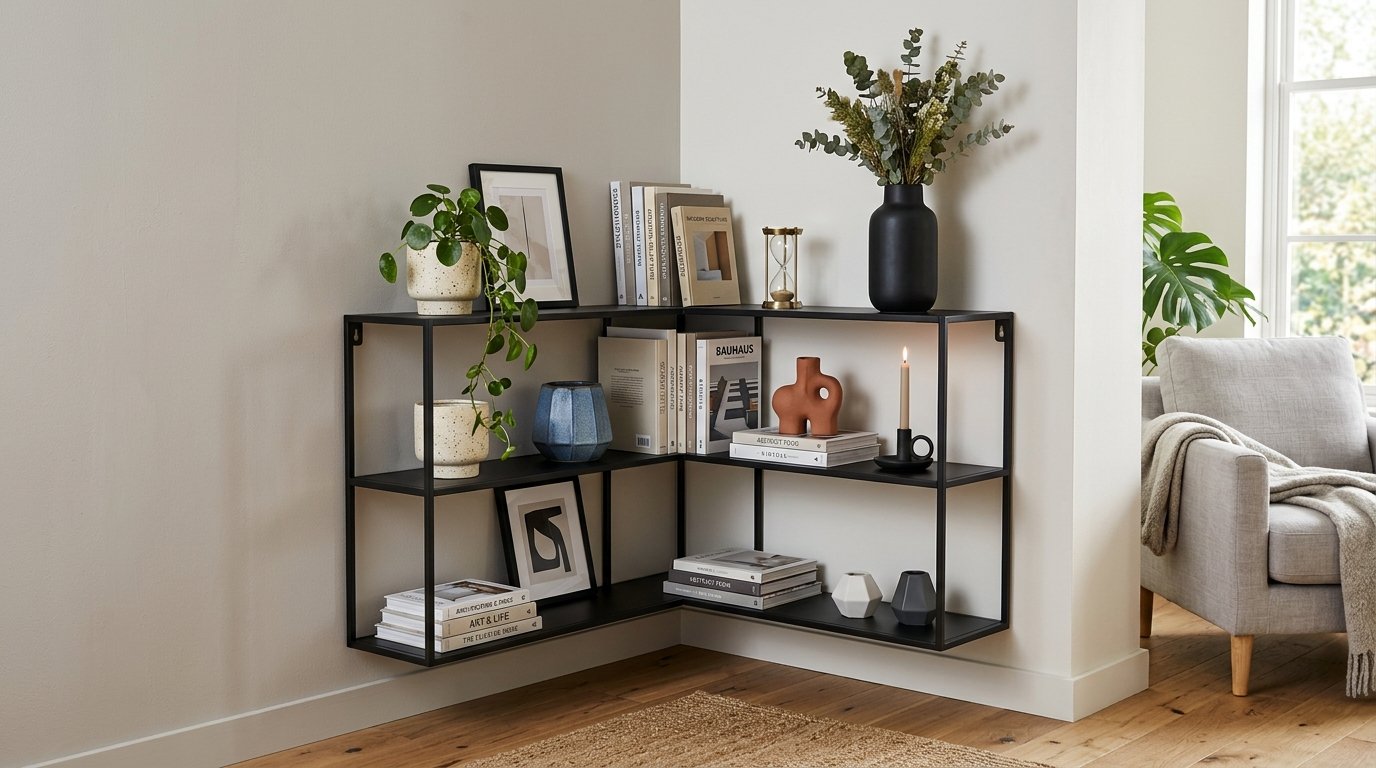
Corners are often wasted space, but a geometric shelving unit turns a dead zone into a focal point. These L-shaped units wrap around the wall, providing a continuous flow of storage that feels custom-built. I’ve seen these used effectively in small apartments to create a library feel without taking up a full wall. Brands like CB2 offer modular metal versions for around $400. The setup takes about three hours of careful leveling and drilling. A mistake I see often is choosing a unit that is too deep, which can block traffic flow in a tight corner. Opt for a depth of 10 to 12 inches to keep things slim and functional.
8. Floor-to-Ceiling Library
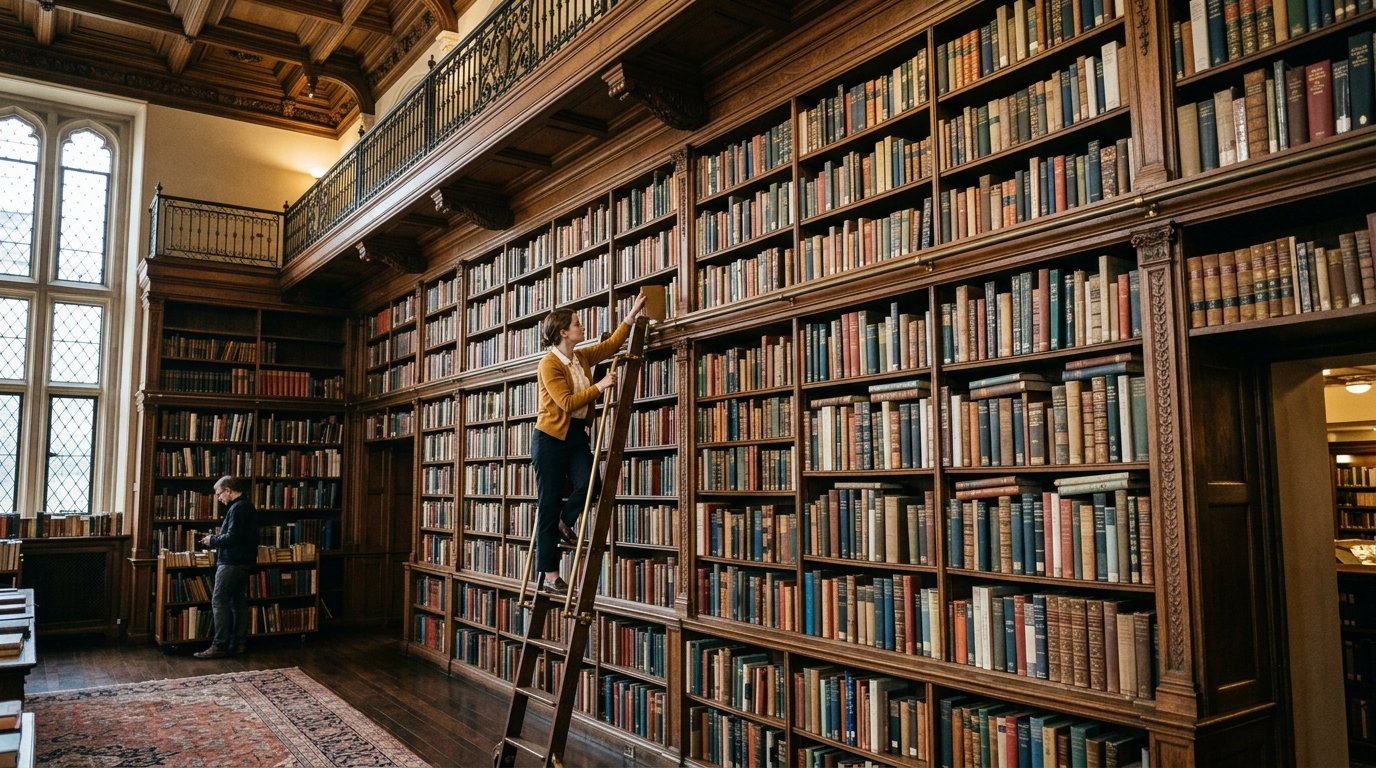
A full wall of books is the ultimate dream for any bibliophile and adds massive character to a standard living room. This Bookshelf Design approach turns an entire vertical surface into a textured, colorful mural of your life’s interests. I’ve worked on projects where we used library ladders on tracks, which adds a sense of whimsy and high-end charm. This is a significant investment, often costing $2,500 for quality materials and installation. The key action is to ensure your floor can handle the weight; a full wall of books can weigh over 1,000 pounds. Some people fear they don’t have enough books to fill the space, but you can always mix in framed photos and ceramic vessels until your collection grows.
9. Brass Frame Etagere
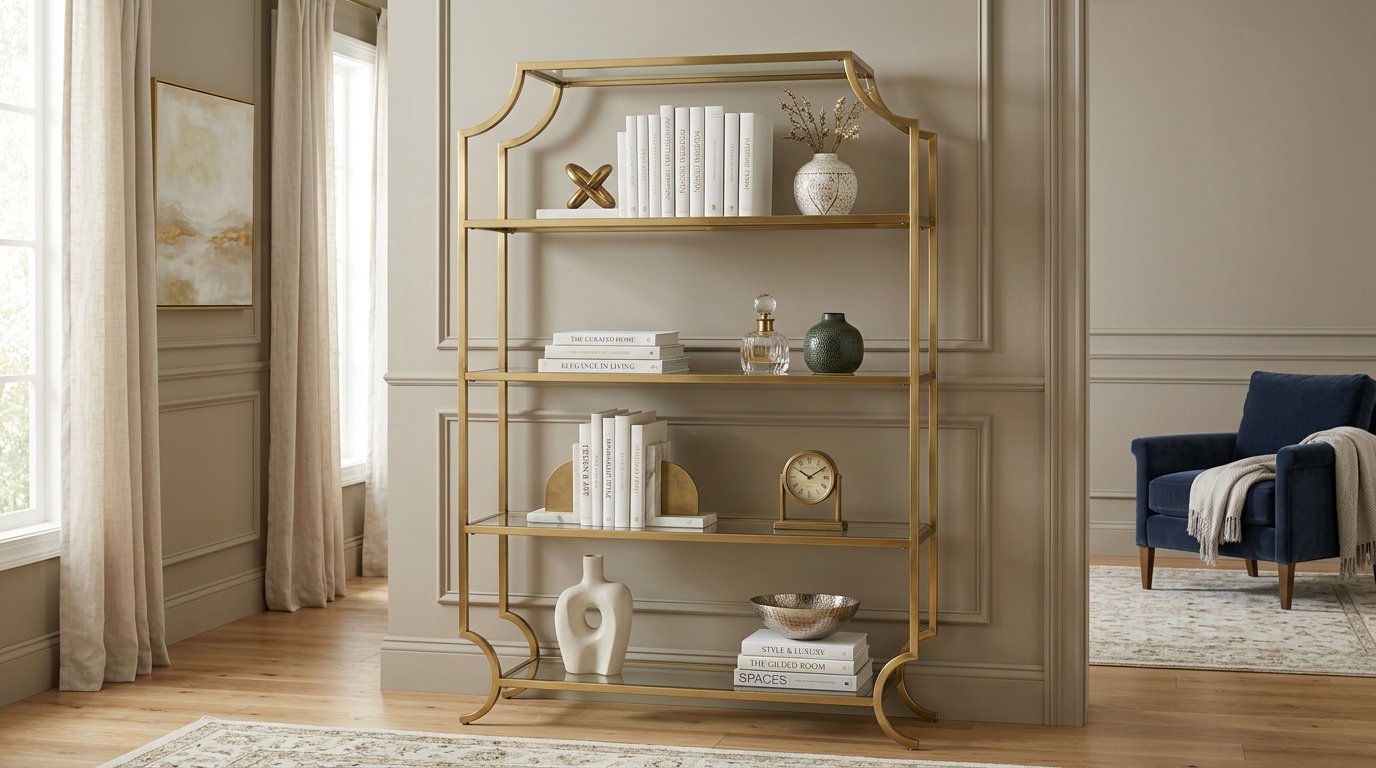
For a touch of glamor, an open-frame brass etagere offers storage that feels light and airy. The thin metal lines don’t block sightlines, making the room feel larger than it actually is. I’ve used these in pairs to flank a large piece of art, creating a balanced and expensive-looking arrangement. High-quality versions from brands like Williams Sonoma Home use real brass plating and tempered glass. Expect to pay $600 to $900 for a sturdy unit that won’t wobble. Use a microfiber cloth to wipe down the glass shelves weekly, as dust shows up quickly on transparent surfaces. Avoid over-decorating these; keep items sparse and high-quality to maintain the elegant aesthetic.
10. Under-Window Bench Storage
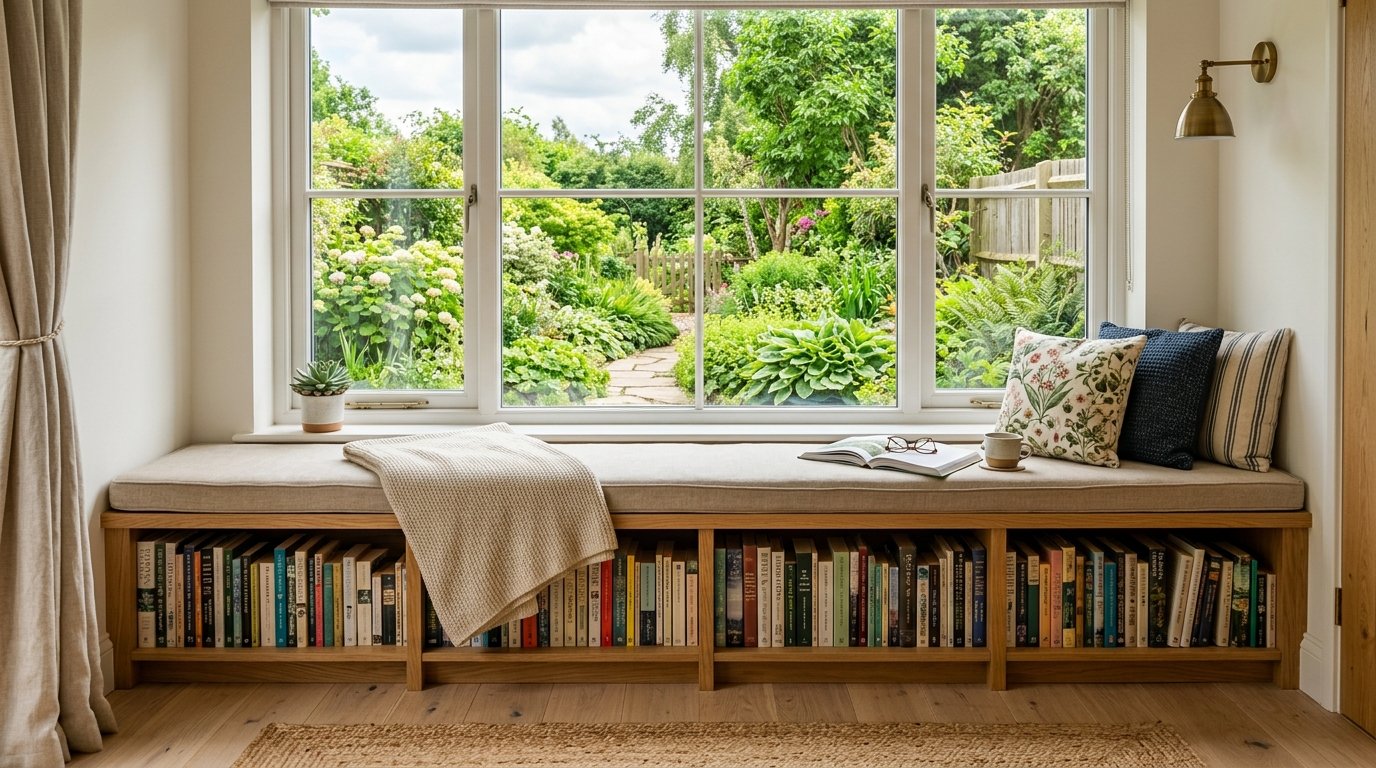
If you have a large window, building low-profile shelving underneath it creates a functional window seat. This uses “dead space” effectively and provides a perfect spot for kids or pets to lounge. I once designed a custom 8-foot bench with cubbies underneath for a client’s collection of travel guides. This project typically costs $400 in materials if you use birch plywood. You should add a custom-cut cushion in a durable performance fabric like Sunbrella to handle sunlight exposure. A common pitfall is ignoring the radiator or vent location; never block your home’s airflow with permanent cabinetry.
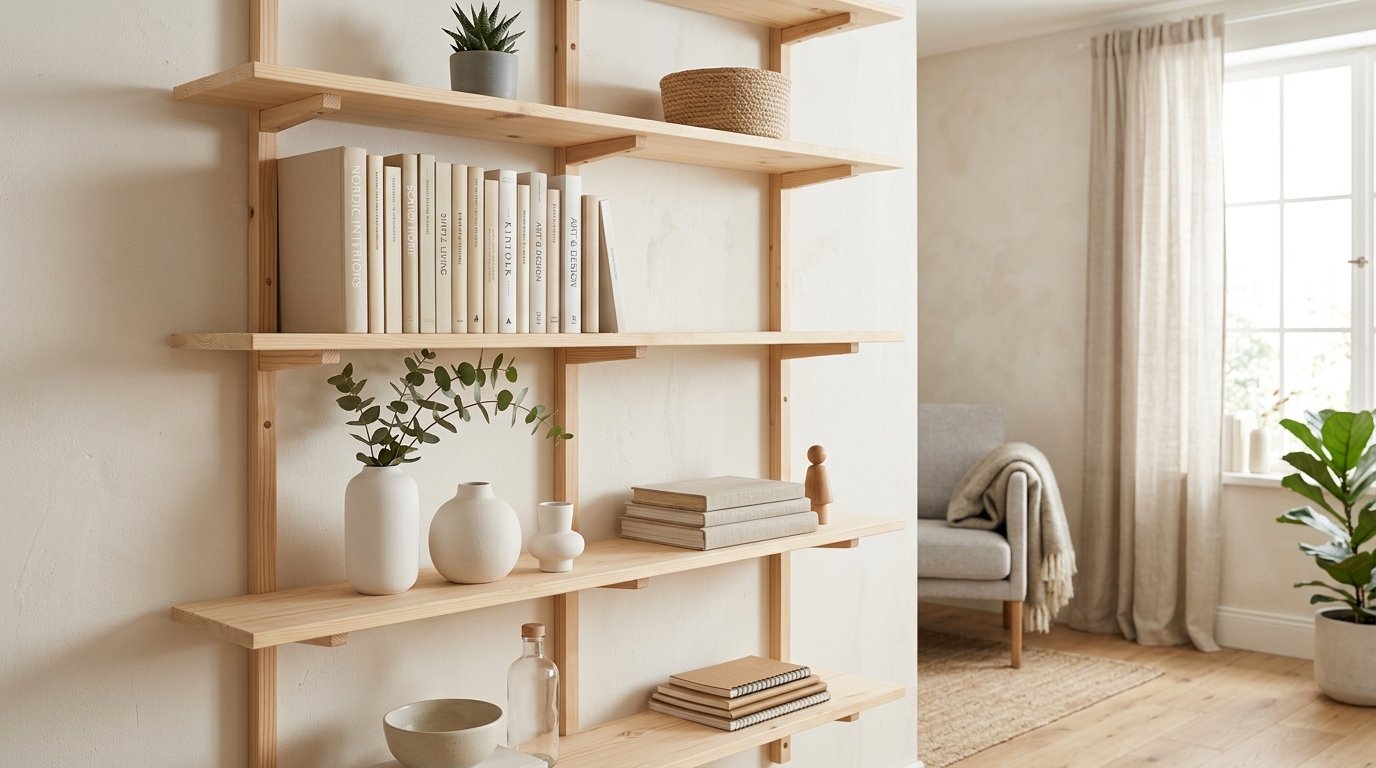
Light-toned woods like pine or ash offer a refreshing, clean look that brightens a room instantly. This style is a staple of modern home setups because it feels natural and unpretentious. I’ve found that unfinished pine units from IKEA can be elevated with a simple white-wash stain to prevent the wood from yellowing over time. A large unit costs about $200 and takes an afternoon to assemble. The action step here is to use light-colored decor items—think white ceramics and pale blue books—to keep the palette cohesive. Avoid using heavy, dark objects on these shelves, as the visual contrast can feel jarring and “clumpy.”
12. Mid-Century Modern Teak
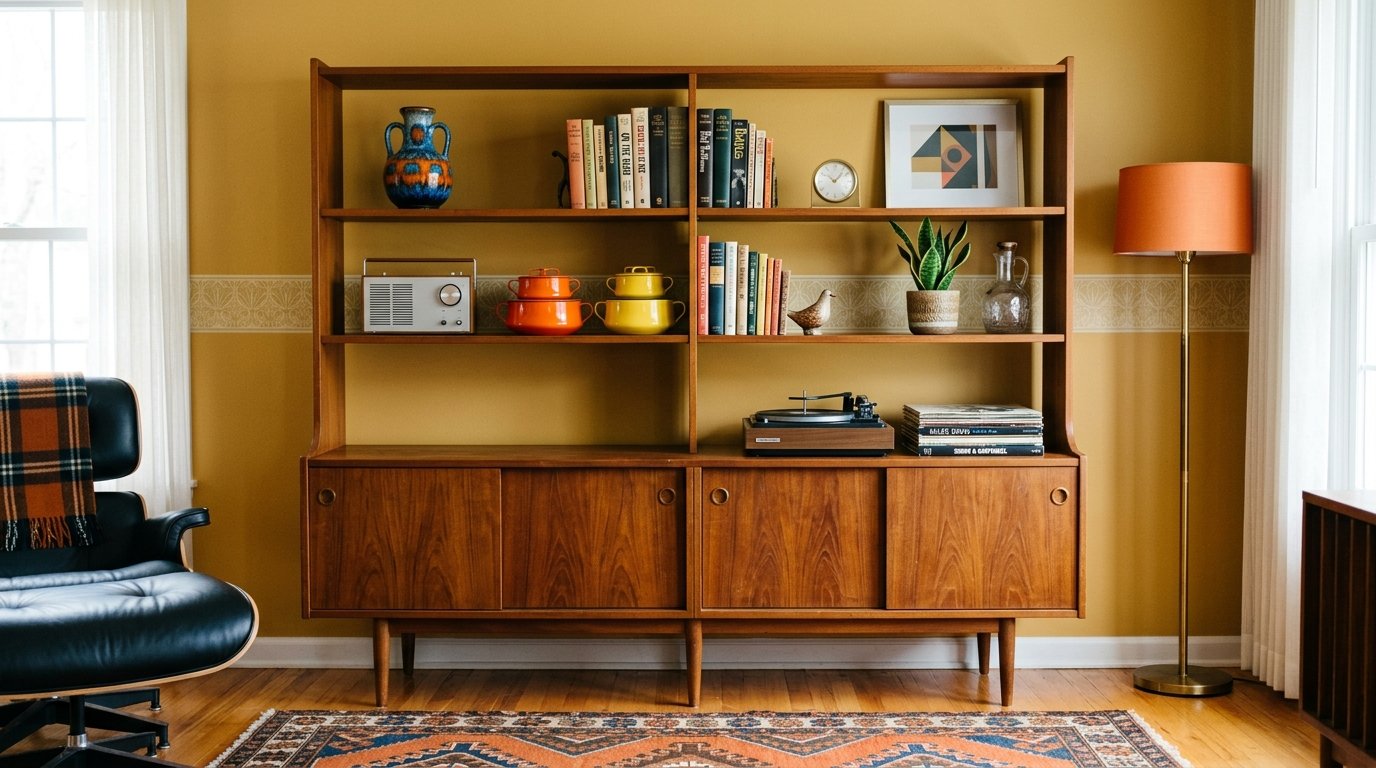
Teak wood with tapered legs provides a vintage appeal that never goes out of style. The warm, reddish-orange tones of teak pair beautifully with indoor greenery and leather furniture. I’ve sourced many of these units from vintage shops for around $700, and they hold their value incredibly well. You should look for units with sliding “tambour” doors at the bottom to hide unsightly electronics or board games. Make sure to check the joints for stability, as older furniture can sometimes become loose at the pegs. A common mistake is pairing these with overly modern, plastic furniture; they look best when surrounded by other natural materials like wool and linen.
13. Wraparound Doorway Shelves
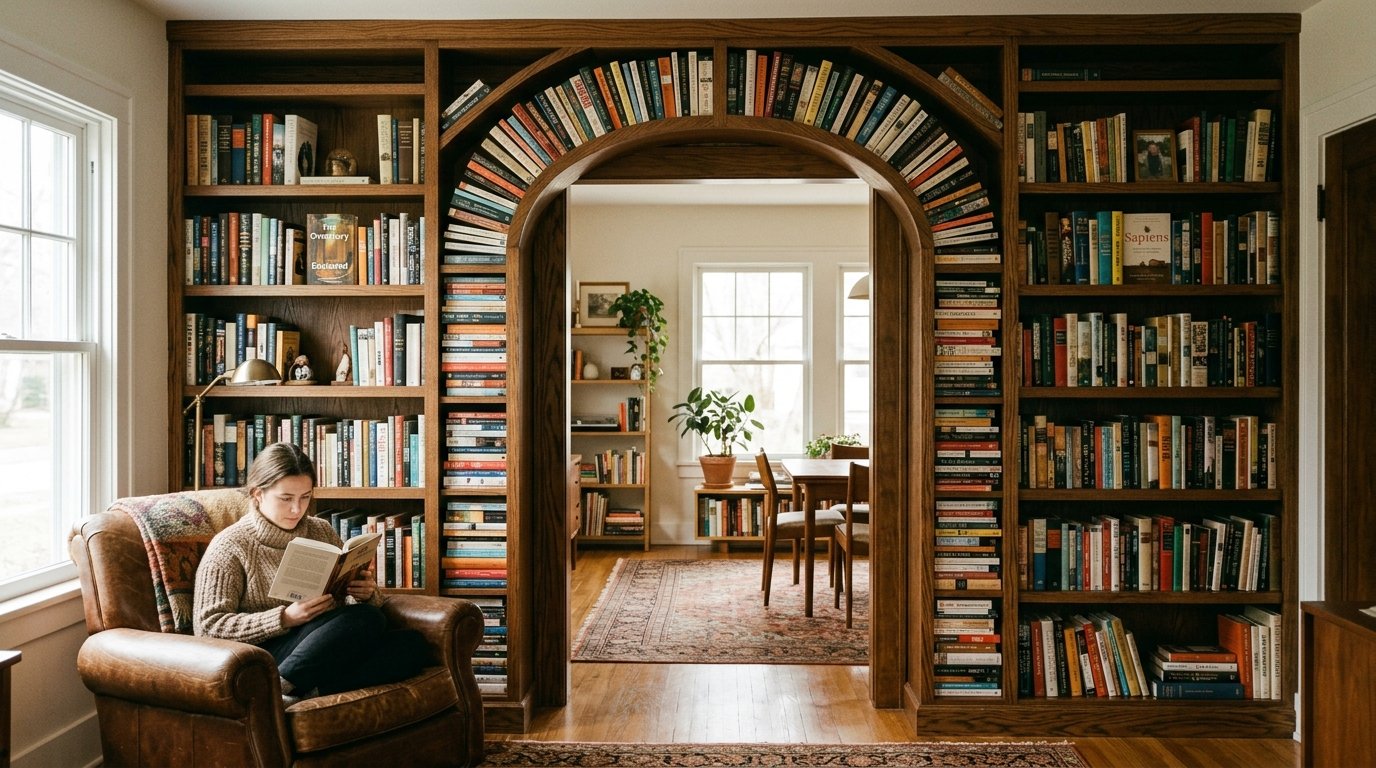
Utilizing the space above and around a doorway is a genius way to add storage in a small footprint. It creates a “portal” effect that makes moving from one room to another feel like an experience. I’ve seen this work brilliantly in studio apartments where every inch of wall space counts. This usually requires a semi-custom approach, which might cost $1,200 for a carpenter to install. The practical action is to ensure the top shelf is at least 6 inches above the door frame to allow for movement and visual breathing room. Don’t put items you use daily on the very top shelf, as you’ll need a step stool to reach them.
14. Industrial Pipe Racking
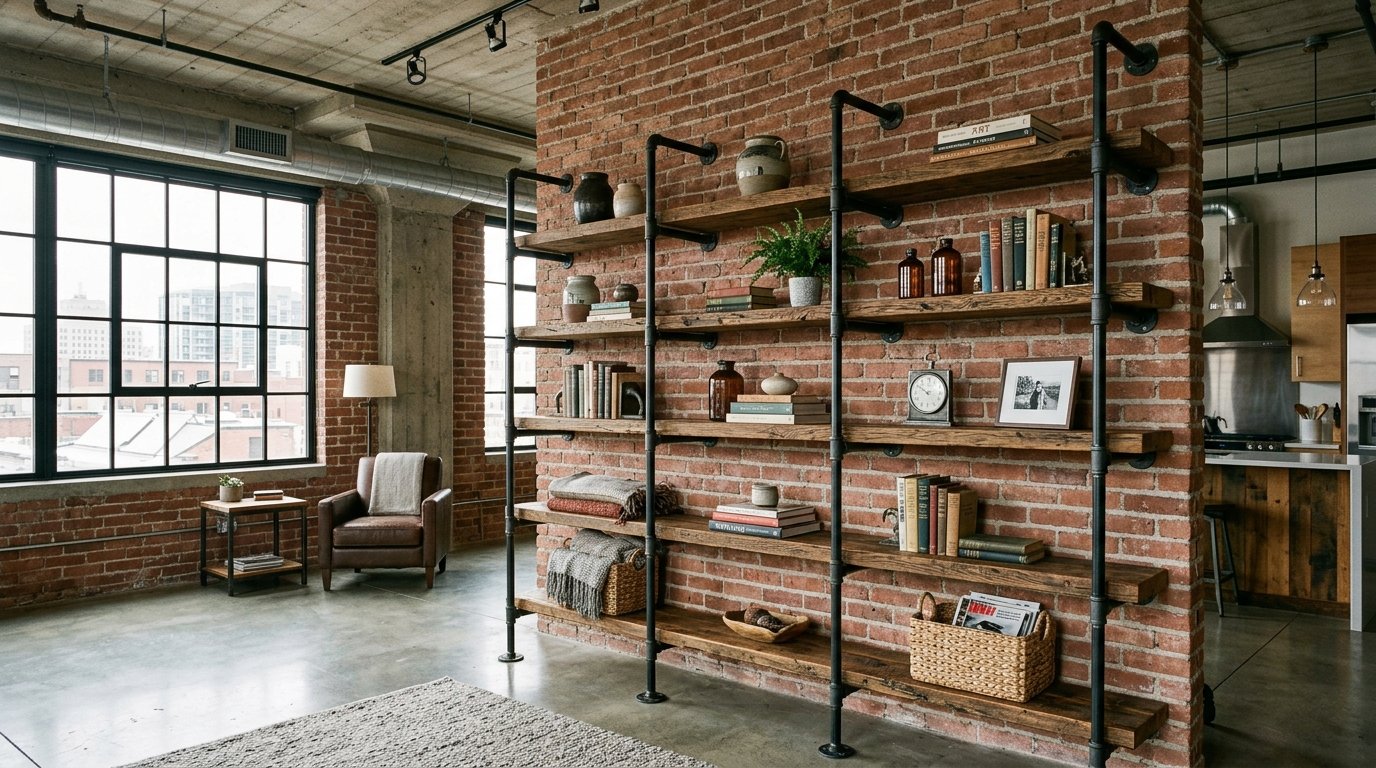
Using black iron pipes and reclaimed wood boards creates a rugged, industrial look that is both sturdy and stylish. This is a popular DIY project because the materials are readily available at any hardware store for about $150. I’ve built these for home offices where the user needed to store heavy technical manuals that would snap standard shelving. You need to clean the pipes with mineral spirits before assembly to remove the greasy factory coating. A contrarian note: don’t go too heavy on the “steam-punk” accessories; keep the decor modern to balance out the raw materials. A frequent mistake is not leveling each individual shelf, which results in a slanted display that is very noticeable.
15. Backlit Glass Cabinets
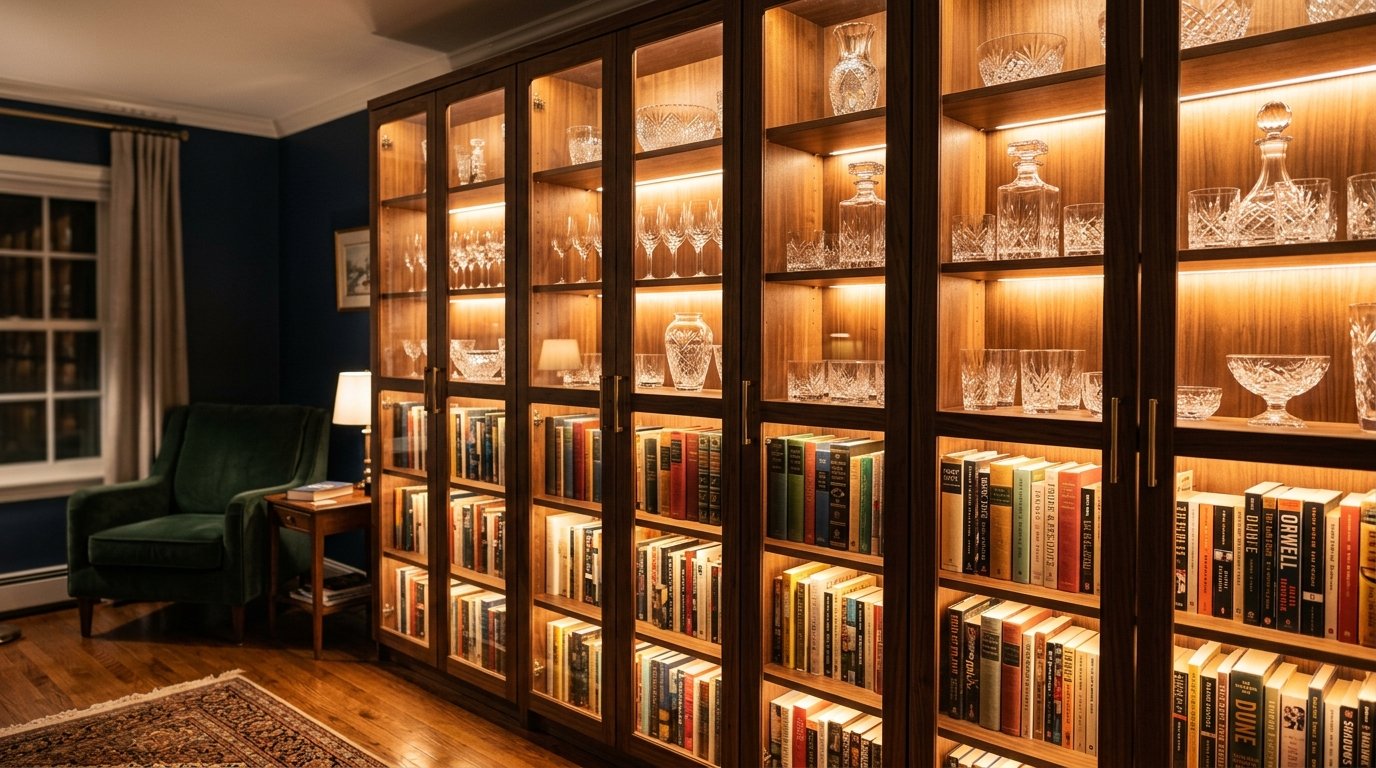
Adding LED strip lighting to the back of glass-fronted cabinets creates a dramatic, high-end glow in the evening. It turns your collection into a lighted display case, perfect for showing off glassware or special editions. I’ve noticed that backlighting makes a room feel 20% more expensive without changing a single piece of furniture. You can buy battery-operated LED puck lights for $30, or hardwire a professional system for $300. The key is to hide the wires behind the shelf supports so they remain invisible to the eye. Avoid using “cool white” bulbs; stick to “warm white” (around 2700K) to keep the living area feeling inviting rather than like a retail store.
16. Arched Alcove Shelving
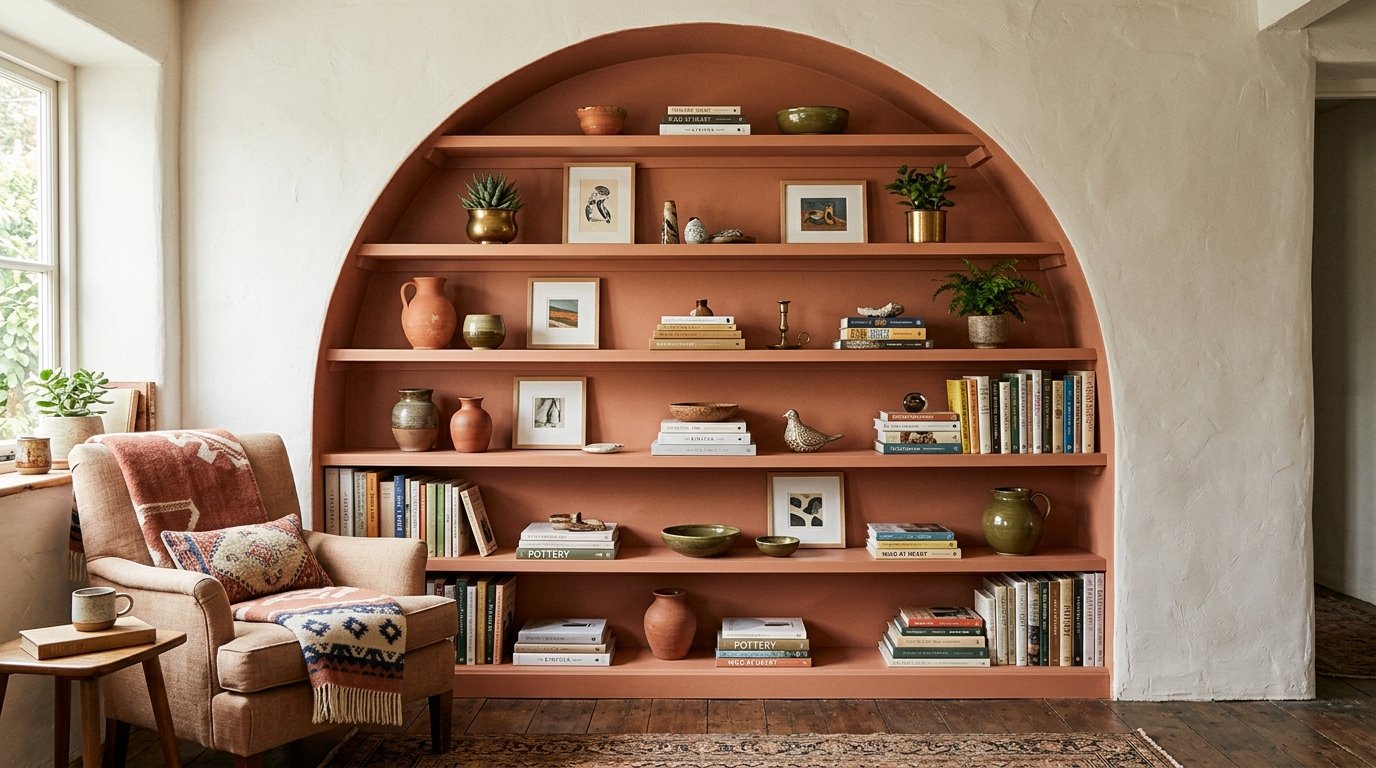
Arched details soften the hard lines of a room and add a sense of architectural history. If you have an existing niche in your wall, adding an arched top using drywall or a custom wood insert creates a stunning focal point. I worked on a 1920s bungalow where we restored these alcoves, and they became the most talked-about feature of the house. Customizing an alcove can cost $500 to $1,000 depending on the complexity. You should paint the interior of the arch a slightly darker shade than the room to add depth. A common error is making the shelves too thick, which can clutter the delicate shape of the arch.
17. Rotating Media Towers
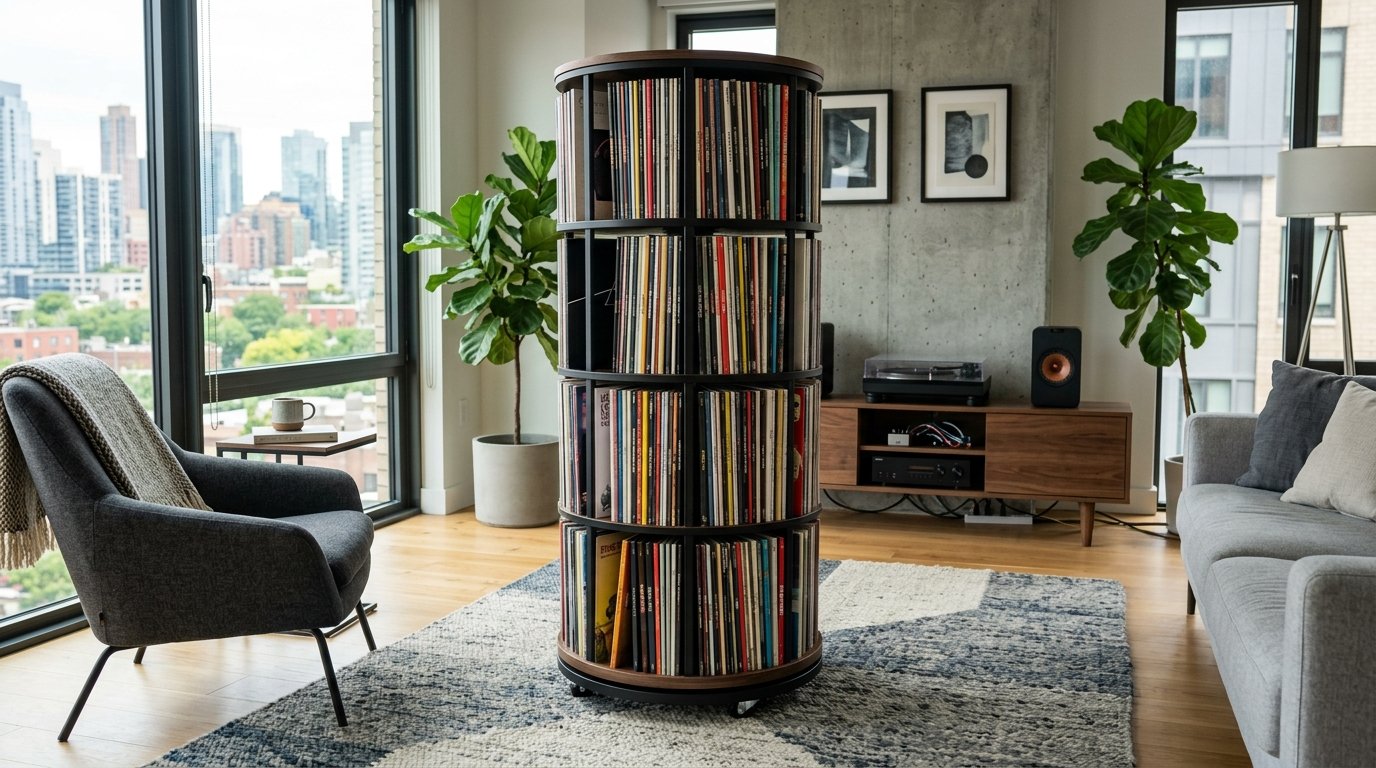
For those with large collections of physical media like vinyl or boutique Blu-rays, a rotating tower provides high-density storage with a small footprint. These units spin 360 degrees, allowing you to access hundreds of items without needing a 10-foot wall. I’ve used these in small media rooms to keep the floor clear for seating. A quality spinning tower costs about $350. The action step is to place it at least 2 feet away from any wall so it has room to rotate fully. Don’t buy the cheapest version available, as the swivel mechanism often fails under heavy weight. Look for a ball-bearing base for a smooth, silent spin.
18. Hidden Door Bookcase
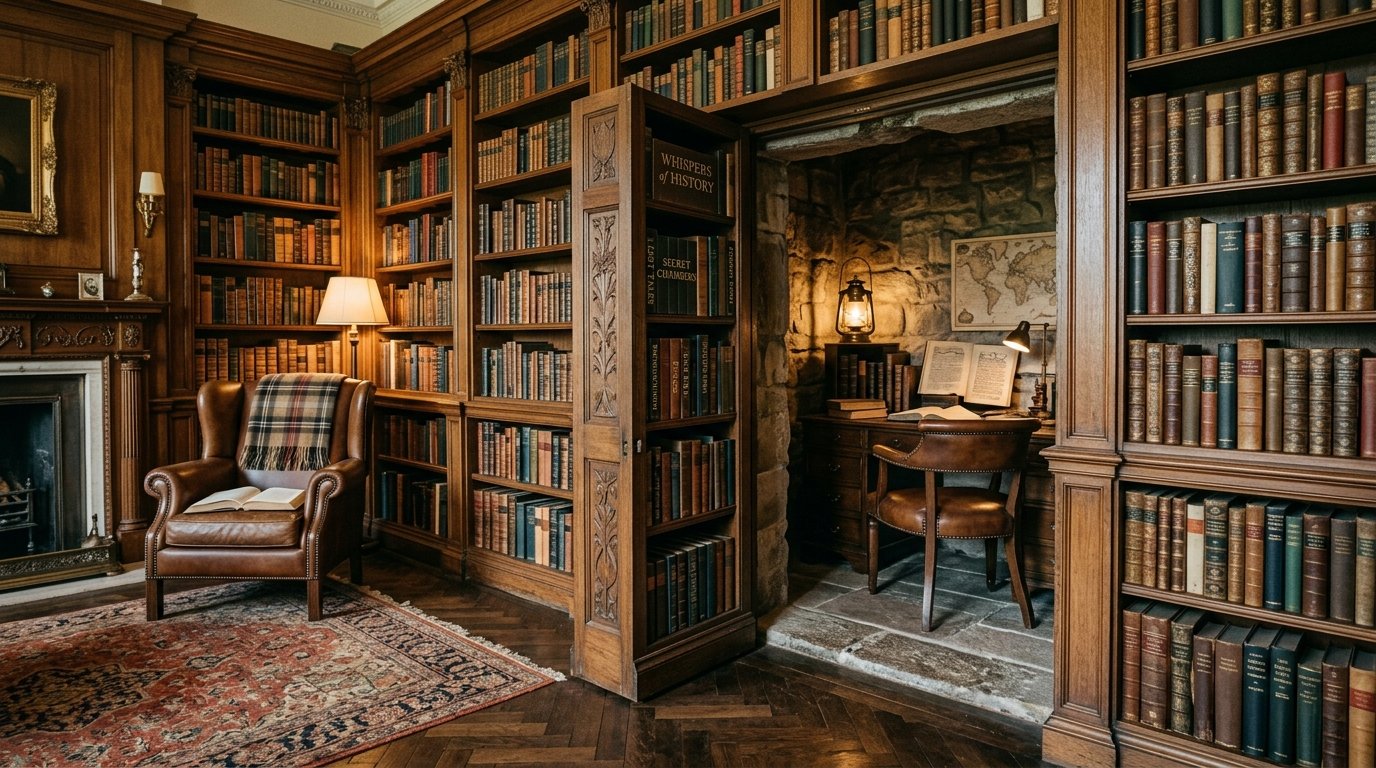
A “Murphy door” that functions as both a shelving unit and a secret entrance is the ultimate “wow” factor. It’s perfect for concealing a private office or a pantry while keeping the library aesthetic continuous. I’ve seen these installed in basements to hide utility rooms, and the result is always impressive. These kits start at $1,000 and require precise installation to ensure they swing smoothly without dragging on the carpet. You must use a heavy-duty hinge system designed for the weight of books. A common mistake is filling the door with fragile items; because the unit moves, stick to sturdy books that won’t fall off when the door opens.
19. Layered Art Display
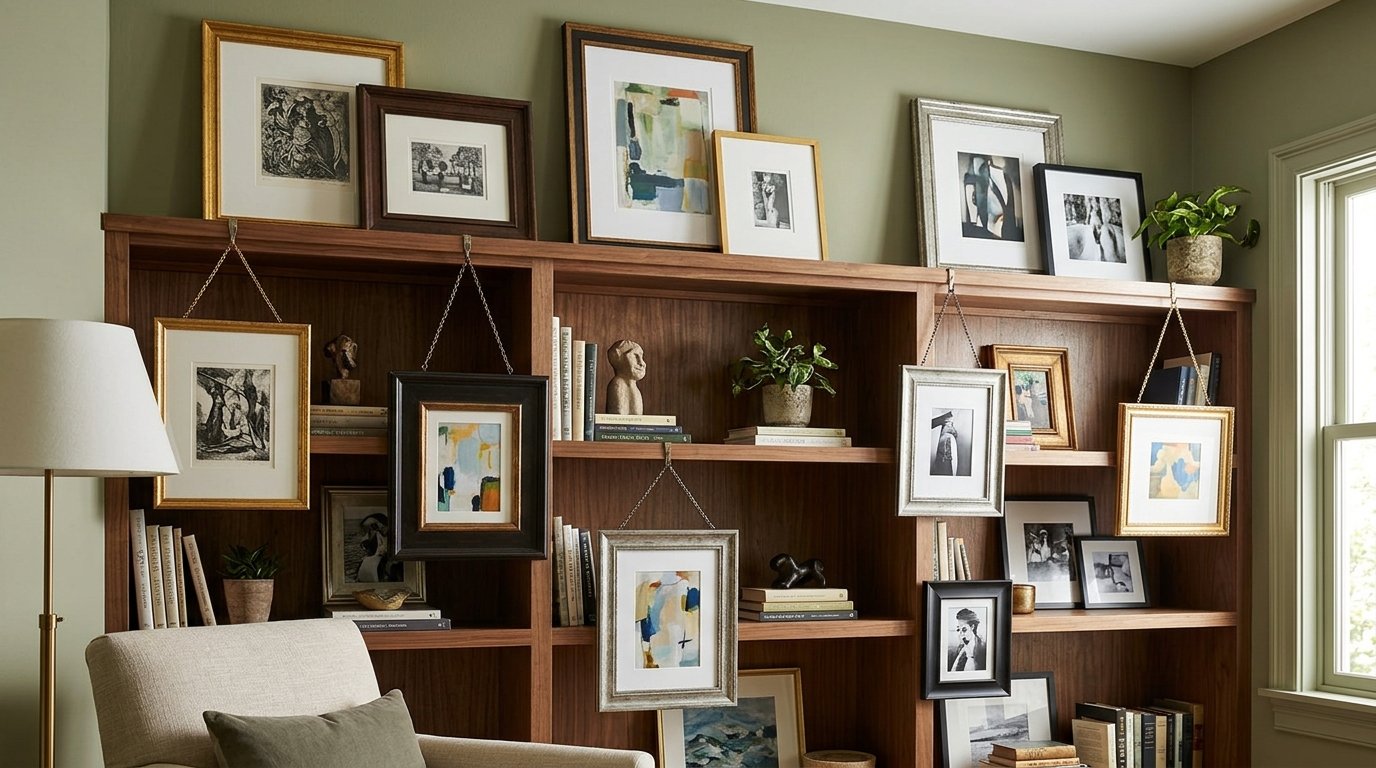
Using your shelves as a backdrop for hanging art creates a sophisticated, multi-dimensional look. You can mount small framed pieces directly onto the front of the shelf supports or lean them against the back wall behind smaller objects. I’ve seen this used in high-end New York apartments to maximize wall space for art collectors. This is a low-cost styling trick that only requires some command strips or small nails. The action here is to vary the heights of the art to keep the eye moving across the display. Don’t use heavy frames that could pull the shelf forward; stick to lightweight wood or metal frames.
20. Office Workspace Combo
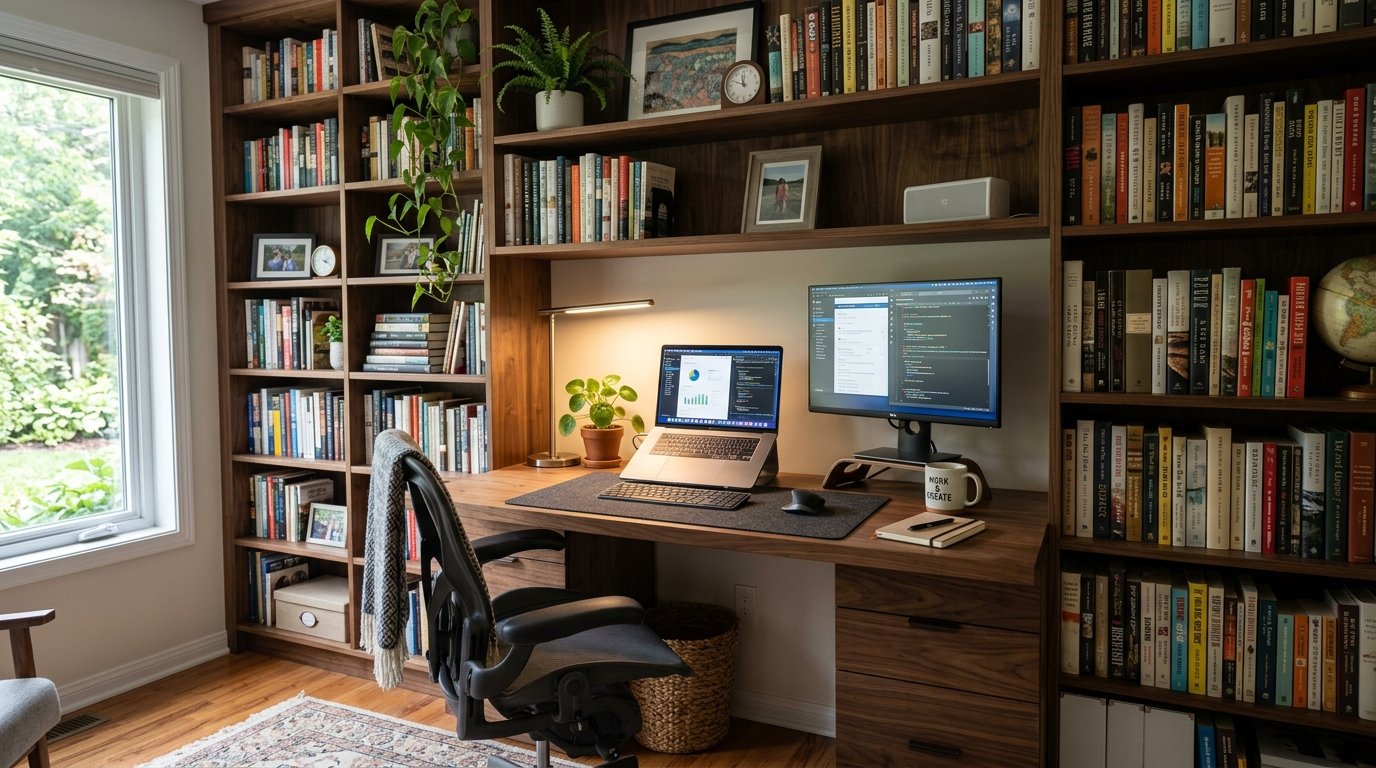
Integrating a desk into your Home Office Design within the shelving unit saves space and creates a unified look. A “floating desk” shelf that is slightly deeper than the others allows you to work comfortably while surrounded by your resources. I’ve noticed that productivity increases when a workspace feels like an integrated part of the home rather than a cluttered afterthought. This setup can be achieved with modular systems like the IKEA Elvarli for about $500. Ensure the desk surface is at a standard height of 29-30 inches for ergonomic comfort. A common mistake is forgetting to plan for cord management; drill a small hole in the back of the shelf for cables to keep the look clean.
21. Natural Rattan Etagere
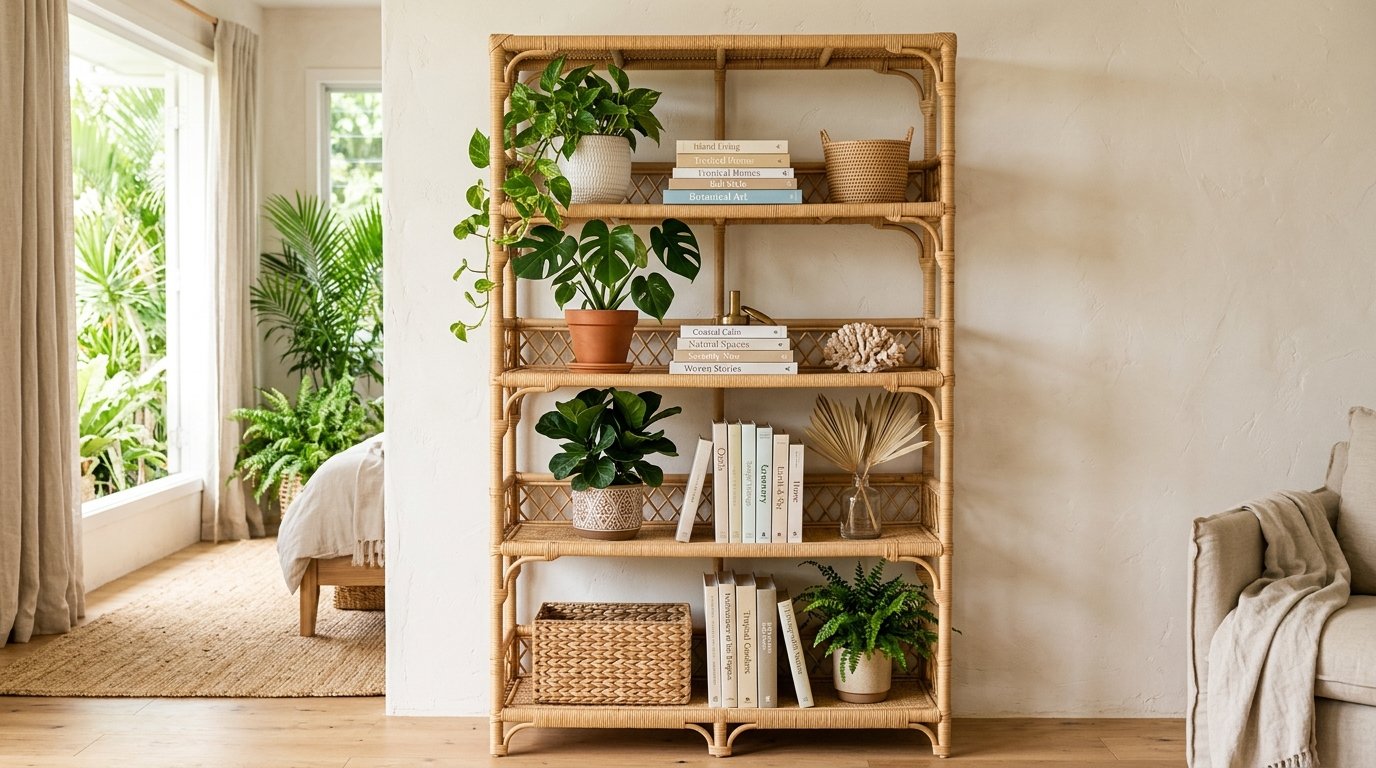
Rattan and wicker bring a textured, bohemian vibe that softens a modern living room. These units are lightweight and add a “vacation” feel to the space, especially when paired with linen curtains and tropical plants. I’ve sourced beautiful rattan pieces from antique shops for $200 that look much better than modern plastic imitations. You should treat the rattan with a light coat of lemon oil once a year to keep the fibers from becoming brittle. The practical step is to use baskets on the lower shelves to hide messy items like charging cables. Avoid these if you have cats who like to scratch, as the woven material is a magnet for claws.
22. Mirrored Back Panels
Adding mirrors to the back of your shelves creates an illusion of infinite depth and bounces light around the room. It’s a classic trick used in small dining rooms to make the space feel twice its actual size. I’ve seen homeowners use simple mirror tiles from a hardware store for a $50 DIY version that looks surprisingly high-end. You’ll need to use a specialized mirror mastic adhesive so it doesn’t damage the silvering on the back of the glass. The key action is to keep the objects on the shelves simple, as the mirror will double everything you see. Avoid this if your shelving faces a cluttered area of the house, as the mirror will simply reflect that mess.
23. Classic Mahogany Console

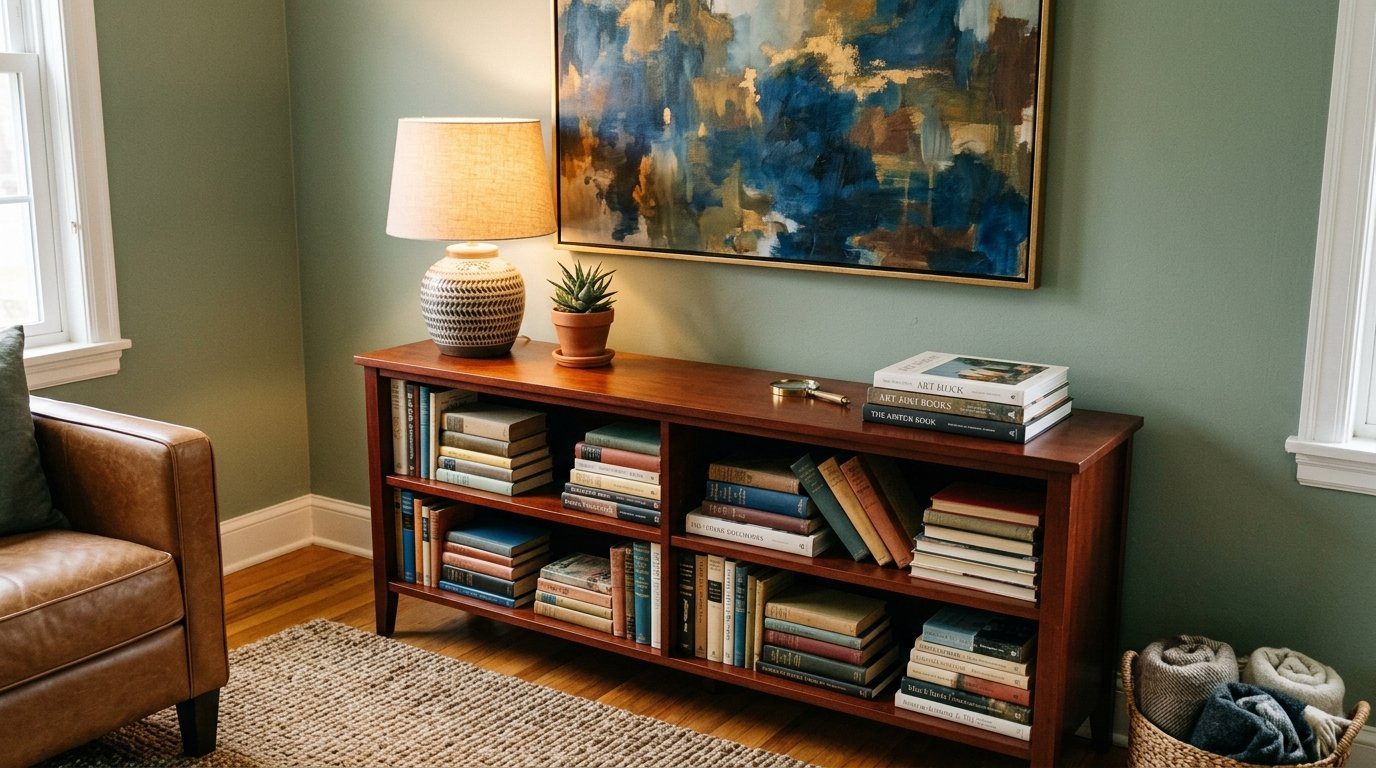
A low-profile, long console unit offers a traditional feel while keeping the upper wall free for large-scale art or a television. This is a staple of a Classic Interior where the goal is a balanced, formal layout. I’ve seen these used behind sofas to create a “room within a room” in open-concept floor plans. A solid mahogany console is a legacy piece that can cost $1,500 or more. The setup involves simply placing the unit and styling the top with a mix of books, lamps, and sculptural objects. A common mistake is choosing a unit that is too short for the wall; aim for a console that covers at least two-thirds of the horizontal space for a balanced look.
Frequently Asked Questions
How do I prevent my shelves from looking cluttered?
The secret to a curated look is the “80/20 rule.” Aim to fill 80% of the space with books and decor, leaving 20% as “white space” or breathing room. I’ve seen many people make the mistake of packing every square inch, which creates visual stress. Instead, group books both vertically and horizontally to create a rhythmic pattern. Add in a few “breather” items like a single ceramic bowl or a small framed photo. If you have messy items like remote controls or loose papers, use decorative boxes or woven baskets on the bottom shelves to hide them from view.
What is the ideal depth for a living room bookshelf?
For most standard novels and hardcovers, a depth of 10 to 12 inches is perfect. If you are planning to store large “coffee table” books or vinyl records, you will need at least 13 to 15 inches of depth. In my experience, 11 inches is the “sweet spot” that accommodates 90% of household items without protruding too far into the walking path of the room. Always measure your largest book before buying or building a unit to ensure it won’t hang over the edge, which looks untidy and can damage the book’s spine.
Should I organize books by color or by subject?
If you are a heavy reader who frequently needs to find specific titles, organize by subject or author. This is the “functional” approach. However, if your primary goal is Dekorasi Rumah and visual impact, color-coding is a fantastic way to turn a random collection into a cohesive art piece. I’ve noticed that color-coded shelves actually make a room feel larger because the brain processes the blocks of color as a single unit rather than hundreds of individual items. You can also try “blind” styling—turning the spines inward for a neutral, beige look—though this makes finding books nearly impossible.
How do I style a shelf around a television?
The key is to minimize the “black hole” effect of the TV. Surround the screen with items that have similar dark tones or textured surfaces to help it blend in. I’ve seen this work well when the TV is mounted on the wall and the shelving forms a “U” shape around it. Use the shelves above the TV for larger, less distracting items like long horizontal boxes or a single trailing plant. Avoid placing small, fussy objects right next to the screen, as they will compete for your attention while you are trying to watch a show.
What are the best plants for shelving units?
Since shelves are often away from direct window light, you need “low to medium light” survivors. I always recommend Pothos, Heartleaf Philodendron, or Snake Plants. These are hardy and have trailing vines that add a beautiful, soft vertical element to the hard edges of the Bookshelf Design. I’ve noticed that adding just three small plants to a large unit makes the whole room feel more “alive” and fresh. Remember to use a saucer under your pots to prevent water rings from damaging the wood or paint of your shelves.
Is it better to buy pre-made units or go custom?
Pre-made units from stores like IKEA or Target are excellent for budgets under $500 and are great for renters. However, custom built-ins are an investment that can significantly increase your home’s resale value. I’ve seen custom library walls return nearly 70% of their cost when it comes time to sell the house because they are viewed as a permanent architectural feature. If you are in your “forever home,” go custom. If you are in a starter home or apartment, stick to high-quality modular units that you can take with you when you move.
How much weight can a standard shelf hold?
A typical 3/4-inch thick shelf made of plywood or solid wood can hold about 20 to 40 pounds per foot if properly supported. Particle board or MDF (common in cheaper furniture) can often only hold 10 to 15 pounds per foot before it starts to sag or “bow.” I’ve seen many shelves ruined by a heavy set of encyclopedias placed in the center. To prevent sagging, ensure you have a vertical support every 30 inches. If you notice a shelf starting to bend, remove the weight immediately and add a center bracket or a thicker board.
How do I style shelves in a small apartment?
In a small space, you want to “go vertical.” Use tall, narrow units that draw the eye upward toward the ceiling, which makes the room feel taller. I recommend using open-back shelving units or glass frames to keep sightlines open. This prevents the furniture from “closing in” on you. I’ve seen studio apartments transformed by using a bookshelf as a room divider between the sleeping and living areas. It provides privacy without the permanence of a wall and allows light to pass through the open shelves.
What are common mistakes in shelf styling?
The biggest mistake is “small object syndrome”—filling the shelves with dozens of tiny knick-knacks. This looks cluttered and is a nightmare to dust. Instead, follow the “rule of three” and group items in odd numbers. Another mistake is forgetting to vary the height of your items. If everything on the shelf is the same height, it looks flat and boring. Use stacks of books to act as “pedestals” for smaller decorative items. Finally, don’t forget to clean your shelves; a thin layer of grey dust can ruin even the most expensive-looking display.
Conclusion
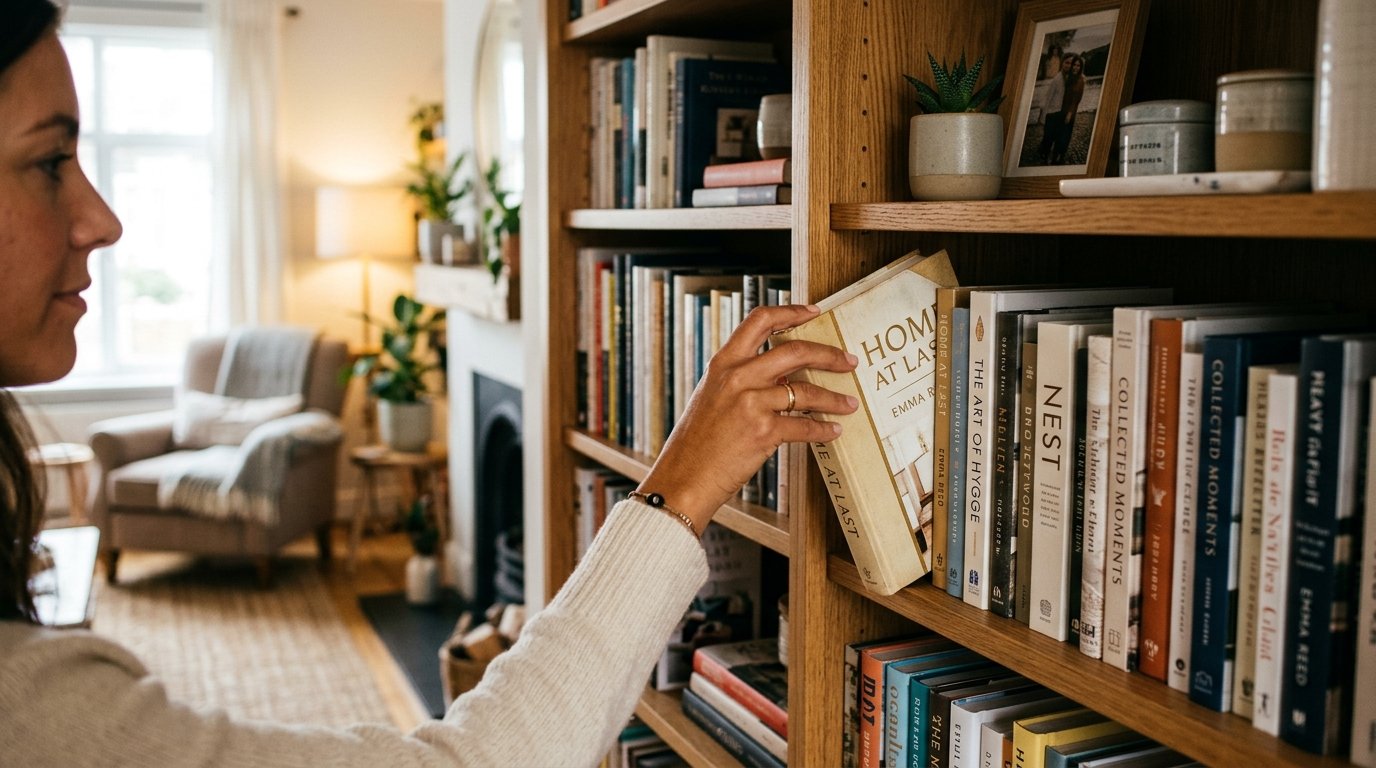
Transforming your space with a well-designed living room bookshelf is one of the most rewarding home projects you can undertake. Whether you choose the architectural elegance of a Classic Interior built-in or the relaxed vibe of a Reading Nook, these ideas provide the foundation for a home that feels both organized and inspiring. I’ve seen how small changes like these can completely transform a space, turning a generic room into a personal sanctuary that reflects your unique history. I encourage you to pick just one of these ideas—perhaps starting with a simple color-coded sort or adding a few floating ledges—and see how it shifts the energy of your home. Save this post on Pinterest so you can refer back to it during your next weekend project, and don’t forget to share your progress with others who are looking for their own home decor inspiration. Your walls are a blank canvas, and the right shelving is the perfect way to start telling your story.