The scent of fermented indigo is something you never forget once you have stood in the dye pits of Osogbo. It is earthy, pungent, and smells like history. Three years ago, I brought home a hand-painted Adire Eleko cloth, wondering if a fabric rooted in centuries-old Yoruba tradition could actually work in my glass-and-steel apartment. I was worried it would look like a souvenir rather than a design choice.
I was wrong. When I draped that deep, midnight-blue cloth over a crisp white sofa, the entire room shifted. It stopped feeling like a showroom and started feeling like a home.
Adire is not just a “boho” trend. It is a sophisticated textile art form that uses resist-dyeing techniques to tell stories. As we see Bedroom Trends move away from sterile minimalism toward soulful, textured spaces, Adire has become the ultimate tool for designers. Whether you are looking to create a Sophisticated Bedroom or add a pop of culture to a Couple Bedroom, these indigo fabrics offer a depth that factory-printed linens simply cannot match.
1. The Foundation of Adire in Modern Spaces
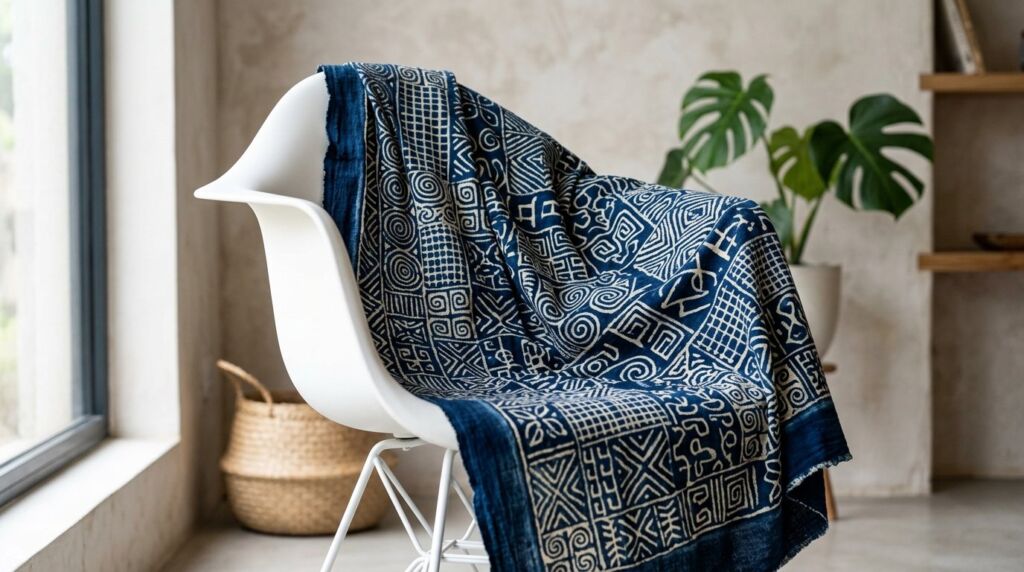
Adire comes in two primary forms: Adire Oniko (tie-dye) and Adire Eleko (hand-painted with starch). For a modern look, the geometric patterns of Adire Eleko often work best. The sharp lines and repetitive motifs lean into the structured feel of contemporary Luxury Decor.
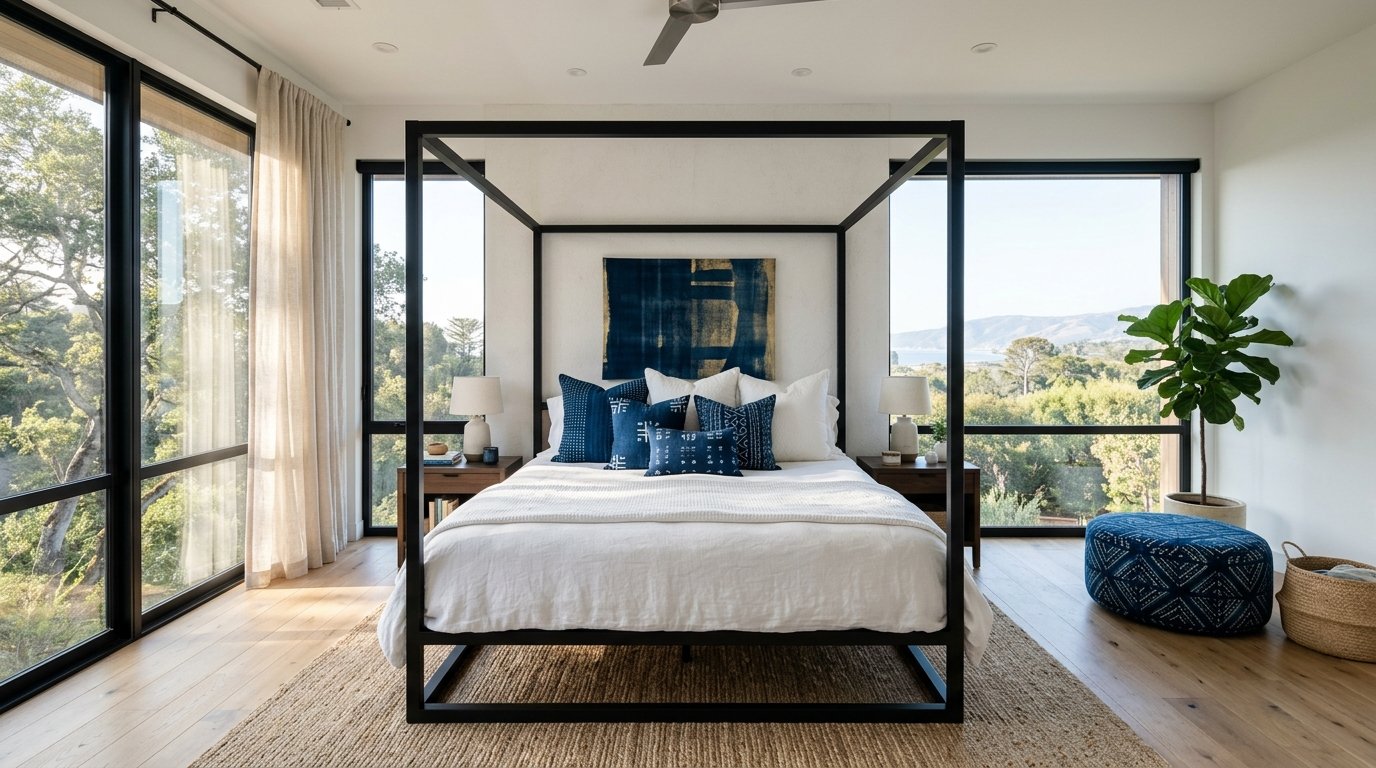
When I first started styling these, I made the mistake of overcomplicating the room. I tried to pair indigo with bright yellows and oranges. It felt chaotic. I learned that Adire thrives when it acts as the anchor. In a Sophisticated Bedroom, use the indigo as your primary Bedroom Accent. Pair it with neutral tones like oatmeal, charcoal, or bone white. This allows the intricate patterns to breathe.
2. Elevating the Canopy Frame
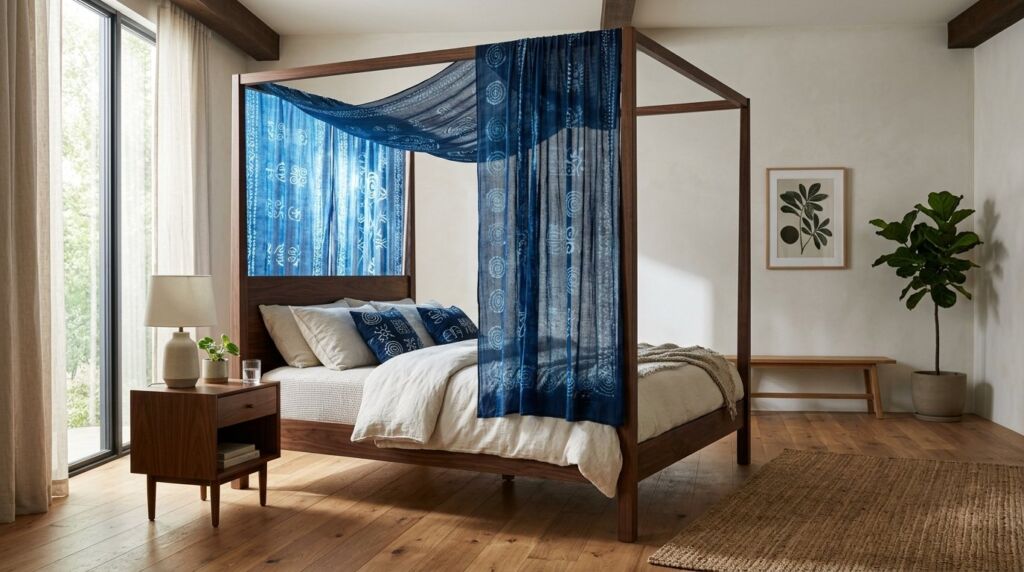
A Canopy Frame is a bold architectural statement. To make it feel modern rather than medieval, use Adire as a sheer headboard backdrop or a light canopy drape. I once worked on a project where we used a lightweight Adire Oniko silk.
We draped it loosely over the top rails of a matte black metal frame. The way the blue filtered the morning light changed the entire mood of the room. It felt private and serene. If you are styling a Couple Bedroom, this adds a layer of intimacy without feeling overly feminine. The indigo blue is a rare “universal” color that appeals to almost everyone.
3. Custom Cushions as Entry Points

If you are hesitant to commit to a large piece, start with Custom Cushions. This is the most accessible way to test African Design in your home. I recommend mixing scales. Use a large-scale Adire pattern on 24-inch pillows and a smaller, tighter pattern on lumbar pillows.
Last year, I replaced my standard velvet pillows with a set of Adire Eleko cushions. The texture of the cotton—which is often slightly stiff from the dyeing process—adds a tactile quality that feels expensive. Pro tip: ensure your inserts are high-quality down or down-alternative. A flat pillow makes even the most beautiful textile look cheap.
4. The Round Storage Ottoman Hack
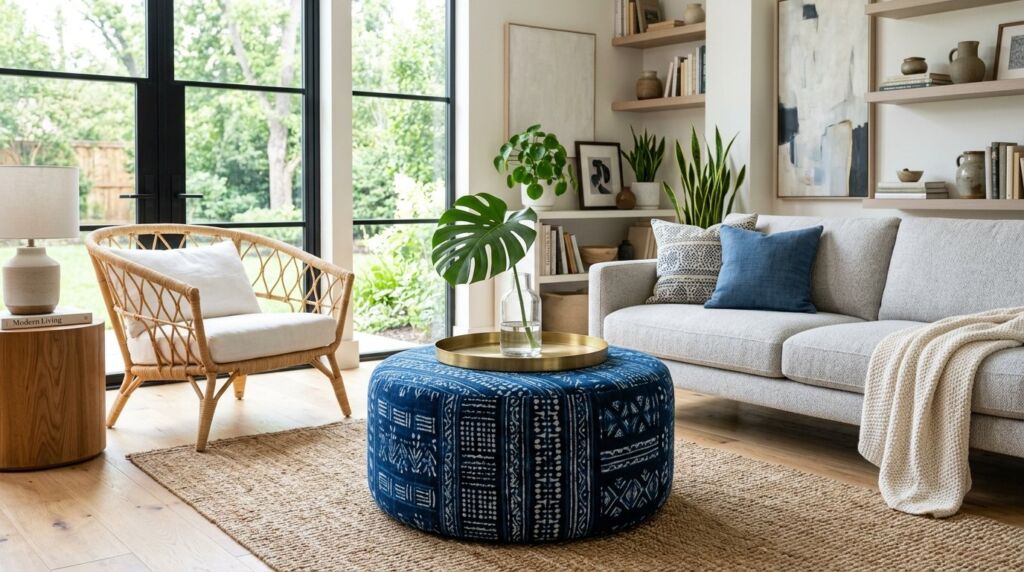
A Round Storage Ottoman is a functional piece that often looks boring. Reupholstering one in Adire fabric instantly turns it into a conversation piece. I found a vintage ottoman at a flea market for $20 and used three yards of vintage indigo cloth to recover it.
The circular shape of the ottoman interacts beautifully with the organic, swirling patterns often found in tie-dyed Adire. It serves as a perfect Bedroom Accent at the foot of the bed or tucked into a vanity corner. It is a small touch that screams Luxury Decor because it is clearly bespoke.
5. Integrating Adire into a Sophisticated Bedroom

To achieve a truly Sophisticated Bedroom, you must balance the “raw” feel of hand-dyed fabric with polished materials. Think polished brass lamps, marble-topped nightstands, or glass vases.
I recently saw a room that used an Adire quilt layered over high-thread-count Egyptian cotton sheets. The contrast between the rugged, hand-crafted indigo and the smooth, factory-perfect white sheets was stunning. This is the core of modern African Design: it is not about making a room look “tribal,” it is about the tension between the handmade and the modern.
6. Creating a Cohesive Couple Bedroom
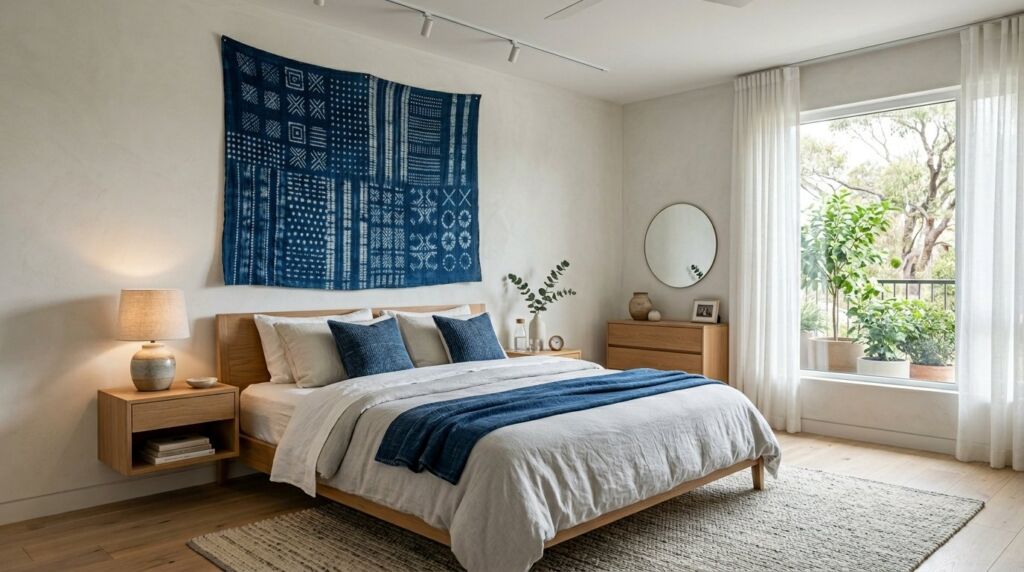
Designing for two people requires compromise. Indigo is the perfect middle ground. It is darker and moodier than pastel blues but more vibrant than navy. In a Couple Bedroom, use Adire for a throw blanket at the foot of the bed.
My partner initially thought the patterns were “too much.” However, once he saw how the deep blue grounded the room and made the wood furniture pop, he was sold. It adds a sense of travel and global curiosity to the space. It tells a story of a life well-traveled, which is a great vibe for a shared sanctuary.
7. The Evolution of African Design in Luxury Decor
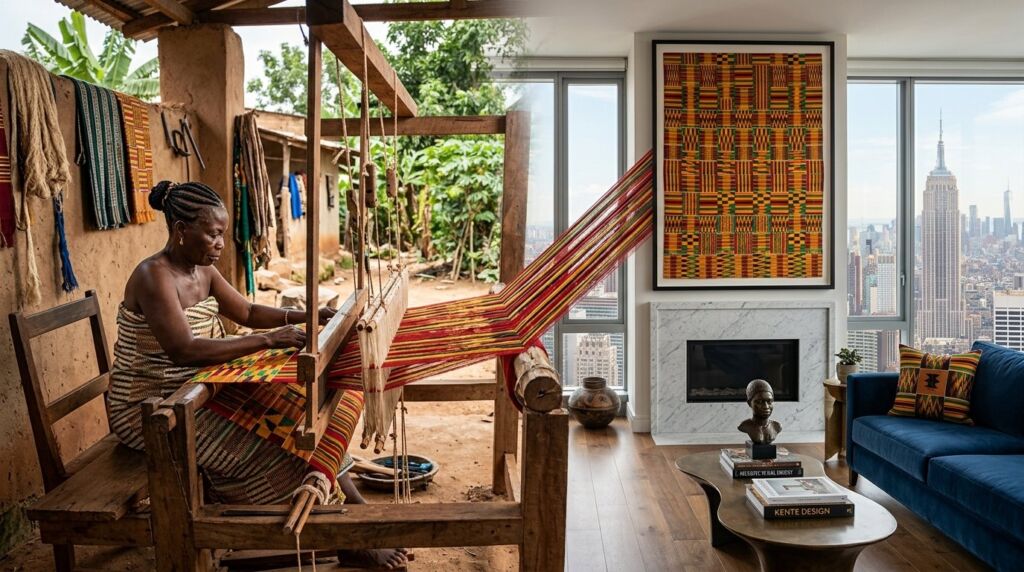
We are seeing a massive shift in how the world views African Design. It is moving from the “craft” category into high-end galleries and luxury homes. Brands like Orange Culture and various interior boutiques in Lagos are showing that Adire can be as formal as any Italian silk.
When you buy authentic Adire, you are investing in a piece of art. Each cloth is unique. The “imperfections”—the slight bleeds in the dye or the variations in the blue—are what provide the soul. In a world of mass-produced IKEA furniture, that uniqueness is the ultimate luxury.
8. Common Mistakes to Avoid
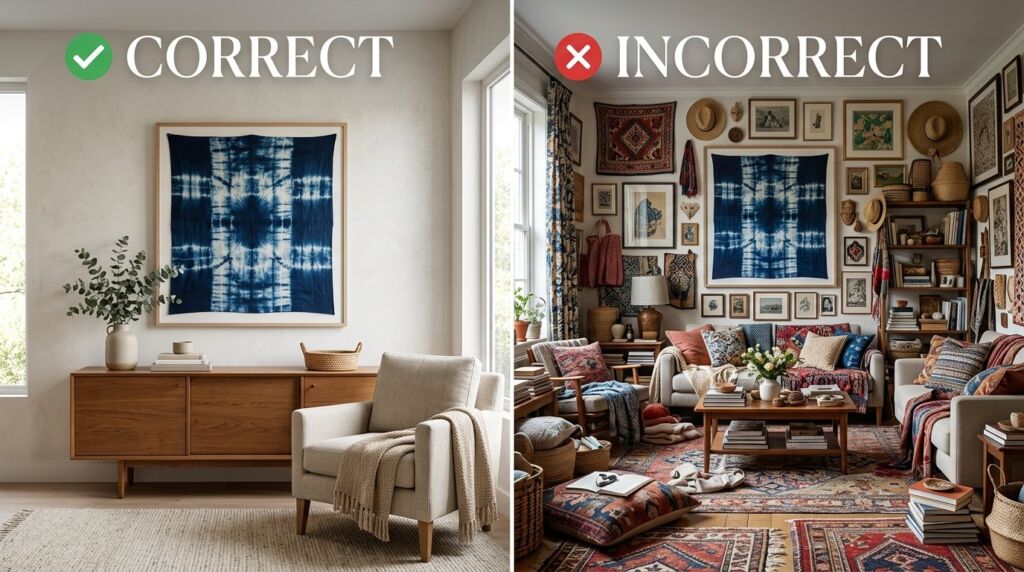
The biggest mistake I see is “Indigo Overload.” If you have Adire pillows, an Adire rug, and Adire curtains, the room starts to look like a costume set.
- Limit the patterns: Use one dominant Adire piece and two smaller accents.
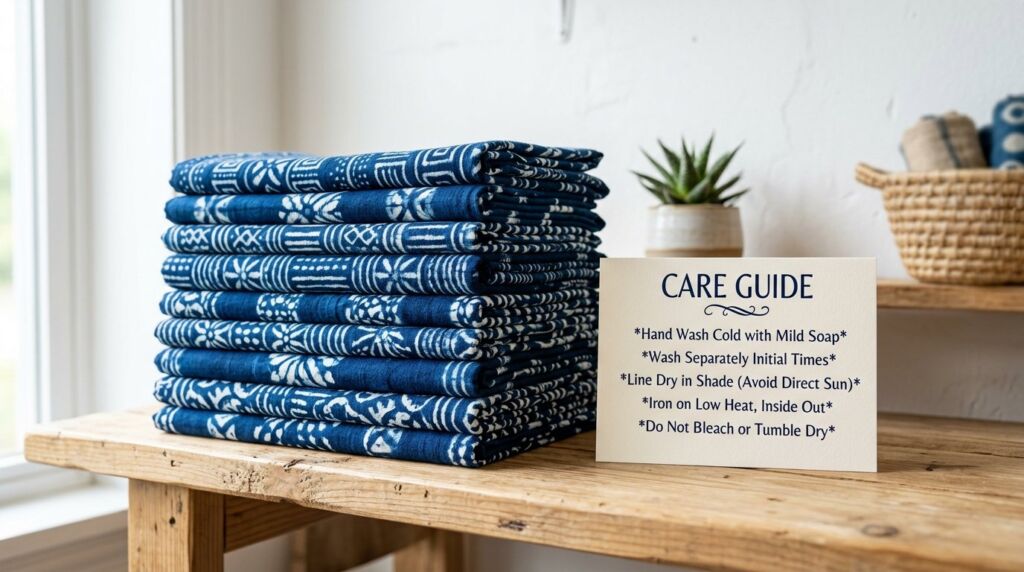
- Watch the sun: Authentic indigo is light-sensitive. Do not place your best Adire pieces in direct, harsh sunlight or they will fade to a dull grey over time.
- Check the dye: Cheap “Adire-style” prints are just that—prints. They lack the depth of real indigo. If it doesn’t have that slight, metallic sheen or a faint earthy smell, it’s probably a synthetic copy.
9. Sourcing and Authenticity
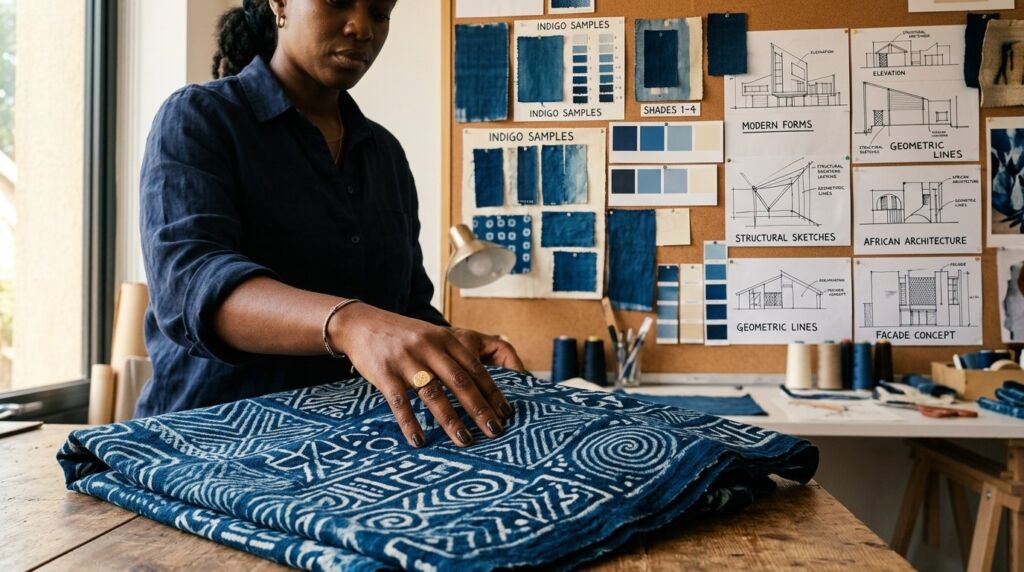
Where you get your fabric matters. I always suggest looking for cooperatives that support the original dyers in Nigeria. Look for “Vintage Faded Indigo” if you want a softer, more lived-in look. For a Sophisticated Bedroom, go for the deep, dark “Black-Blue” that comes from multiple dips in the indigo vat.
I once bought a piece online that turned out to be a screen print. The difference was night and day. The screen print looked flat. The real Adire had layers. You could see where the artist’s hand had moved across the cloth. Always ask the seller about the dyeing method.
10. Styling Beyond the Bedroom
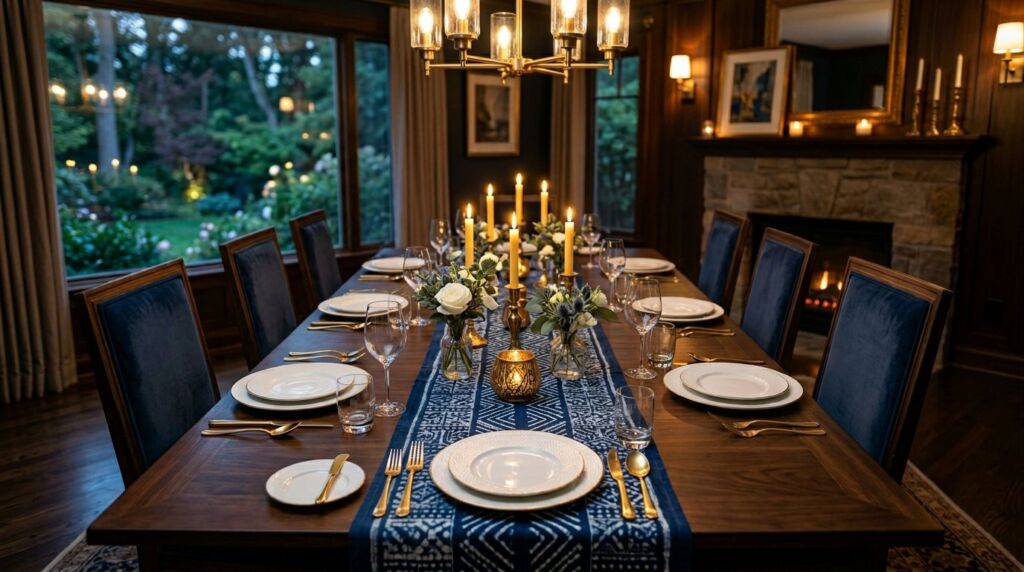
While we focus on Bedroom Trends, Adire works wonders in dining rooms too. A long Adire runner on a dark wood table creates an incredible backdrop for a dinner party.
I used a remnant piece of Adire to frame as wall art. By putting a traditional textile behind high-quality museum glass with a thick white mat, I elevated it to a fine art status. It cost me $50 for the frame, but it looks like a $1,000 gallery find.
11. Maintenance and Care
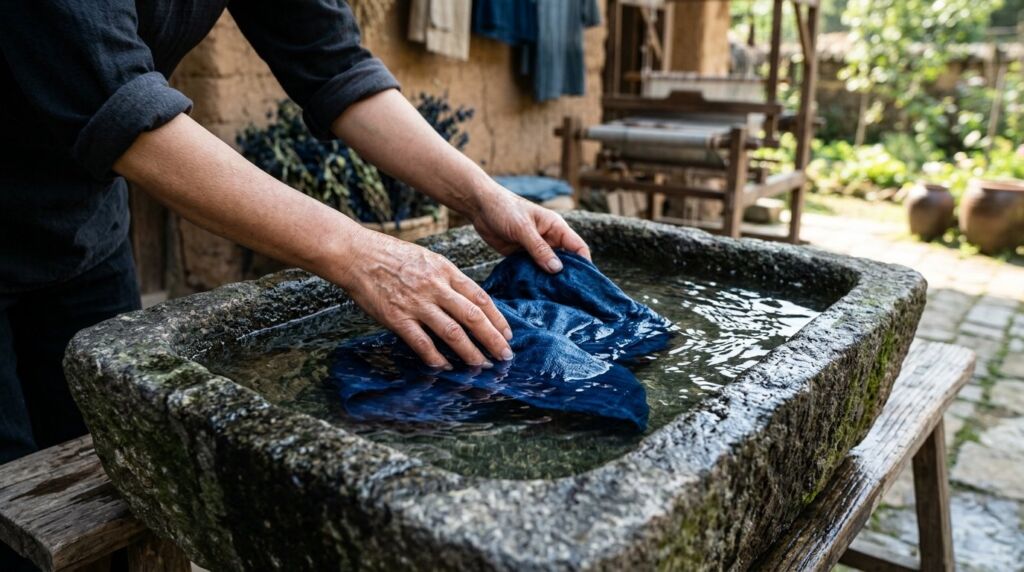
Real indigo is a living dye. You cannot just throw these into a hot wash. I learned this the hard way when I ruined a beautiful cushion cover.
- Hand wash only: Use cold water and a very mild, pH-neutral soap.
- Salt soak: A first wash with a bit of salt can help set the dye.
- Dry flat: Never use a dryer. The heat will break down the natural cotton fibers and dull the indigo.
12. Future Trends: What is Next for Adire?
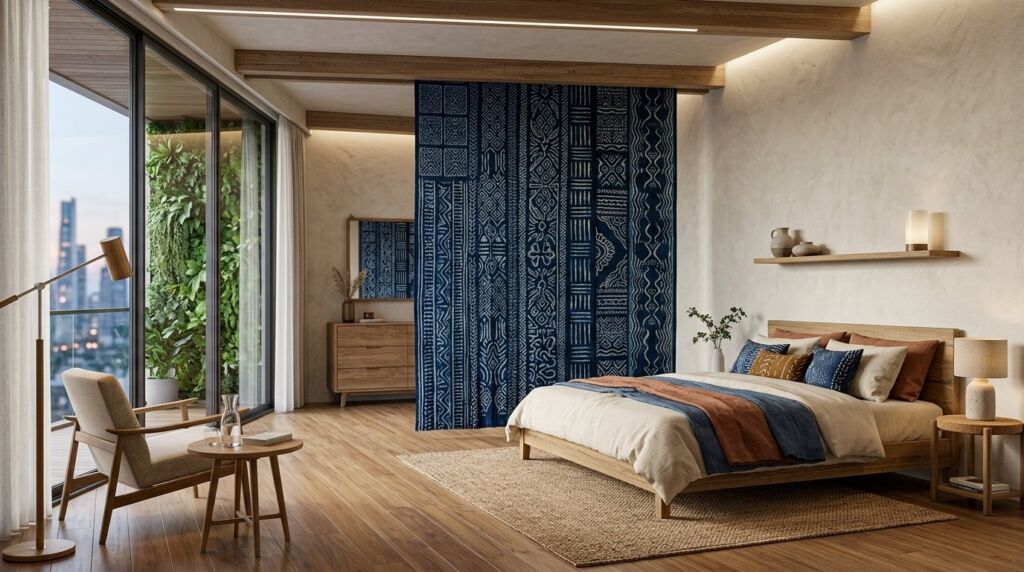
I predict we will see more Adire used in “quiet luxury” settings. Think monochromatic rooms where the only texture comes from the resist-patterns of the fabric. We will see it paired with light oaks and limewash walls.
The sustainability factor is also huge. Natural indigo is plant-based. In an era where consumers care about the environment, hand-dyed Adire is a guilt-free way to decorate. It is a slow fashion movement for the home.
13. Comparison: Traditional vs. Contemporary Adire

| Feature | Traditional Adire | Contemporary Adire Decor |
| Colors | Deep Indigo, Earthy Browns | Indigo, Teal, Pink, Grey |
| Material | Heavy hand-spun cotton | Silk, Linen, Velvet |
| Use Case | Ceremonial clothing | Cushions, Throws, Upholstery |
| Vibe | Cultural, Heavy | Airy, Modern, Luxe |
14. Frequently Asked Questions
Does Adire dye rub off on white furniture?
Yes, it can. This is called “crocking.” New indigo pieces often have excess dye. I always suggest washing your Adire accents once or twice before placing them on a white sofa or light-colored Bedroom Accent.
Is Adire expensive?
Authentic, hand-painted Adire Eleko can range from $150 to $500 for a large panel. However, you can find smaller Custom Cushions for $60 to $80. Considering it is handmade art, the ROI on the “look” of your room is high.
How do I know if it is real indigo?
Real indigo has a specific, slightly metallic luster in the sunlight. It also has a distinct scent. If the back of the fabric is white, it is a print. Authentic Adire is saturated through the cloth.
Can I use Adire in a minimalist home?
Absolutely. One single Adire throw in a minimalist Sophisticated Bedroom acts as the perfect focal point. It prevents the room from feeling “cold.”
15. The Final Word on Styling
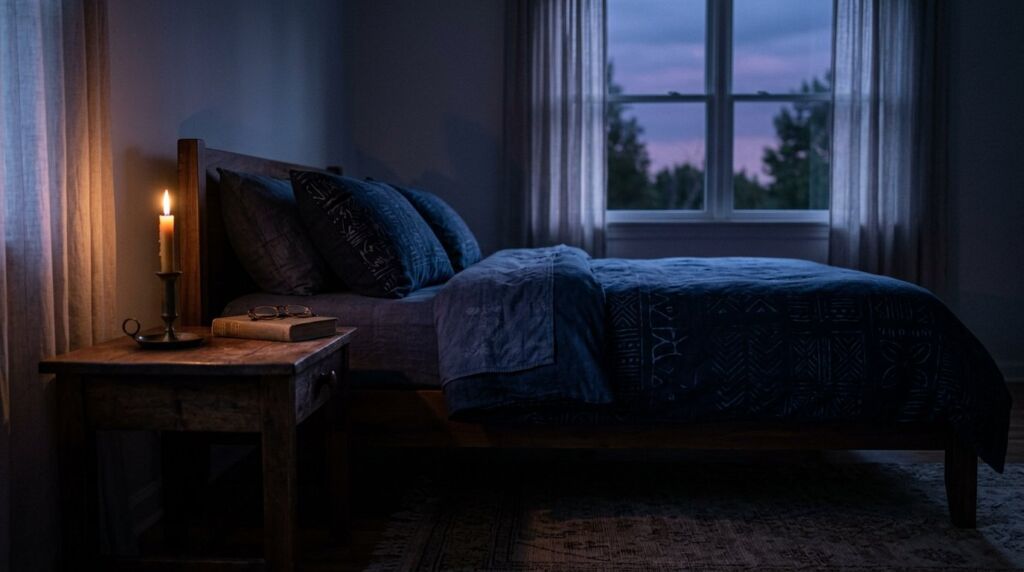
Adire is a bridge. It connects the ancient artisans of West Africa to the modern design enthusiast in a way that feels respectful and elevated. By incorporating these textiles into your Bedroom Trends, you aren’t just decorating; you are curated a space with a pulse.
Start small with a Round Storage Ottoman or a few Custom Cushions. Notice how the blue changes throughout the day. You will find that indigo isn’t just a color; it is a mood. It brings a sense of calm and history that no machine can replicate.
Would you like me to find a list of authentic Adire suppliers or perhaps help you draft a specific floor plan for integrating these textiles into your current bedroom?