The sun hit my patio at 4 PM last July and my plastic pots started to smell like a chemical factory. The heat in Dallas does not play. My lavender was wilting. The roots were literally cooking inside those thin gray walls. I realized that day that cheap materials kill good plants. I threw those plastic bins away. I replaced them with Large Terracotta Pots Outdoor. The difference was immediate. The plants could breathe. The clay stayed cool.
Terracotta is more than a color. It is a functional tool for any serious gardener. It manages moisture. It provides weight against the wind. It creates a look that feels like a centuries old Spanish villa. If you want a garden that looks intentional and wild at the same time, you need to master the art of layering clay.
Executive Summary
This guide provides a deep look into using Rustic Terracotta to build a high end garden aesthetic. You will see how to group pots for visual weight. You will find ways to mix Metal Planters Outdoor with natural clay for a modern twist. We cover the specific physics of why a Terra Cotta Pot keeps plants alive during heat waves.
Expect to find 17 specific Clay Pot Planter Ideas that you can use today. We look at the cost of high fire clay versus standard store pots. We review 12 top brands like Deroma and Campania International. You will find 15 detailed answers to common gardening questions. This is about building a garden that lasts through every season.
1. Create Vertical Interest With Large Terracotta Pots Outdoor
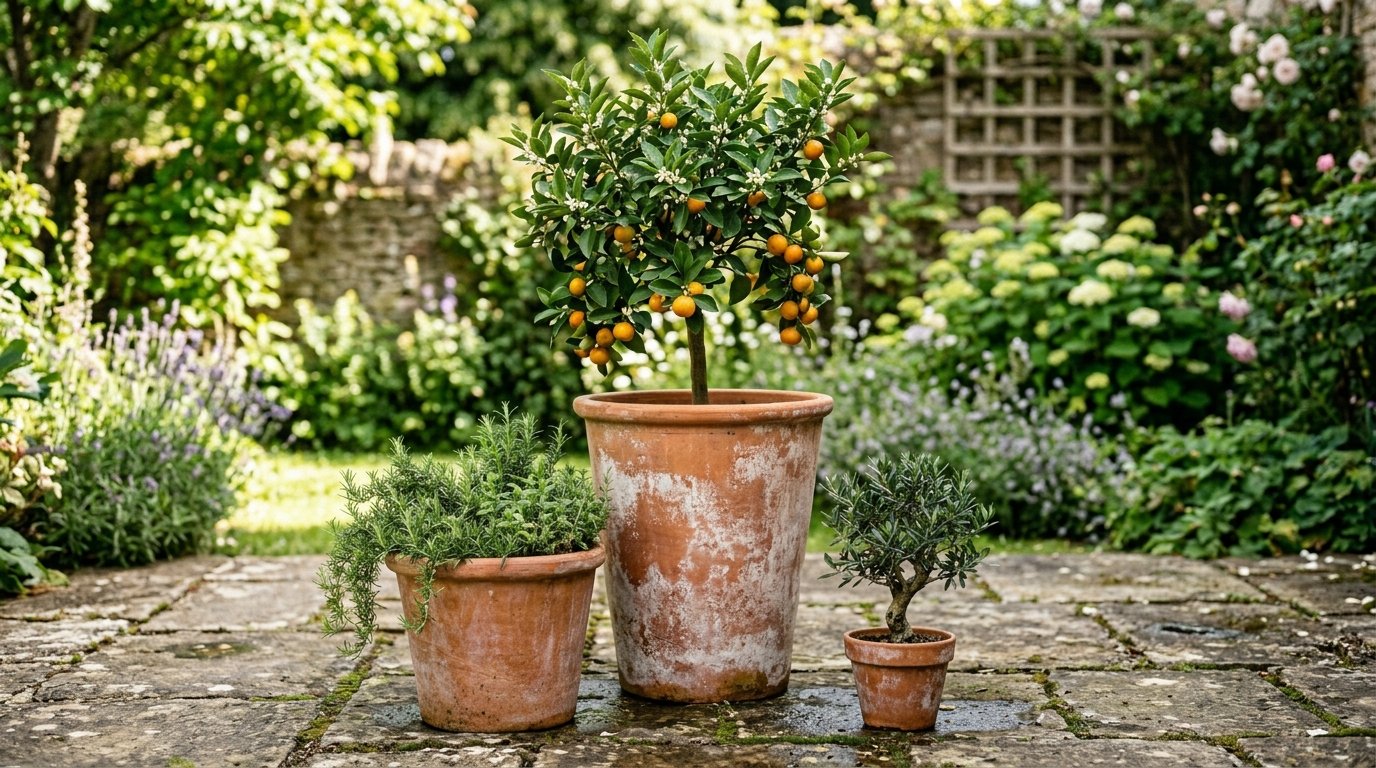
One big pot looks lonely. Three big pots of different heights look like a curated collection. I started using a 24 inch pot next to an 18 inch pot. The visual weight anchors the corner of the patio. It stops the eye from wandering.
Large pots provide more soil volume. More soil means the roots stay at a stable temperature. I found that my citrus trees grew twice as fast once I moved them into heavy clay. The weight also keeps them from tipping when the spring storms roll through. You should place the largest pot in the back. Place the smaller ones in a triangle formation in front of it.
2. Use The Rule Of Three For Clay Pot Planter Ideas
Designers always talk about odd numbers. It works for a Terra Cotta Garden too. When I group three pots together, I choose three different shapes. One should be tall and thin. One should be short and wide. The third should be a classic bell shape.
This variety creates shadows. Shadows give your garden depth. If all the pots are the same size, it looks like a retail store shelf. You want it to look like a private sanctuary. I often use a 12 inch, a 10 inch, and an 8 inch pot together. This cluster fits perfectly on a side table or a porch step.
3. Mix Metal Planters Outdoor With Natural Clay
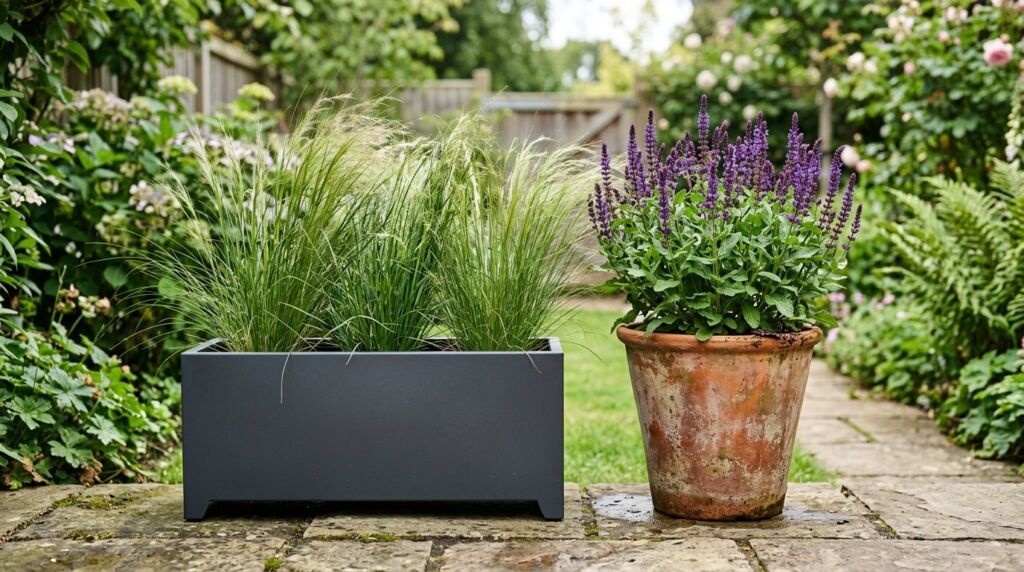
I used to think everything had to match. I was wrong. My garden looked flat until I added iron and zinc. Metal Planters Outdoor provide a sharp contrast to the soft orange of clay. The cool gray of a galvanized bucket makes the warm clay tones pop.
I place one large metal trough behind a group of five clay pots. The metal acts as a backdrop. It feels industrial yet grounded. You must ensure the metal has drainage. Many metal bins do not have holes. I use a power drill with a 1/2 inch bit to fix that. The combination of iron and earth is a staple of Spanish Style Garden Ideas.
4. Master The Aging Process For Rustic Terracotta
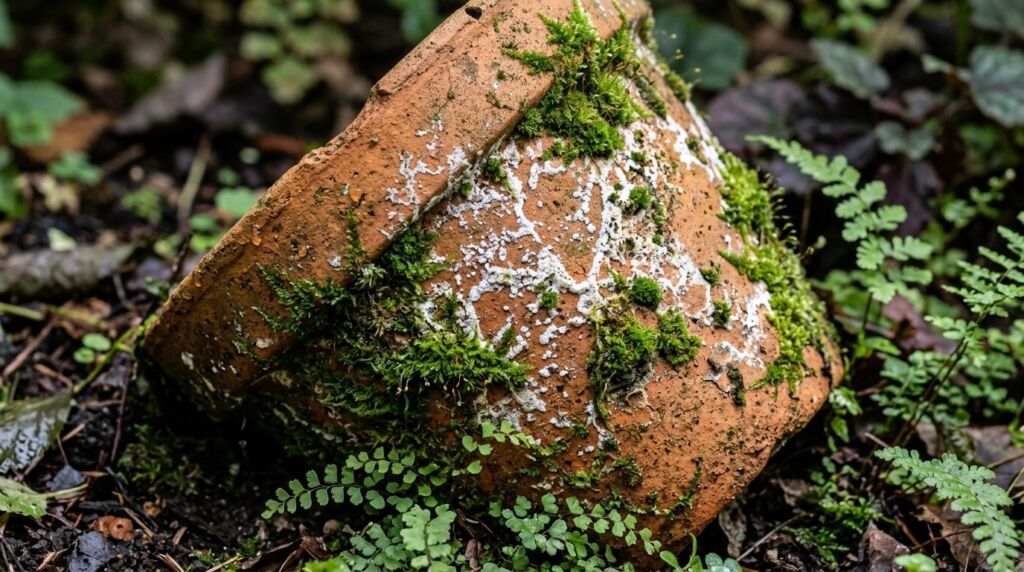
New clay looks too bright. It looks like it just came off a truck. I prefer the look of a pot that has seen twenty winters. You can speed this up. I use a mix of plain yogurt and water. I brush it on the outside of the pot.
I leave the pot in a shady, damp spot for two weeks. Moss starts to grow in the pores. This creates a natural patina. It makes your garden look established. People will ask if you imported your pots from an old estate. It is a simple trick that costs five dollars. It changes the whole vibe of your Terra Cotta Garden Ideas.
5. Incorporate Spanish Style Garden Ideas With Wall Pots
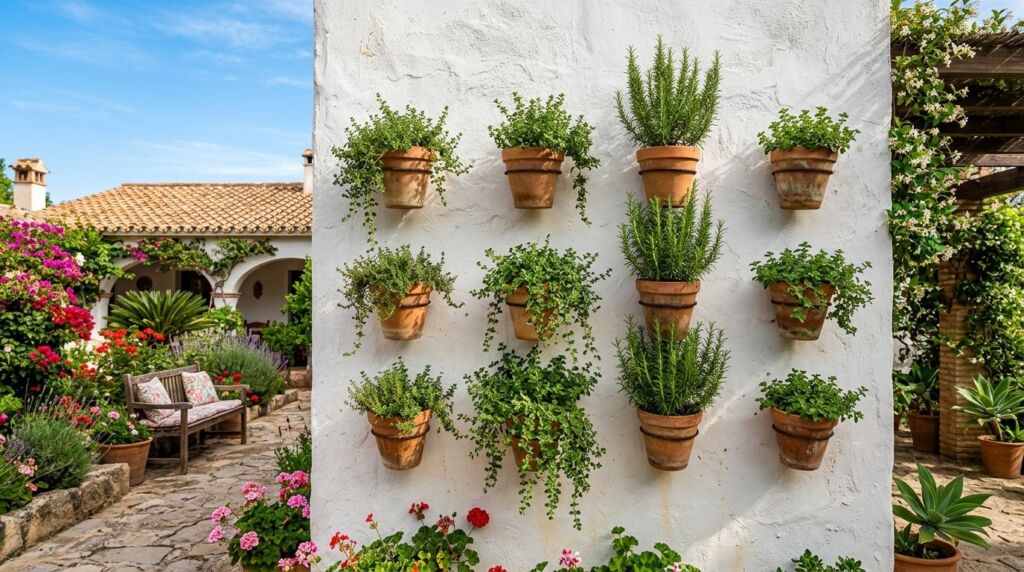
If you have a small patio, go vertical. I used to have a blank brick wall that felt cold. I bought ten small clay pots with flat backs. These are designed to hang. I spaced them out in a grid.
I planted trailing rosemary and thyme in them. Now the wall is a green waterfall. It smells incredible when the sun hits it. This is a classic move in Seville or Cordoba. It uses the thermal mass of the wall to keep the plants warm at night. It is a perfect solution for herb gardens in tight spaces.
6. Focus On Drainage To Prevent Root Rot
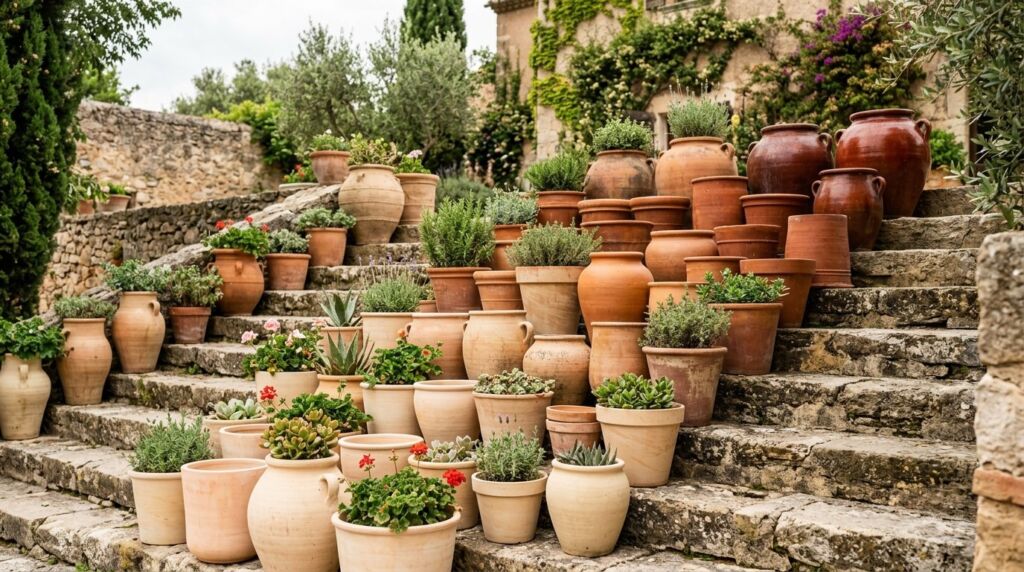
Clay is porous. This is its greatest strength. It allows air to reach the roots. Most people overwater their plants. A Terra Cotta Pot helps fix this mistake. The walls of the pot wick excess moisture away from the soil.
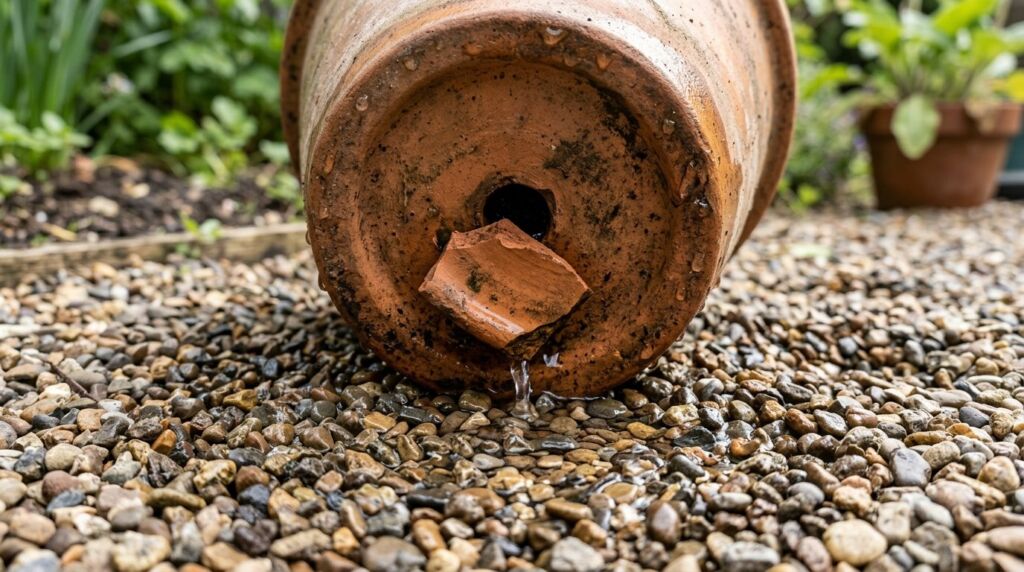
I always check the drainage hole. Some cheap pots have tiny holes that clog with dirt. I use a piece of broken clay or a large stone over the hole. This keeps the water flowing. I once lost a rare succulent because I ignored the drainage. I never make that mistake now. Good drainage is the foundation of a healthy garden.
7. Layer Tones For A Sophisticated Look
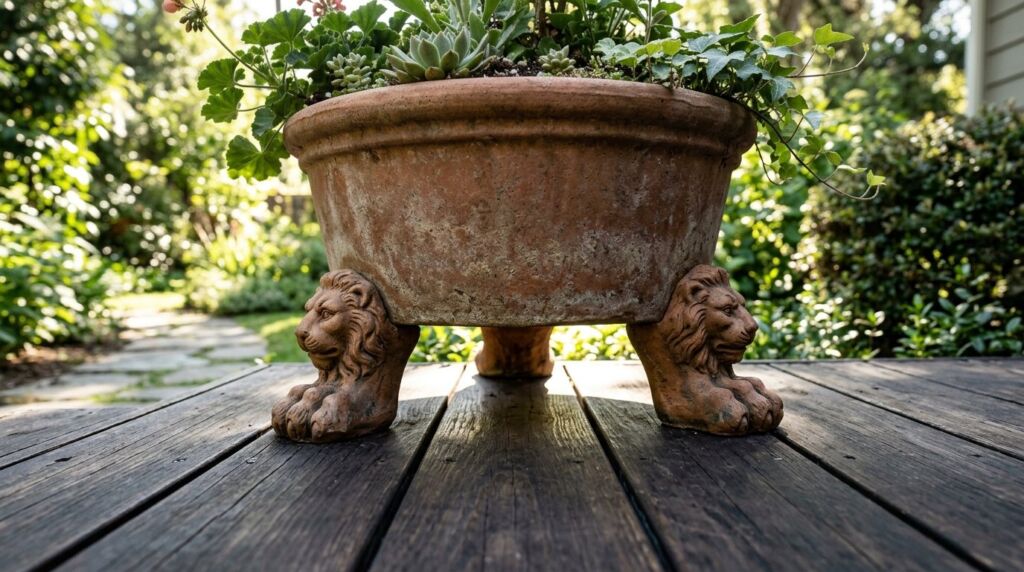
Not all terracotta is the same color. Some are pale pink. Some are deep chocolate. I like to mix these shades. I find that Italian clay is often lighter and more refined. Mexican clay is darker and feels more organic.
When you layer these colors, you create a sense of history. It looks like the collection was built over many years. I place the darkest pots at the base of the grouping. I put the lighter, smaller pots on top of pedestals or shelves. This draws the eye upward. It makes a small space feel much larger than it is.
8. Use Pot Feet For Better Airflow
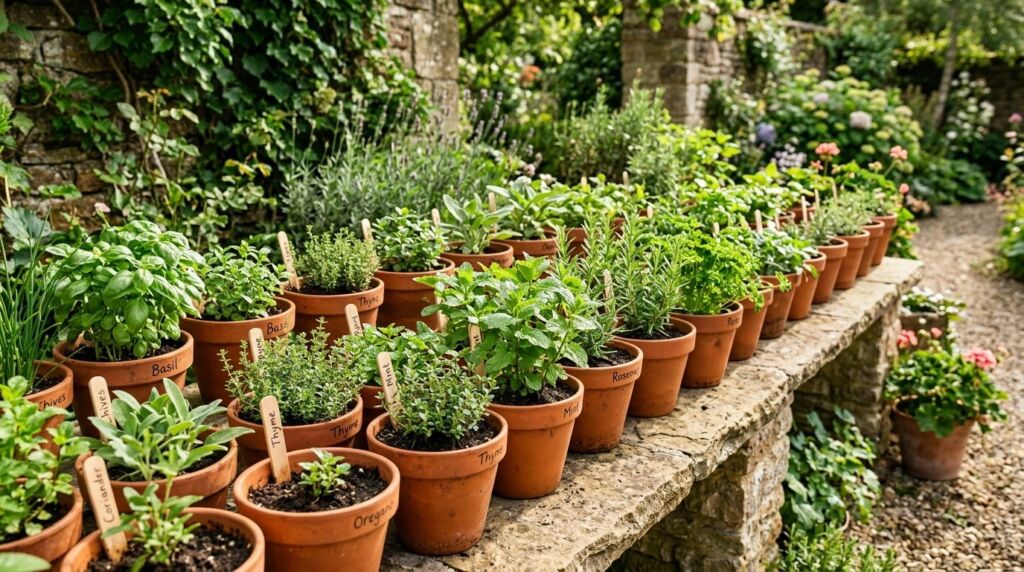
I learned this after I found a ring of mold on my wood deck. Never set a heavy pot directly on a flat surface. I use clay pot feet to lift them up two inches. This allows air to circulate underneath the pot.
It also prevents ants from nesting under the base. I use decorative feet that look like lion paws for my Large Terracotta Pots Outdoor. It adds a layer of detail that feels expensive. You can find simple wedge shaped feet at any garden center for a few cents. It is a small investment that protects your surfaces and your plants.
9. Create A Wild Herb Sanctuary
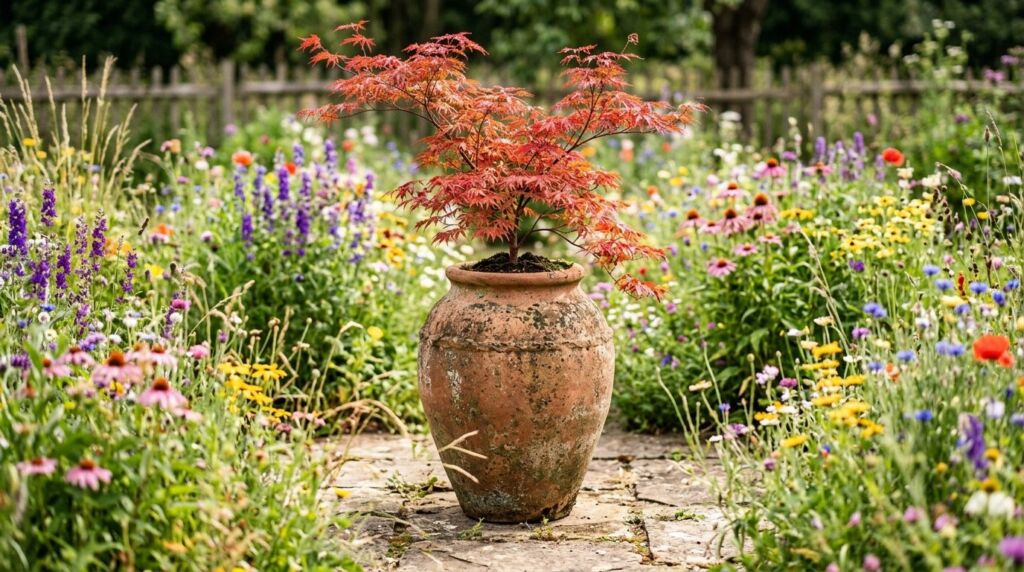
My favorite part of the garden is the herb corner. I use dozens of small clay pots. I plant one herb per pot. This prevents one plant from taking over the whole space. Mint is a bully in a shared bed. In a clay pot, mint stays where it belongs.
I line these pots up along the edge of my outdoor kitchen. The scent of basil and oregano fills the air while I grill. The rustic look of the clay fits the organic nature of the herbs. It is functional decor. You can move the pots around depending on which ones need more sun that day.
10. Anchor Your Space With A Focal Point Pot
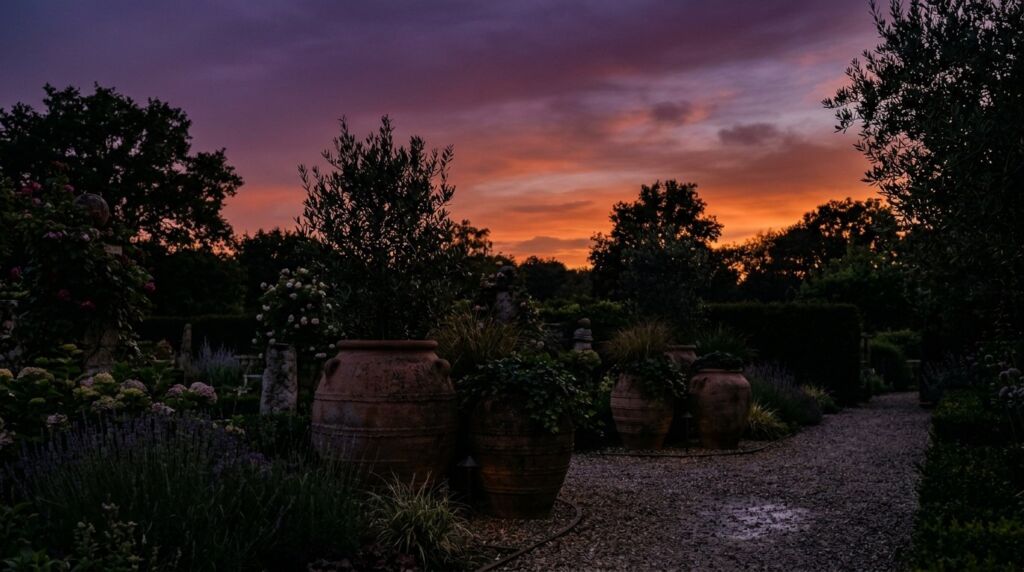
Every garden needs a king. I have one massive 36 inch terracotta urn in the center of my yard. It is too heavy to move. I planted a Japanese Maple in it. This single pot defines the entire space.
All my other Terracotta Garden Ideas orbit this one piece. It provides a sense of permanence. When you choose a focal point, go bigger than you think you need. A small pot will get lost in a wild garden. A large urn stands its ground. It looks better as it cracks and weathers over time.
11. Balance Symmetry In Spanish Style Garden Ideas
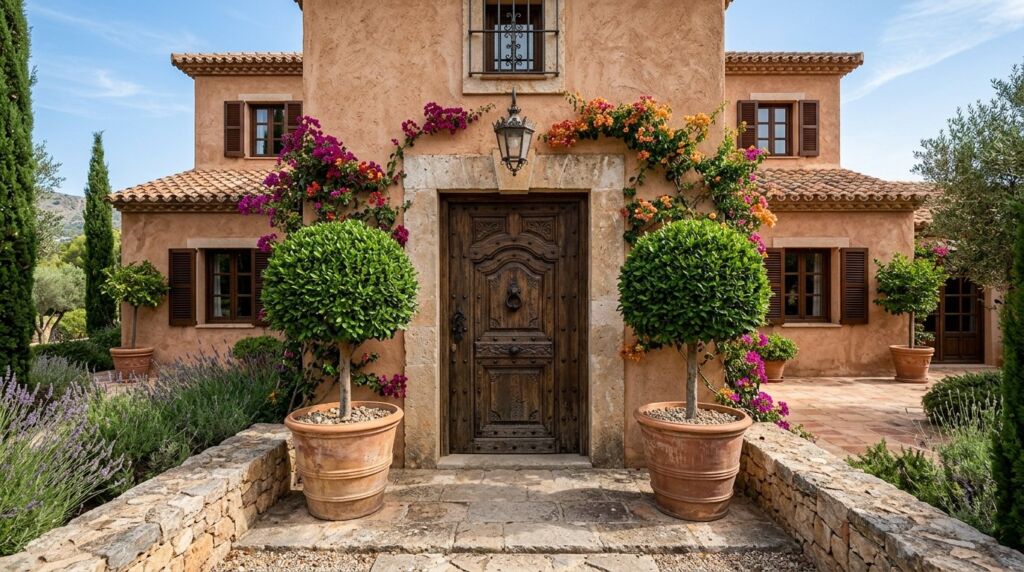
If you want a formal look, use pairs. I put two matching large pots on either side of my front door. It creates an immediate sense of order. I plant tall, structured plants like boxwood or topiary evergreens in them.
This symmetry balances the wilder parts of the yard. It tells the viewer that someone is in charge here. I use heavy, thick walled pots for this. They do not tip over when guests walk by. It is a classic architectural move that never goes out of style.
12. Mix Textures Between Smooth And Rough Clay
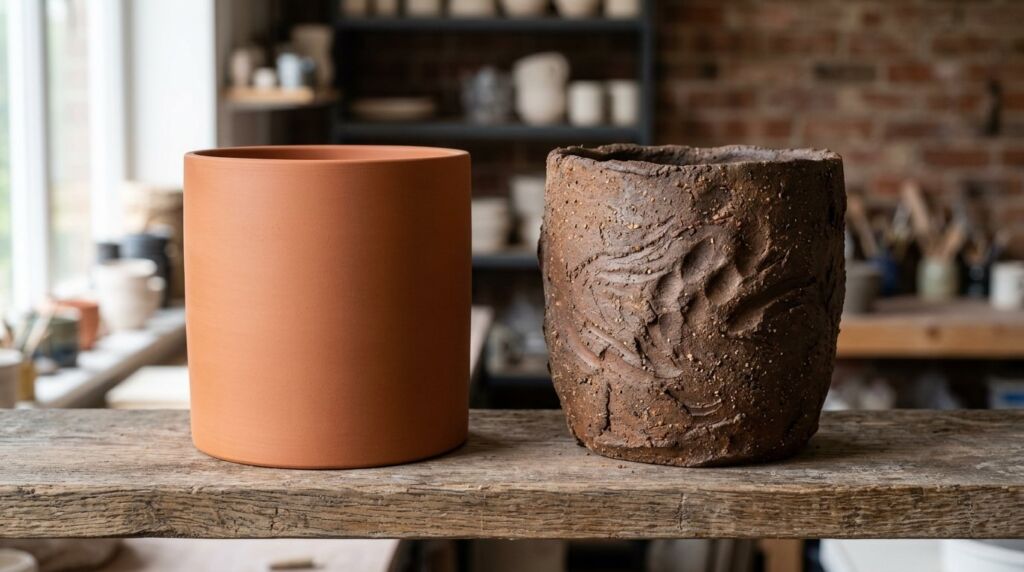
Some pots are sanded smooth. Others have a rough, sandy texture. I like to put them next to each other. The contrast is subtle but effective. I found some pots with a rope detail carved into the rim.
I paired them with perfectly smooth, modern clay cylinders. This mix keeps the garden from looking too much like a museum. It adds a tactile element. I find myself running my hands over the pots when I walk through the garden. It makes the space feel more personal and less like a catalog photo.
13. Use Clay For Drought Tolerant Xeriscaping
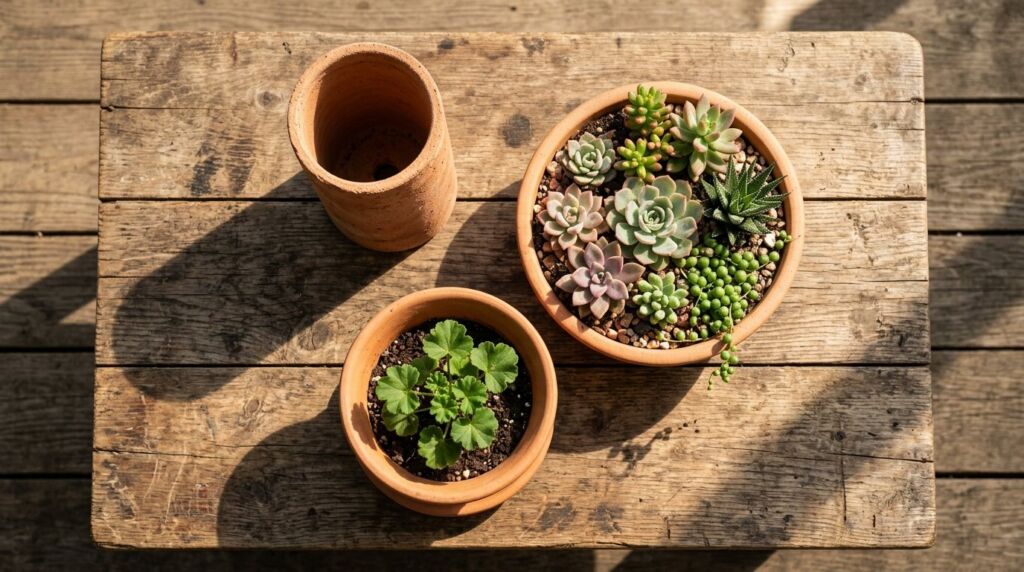
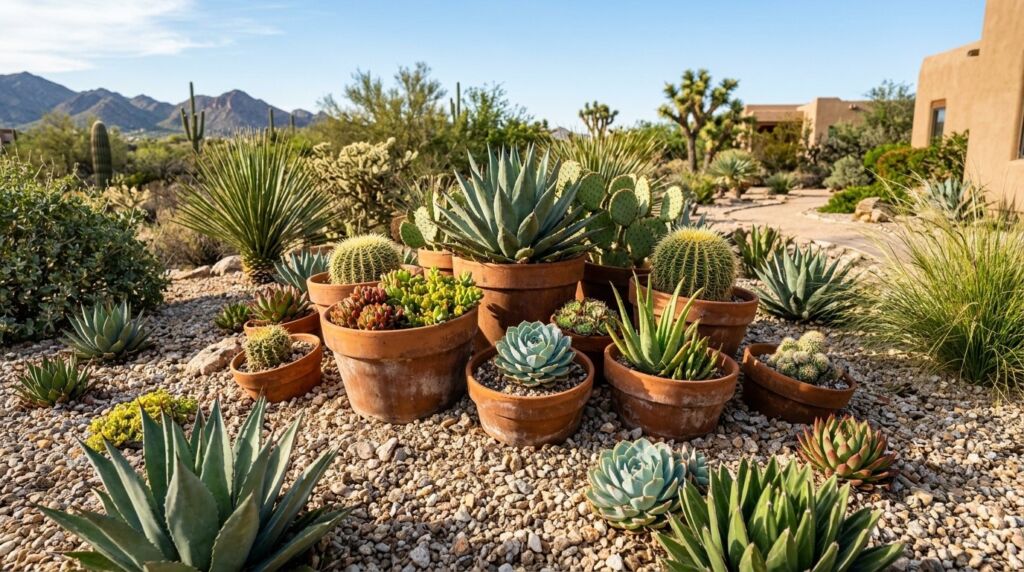
I live in a dry climate. Water is expensive. I use clay because it helps me grow succulents and cacti without much effort. The soil dries out faster in clay than in plastic. This is exactly what desert plants want.
I fill my pots with a mix of coarse sand and potting soil. I top it with small lava rocks. The orange of the clay and the red of the rocks look stunning together. It is a low maintenance way to have a beautiful garden. I only water these pots once every two weeks. They thrive in the heat.
14. Protect Your Pots During The Winter
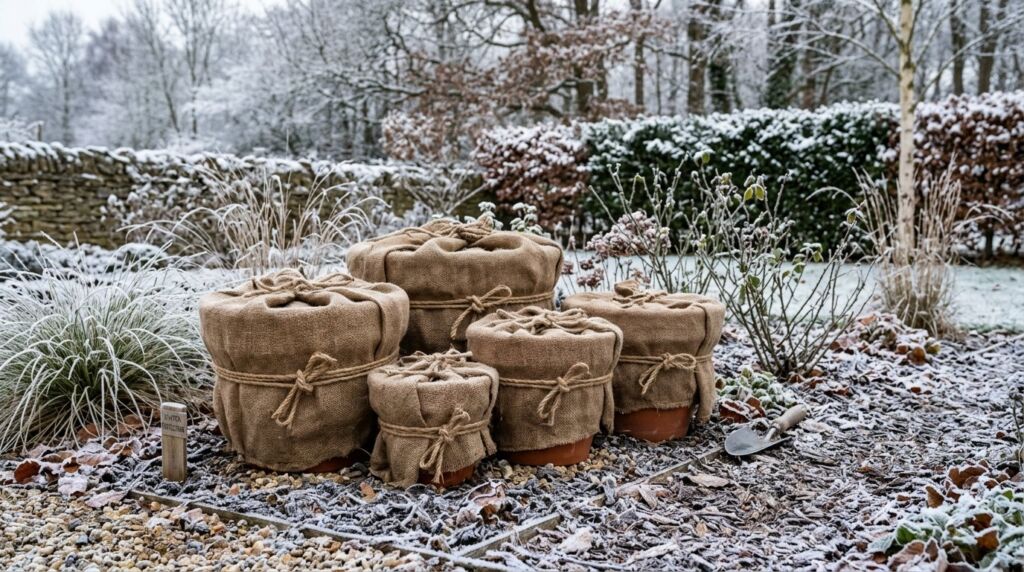
Not all terracotta is frost proof. Cheap clay has air bubbles inside. When water gets in those bubbles and freezes, the pot explodes. I lost three of my favorite Italian pots in the freeze of 2021.
Now I check the labels. I look for high fire or frost resistant ratings. If you have standard pots, bring them inside or wrap them in burlap. You can also flip them upside down so water cannot collect inside. Taking ten minutes to protect your pots will save you hundreds of dollars in replacements.
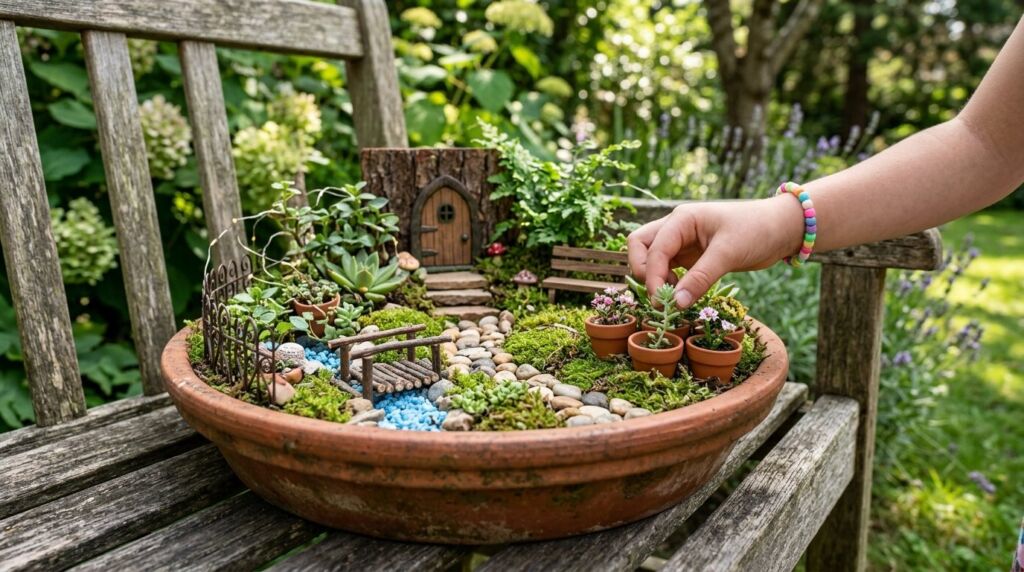
15. Create A Miniature Fairy Garden For Kids
My daughter wanted her own garden. We used a large, wide bowl made of clay. We layered small stones and moss inside. We used tiny terracotta pots the size of a thimble.
It became a project that taught her about soil and water. The clay material is safe for kids to handle. It is not sharp like broken plastic. We placed it on a low bench so she could reach it. It is a great way to introduce the next generation to the joy of growing things.
16. Use Terracotta For Interior And Exterior Flow
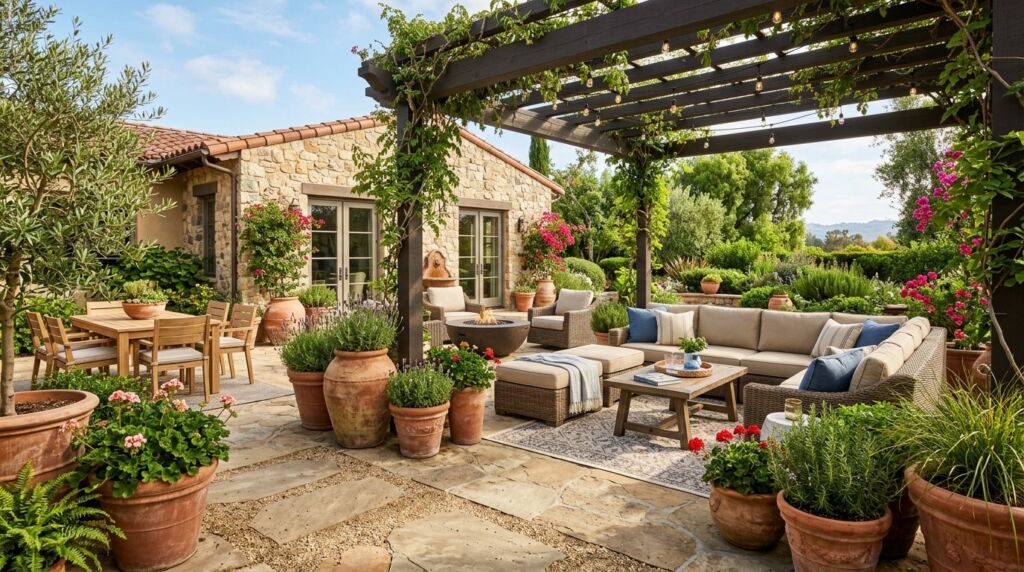
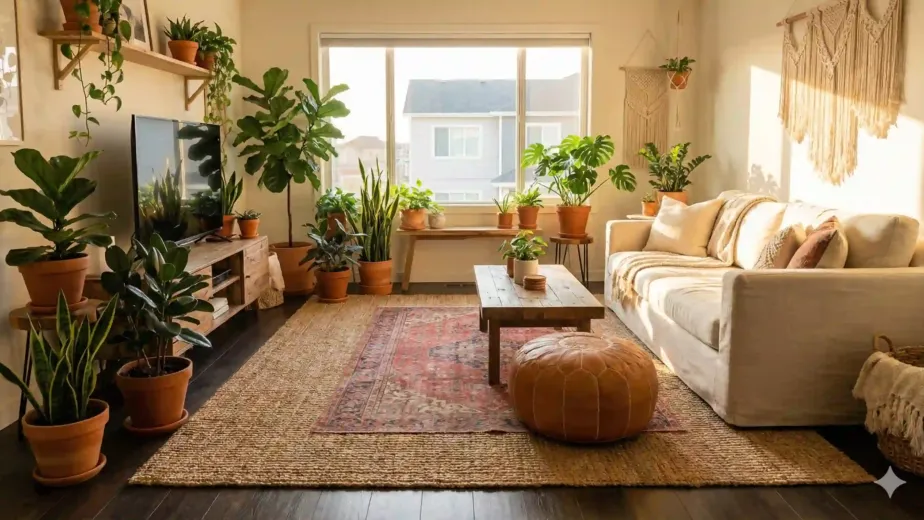
I like to bring the outside in. I use the same style of pots in my living room that I use on my patio. It makes the house feel like it extends into the yard. I put a large fiddle leaf fig in a clay pot near the glass doors.
This visual connection makes the whole property feel cohesive. Just make sure you use a saucer inside. Clay wicks moisture, so it will ruin your hardwood floors if it sits directly on them. I use thick cork pads under the saucers for extra safety.
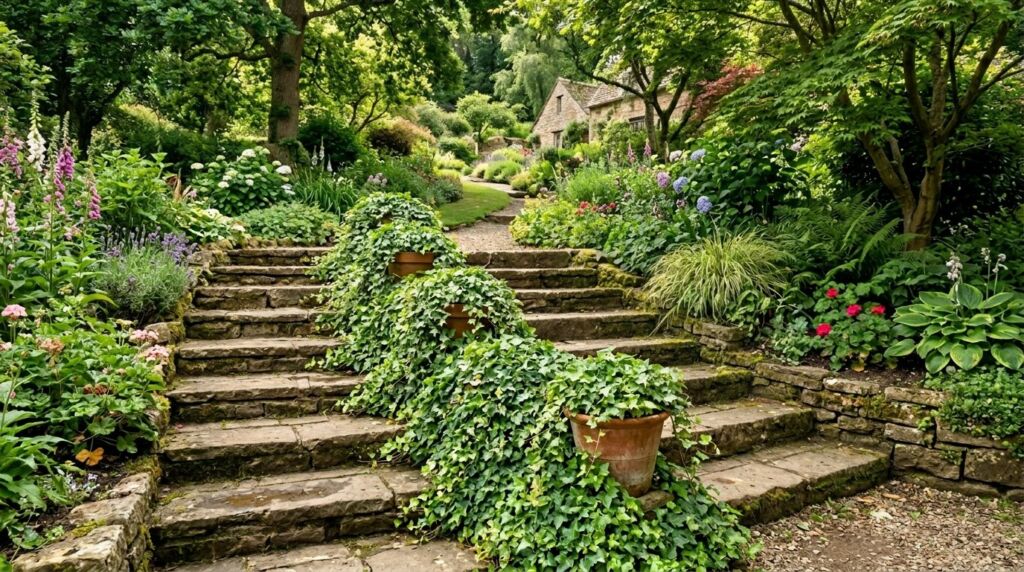
17. Group Pots On Steps For A Waterfall Effect
If you have outdoor stairs, use them. I place one pot on every other step. I use different sizes but keep the color the same. It creates a rhythm as you walk up.
I plant trailing vines like ivy or creeping jenny in these. The green leaves spill over the orange clay. It looks like the plants are flowing down the stairs. It is a simple way to add life to a boring concrete or stone staircase. It makes the entrance to your home feel welcoming.
My $500 Patio Transformation Case Study
I had a boring concrete slab for a backyard. I spent $500 at a local nursery and a hardware store. I bought five large pots and ten small ones. I spent the rest on soil and Mediterranean plants like lavender and sage.
I arranged the pots in the corner to hide the neighbors fence. I used the aging trick with yogurt to make them look old. Within one month, the plants filled out. The area went from a hot, gray box to a lush, shaded retreat. My property value went up because the curb appeal was so much better. It was the best $500 I ever spent on my home.
Comparison Table: Choosing The Right Material
| Feature | Terracotta Clay | Plastic/Resin | Galvanized Metal |
| Breathability | High (Great for roots) | Zero (Risk of rot) | Zero |
| Durability | Decades if handled well | 2-5 years (UV damage) | 5-10 years (Rust) |
| Weight | Heavy (Wind resistant) | Light (Tops easily) | Medium |
| Insulation | High (Keeps roots cool) | Low (Heats up fast) | Very Low (Can cook roots) |
| Aesthetic | Classic/Rustic | Modern/Cheap | Industrial/Farmhouse |
8 Best Brands For Authentic Clay Pottery
- Deroma: The gold standard for Italian clay. They are sturdy and have a clean finish.
- Campania International: These are heavy, cast stone and clay pieces. They last a lifetime.
- Pottery Barn: Great for large statement urns. Their finishes are very consistent.
- Terrain: They offer the best weathered and aged looks. Very high end.
- West Elm: Good for modern, geometric clay shapes.
- Cactus Canyon (Etsy): Authentic Mexican terracotta. The colors are deep and rich.
- Williams Sonoma: Their French style pots are elegant and thick.
- Glamos Wire (Home Depot): They make the best supports and cages for clay pots.
FAQ: Everything You Need To Know About Terracotta
Why does my pot have white crust on the outside?
This is caused by minerals in your water. The clay wicks the water away and leaves the salt behind. You can scrub it off with a stiff brush and vinegar. I think it looks good. It proves the pot is doing its job.
Can I paint my terracotta pots?
Yes, you can. But if you paint the whole thing, you lose the breathability. The paint seals the pores. I suggest painting only the rim or using a stencil. This keeps the function of the clay intact.
How do I stop my pots from cracking in the sun?
The sun will not crack clay. In fact, clay loves the heat. It is a product of fire. Only freezing water causes cracks. Keep them dry in the winter and they will last forever.
What is the best way to clean an old pot?
I use a mix of one part bleach to nine parts water. I soak the pot for ten minutes. This kills any fungus or bacteria from old plants. I rinse it well and let it dry in the sun before replanting.
Do I need to soak a new pot before planting?
Yes. I always soak my new pots in a bucket of water for an hour. Dry clay is thirsty. If you put dry soil and a plant in a dry pot, the pot will suck the moisture out of the soil. Soaking it first protects your plant.
How heavy are Large Terracotta Pots Outdoor?
A 20 inch pot filled with wet soil can weigh over 100 pounds. I always place my large pots exactly where I want them before I fill them with dirt. Use a dolly if you need to move them later.
Which plants hate terracotta?
Plants that love to stay soaking wet might struggle. Ferns and some tropical plants prefer plastic because it holds water longer. For almost everything else, clay is better.
Why are some pots so much more expensive?
It comes down to the kiln temperature. High fire clay is stronger and more dense. It resists frost better. Cheap pots are fired at lower temperatures and break easily.
Can I use terracotta for vegetables?
I grow tomatoes and peppers in large clay pots every year. They love the warm soil. Just make sure the pot is big enough. A tomato plant needs at least a 14 inch pot to thrive.
How do I drill a hole in a pot without a hole?
Use a masonry bit. Go slow. Do not press hard. Let the drill do the work. I put a piece of masking tape over the spot first to stop the bit from slipping.
Is terracotta environmentally friendly?
Yes. It is just baked earth. If it breaks, you can crush it up and put it in the bottom of other pots for drainage. It does not leach chemicals into the ground like plastic does.
Why is my pot turning green?
That is algae or moss. It happens in shady, wet areas. Most gardeners love this look. It adds character. If you hate it, move the pot to a sunnier spot.
How do I keep my pots from staining my patio?
Use a saucer or pot feet. Never let the pot sit directly on a porous surface like stone or wood. The moisture will eventually leave a mark.
What is the difference between terracotta and clay?
Terracotta is a specific type of clay. The name means baked earth in Italian. It is usually unglazed and reddish brown.
Can I leave my pots out in the rain?
Rain is great for clay. It washes away the salt buildup. Just ensure the drainage hole is clear so the plant does not drown.
Concluding Thoughts On Styling Wild Gardens
The beauty of a wild garden comes from the tension between nature and structure. Terracotta provides that structure. It is a material that ages with you. It records the history of your garden through its patina and its scars.