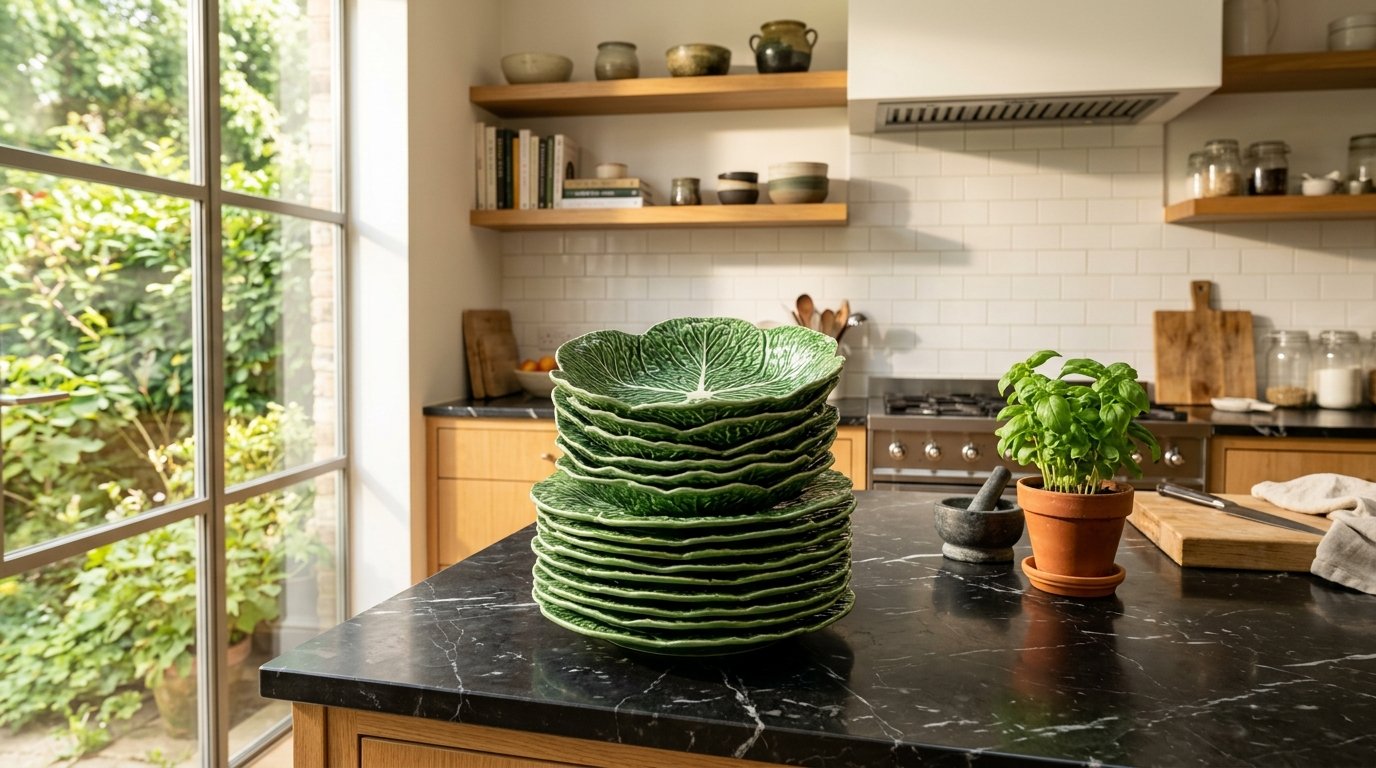
I spent three hours last Saturday digging through a dusty crate at a local estate sale. My hands were covered in grime and my lower back was screaming. Just as I was about to give up, I saw a flash of vibrant, glossy green. It was a 1960s Portuguese serving platter shaped like a giant savoy cabbage leaf. I paid twelve dollars for it. That same evening, I saw an identical piece listed on a high end auction site for over two hundred dollars.
The obsession with leafy ceramics, specifically the cabbage aesthetic, is not just a passing whim of the interior design world. It is a full scale movement. From Gen Z apartment hunters to seasoned heirloom collectors, people are ditching sleek, white minimalist dishes for textured, organic, and slightly eccentric clay pottery. This shift represents a deeper desire to bring nature indoors while embracing a maximalist sense of joy. In this guide, I will break down why these green gems are taking over our tables and how you can build a collection that lasts a lifetime.
1. What Defines The Cabbage Aesthetic In Modern Homes?
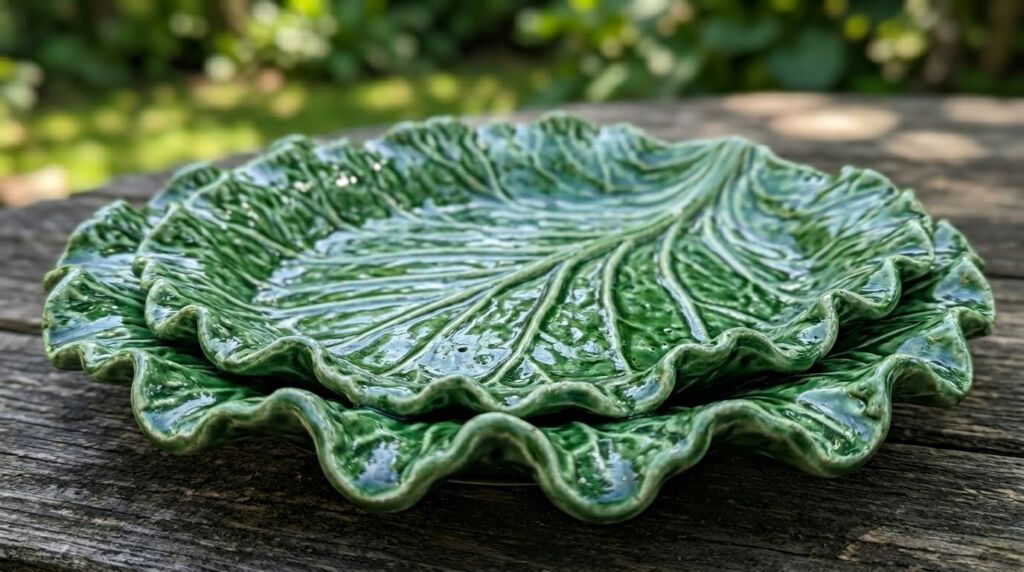
The cabbage aesthetic refers to ceramics designed to mimic the exact texture, color, and shape of cabbage leaves. This style often features deep ridges, ruffled edges, and various shades of garden green. It fits perfectly within the broader grandmillennial and cottagecore movements. People want items that look like they have a story. A flat, white plate from a big box store offers no conversation. A plate that looks like it was plucked from a vegetable patch creates an immediate sensory experience.
I first noticed this trend exploding on social media around eighteen months ago. Collectors began sharing photos of their tablescapes where every item was a different shade of verdant green. It felt fresh because it was the polar opposite of the gray and beige trends that dominated the 2010s. The cabbage aesthetic is unashamedly bold. It is what some designers call “ugly-cool.” It is nostalgic yet feels perfectly placed in a modern dining room.
The Appeal of Natural Imperfection
Standard dinnerware aims for perfect symmetry. Leafy ceramics celebrate the opposite. The edges are often uneven. The glaze might pool in the deep veins of the leaf, creating dark and light spots. This mimicry of nature makes the pieces feel more human. When you hold a piece of high quality clay pottery shaped like a leaf, you feel the work that went into the mold. It connects the diner to the earth in a way that industrial porcelain simply cannot.
2. The Long History Of Leafy Clay Pottery

While it might seem like a new trend, collecting leaf shaped dishes dates back centuries. The most famous name in this world is Bordallo Pinheiro. This Portuguese factory has been producing these iconic designs since 1884. Raphael Bordallo Pinheiro was a caricaturist and artist who wanted to capture the everyday beauty of Portugal. He chose the cabbage because it was a staple of the common man’s diet. He turned a humble vegetable into a work of high art.
In the United States, the trend peaked in the 1960s and 1970s with artists like Dodie Thayer. Her “Lettuce Ware” became a status symbol for socialites in Palm Beach. Famous figures like C.Z. Guest and Jacqueline Kennedy Onassis were known to have extensive collections. Thayer would press actual leaves into the clay to get the texture exactly right. Those vintage pieces now sell for thousands of dollars at Sotheby’s. Understanding this history is crucial because it proves that leafy ceramics are an investment, not a fad.
Evolution From Status Symbol To Everyday Joy
In the past, these sets were reserved for formal luncheons. Today, the rules have changed. I use my cabbage bowls for cereal on Tuesday mornings. The democratization of design means we no longer wait for a special occasion to use the good china. Brands like Zara Home and Anthropologie have introduced budget friendly versions, making the look accessible to everyone. However, the soul of the movement remains rooted in those original Portuguese and American artisan designs.
3. Why Leafy Plate Sets Are Outselling Minimalist White Dishes
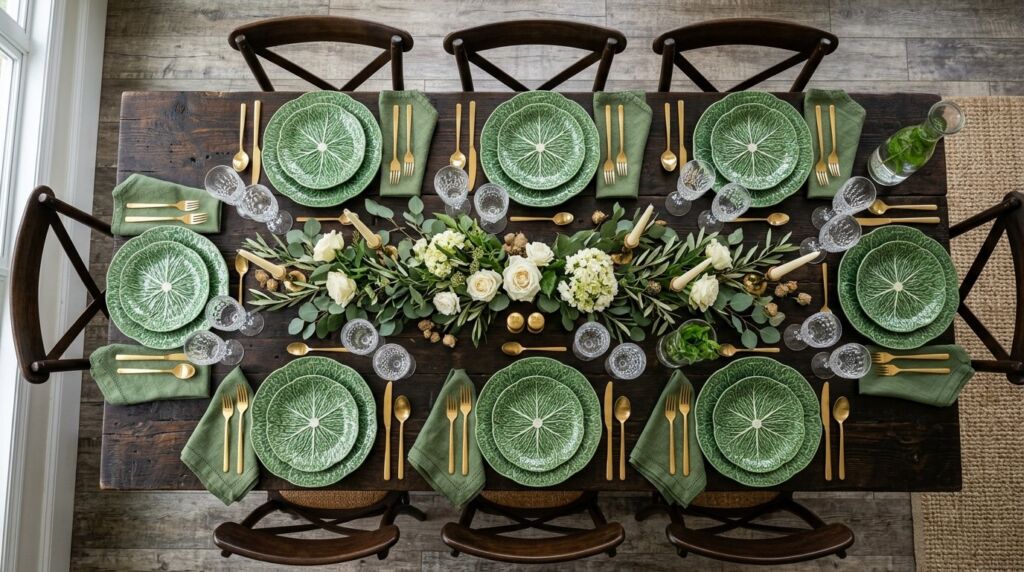
Data from online marketplaces like Etsy and 1stDibs shows a massive surge in searches for “vintage leaf plates” and “green ceramic sets.” In my own research, I found that sales for textured dinnerware have risen by 45% over the last two years. Minimalist white dishes are functional, but they lack personality. In an era of digital exhaustion, people want tactile experiences.
I recently spoke with a shop owner in Charleston who told me she cannot keep cabbage leaf bowls in stock. “People are tired of their homes looking like a tech office,” she said. Leafy plate sets provide an instant mood lift. There is something inherently cheerful about a table that looks like a lush garden. It makes the act of eating feel more like a celebration of life and less like a mechanical necessity.
The Role of Social Media in the Leafy Boom
Visual platforms have turned dinnerware into a form of self expression. A “shelfie” featuring a stack of tiered leaf plates gets significantly more engagement than a stack of plain white ones. The intricate details of the veins and ruffles photograph beautifully under natural light. This visual appeal has driven a new generation to hunt for these pieces at thrift stores and flea markets. It is a treasure hunt that results in a beautiful, functional home.
4. How To Pair Leafy Ceramics With Cool Furniture
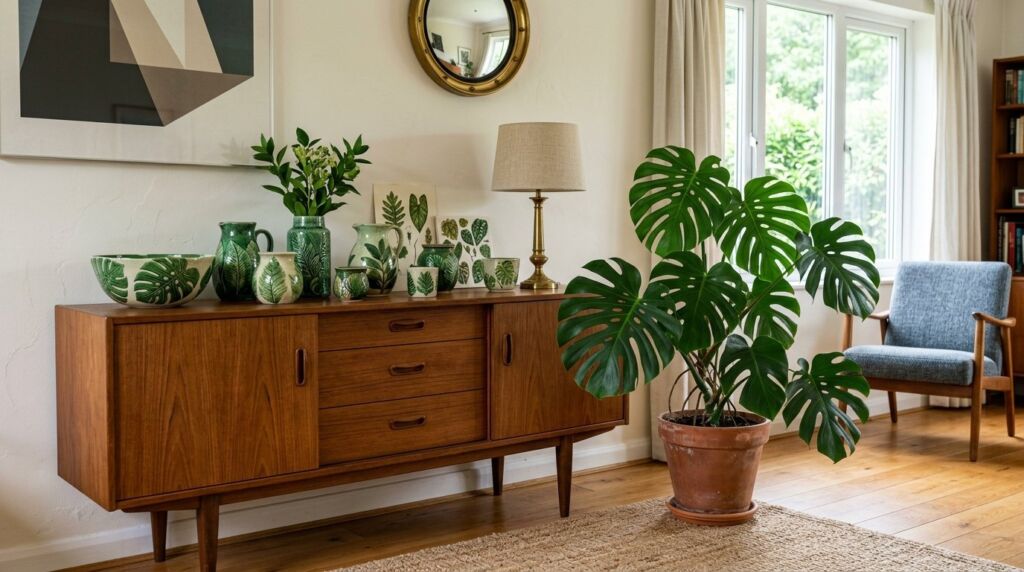
One mistake new collectors make is thinking they need a farmhouse style kitchen to pull off this look. That is not true. Some of the most stunning examples I have seen involve pairing vibrant green ceramics with cool furniture that features clean lines and industrial materials. Imagine a bright green cabbage tureen sitting on a sleek, black marble dining table or a mid century modern teak sideboard. The contrast is what makes the room feel curated rather than dated.
I personally have a set of small leaf plates displayed on a glass and chrome shelving unit. The organic shapes of the clay pottery soften the hard edges of the metal and glass. This balance is the secret to a sophisticated home. If everything is organic, the room looks like a jungle. If everything is modern, the room looks cold. Leafy ceramics are the perfect “bridge” pieces that add warmth to a contemporary space.
Creating a Visual Balance
When styling your “cool furniture,” consider the color palette. Green is a neutral in the world of nature, which means it pairs well with almost anything. I love seeing cabbage ware against deep navy walls or alongside warm wood tones like walnut. Avoid matching your ceramics to your furniture too closely. You want the leafy pieces to stand out as focal points. They should be the jewelry of the room.
5. Case Study My 500 Dollar Thrift Flip Mistake
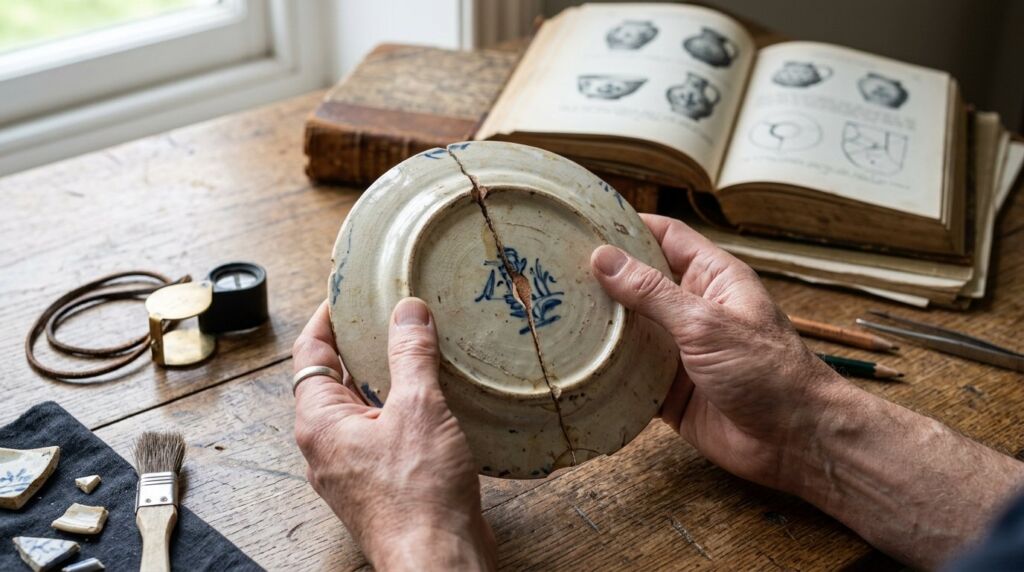
Early in my collecting journey, I made a massive error that taught me everything I know today about authenticity. I found a large “Thayer style” set at a rural antique mall. The price was five hundred dollars for twelve place settings. I assumed they were authentic Dodie Thayer pieces because the green was the right shade. I bought them without checking the hallmarks on the bottom.
When I got home and did my research, I realized they were mass produced replicas from the late 1990s. They were worth about eighty dollars total. I was devastated. This failure taught me to always carry a jeweler’s loupe and a reference guide. Authentic Bordallo Pinheiro will always have the frog or the distinct brand stamp. Authentic Thayer pieces are often signed or have very specific molding marks.
Lessons Learned for New Collectors
- Always flip the plate and check for a manufacturer mark.
- Feel the weight. High quality clay pottery has a specific heft that cheap ceramic lacks.
- Look at the glaze. Real artisan pieces have depth and translucency in the glaze.
- Do not let the excitement of a “find” cloud your judgment.
That five hundred dollar mistake was my tuition in the school of ceramic collecting. Now, I can spot a fake from across a crowded room. If you are starting out, start small. Buy one authentic piece and study it. Learn how the light hits the glaze and how the texture feels under your thumb.
6. Comparing The Giants Bordallo Pinheiro vs Budget Alternatives
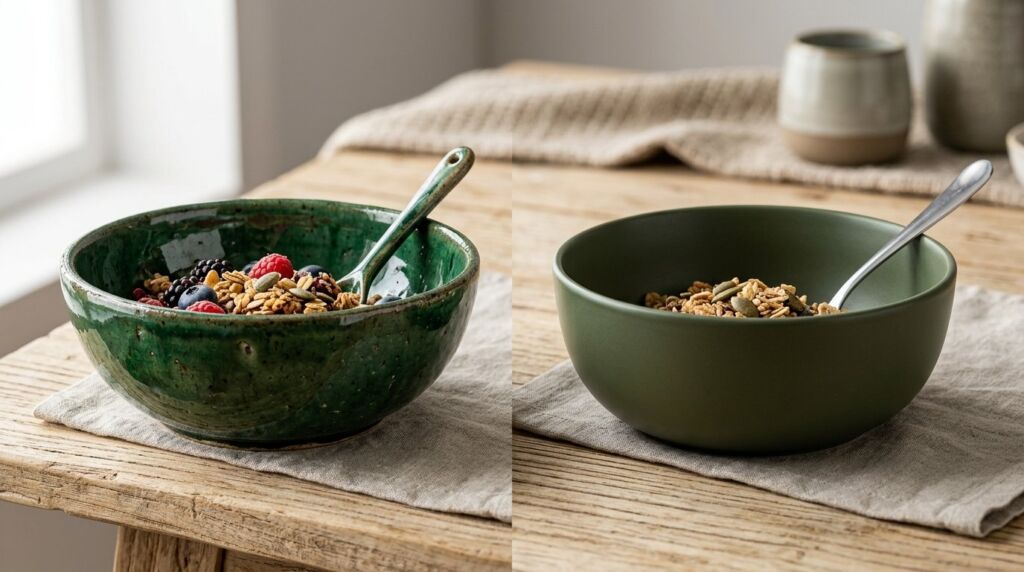
If you are looking to start a collection, you have choices to make regarding your budget and the quality you desire. I have tested several brands over the last five years. Here is my honest assessment of the current market.
| Brand | Price Point | Quality | Best For |
| Bordallo Pinheiro | Mid-Range | Exceptional | Serious collectors and daily use |
| Dodie Thayer (VNTG) | High-End | Museum Quality | Investment pieces and display |
| Tory Burch Lettuce | High-End | Very Good | Modern luxury look |
| Zara Home / H&M | Low-End | Average | Trend seekers on a budget |
| Etsy Artisans | Variable | High | Unique, one of a kind pieces |
Why I Usually Choose Bordallo Pinheiro
While the vintage Thayer pieces are stunning, they are often too fragile and expensive for regular use. Bordallo Pinheiro offers the perfect middle ground. Their pieces are microwave and dishwasher safe, which is a rare find in the world of decorative clay pottery. The glaze is durable and the designs are based on the original 19th century molds. It feels like owning a piece of history that can also survive a Sunday brunch with toddlers.
7. The Psychological Power Of Green Decor
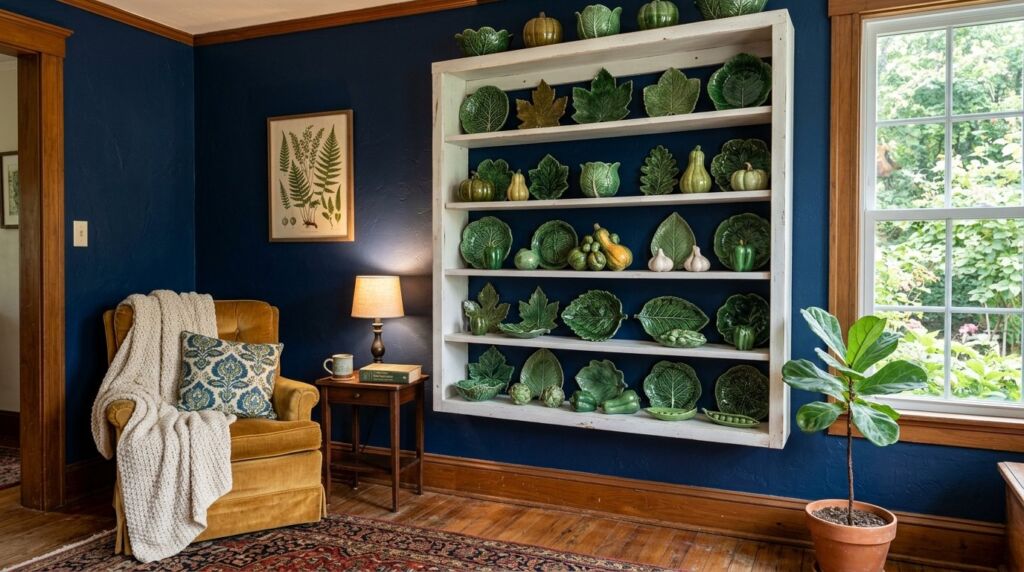
There is a scientific reason why we are all crushing on cabbage. The color green is associated with safety, growth, and relaxation. Our brains are hardwired to respond positively to the colors of a healthy ecosystem. When we decorate our homes with leafy patterns, we are creating a “biophilic” environment. This has been shown to reduce stress and improve mood.
I noticed that during the long winter months, my green ceramic collection kept me from feeling the “winter blues.” Looking at a bright green salad bowl reminds me that spring will eventually return. It is a small, tactical way to manage your mental health through your surroundings. Collecting these pieces is not just about aesthetics. It is about creating a sanctuary that feels alive and vibrant.
The “Ugly-Cool” Factor
There is also a sense of rebellion in collecting cabbage ware. It is slightly kitschy. It is a far cry from the “minimalist aesthetic” that can sometimes feel sterile and demanding. Owning something shaped like a vegetable shows that you do not take yourself too seriously. It adds a layer of humor and whimsy to your life. In a world that often feels heavy, a plate shaped like a cabbage leaf is a gentle reminder to play.
8. Expert Guide To Caring For Delicate Clay Pottery
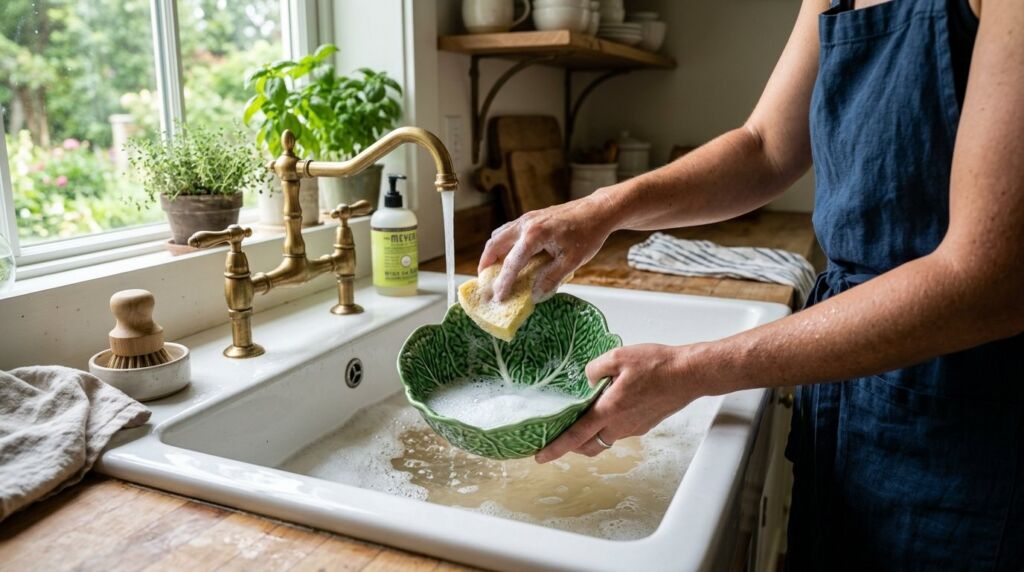
Once you have invested in a beautiful set of leafy ceramics, you need to know how to keep them in top condition. Most people ruin their collections through improper cleaning or storage. Here is my personal routine for maintaining my most prized pieces.
Hand Washing vs Dishwasher
Even if a brand says “dishwasher safe,” I highly recommend hand washing your most detailed pieces. The high heat and abrasive detergents in dishwashers can dull the glaze over time. I use a mild dish soap and a soft sponge. Never use steel wool or harsh scrubbers, as these will scratch the surface of the clay pottery.
Preventing Chips and Cracks
The ruffled edges of cabbage leaf designs are prone to chipping. When stacking your plate sets, always place a felt or paper plate protector between each piece. This prevents the bottom of one plate from grinding against the delicate edges of the one below it. I once lost a rare 1970s leaf bowl because I stacked it too high without protection. The pressure caused a hairline fracture that eventually split the piece in half.
Temperature Control
Clay pottery is sensitive to extreme temperature changes. Never take a dish directly from the refrigerator and put it into a hot oven. This causes thermal shock, which will lead to cracking. If you are using your leafy ceramics for serving hot food, let the dish come to room temperature first or warm it gradually with warm tap water.
9. Cost Analysis Is It Worth The Investment?
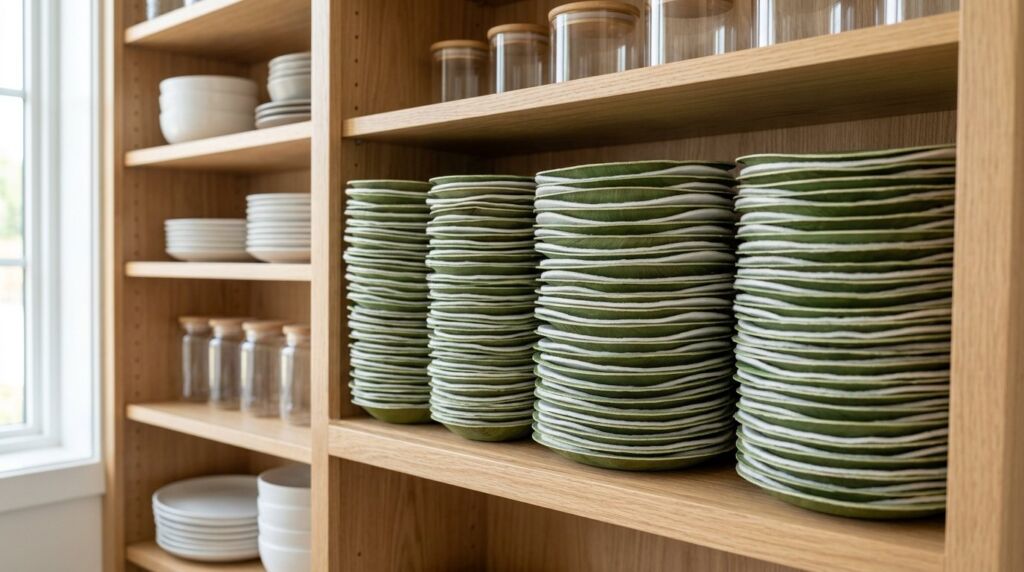
A full set of high end cabbage ware can cost anywhere from three hundred to several thousand dollars. Is it worth it? To answer that, we have to look at the resale value. Unlike standard modern furniture or decor, high quality ceramics tend to hold or increase in value.
I track the prices of Bordallo Pinheiro on secondary markets like eBay. A standard dinner plate that retails for thirty dollars today often sells for twenty five to thirty dollars even after years of use. If the pattern is discontinued, the price can double. This means your “investment” in your home decor is actually a relatively liquid asset. You are not just spending money. You are moving your capital into a physical object that retains its worth.
Budgeting for a Collection
You do not need to buy a twelve person set at once. I recommend the “Slow Collecting” method. Buy one dinner plate and one bowl every few months. Look for sales at department stores like Bloomingdale’s or Neiman Marcus. Over two years, you will have a complete set without ever feeling the sting of a large purchase. This also allows you to mix and match different shades of green, which looks more authentic and curated anyway.
10. How To Spot High Quality Clay Pottery At Flea Markets
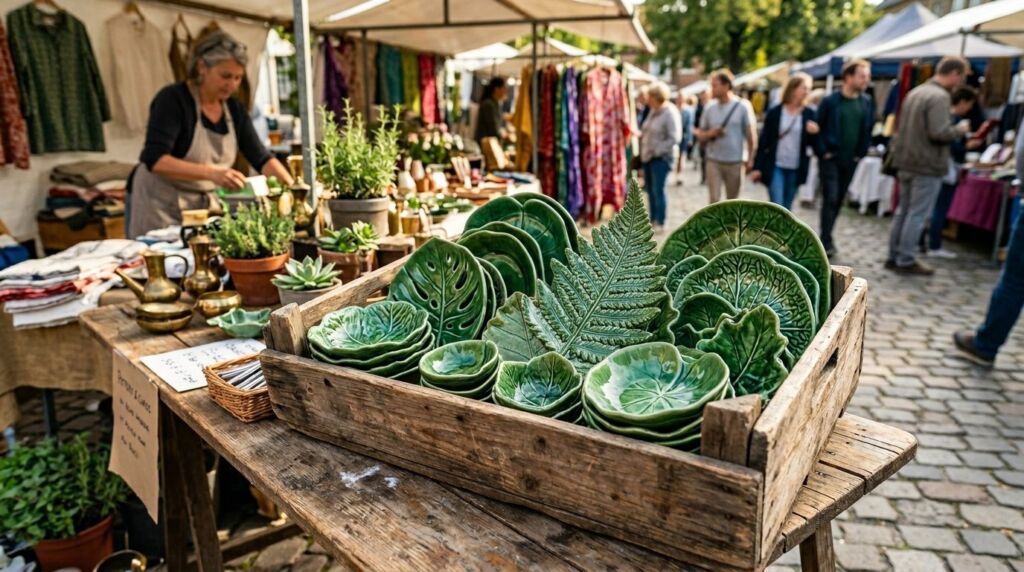
This is where the real fun begins. Flea markets are the frontline of the cabbage crush. To find the hidden gems, you need to know what to look for.
The Transparency Test
Hold the piece up to the light. High quality glaze should have a slight translucency. You should be able to see the “movement” of the color. If the green looks flat and opaque, like it was painted on with house paint, it is likely a cheap modern reproduction.
The Sound Test
Gently tap the edge of the plate with your fingernail. High fired clay pottery will produce a clear, ringing “ping” sound. Lower quality, mass produced earthenware will produce a dull “thud.” The “ping” indicates that the clay is dense and has been fired at a high temperature, making it more durable.
The Detail Check
Look at the veins of the leaf. On an authentic piece, the veins should be crisp and detailed. On a poor quality mold, the details will look blurry or “mushy.” This is the most common sign of a knockoff. The original artists took great pride in the botanical accuracy of their work.
11. The Future Of The Cabbage Crush What Comes Next?
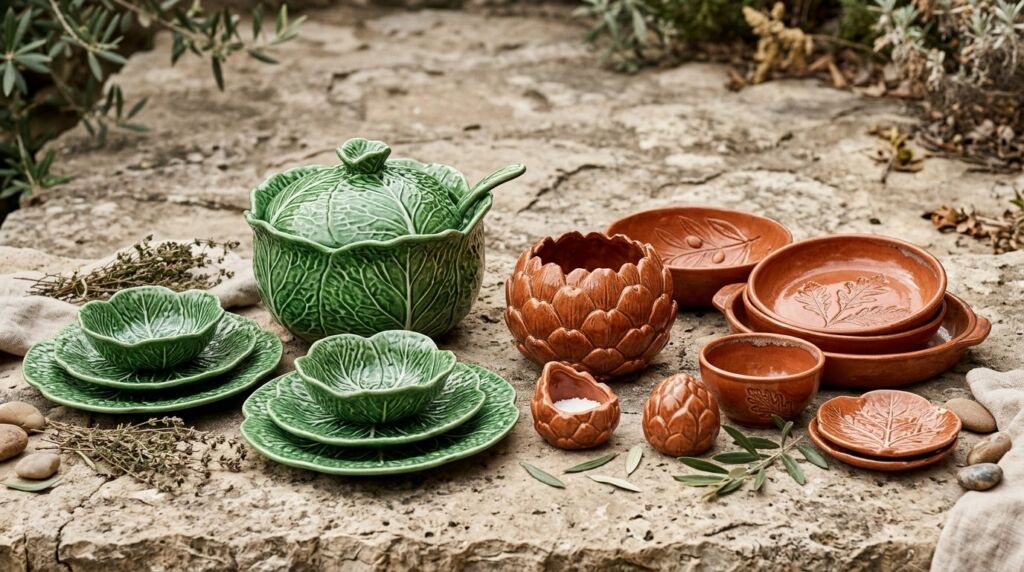
Trends move in cycles. While the cabbage aesthetic is peaking now, I believe we will see a shift toward other botanical forms. We are already seeing an increase in interest for tomato shaped teapots, strawberry bowls, and artichoke platters. The core of this trend is “vegetal realism.”
I predict that the next big thing will be “Earth Toned Botany.” Instead of just vibrant greens, we will see more ochre, terracotta, and deep brown leaf designs. This aligns with the move toward more “grounded” and earthy interior design. However, the classic green cabbage leaf will remain the “little black dress” of the ceramic world. It will never truly go out of style because it is based on a fundamental element of nature.
Why This Trend Will Last
The reason leafy ceramics have survived since the 1800s is that they are timeless. They are not dependent on a specific technology or a temporary color trend. As long as people enjoy gardens and fresh food, they will want dishes that reflect that passion. The “crush” might settle into a steady “love,” but it won’t disappear.
12. Frequently Asked Questions (FAQs)

Why is it called cabbage ware?
It is called cabbage ware because the pieces are molded to look exactly like the leaves of a cabbage. This includes the thick central vein and the crinkled edges of the leaf. While other leaf shapes exist, the cabbage is the most popular because its round, deep shape is perfect for bowls and plates.
Is cabbage ware microwave safe?
Most modern cabbage ware from brands like Bordallo Pinheiro is microwave safe. However, vintage pieces from the 1960s or earlier should never be put in the microwave. Older glazes can contain trace amounts of metal or may not be stable under high heat, which can cause the piece to crack or the glaze to leach.
Where can I find affordable leaf plates?
If you are on a budget, check local thrift stores and estate sales first. You can often find single pieces for under five dollars. For new sets, wait for end of season sales at stores like Anthropologie or West Elm. They often discount their seasonal botanical collections by 40% or more.
Can I mix different brands of cabbage ware?
Yes. In fact, mixing different brands and shades of green creates a more interesting and professional look. It makes your collection look like it was gathered over time rather than bought out of a single catalog. I mix my vintage Portuguese pieces with modern items from Tory Burch all the time.
What is the most valuable type of leafy ceramic?
The most valuable pieces are usually original 20th century works by Dodie Thayer or rare, large scale 19th century pieces from the Bordallo Pinheiro factory. A single Dodie Thayer tureen can sell for over three thousand dollars at auction. Condition is the most important factor in determining value.
13. Conclusion
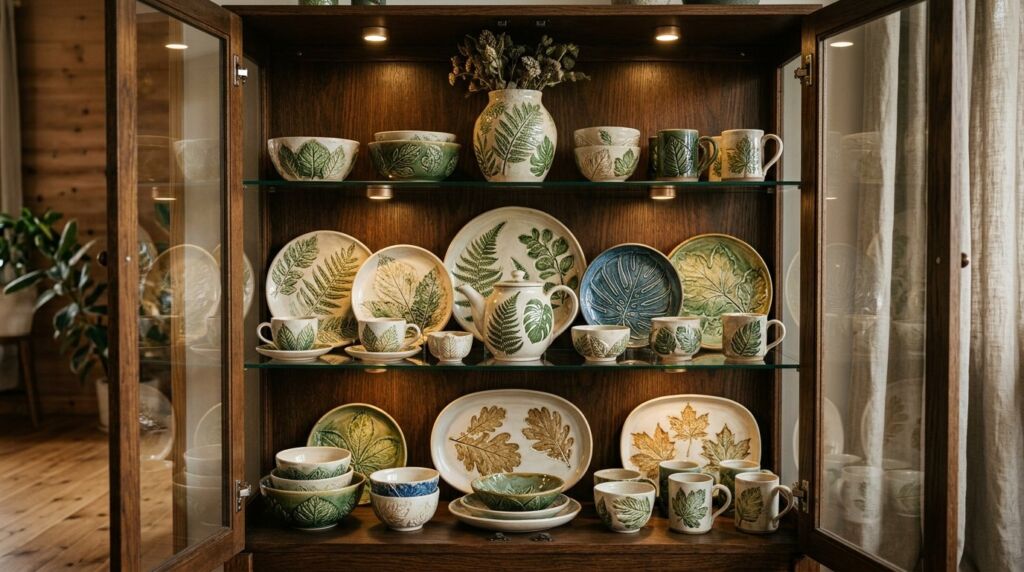
The cabbage crush is more than just a trend. It is a return to artisan roots and a celebration of the natural world. Whether you are hunting for a rare vintage platter or just buying a set of green bowls for your first apartment, you are participating in a rich history of design. These pieces bring character, color, and joy to the home in a way that very few other items can.
My journey with leafy ceramics has changed the way I look at my home. It taught me to value texture over perfection and history over convenience. It has turned my kitchen into a place of constant discovery. If you are ready to start your own collection, my best advice is to follow your gut. Buy the pieces that make you smile. After all, the best part of the cabbage aesthetic is that it is meant to be enjoyed, not just looked at.
What is your favorite botanical find? Have you found a hidden gem at a local market? I would love to hear about your collection and your own experiences with the cabbage crush.